Join Our Wine Journey – Sign Up for the Newsletter 🍷
Dining at Le Barrage: Where Culinary Classics Meet a Spirit of Discovery
Share
Deel op X (twitter)
LinkedIn
WhatsApp
Dining at Le Barrage: Where Culinary Classics Meet a Spirit of Discovery.
At Restaurant Le Barrage in Alblasserdam, familiar dishes take on luxurious interpretations, while an adventurous wine programme brings together producers and regions from across the world. Following our conversation with sommelier Luc Kaminski, we explore the restaurant’s culinary identity through an evening of distinctive dishes and thoughtfully selected pairings.
An oyster prepared over an open flame; a lobster roll crowned with caviar and a savoury interpretation of Dutch French toast might not immediately suggest a single culinary direction. Yet at Restaurant Le Barrage in Alblasserdam, these dishes have become part of the restaurant’s identity. They reveal a kitchen that moves comfortably between familiar favorites and luxurious ingredients, supported by a wine programme equally willing to venture beyond convention.
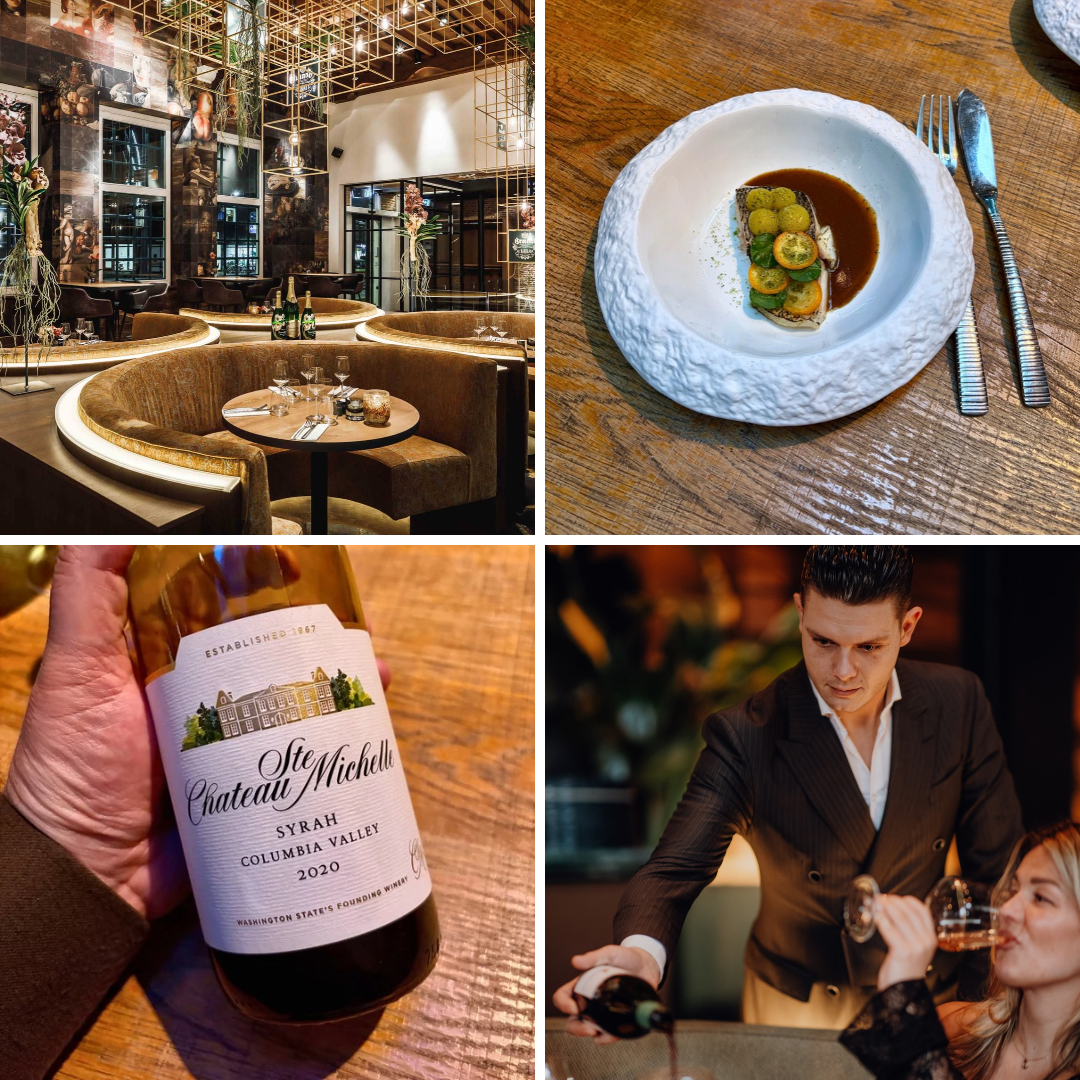
Restaurant Le Barrage.
During our earlier conversation with sommelier Luc Kaminski, we explored the philosophy behind Le Barrage’s extensive wine collection, housed in the vault of a former bank. That discussion revealed a programme built around flexibility, discovery and the freedom to select wines according to the preferences of individual guests. Our dinner provides an opportunity to explore how that philosophy translates to the table.
Le Barrage does not confine itself to a particular culinary tradition. French influences share the menu with Japanese preparations, while familiar dishes are reinterpreted using ingredients such as lobster, caviar, Wagyu and duck liver. It is an approach that combines the accessibility of recognisable food with the ambition and ingredients associated with fine dining.
An Opening from the Sea
Our evening begins with Bliard-Moriset Blanc de Blancs Champagne, a natural introduction to the seafood preparations that follow. Produced from Chardonnay in the Côte des Blancs, its freshness and fine mousse provide a useful counterpoint to the richer ingredients that soon arrive at the table.
Oysters on Fire and Tuna Piccolini.
The first dish is one of Le Barrage’s established signatures: Oyster on Fire. Presented on a bed of sea salt, the oyster is prepared at the table using ignited alcohol, gently cooking the shellfish beneath spinach and Parmesan foam. It is a preparation Luc had already highlighted during our interview, describing it as one of the dishes that guests have come to associate with the restaurant.
The combination recalls classical preparations of cooked oysters, but the tableside presentation introduces an additional element of theatre. Spinach and Parmesan bring savoury richness to the oyster’s natural salinity, changing the relationship with Champagne from the familiar pairing of raw shellfish and sparkling wine. Here, the wine’s freshness becomes particularly relevant in balancing the warmer, creamier preparation.
Alongside it comes Tuna Piccolini, combining tuna with olive oil, crème fraîche and caviar. Where the oyster makes its impression through preparation, the tuna relies more directly on the ingredients themselves. The combination of delicate fish, creamy textures and the saline character of caviar provides a contrasting expression of the same underlying idea: recognisable seafood presented with a luxurious touch.
The following courses explore a more delicate side of the kitchen, beginning with Hamachi, or yellowtail, accompanied by Weingut Manz’s 2025 Blanc de Noir Spätburgunder. A white wine made from Pinot Noir is a less predictable choice than Chardonnay or Sauvignon Blanc, but the grape’s potential for texture alongside freshness offers an interesting direction for the naturally rich flesh of yellowtail.
Langoustine Carpaccio.
The Langoustine Carpaccio continues this progression, bringing together the crustacean’s natural sweetness with red pepper, sesame and Granny Smith apple. Its accompanying 2023 Mâcon-Péronne Vieilles Vignes from Domaine du Bicheron takes us to southern Burgundy, where Chardonnay can combine fresh fruit and acidity with sufficient breadth to accommodate the langoustine and sesame.
2023 Mâcon-Péronne Vieilles Vignes from Domaine du Bicheron.
Together, these opening dishes demonstrate how varied a seafood-focused progression can become. The ingredients move from the richness of a cooked oyster to the delicacy of langoustine, while the wines shift from Champagne to German Blanc de Noir and white Burgundy. Rather than relying on one familiar pairing formula, the selections respond to the different preparations and textures.
Familiar Ideas, Unexpected Interpretations
If the opening courses establish the kitchen’s relationship with seafood, the Lobster Roll Barrage reveals something more distinctive about its personality. Inspired by the American classic, Le Barrage’s version combines lobster with brioche, crème fraîche and caviar. It is another of the restaurant’s longstanding favorites, taking a dish associated with informal coastal dining and giving it a luxurious interpretation.
The combination is appealing in its simplicity. Buttery brioche, sweet lobster and the salinity of caviar are familiar flavours, brought together in a format that is deliberately less formal than the ingredients might suggest. The accompanying FRAM Carmelina from South Africa also moves the wine selection beyond the traditional European regions that feature prominently in the restaurant’s cellar.
BBQ Dorade.
That international outlook continues with BBQ Dorade, or Sea Bream, paired with a 2023 Ca Ses Rosetes Blanc Giró Ros. The indigenous Mallorcan grape is an interesting choice for fish prepared over a barbecue. Where a particularly lean white wine might emphasize freshness alone, Giró Ros offers the possibility of greater Mediterranean fruit character and texture, qualities that can complement the roasted and smoky elements introduced by grilling.
2023 Ca Ses Rosetes Blanc Giró Ros.
The evening’s most distinctive reinterpretation of a familiar dish, however, may be Le Barrage Wentelteefje. In Dutch cooking, wentelteefjes are traditionally associated with sweet, egg-soaked bread, closely related to French toast. At Le Barrage, the concept becomes savoury, combining steak tartare and duck liver.
It is precisely the kind of preparation that illustrates the restaurant’s approach. The reference is familiar, but the ingredients take it in an entirely different direction, bringing together raw beef, the richness of duck liver and the comforting character of the bread preparation.
The accompanying 2018 Tűzkő Kékfrankos from Hungary is one of the more revealing wine choices of the evening. Steak tartare might suggest a lighter red Burgundy, while duck liver could lead the sommelier towards an entirely different style. Kékfrankos, better known internationally as Blaufränkisch, offers a way between the two. Its characteristic acidity and savoury character provide a counterpoint to the richness of the dish without necessarily requiring the weight and tannins of a more powerful red.
It is an example of pairing that considers the composition of the dish rather than simply its principal ingredient. The choice also reflects the willingness of Le Barrage’s sommelier team to look towards less familiar wine regions when the food provides a reason to do so.
The Japanese influence returns with Wagyu Sushi accompanied by Duck Liver, served with Misaki Junmai Daiginjo Sake. Bringing together two ingredients celebrated for their richness and texture creates a particularly concentrated combination, with umami playing an important role.
Choosing sake rather than wine is significant. Junmai Daiginjo offers a different approach to balance, with texture, aromatic refinement and compatibility with savoury flavours taking precedence over the acidity and tannin more commonly considered in wine pairing. For a dish built around Wagyu and duck liver, it is a logical direction that allows the ingredients’ richness to remain central.
These dishes capture the restaurant’s culinary identity more clearly than any single regional classification could. An American-inspired lobster roll, a Dutch childhood classic and Japanese sushi sit alongside one another, each transformed through the use of luxurious ingredients. The wine selections follow the same philosophy, moving between South Africa, Mallorca, Hungary and Japan without treating geographical familiarity as a requirement.
Richness and the Final Glass
The final savoury courses return to more classical European territory, beginning with Sweetbreads and Foie Gras. Both ingredients have a long association with French gastronomy, valued for their delicate flavours and distinctive textures. Their combination places richness at the center of the dish, making balance in the accompanying wine particularly important.
Sweetbreads and Foie Gras.
Le Barrage selects Duca di Saragnano’s 2018 Morellino di Scansano, bringing Sangiovese from southern Tuscany into the conversation. The grape’s natural acidity and savoury character provide a useful counterpoint to the richness of sweetbreads and foie gras, offering an alternative to the more obvious choice of a heavily structured red.
Château Ste. Michelle’s 2020 Syrah .
The final meat course is Beef Tenderloin, accompanied by Château Ste. Michelle’s 2020 Syrah from Washington State. After several unconventional combinations, the pairing returns to more familiar territory. Washington Syrah can offer dark fruit, spice and savoury complexity, while the relatively lean character of tenderloin makes balance between the wine’s structure and the preparation of the meat particularly relevant.
Our evening concludes with a Selection of cheeses and Graham’s 10-Year-Old Tawny Port. After the geographical diversity of the preceding wines, the mature, oxidative character of Tawny Port provides a traditional closing note, with its nutty and dried-fruit qualities offering familiar connections to aged and savoury cheeses.
Graham’s 10-Year-Old Tawny Port and Cheese.
Looking back over the dinner, Le Barrage’s culinary identity is defined less by adherence to one particular cuisine than by its willingness to reinterpret familiar ideas. The menu moves between classical European gastronomy, American-inspired comfort food and Japanese influences, with luxurious ingredients providing a recurring theme. Yet the preparations are not uniformly formal. A lobster roll can be presented alongside langoustine carpaccio, while Dutch French toast becomes a vehicle for steak tartare and duck liver.
The wine programme provides an important connection between these different influences. German Blanc de Noir accompanies Hamachi, Hungarian Kékfrankos meets a savoury Wentelteefje, and Japanese Sake takes the place of wine alongside Wagyu and Duck Liver. These are selections that invite curiosity, reflecting an approach in which the composition of a dish matters more than established pairing conventions.
Sommelier Luc Kaminski ensured us of a great night.
During our earlier conversation, Luc explained that successful wine service begins with understanding the guest rather than demonstrating the sommelier’s knowledge. The pairings selected for this dinner reveal another side of that philosophy: the freedom to explore different regions, varieties and styles when the food calls for it.
What makes Le Barrage interesting is not simply the breadth of its menu or the depth of its cellar, but the freedom with which both are approached. The kitchen draws on different culinary traditions without allowing any one of them to define the restaurant, while the sommelier team finds connections through wines and producers that guests might not otherwise encounter. Together, they give Le Barrage an identity rooted in familiar pleasures, luxurious interpretations and a shared willingness to explore beyond the obvious.
This article is written by our own Niels Aarts. We would like to thank Le Barrage, and Luc Kaminski in particular, for their openness, hospitality and wonderful evening.
Join our insiders’ list and get exclusive early access to new articles, expert tips, and fresh reviews delivered straight to your inbox. Subscribe now and be the first to discover!