Join Our Wine Journey – Sign Up for the Newsletter 🍷
Champagne Rafflin-Lepitre – Their Own Path
Share
Deel op X (twitter)
LinkedIn
WhatsApp
Champagne Rafflin-Lepitre – Their Own Path.
In the Premier Cru vineyards of the Montagne de Reims, Champagne Rafflin-Lepitre is a family estate shaped by generations of winegrowing and a growing desire to express its own identity. Today, sisters Perrine and Émilie are continuing the work their parents began in 1984, balancing tradition with their own ideas about viticulture, winemaking and the future of grower Champagne.
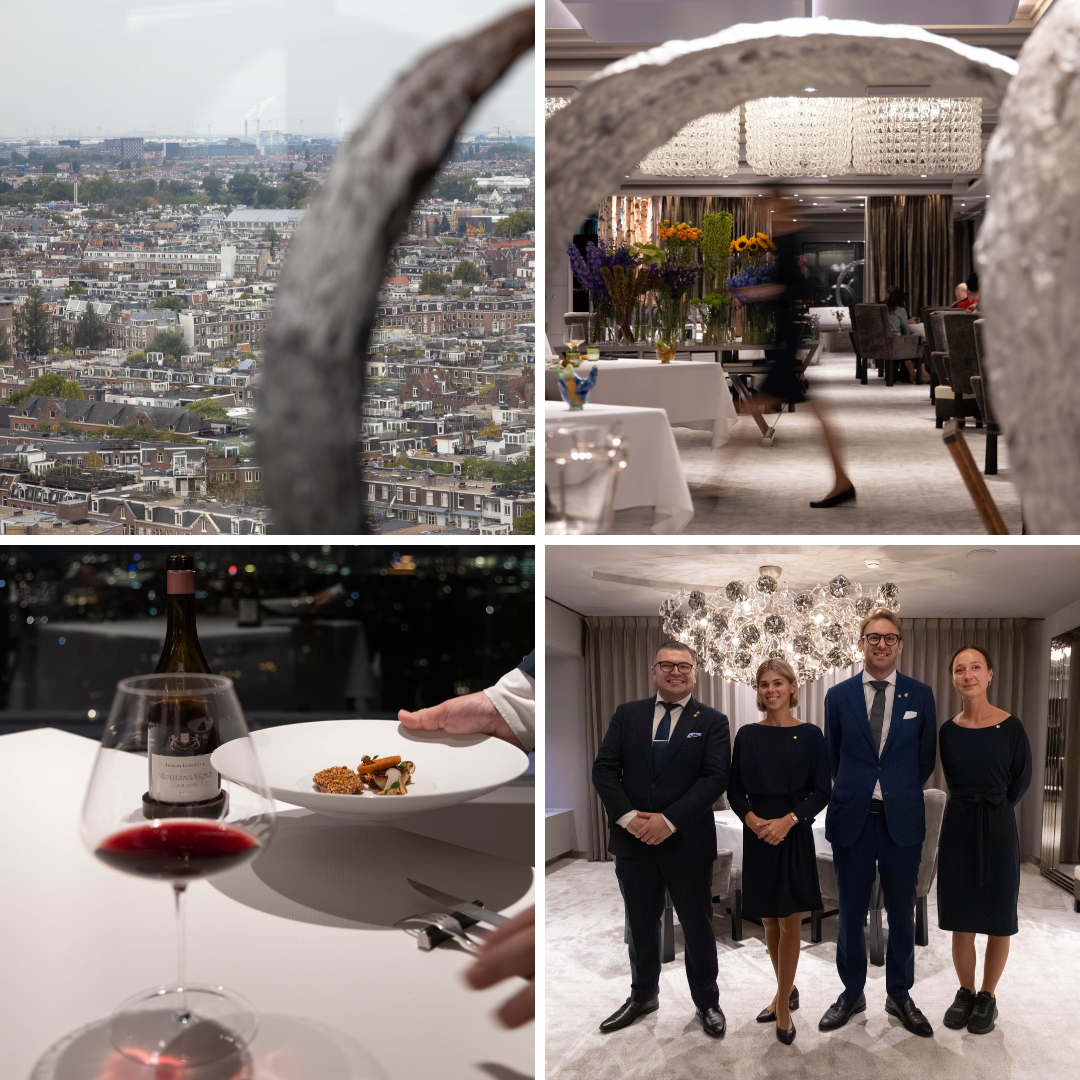
Our introduction to the house came through Sanne Poppen of Rotterdam’s Michelin-starred Restaurant The Millèn, whose enthusiasm for the family’s wines encouraged us to discover the people behind the bottles.
A Family Business in the Hands of Two Sisters
When we speak with Perrine of Champagne Rafflin-Lepitre, she has recently taken on another responsibility alongside running the family business with her sister Émilie. Three months earlier, she became president of the cooperative with which her family has worked for generations. It is a significant addition to an already demanding schedule, particularly while raising three children.
The cooperative has been part of the family’s history for decades. Both of Perrine’s parents came from winegrowing families that traditionally supplied grapes to the larger Champagne houses. In 1984, they decided to retain part of their harvest and begin producing Champagne under their own name.
The transition was gradual, as making Champagne required an entirely different business model from growing and selling grapes. Today, that dual structure remains in place, with approximately 70% of the estate’s production sold as grapes and 30% retained for its own Champagnes. It provides a degree of commercial stability while leaving room to develop the family brand.
The sisters followed different paths into the business. Émilie joined around 2005, having studied accounting before completing additional training in viticulture and winemaking. Her interests lie particularly in the vineyards, where she prefers to spend much of her time.
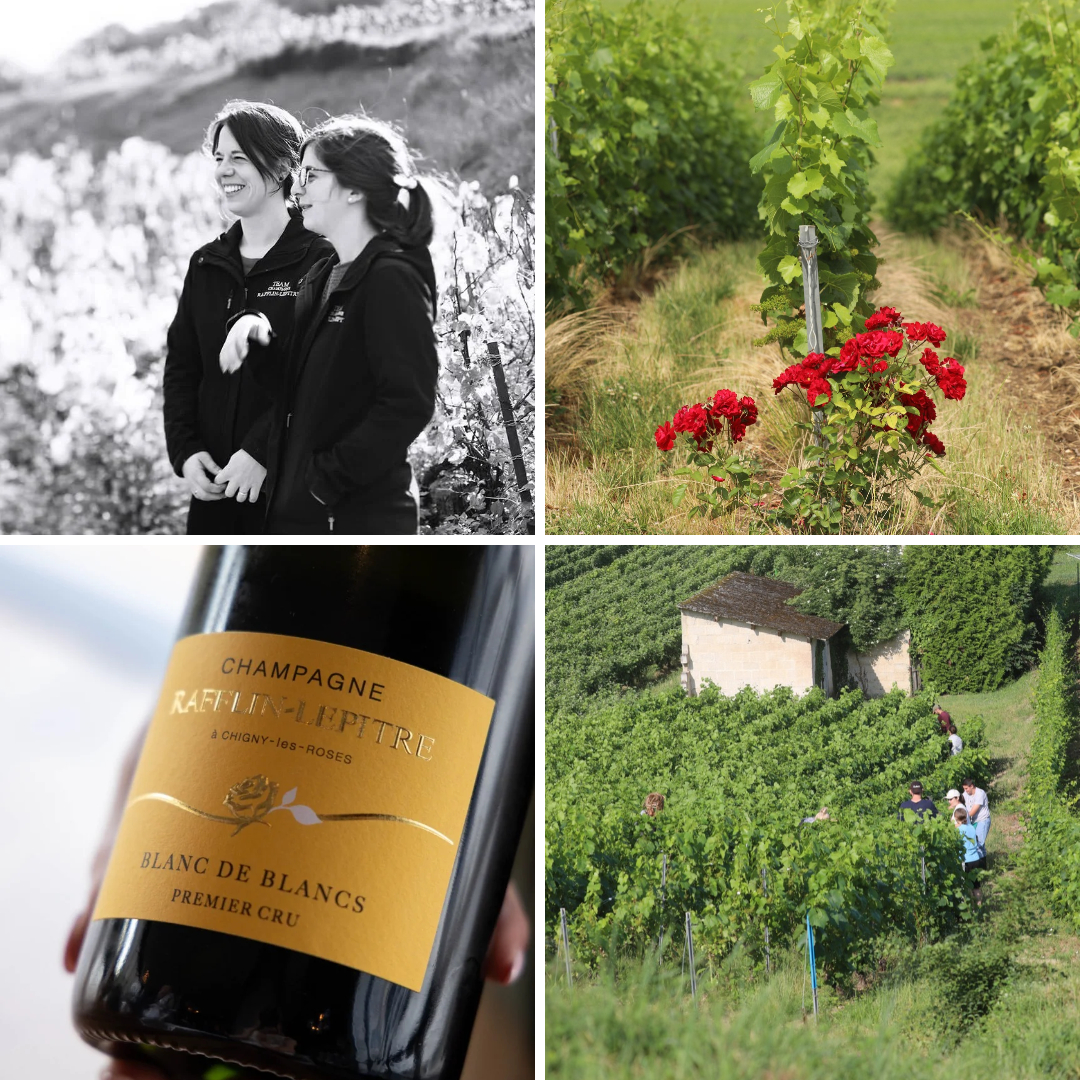
Perrine and Émilie.
Perrine initially imagined a different career. She studied literature and only joined the family business in 2015, a decision that brought her back to the environment in which she had grown up. Today, she primarily oversees communication and commercial relationships, while Émilie manages administration and takes a leading role in viticulture. Other responsibilities, including vineyard work, are shared.
Their different personalities have not prevented them from finding common ground. “I think we have different characters, but we share the same idea that we want to keep the unity in the family,” Perrine explains.
Their parents gradually stepped back, giving the sisters considerable freedom to make their own decisions. It allowed them to develop their own approach while maintaining the values on which the business had been built.
A Patchwork of Premier Cru Vineyards
Rafflin-Lepitre is based in Chigny-les-Roses, in the Montagne de Reims, where the family cultivates approximately nine hectares of vineyards. During our conversation, Perrine describes 26 parcels spread across Chigny-les-Roses, Ludes and Rilly-la-Montagne, three neighbouring Premier Cru villages.
The fragmented nature of the holdings creates considerable diversity in exposure, soil composition and grape characteristics. For Perrine and Émilie, these differences provide opportunities to explore distinct expressions of Champagne, something that has become increasingly important in the development of their portfolio.
Historically, Meunier has been the dominant variety in the family’s vineyards. Over the past five years, however, the sisters have gradually been rebalancing their plantings, increasing the proportion of Pinot Noir and Chardonnay. Such changes take time, as replanting represents a long-term commitment, but they believe a more balanced varietal composition will provide greater flexibility.
They are also experimenting with Voltis, a disease-resistant grape variety that offers possibilities for reducing vineyard treatments. Perrine is particularly interested in its environmental benefits, especially where vineyards are situated close to residential areas.
It is a practical example of how the sisters approach the future, combining respect for established practices with a willingness to explore alternatives.
Depending on the year, Rafflin-Lepitre produces between six and nine cuvées. The diversity reflects a tradition established by their father, whose curiosity encouraged him to experiment with different varieties and winemaking techniques.
Perrine admits that a smaller portfolio would probably make the business easier to manage, but she appreciates the freedom to offer different styles. She particularly enjoys observing how visitors respond to Meunier, a variety that can provoke surprisingly different reactions.
For the sisters, the objective is not to produce Champagnes that appeal equally to everyone, but to preserve the individual personalities of the wines and the vineyards behind them.
That diversity also makes the portfolio particularly interesting for gastronomy, as we discovered through our introduction to the house in Rotterdam.
Work in the vineyards of Rafflin-Lepitre.
A Champagne That Found Its Place at The Millèn
Our first encounter with Rafflin-Lepitre came through Sanne Poppen, sommelier at the Michelin-starred Restaurant The Millèn in Rotterdam. Her connection with the house began with a search for a new Champagne to serve by the glass, but eventually developed into a close relationship with the family, built on a shared appreciation for elegance, quality and authenticity.
Since opening, The Millèn had served the same Blanc de Blancs as its house Champagne. As that wine became increasingly available throughout Rotterdam, Sanne began looking for something more distinctive. She approached several importers and tasted a broad selection of Champagnes, including wines from Pierre Legras, a producer she had previously worked with at Restaurant Amarone. Eventually, it was Rafflin-Lepitre, introduced through Patricia of Bubbels & Meer, that captured her attention.
Sanne Poppen, Sommelier at The Millèn.
Her decision was guided by the restaurant’s culinary philosophy, but also by her own preferences as a sommelier. Interestingly, she explains that her taste and that of the chef are not necessarily identical. While the chef generally appreciates fuller, more powerful wines, Sanne gravitates towards elegance, softness and refreshing acidity. In Rafflin-Lepitre’s Blanc de Blancs, she found a Champagne that brought these different qualities together.
The Chardonnay provides freshness and precision, while extended ageing introduces the texture and structure needed to give the wine substance. For Sanne, this balance is particularly important in an aperitif, which should prepare the palate for the gastronomic experience ahead rather than overwhelm it from the beginning.
“A Champagne served as an aperitif should not be too loud, too powerful or too robust,” she explains. “It should prepare your palate for all the flavours that are still to come.”
Yet elegance alone is not enough to make a successful house Champagne. Sanne also places considerable importance on consistency, something she considers essential when serving the same wine to guests throughout the week.
“The first bottle I open during the week should offer exactly the same experience as the last one,” she explains. “Whether someone visits on Tuesday or Saturday, I want them to experience the same Champagne.”
It is this combination of purity, balance and reliability that convinced her to introduce Rafflin-Lepitre at The Millèn. After discussions with Patricia about the practical and commercial aspects of serving the wine by the glass, the Blanc de Blancs became the restaurant’s new house Champagne.
As Sanne became more familiar with the estate, however, her enthusiasm developed into something more personal. She was particularly impressed by the openness and modesty of Perrine and Émilie, qualities she recognized in the atmosphere she and her colleagues aim to create at The Millèn.
Despite working in fine dining, Sanne believes hospitality should remain welcoming and unpretentious. She appreciates the fact that the sisters approach their Champagne in much the same way, with confidence in their quality but without the need for grand gestures or exaggerated claims.
There is another aspect of the collaboration she finds particularly meaningful. From the sisters producing the Champagne to Patricia importing it and Sanne presenting it at the table, women play a central role throughout the relationship. In an industry where many prominent positions have traditionally been held by men, she sees this connection as something worth appreciating.
Her belief in the wines eventually led her to offer to become an informal ambassador for Rafflin-Lepitre in the Netherlands. Rather than approaching this as a formal commercial role, she simply wanted to introduce the Champagnes to people who might otherwise never encounter them, whether through recommendations at The Millèn or by sharing a glass during special occasions.
The relationship has since developed beyond the restaurant’s regular Champagne selection. As guests began requesting larger formats, Sanne discussed the possibility with the family, and Rafflin-Lepitre has now started bottling magnums and Jeroboams specifically in response to demand from The Millèn.
It is a small but telling example of the connection between producer and sommelier. What began as a search for a distinctive house Champagne has developed into a collaboration in which feedback from the restaurant can influence decisions at the estate.
Our own introduction to Rafflin-Lepitre came through one of Sanne’s gestures. During our visit to The Millèn, she chose to pour the family’s Blanc de Blancs, allowing us to experience the Champagne that had earned her confidence. Her enthusiasm eventually led to our conversation with Perrine and a broader exploration of the estate’s wines.
For a relatively small producer, relationships like these can be particularly valuable. They offer more than access to a new market, creating opportunities to exchange ideas and build a following among people who appreciate the philosophy behind the wines. In Sanne, Rafflin-Lepitre has found someone who not only believes in the quality of its Champagnes, but also genuinely identifies with the people producing them.
Moulins à Vent: The Sisters’ Own Creation
Among the wines in the Rafflin-Lepitre portfolio, Moulins à Vent holds a particularly special place. It was the first cuvée Perrine and Émilie conceived together, rather than continuing a wine developed by their father.
Perrine affectionately describes it as their baby.
The idea originated in the vineyard, where Perrine had repeatedly been struck by the quality of the grapes from one particular parcel during the weeks before harvest. She wanted to discover how the fruit would express itself if bottled separately rather than incorporated into a broader blend.
With respect to the heritage Rafflin-Lepitre is also looking towards a future through improvement, in the vineyards and cellar.
The Chardonnay vines were planted in 1973, and Perrine considers their fruit particularly concentrated, with a character quite different from the Chardonnay grown elsewhere on the estate.
Where other parcels tend towards more generous fruit, Moulins à Vent shows a more mineral, linear personality. Perrine attributes much of this distinction to the soil, although the vineyard’s exposure also plays a role.
The label depicts the parcel itself, establishing a visual connection between the Champagne and its origin.
For the sisters, Moulins à Vent represents more than another addition to the portfolio. It reflects their growing confidence in making independent decisions and exploring the identity of individual vineyards.
It also contrasts with Fût de Chêne, a Champagne that belongs more directly to their father’s winemaking legacy. Perrine openly acknowledges that it is not necessarily her favorite wine in the range, although she appreciates its history and the customers who remain attached to it.
That admission reveals something about the family’s approach. Not every wine needs to reflect the personal preferences of the current generation. Some preserve the ideas of those who came before, while others allow the next generation to introduce something new.
Four Champagnes, Four Expressions of the House
Our tasting of four Rafflin-Lepitre Champagnes provided an opportunity to explore the different personalities within the family’s portfolio. What makes the selection interesting is not simply the diversity of styles, but the way each wine reflects a different aspect of the estate, from the elegance that first attracted Sanne Poppen to the individual character of an old-vine parcel and the winemaking choices inherited from the previous generation.
Rafflin-Lepitre Blanc de Blancs Premier Cru | 94/100 DWA score
100% Chardonnay | 6 g/L dosage | Five years of cellar ageing
Having first encountered this Champagne at The Millèn, it was particularly interesting to return to it with a better understanding of the family behind the wine. The Blanc de Blancs is an elegant expression of Chardonnay, combining freshness and precision with a gentle richness that gradually reveals itself in the glass. Rather than seeking immediate intensity, it invites the drinker to discover its complexity over time.
The bouquet opens with delicate notes of white flowers, citrus and green apple, while the extended ageing introduces a more developed dimension, bringing subtle impressions of brioche and almond. On the palate, lively acidity provides freshness and definition, complemented by a soft, creamy texture that gives the Champagne substance without making it feel heavy. A gentle mineral undertone adds further precision, leading towards a persistent, refreshing finish in which fruit, acidity and maturity remain beautifully balanced.
What makes this Champagne particularly appealing is how naturally these elements come together. The extended ageing provides depth and structure, while the Chardonnay retains the freshness needed to keep the wine lively and approachable. Its complexity becomes more apparent with time in the glass, yet it never loses the elegance that makes it so versatile at the table, whether served as an aperitif or alongside oysters, shellfish and delicate fish preparations.
This balance between refreshing acidity and the texture developed through ageing is precisely what attracted Sanne Poppen to the wine. As a gastronomic aperitif, it offers enough substance to remain engaging without overwhelming the palate, allowing the dishes and wines that follow to take center stage. It is a Champagne that demonstrates how elegance and complexity can coexist, leaving a lasting impression without demanding the spotlight.
Rafflin-Lepitre Blanc de Blancs Premier Cru
Rafflin-Lepitre Moulins à Vent 2018 | 94/100 DWA score
100% Chardonnay | Single parcel | Vines planted in 1973
Of the four Champagnes, Moulins à Vent perhaps tells the most personal story, representing the first cuvée Perrine and Émilie developed together. Knowing how the wine originated from their curiosity about a particular vineyard adds another dimension to the tasting, especially when comparing it with the more delicate expression of the regular Blanc de Blancs.
The 2018 vintage immediately presents a richer aromatic profile, with ripe pear and peach accompanied by floral nuances and more developed notes of brioche, vanilla and toasted hazelnut. There is a sense of concentration that continues onto the palate, where the wine displays a creamy, almost generous texture. Yet this richness is carefully balanced by citrus-driven acidity and a mineral character that brings tension and precision to the finish.
What stands out is how the wine manages to combine maturity and concentration with a distinctly linear structure. The old Chardonnay vines, planted in 1973, appear to contribute to its depth, while the freshness and mineral expression prevent the wine from becoming overly broad.
Moulins à Vent feels like a natural progression from the Blanc de Blancs, offering greater intensity and texture without abandoning the elegance that characterizes the house. More importantly, it provides a tangible expression of the sisters’ desire to explore their vineyards individually, allowing the character of a single parcel to become the defining element of the Champagne.
Rafflin-Lepitre Fût de Chêne Premier Cru | 93/100 DWA score
Chardonnay-dominant blend | Oak maturation | Reserve wine component
Where Moulins à Vent reflects the sisters’ growing independence, Fût de Chêne offers a connection to the previous generation. Developed by their father, this cuvée explores a more structured interpretation of Champagne, in which the influence of oak plays an important role in shaping both the aromatic profile and the texture.
The wine brings together the freshness of Chardonnay with a more developed character, showing floral and citrus notes alongside impressions of toasted nuts, vanilla and gentle spice. These aromas carry through to the palate, where the oak contributes breadth and a rounded texture, giving the Champagne a fuller, more substantial presence than the two Chardonnay expressions tasted before it. Despite this additional weight, sufficient acidity remains to maintain balance and prevent the wine from becoming excessively rich.
It is a style that naturally invites a more gastronomic approach, particularly alongside richer fish preparations, poultry or dishes incorporating creamy sauces. The additional structure allows the Champagne to engage with flavours that might overwhelm a more delicate expression, while its freshness provides a useful counterpoint to the richness of the food.
Perrine’s admission that Fût de Chêne is not necessarily her personal favorite makes the wine particularly interesting within the family’s portfolio. It represents a different interpretation of Champagne, one that continues to appeal to a loyal audience and preserves an element of her father’s winemaking philosophy. Tasted alongside Moulins à Vent, it illustrates how different generations have contributed their own ideas to the identity of Rafflin-Lepitre.
Rafflin-Lepitre Rosé Premier Cru | 92/100 DWA score
Premier Cru Rosé | Traditional Champagne varieties
The Rosé brings a different personality to the tasting, moving away from the citrus-driven precision of the Chardonnay-based wines towards a more generous expression of red fruit. It is a Champagne that immediately feels approachable, although there is sufficient structure beneath its fruit-forward character to make it more than a straightforward aperitif.
Aromas of strawberry, raspberry and redcurrant introduce the wine, followed by a palate where ripe berry fruit is supported by a rounded texture and refreshing acidity. The interplay between fruit and freshness gives the Champagne an inviting character, while its underlying structure provides enough substance to accompany food.
This makes it an interesting option for dishes where a more delicate Blanc de Blancs might struggle to find its place. Poultry, richer seafood preparations or combinations incorporating gentle sweet-and-sour elements would all allow the wine’s fruit and texture to interact with the food without losing its own identity.
Within the selection, the Rosé provides a fitting illustration of the diversity Perrine and Émilie have chosen to preserve. Although its character differs considerably from the other Champagnes, it shares their emphasis on balance and accessibility, demonstrating that the family’s approach can accommodate different styles without becoming inconsistent.
Looking Ahead: Keeping Things Simple and Sincere
For Perrine and Émilie, the future of Rafflin-Lepitre is not primarily about increasing production.
When we ask Perrine about her ambitions, she speaks openly about the challenges facing Champagne, from changing consumer demand and international competition to environmental pressures and the difficulties of maintaining family-owned vineyard businesses.
“We don’t have a lot of big dreams of selling a lot of bottles,” she explains. “We want to keep something simple and efficient and sincere.”
One area where she does see opportunities is exports. Currently, approximately 80% of the estate’s Champagne is sold domestically, with the Netherlands, Belgium and Italy among its established international markets. Smaller quantities also reach the United States and Réunion.
Perrine would like to strengthen the family’s presence in the United States and Italy, while exploring opportunities in Spain. Her motivation is partly commercial, as a broader international presence would reduce dependence on individual markets, but there is also a personal dimension.
She enjoys meeting people from different cultures and discovering how they experience the family’s wines. For a producer, seeing Champagne enjoyed in different countries, with different cuisines and traditions, provides another perspective on the wines themselves.
Her recent appointment as president of the cooperative also brings her closer to some of the structural challenges facing Champagne growers.
Succession is one of them. Perrine points to the difficulties created when vineyards are divided between successive generations, gradually reducing the size of individual holdings. Maintaining sufficient scale to operate a viable business can become increasingly difficult, particularly for growers who want to produce and market Champagne under their own names.
It is a challenge she understands personally. Together with Émilie, she has completed one generational transition and hopes the family business will remain strong enough to offer similar opportunities in the future.
Within the increasingly competitive grower Champagne market, Perrine believes there is still room for producers who understand their identity and remain accessible to their customers.
Accessibility, in her view, extends beyond price. It also concerns the relationship between producers and the people who enjoy their wines, something that becomes particularly apparent in the connection with Sanne Poppen and The Millèn.
Champagne Rafflin-Lepitre found its home in Rotterdam and is now looking to looking to branch out across the world.
Sanne was looking for a Champagne that complemented her philosophy as a sommelier, while Perrine and Émilie were building a family business based on quality, sincerity and personal relationships. Their collaboration developed naturally because those perspectives proved compatible.
Our own experience followed a similar path. A glass of Blanc de Blancs in Rotterdam led us to discover a family estate in the Montagne de Reims, where two sisters are continuing their parents’ work while gradually introducing their own ideas.
Moulins à Vent perhaps captures that evolution most clearly. What began with Perrine tasting grapes in a vineyard and recognizing their distinctive character became the first Champagne the sisters created together. It now sits alongside cuvées developed by their father, each representing a different chapter in the family’s history.
For Perrine and Émilie, the ambition is to preserve that continuity while retaining the freedom to make their own decisions. Their Champagnes reflect an estate that is comfortable with its heritage, but equally interested in discovering what the next generation can contribute.
And perhaps that is what makes Rafflin-Lepitre particularly appealing. As Sanne’s experience illustrates, a Champagne does not need to be extravagant or immediately expressive to leave a lasting impression. Sometimes its character reveals itself more gradually, through the way it develops in the glass, accompanies a dish or encourages a conversation.
In this case, that conversation takes us back to the vineyards of the Montagne de Reims, where a family continues to find its own path.
Special thanks to Sanne for introducing us to the house and to Patricia of Bubbels & Meer, who are the Dutch importers of Rafflin-Lepitre, for facilitating the connection and providing the wines that are reviewed. Picture credits: Champagne Raffling-Lepitre and MAVE Photography.
Join our insiders’ list and get exclusive early access to new articles, expert tips, and fresh reviews delivered straight to your inbox. Subscribe now and be the first to discover!