Join Our Wine Journey – Sign Up for the Newsletter 🍷
The Future of Fine Dining Is Not About Fine Dining
Share
Deel op X (twitter)
LinkedIn
WhatsApp
The Future of Fine Dining Is Not About Fine Dining.
As restaurants face rising costs, changing consumer expectations and evolving attitudes towards wine, the hospitality industry is being forced to reconsider what makes an exceptional experience. Yet Amanda Wassmer Bulgin, sommelière and Co-Founder of Wassmer Family Group believes fine dining has a promising future, provided restaurants rediscover what truly matters to their guests.
Ahead of Weinberg Arlberg, Dutch Wine Apprentice spoke with her about the changing meaning of luxury, the economics of fine wine and why the modern sommelier must be more than a wine expert.
For decades, the evolution of fine dining has been closely associated with the chefs who shaped it. Their creativity, technical mastery and increasingly individual culinary philosophies transformed restaurants into destinations, attracting guests willing to travel considerable distances for experiences they could not find elsewhere. The rise of the celebrity chef brought unprecedented recognition to the profession, but it also established a restaurant culture in which the chef’s vision often became more important than the expectations of the guest.
Today, that relationship is being reconsidered. Rising operating costs, greater consumer awareness and changing attitudes towards luxury are challenging restaurants to demonstrate why their experiences justify increasingly substantial prices. While some observers question whether fine dining is losing its relevance, Amanda Wassmer Bulgin believes the industry is experiencing a necessary transformation rather than an irreversible decline.
Born in Britain, Amanda has built an international career across some of Europe’s most respected hospitality establishments, including Schloss Schauenstein, Park Hotel Vitznau and the Michelin-starred restaurants 7132 Silver and Sven Wassmer Memories in Switzerland. Twice named Switzerland’s Best Sommelière, in 2017 and 2022, she has become widely recognized for her approach to wine service and innovative non-alcoholic pairings. Through the Wassmer Family Group, she now combines her extensive restaurant experience with hospitality consulting and concept development, giving her a perspective that extends well beyond the traditional responsibilities of a sommelier.
Amanda Wassmer-Bulgin, sommelière and Co-Founder of Wassmer Family Group.
Speaking with Dutch Wine Apprentice ahead of Weinberg Arlberg, Amanda challenges the suggestion that ambitious restaurants are approaching the end of their natural lifespan. In an increasingly digital world, she believes restaurants remain among the few environments where people come together for meaningful personal interaction. The opportunity to share an evening, discover something new and enjoy the company of others has not disappeared. What is changing is the way consumers expect restaurants to deliver those experiences.
From Culinary Prestige to Genuine Hospitality
Looking back twenty years, Amanda recalls the emergence of the chef as a celebrated creative personality. This development brought considerable benefits to hospitality, encouraging younger generations to regard restaurant careers as respected professions. Yet it also contributed to an environment in which the restaurant’s philosophy could become more important than the people it was supposed to serve. Guests were expected to embrace the chef’s concept, sometimes without questioning whether the experience genuinely reflected their own preferences.
Amanda illustrates this through a familiar question occasionally asked when guests arrive at a restaurant: whether they already understand its concept. The implication is that diners should have prepared themselves before taking their seats. For her, this represents a reversal of the relationship that should define hospitality. A restaurant may have an ambitious culinary philosophy, but its identity should become apparent through the experience rather than requiring an explanation that risks distancing the guest.
She also questions the increasing similarity between ambitious restaurants internationally. Prestigious ingredients, fashionable techniques and familiar interpretations of luxury have contributed to a landscape in which technically accomplished menus can sometimes feel interchangeable. As Amanda points out, consumers can now purchase exceptional products, such as a beautiful turbot, from a good fishmonger. The presence of an outstanding ingredient is therefore no longer sufficient to justify the price of an expensive restaurant.
What matters increasingly is the experience surrounding the food: the atmosphere, the people, the connection to place and the way guests feel throughout the evening. Amanda sees this as a transition from chef-driven restaurants towards establishments that place greater emphasis on community and belonging. Successful restaurants create an identity with which guests connect, encouraging them to return because they appreciate not only the cooking but also the environment and the people who bring it to life.
Personal interaction and connection are driving the new dining experience.
This development reflects a broader change in the meaning of luxury. Amanda recalls a time when serving strawberries in December represented an exceptional display of abundance, simply because the fruit was difficult to obtain outside its natural season. As global supply chains made previously rare products more accessible, the definition of luxury evolved towards provenance, sustainability and authenticity. Today, she sees increasing value being placed on privacy, individuality and meaningful experiences, whether through personalized private dining or restaurants that create a genuine sense of community.
For Amanda, this does not mean the disappearance of traditional fine dining. She remains convinced that exceptional restaurants, including those operating at the highest Michelin level, will continue to attract guests. The greatest challenge lies with establishments that command substantial prices without offering a sufficiently distinctive experience. In a world where consumers have more choice and greater access to quality, technical excellence must be accompanied by a compelling reason to visit.
Wine Beyond Prestige and Familiar Labels
The changing expectations of restaurant guests also have important implications for wine. Although Amanda remains optimistic about its place in ambitious restaurants, she believes the fine-wine world must reconsider its relationship with prestige, exclusivity and value.
Historically, familiarity with celebrated Bordeaux and Burgundy producers represented an important measure of professional credibility among sommeliers. Amanda recalls how knowledge of legendary vintages and iconic estates provided a way of establishing one’s position within a relatively exclusive community. Interestingly, she believes that the emergence of low-intervention wines and smaller producers did not entirely eliminate this culture. Instead, a different form of insider knowledge developed around obscure growers and fashionable labels. The wines may have become more affordable, but the desire to demonstrate expertise through exclusivity remained.
Nevertheless, this evolution also encouraged sommeliers to explore beyond the traditional fine-wine hierarchy. Regions and producers that previously received limited attention began to appear on ambitious wine lists, offering consumers opportunities to discover exceptional wines without the substantial premiums associated with established prestige labels.
Wine has moved beyond prestige and familiar labels.
For restaurants, Amanda believes this represents an important commercial opportunity. A guest who already owns a collection of celebrated Bordeaux or Burgundy may have little incentive to order those same wines at restaurant prices. Introducing that person to an exciting producer from Argentina, for example, can offer a more memorable experience while providing considerably greater value. The restaurant becomes a place of discovery rather than simply another setting in which to consume familiar luxury products.
Amanda also emphasises that these decisions cannot be separated from the economic realities of hospitality. Food, labour and operating costs have increased, placing pressure on restaurants to maintain profitability while continuing to invest in their employees and the quality of the experience. “You’re only sustainable if you’re economically viable,” she observes. For her, financial sustainability is not simply about generating profit, but about creating the conditions in which restaurants can pay people fairly, maintain standards and remain attractive to guests.
Wine remains an important part of that equation, but successful wine programmes must balance ambition with commercial reality. An impressive cellar may demonstrate a restaurant’s credentials, yet its true value depends on whether the wines serve the interests of the business and its guests. The sommelier’s ability to recognize preferences, encourage discovery and communicate value is therefore becoming increasingly important.
The Sommelier as a Hospitality Professional
As the restaurant experience becomes more guest-centred, Amanda believes the role of the sommelier must evolve beyond the traditional emphasis on technical knowledge.
She remains unequivocal about the importance of education. Understanding regions, grape varieties, producers, vintages and winemaking methods provides the foundation on which professional confidence is built. “You build confidence through competence,” she explains. Yet she questions whether traditional sommelier training devotes sufficient attention to what happens after that competence has been established.
Amanda has encountered highly knowledgeable professionals who could discuss wine in extraordinary detail but struggled to communicate effectively with guests. Their technical understanding was considerable, but they lacked the ability to recognize different personalities, interpret individual preferences and adapt their recommendations accordingly. For her, consumer psychology and communication should therefore occupy a far more prominent position in sommelier education.
A sommelier may understand precisely how tannin, acidity and texture influence a wine, but that knowledge becomes useful only when it can be translated into something meaningful for the person considering the bottle. The objective is not to impress guests with expertise, but to use that expertise to enhance their experience. This distinction becomes particularly clear when we ask Amanda whether someone can be an outstanding sommelier without also being an outstanding hospitality professional. Her answer is immediate: no.
Technical service standards remain valuable, but they should support the guest experience rather than become an end in themselves. A sommelier who performs every procedure perfectly but fails to connect with the guest may ultimately contribute less to the occasion than someone who understands their preferences and introduces a memorable wine. For Amanda, professional excellence is inseparable from the ability to make people feel welcome.
The Sommelier skillset increasingly asks for an eye for hospitality, alongside technical knowledge.
She also believes that discussions about sommellerie often overlook a much larger part of the restaurant industry. Most establishments serving wine do not employ dedicated sommeliers, meaning that recommendations are frequently made by restaurant managers and members of the wider service team. Amanda argues that the industry should invest more energy in helping these professionals develop practical wine knowledge and the confidence to communicate it naturally, even when they have no ambition to pursue advanced qualifications.
Experienced sommeliers have an important role to play as mentors, sharing their expertise while encouraging less experienced colleagues to participate in wine service. In Amanda’s view, the strongest hospitality teams combine specialist knowledge with a shared commitment to the guest experience, making wine approachable without diminishing its complexity.
Changing Drinking Habits, New Opportunities
Amanda’s perspective on alcohol-free beverages reflects the same commitment to hospitality. Although the category has attracted considerable attention in recent years, her involvement began much earlier, motivated by a simple question: why should a guest paying for an exceptional meal receive a less interesting beverage experience simply because they choose not to drink alcohol?
She recalls feeling uncomfortable with the idea that someone might be offered little more than water or orange juice while the rest of the table enjoyed carefully selected wine pairings. Her initial response was to develop a small selection of alternative beverages, ensuring that every guest could participate fully in the dining experience. Over time, she discovered that the approach also made commercial sense, generating additional revenue from guests who might otherwise have consumed water or conventional soft drinks.
For Amanda, this demonstrates how hospitality and economic sustainability can reinforce one another. She does not regard alcohol-free beverages as direct replacements for fine wine, believing that the complexity and emotional experience offered by an exceptional mature bottle remain difficult to reproduce. Nor does she assume that every alcohol-free drink represents a lost wine sale, since many guests choosing these alternatives would not necessarily have ordered wine in the first place.
Her observations extend to the broader discussion about younger consumers and changing drinking habits. Amanda is critical of the tendency to describe younger generations as fundamentally uninterested in wine or unable to appreciate its complexity. She regularly encounters young sommeliers whose enthusiasm for exceptional bottles is comparable to that of previous generations, although they may approach wine through different social settings and cultural references.
Rather than assuming that wine must be simplified to remain relevant, she encourages producers and hospitality professionals to reconsider how it is presented and experienced. Champagne provides an interesting example: its appeal extends far beyond technical knowledge of individual producers or production methods, allowing consumers to connect with the category through celebration, emotion and shared occasions. Amanda believes the wider wine industry can learn from this ability to create meaningful associations, provided they remain authentic and supported by the quality of the product.
The challenge is therefore not necessarily to change the wine itself, but to create environments in which new generations can discover and appreciate its qualities on their own terms.
The Luxury of Time
As our conversation approaches its conclusion, Amanda returns to a subject that connects many of her observations about hospitality with the enduring appeal of fine wine: time.
Restaurants need time to build relationships with guests and develop teams capable of delivering genuine hospitality. Young sommeliers require experience, mentorship and repeated encounters with wine before technical knowledge develops into professional judgement. Wine itself offers perhaps the clearest illustration of this principle.
Amanda is particularly passionate about ensuring that younger sommeliers have opportunities to taste mature wines and experience the transformation that occurs through extended bottle ageing. These encounters are becoming increasingly difficult to access, particularly when older vintages from prestigious producers command substantial prices. Yet she believes they remain essential to understanding what makes fine wine exceptional. The development of complexity and character over time cannot be fully appreciated through theoretical education; it requires direct experience.
Building knowledge and experience, in wine and hospitality, remains crucial for sommeliers.
This understanding of time also has broader relevance to the hospitality industry. As restaurants face growing commercial pressures, the importance of mentorship, professional development and the gradual accumulation of practical knowledge should not be underestimated. These themes provide a natural connection to Weinberg Arlberg, where Amanda will contribute to discussions about the luxury of time and the future of Riesling.
The importance of bringing different perspectives together is evident throughout our conversation. Producers, sommeliers and restaurant operators face different challenges, but their long-term interests remain closely connected. Producers depend on restaurants to introduce consumers to their wines, while sommeliers need compelling products and supportive working environments to create memorable experiences. The future of wine therefore depends not only on what happens in vineyards and cellars, but also on the relationships that connect those wines with the people who ultimately enjoy them.
A Future Built Around People
Our conversation with Amanda Wassmer Bulgin began with the question of whether fine dining is losing its relevance. Her observations suggest that the industry is experiencing something more complex than a decline in consumer interest. The desire for exceptional experiences remains strong, but the traditional measures of excellence are no longer sufficient on their own.
Exceptional cooking, prestigious ingredients, extensive wine lists and highly trained sommeliers continue to have an important place in ambitious restaurants. Their value, however, increasingly depends on how effectively they contribute to an experience that guests consider meaningful and worth returning for.
For the wine industry, this creates both challenges and opportunities. Restaurants must rethink the relationship between wine pricing, discovery and consumer expectations, while sommeliers need to complement technical expertise with a deeper understanding of communication and hospitality. Producers, meanwhile, must recognize that the long-term success of fine wine depends partly on the health of the restaurant industry and its ability to introduce new generations to exceptional bottles.
A new wave in fine dining creates opportunities for wine in a different context.
Amanda’s perspective is ultimately an optimistic one. She does not believe the future requires restaurants to abandon tradition, nor does she suggest that wine must sacrifice its complexity to remain relevant. Instead, she advocates a more thoughtful balance between expertise and accessibility, commercial reality and ambition, innovation and the qualities that have always made hospitality valuable.
The future of fine dining will not be determined solely by what appears on the plate or in the glass. It will depend on the industry’s ability to understand why people come together around a table in the first place, and how exceptional food, wine and hospitality can continue to make those moments memorable.
Amanda Wassmer-Bulgin at Weinberg Arlberg 2026
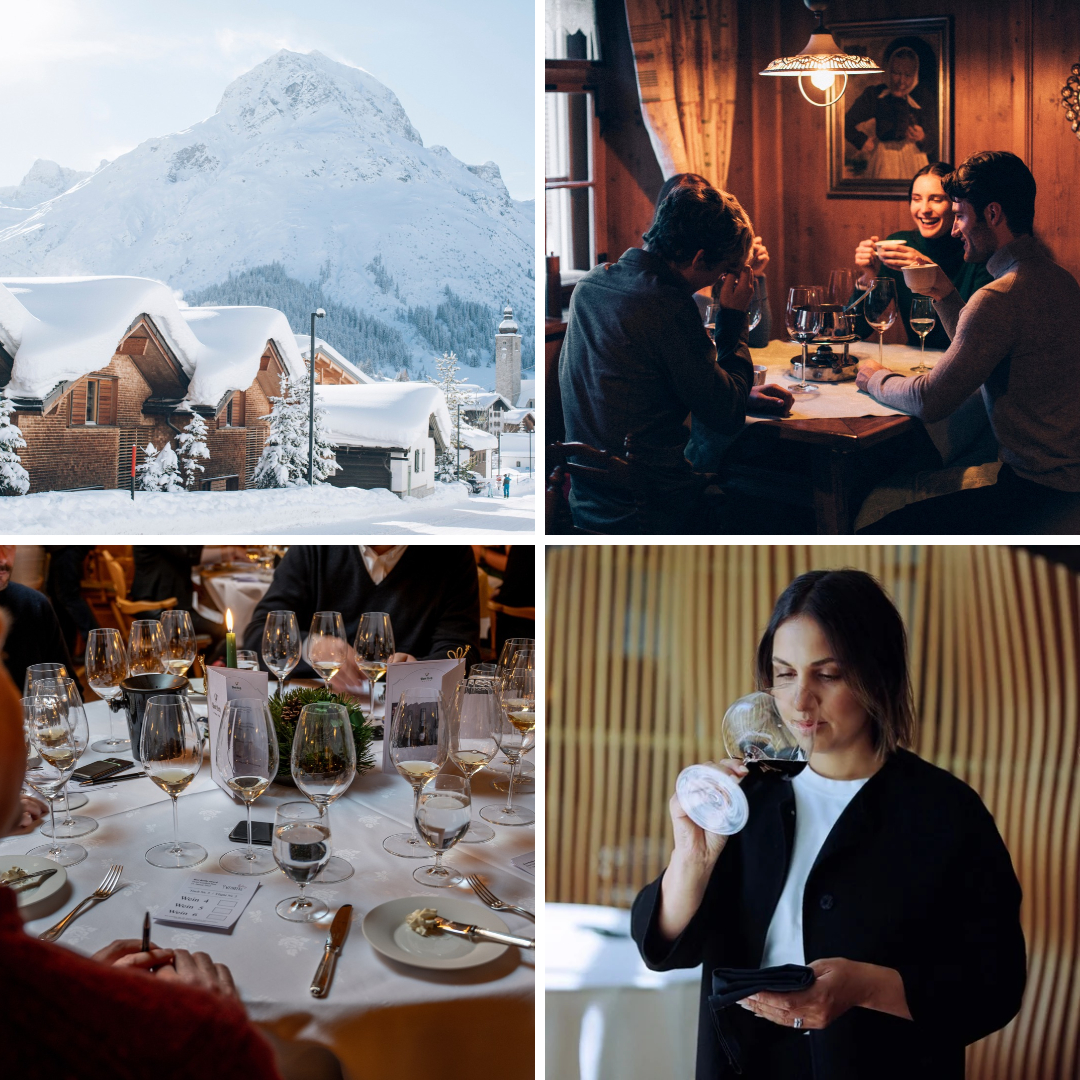
From 3 to 13 December 2026, the Austrian alpine village of Lech am Arlberg will host Weinberg Arlberg, an international gathering bringing together leading winemakers, sommeliers, critics and hospitality professionals for masterclasses, exceptional tastings and discussions about the future of wine.
Amanda will moderate two sessions reflecting themes explored in our conversation: The Luxury of Time: Rare Ports on 6 December, featuring remarkable aged Ports alongside leading Douro producers, and The Future of Riesling on 7 December, examining how climate change, evolving consumer preferences and market developments are shaping one of the world’s most celebrated white grape varieties.
Both sessions offer an opportunity to continue the conversation about wine’s heritage, its relevance to new generations and the importance of looking beyond the glass.
Weinberg Arlberg offers a wealth of insights and learnings for hospitality professionals.
This article is written by our own Niels Aarts. We would like to thank Amanda Wassmer-Bulgin for her time and openness during the interview, and our partner Wine+Partners for setting up the meeting. Picture credits: Wine+Partners, Weinberg Arlberg, Wassmer Family Group and Lukas Lienhard.
Join our insiders’ list and get exclusive early access to new articles, expert tips, and fresh reviews delivered straight to your inbox. Subscribe now and be the first to discover!