Join Our Wine Journey – Sign Up for the Newsletter 🍷
Argentina Uncorked, A Country Redrawing Its Own Map
Share
Deel op X (twitter)
LinkedIn
WhatsApp
Argentina Uncorked, A Country Redrawing Its Own Map.
Argentina’s wine map is being redrawn, and not by rejecting what came before it. For two decades, the country’s export identity has rested on Mendoza and Malbec – reliable shorthand, but incomplete even on its own terms. A recent tasting at the Embassy of Argentina’s residence in Wassenaar, hosted jointly with Dutch importer The New Bunch under the banner Argentina Uncorked, brought together twelve producers; ten of them, tasted in depth, trace a single argument running underneath Argentine wine as a whole.
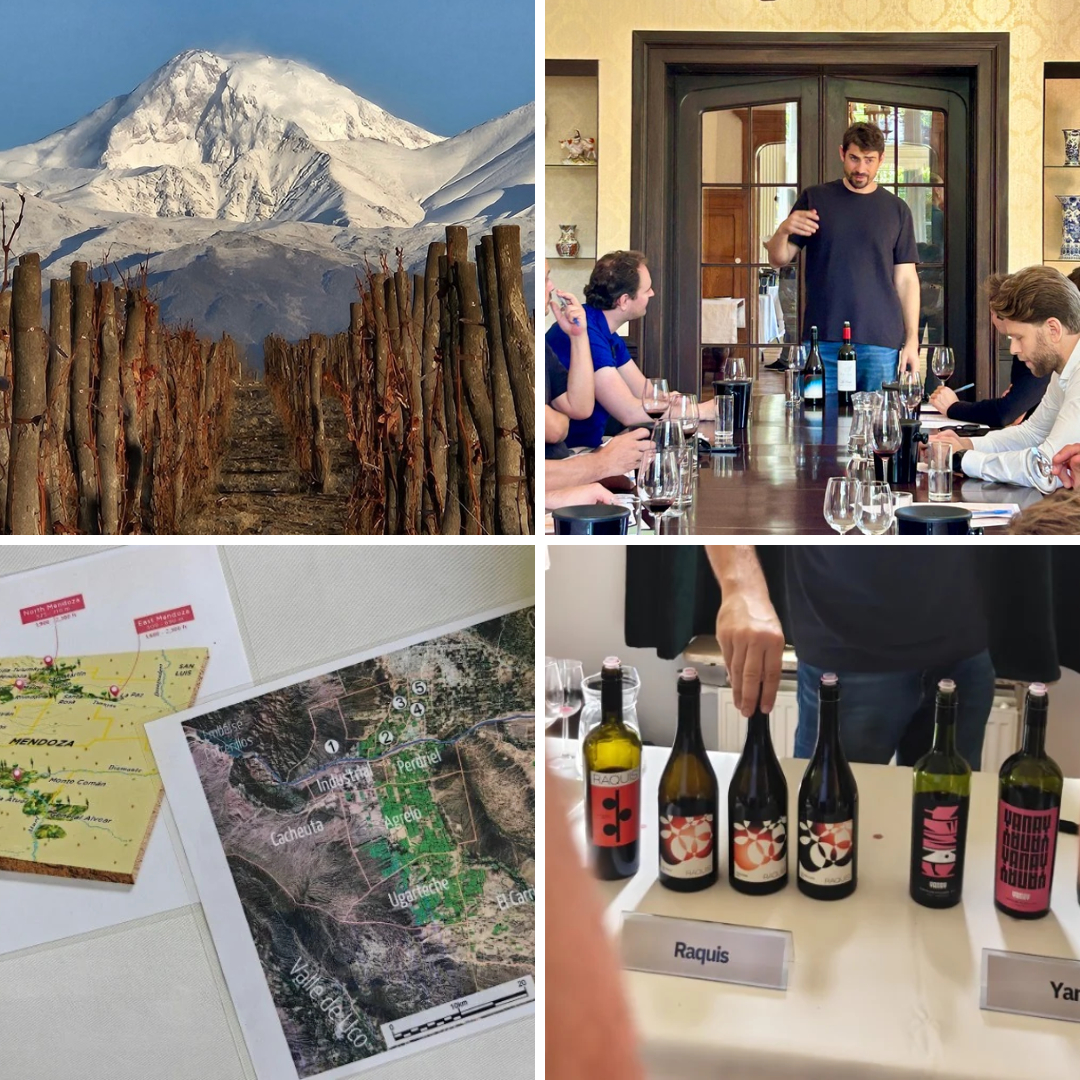
The Embassy of Argentina’s residence in Wassenaar, where Argentina Uncorked brought twelve producers together under one roof.
Unlike most of the Old World, Argentina has almost no rulebook forcing a producer to justify an unconventional choice of site or grape – no appellation committee deciding what counts as typical, no centuries of consensus to depart from or defer to. What these ten producers share is not a region, a grape or a generation, but what each has done with that absence: some have fragmented a known landscape into ever-smaller units; others have simply gone to places no rulebook ever reached in the first place. The ambassador opened proceedings with a short word of welcome, framing Argentina as a country of contrasts – a fitting cue for what followed.
Mendoza Reimagined
Argentina’s freedom from a rulebook plays out differently depending on whether there is anything established to begin with. Where nothing exists yet, freedom simply means building from nothing. Mendoza is the exception, because Mendoza already built something real: over a century of Malbec, tied to a name and a reputation that carries weight internationally. Even here, though, nothing forces a producer’s hand. No committee decides whether a house stays traditional or breaks from it; no authority intervenes if a plot of land gets divided into ever smaller pieces, or if a cellar bends a rule nobody is enforcing in the first place. What a producer owes that tradition is entirely theirs to decide: protect it whole, divide it into pieces, or work around it altogether.
Mendoza is the one region in Argentina that already had a tradition to reckon with, and Escorihuela Gascón sits at the very start of it – if only as its exception. Founded in 1884, it is still the oldest working winery in the city of Mendoza, and its regular Malbec carries a claim not many bottles can make: this was the first pure varietal Malbec ever bottled in Argentina, released by the estate in the 1940s. That history is precisely why Gascón holds so tightly to it. A house that invented the tradition has more reason than anyone to protect it, and less reason than anyone to go looking for something smaller or stranger underneath it.
Escorihuela Gascón Malbec 2023 – Intense from the first sip, dark fruit pushed forward with real concentration behind it. Tannins stay light, though, offering little frame to hold that intensity, so the fruit runs a touch loose rather than carrying through to the finish. Dangerously easy to keep drinking, but short on the grip that would turn pleasant into memorable.
DWA-Score: 90/100
Where Gascón chose to guard the tradition whole, Durigutti chose to split it. Founded in 2002 by brothers Héctor and Pablo Durigutti, the estate spent its early years buying back forgotten, century-old vineyards along Las Compuertas, a stretch of land barely a few kilometres wide west of Luján de Cuyo. Once they started paying attention, they found not one terroir but five: their Proyecto Las Compuertas Malbec – tellingly labelled “5 Suelos” – separates fruit grown across five distinct soil types within that same small corridor, from deep clay and limestone to stony riverbed deposits, fermenting each separately before blending. Sixty years after Gascón fixed Malbec’s national identity, Durigutti was already proving that identity was never uniform to begin with.
Durigutti Proyecto Las Compuertas Malbec ‘5 Suelos’ 2023 – Super soft, full and ripe, with none of the grip you might expect from Malbec at this level. Each of the five soils ferments separately in concrete eggs before blending, leaving no oak imprint – just plum and strawberry fruit rounded off by silky, polished tannins. Roundness by design, built for immediate pleasure over structure.
DWA-Score: 93/100
A short distance north, in the Uco Valley, an entire district is now making the same discovery at a larger scale. Gualtallary, a high pocket of the valley, contains a small zone known locally as Monasterio, where soils run to nearly half calcium carbonate by weight – several times the concentration found elsewhere in the district – and where international critics have started using the words “grand cru” without much hedging. An entire district is now arguing what Durigutti argued at the scale of a corridor: that even one grape, in one valley, can mean several genuinely different things depending on which few hundred metres of ground it came from.
Mendoza’s vinegrowing valleys, mapped by altitude: the Uco Valley climbs to 1,610 metres, more than three times the province’s lowest-lying zones.
Within Monasterio itself, PerSe adds a second kind of evidence to that same argument: scarcity, rather than variation. The estate makes wine from just 2.2 hectares split into parcels as small as 312 vines – one barrel’s worth. Its flagship, La Craie, was only the third wine from Gualtallary ever to receive a perfect Wine Advocate score, yet the estate keeps production small enough that most of what it makes never reaches export markets at all. Volare, the wine we tasted, comes from that same tiny vineyard, and is itself made in quantities of only a few thousand bottles a year. A district can be divided by soil, as Durigutti’s five soils show at the scale of a corridor; PerSe shows how narrow that division can be made before there is almost nothing left to bottle.
PerSe Volare del Camino Gualtallary2022 – Imposing from the first sip: full and thick, with a density that coats everything in its path. Real structure sits underneath, so the weight carries bones rather than mass, and the finish runs on far longer than expected. Scarcity never makes a wine good on its own, but this one earns the fuss.
DWA-Score: 94/100
That same freedom reaches further than soil. Escala Humana, another Mendoza producer in the tasting, applies it to the vine list rather than the cellar. Founder Germán Masera works two small plots in El Zampal, a corner of the Uco Valley where a handful of fourth- and fifth-generation growers once planted vine cuttings brought over from Europe and then, largely, forgot about them. One of his vineyards is a 70-year-old, pergola-trained planting of Bequignol, a light-bodied red variety from southwest France now close to extinction everywhere except here; the other grows Malvasia, a white variety just as scarce in Argentina. Masera has said there is barely any literature on Bequignol left to consult, which leaves him working from the vines themselves rather than from precedent. A Chenin Blanc rounds out the range – itself no obvious choice, since plantings in Argentina remain small next to the grape’s strongholds in the Loire and South Africa. None of the three wines behaves like a curiosity for its own sake; each carries the kind of textural conviction that suggests the choice was a genuine decision, not a gimmick.
Escala Humana Livverá Chenin Blanc 2024 – White blossom on the nose, then orchard fruit – pear, a touch of green apple – in a register that leans far more Loire than South Africa. No tropical weight, no oak flourish: just a taut, low-alcohol line running from attack through to the finish. Old pergola vines in Valle de Uco favour tension over volume here. Not a wine of great depth, but honest, focused and very well drawn.
DWA-Score: 90/100
One more name belongs inside Monasterio before this argument moves elsewhere. Raquis was founded by Andrés Vignoni, together with fellow Viña Cobos veterans Facundo Impagliazzo and Ariel Núñez Porolli, and it poured three single-vineyard wines side by side: Gualtallary, San Pablo and Los Chacayes. The contrast between them is not a matter of house style; it maps onto real, documented differences between the sites themselves. Gualtallary’s rocky, calcareous ground, climbing toward 1,600 metres, tends toward wild herb and floral lift carried by a mouth-watering, almost electric acidity. San Pablo, the valley’s coolest and highest subzone, pushes instead toward a more vertical, mineral tension. Los Chacayes, planted on granite and quartz-rich alluvial soil, is generally associated with deeper colour and higher natural acidity than either neighbour. Three wines, one winemaker, one vintage – and three genuinely different outcomes. Fragmentation this fine is not a stylistic flourish; it is what happens when nothing requires a producer to stop dividing a place once he has started. Raquis takes the instinct that guards Gascón and splits Durigutti’s corridor and pushes it as far as a single vineyard can be pushed before there is nothing smaller left to bottle separately.
Raquis Gualtallary 2023 – Red cherry and blackberry on the nose, dried herbs threaded through a chalky, mineral edge. Full and rich on the palate, layered with oak so well-judged it reads as polish rather than power. The finish is where it delivers most: enormous, unrolling long after most wines from this region have faded. Concentration and complexity run start to finish without a weak link.
DWA-Score: 95/100
No authority in Mendoza required Vignoni to draw these distinctions this finely. Gualtallary’s growing reputation gave him reason to, but nothing resembling a rule did – the same absence of obligation that runs through Gascón’s decision to hold firm, Durigutti’s decision to divide a corridor, and PerSe’s decision to divide it further still. Vignoni, it turns out, is testing that same freedom twice over. A few hundred kilometres north, in a valley with no wine history left to fragment, he applies it not to a place with too much tradition, but to one with none at all.
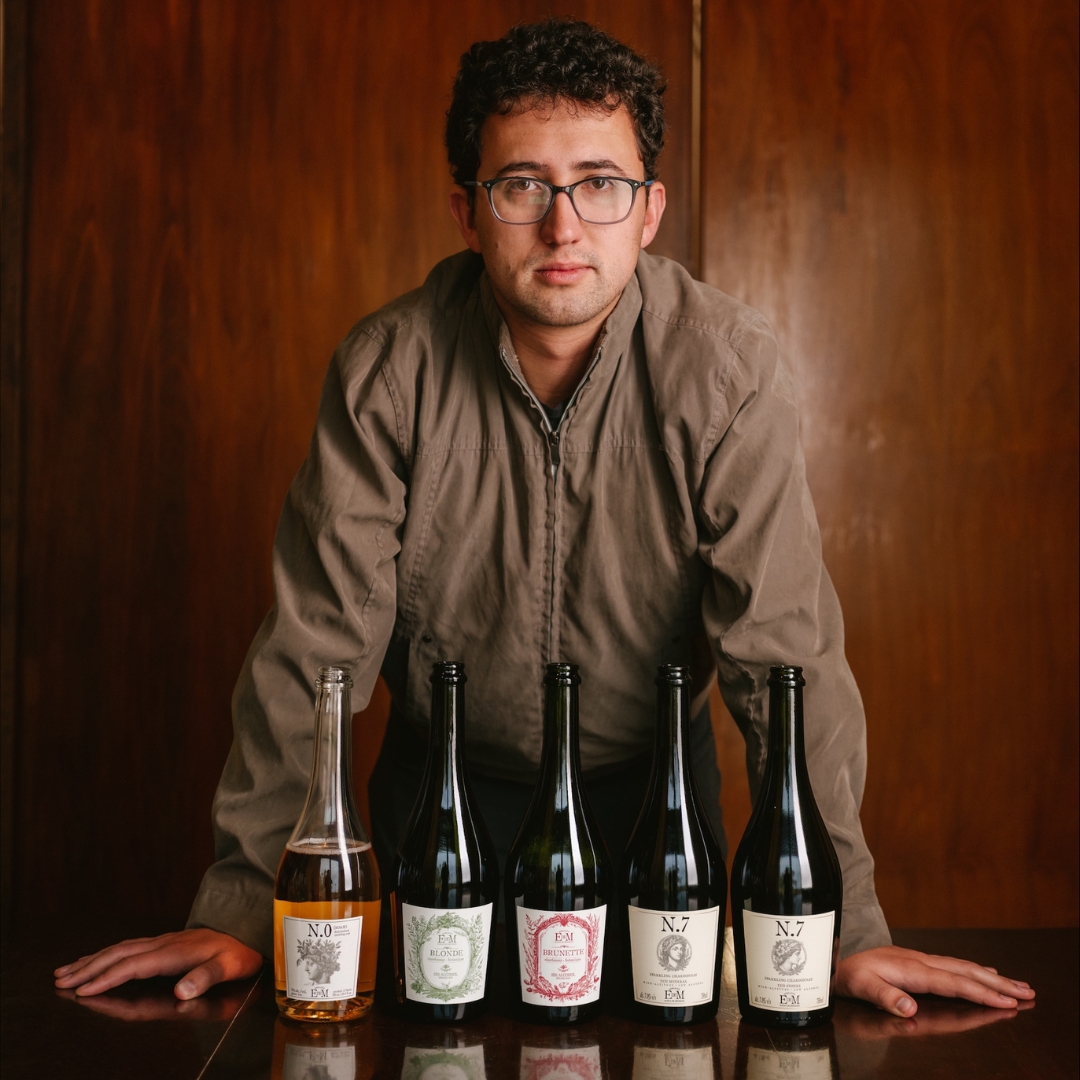
Andrés Vignoni’s two projects, side by side on the tasting table: Raquis dividing an established tradition, Yanay starting with none.
The Edges of the Map
In the Quebrada de Humahuaca in Jujuy, Vignoni applies that same freedom to a valley with no wine history left to fragment, because there was never enough of one to begin with. The vineyard sits at close to 2,300 metres – among the highest in the world – and is split into two sectors: one planted to Bordeaux varieties, the other, La Diabla Sur, given over entirely to Rhône varieties. The choice was not stylistic. Rhône grapes were planted specifically as an answer to the Quebrada’s extreme climate – scarce rainfall, punishing sun, a valley that tests any variety not built to withstand it – and the results exceeded what they had expected. The GSM grown there answers to nothing but that climate. In Mendoza, the same decision would have to reckon with a hundred years of Malbec orthodoxy first.
Bodega Yanay GSM 2024 – Red fruit arrives first, generous and open, before giving way to darker tones, then pepper and spice pushing through at the back. Crunchy in texture, with real energy running underneath. What stands out most is the movement: distinct phases rather than one flat profile, giving it a complexity most GSM blends never quite reach.
DWA-Score: 92/100
Moving south, into Patagonia proper, the same freedom takes a different shape again: not building from nothing, but reviving what had been left for dead. Riccitelli’s winery and most of his vineyards sit in Mendoza, but in 2015 he started a separate project in Río Negro, built around own-rooted vines planted in the 1960s and largely forgotten since. His Semillon 2024 and Flor 2022 both come from that project, sourced from plots so far outside fashion that returning to them counted as recovery rather than discovery. Once he had the fruit, Riccitelli treated it with the same freedom running through everything else here. His Semillon 2024 carries a fifteen percent addition of the 2022 vintage, undeclared on the label. His Flor 2022 goes further still: fifteen percent of the wine comes from a solera that itself stretches back to 2015, aged for years under a veil of flor before ever reaching this blend. Neither addition is a technical necessity – both are choices, made possible because nothing in Argentina’s regulatory framework forces him to declare them.
Matías Riccitelli Flor 2022 – Funky and pungent on the nose, brioche and dried lemon with a crackery edge that flor ageing tends to bring. The base wine gives it backbone, keeping that funk lively rather than tipping into sherry-flat, and the palate carries a bit of wildness alongside real precision. Distinctive, well conceived, and properly rewarding to sit with over a glass.
DWA-Score: 93/100
Riccitelli’s Flor 2022 – old-vine Semillón from Río Negro, aged under flor in a solera stretching back to 2015.
Further south still, in Chubut, the same freedom stops being a choice at all. Casa Yagüe and Contra Corriente both work out of Trevelin, a valley at 43 degrees south, among the southernmost vineyards anywhere in the world, hemmed in by the Andes on one side and Patagonian wind on the other – a full latitude further from Mendoza than Riccitelli’s Río Negro plots. Between them, the two estates inherited no regional style to work within, because until recently there was no wine here at all. Casa Yagüe’s Chardonnay and Sauvignon Blanc carried a flavour profile some distance from what either grape typically delivers – lower alcohol, a lifted, almost saline freshness, and an acid structure that read as far more extreme than the modest 330-metre elevation of the vineyard would suggest. Contra Corriente told a similar story through Pinot Noir and Gewürztraminer: taut, cool-climate wines shaped by a diurnal swing severe enough to keep ripening slow through an entire growing season.
Casa Yagüe Sauvignon Blanc 2024 – Smoke and flint set the tone well before any of the usual varietal signals arrive: no tropical fruit, none of the green pungency you brace for. What comes instead is sharp, clean citrus, and something distinctly appley running across the palate. Atypical and deliberately so, far closer to a cool, mineral white than to a recognisable Sauvignon Blanc.
DWA-Score: 90/100
What these three cases prove, at increasing distance from Mendoza, is that the same question answers itself differently depending on what is missing. In Jujuy, Vignoni had no orthodoxy to answer to, so he built one from scratch, deliberately, variety by variety. In Río Negro, Riccitelli found old vines that Argentina’s own wine industry had stopped paying attention to, and simply picked up where that history had been left off. In Chubut, there was not even a deliberate choice involved: with no local style to defer to, the climate itself took over the job of deciding what these grapes taste like. Between them, Yanay, Riccitelli’s Patagonia project and the two Chubut estates map the full range of what happens once the rulebook disappears – from building a new one out of nothing, to reviving an old one nobody else wanted, to a landscape enforcing that freedom whether anyone intended it or not.
A Country, Not a Formula
What connects the ten producers we tasted, from Escorihuela Gascón’s nineteenth-century cellar to Contra Corriente’s cool Patagonian valley, is not a shared grape or a shared generation but a shared relationship to obligation. Gascón chose to keep it. Durigutti, Raquis and PerSe are all in the process of dividing it into smaller and smaller pieces. Escala Humana bent it toward a grape nobody else in Argentina was bothering to plant. Riccitelli went further still, and revived a version of it the country’s own wine industry had already abandoned, in a province of its own. Yanay, Casa Yagüe and Contra Corriente never had it to begin with.
That range of positions is not unique to Argentina; most serious wine countries contain some version of it, from institutional houses to single-parcel radicals to producers pushing the rules as far as they will stretch. What is specific to Argentina is how little any of these ten producers had to negotiate to get there – nothing to conform to, and nothing to rebel against, in order to make the choice they made.
Argentina’s wine map is being redrawn, then, not because a generation of producers has set out to reject an old consensus, the way a modernist movement might define itself against tradition. It is being redrawn because so little of what any of them does requires a consensus in the first place – only the plot of land, the grape, and the choice made in front of it. Twelve producers stood in a room in Wassenaar recently and made twelve different arguments about what Argentine wine currently is. None of them needed to defeat the others to be right.
The ambassador opens Argentina Uncorked by calling the country one of contrasts – a frame the wines on the table spent the rest of the afternoon filling in.
This article is written by our own Onno Deumer. With sincere thanks to the Embassy of Argentina in the Netherlands for hosting Argentina Uncorked, and to The New Bunch for assembling a portfolio ambitious enough to carry the argument this piece makes.
Special thanks to Andrés Vignoni, who poured his own wines from both Raquis and Yanay in person and spoke openly about both; and to the producers whose wines made this possible.
Join our insiders’ list and get exclusive early access to new articles, expert tips, and fresh reviews delivered straight to your inbox. Subscribe now and be the first to discover!