Join Our Wine Journey – Sign Up for the Newsletter 🍷
Jean Stodden – The Art of Spätburgunder in the Ahr Valley
Share
Deel op X (twitter)
LinkedIn
WhatsApp
Jean Stodden – The Art of Spätburgunder in the Ahr Valley.
Germany’s reputation as a great wine-producing country has traditionally been built around Riesling, but over the past decades its red wines have increasingly attracted international attention. Spätburgunder, the German name for Spätburgunder, has become an important part of this development, with producers demonstrating that the variety can deliver wines of remarkable finesse, complexity and ageing potential well beyond its traditional home in Burgundy.
Few German wine regions illustrate this development quite as convincingly as the Ahr Valley. Situated south of Bonn, this small winegrowing area has established a reputation for producing some of the country’s finest Spätburgunders, despite its northern location and the challenges of cultivating vines on exceptionally steep slopes.
Among the estates that have contributed to this reputation is Weingut Jean Stodden, a family-owned winery in the village of Rech. With a history stretching back several centuries, the estate has developed a distinctive approach to red wine, combining concentration and structure with the refinement that makes Spätburgunder such a fascinating grape.
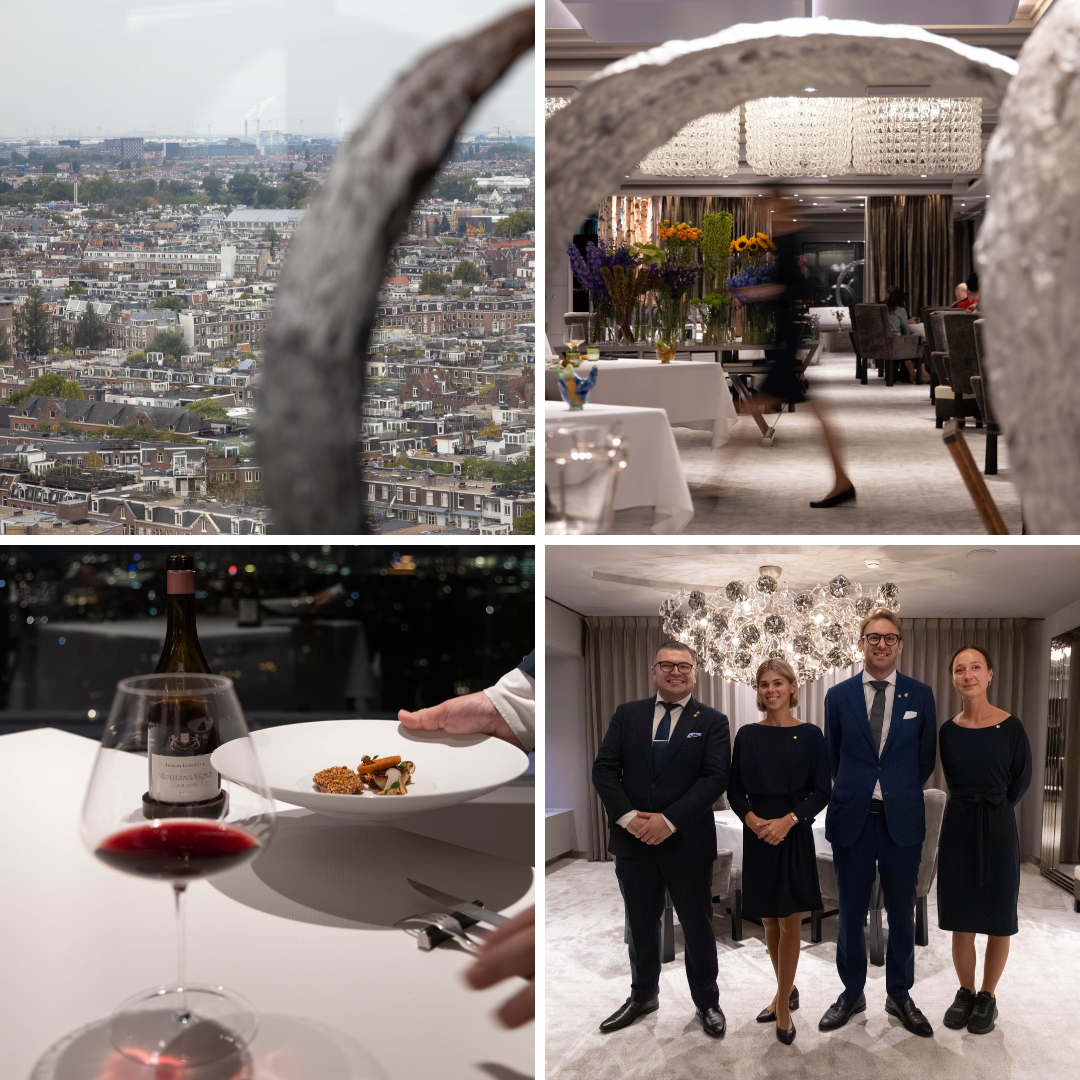
Earlier this year had the pleasure of exploring this philosophy during an exceptional lunch at The White Room in Amsterdam, where Alexander Stodden joined us to present eight wines from the family estate. Located within the historic Anantara Grand Hotel Krasnapolsky, overlooking Dam Square, The White Room provided an elegant setting for an afternoon dedicated to the wines of the Ahr.
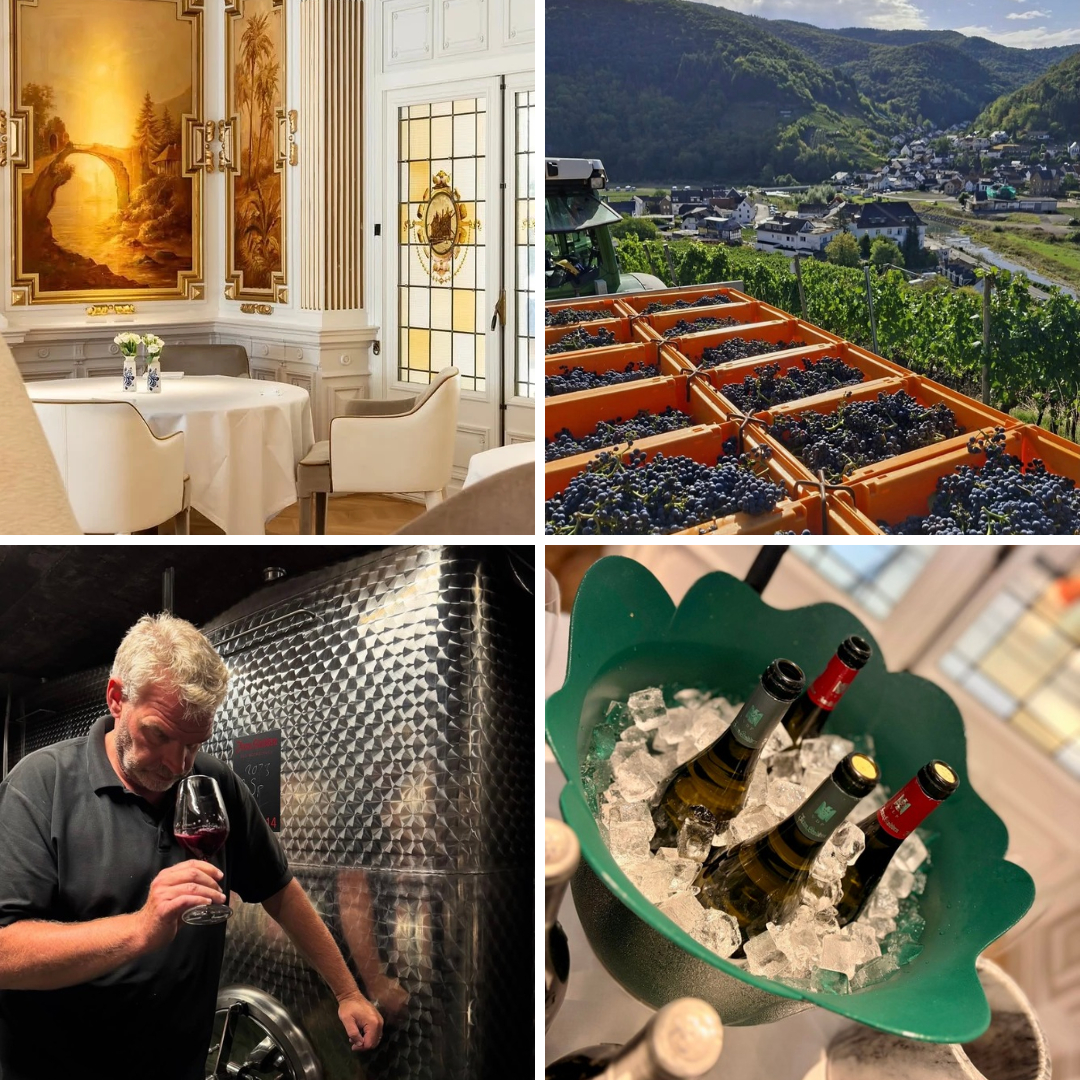
Frederico Figueiredo, Sommelier of the White Room.
An important contribution to the experience came from sommelier Frederico Figueiredo, who worked closely with the winery and The White Room’s kitchen to develop the food and wine pairings. Rather than simply selecting dishes to accompany the wines, the collaboration resulted in a carefully considered menu in which two wines were presented with each course. This allowed us to explore not only the differences between grape varieties, vineyards and vintages, but also how individual wines responded to the ingredients and preparations on the plate.
With Alexander sharing the story behind the wines and Frederico guiding the dining experience, the afternoon offered a fascinating introduction to the Ahr Valley, its distinctive terroir and the philosophy of one of its most respected producers.
The Ahr Valley – An Unexpected Home for Great Spätburgunder
For many people outside Germany, the Ahr Valley became familiar following the devastating floods of July 2021. The disaster had an enormous impact on the region and its inhabitants, including many winegrowers whose vineyards, cellars and infrastructure suffered extensive damage. Yet the valley’s identity as a wine region reaches back more than a thousand years, and its viticultural history tells a story of perseverance and adaptation long before those tragic events.
The region takes its name from the river Ahr, which originates in the Eifel mountains and flows approximately 89 kilometers before joining the Rhine. Along its course, the river has carved a narrow valley whose steep slopes have provided a home for vines for centuries.
With around 545 hectares under vine, the Ahr is one of Germany’s smallest winegrowing regions. Its modest size contrasts with its importance for red wine, which accounts for approximately 87% of vineyard plantings. Spätburgunder dominates, supported by smaller quantities of Frühburgunder and other varieties, making the valley something of an exception in a country historically associated with white wine.
The first written references to viticulture in the region date back to 893. Red varieties have been cultivated here for centuries, although their use has changed considerably over time. Historically, some were made into pale wines known as Ahrbleichert, produced with limited extraction of colour from the grape skins. The principle is not entirely unfamiliar to today’s wine drinkers, as Blanc de Noir follows a comparable approach to producing white wine from dark-skinned grapes.
What makes the Ahr particularly remarkable is its geography. Located around the 50th parallel north, the region might initially seem too cool for producing ripe, structured red wines. However, the surrounding Eifel hills protect parts of the narrow valley from cold winds, while steep, south-facing slopes benefit from prolonged exposure to sunlight.
The rocky soils also contribute to the growing conditions. Dark slate, together with greywacke and other geological formations, absorbs warmth during the day and releases some of that heat as temperatures fall. These conditions help support grape ripening, while the region’s relatively cool climate allows the fruit to retain the acidity that is so important to Spätburgunder.
The result is a landscape capable of producing wines with both ripeness and tension, although the precise expression varies considerably between vineyard sites. Exposure, elevation, soil composition and the shape of the valley all influence the character of the fruit.
Cultivating these vineyards requires considerable effort. Many vines grow on narrow terraces or steep slopes where machinery is difficult to operate, leaving much of the pruning, vineyard maintenance and harvesting to be carried out by hand. This demanding form of viticulture is part of the region’s identity, and it also helps explain why producers place such emphasis on the quality of the fruit.
For an estate such as Jean Stodden, whose reputation rests on carefully selected vineyard parcels and mature vines, these conditions are fundamental to the wines it produces.
Jean Stodden – A Family’s Commitment to Red Wine
The Stodden family’s involvement in viticulture dates back to 1578, making it one of the longstanding winegrowing families of the Ahr. Although the family had cultivated vines for generations, the commercial bottling and sale of wines under the family name began around 1900.
Over time, the estate developed a particular commitment to red wine. At a period when many German reds were produced in relatively soft styles, sometimes with residual sweetness, Alexander’s grandfather pursued a more ambitious direction, concentrating on dry wines with structure and the potential to develop in bottle.
This approach helped establish the foundations of Jean Stodden’s reputation, although the interpretation of Spätburgunder has naturally evolved with successive generations.
Alexander Stodden, who represents the fifth generation, gained experience in South Africa and Oregon before assuming responsibility for the family estate. His time abroad exposed him to different approaches to Spätburgunder, a variety whose sensitivity to growing conditions and winemaking decisions makes it particularly rewarding, but also demanding, to work with.
Alexander Stodden, representing the 5th generation at Weingut Jean Stodden.
At Jean Stodden, Alexander has continued the family’s pursuit of quality while placing greater emphasis on the purity of the fruit and a more restrained expression of oak. Rather than relying on pronounced extraction to create powerful wines, his approach seeks to preserve the character of the grapes and the individual vineyards.
Achieving this begins well before the harvest. The estate pays close attention to pruning and yield management, including green harvesting when necessary to remove selected grape bunches during the growing season. By reducing the crop, the remaining fruit can achieve more even ripeness and greater concentration.
The age of the vines also plays an important role. Many of the estate’s vineyards contain mature plantings, with an average vine age of around 45 years, while certain parcels are considerably older. Their naturally restricted yields and established root systems contribute to the quality of the fruit, particularly in the demanding conditions of the Ahr’s steep vineyards.
Today, the estate cultivates approximately ten hectares, the vast majority planted with Spätburgunder. Frühburgunder accounts for a smaller but significant proportion, while Riesling occupies only a limited area.
The floods of 2021 left their mark on the winery and its future. In addition to the immediate damage suffered throughout the region, the disaster affected access to parts of the estate’s vineyards. Alexander explained during the tasting that reaching the remaining white-wine vineyard has become particularly difficult, and he has no plans to expand the estate’s white plantings. Instead, his attention remains firmly directed towards the red varieties for which Jean Stodden is best known.
Vineyards That Shape the Wines
One of the estate’s most important sites is Recher Herrenberg, a steep vineyard dominated by slate soils and recognized among the Ahr’s finest locations. Its favorable exposure and demanding terrain provide the conditions for producing wines of considerable depth.
The estate also possesses exceptionally old vines, including ungrafted plantings that have survived for approximately a century. Such vines represent a valuable connection to the region’s viticultural past, and the wines produced from their fruit are among the most sought-after expressions in the Jean Stodden portfolio.
Other important vineyard sites include Mayschoßer Mönchberg, Bad Neuenahrer Sonnenberg and Hardtberg, each bringing different growing conditions to the estate’s range.
Harvest in the Vineyards, overlooking the Ahr Valley.
The distinctions between these sites are particularly interesting when the wines are tasted alongside one another. Spätburgunder is remarkably sensitive to its environment, and even within a relatively small region, differences in exposure, soils and vine age can produce noticeably different results.
During our lunch, this diversity became increasingly apparent as we moved from the estate’s more approachable wines towards its single-vineyard expressions and older vintages.
Exploring Jean Stodden at The White Room
The White Room, with its historic interior and contemporary approach to fine dining, provided a fitting setting for the tasting. The restaurant’s kitchen had prepared a menu that moved from delicate opening bites to more substantial dishes, with two Jean Stodden wines accompanying each stage.
The White Room, awarded with a Michelin Star and one of Amsterdam’s most iconic dining locations.
The pairings were the result of a collaboration between sommelier Frederico Figueiredo, the winery and the kitchen. This joint approach was particularly interesting, as it allowed the menu to be developed around the character of the wines while still giving the ingredients and culinary preparations their own identity.
Throughout the lunch, Frederico’s knowledge and attentive hospitality added another dimension to the experience. His understanding of the wines and their interaction with food encouraged us to look beyond the individual tasting notes and consider how acidity, texture, fruit and structure could influence the way a dish was perceived.
What made the format especially enjoyable was the opportunity to revisit each glass as the food arrived. Certain characteristics became more pronounced alongside a dish, while others softened or developed in unexpected ways. The lightly smoked beetroot with verjus, for example, provided a fascinating combination with the estate’s younger Spätburgunders, while the lamb and Thai-inspired salad proved an excellent match for the more structured Hardtberg.
With Alexander providing the perspective of the winemaker and Frederico connecting the wines to the kitchen’s creations, the lunch became more than a presentation of individual bottles. It offered a broader understanding of the estate’s philosophy and the versatility of its wines at the table.
The first wines offered an intriguing introduction, not least because neither represented the red-wine style for which Jean Stodden is most famous.
An Unexpected Beginning with Riesling and Blanc de Noir
We opened with the 2022 Jean Stodden Cuvée de Blanc (94/100 DWA score), a wine that immediately challenged our expectations of German Riesling.
Rather than emphasizing the grape variety on the label, Alexander chose the name Cuvée de Blanc, encouraging people to approach the wine without preconceived ideas. Although made entirely from Riesling, its style is quite different from the fresh, linear expressions commonly associated with the variety.
The wine was barrel-fermented, spent twelve months in oak and underwent full malolactic fermentation, resulting in additional texture and a broader aromatic profile.
In the glass, we discovered yellow plum, lemon, pineapple and fresh garden herbs, followed by subtle notes of white pepper. The palate was generous and rounded, yet retained sufficient acidity to keep the wine lively. Its elegant, persistent finish made it a fascinating example of how Riesling can respond to a different approach in the cellar.
Alongside it, the 2025 Jean Stodden Blanc de Noir (93/100 DWA score) offered an entirely different experience.
Made from Spätburgunder grapes, the wine illustrates the principle of producing white wine from red fruit. By separating the juice from the skins before significant colour extraction, the winery obtains a pale wine that retains some of the grape’s delicate aromatic characteristics.
Almost colorless in the glass, it revealed white peach, apple, a hint of raspberry and delicate floral notes reminiscent of violets. Its crisp acidity and energetic character provided a striking contrast to the richer Riesling, while the finish was clean and refreshing, with a mineral impression.
Jean Stodden, known for world class reds, also presented some stunning whites this afternoon.
The kitchen accompanied the wines with three small bites: a savoury macaron with tuna, dashi and shiso, a pumpkin rouleau with cardamom ice cream, and a preparation of potato, cavolo nero and cumin.
These opening combinations introduced the variety of textures and flavours that would continue throughout the lunch. They also demonstrated that, although Jean Stodden is primarily associated with red wine, the estate’s limited white-wine production deserves attention in its own right.
The First Spätburgunders – From Approachability to Complexity
Our first substantial course was built around lightly smoked beetroot, accompanied by blueberry, aged Remeker cheese and a verjus dressing.
The dish brought together earthy sweetness, savoury depth and refreshing acidity, making it an interesting partner for two Spätburgunders with different levels of concentration and oak influence.
We began with the 2023 Jean Stodden VDP Gutswein Spätburgunder (94/100 DWA score), the estate’s foundational red wine.
Despite its position at the beginning of the range, the wine immediately demonstrated the quality of the fruit and the precision of the winemaking. Aromas of sour cherries, wild strawberries and summer raspberries gave it an inviting character, supported by fine tannins and a lively palate.
The combination with the beetroot worked particularly well. The fruit complemented the natural sweetness of the vegetable, while the acidity provided a pleasant crispness in the aftertaste. It was a pairing in which neither the food nor the wine dominated.
The 2022 Jean Stodden Spätburgunder JS (94/100 DWA score) introduced greater depth and a more pronounced influence from oak ageing.
Sourced from selected vineyard parcels and matured for sixteen months in small French oak barrels, the wine showed aromas of dark cherries, blackcurrants, fresh mint and smoky wood. The palate was fuller and more layered than the Gutswein, with silky tannins and a long, stony finish.
What stood out was how well the oak had been integrated. Although its influence was clearly present, it supported the fruit rather than overshadowing it, allowing the wine to retain its characteristic refinement.
With the beetroot and verjus dressing, an interesting peppery sensation emerged, adding complexity to the pairing and illustrating how the acidity of the food could influence our perception of the wine.
Tasting these two wines together provided a useful introduction to the estate’s range. The Gutswein was immediately accessible and driven by bright red fruit, while the JS offered additional layers and a more substantial structure. Both reflected the same careful approach to Spätburgunder, expressed at different levels of complexity.
The Wine Selection for the Afternoon.
Herrenberg – Two Expressions from One Remarkable Vineyard
The next course featured peas prepared on the barbecue, beurre noisette, pistachio and a sauce made with bergamot orange.
The smoky character of the peas, richness of the browned butter and citrus notes of the bergamot created an unusual combination, particularly when paired with two wines from Recher Herrenberg.
The first was the 2022 Jean Stodden Recher Herrenberg GG Frühburgunder (94/100 DWA score).
Frühburgunder, also known as Pinot Madeleine, is an early-ripening mutation of Spätburgunder. Although closely related to Spätburgunder, it has its own characteristics, often producing wines with an attractive aromatic profile and delicate texture.
Because the variety ripens earlier, vineyard exposure is particularly important. At Jean Stodden, it is planted on cooler, east-facing parcels of Herrenberg, where the growing conditions help preserve acidity and avoid excessive ripeness.
The wine opened with ripe cherries, wild berries and blueberries, followed by cedar, violets and subtle aromas of damp forest floor. On the palate, it was harmonious, with carefully integrated oak and a refined texture that allowed the fruit to remain at the center of the experience.
It was one of the more surprising wines of the afternoon, demonstrating the potential of a variety that is still relatively unfamiliar to many international wine drinkers.
We then moved to the 2019 Jean Stodden Recher Herrenberg GG Spätburgunder (95/100 DWA score), which showed a more mature and complex expression of the vineyard.
The 2019 vintage produced wines of impressive quality in many German regions, and this bottle illustrated the combination of ripe fruit and preserved acidity that made the year so successful.
Aromas of cherries and plums were accompanied by a delicate hint of liquorice, while cocoa, coffee and subtle smoky notes reflected the wine’s nineteen months of barrel ageing.
The palate was beautifully composed, with depth and concentration supported by a freshness that carried the flavours through a long finish. The oak had become part of the wine’s overall structure, contributing complexity without drawing attention away from the fruit.
For us, this was one of the standout glasses of the lunch.
The comparison between the two Herrenberg wines was especially rewarding. Although both originated from the same renowned vineyard, their different grape varieties and vintages produced distinct personalities. The Frühburgunder offered a more delicate, aromatic expression, while the Spätburgunder revealed greater depth and the additional complexity that comes with maturity.
Together, they demonstrated why Herrenberg occupies such an important position within the estate’s portfolio.
Hardtberg and Alte Reben – A Fitting Conclusion
For the main course, the kitchen served perfectly cooked Kamperland lamb, accompanied by a Thai-inspired salad and a smooth lamb sauce.
The richness of the meat and the subtle spice of the salad called for wines with sufficient structure and aromatic intensity, and the final two bottles proved more than capable of meeting that challenge.
The 2022 Jean Stodden Hardtberg Spätburgunder (95/100 DWA score) came from a vineyard characterized by a combination of slate and greywacke soils, situated in a sheltered side valley.
Its aromatic profile was immediately appealing, with blueberries, dark cherries and delicate notes of roasted coffee. On the palate, the wine offered ripe fruit, integrated acidity and a long, vibrant finish, with enough structure to accompany the lamb without overwhelming the dish.
What made this pairing particularly memorable was the interaction with the Thai-inspired salad. The fruit character complemented the gentle spice, while the acidity refreshed the palate between bites.
It was a wonderful example of the versatility of Spätburgunder at the table.
The final glass was the 2019 Jean Stodden Spätburgunder Alte Reben (96/100 DWA score), produced from exceptionally old, ungrafted vines growing on steep slate slopes.
These century-old vines are among the estate’s most valuable assets, representing generations of viticultural history and producing fruit with remarkable depth.
The wine was immediately impressive, revealing layers of dark fruit, earthy notes, exotic spices, leather and smoke. Yet despite its concentration, there was nothing excessive about its character.
The palate was complex and beautifully textured, with mature tannins and a long, savoury finish that seemed to continue well after the wine had left the glass. With time, additional nuances emerged, making it a wine that rewarded attention rather than simply delivering an immediate impression of power.
It was a remarkable conclusion to the tasting and, for us, the finest wine of the afternoon.
Ending with the Alte Reben also provided an interesting perspective on everything we had tasted before. The progression from the youthful Gutswein through the different vineyard expressions had gradually revealed the estate’s range, while this final wine demonstrated the complexity and longevity that can be achieved with old vines and careful winemaking.
A Distinctive Expression of the Ahr
As the lunch came to an end, it was the diversity of the wines that stayed with us. We had tasted eight very different expressions from one estate, ranging from an unusually textured Riesling and an energetic Blanc de Noir to several interpretations of Spätburgunder and the less familiar Frühburgunder.
Each wine had its own personality, shaped by grape variety, vineyard origin, vintage and time in the cellar. Yet throughout the tasting, there was a recognisable sense of purpose behind the range. Alexander’s approach allows the fruit and individual vineyard characteristics to remain visible, even in wines with considerable concentration and extended oak ageing.
The experience also reinforced the importance of the Ahr Valley as a region for serious Spätburgunder. Its small size and demanding vineyards may limit production, but they have not prevented its leading estates from achieving international recognition.
Jean Stodden is a compelling example of how generations of knowledge can continue to evolve. The family’s long commitment to red wine provides a strong foundation, while Alexander’s interpretation reflects a contemporary understanding of Spätburgunder and the distinctive conditions of the Ahr.
The barrel cellar at the estate in the Ahr Valley.
The Frühburgunder was an unexpected highlight, and the barrel-fermented Riesling certainly deserves to be discovered by anyone interested in exploring a different side of the variety. But it was the Spätburgunders, particularly the Herrenberg 2019 and Alte Reben 2019, that most clearly demonstrated the estate’s capabilities.
The afternoon also reminded us how much a thoughtfully developed food and wine pairing can contribute to the appreciation of great wines. The collaboration between Frederico Figueiredo, Alexander Stodden and The White Room’s kitchen brought together different areas of expertise, resulting in a lunch in which the food and wines complemented one another without either losing its identity.
Frederico deserves particular recognition for his contribution to the experience. His involvement in developing the pairings, combined with his wine knowledge, attentive service and warm hospitality, helped create an atmosphere in which we could explore the wines in depth while enjoying the kitchen’s excellent preparations. It was a fine example of how a skilled sommelier can connect the work of the winemaker with that of the chef, adding another dimension to the dining experience.
For those who have yet to explore the Ahr Valley, Jean Stodden provides a convincing reason to make the journey. And for anyone who appreciates the combination of thoughtful cuisine, carefully selected wines and knowledgeable hospitality, The White Room demonstrated why such collaborations can make a wine lunch particularly memorable.
This article is written by our own Martijn Coenen in collaboration with Niels Aarts. Our sincere thanks go to Alexander Stodden, of Weingut Jean Stodden, for sharing his wines and the story behind them, and to Frederico and the entire team at The White Room for their hospitality and an outstanding lunch. Picture credits: Weingut Jean Stodden.
Join our insiders’ list and get exclusive early access to new articles, expert tips, and fresh reviews delivered straight to your inbox. Subscribe now and be the first to discover!