Join Our Wine Journey – Sign Up for the Newsletter 🍷
Beyond Alcohol: Dante McDermott Catena on Domaine EdeM and the Future of Wine
Share
Deel op X (twitter)
LinkedIn
WhatsApp
Beyond Alcohol: Dante McDermott Catena on Domaine EdeM and the Future of Wine.
Can a wine without alcohol still deliver the complexity, pleasure and sense of occasion that wine lovers are looking for? For Dante McDermott Catena, fifth-generation member of Argentina’s renowned Catena wine family, the answer is ‘yes’. Through Domaine EdeM, a research-driven project developed by the Catena Institute of Wine, the family is exploring new possibilities for no- and low-alcohol wines. We spoke with Dante about family heritage, scientific innovation, changing consumer habits and why the future of wine may be more inclusive than ever.
Getting to know Dante, the Catena family and Domaine EdeM
Wine has been part of the Catena family’s history since 1902, when the family began producing wine in Argentina. More than a century later, the fifth generation is exploring a different direction: creating wines and wine-inspired beverages with little or no alcohol, while preserving the qualities that make wine enjoyable.
Dante McDermott Catena, son of Laura Catena, represents this new generation. Based in San Francisco, he is responsible for sales, marketing and exports for Domaine EdeM, working alongside winemaker Agustín Silva, who oversees the development and production of the wines.
The project has its roots in a very personal family request.
“The motivation behind the project comes from my grandmother,” Dante explains. “She was the one who first asked us to make something with lower or no alcohol. She wanted something that would be easier to process as she got into her 80s.”
His grandmother, Elena, inspired the name Domaine EdeM, short for Elena de Mendoza. What began as a wish to continue enjoying the ritual of wine without its full alcoholic impact eventually developed into a scientific research project.
Elena Maza and Augustin Silvia, winemaker at the Catena Institute of Wine.
In 2021, the Catena Institute of Wine, founded by Laura Catena in Mendoza in 1995, began investigating the possibilities. The institute brings together expertise in viticulture, wine chemistry and sensory analysis, traditionally focused on improving the quality and understanding of Argentine wines.
“We spent four years researching, trying everything that was on the market and looking at all the different production methods,” Dante recalls. “We felt like this was a very challenging task, especially a challenging task to make a delicious product.”
The family’s first dealcoholized wine was launched in 2025, following several years of experimentation. Today, Domaine EdeM offers different approaches to alcohol reduction, ranging from dealcoholized sparkling wine to botanical aperitifs and sparkling wines with 7% alcohol.
Although the products differ in their production methods, they share a common objective: to offer wine lovers a sophisticated drinking experience without necessarily consuming a traditional glass of wine.
The Philosophy Behind their No- and Low-alcohol Wines
For Domaine EdeM, producing a convincing alcohol-free wine starts with the same principle that has guided the Catena family for generations: the quality of the grapes.
“What we saw when we were first researching the category was that a lot of producers were using low-quality grapes for their no- or low-alcohol wines,” Dante explains. “But the quality of the grapes is essential for making a good dealcoholized wine.”
This conviction distinguishes the project’s philosophy from simply removing alcohol from an existing low-quality wine. The team wanted to understand what makes wine or a wine-alternative taste and feel like wine in the first place. And that begins with high-quality grapes.
At the Catena Institute of Wine, sensory analysis provided an important starting point.
“We felt like we could break wine down from a sensory perspective and be really detailed and specific about the sensations that wine and alcohol were providing. And then, once we were really specific about that, we started talking about how we could replicate those sensations without alcohol.”
Alcohol contributes considerably more than intoxication. It influences the perception of body, texture, warmth and flavour. Removing it inevitably changes the structure of the wine. The challenge is therefore not only technical but also sensory: how can these characteristics be recreated or compensated for?
Interestingly, Dante does not believe that every non-alcoholic product must imitate traditional wine perfectly.
“I really do think it’s a whole different category,” he says. “There are even separations within non-alcoholic wine, which is the dealcoholized wine versus the wine alternatives.”
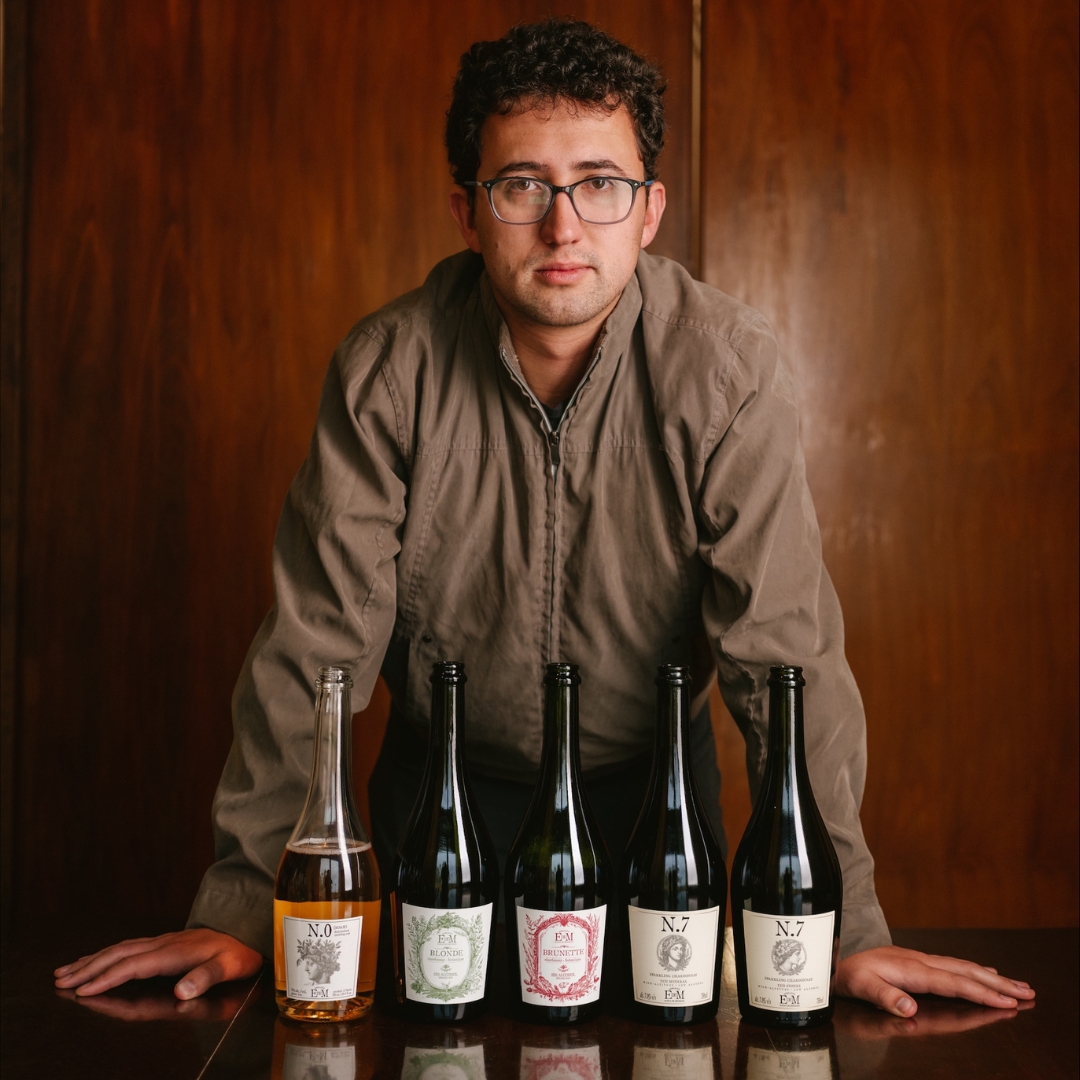
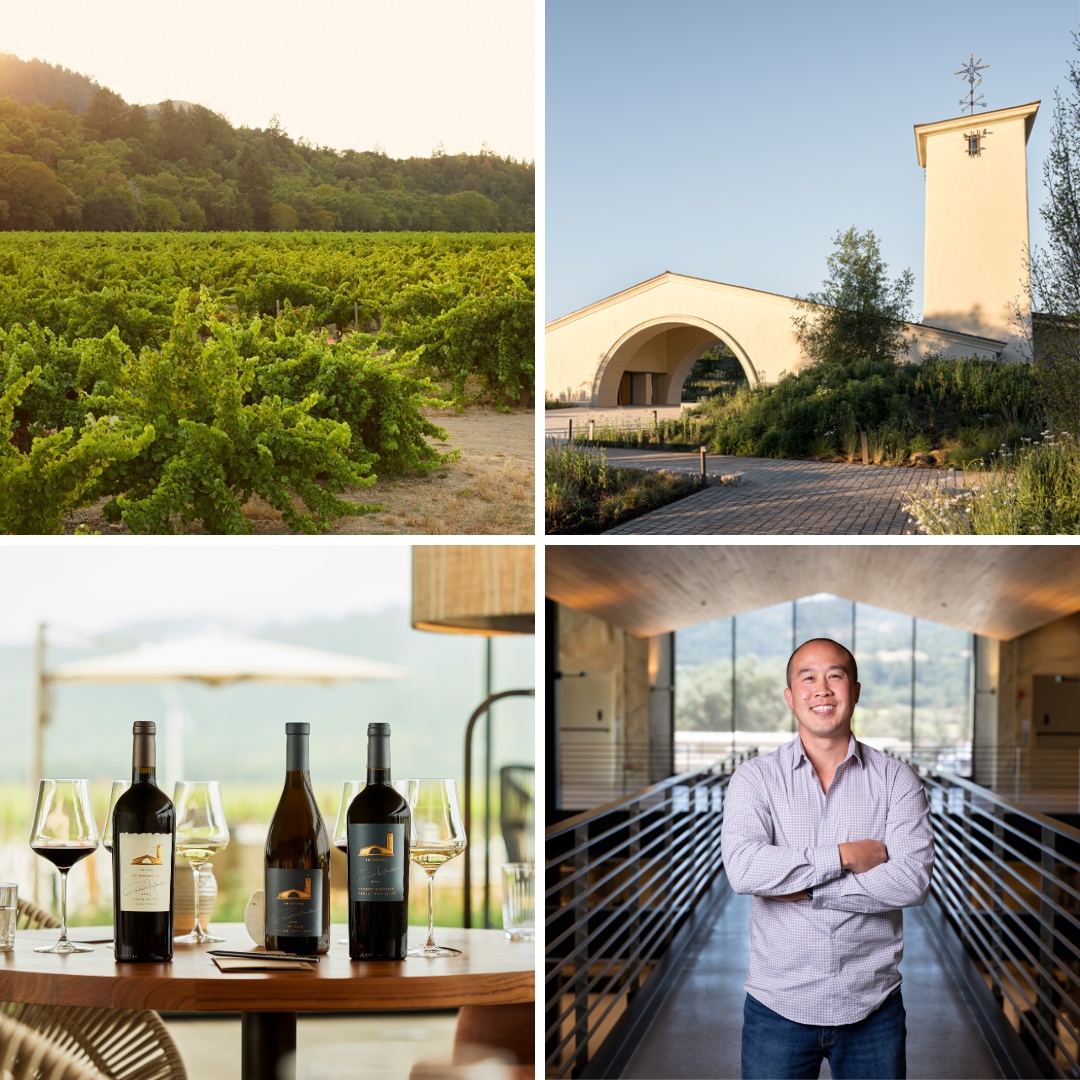
Dante McDermott Catena and Part of the Domaine EdeM range.
Domaine EdeM works with both approaches. Some products begin as traditionally fermented wines before their alcohol is removed. Others are developed without fermentation, using grape must, verjus and botanicals to construct a different but equally interesting drinking experience. The distinction raises an important question for the wider wine industry: should alcohol-free wines be evaluated using exactly the same criteria as traditional wines?
Dante believes there is room for a broader interpretation of quality. Rather than judging every alcohol-free wine on its ability to replicate a conventional wine, consumers should also consider its individual character and enjoyment.
From Grape to Glass: The Winemaking Process
Domaine EdeM’s range demonstrates that there is no single method of producing no- and low-alcohol wines.
N.0 Rosae: Dealcoholization with Aroma Recovery.
The sparkling Rosae is produced in Spain using Airén grapes from La Mancha. The grapes are fermented into wine before the alcohol is removed through vacuum distillation.
“Because of the pressure and the vacuum and the certain temperature, the alcohol is separated from the rest of it,” Dante explains.
During dealcoholization, some of the wine’s volatile aromatic compounds can also be lost. Aroma recovery technology makes it possible to capture and reintroduce these components. This is particularly important because aroma is one of the defining characteristics of wine. For the Rosae, the choice of Airén is deliberate. According to Dante, the grape provides an aromatic base with stone-fruit characteristics, including peach, apricot and melon.
“We know with the dealcoholization that some of the aromas and flavours are going to get lost. So, it’s important to make a very aromatic and flavorful base wine before the dealcoholization.”
Rose petals are added to introduce floral characteristics, while carbonation creates the sparkling texture.
Blonde and Brunette: The Botanical Approach.
The Blonde and Brunette follow an entirely different production method. Instead of fermenting grapes and subsequently removing the alcohol, these products are based on Chardonnay grapes from high-altitude vineyards in Tupungato, within Argentina’s Uco Valley. The grapes are harvested early, around January, to produce verjus: an acidic, unfermented grape juice that provides freshness and structure. This base is then combined with carefully selected botanicals.
“We make a complex botanical recipe, and we use botanicals that simulate the bitterness, the mouthfeel and aromatic sensations of alcohol,” Dante explains.
The resulting products are not technically dealcoholized wines, because they have never undergone alcoholic fermentation. Instead, they represent a wine-inspired category built around grapes, acidity, botanical complexity and texture.
Blonde and Brunette: the Botanical Approach.
Uco Stones and Uco Mineral: A Different Approach to Low Alcohol.
Domaine EdeM also produces two sparkling wines with 7% alcohol: Uco Stones and Uco Mineral. The choice of 7% was intentional.
“We wanted it to be half of 14%, which is a traditional glass of wine,” says Dante. “People could have two glasses of the 7%, which is the same amount of alcohol as one glass of the 14%.”
The wines are produced using Chardonnay from Tupungato. A second fermentation in tank, following the Charmat method, creates the bubbles. The sparkling wine is subsequently blended with unfermented verjus to reduce the final alcohol concentration. Rather than removing alcohol after fermentation, the team achieves the desired level by blending wine with grape juice.
This illustrates another important aspect of Domaine EdeM’s philosophy: giving consumers greater flexibility, rather than presenting alcohol consumption as an all-or-nothing decision.
Taste, Balance and Quality: The Second Glass Test
One of the greatest challenges in no- and low-alcohol winemaking is reproducing the balance and mouthfeel of traditional wine. Alcohol provides weight and contributes to the overall texture. Without it, a wine can appear thinner, particularly in the mid-palate. For Dante, bubbles are an important part of the solution.
“The bubbles kind of distract you a little bit from the lack of weight on the palate,” he explains. “Because of the bubbles, you feel the sparklingness, and that’s the main texture you feel in your mouth.”
This is one reason why sparkling styles play such a prominent role in Domaine EdeM’s portfolio.
During our conversation we opened a bottle of the Rosae. Its aromatic profile immediately reminded of a sparkling rosé, with a pronounced fruit character and an inviting floral impression. On the palate, the fine bubbles contributed to a sense of body, while the dry taste and acidity brought freshness and definition.
Dante describes Rosae as the wine in the range that comes closest to the traditional wine experience.
“Our goal was always to make things for wine lovers primarily.”
Yet quality is not only about how closely the product resembles conventional wine. The Catena team also considers aromatic intensity, complexity, acidity, balance and finish. Dante points out that many of the established principles of wine tasting remain relevant when assessing alcohol-free wines. Even secondary and tertiary aromas are not necessarily excluded from the category. A wine can develop complexity through maturation before being dealcoholized, although its subsequent ageing potential may be different.
For him, however, the most revealing quality assessment is surprisingly straightforward.
During our interview, we found ourselves pouring a second glass of Rosae.
“We call that the second glass test,” Dante responds. “Do you want to have a second glass? That’s very important for us.”
Perhaps this is the most practical definition of quality in the emerging category. Beyond technical perfection and traditional wine classifications, the product should simply be enjoyable enough to make someone want another glass.
Food Pairing and Drinking Occasions
Can no- and low-alcohol wines play the same gastronomic role as traditional wines? According to Dante, they certainly can, although some pairings require a different perspective.
“In my opinion, the most important component of a wine combining with food is acidity,” he explains.
Acidity refreshes the palate, balances richer dishes and creates contrast with fat and sweetness. None of these functions necessarily requires alcohol. Dante proposes considering wine almost as a condiment alongside food.
“You’re eating something and then the wine is adding these really nice fruit, floral and herbal flavours as an addition to the food.”
From this perspective, alcohol-free wines can offer the same aromatic interplay with a dish while introducing different possibilities. Indeed, the absence of alcohol can sometimes become an advantage.
Highly alcoholic wines may amplify the burning sensation of spicy food. Alcohol-free alternatives can therefore work particularly well with dishes that are traditionally difficult to match with wine. Dante shared several pairing suggestions for the Domaine EdeM range.
Rosae is light, refreshing and particularly suitable for lighter dishes. Dante recommends salads, light fish dishes, including a classic caprese with tomato and mozzarella. Its floral character and acidity could also complement dishes containing basil or pesto.
Blonde works well with Asian cuisine, spicy noodle dishes, sushi and fish. Its refreshing acidity also makes it an interesting match for fish served with butter-based sauces, where it can cut through the richness of the dish.
Brunette offers a more pronounced botanical and spicy character. Dante enjoys pairing it with creamy desserts, chocolate cake or flan. It also works as an aperitif, accompanied by cheese, charcuterie or cured meats.
The different styles therefore serve different moments within a meal. Rosae and Blonde are particularly suitable alongside a main course, while Brunette can be enjoyed before or after dinner.
EdeM can feature in many ways, as stand-alone drink or dining companion.
For restaurants and sommeliers, these products create opportunities to offer more interesting alternatives to soft drinks or mineral water. Or even in a wine pairing combining them with traditional wines.
Importantly, Dante believes that the experience should be inclusive rather than restrictive.
“I always recall a New York sommelier who approaches guests by asking whether everyone at the table will be consuming alcohol that evening, instead of automatically assuming that wine will be the preferred choice. This simple question gives guests the opportunity to express their preferences without having to explain why they are not drinking alcohol.”
The Market and Changing Consumer Preferences
The growing interest in no- and low-alcohol wines is often associated with younger generations, health awareness and changing lifestyles. Dante recognizes these developments but cautions against overly simplistic explanations.
“I think some of it is economic, some of it is health-related, and some of it is lifestyle and fitness-related.”
Living in San Francisco, he observes that affordability can influence drinking habits. Young consumers facing high housing and living costs may be less inclined to spend significant amounts on an expensive restaurant wine. At the same time, fitness and wellness have become increasingly important elements of social life. Running clubs, Pilates classes and other group activities offer new opportunities to meet friends. Social occasions no longer necessarily revolve around drinking late into the night.
Dante also observes that modern health-tracking technology has made people more conscious of how alcohol can affect factors such as sleep and physical performance. Nevertheless, he does not believe that the social benefits of wine should be overlooked. For many consumers, enjoying a glass of wine with friends remains an important source of pleasure and connection.
This is where the concept of ‘zebra striping’ becomes relevant: alternating between alcoholic and non-alcoholic drinks during the same occasion. Instead of choosing between drinking wine and avoiding alcohol entirely, consumers can enjoy both. Dante gives the example of starting an evening with a traditional glass of wine, switching to a non-alcoholic alternative and continuing to alternate throughout the evening. The result is a more moderate approach to alcohol consumption without abandoning the social ritual of wine.
Are Younger Generations Really Abandoning Wine?
Much has been written about younger consumers drinking less wine, but Dante questions whether the situation is as dramatic as some industry commentators suggest.
“I think sometimes the difference can be overstated,” he says.
He points out that consumers in their twenties have historically explored beer, cocktails and other drinks before developing a stronger interest in wine later in life.
“I think as we progress into our 30s and 40s, we’re going to settle down into a lot of the traditional wine-drinking occasions that the generation before us settled into.”
While he acknowledges that wellness and fitness are influencing his generation, he does not believe that traditional wine consumption is necessarily disappearing. Instead, the industry may need to adapt to consumers who expect greater choice and flexibility.
Overcoming the Stigma
Despite growing interest, non-alcoholic wines still face considerable skepticism among some consumers and wine professionals. Dante regularly encounters people who refuse to taste them because they assume the quality will be disappointing. He also hears concerns that non-alcoholic wines might compete with traditional wine.
His response is clear.
“I always see the non-alcoholic wines as complementary. I actually think that the non-alcoholic wines could help us save the wine industry.”
For Dante, expanding the category creates more opportunities to engage consumers rather than taking something away from traditional wine. Wine retailers and sommeliers have an important role to play in changing perceptions. He encourages retailers to offer a meaningful selection rather than treating non-alcoholic wines as an obligatory single product in a separate corner of the shop.
Education is equally important. Wine professionals need to understand the different production methods, styles and quality parameters in order to present these products confidently.
The Dutch Market: Openness to Innovation
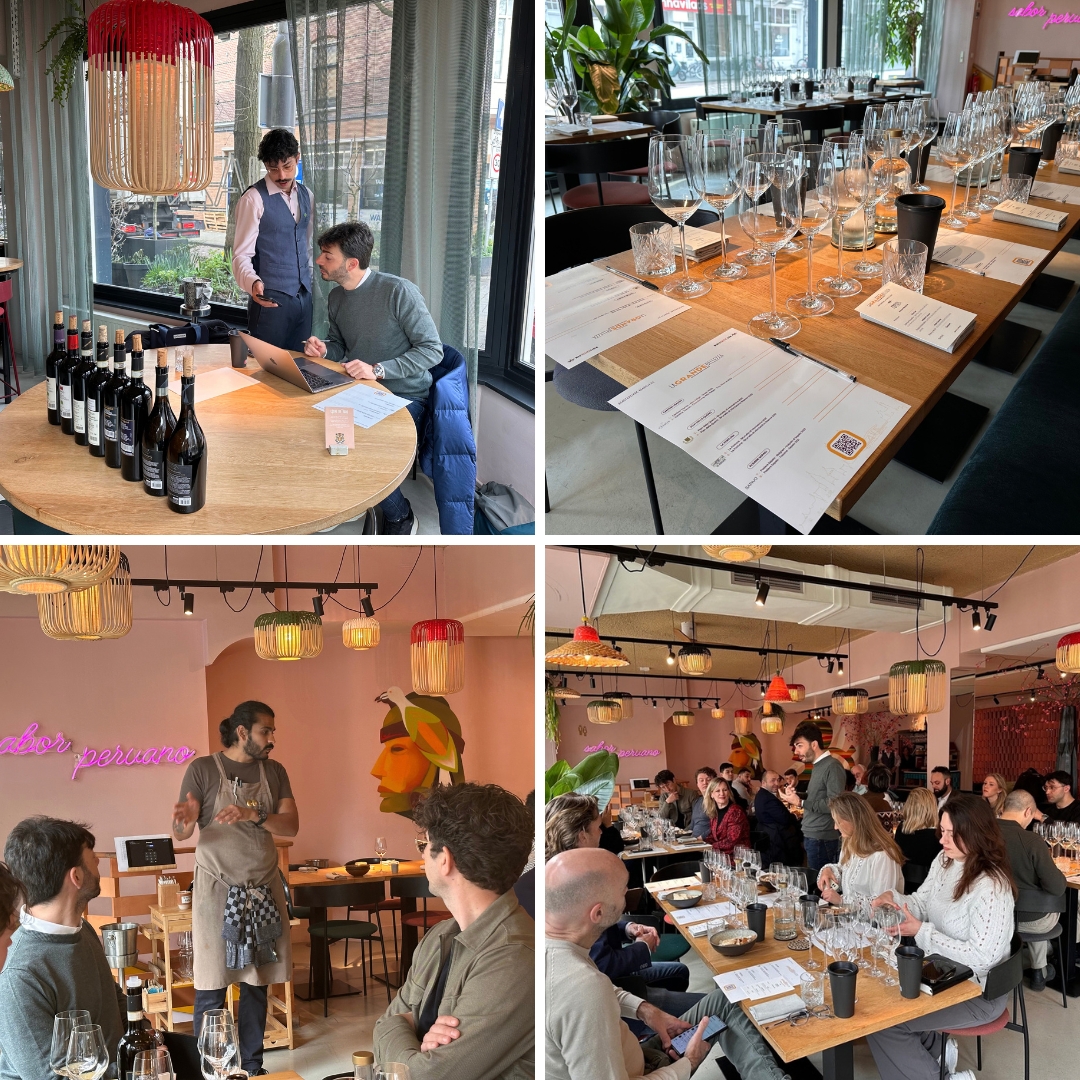
Having recently attended the Gastvrij gastronomy fair in Rotterdam, together with their importer Vinites, Dante is particularly positive about the Dutch market.
“I found people to be very open to the non-alcoholic wines, much more open than in the US,” he observes.
In his experience, Northern Europe and the United Kingdom are further along in accepting these products than some more traditional wine markets. What impressed him was not only the willingness of visitors to taste the wines but also their readiness to take them seriously. He noticed that Dutch consumers and wine professionals were prepared to give alcohol-free wines the same attention they would give conventional wines. For Domaine EdeM, this openness represents an important opportunity as the brand expands internationally.
Looking Ahead and Personal Reflections
Looking five to ten years into the future, Dante hopes that no- and low-alcohol wines will become a natural part of the wider wine category. His vision is simple: non-alcoholic wines should no longer be confined to a separate section in wine shops or treated as an inferior alternative. Instead, he imagines them being displayed alongside traditional wines, allowing consumers to choose between different styles and alcohol levels.
He points to Argentina, where some Domaine EdeM products are already displayed in the sparkling wine section. Dante also hopes that zebra striping will become an accepted part of everyday drinking culture.
“Consumers should be able to order non-alcoholic wine without being questioned about their reasons.”
On the technical side, he sees continued innovation in dealcoholization and aroma recovery as particularly promising. The ability to preserve delicate wine aromas while removing alcohol remains an important area of research and development.
At Domaine EdeM, international expansion is one of the immediate priorities. The company aims to build on the Catena family’s existing distribution network, with opportunities in Europe, Latin America and the Middle East.
New product development is also on the horizon. Dante works closely with winemaker Agustín Silva and Laura Catena on the direction of the portfolio, combining scientific knowledge with consumer feedback.
Yet beyond commercial expansion and technical innovation, his personal ambition remains closely connected to the enjoyment of wine.
When asked what he would say to a traditional wine enthusiast convinced that alcohol-free wine can never be truly enjoyable, Dante’s response captures the spirit of the entire project. He would encourage that person to try several good examples, including wines from competing producers, without expecting them all to follow the rules of conventional wine.
“Just ask yourself, is it enjoyable? Is it delicious? That’s what’s important. It doesn’t matter if it fits the rules of wine.”
It is a compelling perspective from a fifth-generation member of one of Argentina’s most established wine families. Rather than rejecting tradition, Dante and the team behind Domaine EdeM are applying generations of winemaking experience to a category that is still defining itself.
The future of wine may not be about choosing between alcoholic and non-alcoholic products. It may simply be about creating more opportunities for people to enjoy a good glass together.
Podcast tip: Zebra Striping
Alongside the development of Domaine EdeM, Dante and his mother Laura Catena have launched the podcast ‘Zebra Striping’. In this podcast they explore the changing relationship between wine, alcohol and the evolution of the contemporary drinking culture and the future of wine.
This article is written by our own Silvia Natalia. Would like to thank Dante and the Catena family, as well as their Dutch importer and our partner Vinites, for their openness and support in writing this article. The EdeM portfolio is available for professional through Vinites, and through their partners for consumers.
Join our insiders’ list and get exclusive early access to new articles, expert tips, and fresh reviews delivered straight to your inbox. Subscribe now and be the first to discover!