Join Our Wine Journey – Sign Up for the Newsletter 🍷
Beyond the Wine List: The Wine Philosophy of Le Barrage
Share
Deel op X (twitter)
LinkedIn
WhatsApp
Beyond the Wine List: The Wine Philosophy of Le Barrage.
Behind the former bank vault that now houses Le Barrage’s wine collection lies a programme built around more than prestigious labels. In conversation with sommelier Luc Kaminski, we explore a wine culture shaped by mature bottles, lesser-known appellations, collaboration across Willaerts Group and, above all, the conversation at the table.
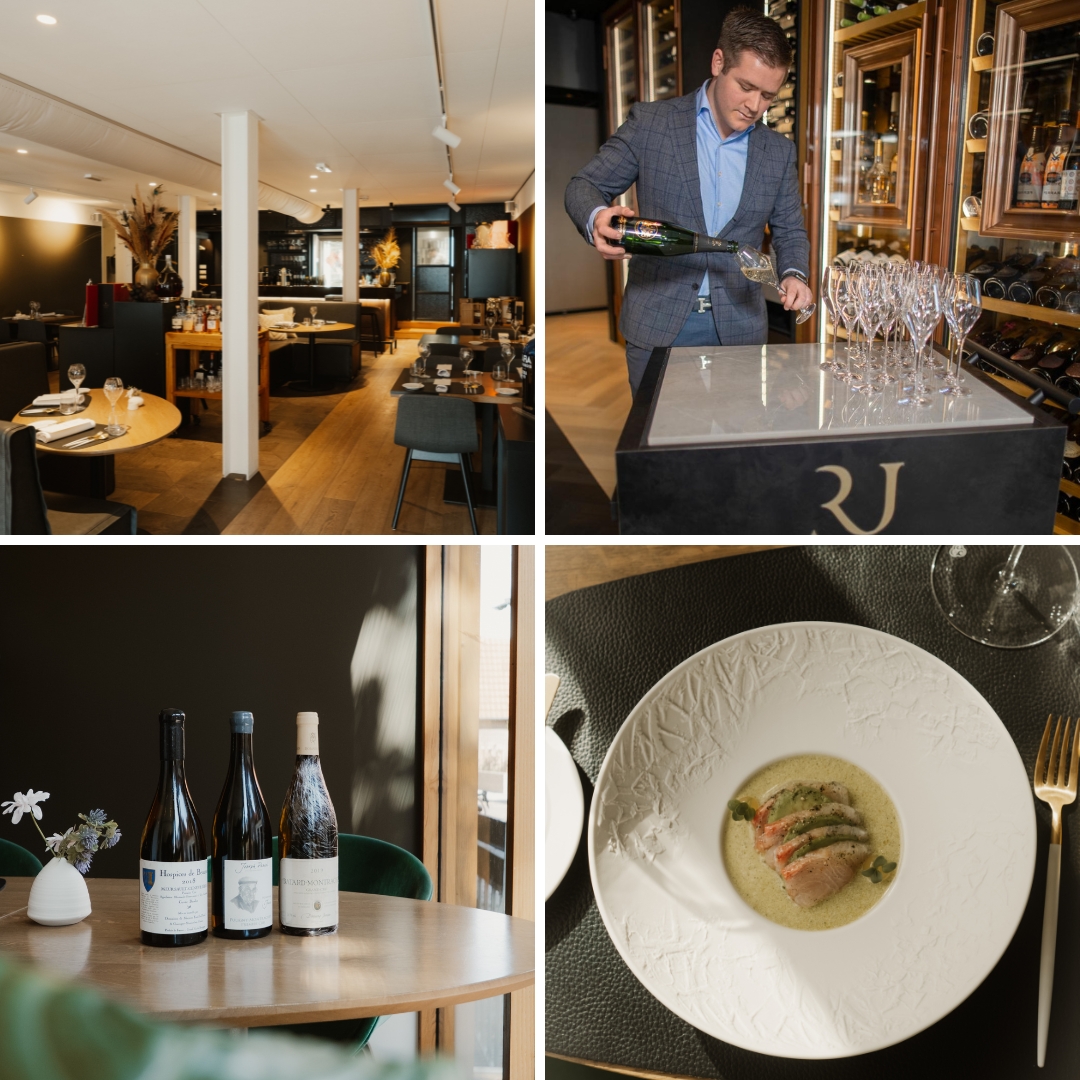
The wine cellar at Restaurant Le Barrage, in Alblasserdam, occupies the vault of a former bank. It is the kind of detail that almost writes its own metaphor: valuable bottles kept behind a heavy door, some destined to remain there for years. But sitting upstairs with sommelier Luc Kaminski, with two bottles on the table and a conversation moving between Burgundy, Tuscany and the restaurants of Willaerts Group, the cellar gradually begins to look less like a collection and more like a working resource.
Luc routinely has around thirty wines open by the glass, with the wines used for the restaurant’s pairing menus coming on top of those. The selection is fluid. When something interesting arrives, it can find its way into the by-the-glass offering, while even magnums are not necessarily protected from the corkscrew. The turnover at Le Barrage gives the sommelier team considerable freedom in this respect.
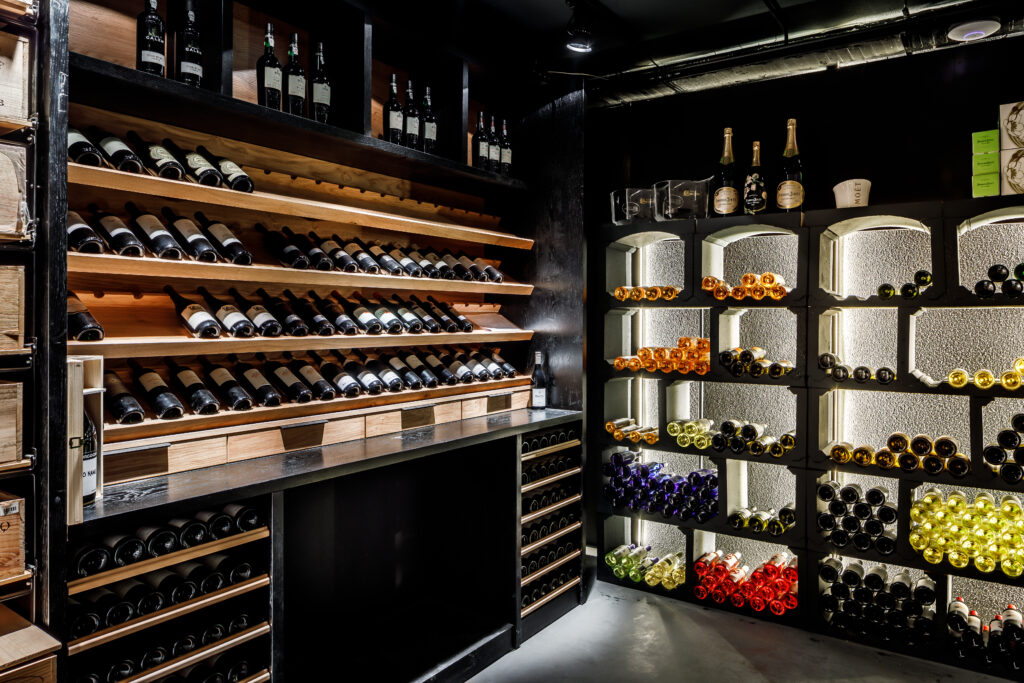
The Wine Vault at Le Barrage.
That freedom extends to requests from the table. If somebody is looking for Chablis and none happens to be open, Luc’s response is uncomplicated: “If somebody wants a glass of Chablis, fine. Then I open it.” There are obvious limits when prices reach the level of wines such as Solaia, but within reason, the team can reach further into the cellar when the wines already open do not provide the answer.
Building a Wine Culture
Wine already occupied an important position at Le Barrage when Luc arrived in September 2019. His own route into the subject had developed gradually. At Restaurant Las Palmas in Rotterdam, the scale of service meant that members of the floor team needed to understand and present the pairings within their own sections. The wines were documented so staff could prepare before service, and Luc discovered that he wanted to understand more.
Later, at the smaller Zeeblauw in Dordrecht, he became more closely involved with the wine list itself. By the time he joined Le Barrage, wine was already a substantial part of his work, although he estimates that the list he encountered was perhaps a third of its current size.
Its subsequent development should not, however, be attributed to one person. Luc readily acknowledges the freedom created by the ownership of Willaerts Group. A cellar of this scale requires investment in stock, relationships that provide access to sought-after wines and people on the floor who genuinely enjoy working with them. The sommeliers have been given considerable freedom within that environment.
The restaurants within the group nevertheless retain their own identities, and their wine selections reflect that. At Le Barrage and Restaurant KITA, for example, Champagne by the glass fits naturally with the concept and clientele; elsewhere, Cava or Prosecco may be more appropriate. The choices are made with the individual restaurant and its guests in mind.
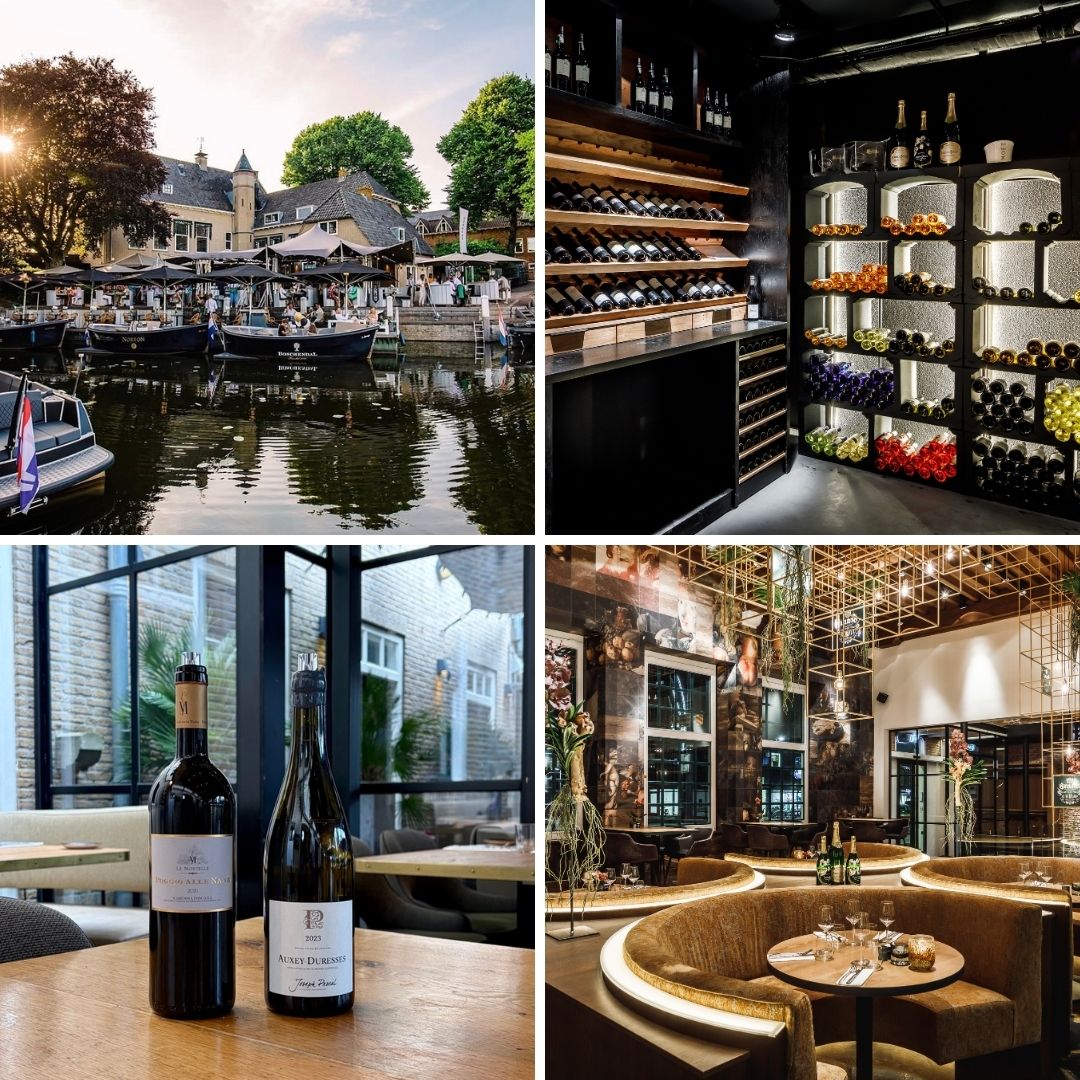
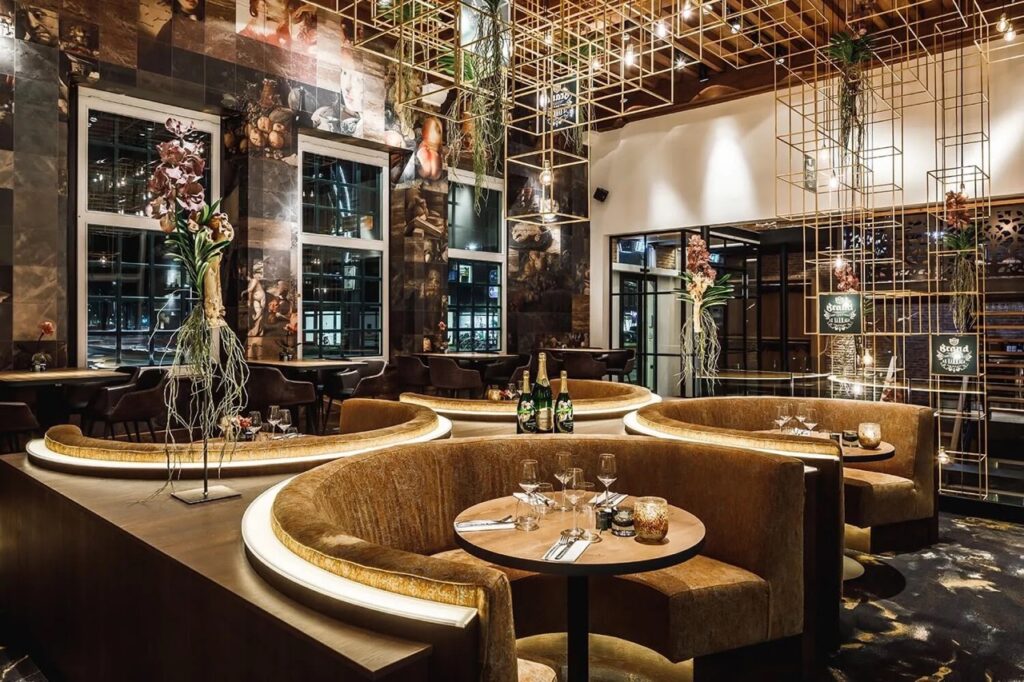
Restaurant Le Barrage in Alblasserdam.
Le Barrage and KITA stand out for the depth of their wine programmes and dedicated sommelier expertise. Their lists are distinct, but the people behind them work closely together. Much of the cooperation is informal: a message asking whether someone has tasted a particular producer, a question about a section of the list or a search for a bottle another restaurant might have available. On a Sunday, when an importer is unlikely to answer the telephone, the solution can sometimes be found in another Willaerts cellar nearby. Le Barrage has considerably more storage than some of the other locations and can, in practice, function as a reserve cellar within the group.
Knowledge travels just as easily. When an importer visits, sommeliers from different restaurants can join the same tasting, each bringing different interests and experience. One colleague may have explored Italy more deeply, another Spain. Producer visits and invitations to wine regions similarly become opportunities to travel and learn together.
Covid unexpectedly broadened that circle. With the restaurants closed, Willaerts Group offered wine education to permanent staff who were interested, with Luc estimating that around twenty people participated over several rounds. The purpose was to build sufficient knowledge and confidence for better conversations with guests, rather than to turn everyone into a sommelier. Some restaurants subsequently began highlighting changing Wines of the Month and broadening what they offered by the glass.
At Le Barrage and KITA, the scale of the lists naturally demands greater specialization. Yet a question, a tasting or sometimes even a bottle can readily travel from one restaurant to another.
From Familiarity to Discovery
The foundation of the Le Barrage list remains predominantly Old World, with France particularly prominent and Burgundy accounting for considerable depth. New World wines have their place too, particularly where producers have become international reference points that guests actively request. Size, however, is not an objective in itself.
Luc would rather have one or two producers that convincingly represent a region than six similar propositions. Ribera del Duero is one example he gives: a few strong reference points are more useful than filling pages simply to create an impression of depth.
The same consideration applies to navigating the list. Luc appreciates the enormous wine books that can occupy an enthusiast for half an hour, but recognizes their limitations during dinner. Most guests have come to spend the evening with other people. Le Barrage therefore uses flavour profiles to provide some orientation, after which the conversation with the sommelier can take over.
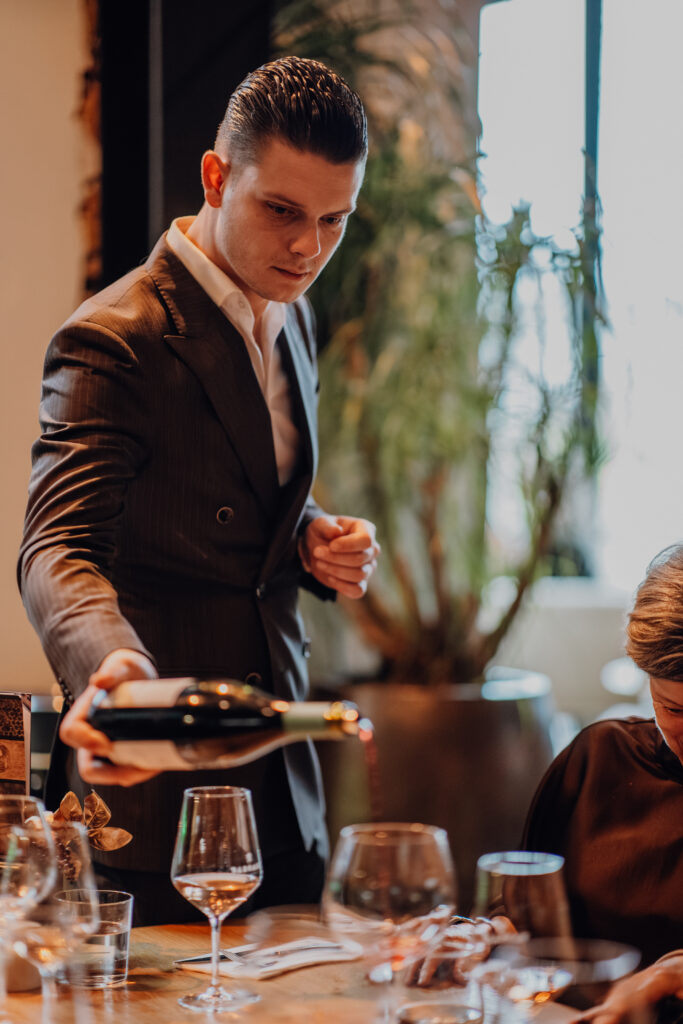
Luc Kaminsky, Sommelier at Le Barrage.
Regular guests are particularly important in that process. Many return knowing broadly what they enjoy and are comfortable allowing the team to choose within those preferences. Over time, the sommeliers learn their reference points and can introduce wines that sit just outside familiar territory.
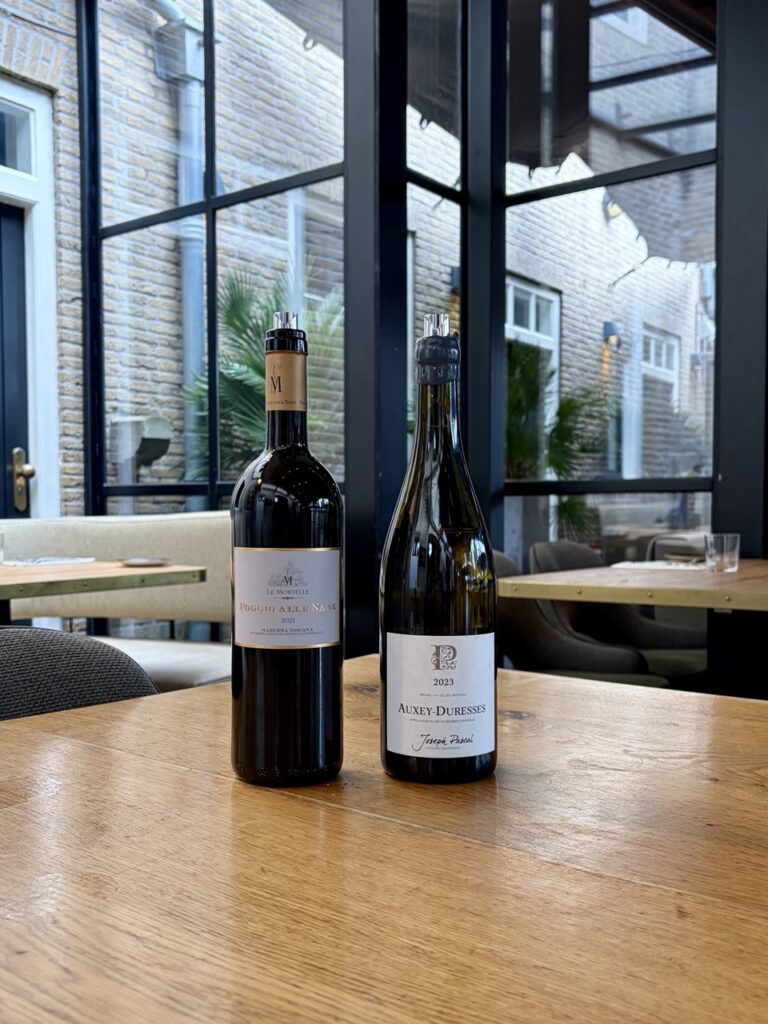
When it is time for us to taste, Luc demonstrates the point with Joseph Pascal’s 2023 Auxey-Duresses. The choice takes us into a part of Burgundy that receives considerably less attention than its more recognisable neighbors. Meursault and Chassagne-Montrachet require relatively little introduction at the table; Auxey-Duresses leaves more room for conversation.
Luc sees appellations such as this as increasingly relevant at a time when Burgundy’s best-known villages have become prohibitively expensive for many drinkers. Investment and ambition have spread beyond the most prestigious addresses, giving sommeliers more reason to look towards neighbouring appellations.
If somebody wants Meursault, Le Barrage can provide it. But Auxey-Duresses allows the sommelier to introduce a part of Burgundy the guest might otherwise have passed over. Luc is equally reluctant to respond to Burgundy’s rising prices by immediately suggesting a Chardonnay from elsewhere as “Burgundy-style”. If Burgundy is what the guest wants, origin remains part of the request. Looking towards Auxey-Duresses, Monthelie or another less fashionable appellation maintains that connection to place.
At the same time, these wines eventually need to establish identities of their own. Comparisons with a more famous neighbor can provide a useful introduction, but an appellation such as Auxey-Duresses becomes more interesting once it no longer needs to be explained principally through Meursault.
Our second wine changes both geography and the nature of the conversation. Le Mortelle’s 2021 Poggio alle Nane takes us to Tuscany and into the wider world of Antinori. Here, recognition itself can help the sommelier. A guest familiar with one Antinori wine may be more willing to explore another estate or label connected to the same family. A recognized name provides a point of orientation from which the conversation can move elsewhere.
Prestigious wines also raise the question of when they should be served. Tignanello is Luc’s example. New vintages can arrive at the restaurant well before he considers them ready to drink, and younger bottles may be present in the cellar while effectively being held back for later.
For a restaurant, this requires patience and ties up capital, particularly because mature back vintages are not always easy to replace. Bottles can occasionally be sourced from private cellars, but buying a wine and deciding when to serve it remain separate decisions.
The Conversation at the Table
The range of the cellar partly reflects the diversity of the kitchen and the very different flavours and intensities the sommelier team encounters during service. The changing pairing menus provide a regular testing ground for those choices, although the details of Le Barrage’s cuisine are a story in themselves.
For all the knowledge required to maintain a list of this depth, Luc does not expect the guest to speak the language of a sommelier. It is more useful if someone can simply communicate what they enjoy.
Wine terminology, after all, is highly relative. Dry, round, fresh, powerful or full-bodied can mean different things depending on the drinker. Luc recalls guests saying that they prefer particularly full-bodied wines before naming Pinot Noir as their reference point. Correcting them would achieve very little. The useful information is that Pinot Noir tells him something about where that particular guest’s scale begins. “You really have to put yourself in the guest’s shoes,” he says.
Sometimes the easiest way forward is to taste. If a guest tries something and it is not what they had in mind, another wine can be considered. When Luc is uncertain which of two directions somebody means, he may bring both. The traditional tasting pour primarily establishes whether a bottle is sound, but in practice it can also answer the simpler question of whether the person sitting at the table actually likes the wine.
Professionals inevitably approach wine differently. Sommeliers and critics learn to separate acidity, concentration, length, balance and structure because doing so provides a language through which quality can be discussed. Many restaurant guests experience wine more holistically: whether they enjoy it, whether it works with the food and whether it feels right at that moment. As Luc observes, plenty of people have no desire to analyze what is in their glass. “They just want a feeling.”
Much of the complexity at Le Barrage consequently remains behind the scenes. The cellar provides options, mature stock allows certain wines to be served later in their development, the cooperation with KITA and the other Willaerts restaurants broadens the team’s knowledge, and the number of bottles open by the glass gives the sommeliers room to respond once a conversation begins.
The two wines on our table have taken us in different directions. Joseph Pascal’s Auxey-Duresses introduces a Burgundian appellation many guests might overlook, while Le Mortelle’s Poggio alle Nane starts from the reassurance of a major wine family and leads towards a less obvious part of its portfolio. They are different examples of the same process: beginning with the person at the table rather than with the prestige of the label.
Burgundy & Tuscany on the tasting table, but not the usual suspects.
Luc may be the person guiding us through the cellar during our visit, but the wine programme around him is clearly a collective effort. It draws on fellow sommeliers, colleagues at KITA and elsewhere within Willaerts Group, suppliers and producers, together with an organisation prepared to invest in wine and give the people working with it sufficient freedom to make their own decisions.
In a former bank, it is tempting to view wine in terms of value, with bottles acquired, accumulated and protected behind the vault door. Le Barrage certainly understands the importance of cellaring, but after an afternoon tasting and talking with Luc, the impression is rather different. A bottle earns its place here not simply by being worth keeping, but by eventually being worth opening.
This article is written by our own Niels Aarts. We would like to thank Le Barrage, and especially Luc Kaminski, for their time and hospitality.
Join our insiders’ list and get exclusive early access to new articles, expert tips, and fresh reviews delivered straight to your inbox. Subscribe now and be the first to discover!