Join Our Wine Journey – Sign Up for the Newsletter 🍷
Jean-Pierre Moueix 2025: Why Bordeaux’s Future Still Looks Bright
Share
Deel op X (twitter)
LinkedIn
WhatsApp
Jean-Pierre Moueix 2025: Why Bordeaux’s Future Still Looks Bright.
Every spring, Bordeaux asks wine professionals to perform a peculiar exercise: judge wines that are not yet finished.
The annual En Primeur campaign requires buyers, merchants, sommeliers and journalists to assess wines that still rest in barrel and imagine what they may eventually become. It is an exercise built on experience, trust and an understanding of how great wines evolve over time. Few wine regions ask consumers and professionals alike to think so far into the future.
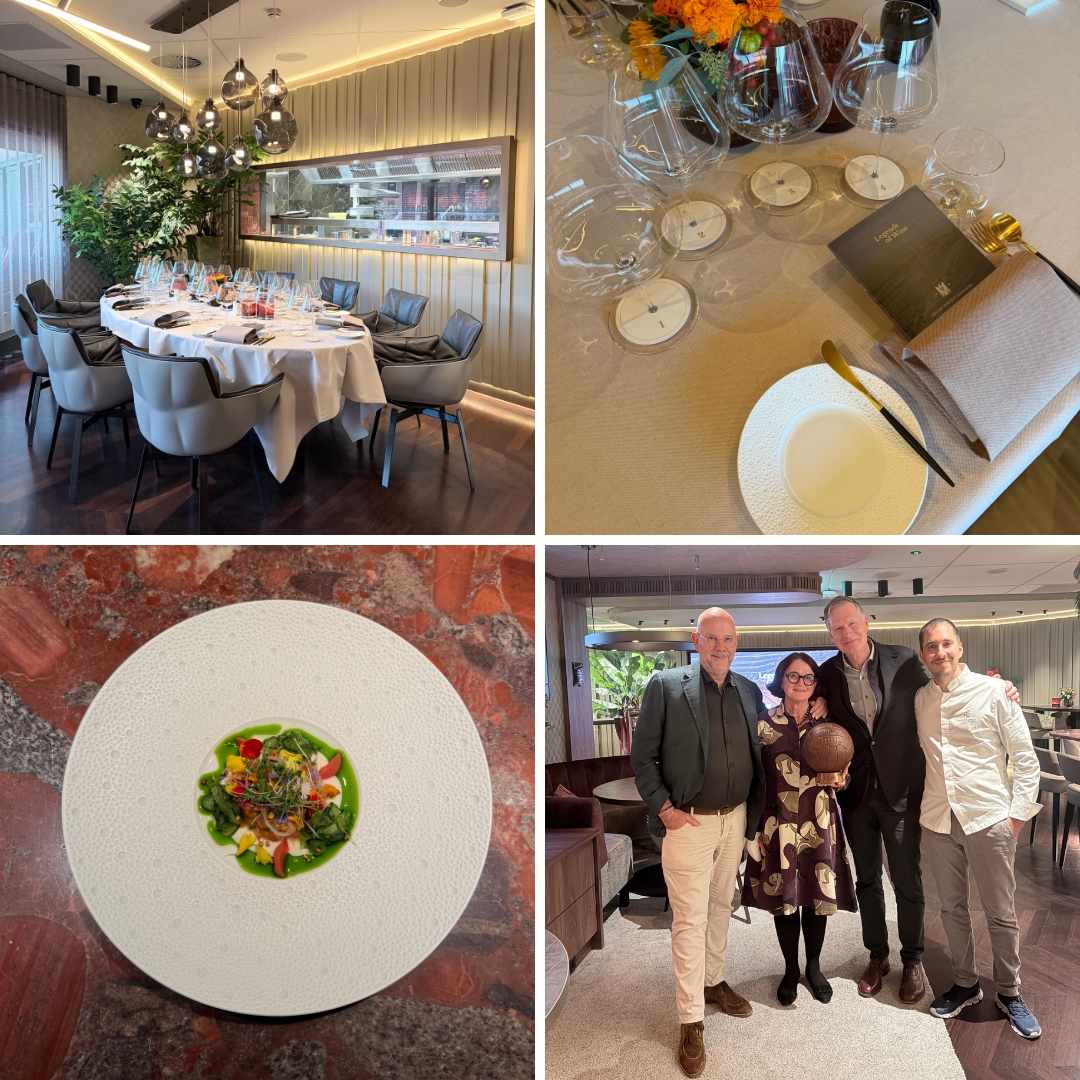
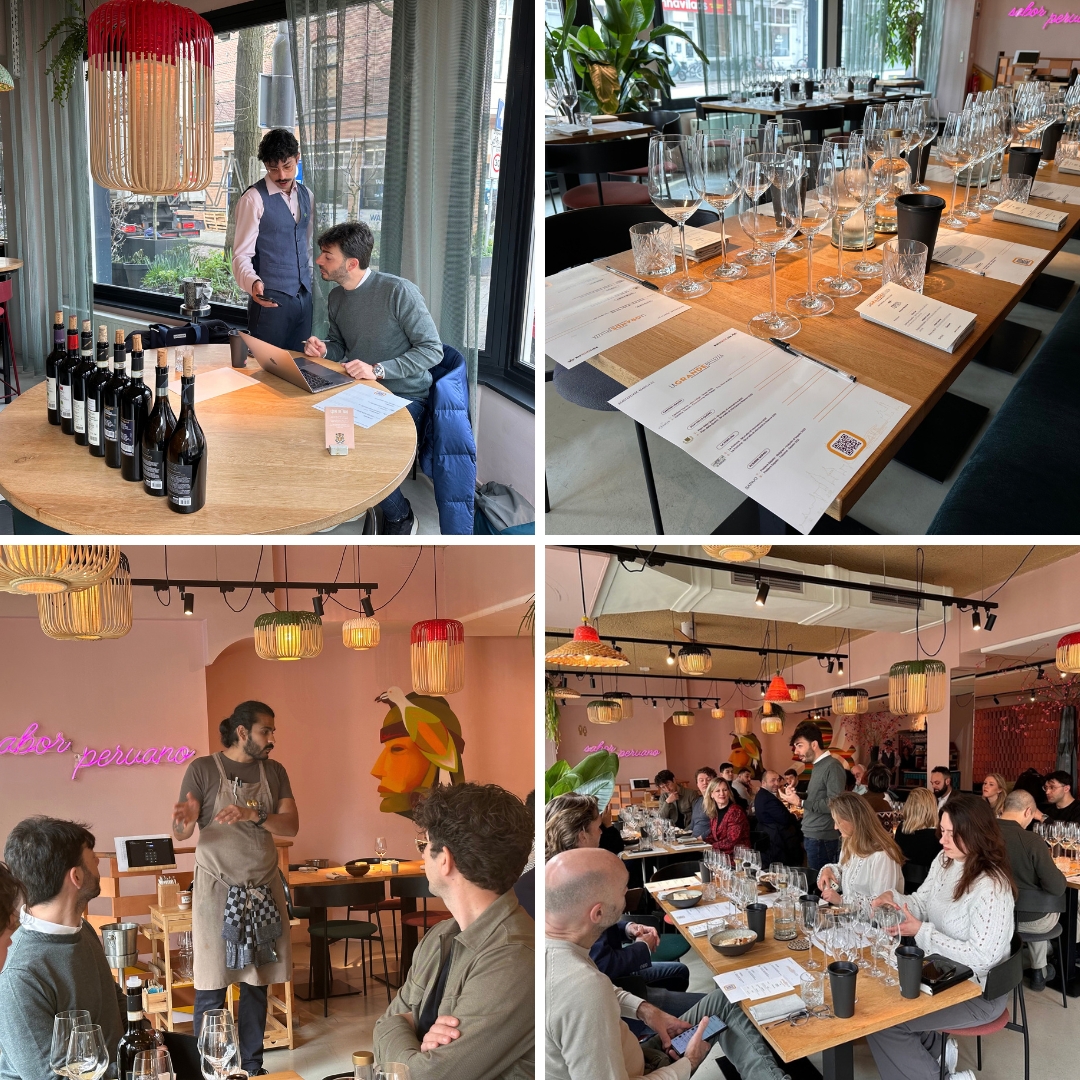
With the 2025 En Primeur campaign underway, we travelled to Central Park Voorburg for a tasting hosted by De Waal, Zey & Engels, representatives of the Jean-Pierre Moueix portfolio in the Netherlands. Invited by De Bruijn in Wijnen, we joined members of the Dutch wine trade for a presentation of the 2025 Jean-Pierre Moueix wines, followed by lunch with Edouard Moueix.
Edouard Moueix at Central Park Voorburg for the 2025 En Primeur Tasting.
The choice of venue felt particularly appropriate. Under the leadership of owner and general manager Joey de Kruijf, Central Park has established itself as one of the Netherlands’ leading fine dining destinations, built around a philosophy where hospitality, cuisine and wine are treated as equal partners. Together with chefs Tim Bood and Hette Hettema and sommelier Sasja Moonen, the team has created a restaurant where thoughtful gastronomy and serious wine culture coexist naturally. It provided a fitting setting for a discussion about some of Bordeaux’s most sought-after wines.
The timing could hardly have been more relevant. Bordeaux finds itself at an interesting moment in its history. Consumption patterns are evolving, collectors are becoming more selective, and competition from other fine wine regions has never been stronger. Yet at the same time, many leading estates are producing wines of remarkable precision and consistency, the result of decades of investment in vineyards, wineries and a deeper understanding of terroir.
Looking Beyond the Barrel
The 2025 vintage therefore arrives at a particularly revealing moment. It is a vintage that may say as much about Bordeaux’s future as it does about the growing season itself.
The morning tasting focused on four wines from the Jean-Pierre Moueix portfolio: Château Hosanna, Château La Fleur-Pétrus, Château Trotanoy and Château Bélair-Monange. Yet it was during lunch that the broader significance of the vintage began to emerge.
Shortly after the final barrel samples had been poured, the conversation shifted from the future of Bordeaux to its past. Around the table stood a succession of bottles that represented decades of winemaking history. A Jeroboam of Taittinger Brut Réserve welcomed guests, followed by Giaconda Estate Vineyard Chardonnay 2021, before the focus turned firmly to Bordeaux with La Fleur-Pétrus 2000 from Magnum, Bélair-Monange 2016 from Magnum and Château Magdelaine 1998. Together, they offered a reminder that the unfinished wines tasted earlier that morning would one day face the same test of time.
2025 Moueix Wines at a Glance
Château Bélair-Monange 2025 | 98/100 DWA score
Château Trotanoy 2025 | 97/100 DWA score
Château Hosanna 2025 | 95/100 DWA score
Château La Fleur-Pétrus 2025 | 95/100 DWA score
A Vintage Forged Under Pressure
Readers of our recent report, Bordeaux 2025: Precision Under Pressure, will already be familiar with the broad outline of the growing season. Across the region, producers faced a year that demanded precision rather than intervention, patience rather than reaction.
The Moueix estates experienced those challenges first-hand.
A relatively mild winter encouraged an early budbreak, followed by a warm spring that ensured healthy flowering and fruit set. The real challenge arrived during summer. From mid-May onwards, drought conditions intensified, culminating in periods of extreme heat. According to Edouard Moueix, some vineyard parcels experienced temperatures above 50°C in direct sunlight. On certain young gravel parcels at Hosanna, concerns briefly emerged about whether the vines themselves would survive.
What ultimately shaped the vintage was not the heat, but the timing of the relief.
Rain arrived in late August at precisely the moment the vines needed it most. The result was a crop of small berries, naturally concentrated fruit and notably high tannin levels. On paper, those conditions might suggest broad and powerful wines. In practice, the opposite impression emerged throughout the tasting.
Again and again, freshness became the defining characteristic.
The wines possess concentration and structure, but they rarely feel heavy. The tannins are abundant, yet remarkably ripe. Acidity remains vibrant. It is a vintage that combines power with restraint, concentration with energy.
Perhaps most importantly, it is a vintage that rewards thoughtful viticulture.
During our conversation after lunch, Edouard Moueix was careful not to describe 2025 as a universally great vintage. In his view, greatness requires every vineyard to overperform. That is not the story of 2025. Instead, it is a vintage where producer selection matters, where the difference between good and exceptional estates is likely to become increasingly evident over time.
Three Takeaways from the Moueix 2025 Tasting
Ripe tannins define the vintage
The structural backbone of the vintage is undeniable. Yet the tannins rarely dominate. Instead, they provide framework and longevity while allowing fruit and terroir expression to remain visible from the outset.
Freshness is the surprise
Given the drought conditions and prolonged summer heat, one might expect broad, powerful wines. Instead, the best examples display energy, tension and precision.
Producer selection matters
This is not a vintage where reputation alone guarantees success. The strongest wines belong to producers who navigated the growing season with precision and patience.
Four Expressions of Terroir
Few producers offer such a compelling cross-section of elite Right Bank terroir.
Taken together, Hosanna, La Fleur-Pétrus, Trotanoy and Bélair-Monange demonstrate how dramatically different neighboring vineyards can be. They also illustrate one of the defining characteristics of the Moueix philosophy: allowing each site to express its own identity rather than pursuing a uniform house style.
The 2025 top from Jean-Pierre Moueix’s own estates.
Château Hosanna 2025, Pomerol | DWA Rating: 95/100
Hosanna captures the warmth of the vintage while retaining admirable composure. Aromas of black cherry, plum, violets and dark chocolate emerge alongside subtle notes of graphite and spice. The palate is concentrated yet composed, with Cabernet Franc bringing freshness and aromatic lift to the generous Merlot core. The finish is long and polished, supported by finely textured tannins that suggest considerable ageing potential.
Château La Fleur-Pétrus 2025, Pomerol | DWA Rating: 95/100
La Fleur-Pétrus offers a more graceful interpretation of the vintage. Floral aromatics, blackberry fruit and sweet spice lead into a palate defined by silk-like texture and precision. Layers of fruit unfold gradually, supported by vibrant acidity and finely integrated tannins. There is an effortless sense of harmony throughout that reflects the extensive vineyard work undertaken at the estate over the past two decades.
Château Trotanoy 2025, Pomerol | DWA Rating: 97/100
Profound, structured and unmistakably Trotanoy. Dark cherry, cassis, graphite, cocoa and iron-rich earth combine into a wine of remarkable depth. The concentration is immense, yet the wine never loses its sense of balance. The estate’s famous clay and iron-rich soils appear particularly well suited to the conditions of 2025, producing a wine of formidable structure and exceptional ageing potential.
Château Bélair-Monange 2025, Saint-Émilion | DWA Rating: 98/100
If one wine captured both the challenges and opportunities of the vintage, it was Bélair-Monange.
Blackcurrant, crushed flowers and limestone minerality define the aromatic profile. The palate combines concentration with extraordinary energy, delivering density without weight and power without excess. The tannins are exceptionally refined, while the finish is long, mineral and beautifully focused.
Among a strong line-up, Bélair-Monange stood apart not because it was bigger or richer, but because it seemed to unite all the vintage’s defining characteristics into a single wine.
Climate Adaptation in Practice
One of the most interesting aspects of the tasting was how clearly the different terroirs responded to the same growing season.
In Pomerol, the deep clay soils helped vines withstand periods of hydric stress. At Trotanoy, those clay-rich parcels contributed to the wine’s depth and structure. At Hosanna and La Fleur-Pétrus, gravel and clay combinations produced wines that balanced concentration with freshness.
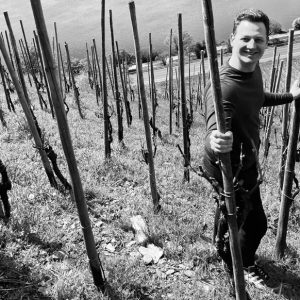
Edouard Moueix in the Vineyards.
Across the river in Saint-Émilion, the limestone plateau of Bélair-Monange played a different role. Limestone acts as a natural regulator, helping preserve freshness during warm years and maintaining balance when conditions become extreme.
The lesson was not simply about climate change.
It was about adaptation.
The best estates are increasingly defined by how effectively they understand and work with their terroirs under changing conditions. The 2025 vintage offered a clear demonstration of that reality.
Lunch as a Lesson in Time
If the tasting was about potential, lunch was about proof.
The setting could hardly have been more appropriate. Central Park has long established itself as one of the most ambitious culinary destinations in the Netherlands, and on this occasion the kitchen and service team delivered a lunch that matched the caliber of the wines being poured.
Under the leadership of Joey de Kruijf, chefs Tim Bood and Hette Hettema presented a menu that balanced precision with restraint. Each course felt carefully considered, allowing the wines to remain central while never fading into the background. It is a delicate balance that many restaurants struggle to achieve, particularly when the wines themselves are likely to dominate the conversation.
The opening combination of Iberico Pata Negra and Gillardeau oyster immediately set the tone. Delicate preparations followed, including weever with green pea and lemon and halibut accompanied by white asparagus, before the menu moved towards Dutch lamb and a selection of artisan cheeses.
To complement the 2025-barrel samples, Edouard Moueix had selected a number of large-format bottles from the family cellars, providing a valuable point of reference for the wines tasted earlier that morning. Central Park sommelier Sasja Moonen guided guests through the line-up, which was served blind throughout lunch.
The approach shifted the focus away from labels and reputation, encouraging discussion around style, maturity and terroir instead. Rather than treating the bottles as rare collectibles, Sasja presented them as part of a broader conversation about place, time and evolution, creating a natural dialogue between the wines, the cuisine and the themes discussed around the table.
The first major statement arrived in the form of La Fleur-Pétrus 2000 from Magnum.
Twenty-five years after harvest, the wine displayed precisely the qualities that continue to distinguish great Bordeaux. Layers of cedar, tobacco, truffle and earth had emerged without diminishing freshness or vitality. Suddenly, the discussion surrounding the 2025 vintage became tangible.
The 2016 Bélair-Monange provided a different perspective. Still youthful, it nevertheless revealed the precision and limestone-driven character that could already be detected in the 2025-barrel sample tasted earlier that morning.
Finally, Château Magdelaine 1998 offered a glimpse into the history that preceded Bélair-Monange. Produced before the merger that ultimately created today’s estate, it connected the modern renaissance of Bélair-Monange with the long history of Saint-Émilion itself.
The Line-Up of Wines from our Lunch
Together, the wines compressed nearly three decades of Bordeaux history into a single meal.
More importantly, they transformed the afternoon from a simple En Primeur presentation into something far more compelling: a conversation about how great wines evolve, why patience matters and what today’s barrel samples may eventually become.
Optimism without Illusion
One of the more striking aspects of the conversation with Edouard Moueix was his willingness to discuss Bordeaux’s challenges openly.
There was little attempt to present an idealized picture of the market. Competition has never been greater; consumer behavior continues to evolve and Bordeaux no longer occupies the dominant position it once enjoyed in every market around the world.
Yet throughout the discussion, pessimism was notably absent.
Relaxed, engaging and generous with his time, Moueix spoke less like someone defending Bordeaux and more like someone convinced that the region is entering a new chapter. In his view, many of the investments made over the past two decades are only now beginning to reveal their full potential.
Leading estates across Bordeaux have invested heavily in vineyards, cellar technology, parcel selection and a more detailed understanding of terroir. The result, he argues, is a level of precision and consistency that would have been difficult to imagine a generation ago.
The irony is that Bordeaux may be producing some of its finest wines at precisely the moment when the region is being challenged to rethink how it presents itself to the world.
While Moueix continues to see healthy consumer demand and genuine interest in Bordeaux, he believes some of the region’s challenges lie elsewhere in the chain. Increasingly, competition comes not only from other wine regions, but from the way wines are presented and promoted. Sommeliers, retailers and merchants have more choice than ever before, and newer regions often benefit from the excitement that accompanies discovery.
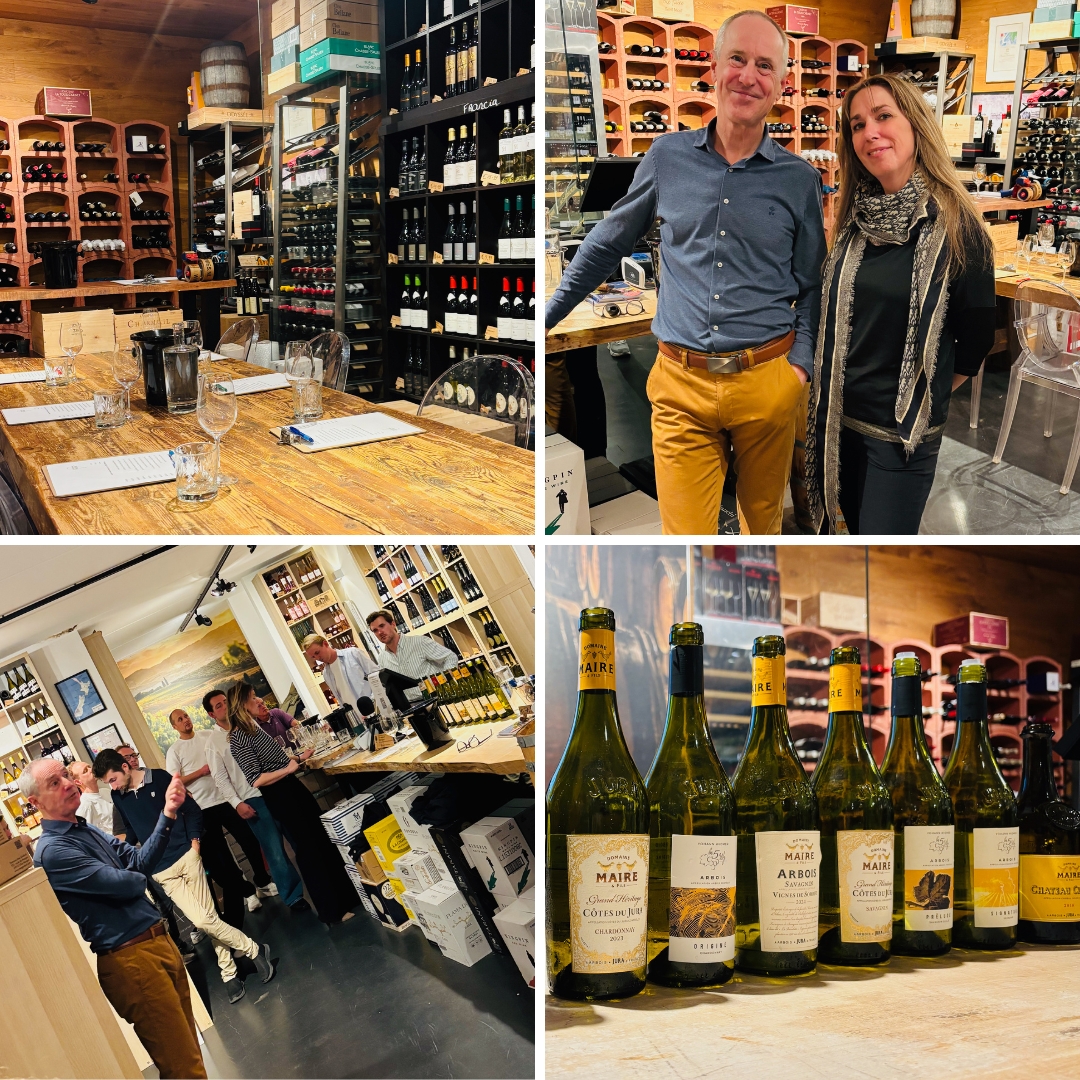
Marianne de Bruijn of De Bruijn in Wijnen, and Jean-Pierre Moueix during a tasting in Bordeaux.
For Bordeaux, the task is therefore not simply to make great wine.
It is to reconnect with the people who ultimately place those wines on shelves, wine lists and dining tables.
Consumers, he believes, still ask for Bordeaux more often than many assume. The challenge is ensuring that Bordeaux remains part of the conversation when recommendations are made.
Listening to him speak, it became clear that his optimism is not rooted in nostalgia. It is rooted in a conviction that Bordeaux’s future will ultimately be determined by the quality in the glass.
Judging by the wines poured that day in Voorburg, he may have a point.
Wine First, Marketing Second
During our conversation after lunch, Edouard Moueix repeatedly returned to a theme that felt surprisingly refreshing in the world of luxury wine.
Wine should be consumed.
At a time when fine wine discussions frequently revolve around scarcity, collectability and investment, Moueix’s perspective remains grounded in the simple idea that wine exists to provide pleasure.
The same philosophy shapes how he views Bordeaux’s future.
The generation that built brands around exclusivity achieved extraordinary success. Yet Moueix believes today’s consumers are looking for something different. They seek experiences, connection and authenticity rather than status alone.
Perhaps his most telling remark came when discussing producers and consumers.
“Nobody drinks the producer. They drink the wine.”
It is a simple statement, but one that reveals much about the family’s approach. The vineyard remains the center of attention. The wine remains the final measure of success.
Everything else is secondary.
Bélair-Monange and the Moueix Vision
If one estate symbolizes the direction of the Moueix portfolio today, it is Bélair-Monange.
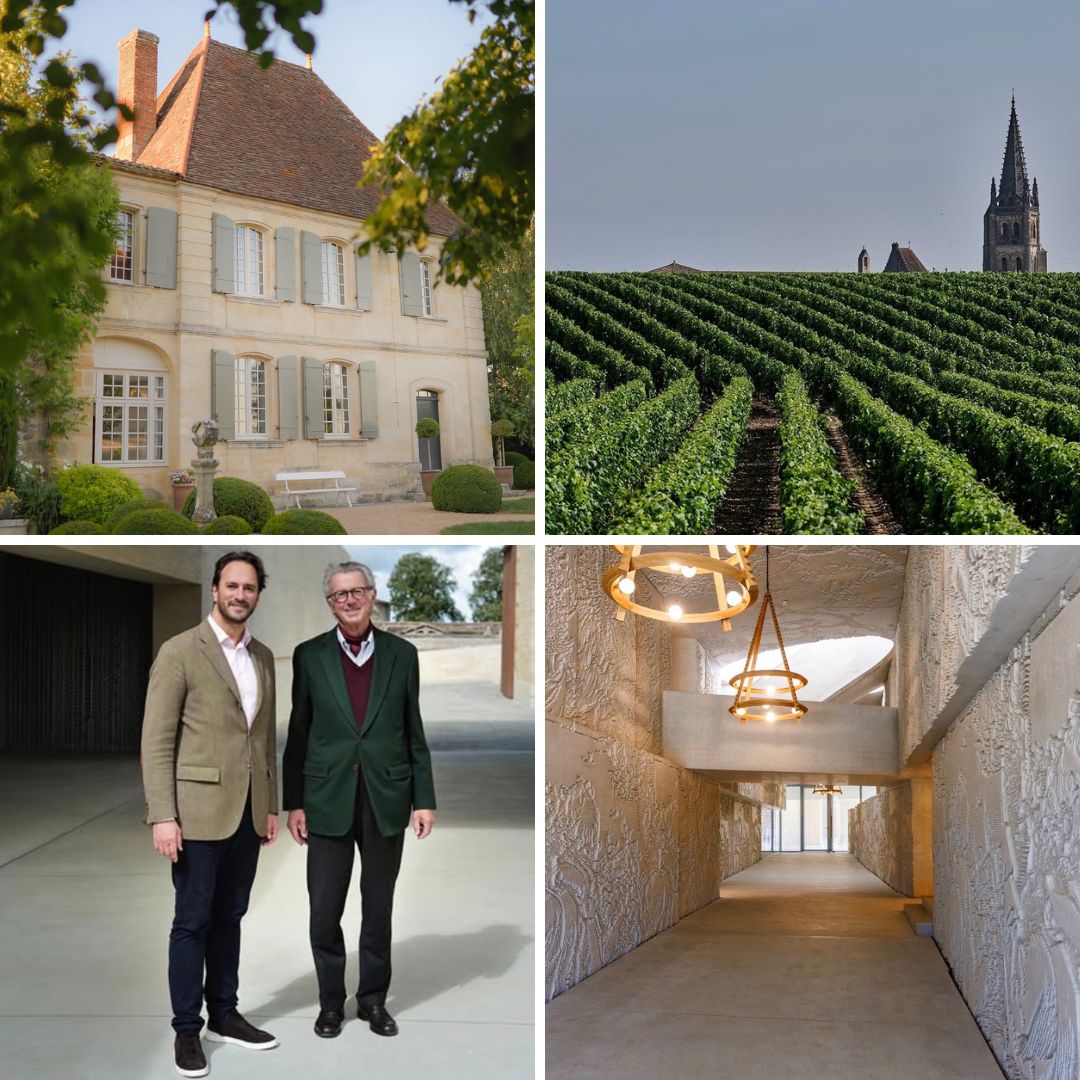
For more than fifteen years, the family has invested heavily in restoring the historic Saint-Émilion property to its former stature. The project has involved extensive vineyard redevelopment, restoration of the limestone quarries beneath the estate and, most recently, the completion of the striking new winery designed by Herzog & de Meuron.
The newly designed winery at Bélair-Monange.
The results are increasingly visible.
The 2016 demonstrated how far the estate has progressed. The 2025 suggests that the project may be entering its most exciting chapter yet.
In many ways, Bélair-Monange reflects the broader themes of the day: respect for history, investment in the future and a belief that great terroirs remain capable of producing wines that transcend changing fashions.
Bordeaux’s Strongest Argument: Value
The most thought-provoking discussion of the afternoon concerned Bordeaux’s position within today’s fine wine market.
No other fine wine region combines historical pedigree, proven longevity, global recognition and production scale in quite the same way. Just as importantly, many producers have responded to changing market conditions with more realistic pricing.
That matters.
Collectors increasingly speak of drinking less but drinking better. In that environment, Bordeaux may be better positioned than many assume.
Edouard Moueix and Eric de Bruijn, from De Bruijn in Wijnen, in Bordeaux.
The best 2025 wines offer immediate appeal through their ripe tannins and freshness, while retaining the ageing potential that has defined the region for generations. Combined with more restrained pricing, they represent a compelling proposition within the modern fine wine landscape.
The challenge is not whether Bordeaux can compete.
The challenge is ensuring that consumers, merchants, sommeliers and collectors continue to recognize the value that Bordeaux already offers.
Looking Forward
What became clear in Voorburg is that the best estates have transformed a difficult growing season into wines of remarkable balance.
They possess concentration without excess, structure without severity and freshness without dilution.
It was a fitting conclusion to an afternoon at Central Park, where thoughtful hospitality, ambitious cuisine, mature wines and unfinished barrel samples combined to offer a rare opportunity to view Bordeaux not through the lens of a single vintage, but through decades of evolution.
As the final glasses of Château Magdelaine 1998 were poured, the 2025-barrel samples already felt slightly different. Not because they had changed, but because the mature wines had provided a glimpse of their possible future.
In Bordeaux, that remains the ultimate measure of a vintage.
Not how impressive it appears in a tasting room, but what it becomes twenty years later.
This article is written by our own Niels Aarts. We would like to thank Edouard Mouiex, De Waal, Zey & Engels, De Bruijn in Wijnen and of course the staff at Central Park Voorburg for their invitation, support and great lunch. Picture credits: Jean-Pierre Moueix and De Bruijn in Wijnen.
If you are interested in the Mouiex wines you can get them in the Netherlands through De Bruijn in Wijnen. For the 2025 En Primeur campaign you can find their selection here.
Join our insiders’ list and get exclusive early access to new articles, expert tips, and fresh reviews delivered straight to your inbox. Subscribe now and be the first to discover!