Join Our Wine Journey – Sign Up for the Newsletter 🍷
Dunn Vineyards: A Reputation Revisited
Share
Deel op X (twitter)
LinkedIn
WhatsApp
Dunn Vineyards: A Reputation Revisited.
Few American Viticultural Areas possess an identity as clearly defined as Howell Mountain.
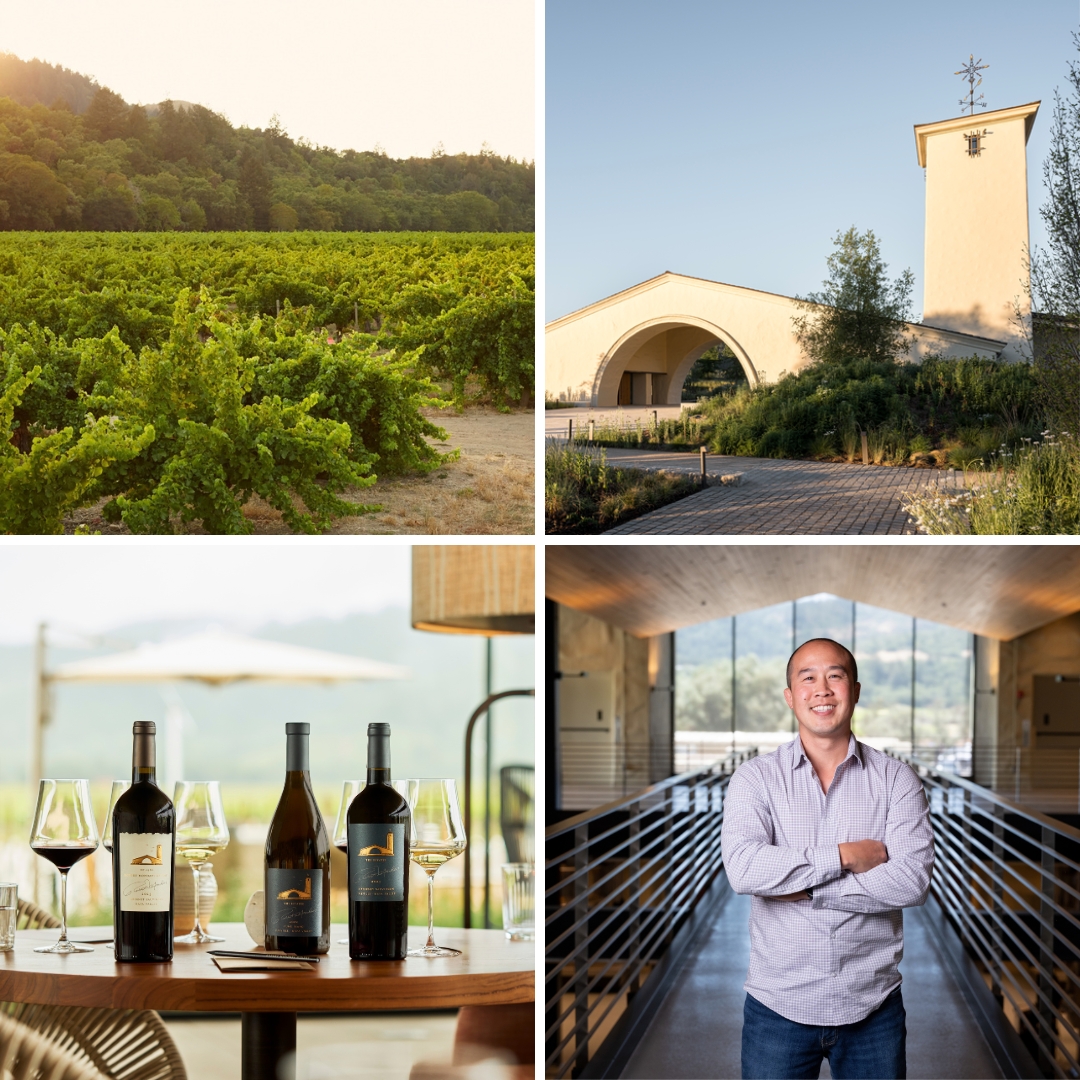
Rising above the eastern side of Napa Valley, the appellation occupies a landscape of volcanic soils, dense forests and vineyards planted almost entirely above the region’s characteristic fog line. Those conditions create a growing environment unlike that of the valley floor below. The growing season is longer, the nights cooler and Cabernet Sauvignon develops with a combination of concentration, freshness and structure that has become the hallmark of the mountain.
Few wineries have done more to define that identity than Dunn Vineyards.
Founded by Randy Dunn in 1979, the estate has spent nearly five decades demonstrating what Cabernet Sauvignon can achieve when the emphasis lies not on immediate generosity or fashionable winemaking, but on precision, longevity and an uncompromising expression of place. During that time, Napa Valley has undergone profound stylistic change, yet Dunn has remained remarkably consistent, refining its approach without ever losing sight of the philosophy on which it was built.
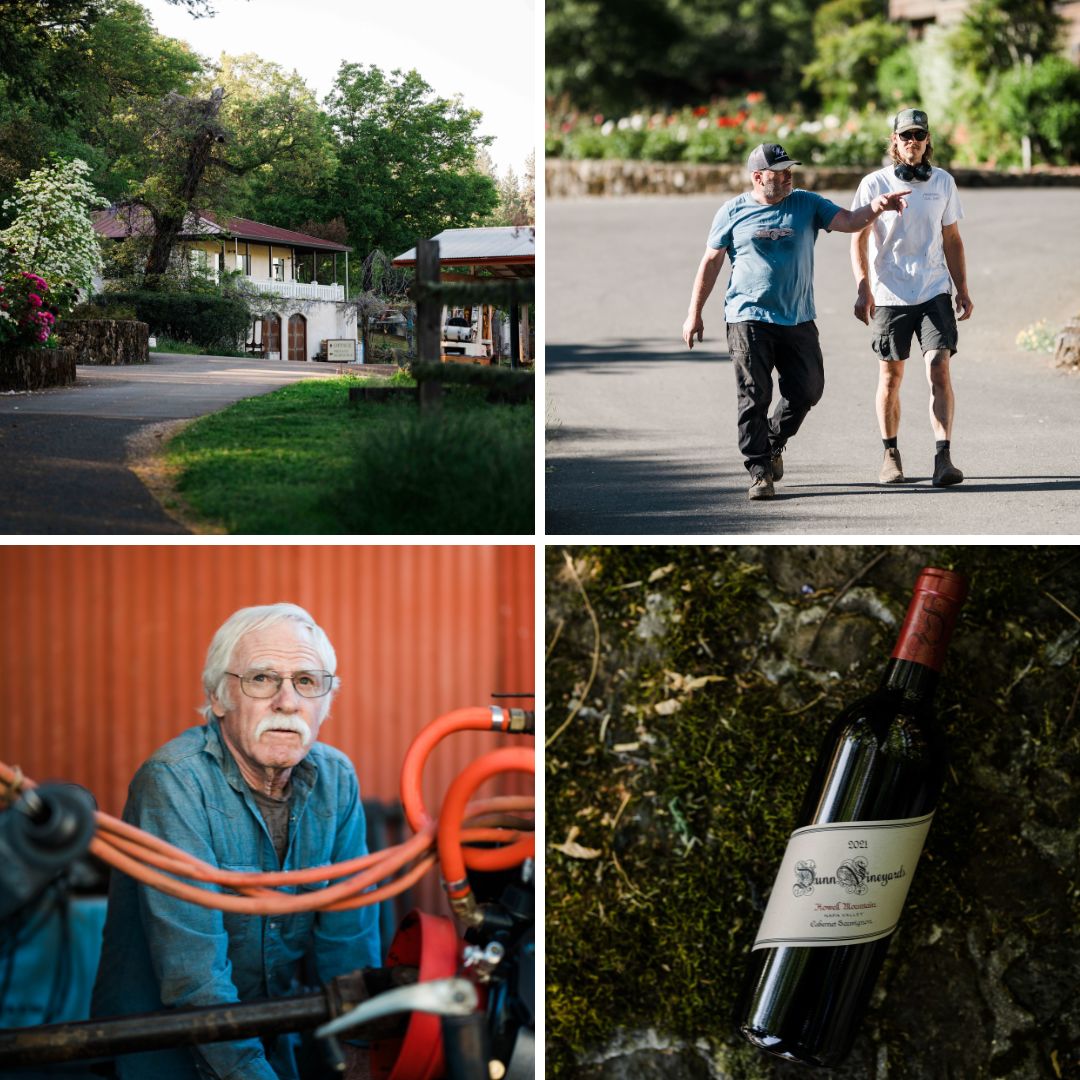
Dunn Vineyards on Howell Mountain.
Today, however, the winery faces an unusual challenge. Dunn’s reputation has become almost as enduring as the wines themselves. Collectors know the Cabernet Sauvignons for their extraordinary ageing potential, sommeliers instinctively associate them with rich cuts of beef, and younger vintages are often discussed in terms of what they might become rather than what they already are. It is a reputation built on admiration, yet one that has gradually narrowed the conversation surrounding the estate.
The irony is that Dunn has never stood still.
Across three generations, the vineyards have become healthier, the cellar more precise and the understanding of Howell Mountain deeper than ever before. Yet the changes have been so gradual that they have often gone unnoticed, hidden behind a reputation that increasingly took on a life of its own.
To understand Dunn Vineyards today, it is therefore necessary to look beyond that reputation and return to the place where the winery’s identity was first established: Howell Mountain.
Above the Fog
When Randy Dunn founded Dunn Vineyards in 1979, Howell Mountain was still a relatively unfamiliar name beyond Napa Valley. Although the Judgement of Paris had firmly established California on the international wine stage three years earlier, producers were only beginning to understand how dramatically Cabernet Sauvignon could change from one part of the valley to another. It was a period of discovery, as growers gradually recognized that Napa Valley was not one vineyard, but a mosaic of distinct sites with their own identities.
Having worked as winemaker at Caymus Vineyards, Randy Dunn knew the generosity and richness that characterized many of the valley floor’s finest wines. Howell Mountain offered something different. Above the fog line, cooler temperatures, volcanic soils and naturally low vine vigor slowed the growing season, allowing Cabernet Sauvignon to ripen gradually while preserving freshness, aromatic precision and a firm structural backbone. Rather than imposing a style in the cellar, Dunn came to recognize that the mountain itself was the wine’s greatest author.
Randy Dunn.
That conviction extended beyond the winery. Dunn was among the growers who believed Howell Mountain deserved recognition as a distinct appellation, helping lay the foundations for the establishment of the Howell Mountain AVA in 1983. Unlike many wine regions whose boundaries follow geography or administrative convenience, Howell Mountain was defined by climate. Once the vineyards rose above the valley’s morning fog, they entered an entirely different growing environment, one capable of producing a style of Cabernet Sauvignon unlike any found elsewhere in Napa Valley.
The same philosophy shaped the growth of Dunn Vineyards. As neighbouring vineyard parcels became available, the objective was never expansion for its own sake, but a deeper connection to the mountain itself. Vineyards remained interwoven with forests, native vegetation and wildlife corridors, reflecting a long-standing belief that preserving Howell Mountain mattered as much as cultivating it. That commitment would eventually find expression in the family’s support of the Napa Valley Land Trust, helping protect significant areas of the mountain from future development.
Dunn Vineyards on Howell Mountain.
By the time Howell Mountain had established itself among California’s great Cabernet Sauvignon appellations, Dunn Vineyards had become one of its defining estates. More importantly, the winery had established an identity inseparable from the mountain itself. Every chapter of its history would begin and end with the same place.
A Philosophy Rooted in Place
The philosophy that emerged at Dunn Vineyards was never the result of a carefully written manifesto, nor was it shaped by the stylistic debates that would later dominate Napa Valley. It developed gradually through years of working on Howell Mountain, observing the vineyards and learning what they revealed from one vintage to the next.
Cabernet Sauvignon established itself as the natural focus of the estate, not because it represented the most commercially attractive choice, but because it proved uniquely capable of translating the mountain’s character into the glass. The combination of volcanic soils, cool nights and an extended growing season produced wines whose balance relied less on intervention than on the conditions in which the fruit had been grown. Rather than encouraging the vineyard to conform to a preconceived style, Dunn adapted its farming and winemaking to the rhythm of the mountain itself.
Dunn Vineyards completely became one with Howell Mountain.
As Napa Valley grew in international prominence throughout the 1980s and 1990s, Cabernet Sauvignon evolved in many different directions. New vineyard practices emerged, cellar techniques became increasingly sophisticated and changing critical tastes encouraged richer fruit, greater ripeness and more pronounced oak influence. Dunn acknowledged those developments but rarely felt compelled to follow them. Every new practice was judged by a single question: did it reveal Howell Mountain more clearly, or did it move the wine further away from its origin?
That question shaped every decision. Advances in viticulture were embraced when they improved the health of the vineyards. Refinements in the cellar were adopted when they allowed the fruit to speak with greater precision. Yet the objective never changed. Innovation was welcomed, provided it served the vineyard rather than the winemaker.
Perhaps that explains why Dunn has evolved so quietly.
Improvements in farming, barrel selection and winemaking have steadily refined the wines without altering their identity. Vintage after vintage, the estate has remained recognizably itself, not through resistance to change, but through a willingness to change only when it strengthened the expression of place.
That consistency earned Dunn the respect of fellow winemakers and collectors alike. Over time, however, it also shaped the way the outside world came to understand the estate. The reputation surrounding the wines became almost as enduring as the wines themselves—a reputation that, with every passing vintage, gradually took on a life of its own.
The Weight of Consistency
Consistency is one of the rarest achievements in fine wine. Outstanding vintages can establish a winery’s reputation almost overnight, but genuine consistency is earned over decades, as each successive release reinforces the confidence of collectors, sommeliers and consumers alike. By the turn of the century, Dunn Vineyards had become one of those rare estates whose reputation rested not on a handful of celebrated vintages, but on the remarkable reliability with which it expressed Howell Mountain, year after year.
That reputation was established during a period of profound change in Napa Valley. Throughout the 1980s and 1990s, international demand grew rapidly, vineyard prices climbed and critical opinion increasingly influenced stylistic direction. Many producers responded to a market that rewarded greater ripeness, richer fruit and more pronounced oak influence.
Dunn saw little reason to alter a style that had always been shaped by the mountain rather than prevailing fashions. If anything, the estate’s confidence in its own identity only deepened as the surrounding landscape evolved.
The Winery got its Upgrades, but the Identity of the Vineyards still leads the Wines.
Collectors recognized that confidence. Dunn became one of the few Californian Cabernet Sauvignons to find a place in cellars otherwise dominated by Bordeaux, Burgundy and the Rhône Valley. Rather than being viewed simply as an alternative to Europe’s great wines, it earned recognition alongside them, admired for its ability to evolve over decades while retaining freshness, structure and a clear sense of place. Mature bottles repeatedly confirmed that reputation in blind tastings, standing comfortably beside some of the world’s most celebrated wines.
Success, however, brought an unexpected consequence. As stories about Dunn’s longevity circulated among collectors and sommeliers, admiration gradually became expectation. The wines were no longer celebrated merely because they aged beautifully; increasingly, they were defined by the assumption that they should not be opened for many years.
Few people have observed that perception more closely than Lily Mirabelle Freedman.
Lily Mirabelle Freedman, GM at Dunn Vineyards.
Before joining Dunn Vineyards, she spent almost a decade working in the international wine auction market, handling some of the world’s most important private collections. Whether the cellar belonged to a lifelong Bordeaux collector, a Burgundy enthusiast or someone whose interests spanned the great wine regions of the world, she encountered the same pattern with remarkable regularity: unopened cases of Dunn.
The explanation was almost always the same.
Owners would smile, glance towards the shelves and remark that the Dunn was still waiting because it would probably outlive them. The comment was offered with genuine admiration for the wines’ extraordinary longevity, yet it revealed something else. Many collectors had come to admire Dunn so deeply for what it might become that they postponed discovering what it already was.
The irony is difficult to ignore. A winery that had spent decades pursuing balance rather than sheer power gradually became known almost exclusively for its ability to age. Conversations increasingly centred on patience, cellaring and maturity, while the freshness, precision and versatility that had always characterized the wines received far less attention.
Inside the winery, however, a different story was unfolding. Vineyard practices continued to evolve, the cellar became steadily more precise and each generation quietly refined the work of the last. The philosophy had not changed, but the way in which it was expressed continued to improve. Those changes would only become fully apparent by looking back through the winery’s own history.
Reading Dunn Again
When Lily Mirabelle Freedman joined Dunn Vineyards, she inherited more than a new role. She also inherited more than four decades of history, preserved not only in the vineyards and the cellar, but in filing cabinets filled with newsletters, harvest reports, correspondence and tasting notes dating back to the winery’s earliest years.
Curiosity led her to begin reading.
Issue after issue revealed a Dunn Vineyards that felt strikingly different from the image she had encountered during her years in the international wine trade. There were updates from the vineyards, reflections on harvest, stories about family life and photographs of Howell Mountain through the changing seasons. The newsletters spoke of geese, gardens, travel and everyday life. Surprisingly little space was devoted to selling the wines themselves. There were few references to scores, critics or commercial success. Instead, the newsletters documented the rhythm of life on the mountain, allowing the wines to emerge naturally from the place in which they were grown.
The further she read, the clearer the pattern became. The language evolved, new generations assumed responsibility and vineyard practices gradually became more refined, yet the underlying philosophy scarcely changed. Dunn was never trying to become something different. It was simply trying to understand Howell Mountain a little better with every passing vintage.
The archives prompted another question. If the philosophy had remained so remarkably consistent, had the wines themselves changed as much as many people assumed?
Dunn’s Administration turned out to be a Treasure Trove.
Part of the answer lay in the winery’s analytical records. Looking back across decades of vintages, alcohol levels, acidity and pH displayed a degree of continuity that would surprise many observers familiar only with the broader story of Napa Valley Cabernet Sauvignon.
While much of the region gradually moved towards riper fruit and higher alcohol during the closing decades of the twentieth century, Dunn’s figures remained strikingly stable. The freshness and restraint associated with the wines today were not the result of a recent stylistic correction. They had been present for decades, quietly preserved by the mountain itself.
Seen through that lens, Dunn’s evolution looked rather different. The vineyards had become healthier, farming more precise and the cellar more refined, but those changes rarely altered the character of the wines. Instead, they revealed it with greater clarity. The mountain had not found a new voice; it had simply become easier to hear.
That realization also cast the winery’s reputation in a different light. Outside Dunn, the story had continued to grow through collectors, critics and sommeliers, each adding another layer to its mythology. Inside the winery, the work had remained remarkably steady, focused not on preserving a reputation but on understanding a place. The two stories had never been in conflict, but they had gradually drifted apart.
If Dunn had become misunderstood, nowhere was that more apparent than at the table.
Beyond the Steakhouse
Few perceptions have become as deeply rooted as the idea that Dunn Vineyards produces Cabernet Sauvignon for the cellar first and the dining table second. It is an understandable conclusion. Wines renowned for their longevity naturally become associated with patience, while the structure of young Howell Mountain Cabernet encourages comparisons with Bordeaux.
Over time, those qualities also shaped the way Dunn was served. Rich cuts of beef, game and other robust dishes became almost automatic pairings, reinforcing the impression that these were powerful wines requiring equally powerful food.
Yet that reputation tells only part of the story.
If freshness, moderate alcohol and vibrant acidity have always defined Dunn, there is little reason to assume the wines belong exclusively alongside heavily flavored cuisine. Some of the most memorable combinations in recent years have relied not on richness, but on precision. Fatty tuna, grilled octopus, roasted vegetables and Japanese cuisine have repeatedly demonstrated that Howell Mountain Cabernet can accompany dishes rarely associated with Napa Valley. Rather than overwhelming delicate flavours, the wines bring freshness, definition and remarkable balance to the table.
That perspective also reflects a broader shift within fine dining. Contemporary tasting menus increasingly favor elegance over weight, acidity over sheer concentration and progression over individual statements. Sommeliers are therefore looking less for wines that dominate a single course and more for those capable of carrying an entire meal. Viewed through that lens, Dunn begins to look rather different from the image that accompanied it for so many years.
Dunn’s Cabernet’s have a reputation for ageing, but have their own qualities when poured young as well.
Lily Mirabelle Freedman has watched that change unfold during tastings and international visits. Younger sommeliers often approach Dunn without the assumptions that shaped previous generations. Instead of seeing a wine defined primarily by longevity, they respond to its freshness, texture and energy. Conversations move naturally from cellaring potential to food, revealing dimensions that had always been present but were often overshadowed by the estate’s formidable reputation for ageing.
That renewed appreciation is particularly evident in markets where wine has long been understood as part of the dining experience rather than an object of collection. In Japan, Dunn has found a natural audience among sommeliers who value the interplay between freshness, structure and umami, while in cities such as Stockholm the wines have become increasingly at home on tasting menus built around precision rather than excess. These are not markets reinterpreting Dunn. They simply recognize qualities that have always been there.
Seen from that perspective, Dunn’s reputation appears less mistaken than incomplete. The wines undoubtedly reward long cellaring, just as they always have, but reducing them to their ageing potential overlooks what makes them compelling from the moment they are released. Balance, freshness and a profound sense of place were never qualities waiting to emerge after twenty years in bottle. They have always been present.
That becomes unmistakably clear once the wines themselves are poured.
Howell Mountain in the Glass
Ultimately, every philosophy must answer to the wine itself.
After spending time on Howell Mountain, exploring the winery’s archives and understanding the principles that have guided Dunn Vineyards for more than four decades, tasting the wines becomes more than an exercise in evaluation. It becomes an opportunity to discover whether everything the estate claims about itself can be found in the glass.
Dunn’s Cabernet’s Bearing the Iconic Label.
To explore that question, we tasted two expressions from the outstanding 2021 vintage.
Although both originate from the same growing season and share the unmistakable signature of Dunn Vineyards, they reveal two distinct perspectives. The Napa Valley Cabernet Sauvignon offers an introduction to the estate’s style, while the Howell Mountain bottling delivers the mountain in its purest and most complete form.
2021 Dunn Vineyards Napa Valley Cabernet Sauvignon | DWA Rating: 93/100
The 2021 Napa Valley Cabernet Sauvignon immediately reflects the restrained philosophy that has defined Dunn for decades. Aromas of blackcurrant, wild blackberry and dark cherry are lifted by notes of graphite, cedar, dried herbs and a subtle floral freshness. The palate is beautifully composed, balancing ripe fruit with vibrant acidity and finely grained tannins that provide structure without dominating the wine. Rather than pursuing richness for its own sake, it emphasises precision, purity and remarkable drinkability. Already highly enjoyable in its youth, it possesses enough structure to reward further cellaring, yet its greatest strength lies in its effortless balance.
2021 Dunn Vineyards Howell Mountain Cabernet Sauvignon | DWA Rating: 96/100
The Howell Mountain Cabernet Sauvignon builds upon the same philosophy with greater depth, concentration and definition. Dark cassis, blackberry, graphite and crushed volcanic stone are joined by hints of mountain herbs, violets, cedar and pencil shavings, creating a wine of striking aromatic complexity. On the palate, the fruit is tightly woven into a framework of vibrant acidity and powerful yet exceptionally refined tannins.
Despite its youthful intensity, nothing feels excessive. Instead, the wine combines concentration with remarkable freshness, allowing the mountain’s distinctive character to take center stage. It is unmistakably built for the long term, but even at this early stage its balance and precision make it deeply compelling.
Tasted side by side, the two wines reveal the remarkable consistency that has shaped Dunn Vineyards since its founding. The Howell Mountain bottling undoubtedly possesses greater depth and longevity, yet the family resemblance is unmistakable. Freshness, restraint and an unwavering sense of place define both wines far more than power or extraction.
Perhaps that is the clearest lesson of the tasting. Dunn’s legendary ability to age is not the objective—it is the consequence. These wines endure because they begin in balance, allowing time to reveal ever greater complexity without sacrificing the energy that has been present from the very beginning. In the end, Howell Mountain is not simply where these wines are grown. It is the quiet thread that connects every vintage, every bottle and every generation of Dunn Vineyards.
A Legacy of Consistency
The story of Dunn Vineyards is often told through the lens of longevity, and understandably so. Few wineries anywhere in the world have built such an enduring reputation for producing wines capable of rewarding decades of patience. Yet after spending time on Howell Mountain, speaking with the people behind the estate and looking back through its own history, that reputation begins to feel less like the whole story than a single chapter within it.
What emerges instead is a winery defined by remarkable clarity of purpose. Since Randy Dunn founded the estate in 1979, the ambition has never been to follow changing fashions or pursue the style of the moment. The objective has remained strikingly consistent: to understand Howell Mountain more deeply with every vintage and allow that understanding to find its way naturally into the glass.
That philosophy has endured because it was never tied to a particular generation or personality. Randy Dunn established the foundations, but each generation has quietly built upon them, refining vineyards, improving farming and embracing new knowledge without losing sight of the principles that shaped the estate from the beginning. The result is not a winery preserved in time, but one that continues to evolve without ever losing its identity.
The next generations of the Dunn Family are continuing the great work on Howell Mountain.
Perhaps that explains why Dunn occupies such a distinctive place within Napa Valley today. In a region often defined by reinvention, it has demonstrated the value of continuity. While styles, markets and critical tastes have shifted around it, the mountain has remained the estate’s constant point of reference, providing a sense of direction that has never required dramatic course corrections.
For collectors, that consistency offers confidence. For sommeliers, it opens possibilities at the table that extend well beyond the expectations surrounding Napa Valley Cabernet Sauvignon. And for anyone encountering Dunn for the first time, it offers something increasingly rare: a wine whose character is shaped less by the era in which it was made than by the place from which it came.
Dunn Vineyards and Howell Mountain are here to stay.
In the end, the reputation is deserved. Dunn Vineyards is one of California’s great Cabernet Sauvignon estates, and its wines will continue to reward patience for decades to come. But perhaps the greatest reward lies in recognizing that their story has never been about longevity alone. It has always been about Howell Mountain—and about the quiet discipline of returning, vintage after vintage, to the same place in search of an ever-clearer expression of it.
This article is written by our own Niels Aarts and based on an interview with Lily Mirabelle Freedman. We thank her, and the Dunn family for their time and openness. The 2021 wines were provided by Best of Wines, who are Dunn Vineyards distributor in the Netherlands. Picture credits: Dunn Vineyards and their respective owners.
Join our insiders’ list and get exclusive early access to new articles, expert tips, and fresh reviews delivered straight to your inbox. Subscribe now and be the first to discover!