Join Our Wine Journey – Sign Up for the Newsletter 🍷
Bordeaux 2025: Precision Under Pressure
Share
Deel op X (twitter)
LinkedIn
WhatsApp
Bordeaux 2025: Precision Under Pressure.
Bordeaux 2025 is not a vintage that reveals itself easily. It does not seduce with opulence, nor overwhelm with power. Instead, it unfolds gradually—demanding attention, and rewarding those who look beyond the surface with wines of remarkable precision and quiet authority.
Following the en primeur campaign, one conclusion becomes clear: this is not a universally great vintage, but a highly selective, terroir-driven year. At its best, it delivers wines of clarity, balance, and intent—wines that feel composed rather than constructed.
If 2022 was about scale and 2023 about approachability, then 2025 belongs firmly to the reflective drinker. It is a vintage that may not impress instantly, but one that reveals increasing depth with time and attention.
A Vintage Shaped by Extremes
The growing season of 2025 was defined by contrast. Early budbreak set the tone for a warm and accelerated cycle, followed by a prolonged period of summer heat and dryness. As the season progressed, water stress became a central factor—particularly on free-draining gravel and sandy soils, where vines struggled to maintain equilibrium.
The 2025 vintage wasn’t an easy one but in capable hands it produced great wines.
Yet Bordeaux, perhaps more than any other fine wine region, is defined by its ability to adapt. Cooler nights preserved acidity, while careful vineyard management and precise harvest timing allowed the best estates to avoid the excesses often associated with hot vintages.
The result is a year that speaks less of climate extremes, and more of human response to those extremes. Where decisions were measured and flexible, wines show remarkable balance. Where they were rigid, the vintage is far less forgiving.
Style: Structure Reimagined
What emerges in the glass is a style that feels both familiar and quietly progressive. The best wines of 2025 are structured, yet not heavy; concentrated, yet not opulent. Fruit expression is clear and focused, supported by tannins that are present but rarely aggressive, and acidity that brings lift rather than tension.
There is, across the top wines, a sense of definition—of elements held in place rather than pushed to their limits. Alcohol levels remain moderate, and the overall impression is one of control.
The best wines of 2025 are structured, yet not heavy; concentrated, yet not opulent.
At the same time, this is not a vintage that flatters indiscriminately. Where extraction was too forceful, or where ripening was uneven, wines can appear dry, angular, and lacking in mid-palate depth. In that sense, 2025 rewards intuition over formula, and nuance over ambition.
The Left Bank: A Study in Control
Pauillac – Classical Structure, Recalibrated
In Pauillac, the vintage finds one of its most consistent expressions. The appellation’s deep gravel soils, combined with experienced vineyard management, have produced wines that retain their classical identity while adapting to the conditions of the year.
Here, structure is still very much at the core—but it is a structure shaped by restraint. The wines are less about density and more about line: focused, linear, and composed.
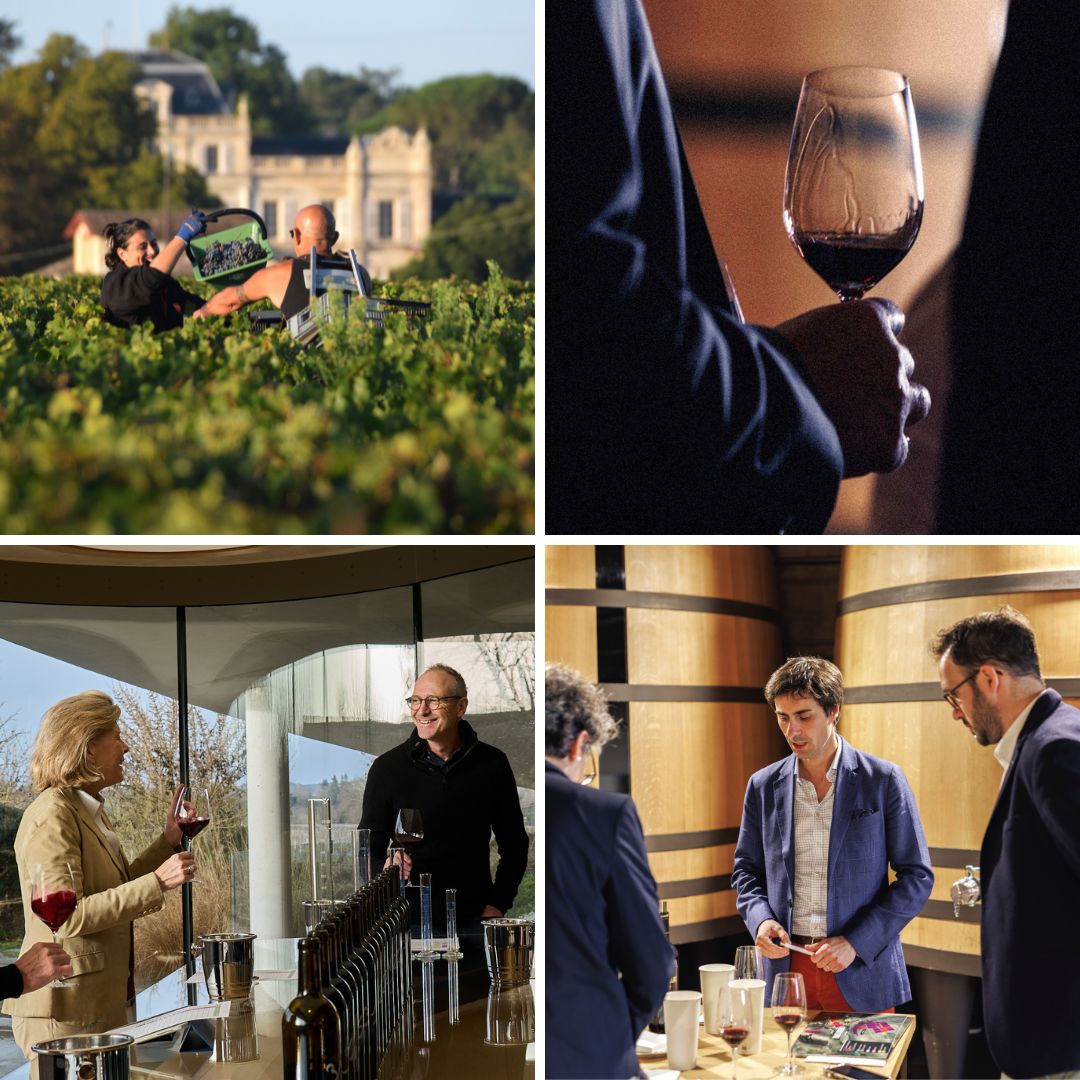
Tastings during en-primeur in Margaux, at Brane-Cantenac.
Among the leading performers, Château Lafite Rothschild and Château Mouton Rothschild once again define the upper tier, each interpreting the vintage through its own lens—Lafite through precision and restraint, Mouton with slightly more amplitude and texture. Alongside them, Château Pontet-Canet and both Pichon estates demonstrate just how successful Pauillac can be when power is guided by discipline rather than pursued for its own sake.
Saint-Julien – Balance as Identity
If Pauillac is about structure, Saint-Julien remains the appellation of proportion. In 2025, that identity becomes even more relevant, as balance proves more valuable than scale.
The benchmark estates—Château Léoville Las Cases and Château Ducru-Beaucaillou—once again deliver wines of quiet authority, defined not by intensity, but by coherence.
Within this framework, Château Beychevelle offers a particularly interesting perspective. As explored in “An Iconic Saint-Julien Estate Reinvented”, the château’s recent evolution toward greater precision is clearly reflected in the vintage. The result is a wine that feels measured and composed, favoring clarity over impact, and confirming Saint-Julien’s reputation as Bordeaux’s most consistently harmonious appellation.
Margaux – The Language of Elegance
Margaux, in 2025, speaks in a softer voice—but one that carries further. The appellation is among the most successful of the vintage, producing wines of aromatic detail and textural finesse.
At the highest level, Château Margaux and Château Palmer capture the essence of the year: wines that combine depth with weightlessness, structure with fluidity. As explored in “A Legacy of Elegance and Evolution”, Palmer’s identity is built on refinement and adaptability—qualities that align seamlessly with the demands of 2025.
Château Palmer maintains its reputation as strong performer in 2025.
Further reinforcing this narrative, Château Brane-Cantenac continues to demonstrate its role as a true “silent force” within the appellation. As explored in “Château Brane-Cantenac: Solid, Silent Force in Margaux”, the estate’s strength lies not in headline-grabbing power, but in consistency, precision, and an unwavering commitment to terroir expression. In 2025, that philosophy translates seamlessly into a wine that captures Margaux’s finesse with clarity and control—often rivaling more prominent names not through scale, but through balance and definition.
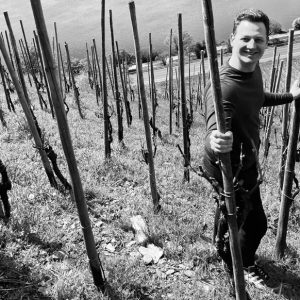
Henri Lurton’s Château Brane-Cantenac is a force to reckon with.
Saint-Estèphe – Strength with Direction
In contrast to Margaux’s elegance, Saint-Estèphe offers a more grounded, structured expression of the vintage. Yet even here, the defining theme is not power alone, but control.
The leading estates—Château Montrose and Château Cos d’Estournel—deliver wines of depth and authority, built for long-term ageing but anchored by freshness.
Alongside them, Château Phélan Ségur provides a compelling example of the appellation’s evolution. As discussed in “Breaking the Glass Ceiling in Saint-Estèphe”, the estate has shifted toward a more precise and balanced style—an approach that proves particularly effective in 2025, where restraint is rewarded as much as ambition.
Château Phélan Ségur again punches well above its weight class in 2025.
Pessac-Léognan – Where the Vintage Finds Its Voice
If one appellation captures the essence of Bordeaux 2025, it is Pessac-Léognan. Here, the interplay between structure, freshness, and aromatic complexity is at its most articulate.
At the top, Château Haut-Brion provides its usual depth and gravitas, while Les Carmes Haut-Brion offers a more progressive, lifted interpretation—an approach explored in “Bordeaux Reimagined from Within”.
Château Les Carmes Haut Brion found its place in the top of Bordeaux in just over a decade, and is there to stay.
Yet it is Château Haut-Bailly that perhaps best defines the vintage. As highlighted in “Custodians of Style Beyond Fashion”, the estate’s philosophy of restraint and continuity aligns perfectly with the conditions of 2025. Rather than seeking to amplify concentration, Haut-Bailly allows the wine to unfold naturally, resulting in an expression that feels both complete and effortless.
Véronique Sanders – van Beek clearly has the momentum with her team at Château Haut-Bailly.
In this sense, Pessac-Léognan does more than succeed in 2025—it explains the vintage.
The Right Bank: Terroir in Focus
Saint-Émilion – The Return of Limestone
On the Right Bank, the role of terroir becomes even more pronounced. Nowhere is this clearer than in Saint-Émilion, where limestone soils once again prove their value in a warm, dry year.
The leading estates—Château Cheval Blanc, Château Ausone, and Château Figeac—deliver wines defined by energy and precision rather than sheer richness.
Here, the vintage rewards sites that can maintain balance under pressure, resulting in wines that feel lifted, linear, and enduring.
Pomerol – Depth, Refined
Pomerol, by contrast, offers a more enveloping expression of the vintage, though still shaped by the same underlying sense of control.
At the highest level, Vieux Château Certan and La Conseillante stand out for their ability to combine depth with freshness—wines that are rich, but never excessive.
Within this context, Château CLINET provides a compelling bridge between tradition and modernity. As explored in “A Modern Soul on a Classic Soil”, the estate’s approach allows it to navigate the vintage with confidence, delivering a wine that reflects both the character of Pomerol and the demands of the year.
A Vintage for the Informed Buyer
Beyond the headline names, Bordeaux 2025 reveals a deeper, more nuanced story—one that speaks directly to the informed buyer.
In a year where conditions were unforgiving, many mid-tier estates rose to the occasion, often outperforming expectations. Producers such as Château Brane-Cantenac and Château Phélan Ségur demonstrate that success in 2025 is not defined by classification, but by decision-making.
For 2025 the motto seems; if it is good, it is really good!
This is a vintage where knowledge—of terroir, of producer, of style—becomes a decisive advantage.
Challenges and Limitations
The same conditions that elevated the best wines also exposed the limits of others. On lighter soils, particularly gravel and sand, water stress often led to uneven ripening, resulting in wines that lack cohesion.
In the cellar, a failure to adapt extraction techniques to the vintage has, in some cases, produced wines that feel dry and structurally dominant. These are not flaws unique to 2025—but they are more visible here.
Precision and attention in the cellar were crucial in 2025.
This is not a forgiving vintage. It demands precision—and reveals its absence.
Market Context: A Moment of Adjustment
Bordeaux 2025 arrives at a moment when the market itself is recalibrating. After a series of high-profile and, at times, high-priced campaigns, buyers are increasingly selective.
In this environment, the strengths of 2025—its precision, its restraint, its emphasis on balance—align with a broader shift in demand. At the same time, the variability of the vintage reinforces the importance of careful selection.
The state of the market might worry many but some producers are very ‘in-control’ of their wines and delivered strong wines in 2025.
The gap between the best wines and the rest is no longer just qualitative—it is increasingly commercial.
Vintage Context: A Question of Style
To understand 2025, it is useful to place it alongside recent vintages. If 2010 represents structure at its most monumental, and 2022 power at its most expansive, then 2025 sits in a different space altogether.
Bordeaux’s 2025 vintage is defined by contrasts, with Giscours ending up on top with the best.
It shares the structural clarity of 2010, but without its weight. It approaches the precision of 2016 at the top level, though with less overall consistency. And in contrast to the richness of 2020 or 2022, it offers a more restrained, measured expression.
In that sense, 2025 is not defined by comparison—but by contrast.
Strong Performers in 2025
While the vintage resists simple hierarchies, a clear group of wines has emerged at the highest level—each offering a distinct interpretation of the same conditions.
In no particular order we recommend:
Château Mouton Rothschild
Château Margaux
Château Cheval Blanc
Château Ausone
Château Montrose
La Conseillante
Château Haut-Brion
Château Haut-Bailly
Troplong Mondot
Pontet-Canet
Château Giscours
These wines do not dominate through scale, but through clarity. They define 2025 not as a vintage of power, but of precision.
Conclusion: Understanding Over Impression
Bordeaux 2025 is not a vintage that seeks immediate recognition. It does not rely on impact or scale to make its case. Instead, it builds its argument gradually, through balance, structure, and detail.
It is a vintage that rewards those who take the time to understand it—those who look beyond reputation and into the specifics of site and producer.
Now the 2025 en-primeur tastings are done we wait for the prices and ratings.
For those willing to engage on those terms, it offers something increasingly rare: wines that do not simply impress, but endure.
In the end, Bordeaux 2025 does not seek attention—it earns it, slowly and decisively, in the glass.
This article was written by Niels Aarts, and is based on extensive research, as well as ongoing dialogue with leading critics and professionals across the wine trade. While we did not attend the 2025 en primeur tastings, our analysis reflects a synthesis of trusted industry insights, supported by our own experience in Bordeaux through previous visits, tastings, and in-depth conversations with many of the region’s leading producers. We thank our partners, the producers for their support in writing this article, and the images provided.
Join our insiders’ list and get exclusive early access to new articles, expert tips, and fresh reviews delivered straight to your inbox. Subscribe now and be the first to discover!