Join Our Wine Journey – Sign Up for the Newsletter 🍷
Chefs & Cellars: Dining at Restaurant Roux, Amsterdam
Share
Deel op X (twitter)
LinkedIn
WhatsApp
Chefs & Cellars: Dining at Restaurant Roux, Amsterdam
In Amsterdam’s Jordaan, where narrow streets carry centuries of history and the rhythm of the city feels just a little more intimate, Restaurant Roux has found its place with remarkable confidence. It is not a restaurant that demands attention through spectacle, but one that earns it through consistency, clarity, and an unmistakable sense of purpose.
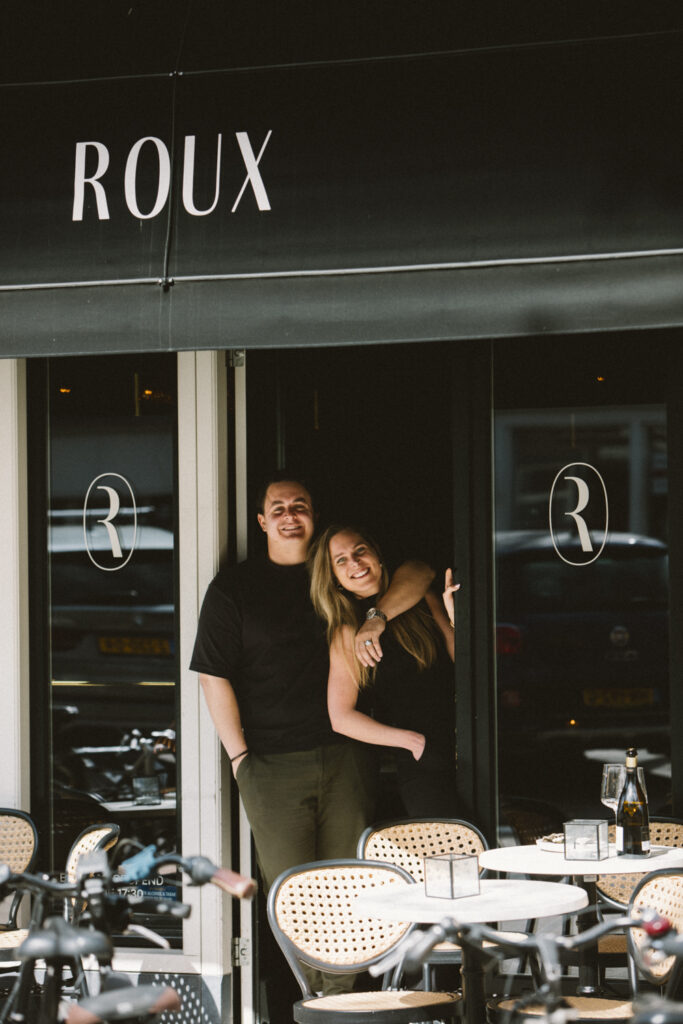
For Episode 3 in Season 2 of Chefs & Cellars, we sat down with co-owners Allon Niesen and Roos Bierhoff—a duo whose shared background in hospitality has evolved into one of Amsterdam’s most compelling new dining stories.
From Colleagues to Co-Founders
The story of Roux begins, as many strong hospitality concepts do, not with a business plan, but with people. Allon Niesen and Roos Bierhoff first crossed paths professionally, working side by side in the industry. What started as a collaboration quickly developed into a friendship built on shared standards, mutual trust, and a deep appreciation for quality.
That personal connection would prove essential. Opening a restaurant is one thing; building a lasting one requires alignment far beyond operational skill. It demands a shared vision—not just of what a restaurant should be, but how it should feel.
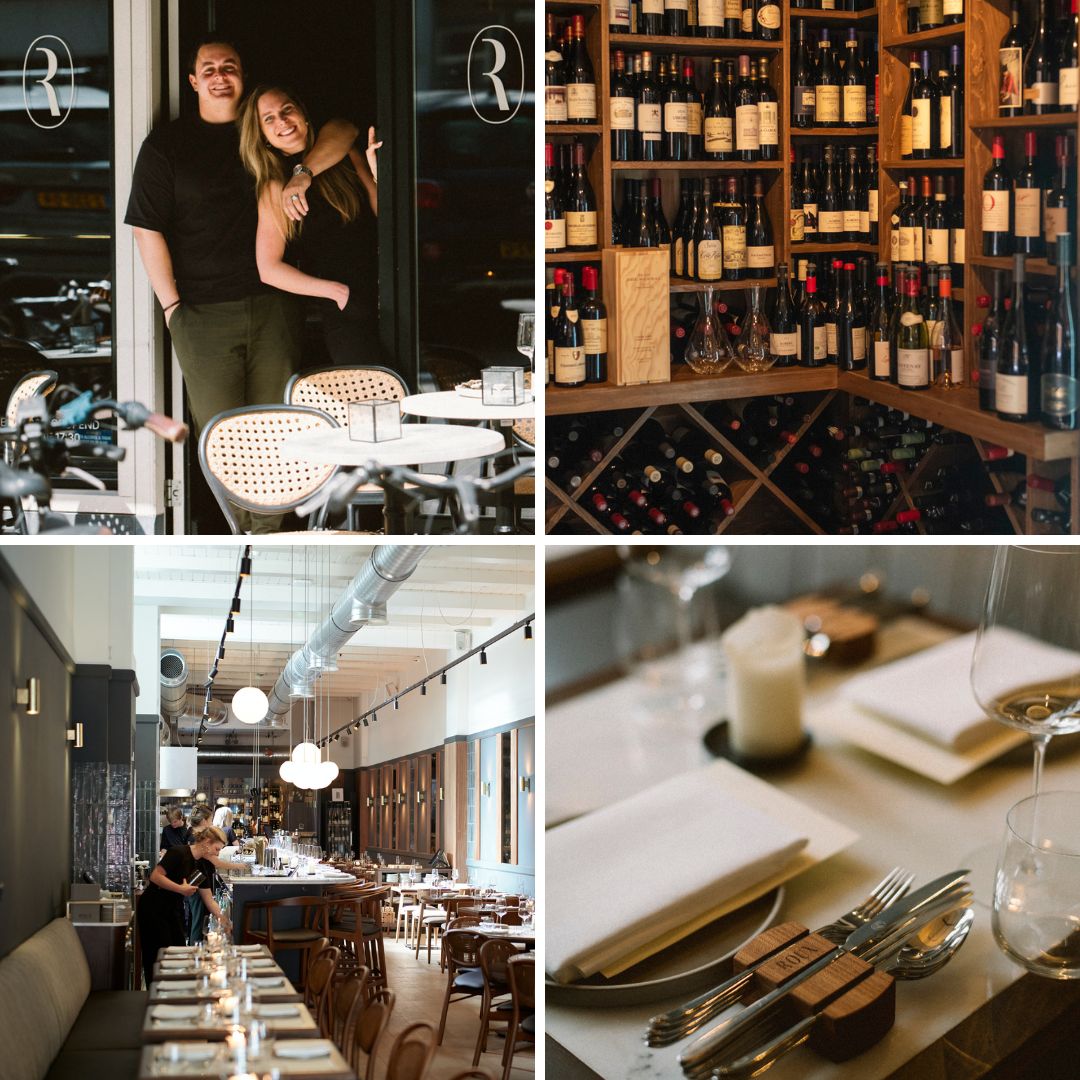
Allon Niesen and Roos Bierhoff.
For Roux, that vision was surprisingly simple: create a place they themselves would choose, again and again. Not for a special occasion, not as a rare indulgence, but as a reliable, high-quality option for any given evening.
Rethinking the Dining Experience
In a city saturated with ambitious concepts and ever-evolving formats, Roux deliberately chose a different path. At its core lies a single, defining principle: freedom of choice.
There are no tasting menus here. No fixed journeys. Instead, guests are invited to navigate the menu entirely à la carte—deciding for themselves how long they stay, how much they explore, and how they wish to spend.
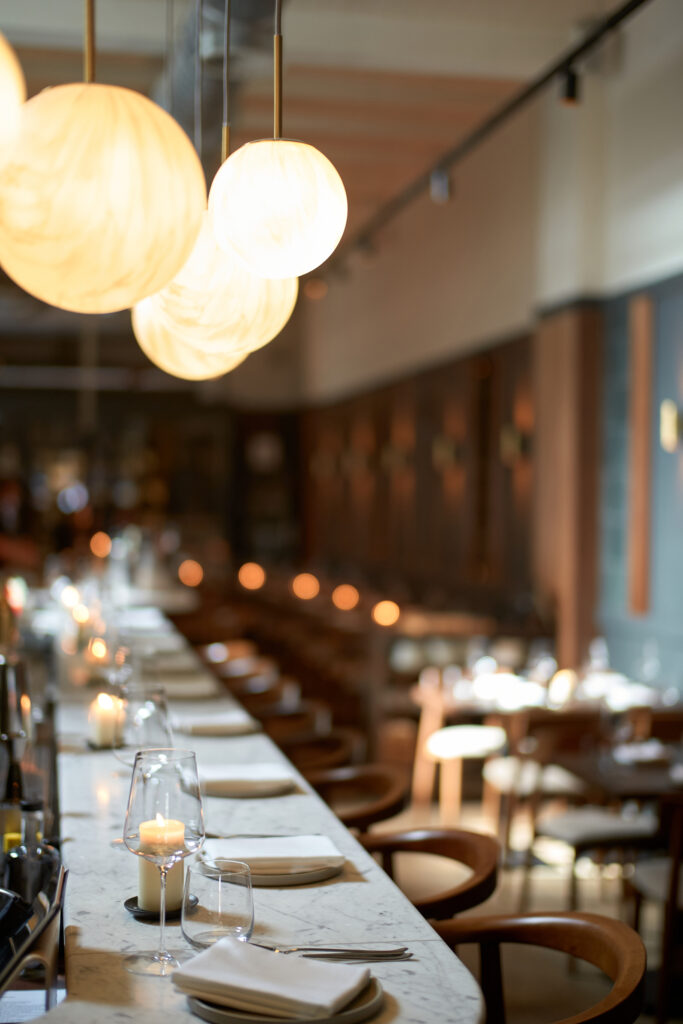
One of Roux’s Eyecatchers, the Bar.
It is a response to a broader shift in dining culture. The traditional multi-hour tasting format, while still relevant, is no longer the default for many guests. Time, flexibility, and accessibility have become equally important considerations.
At Roux, this translates into a dining model that adapts to the guest, rather than the other way around. A quick main course and a glass of wine are as welcome as a full progression through the menu. The experience is defined not by structure, but by intention.
Casual Fine Dining, Defined
Describing Roux as casual fine dining is accurate, but perhaps incomplete. It is not simply a matter of lowering formality; rather, it is about recalibrating expectations.
Quality remains non-negotiable. Ingredients are carefully sourced, technique is precise, and presentation is thoughtful. Yet the atmosphere is deliberately unforced. There is no stiffness, no sense of ceremony imposed on the guest.
Roos Bierhoff, responsible for the front of the house.
Roos captures it best when describing the ambition behind Roux: a place where guests feel immediately comfortable, yet unmistakably aware of the level at which everything operates. The details matter—the weight of the cutlery, the comfort of the seating, the flow of service—but they are never presented as statements. Instead, they quietly reinforce the overall experience.
A Kitchen Rooted in French Tradition, Driven by Creativity
At the heart of Roux’s culinary identity is a classical foundation. French cuisine provides the structure—the reference point from which the kitchen operates. But what emerges on the plate is far from traditional replication.
Chefs Sebastiano Guglielmucci and Teun Daemen bring a distinctly modern perspective, one that embraces creativity without abandoning discipline. Their approach is exploratory, often starting with a familiar idea before reworking it into something entirely new.
A dish inspired by carbonara, for instance, might be reimagined through squid—its textures and flavours transformed into an entirely marine composition. Elsewhere, combinations such as turbot with unripe strawberry or desserts incorporating savoury elements reflect a willingness to challenge expectations while maintaining balance.
This is not creativity for its own sake. Each element is considered, each combination deliberate. The result is a menu that feels dynamic and evolving, offering returning guests a sense of discovery without losing its identity.
Lunch at Roux: Precision, Creativity and Balance
Our visit to Roux took place over lunch, offering a concise yet revealing insight into both the kitchen’s philosophy and the strength of the wine program. What quickly becomes apparent is that the interplay between food and wine is not treated as an afterthought, but as a carefully constructed dialogue—sometimes harmonious, sometimes deliberately contrasting, yet always considered.
First Course
Cod | Ginger Beurre Blanc | Pistachio and Watercress Salad
Wine Pairing: Apostelhoeve 2023 Cuvée XII
The opening dish sets the tone immediately: clean, precise, and layered with subtle complexity. The cod is delicately cooked, retaining its natural texture while acting as a neutral canvas for the accompanying elements. The beurre blanc, lifted by ginger, introduces both warmth and freshness—its aromatic lift preventing the richness from becoming dominant.
The pistachio and watercress salad brings texture and a gentle bitterness, adding contrast and keeping the dish firmly in balance. It is a plate that feels composed rather than constructed, where each element has a clear role without competing for attention.
The pairing with the 2023 Cuvée XII from Apostelhoeve proves highly refined. The wine’s crisp acidity and pronounced minerality bring precision to the dish, cutting elegantly through the beurre blanc while complementing the freshness of the watercress. At the same time, the wine’s subtle texture and concentration provide enough weight to stand alongside the richness of the sauce without overpowering the delicacy of the cod.
What makes the pairing particularly successful is its sense of restraint. Rather than competing with the dish, the wine sharpens and elevates its finer details, creating a combination that feels balanced, vibrant, and quietly confident.
The second course represents the kitchen at its most creative. A reinterpretation of carbonara, the dish replaces traditional pasta and pork with entirely marine elements—tagliatelle and crisped “bacon” fashioned from squid.
Texturally, the dish is compelling. The squid offers both softness and bite, while the crisp elements introduce a necessary contrast. The cream of sweetbread adds depth and richness, anchoring the dish in a more classical register, while the verjus dressing cuts through with acidity, preventing the composition from becoming overly indulgent.
This is a dish that walks a fine line between innovation and coherence—and succeeds. The references are clear, yet the result is entirely its own.
Squid Tagliatelle x Weissburgunder Chardonnay.
The pairing, Weingut Scheuermann 2023 Weissburgunder Chardonnay from Weingut Scheuermann, reflects a more challenging dynamic. The wine’s structure—combining the freshness of Weissburgunder with the broader texture of Chardonnay—proves a thoughtful choice. Its acidity engages well with the verjus, while its body complements the creaminess of the dish.
At the same time, the complexity of the plate pushes the pairing into more exploratory territory. Rather than a seamless match, it becomes a conversation—one that highlights both the versatility of the wine and the layered nature of the dish. It is precisely in this tension that the pairing becomes interesting.
Wine Pairing: Domaine des Annibals – 2023 Cuvée Annibals Rosé
The final course of the lunch exemplifies Roux’s ability to surprise while maintaining balance. Carrot, often relegated to a supporting role, is here the central focus—presented in multiple textures and expressions.
The fermentation introduces acidity and depth, elevating the vegetable beyond its natural sweetness. Stracciatella adds creaminess and softness, acting as a counterpoint to the sharper elements. The cardamom dressing introduces aromatic complexity, while the burnt chocolate provides both bitterness and texture—an unexpected yet highly effective addition.
The dish challenges conventional expectations of a “starter” or intermediate course, blurring the line between savoury and sweet without ever losing its footing.
Fermented Carrot Ribbons x Rose.
Paired with the 2023 Cuvée Annibals Rosé from Domaine des Annibals, the result becomes unexpectedly compelling. The wine’s freshness and delicate red fruit character bring lift to the sweeter elements of the carrot, while its dry finish and subtle herbal undertones resonate beautifully with the cardamom and burnt chocolate.
Rather than offering contrast alone, the rosé introduces an additional layer of brightness and energy to the dish. The pairing feels playful yet highly controlled—an example of how unconventional combinations, when carefully executed, can create remarkable harmony.
Wine as a Cornerstone
If the kitchen defines Roux’s creativity, the wine program defines its depth.
Allon’s background as a sommelier is immediately evident in both the structure and philosophy of the list. With around 350 references and a cellar that holds thousands of bottles, the selection is extensive without being overwhelming.
Allon Niesen, responsible for Roux’s excellent wine list.
The foundation is firmly rooted in the Old World. Burgundy, Champagne, and Germany play a central role, reflecting both personal preference and guest demand. White Burgundy, in particular, remains a dominant force—unsurprising in a city where familiarity with the region runs deep.
Yet the list avoids predictability. Alongside the classics, guests encounter wines from less expected origins—Luxembourg, Switzerland, and the Netherlands among them. These additions are not included for novelty, but for their ability to stand on equal footing with more established regions.
A standout example is the inclusion of wines from Apostelhoeve, a producer that continues to redefine perceptions of Dutch viticulture. Serving such wines, often by the glass, reflects a broader commitment to curiosity and exploration.
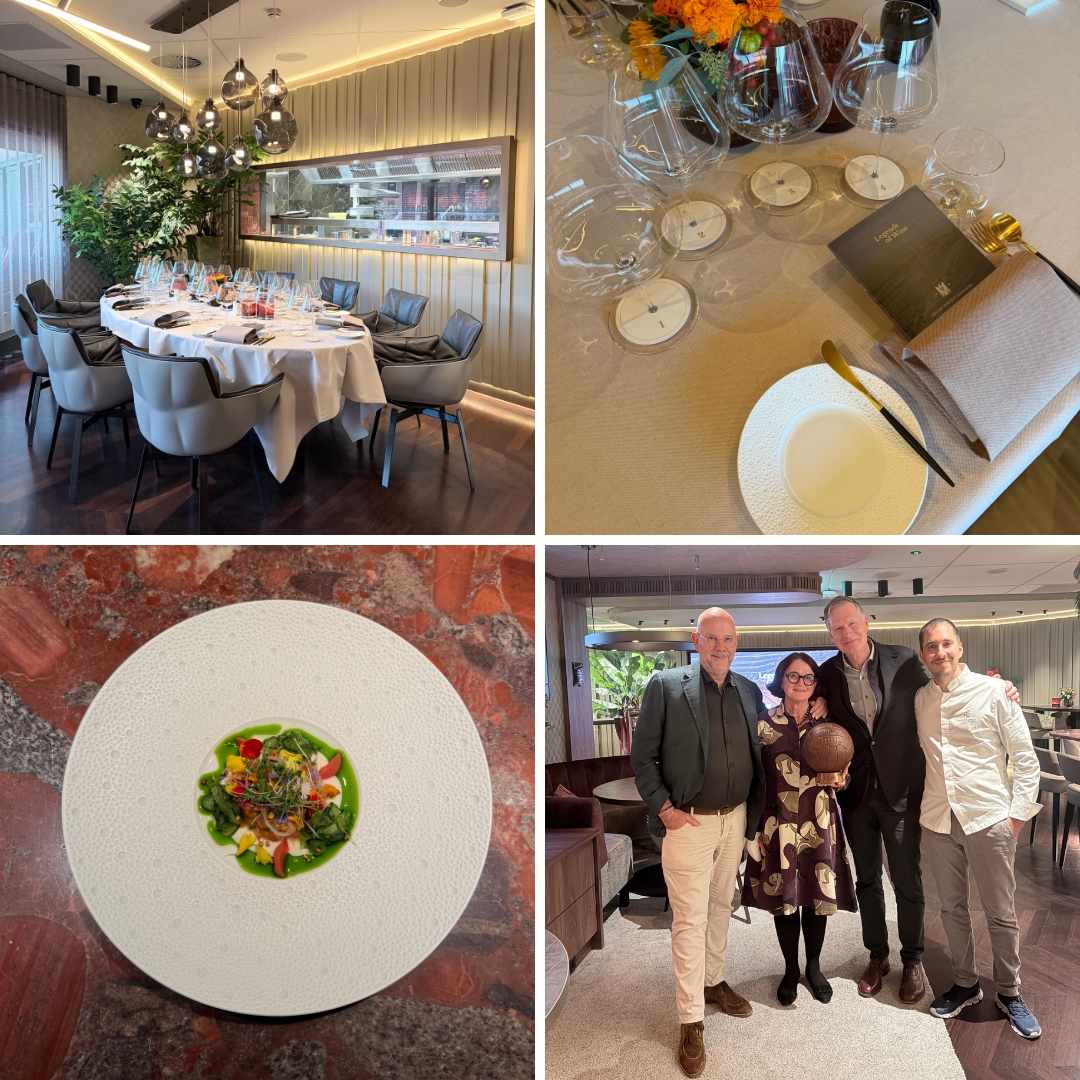
The Impressive Wine Room in the Back of the Restaurant.
Accessibility Without Compromise
One of the most notable aspects of Roux’s wine philosophy is its approach to pricing.
Rather than focusing solely on high-end bottles, the list is structured to ensure that value exists across every level. A guest selecting a bottle at €60 or €75 can expect a wine of genuine quality—balanced, expressive, and worth the investment.
At the same time, the cellar accommodates those seeking rarer and more prestigious labels. Iconic producers sit alongside emerging names, creating a spectrum that is both inclusive and aspirational.
This balance is deliberate. It reinforces the idea that wine at Roux is not reserved for connoisseurs alone, but is an integral part of the experience for every guest.
The Space: Comfort Meets Intention
Physically, Roux stands out in Amsterdam for its scale. With approximately 85 seats, it offers a sense of openness rarely found in the city. Yet the design avoids the pitfalls of larger spaces.
The layout is carefully divided between a kitchen counter, bar seating, and dining tables, each offering a slightly different perspective on the experience. High ceilings create an airy atmosphere, while thoughtful spacing ensures comfort without sacrificing intimacy.
Particular attention has been paid to seating—an often-overlooked detail. Whether at the bar or at a table, guests are encouraged to settle in, to stay longer, to relax into the experience.
Spacious seating at Restaurant Roux.
At the far end of the restaurant, a glass-enclosed wine room serves as both a functional space and a visual centerpiece. Housing thousands of bottles under controlled conditions, it reinforces the importance of wine within the overall concept.
A Sense of Belonging
Perhaps the most defining characteristic of Roux is not found on the plate or in the glass, but in the atmosphere.
From the moment guests enter, there is a sense of ease—an absence of tension that allows the experience to unfold naturally. Service is knowledgeable, yet approachable. Conversations flow easily. The boundary between guest and host feels intentionally softened.
Roux offers a comfortable and well thought through dining experience.
This approach has led to an impressive level of guest loyalty. Regulars return frequently, some treating the restaurant almost as an extension of their own living space. It is a testament to the environment that Allon and Roos have created—one that prioritizes connection as much as quality.
The Jordaan Context
Location plays a subtle but important role in shaping Roux’s identity. Situated in the Jordaan, the restaurant benefits from a neighborhood that blends authenticity with vibrancy.
Across the street, Café Nol offers a distinctly different experience—lively, informal, unmistakably Amsterdam. Together, the two venues create a natural rhythm: dinner at Roux, followed by drinks and music nearby, or the reverse.
This interplay between refinement and local culture mirrors the restaurant itself. Roux is not isolated from its surroundings; it is deeply connected to them.
Building for the Long Term
Two years after opening, Roux shows little interest in reinvention. Instead, the focus is on refinement—maintaining the level of quality that has defined its success so far.
In an industry often characterized by constant change, this commitment to consistency stands out. The concept remains intact, the team largely unchanged, and the standards firmly in place.
It is an approach that reflects confidence. Roux does not need to chase trends; it simply needs to continue doing what it set out to do.
A Lasting Impression
Roux represents a new kind of dining experience in Amsterdam—one that acknowledges the evolving expectations of guests while remaining grounded in the fundamentals of hospitality.
It is a restaurant built on relationships, driven by quality, and defined by its ability to make guests feel at ease without ever lowering its standards.
In a city where concepts come and go, Roux feels built to last.
Chefs & Cellars
For Episode 3 of Season 2 of our podcast Chefs & Cellars, we sat down with Allon and Roos. In a conversation shaped by ambition, friendship, and a shared vision, we explored the realities of opening a restaurant in one of Europe’s most dynamic dining cities—touching on evolving guest expectations, building a loyal team, and creating a concept that balances accessibility with uncompromising quality.
Stay tuned for the release of this episode!
This article is written by our own Niels Aarts. Picture credits: Restaurant Roux and Dutch Wine Apprentice. We would like to thank Allon Niesen, Roos Bierhoff, and the entire team at Roux for their warm welcome and hospitality during our visit.
Whether you are a dedicated wine enthusiast, a curious diner, or a hospitality professional, we highly recommend a visit to Roux—where thoughtful cooking, a deep love for wine, and genuine hospitality come together in a setting you will want to return to.
Join our insiders’ list and get exclusive early access to new articles, expert tips, and fresh reviews delivered straight to your inbox. Subscribe now and be the first to discover!