Join Our Wine Journey – Sign Up for the Newsletter 🍷
Lingua Franca: Speaking the Language of Place
Share
Deel op X (twitter)
LinkedIn
WhatsApp
Lingua Franca: Speaking the Language of Place.
Some wineries are introduced through a vineyard. Others through the personality of their founder. Lingua Franca revealed itself in a different way: through the dining room.
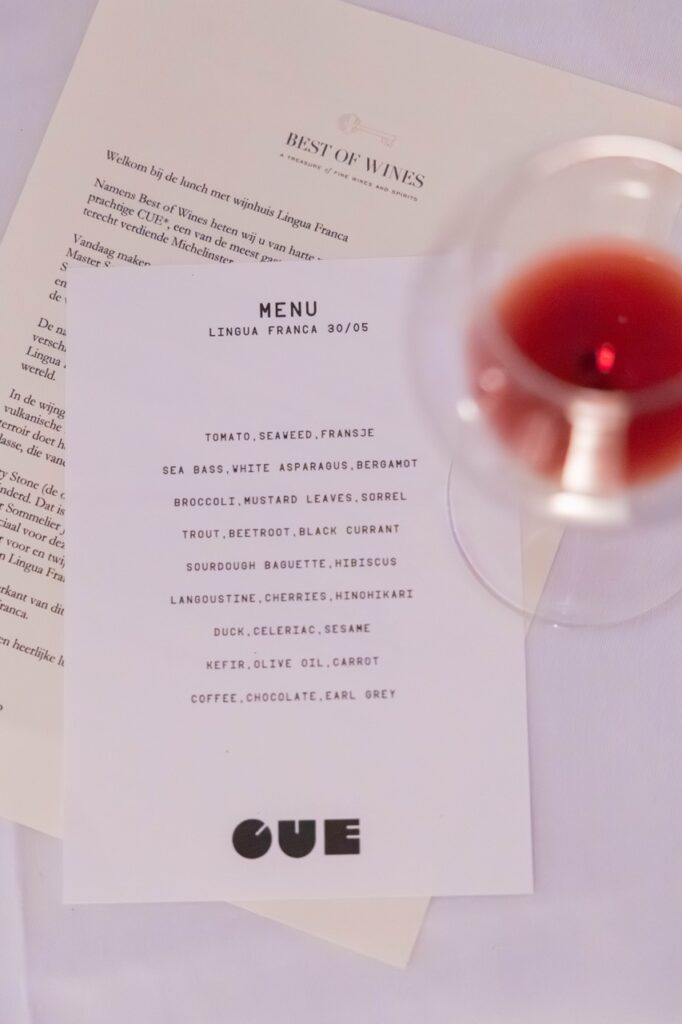
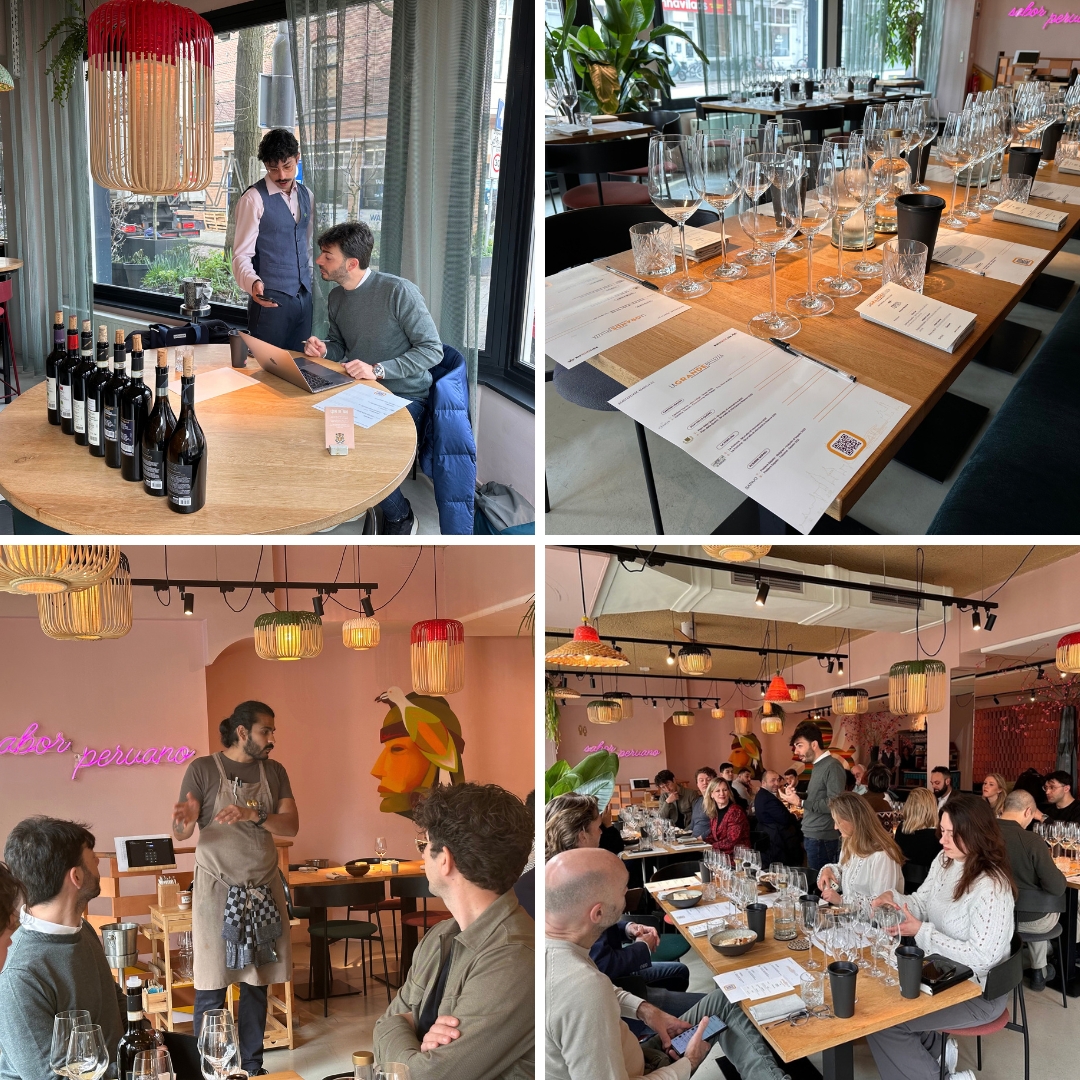
Restaurant CUE in Amsterdam provided the setting for an intimate lunch dedicated to one of Oregon’s most admired producers. Organized in collaboration with Best of Wines and hosted by Master Sommelier Jason Smith, the afternoon paired eight wines with a menu designed to show them where they belong: around the table.
From the opening glass onwards, one thing became increasingly clear. Whether Chardonnay or Pinot Noir, regional blend or single-vineyard bottling, every wine shared the same quiet confidence, combining freshness, precision and an instinctive affinity with food.
Lingua Franca Winemakers Lunch at Restaurant CUE Amsterdam.
As Jason guided guests through the vineyards, vintages and people behind the labels, another question gradually emerged. How had a winery founded little more than a decade ago established such a distinctive identity, and what had persuaded one of America’s most accomplished sommeliers to leave a career at the highest level of hospitality in order to plant vineyards in Oregon’s Willamette Valley?
The answer began long before Lingua Franca existed.
When we sat down with founder Larry Stone, the conversation moved almost immediately away from wine. Instead, Larry spoke about orchards, produce markets, family kitchens and the curiosity that had shaped his understanding of flavour from an early age. Although his career would eventually take him to some of the world’s finest restaurants and earn him recognition as one of America’s pioneering Master Sommeliers, the foundations of Lingua Franca had been laid decades earlier, long before he ever imagined owning a vineyard.
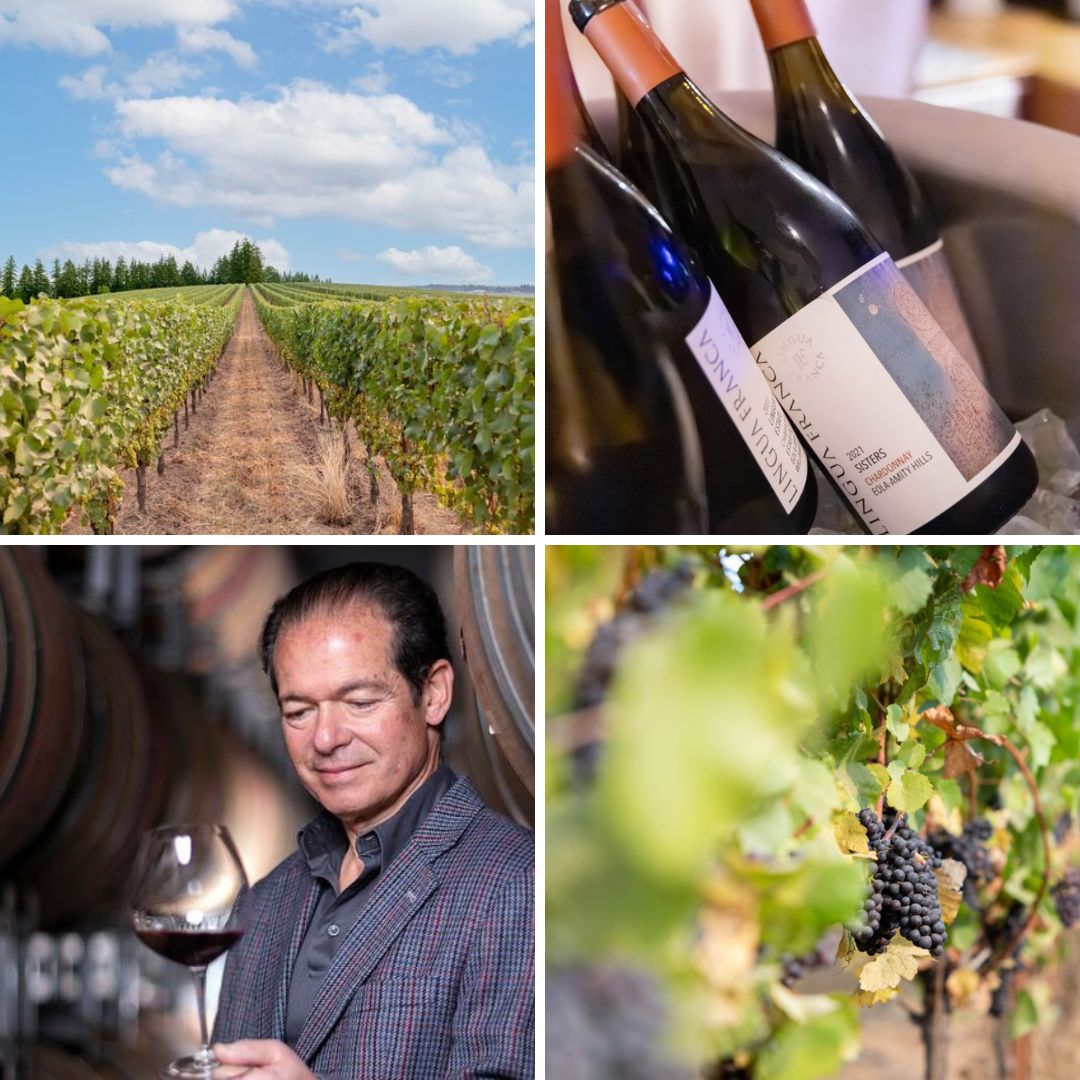
Lingua Franca’s Chardonnay and Pinot Noir wines, originating from Oregon’s Eola-Amity Hills region.
Listening to him, it became clear that the story of Lingua Franca was never simply about making wine. It was about understanding why one place produces extraordinary fruit while another does not, why certain combinations of food and wine feel so instinctively right, and how a lifetime spent asking those questions eventually led to a windswept hillside in the Eola-Amity Hills.
From Orchard to Vineyard
When Larry looks back on the path that eventually led to Lingua Franca, he rarely begins with wine. Instead, he remembers travelling through the Pacific Northwest with his father, a produce buyer at Seattle’s Pike Place Market, visiting growers whose livelihoods depended on understanding the strengths of their land. One orchard consistently produced exceptional cherries, another was known for its apricots, while neighbouring farms struggled to achieve the same quality with the very same fruit. At the time, these were simply observations made by a little boy visiting farms and sampling fruit next to his father. Only much later did Larry realize they had introduced him to one of the central ideas that would shape his life.
“I knew about terroir from fruit,” he recalls. His father never spoke in the language of soil science or viticulture, yet he instinctively understood that every piece of land had its own strengths. If the finest apricots came from across the Canadian border, that was where he would buy them. If another farm consistently produced the best cherries, that was where he returned each season. Watching those decisions sparked a curiosity that extended beyond fruit itself. Larry became fascinated by the relationship between landscape and flavour, noticing that even wild mushrooms gathered from different forests possessed their own distinct character.
Food was equally important at home. His mother, whose family came from Romania, had trained in classical French cooking, while his father’s Polish heritage added another layer to the family table. Stocks simmered on the stove, sauces were prepared from scratch and technique was simply part of everyday life. Long before he entered a professional kitchen or restaurant, Larry had developed an appreciation for the care and discipline behind good cooking.
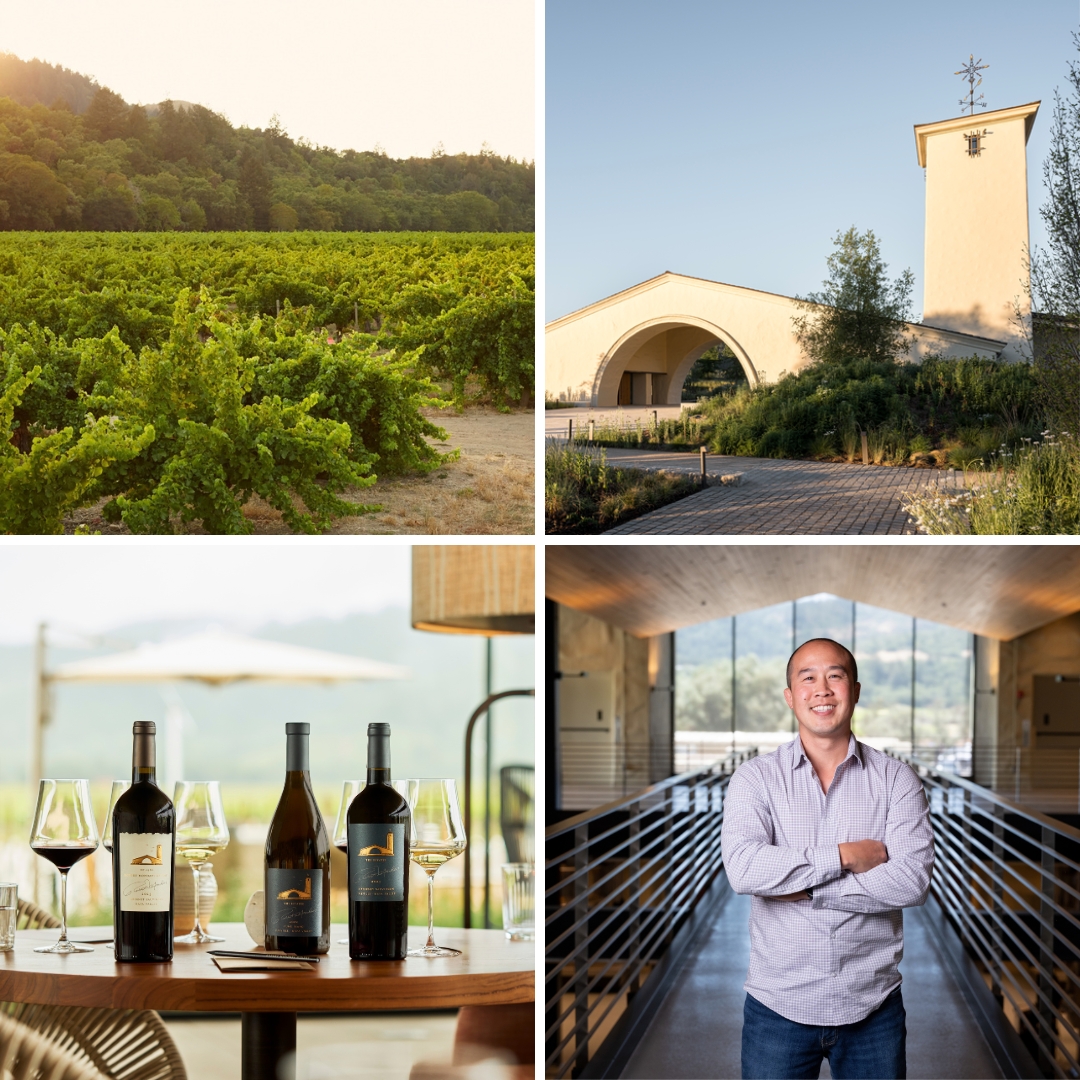
Larry Stone, one of America’s most respected Master Sommeliers, now turned Winemaker.
That curiosity eventually led him towards chemistry. As a teenager he experimented with making wine and even tried distilling whisky, convinced that understanding fermentation meant understanding flavour. University confirmed that fascination, but it also revealed its limits. “I discovered I liked chemistry because I loved food,” he says with a smile. “I didn’t enjoy spending ten hours a day in a laboratory without windows.”
A move to Vienna brought another shift in perspective. Living with relatives immersed him in Central European food culture and reinforced the idea that wine was never something to be appreciated in isolation. It belonged at the table, woven naturally into meals, conversation and everyday life.
While completing his doctoral dissertation, a friend persuaded him to apply for a sommelier position, arguing that his palate mattered more than his lack of restaurant experience. Larry expected little to come of it. Instead, he found himself embarking on a career that would take him to some of the world’s most respected dining rooms.
Yet even as his knowledge deepened and his reputation grew, the questions that had first emerged during those childhood journeys never really changed. He was still trying to understand why one place produced more compelling fruit than another, and why the wines that lingered longest in the memory always seemed inseparable from where they had been grown.
North to Oregon
Working as a sommelier gave Larry the opportunity to taste many of the world’s greatest wines, but it also confirmed something he had suspected since those childhood journeys through the orchards of the Pacific Northwest. The bottles that stayed with him were rarely defined by reputation or sheer power. They reflected the places they came from so convincingly that the vineyard seemed inseparable from the wine itself.
That conviction shaped the way he approached his career. While others often focused on producers, vintages or cellar techniques, Larry found himself asking different questions. Why did one vineyard consistently produce more compelling fruit than another? What allowed certain sites to retain their character year after year? The longer he worked in wine, the more often the answers seemed to lie outside the winery.
His reputation opened doors few people in the industry ever experience. He advised collectors, built award-winning wine programmes and worked alongside some of the world’s most respected producers. Those relationships deepened his understanding of great vineyards, but they also planted another idea. After decades spent evaluating exceptional sites for others, perhaps the time had come to put those lessons into practice himself.
California might have seemed the obvious place to begin. Larry knew its vineyards intimately and had spent much of his professional life there. Burgundy remained an enduring source of inspiration as well, shaped by friendships with growers whose intimate understanding of their vineyards left a lasting impression. Yet neither region offered quite what he was looking for. His attention kept returning to Oregon, and more specifically to the Eola-Amity Hills to a site he had first noticed in 1985.
Lingua Franca’s vineyards in the Willamette Valley.
The attraction was not simply the region’s growing reputation for Pinot Noir and Chardonnay, but the conditions that define it. Each afternoon, cool Pacific air funnels inland through the Van Duzer Corridor, moderating temperatures and extending the growing season. Ripening is gradual rather than hurried, allowing the fruit to develop naturally while preserving the freshness Larry had long admired in the world’s finest wines. It was a landscape that rewarded patience.
Eventually, the search led him to a former farm bordering the renowned Seven Springs Vineyard. At first glance it was an ambitious undertaking. The land still had to be planted, requiring years of investment before it would produce a meaningful crop. Yet after studying the volcanic soils, exposure and cooling airflow, Larry became convinced he had found the site he had been searching for. He has often joked that buying the property was easier than finding the money to establish the vineyard, but he never questioned the decision. Throughout his career he had encouraged others to begin with the land. When the opportunity came to follow his own advice, compromise never really entered the equation.
The project soon attracted collaborators who shared that confidence, among them Burgundy producer Dominique Lafon. Their friendship had been built over many years through conversations about Chardonnay, Pinot Noir and the vineyards that produced them.
Even so, Lafon initially questioned Larry’s decision to plant beside the celebrated Seven Springs Vineyard rather than seek an entirely different site. Larry’s answer was straightforward. After years of studying Oregon, he believed this hillside offered one of the finest places in the Willamette Valley to grow both varieties. If he was going to dedicate the next chapter of his life to a single vineyard, this was where he wanted it to begin.
Starting with the Land
Rather than purchasing an established vineyard, Larry chose to begin with bare land, accepting years of work before the first meaningful harvest. It was undoubtedly a financial gamble, but it also offered complete freedom. Every block, every clone and every farming decision could be shaped by the site itself rather than adapted to choices made by previous generations.
That same approach continues to guide Lingua Franca today. Larry has little interest in rigid doctrines or fashionable terminology. Healthy soils, biodiversity and regenerative practices are valuable not because they follow a particular philosophy, but because they encourage the vineyard to become more resilient over time. Every growing season presents different conditions, and every parcel demands its own response. The objective is not to impose consistency, but to understand the land well enough to work with it.
Chardonnay as the perfect translator of Lingua Franca’s Terroir and Vision.
Listening to Larry, it became easier to understand why the wines we had tasted over lunch felt so coherent despite their differences. None relied on excessive ripeness, heavy oak or extraction for their identity. Instead, each seemed to grow naturally from the same foundation, with the regional wines introducing the estate’s character before the single-vineyard bottlings revealed how individual sites could express themselves while remaining unmistakably part of the same family.
That progression reached its quiet conclusion with the mature 2016 Sisters Chardonnay served at the end of the lunch. Nearly a decade after harvest, the wine still carried remarkable freshness, suggesting that the decisions made years earlier in the vineyard continued to echo in the glass. Time, Larry reflected during our conversation, remains the only true measure of a vineyard. A young wine can promise much, but only maturity reveals whether the site has truly fulfilled its potential.
The wines poured during lunch at CUE, and Larry’s personal story, formed a clear display of vision and identity.
The Wines
Avni Chardonnay 2023 | 92/100 DWA Score
The lunch opened with Avni, the estate’s regional Chardonnay, immediately offering an accessible introduction to the Lingua Franca style. White peach, pear and green apple sit alongside lemon zest and chamomile, with a faint flinty note emerging as the wine opens.
There is more substance on the palate than the bright aromatics initially suggest, combining a gently creamy texture with mouthwatering acidity and a subtle phenolic grip. Almond and a touch of ginger appear towards the finish, adding a savoury dimension to the fruit. Paired with tomato, seaweed and Fransje cheese, its freshness and slightly saline character worked particularly well with the maritime elements of the dish.
Lingua Franca’s Avni Chardonnay at the Lunch.
Estate Chardonnay 2023 | 93/100 DWA Score
A step up in depth, the Estate Chardonnay shows a more pronounced mineral and reductive character, with green apple, citrus zest and stone fruit accompanied by flint, white flowers and a distinctly saline edge. The palate is taut and finely textured, with enough weight to give the wine presence without sacrificing its bright acidity. Subtle notes of beeswax, chamomile and citrus oil emerge with air, while the oak remains firmly in the background. Served with sea bass, white asparagus and bergamot, the wine had sufficient breadth for the fish while its saline, citrus-driven finish echoed the freshness of the dish beautifully.
Avni alongside the Estate Chardonnay.
Bunker Hill Chardonnay 2023 | 94/100 DWA Score
Bunker Hill was initially more reserved, but developed considerably in the glass. Pear, quince and ripe citrus are joined by chamomile, lemon oil and a subtle flinty reduction, with hints of wet stone and fresh herbs adding further detail. What distinguishes the wine, however, is its structure. There is real breadth and texture through the mid-palate, countered by firm acidity and a slightly phenolic quality that gives the finish both grip and persistence. The combination of generosity and tension made it particularly convincing alongside broccoli, mustard leaves and sorrel, where the herbal and citrus elements of the wine found a natural counterpart in the dish.
Sisters Chardonnay 2023 | 94/100 DWA Score
Sisters takes the textural character of Bunker Hill further while adding another degree of refinement. Lime zest, white peach and ripe orchard fruit are accompanied by hazelnut, almond skin and a restrained flinty note, while a saline quality runs quietly underneath. The palate is broad and supple, with ripe citrus, pear and spiced apple developing around a firm core of acidity. A subtle tannic grip towards the finish keeps the wine from becoming too generous, while savoury herbal notes add length. With trout, beetroot and blackcurrant, that combination of richness and structure proved especially effective, making this one of the most complete Chardonnays of the afternoon.
After the Chardonnay’s it was time for the Pinot Noir’s to complete lunch.
Estate Pinot Noir 2023 | 94/100 DWA Score
The transition to Pinot Noir introduced a different aromatic register without losing the freshness that ran through the Chardonnays. Raspberry, pomegranate and black cherry are joined by rose and violet, with touches of spice, tea leaf and freshly turned earth developing underneath. Silky at first, the palate gradually reveals more structure, as fine, slightly chalky tannins frame the red and darker berry fruit. There is also an appealing savoury quality, with hints of herbs, orange peel and stony minerality carrying into the finish. Paired with sourdough baguette and hibiscus, it was already highly expressive, although the structure suggests there is considerably more to come with bottle age.
Tongue ‘n’ Cheek Pinot Noir 2021 | 94/100 DWA Score
Tongue ‘n’ Cheek showed the additional dimension that a few years in bottle can bring. Raspberry and strawberry remain at the center, but the fruit is now joined by anise, rooibos tea, dried herbs and a faint earthy character, with a subtle flinty note appearing on the nose. The palate is generous without becoming heavy, combining juicy red fruit with velvety tannins and bright acidity, while pomegranate and gentle spice give the wine an appealing savoury edge. It continued to open throughout the course, becoming increasingly expressive alongside langoustine, cherries and Hinohikari rice, and suggesting that further development in bottle should prove equally rewarding.
Tongue ‘n’ Cheek Pinot Noir paired with Langoustine.
Mimi’s Mind Pinot Noir 2021 | 95/100 DWA Score
Every tasting seems to produce one bottle that gradually draws the attention of the entire table, and for us that was Mimi’s Mind. Raspberry, cranberry and pomegranate form the aromatic core, but the wine becomes increasingly intriguing as rose petals, black tea, forest herbs, fennel and subtle spice emerge. There is considerable depth, yet it carries that concentration lightly, with vibrant acidity and finely chiselled, chalky tannins providing shape rather than weight. The finish is long, savoury and increasingly spicy, suggesting a wine still early in its development. Served with duck, celeriac and sesame, it was the most complete Pinot Noir of the afternoon and our highest-rated wine.
Mimi’s Mind Pinot Noir, the most complete red of the afternoon, paired with Duck.
Sisters Chardonnay 2016 | 94/100 DWA Score
Returning to Sisters with nearly a decade of bottle age provided a fascinating counterpoint to the 2023. The youthful citrus and orchard fruit had evolved towards nectarine, quince and preserved lemon, accompanied by honeysuckle, saffron and more developed savoury tones, while an underlying mineral and saline character remained intact. The palate had gained breadth but retained an impressive line of acidity, with bitter lemon peel bringing definition to the finish. Rather than showing any sense of fatigue, the wine remained focused and persistent, with the maturity adding depth without obscuring its origins. Paired with kefir, olive oil and carrot, it provided a fitting conclusion to the lunch and persuasive evidence of the ageing capacity of Lingua Franca’s Chardonnay.
Taken together, the wines made perfect sense after our conversation with Larry. None relied on overt ripeness, assertive oak or concentration to leave an impression. Instead, they reflected a consistent way of thinking about vineyards, farming and the relationship between wine and food. Each bottling carried its own personality, yet all belonged unmistakably to the same place.
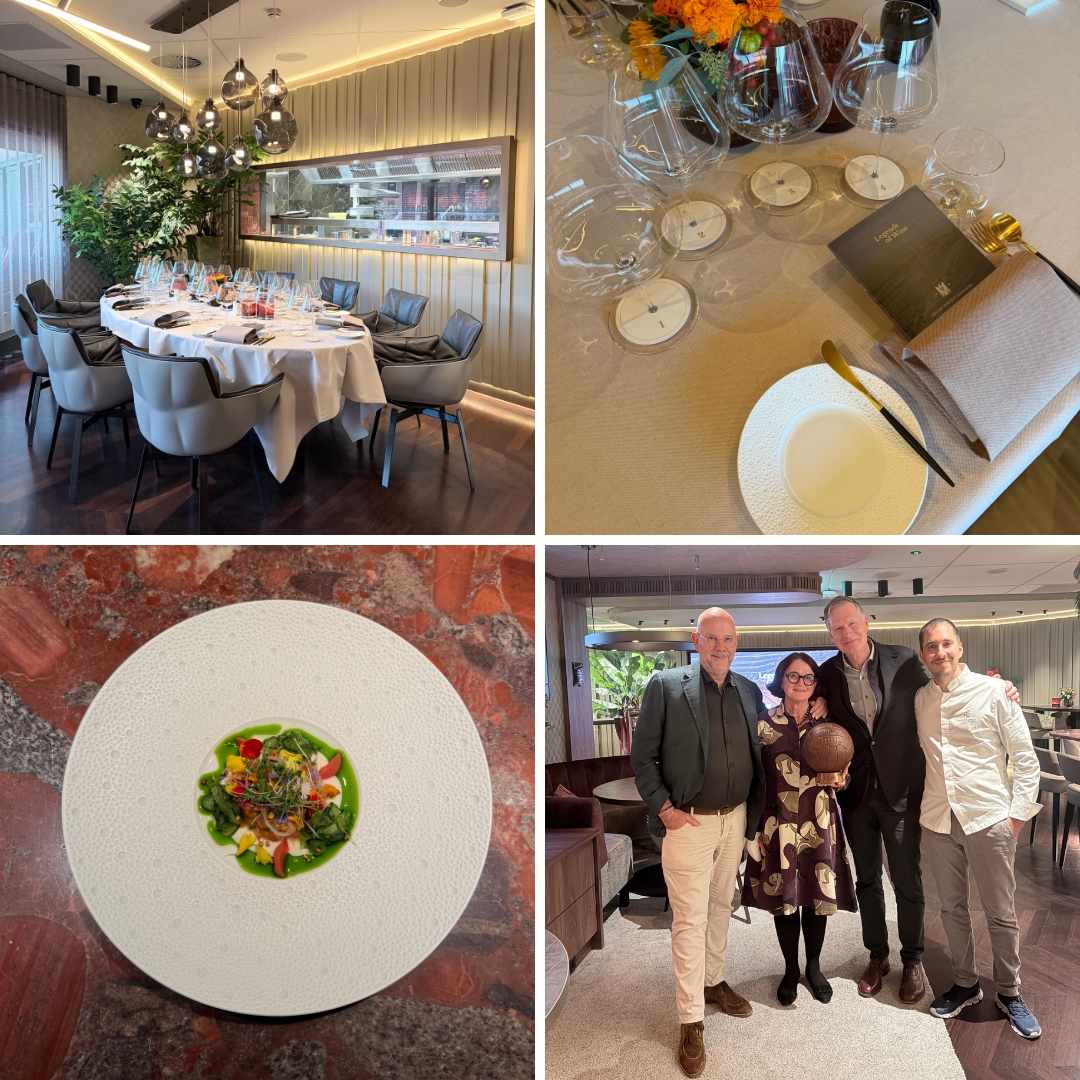
The wines found a fitting stage at Amsterdam’s Restaurant CUE.
By the time we sat down with Larry, the wines had already left a lasting impression. Yet our conversation gave them an entirely different context. Looking back, it was striking how rarely we spoke about wine itself. Instead, Larry talked about orchards, family kitchens, chemistry and farming—everything that came before the bottle.
Perhaps that is Lingua Franca’s defining quality. Rather than beginning with a style of wine or a winemaking philosophy, Larry began with a simple curiosity about why certain places produce extraordinary fruit. The vineyard became the answer to a question he had been asking since childhood, and the wines are its natural consequence. By the end of the afternoon, they felt less like the beginning of the story than its final chapter.
This article is written by our own Niels Aarts, picture credits Marianna van Velzen (Mave Photography). We would like to thank Larry Stone of Lingua Franca, as well as Jason Smith, for their time and openness at the lunch and in the interview.
Additionally, we would like to thank the team of Constellation Brands, Sara Fogarty in particular and the team of Restaurant CUE for the great lunch. Lingua Franca is imported by, and available at Best of Wines, in the Netherlands and online.
Join our insiders’ list and get exclusive early access to new articles, expert tips, and fresh reviews delivered straight to your inbox. Subscribe now and be the first to discover!