Join Our Wine Journey – Sign Up for the Newsletter 🍷
How ÖTW Is Shaping the Future of Austrian Wine
Share
Deel op X (twitter)
LinkedIn
WhatsApp
How ÖTW Is Shaping the Future of Austrian Wine.
For more than three decades, Österreichische Traditionsweingüter has worked to put vineyard origin at the center of Austrian wine. We speak with managing director Michael Tischler-Zimmermann about ÖTW’s pioneering classification system, Austria’s changing wine law and why the country’s villages may be just as important as its greatest vineyards.
For more than three decades, the Österreichische Traditionsweingüter (ÖTW) has been one of the driving forces behind Austria’s shift towards an origin-based wine culture. Long before vineyard classification became an accepted concept, the association championed the idea that a wine’s identity should be defined by its place of origin rather than by grape variety or must weight. Much of what is now taken for granted in Austrian wine, from the focus on origin to the classification of individual vineyards, can be traced back to the pioneering work of ÖTW.
That long-term vision formed the starting point of our conversation with Michael Tischler-Zimmermann, managing director of ÖTW since 2024. After working at Weingut Weszeli in Kamptal and holding several positions at Österreich Wein Marketing (ÖWM), he accepted the invitation of ÖTW chairman Michael Moosbrugger to lead the organisation into its next chapter. Our discussion quickly made clear not only how much ÖTW has achieved over the past 35 years, but also how much work still lies ahead.
Michael Tischler-Zimmermann, managing director of ÖTW.
Founded in 1991 by a group of winegrowers from Kamptal and Kremstal, ÖTW has since evolved into a nationwide quality alliance that has fundamentally shaped Austria’s philosophy of origin. Yet, as our conversation with Tischler-Zimmermann showed, the classification itself is only part of the story. The greater challenge is making origin meaningful — to producers, professionals and, ultimately, consumers.
How It Started
In 1991, a handful of prominent producers from Kamptal and Kremstal decided to join forces. Their shared conviction appeared simple, but in the early 1990s it was both visionary and revolutionary: no longer should grape variety or must weight define quality; instead, the origin of the wine would become the central criterion.
At the end of the twentieth century, the Austrian wine industry was still dealing with the consequences of the 1985 glycol scandal, which had severely damaged the country’s international reputation. The government responded swiftly by introducing some of Europe’s strictest wine legislation, laying the foundations for the Qualitätswein and Prädikatswein categories and, later, for the DAC appellation system. Nevertheless, it took many years before the confidence of international consumers was fully restored.
A number of forward-thinking winegrowers recognized this as an opportunity to change course: shifting the emphasis from yield to quality, from mass production to precision viticulture, from sweet wines to dry wines, and from technological intervention towards a purer expression of origin. Under the impulse of Willi Bründlmayer of the renowned Langenlois estate, they founded the Österreichische Traditionsweingüter in Krems an der Donau in 1991.
Looking back at those early years, what stands out is the extent to which the founders were thinking beyond their own vineyards and regions. The choice of the association’s name was significant. Rather than adopting a regional designation, they deliberately chose Österreichische Traditionsweingüter, leaving the door open for producers from other Austrian wine regions who shared the same philosophy of quality and origin.
In retrospect, that decision proved important. Initially consisting exclusively of producers from Kamptal and Kremstal, the association gradually evolved into a national quality alliance. Traisental and Wagram joined in 2001, followed by Carnuntum and Vienna in 2018, Thermenregion in 2022, and Weinviertel in 2024.
The ÖTW now comprises 91 member estates.
Today, ÖTW comprises 91 member estates cultivating approximately 3,600 hectares of vineyards, around eight percent of Austria’s total vineyard area.
As the association expanded beyond its original regions, its ambitions evolved with it. Establishing a vineyard classification system based on origin became its most influential and arguably most challenging project.
The Challenge of Classifying a Vineyard
At the heart of the ÖTW project lies a deceptively difficult question: how do you determine that one vineyard deserves to be considered more significant than another?
Bringing all members onto the same path was by no means straightforward. Long-standing traditions stood in the way of a new classification system, and not every winegrower was immediately convinced of its benefits. Classification, after all, is not merely an academic exercise. Decisions about vineyards can have practical and economic consequences for the people farming them.
One example is the Austrian Heuriger, the traditional estate wine tavern where young local wine is served alongside simple dishes and which provides an important source of income for many producers. The tension arises when grapes from potentially valuable vineyard sites are destined for these wines rather than for premium bottlings carrying the identity of the vineyard itself.
For the winegrower, the question can therefore become one of immediate income versus the longer-term value of establishing a vineyard’s reputation. Changing that approach is not simply a matter of introducing new rules. It is a gradual process that takes place in the mind of the grower and requires time, conviction and support — guidance that ÖTW provides to its members throughout the transition.
The classification itself attempts to bring structure to something that can never be judged on reputation alone. To make the process as democratic and transparent as possible, ÖTW developed a publicly accessible evaluation tool. The price of the wine is only one of the parameters considered. Instead, the significance of a vineyard is assessed from several perspectives, based on three groups of criteria: the characteristics of the vineyard itself, its economic relevance, and its qualitative relevance, evaluated both internally and externally.
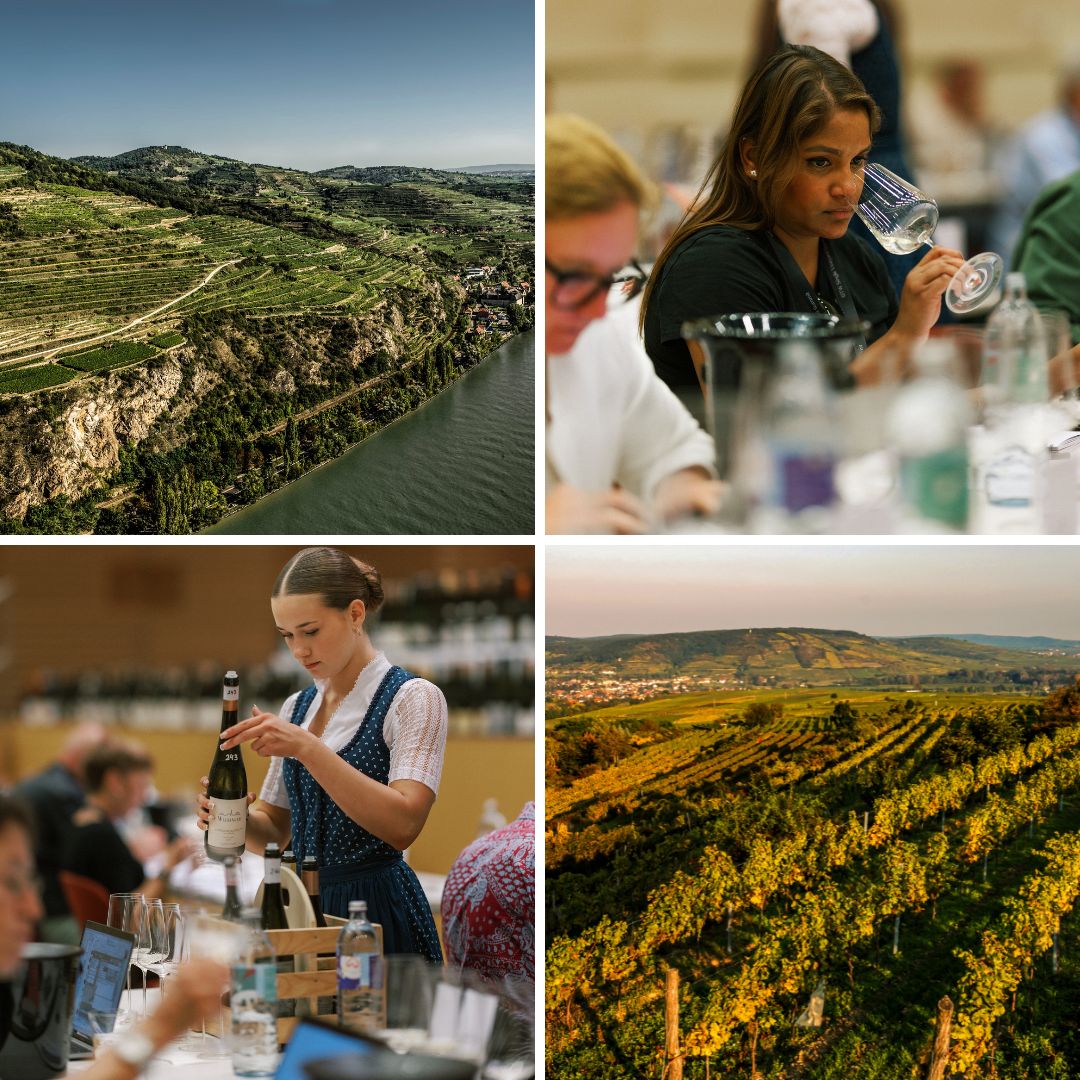
Austria offers a wide variety of wine regions and terroirs.
Among the aspects examined are the date of the vineyard’s first historical reference, how long it has been marketed under its own name, and the degree of homogeneity of its geology, climate and aspect. Economic relevance is determined by factors such as the number of producers making wine from the vineyard, the average market price of those wines and their share of exports. Qualitative relevance is assessed through expert evaluations of all wines originating from the vineyard, together with the consistency of those assessments over time, both by the producers themselves and by independent specialists.
Taken together, these parameters are combined through a multi-factor analysis, producing an overall “classification strength” for each vineyard. The vineyards are subsequently ranked according to that score.
What becomes apparent is that ÖTW does not regard classification as a single judgement made at a particular moment. Time is an essential part of the process. The evaluation leading to the designation ÖTW Erste Lagetypically spans fifteen to twenty years. For the future category ÖTW Grosse Lage, which has yet to be formally introduced, an additional period of five to ten years is envisaged.
The first wines bearing the designation ÖTW Erste Lage (1ÖTW on the label) appeared with the 2009 vintage, released in 2010. Today, ÖTW has classified 145 vineyards under this designation. For the time being, this remains a private classification reserved for ÖTW members, although that is now set to change.
From Private Initiative to Austrian Wine Law
Alongside its internal work, ÖTW has invested considerable effort in advocating changes to Austrian wine legislation. This, too, required patience and perseverance, but ultimately proved successful.
At the beginning of 2023, the legal framework was established for a national vineyard classification system. Every Austrian wine region will be able to officially classify an individual vineyard (Ried), initially as Erste Lage (Premier Cru) and, at a later stage, as Grosse Lage (Grand Cru). The system is based on a rigorous catalogue of criteria that closely mirrors the requirements ÖTW has long applied to its own members.
The connection is hardly accidental. Chairman Michael Moosbrugger has been closely involved throughout the legislative process as a non-voting adviser, allowing ÖTW’s decades of experience with vineyard classification to feed directly into the new legal framework. The first officially classified vineyards are expected to appear with the 2026 vintage, although several hurdles still have to be overcome before the system becomes fully operational.
The OTW designed a clear framework for Austrian Wine.
As Dorli Muhr of Weingut Dorli Muhr in Carnuntum points out, the subject remains a polarizing one. On the one hand, the classification system and the new wine law provide an incentive for the Austrian wine sector to think more precisely about origin. On the other, progress is frustratingly slow. Not every producer embraces the new philosophy, and many still fail to see either the broader vision or the long-term benefits.
Some fear that wines originating from vineyards that remain unclassified may eventually no longer be allowed to carry their traditional vineyard names. Others worry that they will have to restructure their portfolios to fit the new hierarchy of origin. These concerns remain significant obstacles that both ÖTW and legislators will have to address if they wish to bring the wider industry on board.
For consumers, the attraction is primarily one of clarity. The new wine law follows a hierarchy of origin, with generic wines (Gebietswein) at the base, followed by village wines (Ortswein) and wines from individual vineyards (Ried or Lage) at the top, which can be further classified as Erste Lage (Premier Cru). A Grand Cru level (Grosse Lage) is intended to follow later, although its introduction has temporarily been delayed by parliamentary obstacles.
The hierarchy itself may appear straightforward. The decades of work required to build it are anything but.
The Single Vineyard Summit
If the classification process can appear theoretical on paper, the Single Vineyard Summit gives it a practical dimension. Each September, ÖTW brings together wine professionals, sommeliers and specialized wine journalists at Schloss Grafenegg in Wagram to taste and evaluate the wines that sit at the heart of this discussion about origin.
More than 300 wine professionals from around the world gather to assess approximately 600 wines over four days. Yet despite those numbers, the format is remarkably individual. Tastings are conducted as a Silent Tasting: participants select the wines they wish to taste from an extensive list, after which each wine is brought individually to their table.
Kremstal Ehrenfels Senftenberg Erste Lage.
There is no requirement to follow somebody else’s sequence or pace. One taster may work through 200 wines in a single day, while another may choose only a dozen spread across several days. That flexibility allows every participant to develop their own comparative tasting route, whether organized around a region, grape variety, vineyard or producer.
More importantly, the Summit shows why independent evaluation matters to ÖTW’s approach. Classification is not intended to become static once a vineyard has achieved a particular status. The wines and vineyards continue to be assessed, and outside perspectives form part of that ongoing process.
Tastings at the 2025 Single Vineyard Summit.
The Summit therefore serves a dual purpose. For professionals, it provides an unusual opportunity to compare wines from Austria’s leading single vineyards under identical tasting conditions. For ÖTW, those same tastings provide independent feedback that contributes to the continuing evaluation of its vineyard classifications.
Beyond the Great Vineyards
For all the attention given to Erste Lage and the future Grosse Lage classification, one of the most interesting parts of our conversation with Tischler-Zimmermann concerned wines that sit further down the hierarchy.
He believes Austria’s village wines deserve far greater attention.
According to Tischler-Zimmermann, every Austrian winegrower, whether or not they own classified vineyards, should actively promote their Ortsweine. These wines can become the calling card of a municipality and of the estate itself, expressing local identity and tradition while helping consumers better understand the differences between Austria’s wine regions.
It is an important point because a hierarchy of origin cannot rely solely on the prestige of the vineyards at its summit. If consumers are to understand why one site differs from another, they first need to understand the villages and landscapes to which those vineyards belong.
The Ortswein Classification is equally important for the success of Austrian wine as Single Vineyard wines.
Seen from that perspective, Ortswein becomes more than an intermediate category between regional wine and a named vineyard. It provides the connection between the broader identity of a wine region and the precision of an individual site.
For Tischler-Zimmermann, strengthening that identity is therefore not only beneficial for producers but an essential step in making Austria’s new hierarchy of origin meaningful and accessible. Not every grower needs an Erste Lage to participate in that story. Every grower, however, has an origin.
The Next Chapter for ÖTW
Austria’s wine landscape is entering a new phase. The gradual transformation of the country’s wine legislation reflects a broader shift towards a system in which origin increasingly determines how quality and identity are communicated. Much of that evolution can be traced back to the persistent efforts of ÖTW, which for the past thirty-five years has played a central role in developing Austria’s philosophy of origin.
Yet our conversation with Tischler-Zimmermann also suggested that the next chapter will be different from the first. The pioneering work of identifying and classifying vineyards remains important, but classification alone is not enough. The challenge now is to make that hierarchy understandable and relevant beyond the group of producers and professionals who created it.
The OTW Classification has set the foundation for success, it is up to the winemakers to showcase their wines now.
That means explaining why vineyards matter, strengthening the identities of villages, continuing to evaluate classifications rather than treating them as permanent truths, and convincing a wider group of Austrian winegrowers that a stronger emphasis on origin can benefit more than those who own the country’s most prestigious sites.
What began in 1991 with a small group of growers questioning how Austria defined wine quality has, more than three decades later, become part of a national conversation about origin. The classifications will continue to evolve, as will the discussions surrounding them. But the principle at their foundation has become increasingly difficult to ignore: understanding Austrian wine increasingly means understanding where it comes from.
This article is written by our own Marc Roovers. Our sincere thanks to Michael Tischler-Zimmermann of the Österreichische Traditionsweingüter for his time and for sharing his insights, and to Dorli Muhr and Bettina Bäck from Wine+Partners for making this interview possible. Picture credits Österreichische Traditionsweingüter and Wine+Partners.
Join our insiders’ list and get exclusive early access to new articles, expert tips, and fresh reviews delivered straight to your inbox. Subscribe now and be the first to discover!