Join Our Wine Journey – Sign Up for the Newsletter 🍷
Hudson Ranch: The Vineyard That Helped Shape California Wine
Share
Deel op X (twitter)
LinkedIn
WhatsApp
Hudson Ranch: The Vineyard That Helped Shape California Wine.
Every spring, hundreds of newborn lambs arrive at Hudson Ranch in Napa Valley’s Carneros region. Visitors who come expecting a traditional winery experience often find themselves doing something entirely different. Rather than heading straight for a tasting room, they spend their afternoon beside a pen filled with newborn lambs, talking, laughing and reconnecting with a side of agriculture that many have long since left behind.
It is perhaps the perfect introduction to Hudson Ranch.
While the estate has become one of California’s most respected vineyard properties and today produces highly sought-after wines under its own label, spending time with Lee and Cristina Hudson quickly reveals that wine is only part of the story. The ranch encompasses vineyards, olive groves, vegetable gardens, livestock, bees, orchards and a close-knit community of employees, many of whom have spent decades working alongside the Hudson family. What has emerged over the past forty-five years is not simply a successful winery, but an agricultural ecosystem built around a set of values that feel increasingly rare in modern business: patience, stewardship, collaboration and a deep respect for people.
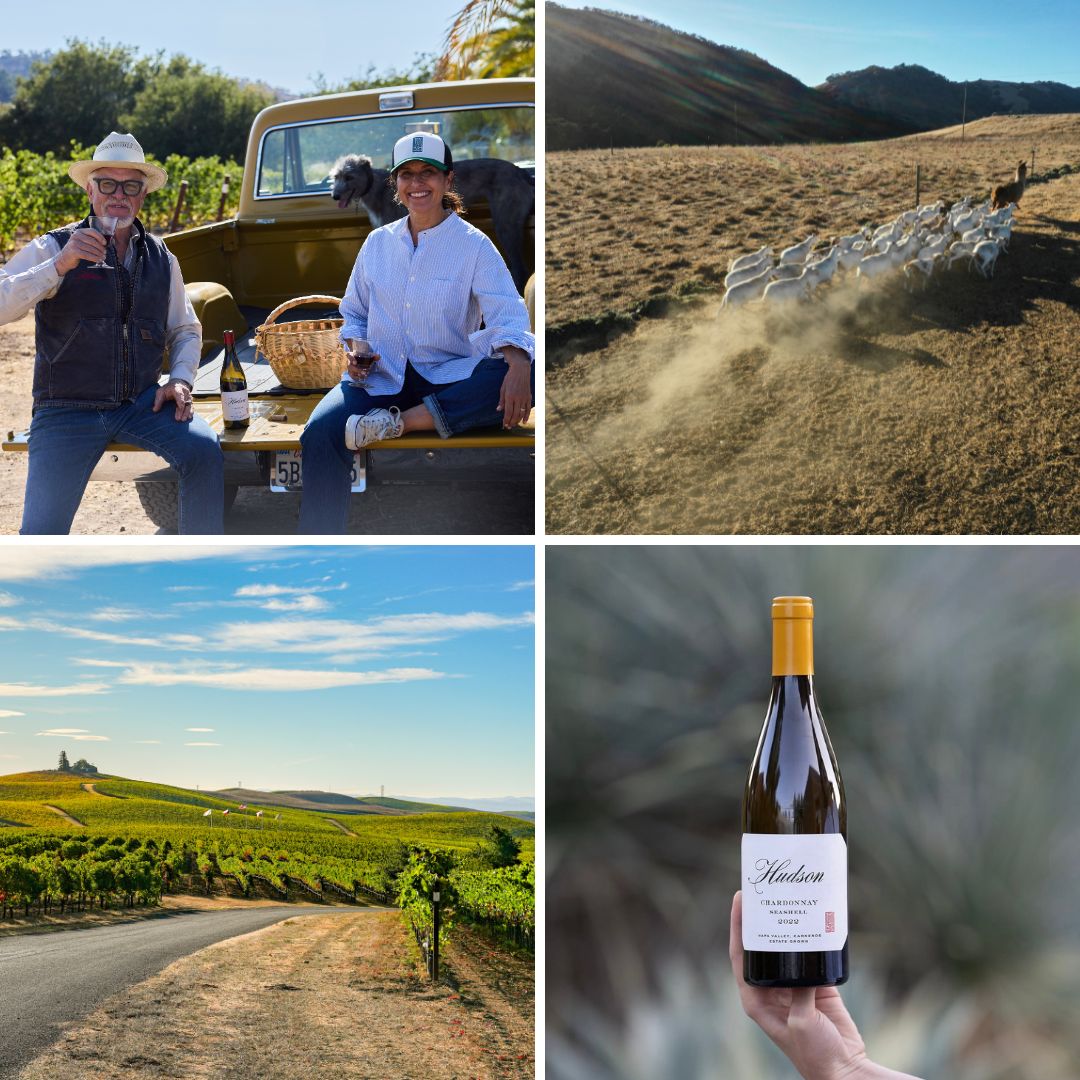
Lee and Cristina Hudson.
Sitting down with Lee and Cristina Hudson it became equally clear that the story of Hudson Ranch is inseparable from the partnership at its center. Lee still speaks most passionately about vineyards, farming and the endless pursuit of understanding a site more deeply. Cristina often brings the discussion back to people, hospitality and the experiences that connect visitors to the ranch. Together, they have built a business that feels remarkably coherent despite its many moving parts.
The story of Hudson Ranch is ultimately the story of how those values helped shape not only an estate, but also a small part of California wine itself.
Burgundy, Apprenticeship and an Agrarian Calling
Lee Hudson’s journey into wine began far from Napa Valley.
After graduating from the University of Arizona with a degree in horticulture in 1975, he travelled to Europe searching for practical experience. His interest lay in perennial fruit crops, and few crops fascinated him more than wine grapes. After knocking on doors in Alsace, Champagne and Bordeaux, he eventually arrived in Burgundy, where he met Jacques Seysses of Domaine Dujac. Seysses hired him as his first apprentice.
Looking back, it is difficult to overstate the significance of that opportunity. Dujac would become one of Burgundy’s most influential domaines, while Seysses himself helped mentor a generation of winemakers who would go on to shape wine regions around the world. Lee was the first apprentice. Ted Lemon, who founded Littorai, and become one of California’s most respected Pinot Noir producers, followed shortly afterwards.
More important than the technical lessons were the philosophy that Hudson encountered there. He saw firsthand how deeply connected great wine was to place, people and long-term thinking. “Wine is this unique product that is about people and connections to people,” he reflected during our conversation. “This connection between the land and people is what appealed to me.”
Originally from Texas, formed in Burgundy, Hudson shaped California’s vineyards, along with his peers.
That idea never left him. When Hudson returned to California and acquired his ranch in Carneros in 1981, he was not looking to create a luxury brand or chase critical acclaim. He was searching for what he describes as an agrarian dream: a life connected to the land and the people working it. More than four decades later, that philosophy remains visible in virtually every aspect of the ranch.
Growing Up Alongside California Wine
The timing of Hudson’s arrival could hardly have been better.
California wine was entering a transformative period. The Judgement of Paris had recently placed the state’s wines on the international map, but the industry was still young and many of the figures who would later become icons were only beginning their careers.
Among Hudson’s contemporaries were names such as John Kongsgaard, Cathy Corison, Tony Soter, Michael Martini and Randall Grahm. Today those names carry enormous weight within the wine world, yet at the time they were simply classmates, colleagues and friends trying to understand how California could fulfil its enormous potential.
Listening to Lee speak about those years, what stands out is not competition but camaraderie. Many wine regions are built on generations of inherited knowledge. California’s modern wine industry, by contrast, was largely built by people learning together. Ideas were exchanged freely, experiments were discussed openly and successes and failures became collective learning opportunities.
Decades later, those relationships remain remarkably strong. Hudson still gathers with many of his former classmates, reflecting not only on how their individual careers evolved, but also on how they collectively helped establish the foundations of modern California wine. In many ways, they were not simply building wineries; they were building an industry.
That spirit of openness would eventually become one of the defining characteristics of Hudson Ranch itself.
The First Chapter: Twenty Years Growing Grapes for Others
When Hudson Ranch was established, Lee had little interest in becoming a winery owner. His focus was entirely on vineyards, and for more than twenty years, from 1984 until 2004, the ranch supplied fruit exclusively to other producers.
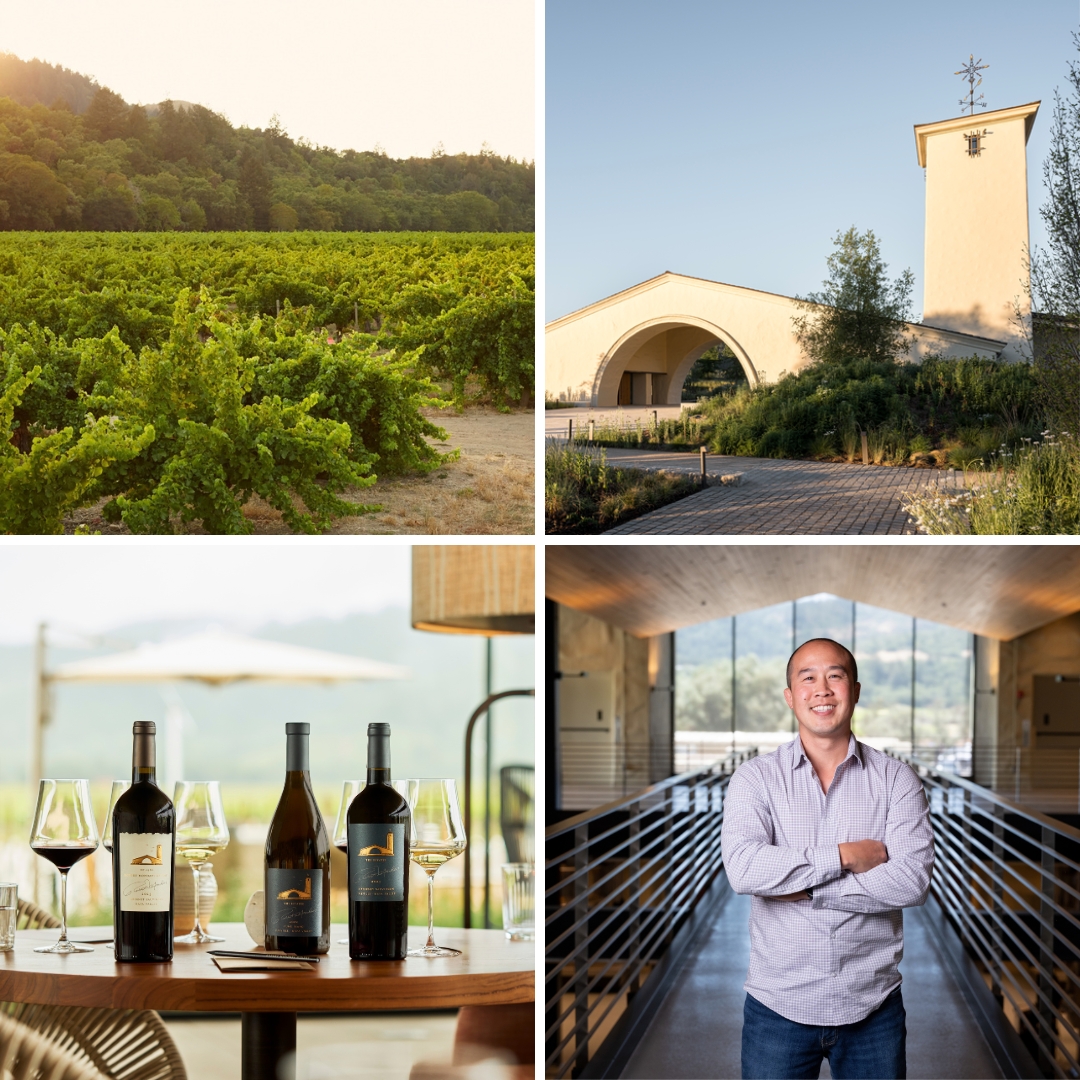
The location itself helps explain much of Hudson’s reputation. Situated in Carneros at the southern edge of Napa Valley, where cooling influences from San Pablo Bay moderate temperatures throughout the growing season, the ranch occupies a very different environment from the warmer regions further north. Chardonnay first established the area’s reputation, but Hudson’s vineyards would eventually demonstrate that the site could also produce compelling expressions of Cabernet Franc, Merlot, Syrah, Grenache and a range of other varieties.
During those two decades, Hudson Vineyard quietly established itself as one of California’s most respected vineyard sources. Long before consumers encountered the Hudson label, winemakers already knew exactly where the fruit came from. Producers such as Kongsgaard, Kistler and numerous others-built vineyard-designated wines around Hudson fruit, helping establish the ranch’s reputation as one of the premier sources of Chardonnay in California.
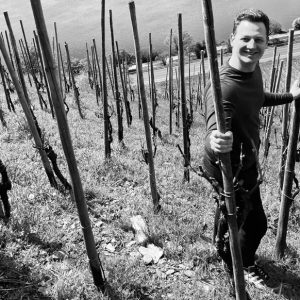
Lee in the Vineyards that helped shape California Wine.
At the same time, Hudson was pursuing a path that would quietly influence California viticulture more broadly. During the 1980s and 1990s, he became increasingly fascinated by older California plant material. Rather than simply planting whatever selections happened to be fashionable at the time, he sought out heritage vines that had spent generations adapting to California’s growing conditions. Small experimental plots were planted, observed and evaluated over many years before being expanded into commercial vineyards. Many of those selections continue to form the backbone of Hudson’s Chardonnay programme today and reflect a broader philosophy that has guided much of his work: understanding what truly belongs in a place requires patience.
What made this period particularly valuable was the perspective it provided. Most growers watch their fruit leave the vineyard and rarely have the opportunity to follow it through fermentation, élevage and bottling. Hudson’s relationships with his winery clients developed differently, allowing him to remain engaged in conversations about the finished wines and the decisions that shaped them.
Over time, those relationships evolved far beyond simple commercial agreements. Some clients have worked with Hudson fruit for more than forty years, and certain vineyards have been farmed continuously for the same producer since the early 1980s. Those long-term partnerships created an environment built on trust, curiosity and mutual respect. In many ways, Hudson occupied a unique position within California wine. He was simultaneously a grower, an observer and a student, learning from some of the state’s most talented winemakers while continuing to refine his own understanding of viticulture.
A Seat at California’s Most Fascinating Table
Perhaps nowhere is that educational spirit more visible than in the annual study tastings hosted at Hudson Ranch.
Each year, a single grape variety is selected. One year it might be Chardonnay. Another year it might be Syrah. Winemakers who source fruit from Hudson vineyards gather around a table and open their wines side by side.
The purpose of these gatherings is not commercial. There are no critics present and no scores to be won; instead, the tastings provide an opportunity for growers and winemakers to exchange ideas, compare experiences and better understand how different decisions in both vineyard and cellar influence the final wine.
The wines originate from the same ranch, often from the same growing season and sometimes from neighboring vineyard blocks. Yet the differences can be remarkable. One producer may pursue richness and texture, while another focuses on precision and tension. Some seek power, others elegance. Vineyard reports are shared, winemaking decisions are discussed and everyone leaves with a deeper understanding of how different choices influence the final result.
It is a fascinating exercise because it highlights a truth that wine lovers sometimes overlook. Terroir matters enormously, but so does interpretation. The vineyard provides the raw material, while the winemaker provides the lens through which that vineyard is ultimately expressed.
There is always a seat at the Hudson table to discuss grapes and enjoy wine.
What emerges from these tastings is not a competition, but a deeper appreciation of how many different expressions can arise from the same place. For Hudson, these gatherings have become one of the greatest educational tools imaginable. Few growers have the opportunity to observe dozens of talented winemakers working with the same fruit over multiple decades, and even fewer have the chance to sit down with them each year to discuss what worked, what failed and what surprised them.
The tastings also reveal something important about California wine itself. Despite the prestige associated with many of the names involved, there remains a culture of generosity and openness that traces back to the industry’s formative years. As Lee observed, it is remarkably rare to hear a winemaker say, “I can’t tell you how I did that.”
Passing Knowledge Forward
That culture of learning extends far beyond established producers.
Just as Jacques Seysses once opened his doors to a young Lee Hudson, Hudson Ranch has spent decades welcoming apprentices eager to learn about viticulture and farming. Many have since gone on to become successful vineyard managers, grape growers and winemakers in their own right.
Lee speaks about these former apprentices with the same pride others reserve for awards or accolades. One of the greatest rewards, he explained, is seeing someone return twenty years later and knowing that their experience at Hudson helped shape their career.
It is a philosophy that perfectly reflects the estate’s broader approach. Knowledge is not something to be protected or guarded, but something that becomes more valuable when it is shared. The same principle applies to the relationships Hudson maintains with employees. Today the business employs nearly sixty people, with a significant number having spent more than twenty-five years on the ranch and some approaching four decades.
Such loyalty is rarely accidental and reflects the long-term approach that Lee and Cristina have taken towards both agriculture and people throughout the history of the ranch.
The Second Chapter: Becoming a Winery
Ironically, the man who would eventually build a successful wine brand spent years deliberately avoiding the wine business.
Growing grapes was his passion. Making wine was fascinating. Selling wine, however, was something entirely different.
Yet after two decades of working alongside some of California’s finest winemakers, Hudson began to realize that there was only so much he could learn as a grower alone. If he truly wanted to understand the consequences of every decision made in the vineyard, he needed to follow the fruit all the way to the finished bottle.
“If I didn’t actually make the wine myself, I couldn’t evolve and improve,” he explained.
The decision to launch Hudson wines in 2004 was therefore not driven by prestige or ambition alone. It was the natural continuation of a lifelong pursuit of knowledge and understanding.
The timing also coincided with an increasingly important partnership. While Lee’s strengths had always been rooted in agriculture, Cristina brought a very different perspective to the business. With expertise in branding, hospitality, sales and marketing, she helped transform decades of vineyard excellence into a winery capable of reaching consumers around the world.
During our conversation, Cristina described the launch of Hudson wines as the culmination of Lee’s dream. Listening to the two of them speak, it becomes clear that the winery’s success rests upon the combination of their complementary strengths. If Lee devoted his career to building the vineyards and refining the agricultural side of the business, Cristina played an equally important role in transforming that foundation into a globally recognized wine brand.
Hudson Farm, from Grape Growers to Winemakers.
Many producers eventually stop selling fruit once their own labels become successful. Hudson deliberately chose a different path. Continuing to work with leading wineries provides an ongoing source of feedback and perspective, while the success of the estate wines allows the ranch to deepen its understanding of the vineyards and test new ideas. Rather than existing in competition with one another, the two sides of the business have become mutually reinforcing.
Today, Hudson produces approximately 6,000 to 7,000 cases annually while continuing to farm vineyards for around thirty-five winery clients, creating a virtuous cycle in which decades of vineyard experience shape the wines, while the lessons learned in the winery feed directly back into the vineyards.
More Than a Winery
What distinguishes Hudson Ranch from many luxury wine estates is that wine remains only one part of a much broader picture.
The ranch functions as a living agricultural community. Sheep graze among the vineyards, helping reduce fire risk. Olive oil, honey and vinegar are produced alongside wine. Vegetable gardens provide additional agricultural activity, while livestock contribute to the overall ecosystem.
The Ranch provides for food but serves as an ecosystem on its own at the same time.
These enterprises serve practical purposes, but they also support something that Lee and Cristina care deeply about: creating stable year-round employment. Unlike many vineyard operations that rely heavily on seasonal labour, Hudson has worked to provide consistent work throughout the year. Additional businesses on the ranch help support that goal, while subsidized housing allows many employees to live close to where they work.
The result is a business that feels more like a community than a conventional winery.
Perhaps no story illustrates this better than the annual lambing season. When hundreds of lambs are born each spring, members and visitors are invited to experience the event firsthand. Cristina recalled being surprised that it was not children who spent the most time with the animals, but adults. People would sit for hours holding newborn lambs, talking with one another and reconnecting with a world that many had become increasingly distant from.
Cristina holding a Lamb at the Ranch.
Although wine played no role in the event, it perhaps explained Hudson Ranch better than any tasting ever could, illustrating the Hudson’s’ belief that agriculture, community and human connection ultimately matter just as much as what ends up in the glass.
Hudson Ranch in the Glass
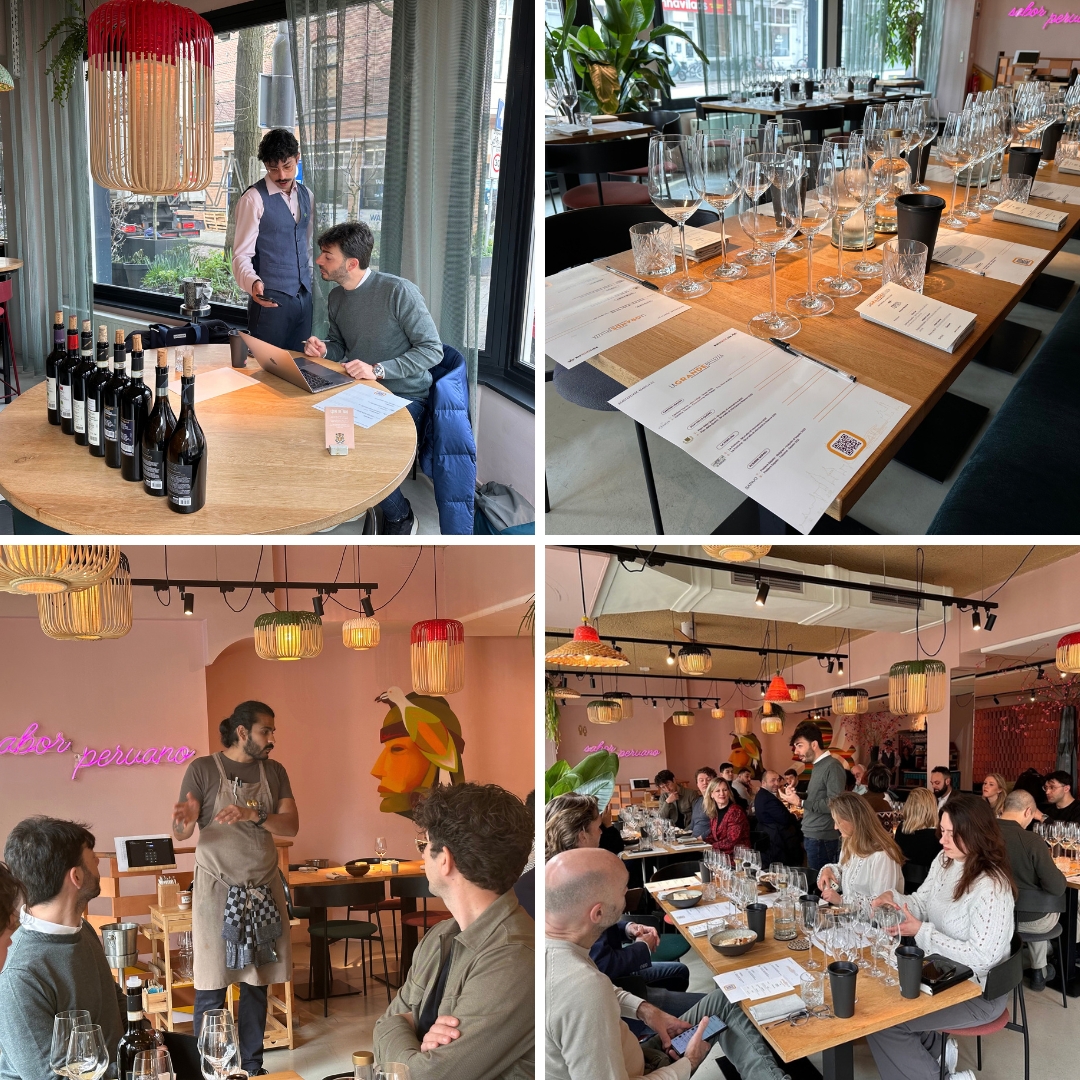
As our conversation drew to a close, the wines provided an opportunity to revisit many of the themes we had spent the previous hour discussing. Throughout the interview, Lee and Cristina repeatedly returned to the relationship between vineyard and winery, the importance of site, and the value of patience in understanding a piece of land. Tasting a selection of the Hudson wines gave those ideas a tangible form.
What struck us most was how naturally the wines reflected different aspects of the Hudson story. The agricultural philosophy that underpins the ranch, the decades spent supplying fruit to some of California’s most respected winemakers, and the evolution into a producer in its own right all seemed present in the glass.
2022 Ladybug Chardonnay | DWA score: 95/100
Among the wines tasted, Ladybug Chardonnay offered one of the clearest examples of the relationship between site and expression that Lee Hudson spoke about throughout our conversation. Produced from a specific parcel within the ranch, the wine feels both distinctive and deeply connected to the broader philosophy that has guided Hudson Ranch for more than four decades.
The nose unfolds gradually, revealing aromas of ripe pear, melon and white stone fruit alongside notes of citrus blossom, toasted almond and subtle baking spice. On the palate, the wine combines impressive concentration with freshness and energy, allowing layers of orchard fruit, citrus curd and finely integrated oak to unfold seamlessly across the palate.
What impressed me most was the clarity of expression. Despite its richness and generosity, the wine never loses sight of where it comes from. There is a precision to the fruit and a mineral thread running through the wine that continually pulls it back towards the vineyard.
In many ways, Ladybug reflects the philosophy that underpins Hudson Ranch itself. Rather than pursuing a fashionable style, it speaks with clarity about a specific place and the people who have spent decades learning how best to express it.
2022 Ladybug Chardonnay.
2021 Hudson Vineyard Chardonnay | DWA score: 94/100
Long before Hudson became known as a wine producer, Hudson Vineyard had already established itself as one of California’s most respected sources of Chardonnay fruit. Tasting Hudson’s own Chardonnay provides an opportunity to experience the vineyard through the eyes of the people who know it best.
Where Ladybug focuses on a particular expression of the ranch, Hudson Vineyard Chardonnay feels broader in scope. The nose opens with ripe orchard fruit, white peach and citrus, accompanied by subtle notes of toasted hazelnut, struck flint and carefully integrated oak. On the palate, creamy richness is balanced by freshness and precision, creating a wine that feels simultaneously generous and composed.
What impressed us most was the wine’s sense of harmony. Rather than drawing attention to any single component, it allows fruit, oak, texture and freshness to work together seamlessly.
If Ladybug offers a glimpse into a specific corner of Hudson Ranch, Hudson Vineyard Chardonnay provides a broader understanding of the vineyard that helped build the estate’s reputation.
2021 Chardonnay and 2019 Phoenix.
2019 Phoenix | 92/100 DWA score
If the Chardonnays tell the story of Hudson as a vineyard, Phoenix tells the story of Hudson as a wine producer.
Built around Merlot and complemented by Cabernet Sauvignon and Cabernet Franc, the wine immediately distinguishes itself from many of Napa Valley’s more Cabernet-driven blends. Aromas of ripe black plum, blackberry and dark cherry are layered with notes of cedar, graphite, dark chocolate and sweet spice, while the palate combines generous fruit with polished tannins and a freshness that carries the wine effortlessly through the finish.
What impressed us most was the role of Merlot and Cabernet Franc within the blend. The Merlot provides generosity, texture and a dark-fruited core, while the Cabernet Franc contributes lift, freshness and aromatic complexity. Together they create a wine that feels less driven by power and more by balance and nuance.
Although the wine does not possess quite the same level of individuality found in the estate’s top Chardonnay bottlings, it succeeds in offering a polished and distinctive interpretation of Bordeaux varieties grown at Hudson Ranch. In doing so, it provides an insightful glimpse into the producer side of the Hudson story.
Looking Ahead
After more than four decades of farming and more than twenty years of producing wine under their own label, Lee and Cristina Hudson find themselves entering what may be one of the most rewarding periods in the estate’s history. With mature vineyards, an established winery and a talented new generation of employees taking on greater responsibility throughout the organisation, the foundations for the future appear stronger than ever.
What excites both of them most is not necessarily growth in production or expansion into new markets, but the people around them. During our conversation, they spoke enthusiastically about the younger generation emerging within the business and the energy they bring to the next chapter of Hudson Ranch.
Looking back, it is tempting to measure Hudson through vineyard designations, production figures or critical acclaim. Those achievements are certainly significant, but after spending time with Lee and Cristina it becomes clear that their most enduring contribution may lie elsewhere.
During our conversation, Lee returned repeatedly to the idea that first drew him to Burgundy as a young horticulture student: the connection between land and people. More than four decades later, after helping build one of California’s most respected vineyard estates, that idea still sits at the center of Hudson Ranch.
It is visible in the apprentices who return years later as accomplished vineyard managers and winemakers. It is visible in employees who have spent much of their working lives on the ranch, and in the growers and producers who continue to gather around a table each year to compare notes and share ideas. The wines of Hudson Ranch have undoubtedly earned their place among California’s most respected bottlings, but the broader legacy of the estate is inseparable from the people who helped build it and the culture of collaboration that continues to define it.
Lee and Cristina created much more than a Farm, they created a community at the Center of Californian Wine.
In a region often associated with ambition and innovation, Hudson Ranch stands as a reminder that some of the most enduring successes are built not only on exceptional vineyards, but also on the communities that grow around them.
This article is written by our own Niels Aarts. We would like to thank Lee and Cristina of Hudson Ranch for their time and openness in the interview leading up to this article, as well as their (and our) partner Best of Wines who sell and distribute the wines in the Netherlands.
Join our insiders’ list and get exclusive early access to new articles, expert tips, and fresh reviews delivered straight to your inbox. Subscribe now and be the first to discover!