Join Our Wine Journey – Sign Up for the Newsletter 🍷
Littorai at 30 Years: Does California Age?
Share
Deel op X (twitter)
LinkedIn
WhatsApp
Littorai at 30 Years: Does California Age?
Littorai was never meant to be judged in its first five years.
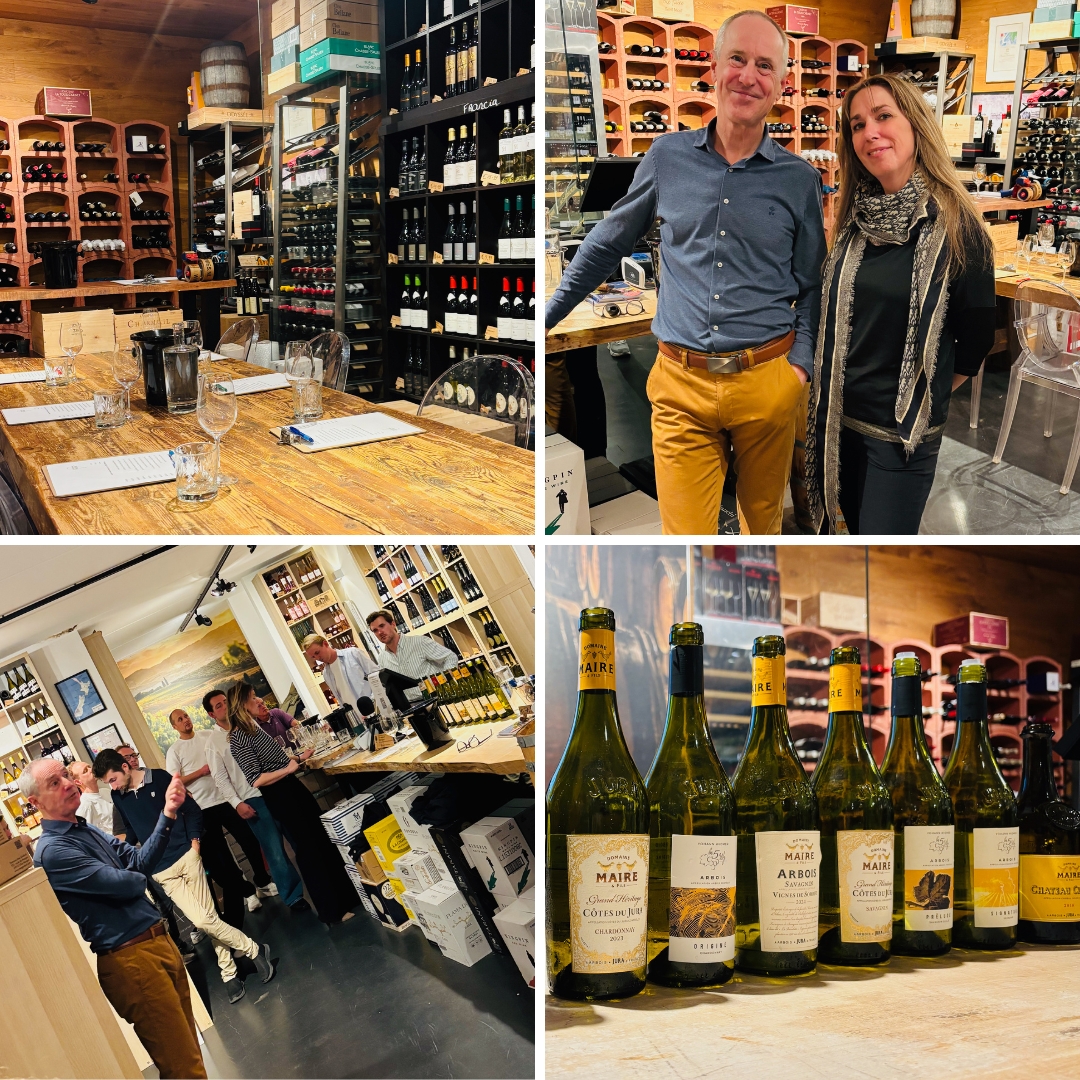
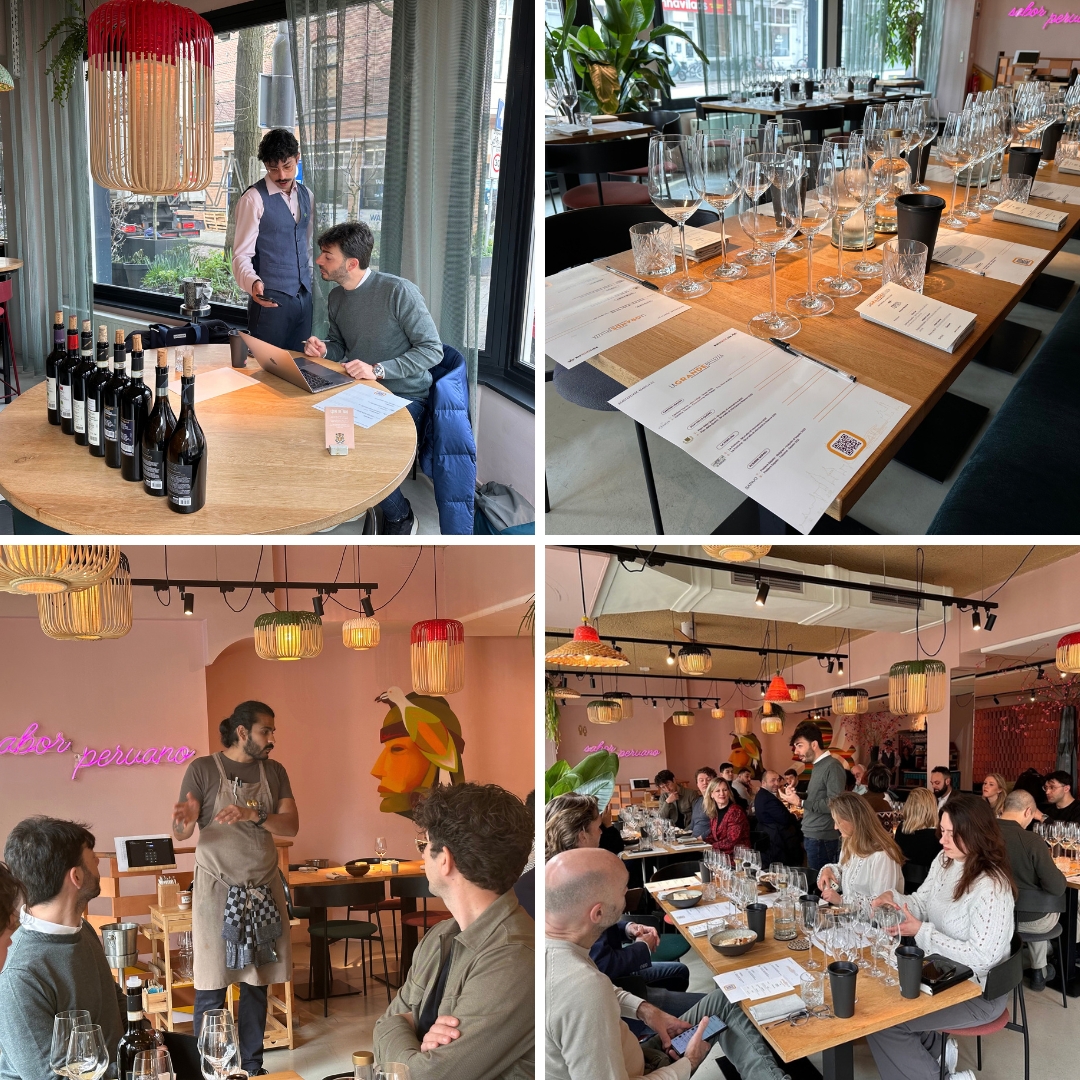
In a focused masterclass organized by Résidence Wijnen—importer of Littorai in the Netherlands—that idea was not presented as philosophy, but as evidence. The room was quiet in a way that felt deliberate. Glasses lined up, notebooks open, conversation held back. This was not a tasting built around impressions—it was built around attention.
Because the question at hand demanded it.
Can California age?
A Beginning Without a Blueprint
To understand Littorai, you have to start far from California.
Ted Lemon did not grow up in wine. There was no family estate, no inherited vineyards, no expectation that this would be his path. His introduction came almost by accident, during a year in Burgundy as a student—an experience that would quietly redirect everything that followed.
What began as curiosity turned into immersion. Harvest work led to deeper involvement, and before long, Lemon found himself working alongside some of Burgundy’s most respected producers. At Domaine Dujac, he learned not from theory, but from necessity—helping navigate a vintage under difficult circumstances, guided by instinct, observation, and the quiet authority of experience.
Ted Lemon in Burgundy, France at Domaine Dujac 1980s.
At Domaine Guy Roulot, he took on even greater responsibility, stepping into a role that required not only technical understanding, but trust. It was here, perhaps more than anywhere else, that the foundations were set: that great wine is not made through intervention, but through restraint; that the vineyard defines the wine, not the cellar; and that time is not a risk, but an essential dimension.
When he eventually returned to the United States, it was not with the intention of recreating Burgundy. If anything, it was the opposite.
The goal was to find a place where those principles could be explored on entirely new terms.
The Edge of the Map
In the early 1990s, the far Sonoma Coast and Anderson Valley were still largely unknown in practical terms. While Napa Valley was already well established, these cooler, ocean-influenced regions remained on the margins—geographically and conceptually.
Along the Sonoma Coast there were vineyards, but very few. Standing on those coastal ridges at the time meant looking out over land that had yet to be defined by wine. Anderson Valley on the other hand was already largely established, but not recognized for its potential to produce outstanding Pinot Noir.
What drew Lemon and his wife Heidi here was not certainty, but potential.
The Pacific Ocean played a decisive role. Cold, persistent, and ever-present, it shaped the climate in ways that differed fundamentally from inland California. Fog rolled in daily, temperatures remained moderate, and the growing season stretched longer than expected. Rain fell in winter, not during the critical months of ripening.
The Pacific Coast.
These were not conditions that produced immediate, generous wines. They were conditions that demanded patience.
And patience, as it turned out, would become the defining characteristic of Littorai.
Ted and Heidi working on their first vintage in 1993.
A Winery Built on Time
When Littorai was founded in 1993, there was no clear answer to the question of ageing.
California had produced great wines, certainly. But whether Pinot Noir and Chardonnay from these coastal sites could evolve over decades remained unproven.
What Littorai did differently was simple in concept, but significant in practice: they kept the wines.
Vintage after vintage, cases were set aside and left untouched. Not because it was commercially advantageous—it wasn’t—but because it was necessary. Without that long view, there would be no way to understand what these wines could become.
Littorai’s work of decades has been studied over time and we were lucky enough to join Ted in this study on his world tour.
It was, in many ways, a risk. A financial one, certainly, but also a philosophical one. To commit to ageing before knowing the outcome requires a degree of conviction that is rare in any wine region, let alone one still defining itself.
But that conviction was rooted in experience. Burgundy had already shown that wines evolve in ways that are not always predictable at release. Vintages dismissed early could reveal unexpected depth decades later. Structure, balance, and site—these mattered more than immediate impression.
Littorai set out to test whether the same could be true here.
The Present: A Different Kind of Youth
The youngest wines in the tasting did not shout for attention.
The 2023 One Acre, Anderson Valley Pinot Noir (93/100 DWA score) opened with clarity—fresh red fruit, floral lift, and a sense of openness that felt precise rather than exuberant. The 2023 Wendling Vineyard Block E (94/100 DWA score) followed with slightly more structure, adding depth without sacrificing definition.
The Wendling Vineyard.
Alongside them, the 2022 The Pivot Vineyard, Sonoma Coast Pinot Noir (92/100 DWA score) told a different story. Darker, more composed, with a firmer backbone that suggested a slower unfolding.
The Pivot Vineyard.
The contrast between vintages was subtle but meaningful. The 2023s, shaped by a later growing season and an absence of extreme heat, leaned towards aromatic expression and immediacy. The 2022s, from a smaller and warmer year, carried more structure and density.
But what stood out most was not the difference—it was the shared restraint.
These were not wines designed to impress in their youth. They were wines designed to become.
When Time Takes Hold
As the tasting moved back, something shifted.
Not abruptly, but steadily. The wines began to speak in a different register—less about fruit, more about form.
The 2016 Savoy Vineyard, Anderson Valley Pinot Noir (96/100 DWA score) showed what happens when structure settles into harmony. The fruit had softened into layers—subtle spice, earth, and a quiet depth that unfolded gradually.
And then came the 2012 One Acre.
Up until that point, the argument had been building. With the 2012 One Acre, Anderson Valley Pinot Noir (97/100 DWA score), it became undeniable.
The One Acre Vineyard.
The wine did not assert itself. It didn’t need to. Everything was in place—fruit, acidity, tannin—moving together with a sense of completeness that only time can create. The finish lingered, not through power, but through balance.
It changed the tone of the room.
This was not California trying to imitate Burgundy. It was California proving it never needed to.
The Long View
The 2009 One Acre, Anderson Valley Pinot Noir (95/100 DWA score) extended that perspective further.
More than fifteen years on, the wine had not diminished. It had deepened. The fruit had evolved into savoury nuance, the structure fully integrated, yet the core remained intact.
There was still energy here—still direction.
It did not feel like a wine at the end of its life, but one continuing along its path.
And that distinction is essential. Ageing, in this context, is not about survival. It is about transformation.
Chardonnay: Precision Over Time
If the Pinot Noirs answered the question directly, the Chardonnays approached it with quiet precision.
A Large Selection of Pinot Noir and Chardonnay wines were tasted during Littorai’s 30-year anniversary tour.
The 2023 Charles Heitz Vineyard, Sonoma Coast Chardonnay (95/100 DWA score) was defined by tension and clarity—nothing excessive, everything in place. The 2020 and 2013 vintages (both 95/100 DWA score) revealed how that structure evolves.
Not by becoming larger, but by becoming more refined.
Edges soften. Layers integrate. The wine becomes more itself, not something else.
It is a subtle transformation, but no less profound.
Why These Wines Age
The answer, ultimately, lies in consistency.
In the vineyards, Littorai has moved steadily towards organic, biodynamic, and regenerative farming. The aim is not certification, but balance—creating an environment where vines can express their site without interference.
Collecting and inspecting the grapes after harvest.
The vineyards themselves are part of a broader ecosystem, where diversity is encouraged and sustainability is practical rather than theoretical.
In the cellar, the same philosophy applies. Intervention is minimal. Oak is used with restraint. Fermentations are guided, not controlled.
Ted Lemon in Littorai’s Cellar.
And above all, the sites define the wines.
The influence of the Pacific Ocean is constant—cool air, fog, wind, and long growing seasons preserving natural acidity and structure. These are not elements added in the cellar. They are inherent to the place.
It is this combination—site, farming, and restraint—that allows these wines to evolve with such clarity over time.
At the Table
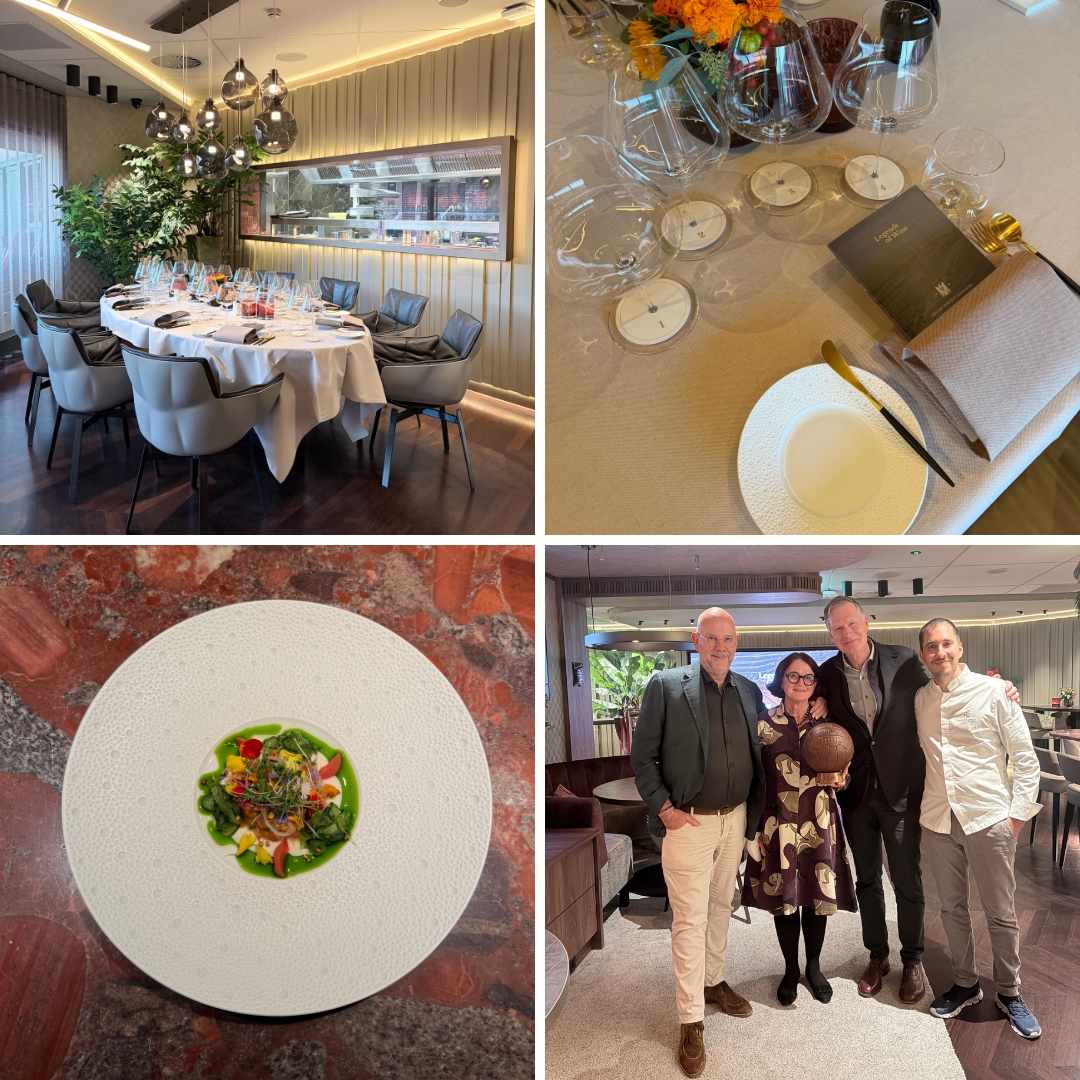
The day concluded, fittingly, not with further analysis, but with food—thoughtfully prepared by guest chef Dennis Liem.
A veal tongue salad paired with the 2024 Les Larmes Pinot Noir highlighted freshness and detail. The main course—stuffed cabbage with duck and lentils—brought out the structure and depth of the 2023 The Pivot Vineyard, its backbone mirroring the richness of the dish.
With a selection of farmhouse cheeses from L’Amuse, the 2023 Savoy Vineyard returned the focus to youth—vibrant, composed, and already suggesting what lies ahead.
A Question, Answered—Almost
Thirty years on, Littorai offers a clear response.
Yes, California can age.
But more importantly, it shows how.
Not through power or ambition, but through patience, balance, and an unwavering commitment to place.
The question is no longer whether California can produce wines that evolve over decades.
It is how many producers are willing to take the long road required to prove it.
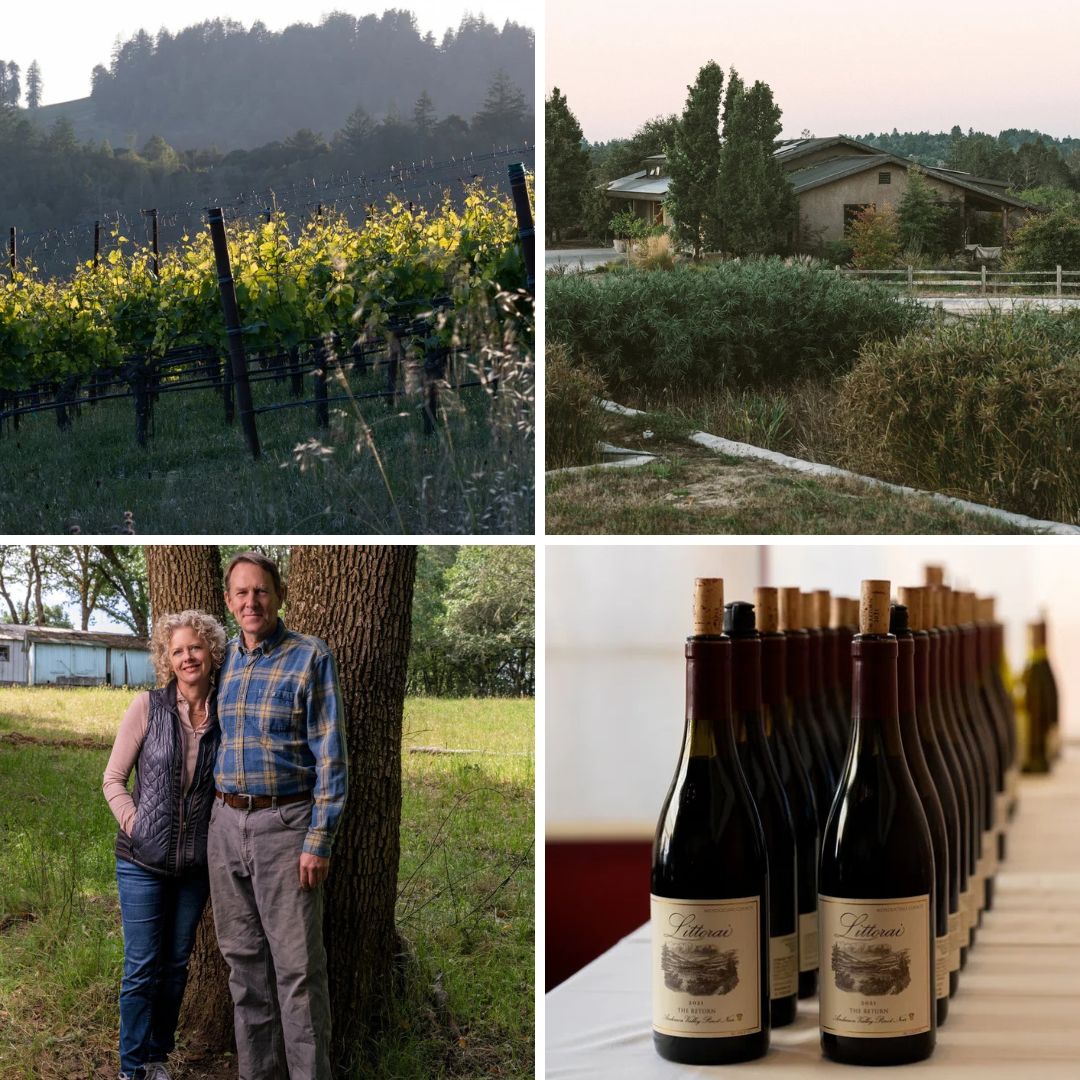
Ted and Heidi, looking back at 30 years Littorai.
This article is written by our own Niels Aarts. We thank Ted Lemon of Littorai Wines and our partner Résidence Wijnen, along with Chef Dennis Liem, for their time, invitation and great wines shared. If you are interested in the wines reach out to Residence Wijnen (for professionals) or De Gouden Ton (for consumers), who distribute the wines in the Netherlands.
Join our insiders’ list and get exclusive early access to new articles, expert tips, and fresh reviews delivered straight to your inbox. Subscribe now and be the first to discover!