Join Our Wine Journey – Sign Up for the Newsletter 🍷
Field blends: Historical Viticulture Launched into Modernity
Share
Deel op X (twitter)
LinkedIn
WhatsApp
Field blends: Historical Viticulture Launched into Modernity.
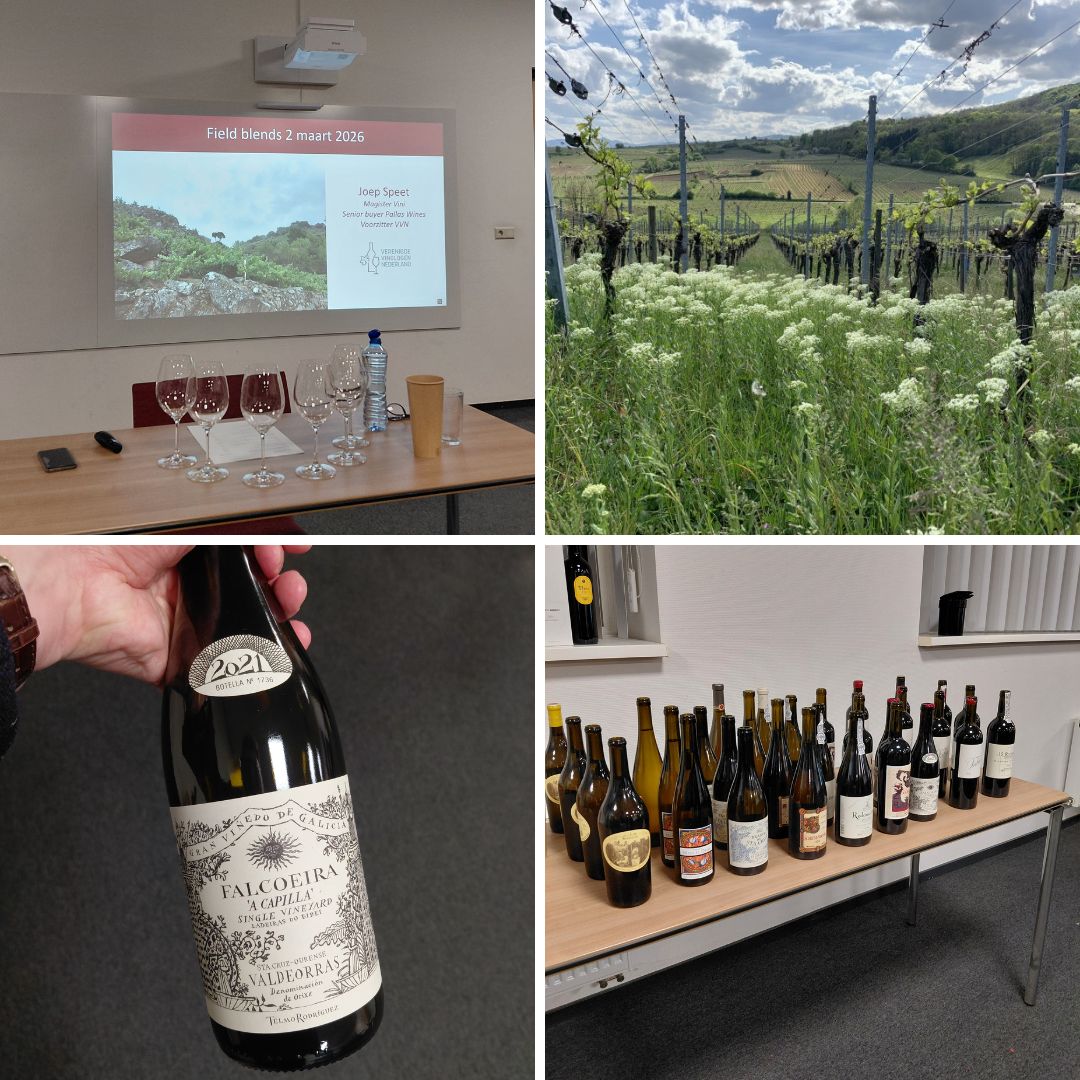
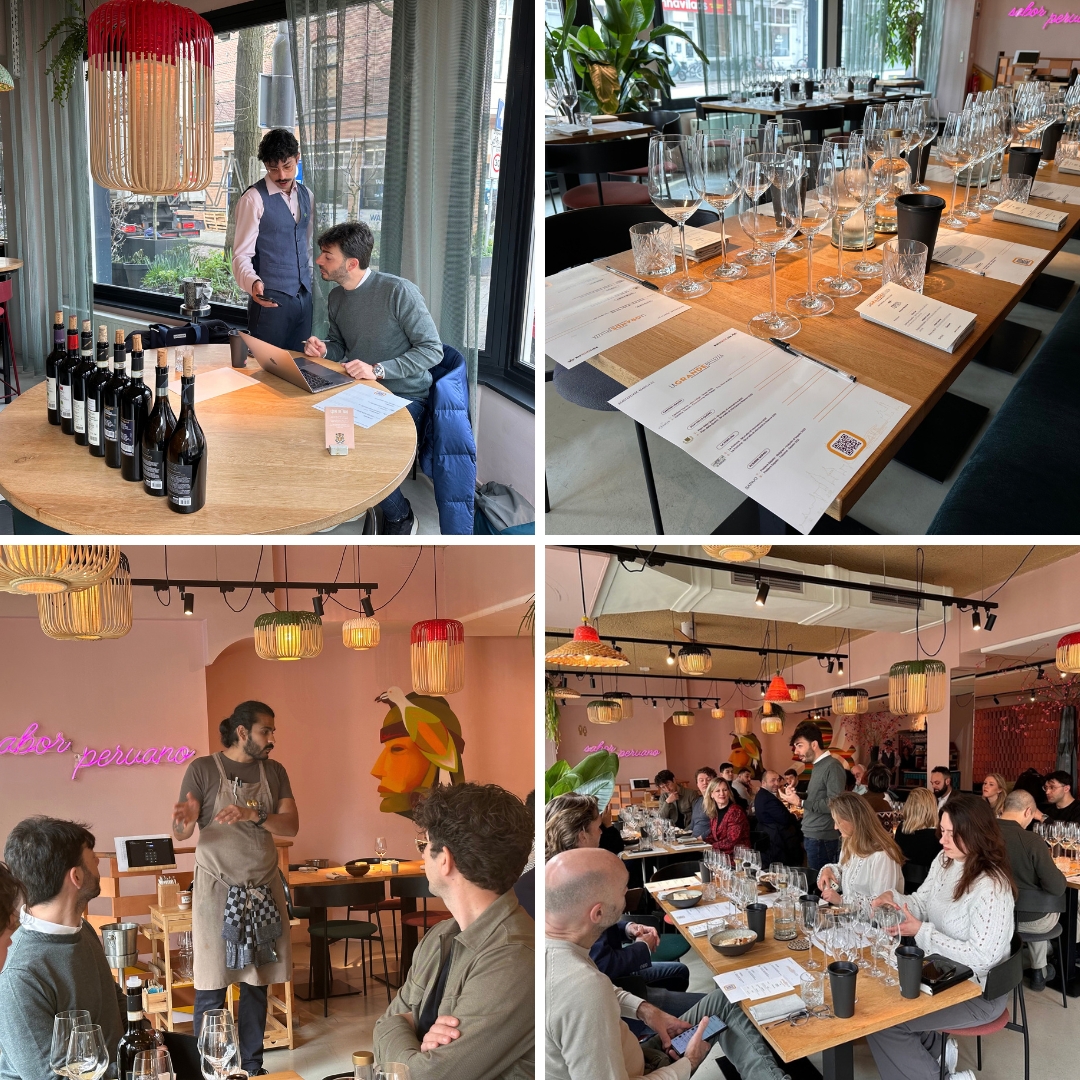
Recently we were invited by Joep Speet Magister Vini to taste along with the Dutch ‘Verenigde Vinologen Nederland’ (‘VVN’), an independent association of wine professionals who graduated from the Dutch wine academy. The topic of the evening was a deep dive into field blends – their definition, advantages, disadvantages, and how this all translates into the glass. Several accompanying field blend wines were also poured – from ancient vines planted decades, sometimes nearly centuries, ago to more modern plantings and interpretations of field blends in all colours. While exciting as a concept, the question is whether the field blends are here to stay. Therefore, without further ado, join us in rediscovering this ancient way of viticulture and why it is gaining so much momentum as of lately.
Field Blends: What, How, and Why?
A ‘field blend’ refers to the practice of planting various grape varieties next to one another in the same vineyard (or even block), which are subsequently harvested and fermented together. While considered quite rare as of today, back in the 19th century this was common practice in the world of viticulture. At that time, the main priority was to obtain consistent, uniform yields – something that field blends, with their natural hedge arising from the use of many different grape varieties, were ideally suited to deliver. For example, in humid years, thicker-skinned varieties would perform better, in years of spring frost later-budding varieties would perform better, and in cold years earlier-ripening varieties would likely perform better. In this way, for nearly each type of vintage the grower would be guaranteed a decent yield.
Another common benefit is that vineyards planted as field blends are often considered to have slightly greater resistance to disease. In mono-varietal plantings, diseases such as mildew can spread more rapidly because all the vines share the same vulnerability. Thus, when one vine becomes infected, the disease is therefore more likely to quickly spread to neighboring vines that are equally vulnerable. Adding to this, back then it was also the matter of grape-growers simply not knowing which exact varieties they had, and which would be best suited to their vineyard. This in turn caused many growers to plant a wide array of grape varieties to see which would work best – and then uproot ones that did not perform in order to replace them with better grape varieties.
The Field Blend Masterclass.
Modern Monocultures
Nowadays however, increased understanding of grape varieties and which ones are best suited to certain terroirs has caused an increased focus on monocultures, with just one grape variety, and often even one single clone, being planted in vineyards. Examples of this include Burgundy, where Pinot Noir and Chardonnay dominate (more on this later), and many of Germany’s top sites where Riesling thrives.
This evolution was also strongly aided by modern pesticides and fungicides, allowing blocks of single grape varieties to produce high and consistent yields each year, perfectly suited for mass production of entry-level varietal wine. Having just one grape variety planted also makes pruning and other vineyard management techniques easier as each vine is subject to the same treatments. When considering the more premium segment of wine, producers often argue that certain grape varieties display terroir more precisely than field blends, with Pinot Noir for example being stated as a better conveyor of terroir in Burgundy than for example Syrah would be. And even where blends are common-place, such as in Pauillac in the Médoc, consumers still expect a certain profile in the blend – in the case of Pauillac being a Cabernet Sauvignon-dominated blend with a hint of Merlot and Cabernet Franc/Petit Verdot as salt and pepper. A grape such as Pinot Noir would not be expected here – and even forbidden by the rules of the appellation.
However, some modern bastions of field blends remain. The most notable is perhaps the Douro Valley, where old-vine field blends of over 50+ indigenous grape varieties still constitute many top wines produced – famously championed by top produces such as Niepoort,Quinta do Crasto, and Wine & Soul. Another example is Vienna’s Gemischter Satz field blends. In these blends, Grüner Veltliner, Welschriesling, Traminer, and Gelber Muskateller among many others are co-planted and co-fermented into delicious, easy-drinking white wines – with even some single vineyard top wines entering the scene as of recent years such as Weingut Wieninger’s Ried Ulm Nussberg as tasted in the masterclass. Further regions where field blends are commonly found include the Alsace as championed by Marcel Deiss, Valdeorras and Rioja as championed by Telmo Rodriguez, and California, South Africa, and Australia, who all have many older so-called ‘settler’ vineyards, hinting at their respective ages.
The Modern Take on Field Blends
So, in what perspective should field blends be seen as of today? Do field blends indeed show terroir or are singular grape varieties a more transparent means to show the vineyard’s place? Growers like Mathieu Deiss of Domaine Marcel Deiss – who solely use field blends of all Alsatian varieties in their plantings – argue that field blends give the purest terroir expression, and that any varietal note in wines only muddy their sense of place. Critics of this notion on the other hand state that the terroir needs grape varieties that are adapted to the place, as otherwise they might not ripen sufficiently and yield underripe notes.
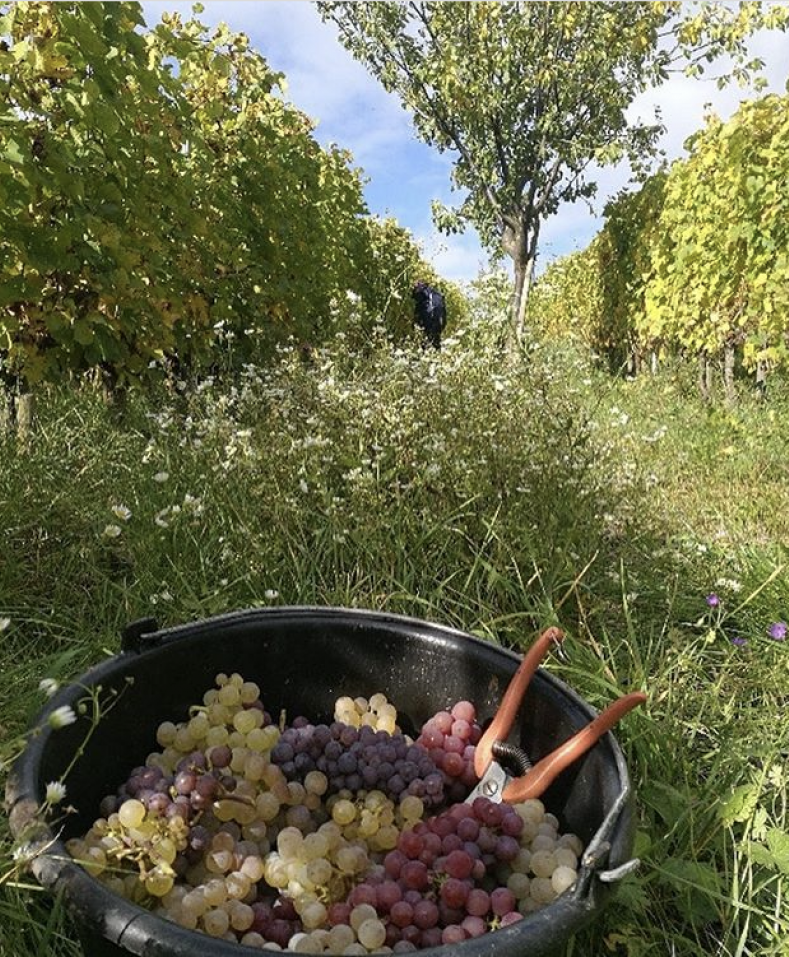
Complantation in action: grapes of every colour, ripened together, harvested as one. At Deiss, the vineyard is not a sum of parts but a single living whole — complex, coherent, and rooted in place.
On the other hand, evidence seems to suggest that different varieties planted as field blends adapt their ripening windows nearer to one another, with a lower time in between optimal maturity between them than in the scenario that they are planted separately. While this sounds a bit spiritual, biology does support plants ‘communicating’ to each other, for example when a vine being attacked by mildew alerts its neighbors via releasing hormonal scents – who then proceed to have a slightly lower risk of getting infected due to them bolstering their natural defenses. Might it be too radical to question whether they also ‘communicate’ their maturation cycles to one another? Julien Brechet of Domaine des Bousquets in Gigondas notes in this regard that his regular plantings of Grenache, Syrah, and Mourvèdre mature 20 days apart, whereas his field blend of the same varieties ripens roughly 8 days apart. Mathieu Deiss adds in this regard his metaphor that mono-varietal plantings talk to their selves, whereas field blends to each other – accounting for the narrower maturity times and increased disease resistance.
Furthermore, none of the wines tasted in the masterclass had any under ripeness or harsh tannins, which underlines Deiss’ point of the grape varieties in field blends ripening more or less in a similar fashion. However, if a grower were to plant early-ripening Pinot Noir next to late-ripening Mourvèdre in a field blend, it would be hard not to imagine an odd combination of over- and under ripeness in the resulting wine. ‘Anything goes’ is therefore unlikely to apply to field blends. Rather, they tend to involve varieties that have been grown in a region for a long time and are fully adapted to its climate – varieties which, when grown together, yield an interesting interplay of riper and less ripe components – but without any harsh under ripeness.
Another modern take is the lack of perfection field blend wines tend to have, as some riper and some less ripe fruit is bound to be included. While this sounds as a negative, Joep Speet argues instead that this might be an advantage of field blends, with ‘perfect’ wines with spotless fruit perhaps being slightly ‘too perfect’ – as slight imperfections in wine (without going overboard) give complexity, tension, and interest. Or as Mathieu Deiss states: field blend wines are seldom perfect, but quite often interesting and rarely boring. After all, it is hard to imagine a Bourgueil without a slight hint of pyrazines, or a world-class Pommard without just the faintest rustic edge to it. And lastly, field blends also help to protect near-extinct grape varieties by keeping them around, instead of giving the vineyard over to more popular varieties – giving a more authentic feel to the wines as well.
Fields Blends Tasted
Time for the practical evidence: a line-up of field blends from all over Europe, carefully curated by Joep Speet. Surprisingly or unsurprisingly, no wine showed any indication of severe under- or over ripeness, all wines showed balance, and most of them were genuinely exciting – whether an older or younger vintage, from old vines or younger ones, or white or red in colour. But: while they were all sound wines, did they truly benefit from being a field blend? Time to find out whether the proof is truly in the glass.
The Tasting Table of the Evening.
Weingut Wieninger Wiener Gemischter Satz DAC Ried Ulm Nussberg 2023
Field blend | 93/100 DWA score | Drink 2028-2033
Field blend of nine common Austrian white grapes, including Grüner Veltliner, Pinot Blanc, Welschriesling, Traminer, Zierfandler and others, grown on in the calcareous Ulm vineyard, part of the wider Nussberg situated directly north of Vienna overlooking the city. Commonly cited as one of Austria’s best field blends, contradicting the image of it being a simple wine drank in local taverns. Needs some time to open up on the nose, but already quite intense on the palate, with ripe yellow pear, fresh apple, white pepper, anise, lemongrass, thyme, honeysuckle, bread dough, and smoke. Very interesting and complex, with short skin maceration and aging in old oak adding structure and a light phenolic touch. Great fruit quality, made for the longer haul. Subtle combination of ripe and just-ripe fruit, with herbal depth.
Weingut Wieninger Wiener Gemischter Satz DAC Ried Ulm Nussberg 2023.
Domaine Marcel Deiss Complantation 2023
Field blend | 91/100 DWA score | Drink 2026-2030
All 13 Alsatian grape varieties feature in Deiss’ entry-level white blend, sourced from many terroirs around Ribeauvillé. Quite different character than other, ‘regular’ white wines, with the exact notes being hard to describe but approximating ripe red apple, peach, fresh pineapple, jasmine, orange blossom, fresh yellow pear, nutmeg, and clove. Unique interpretation yet very much Alsatian in character, with intense spice and floral notes. Balanced and nuanced, with a tiny hint of residual sugar.
If you would like to learn about the philosophy of Domaine Marcel Deiss check out our earlier article here.
Telmo Rodriguez Valdeorras Branco de Santa Cruz 2022
Field blend | 92/100 DWA score | Drink 2027-2032
Telmo’s mid-level white wine from his Ladeiras Do Xil estate in Valdeorras, being a field blend of Godello, Treixadura, Doña Branca, and Palomino. The vineyards are situated around the village of Santa Cruz on steep, terraced granitic vineyards at 400 to 600 meters above sea level overlooking the Bibei river. Needs a bit of time in the glass to come around. Complex and nuanced notes of peach, ripe yellow apple, wet stone, butter, and smoke. Long, salty finish. Concentrated and round in style, with good acidity to balance it out.
If you would like to learn more about the work of Telmo Rodríguez check out our earlier article here,
Domaine Marcel Deiss Schoenenbourg Grand Cru 2016
Field blend | 95/100 DWA score | Drink 2026-2046
The Schoenenbourg vineyard will always hold a special place for the Deiss family. It was there, in 1984, that they bought a parcel which happened to contain a field blend – an encounter that first sparked their interest in the phenomenon. Again all 13 Alsatian varieties are planted here, on steep south-facing slopes with marl, sand, and gypsum soils. Especially the gypsum soils are interesting, as according to Marie-Hélène Deiss they contain an abundance of active sulphur, explaining why already back in the Middle Ages the wines of the Schoenenbourg could be transported all over Europe without getting oxidized. The vineyard is also prone to botrytis, which the Deiss family happily keep in the wine as they consider it part of the terroir. In the glass this translates into a beautiful light golden colour alongside off-dry notes of honey, petrol, mushroom, clove, and overripe mango. The wine is perhaps a bit too evolved as can happen with bottle variation, but still shows freshness and unique white truffle and poutpourri notes. Luscious style with lacy freshness and impeccable depth of flavour – truly Alsatian.
Niepoort Redoma Reserva Branco 2023
Field blend | 95/100 DWA score | Drink 2026-2043
Field blend of native white grapes to the Douro, including Rabigato, Códega, Viosinho, Arinto and many others sourced from Niepoort’s Quinta de Nápoles and planted in field blends with the vines being over 80 years old. Beautiful fresh, modern, mineral style, with an exciting reductive element alongside intense lemon, lime, peach, wet stone, dill, butter, and vanilla. High acidity cuts through the richness and gives great tension. Structured, fresh, and pure. Hugely exciting interpretation of the classic Douro field blends.
Invincible Numero Dois Douro Tinto 2021
Field blend | 92/100 DWA score | Drink 2026-2034
A project headed by Marc Kent (of Boekenhoutskloof fame) and Rita Marques, paying hommage to the old, and often ancient, vines of the Douro. Field blend of many, many Douro red grape varieties. Again, featuring old vines, this time averaging out over 50 years of age, vinified via old, larger oak in order to let the fruit shine through. Deep ruby colour, with intense plum, ripe black cherry, fresh blueberry, violet, tobacco, and clove. Beautiful fruit purity, with both ripeness and elegant floral notes so classic of the Douro reds. Pixelated, fine tannins alongside fresh acidity. Exceptional value, an absolute bargain for the price.
Telmo Rodriguez Falcoeira A Capilla 2021
Field blend | 93/100 DWA score | Drink 2026-2036
Mencía, Brancellao, Sousón, Garnacha Tintorera among others feature in this field blend, again from Valdeorras but then in red. Relatively younger vines, around 18 years of age, harvested and fermented together in large foudres. It has a light volatile touch to it on the nose, perhaps evidence of low-sulphur winemaking, but still allows for its abundant fresh red fruit to shine through on the palate, with wild strawberry, raspberry, fresh plum, and dried cranberry all coming together. Wild roses, damp earth, and wet stone alongside a subtle funky barnyard note give depth and complexity. Delicious now, difficult to judge whether it will improve further with age. For seekers of nuance above power.
Field blend of mostly Tempranillo, with some Garnacha and Mazuelo, alongside minor percentages of other grapes. Combination of older and younger vines on calcareous clay soils from Labastida, a premier village in Rioja Alavesa. What a beautiful wine. Deep ruby colour, with haunting notes of perfectly ripe plum, red cherry, and blueberry. Elegant smoke and clove notes are present due to the subtle regime of older oak, alongside being hallmark notes of aged Tempranillo wines. Leather and tobacco aromas are just making their entrance due to the years of bottle age. Extremely fine and pixelated tannins, with great length. One of the best Rioja Alavesa has to offer, fully made to showcase its beautiful fruit.
Niepoort Redoma Tinto 2015
Field blend | 94/100 DWA score | Drink 2026-2035
Tinta Amarela, Touriga Franca, Touriga Nacional, Tinta Roriz, and Tinta Cão feature in this elegant field blend, made from cooler, north-facing vineyards at altitude at Quinta de Nápoles, explaining its more moderate alcohol content. Gentle and fresh, with more emphasis on red fruit and roses over the classic Douro profile of dense purple fruit. Ripe red cherry, strawberry, and blueberry form the wine’s core, no doubt helped by the use of whole bunches, alongside nuanced notes of roses, clove, wet stone, and wild herbs. Subtle oak. Good intensity and extraction due to the maceration in stainless-steel lagares (as commonly used for premium Port production). High acidity gives backbone and freshness. Round and gentle tannins. Perfect to drink now, but certainly possible to keep for longer. Modern, delicious and very drinkable take on Douro reds.
The Tasting List of the Masterclass.
Conclusion
All in all, this proved to be an insightful masterclass, but perhaps one that nearly raised as many questions as it answered. Joep Speet walked us through a beautiful line-up of field blends in both colours; all made in very different ways from one another. From more classically made white wines (Wieninger, Niepoort Branco), to off-dry with botrytis (Deiss Schoenenbourg), and from young vines (Telmo Rodriguez Falcoeira) to ancient vines (Again Niepoort), virtually all categories of field blends were well-represented in this masterclass – much to Joep Speet’s acclaim. Whether field blends are superior in quality or a better transmitter of terroir seems near impossible to objectively quantify, but the allure of field blends, their unique characteristics in the glass, and perhaps above all the story they tell, certainly make them worth pursuing.
This article was written by our own Martin Bronkhorst. Most of the above-mentioned wines are imported in the Netherlands by Pallas Wines, part of Delta Wines (except for Weingut Wieninger and Niepoort who are imported by Résidence Wijnen and Horizon Wines respectively), and available through selected partners.
We thank Verenigde Vinologen Nederland for the invitation and Joep Speet Magister Vini for the deep insights into the phenomenon that is field blends.
Join our insiders’ list and get exclusive early access to new articles, expert tips, and fresh reviews delivered straight to your inbox. Subscribe now and be the first to discover!