Join Our Wine Journey – Sign Up for the Newsletter 🍷
Domaine Marcel Deiss, The Taste of Place
Share
Deel op X (twitter)
LinkedIn
WhatsApp
Domaine Marcel Deiss, The Taste of Place.
Why Field Blends Still Matter.
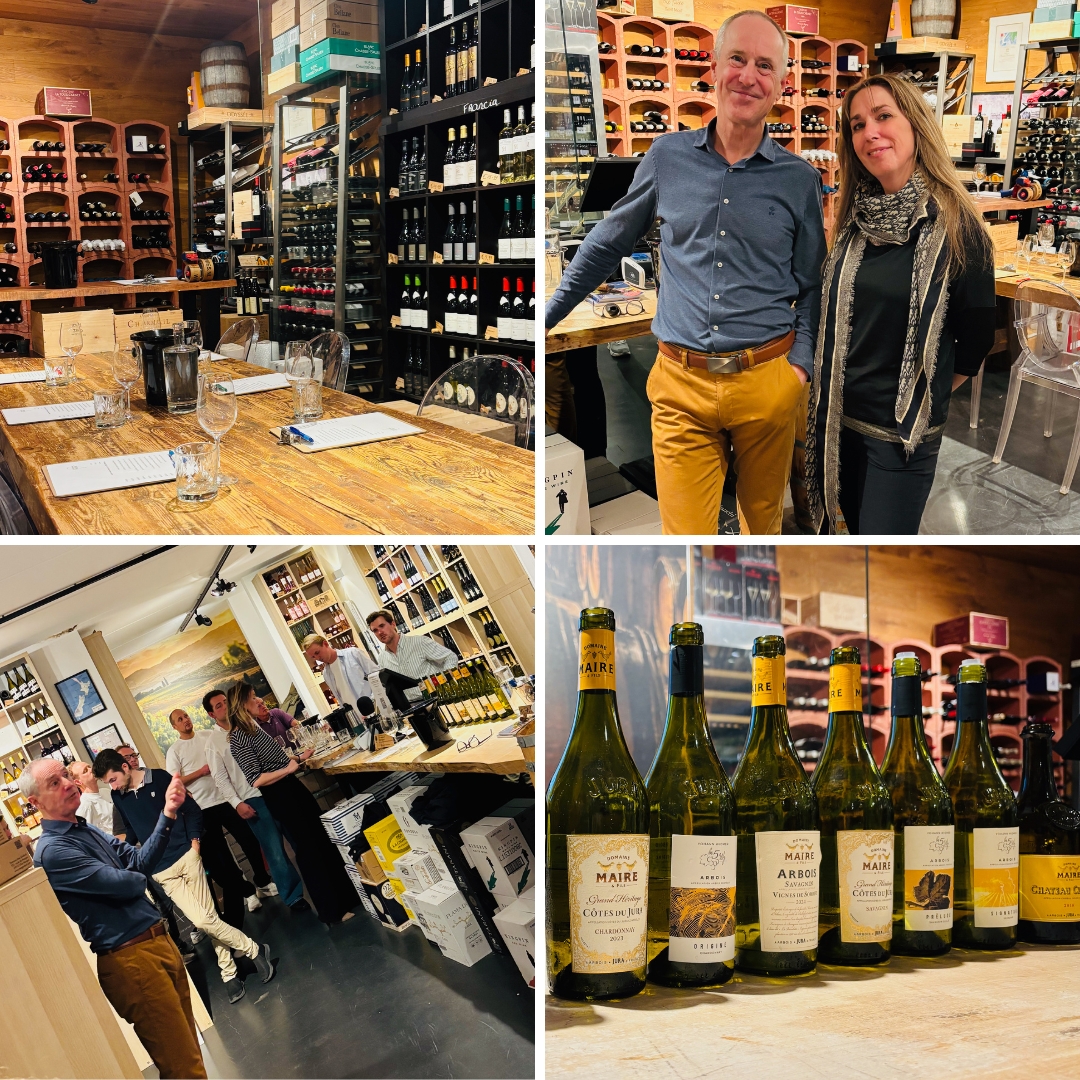
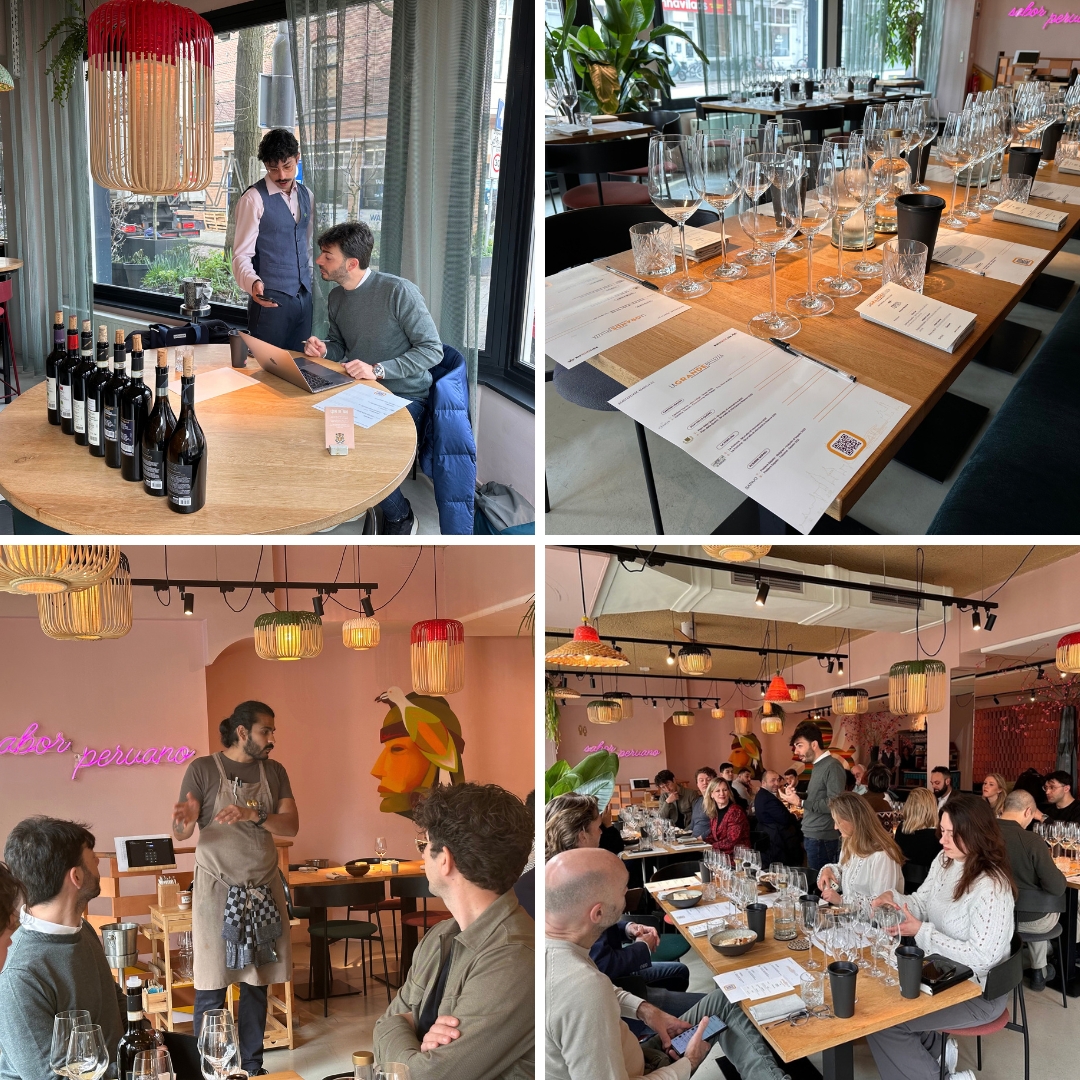
On a quiet Tuesday afternoon in Amsterdam, a roomful of sommeliers, trade professionals and our own Onno Deumer gathered for something that, at first glance, seemed counterintuitive: a masterclass on Alsatian field blends at D-Vine Amsterdam. No varietal banners, no Pinot Gris versus Riesling showdown — just one speaker, a handful of wines, and a vineyard-first philosophy that challenged conventional logic.
Hosted by Domaine Marcel Deiss, and led by the articulate and unassuming Marie-Hélène Deiss, the event offered more than just a tasting. It was an invitation to reconsider the foundations of wine identity: not as a product of grape variety, but of place. For this family estate — biodynamic since 1997, rebellious long before that — field blends aren’t a stylistic choice. They’re a consequence of principle.
What that principle entails — and why it might matter more than ever — became clear over the course of one focused, quietly radical afternoon.
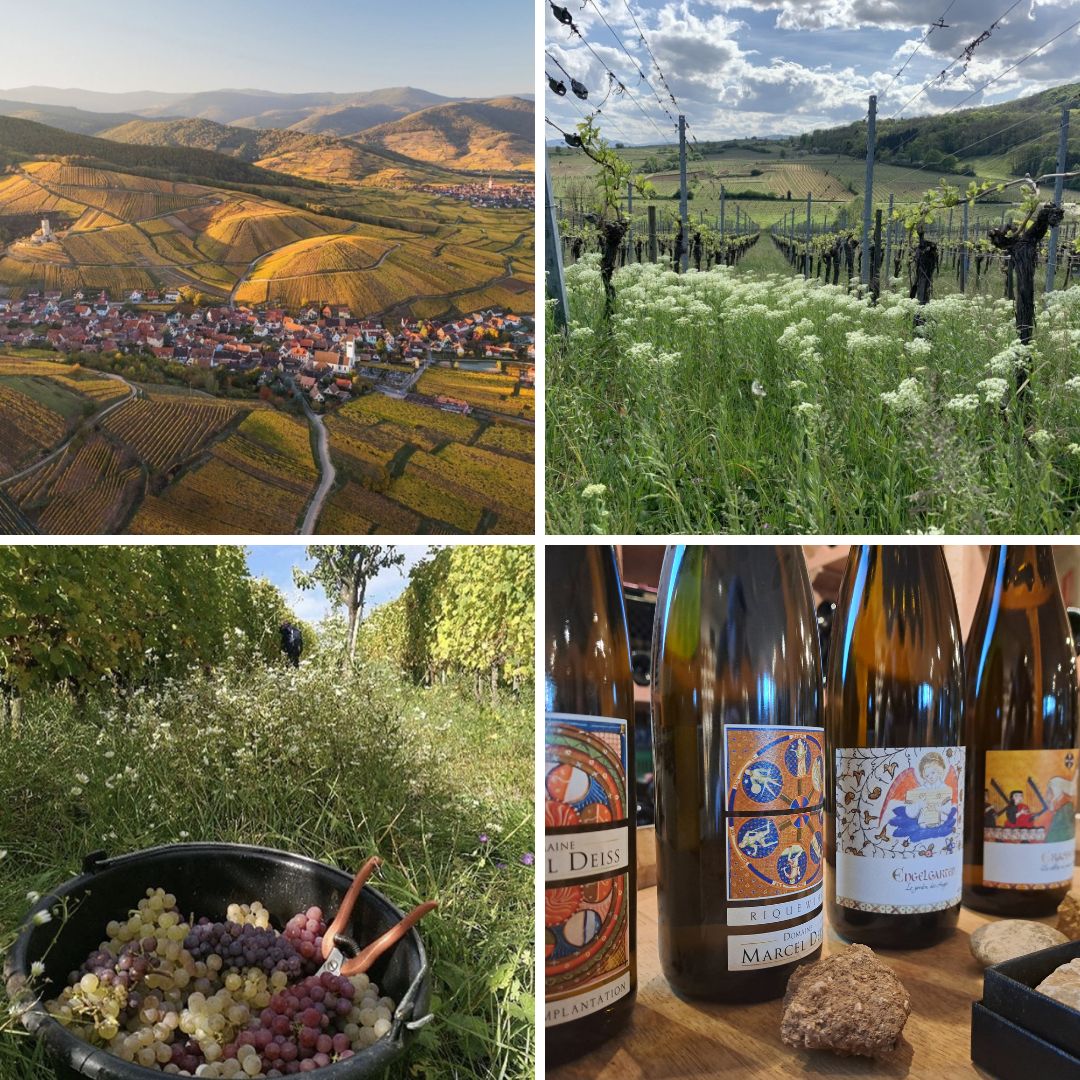
The mosaic of Alsace: centuries-old villages surrounded by vineyards that once spoke the language of place. Here, complantation was not a trend but tradition — a quiet balance between soil, slope and grape.
Origin as Philosophy – Why Field Blends?
Long before grape varieties became brands, Alsace made wines rooted in place. Villages had reputations. Slopes had names. And inside each plot, a natural assortment of varieties coexisted — planted together, harvested together, and fermented as one. These were not blends in the modern sense, but expressions of complantation: the vineyard as a single, living unit.
By the late 20th century, this logic had largely disappeared. The global wine market embraced varietal identity, and so did Alsace — in part because its AOC system, unlike most in France, required grapes to be named on the label. Wines became varietal statements: a Gewurztraminer, a Pinot Gris, a Riesling. The vineyard was still there, of course, but its voice grew faint under the weight of grape typicity.
Today, that voice is making a quiet return — not out of nostalgia, but necessity. Climate stress, soil exhaustion, and consumer fatigue are converging to challenge the monocépage model. One response gaining traction is a return to complexity in the vineyard itself. Mixed plantings offer more than stylistic nuance; they restore biodiversity, encourage balance, and reduce the need for chemical correction. Like a forest, a diverse plot creates its own ecosystem, one that can buffer shocks and evolve with its environment.
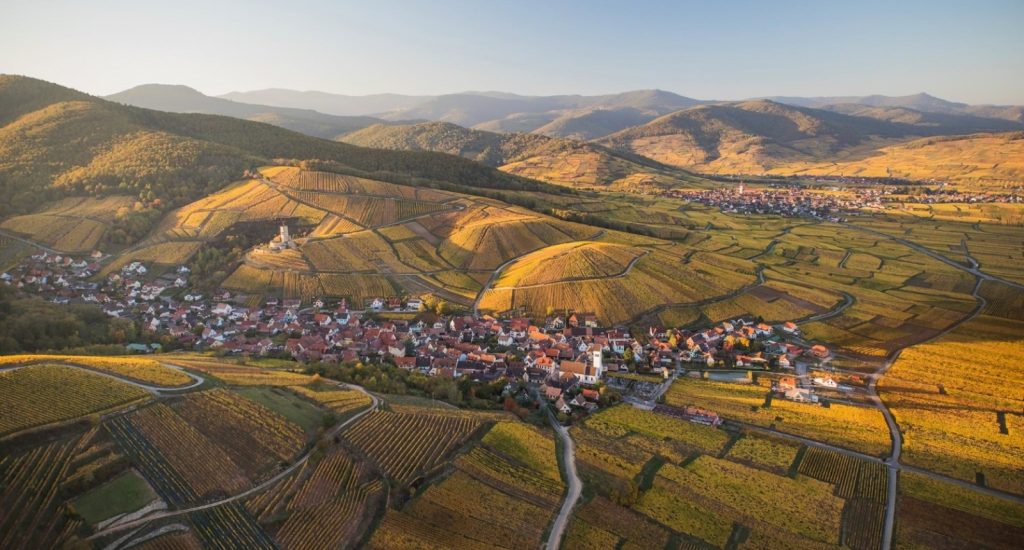
Complantation in practice: densely planted vines and spontaneous vegetation reflect a vineyard managed as a living ecosystem — one where biodiversity replaces intervention, and terroir takes the lead.
But the relevance of this approach goes beyond viticulture. In a market saturated with technically correct but emotionally flat wines, producers and drinkers alike are seeking something more grounded. Wines that transmit not just flavour, but identity. Not just quality, but coherence. In that context, field blends are not a curiosity — they are a provocation. A reminder that place, when given the chance, can still speak louder than grape.
One producer in particular has made this principle the core of their identity — not through slogans or stylisation, but through decades of soil-driven experimentation.
Marcel Deiss: Terroir as Language
At Domaine Marcel Deiss, terroir is not just a principle — it’s the source code. Everything flows from it: vineyard layout, grape composition, vinification, even the way wines are named. “The grape does not make the wine,” said Marie-Hélène Deiss during the Amsterdam masterclass. “Terroir creates the taste, and uses the grape.” It’s not a slogan, but a working philosophy — one that puts place above varietal, and coherence above category.
That philosophy was first developed by her father, Jean-Michel Deiss — a trained agronomist with the mind of a poet, and one of Alsace’s most quietly radical voices. Over the past four decades, he has reimagined the vineyard as a self-regulating ecosystem: a biodiverse, densely planted, and deeply expressive unit of meaning. Marie-Hélène, who now plays a leading role in the estate’s education, export and philosophy, carries that vision forward with clarity and calm conviction.
The methods at Deiss follow the logic of the land. Parcels are planted according to complantation — multiple varieties coexisting within the same site, each contributing its part. Density is extreme by regional standards: over 10,000 vines per hectare, roughly double the Alsace average. The effect is intentional. With more plants competing for fewer resources, roots are forced deeper into the subsoil, increasing both resilience and expression. Lower yields, longer élevage, and spontaneous fermentation complete the picture — not for style, but for site transparency.
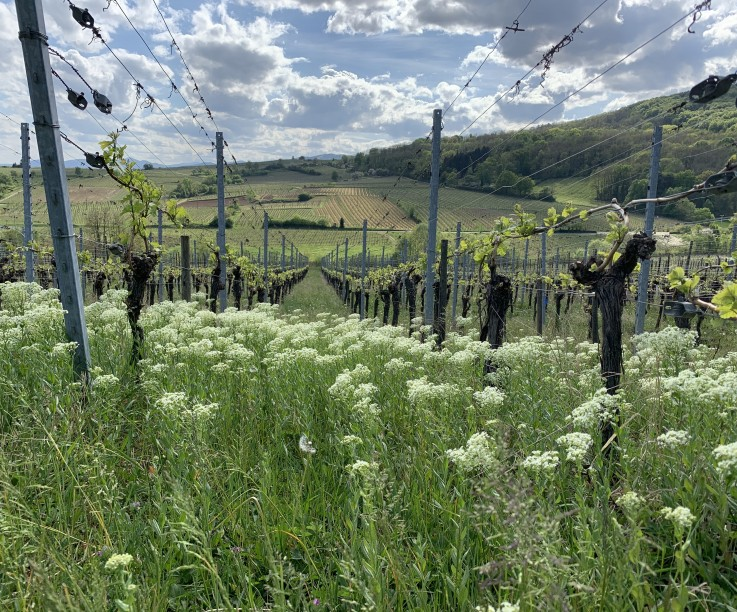
Complantation in action: grapes of every colour, ripened together, harvested as one. At Deiss, the vineyard is not a sum of parts but a single living whole — complex, coherent, and rooted in place.
It’s an approach that has often run against the current. For years, Deiss was seen as a contradiction: too empirical for the romantics, too philosophical for the technicians. Marie-Hélène knows this tension well. She described their wines as demanding, but ultimately more rewarding. Not designed for typicity, but for narrative coherence — wines that behave like the places they come from.
That coherence hasn’t gone unnoticed. Critics now cite Deiss as one of France’s most thoughtful producers. Eric Asimov praised the estate for forcing “us to rethink what we think we know about Alsace.” Decanter called the domaine “provocative and poetic.” And Jancis Robinson, never one for hyperbole, found “compelling coherence” where others saw nonconformity.
Despite the acclaim, the focus remains underground — in the vineyard, where ideas must root themselves before they can bear fruit. Asked about the estate’s biggest challenge, Marie-Hélène didn’t hesitate: “Our biggest challenge is not to sell wine,” she said. “It’s to produce wine.”
In the Glass – Back to Place
If the philosophy of Marcel Deiss is rooted in the vineyard, it is in the glass that it truly comes alive. The Amsterdam masterclass offered a rare opportunity to taste that philosophy in motion — not through a varietal comparison, but through a progression of origin.
The tasting began with a village-level wine from the limestone-rich slopes around Bergheim. It was an elegant entry into the Deiss style — lifted, structured, and immediately mineral in tone. From there, we moved to a wine from the clay-limestone marl of Riquewihr, offering more weight and density without losing finesse. The final step was a pair of Premier Crus: Engelgarten and Grasberg — the former broader and more aromatic, the latter taut, vertical and deeply stony.
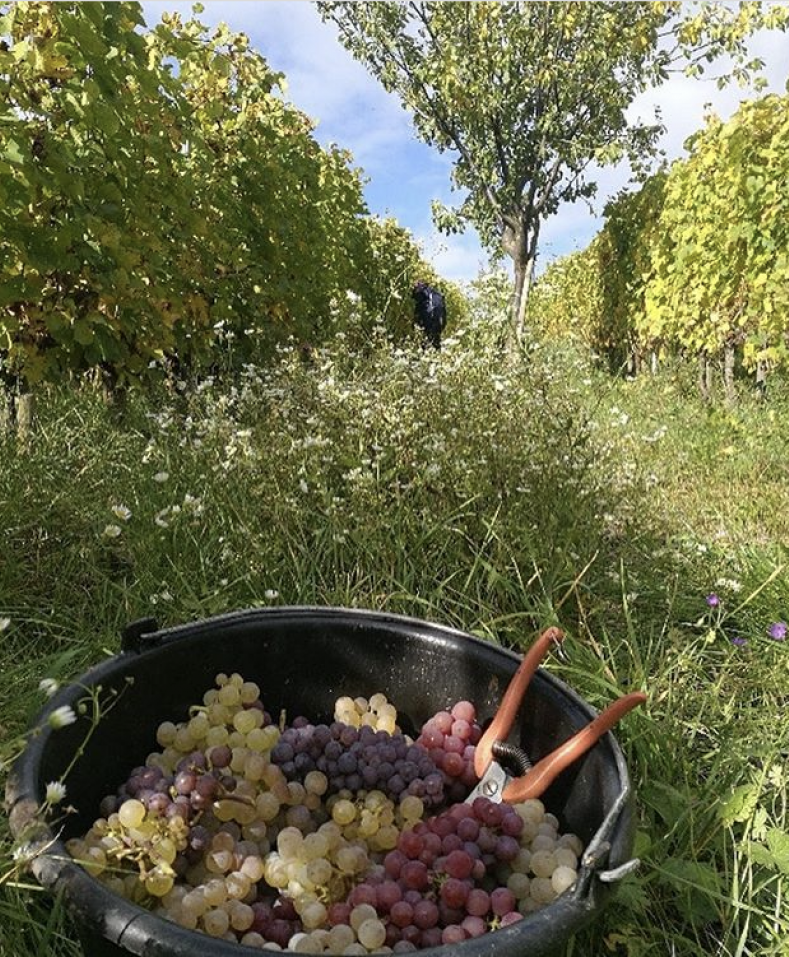
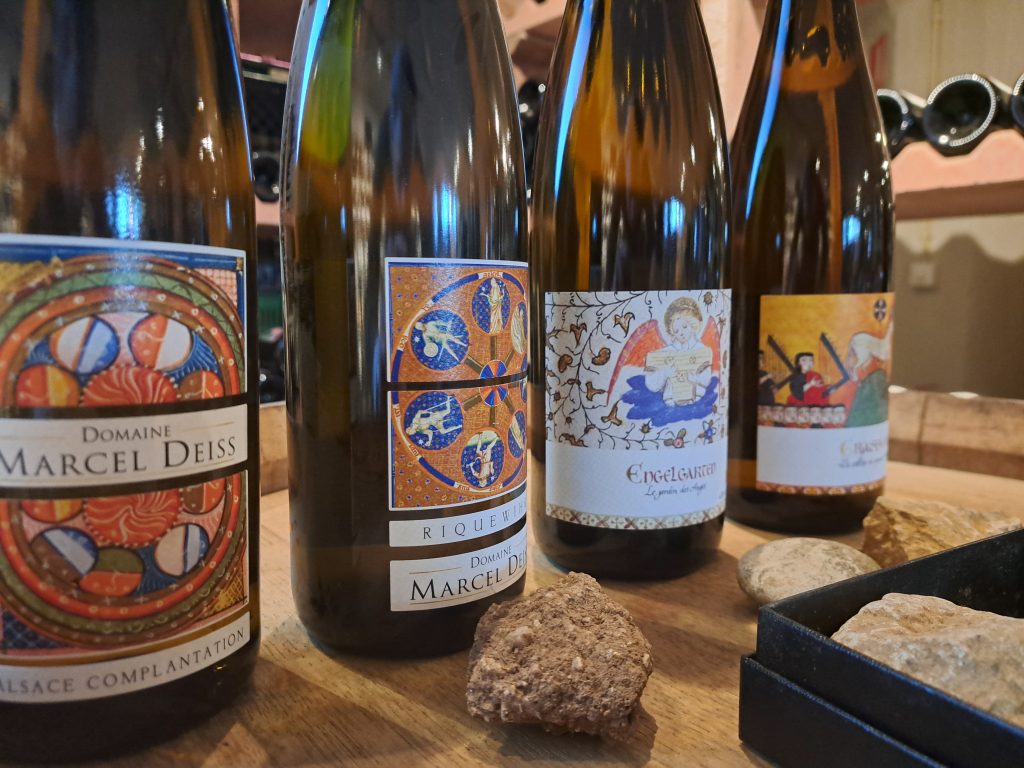
From limestone to marl to Jurassic rock — the four wines tasted during the masterclass, each a field blend from a distinct terroir. Left to right: Alsace Complantation, Riquewihr, Engelgarten, Grasberg
Each wine reflected its vineyard more than its grape composition — transmitting soil, exposure and energy through texture and tone. Below, we offer individual impressions of all four wines tasted:
2023 Complantation – Floral and bright, this Alsace field blend packs all 13 permitted grapes into one generous harmony. Jasmine, honey and orchard bloom rise first, chased by crisp acidity and that telltale stony freshness. A soft roundness follows – biscuit, a whiff of bread dough – giving it both comfort and charm. No oak, no tricks, just texture and flow. Easy to drink but quietly complex, each sip revealing another layer of grape character. For this money, a rock-solid find that overdelivers with effortless grace.
DWA-Score: 92/100
2023 Riquewihr – Still young but already charming, like a first date that quietly surprises you. Riesling adds citrus and lift, Pinot Gris brings flesh and calm. The fruit feels ripe – peach, baked apple, a hint of honeyed warmth – so it tastes sweeter than it truly is. Acidity is gentle, giving the wine a round, relaxed rhythm rather than a sharp edge. Medium alcohol, creamy texture, a whisper of clay minerality underneath. Finishes mellow, balanced and comforting. A quiet winter companion for roast chicken or creamy dishes.
DWA-Score: 90/100
2023 Engelgarten – Bright, aromatic and bursting with energy. Flowers, grass, citrus zest and that quirky touch of wet wool float over a salty mineral heartbeat. The Riesling thread is unmistakable: crisp, linear, transmitting the vineyard straight into the glass. South-facing slopes might promise heat, yet those tiny pebbles keep everything cool and taut, like nature’s own fridge. It feels like sunlight filtered through stone – vibrant, elegant, quietly magnetic. Not a wine that shouts, but one that charms its way into memory.
DWA-Score: 92/100
2021 Grasberg – Golden and luminous, it opens with ripe apricot, peach and a whisper of honeyed bloom. Juicy yet crystalline, gliding on vibrant acidity that feels almost alpine. The texture is full but weightless, shaped by the deep Jurassic limestone that anchors these north-facing vines. Beneath the cool light lies warmth from the iron-rich rock, giving quiet energy and grip. It’s a wine that hums with balance – ripe yet brisk, creamy yet precise – like sunlight reflecting off cold stone. Calm confidence in liquid form.
DWA-Score: 93/100
What stood out, above all, was not the individuality of the wines, but their internal coherence. Despite their differing origins, they shared a structural signature: balance without excess, depth without weight, length without artifice. In a room full of professionals trained to decode style, these wines asked for a different kind of attention — not identification, but listening.
The Wine is the Vineyard
In an age where wine is increasingly defined by labels, categories, and expectations, Marcel Deiss reminds us that meaning still lives underground. What we tasted in Amsterdam was not a series of styles, but a series of places — rendered through vine, soil, and time.
Field blends were the thread, but not the headline. They are not a style, and certainly not a gimmick. They are the result of a choice: to prioritise the vineyard as the unit of identity. By planting multiple varieties within a single parcel — and harvesting, fermenting and ageing them together — Deiss allows the site to speak without interference. The goal is not to create complexity through blending, but to cultivate balance through co-existence. Each grape variety plays a role, but none is the star.
The system is slow to show itself. There are no shortcuts, no varietal markers to guide the palate. Instead, the wines build their message structurally — through tension, clarity, and length. Their typicity is not of grape, but of place. That shift matters. Because if terroir is to remain a meaningful concept in the future, it must be expressed not just in theory, but in practice.
This doesn’t mean field blends are the answer for every region. But they do offer a kind of proof. Proof that complexity, balance and expression don’t have to be engineered — they can be grown. And in a time when climate stress and consumer fatigue threaten both production and perception, that is no small thing.
In a world full of noise, wines like these don’t shout. They don’t need to. They speak in soil tones, vintage moods, and mineral accents. You just have to listen.
This article is written by our own Onno Deumer and was made possible thanks to the generosity and clarity of Marie-Hélène Deiss, who led the tasting and masterclass with purpose and poise. We also thank Domaine Marcel Deiss for their commitment to thought-provoking wine, D-Vine Amsterdam for inviting us and hosting the event in such a focused and professional setting, and Delta Wines for making these bottles — and their philosophy — available to the Dutch market. If you would like to taste the wines of Domaine Marcel Deiss yourself D-Vine has a nice selection to offer.
Join our insiders’ list and get exclusive early access to new articles, expert tips, and fresh reviews delivered straight to your inbox. Subscribe now and be the first to discover!