Join Our Wine Journey – Sign Up for the Newsletter 🍷
Kraichgau in a Glass at Restaurant Merlot
Share
Deel op X (twitter)
LinkedIn
WhatsApp
Kraichgau in a Glass at Restaurant Merlot.
A Wine Maker’s Dinner with Weingut Klumpp.
A shared philosophy united Merlot and Klumpp: wine should be gastronomic, but above all, it should bring pleasure to the table.
Some partnerships were years in the making. Others began with a single glass of wine.
The relationship between Restaurant & Wine Bar Merlot and Weingut Klumpp had started more than a decade earlier at ProWein in Düsseldorf. Vincent Tomassen, owner of Merlot, and his team tasted the wines of the German family estate, were immediately impressed, and decided to bring them to the Netherlands. More than a decade later, Klumpp’s wines remained a familiar sight on Merlot’s wine list and an integral part of its wine pairings.
This was no coincidence. Merlot and Klumpp shared the same philosophy: wine should not only be interesting in the glass but should truly work at the table. For Vincent, German wines ranked among the finest in the world thanks to their purity, precision, and gastronomic versatility. For Markus Klumpp, who joined the dinner that evening, it all came down to freshness, tension, minerality, and, as he liked to call it, “drinking fun.”
A Warm Welcome
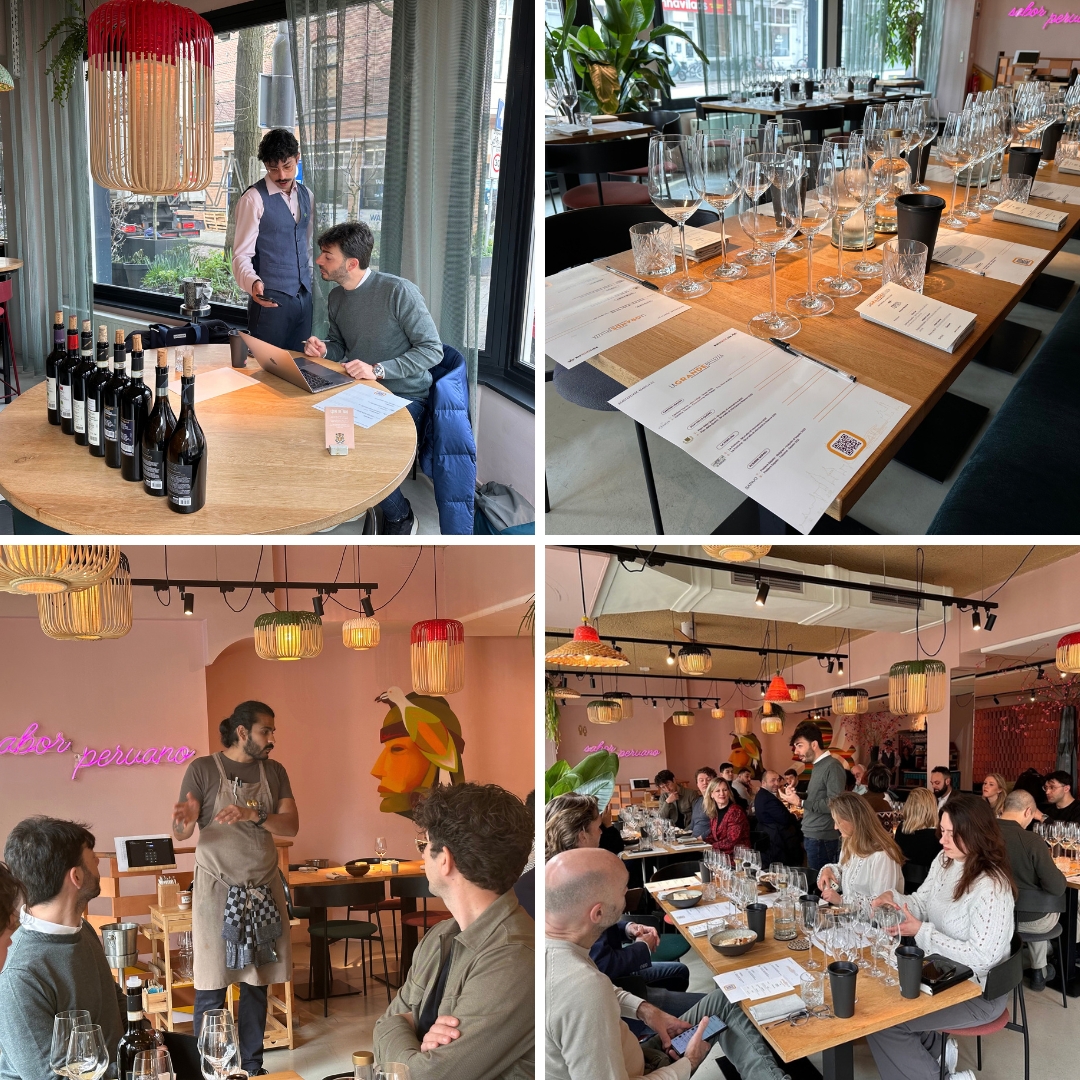
Guests were welcomed at the door and shown to their tables while the restaurant gradually filled up. As people settled in, the first wine of the evening, the Riesling Sekt Brut 2023, was poured.
Once everyone was seated, Vincent introduced his team. He acknowledged not only chef Simon Groenhuijsen and his kitchen brigade, but also the front-of-house team. It was a well-deserved gesture, as became clear throughout the evening. He then handed the floor to Markus Klumpp.
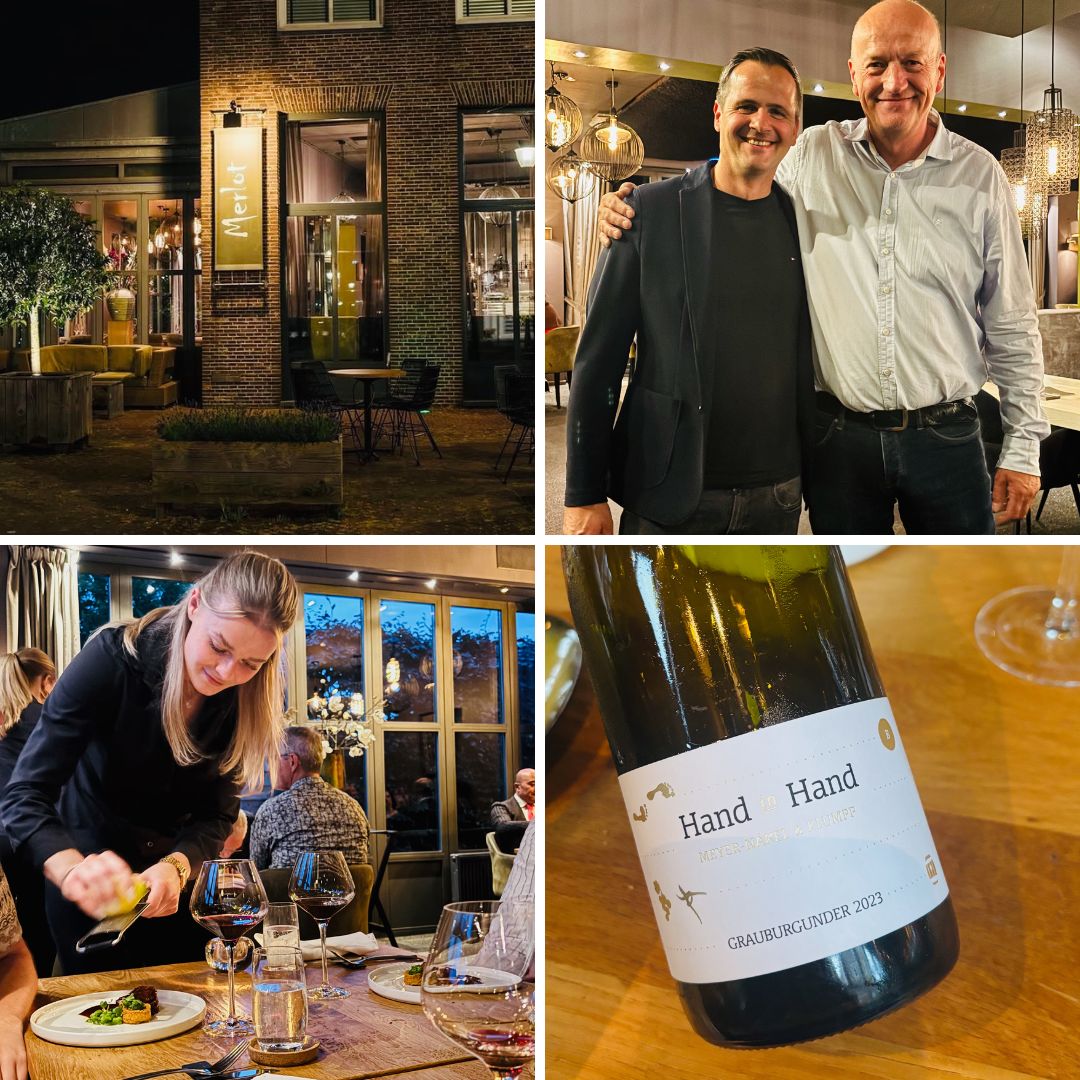
Markus and Vincent.
Over the course of the night, Markus proved to be not only a passionate winemaker but also an approachable host alongside Vincent. Between courses, he moved from table to table, answering questions and chatting with guests. The service team was equally attentive. Empty glasses were quickly refilled, dishes were introduced with attention to detail, and the courses were served at a comfortable pace. Together, these elements created a relaxed and welcoming atmosphere.
From Half a Hectare to International Recognition
When Markus began telling the story of the estate, he started with his parents.
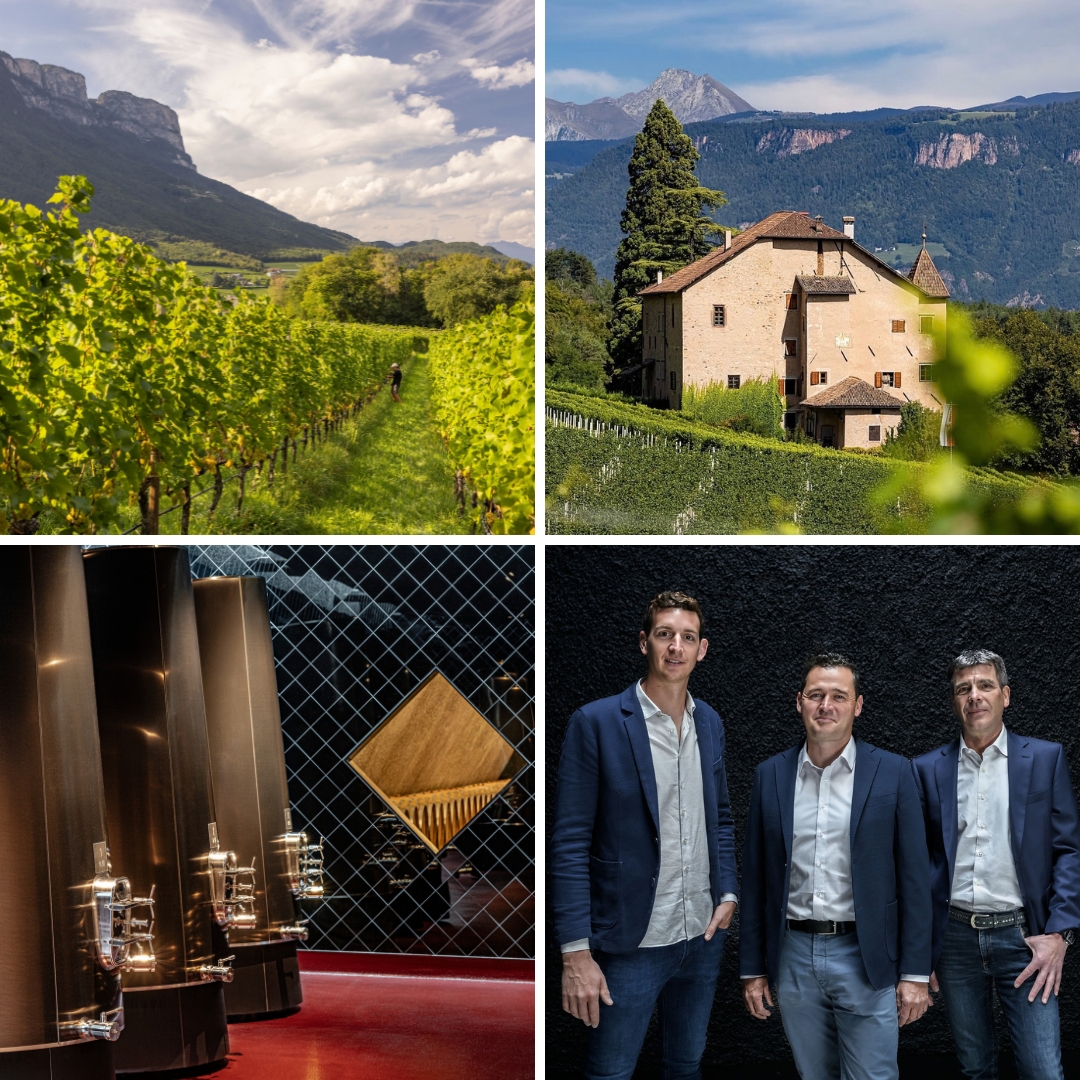
More than forty years earlier, a bank employee and a civil servant had planted their first half hectare of vines in the Kraichgau. By the time Markus and his brother Andreas took over the estate in 2004, it had grown to ten hectares. Today, together with a close-knit team of twelve people—four family members and eight employees—they farmed 42 hectares of vineyards.
Markus stressed that the people behind the estate were every bit as important as the vineyards themselves. The relatively young team shared the same passion and ambition, and he saw this commitment as one of the foundations of the estate’s development over the previous two decades.
This progress had not happened overnight. Markus and Andreas had not inherited a prestigious winery in a famous wine region, but a relatively small family business in an area that had been virtually unknown internationally. The previous twenty years had therefore been dedicated to building quality, reputation, and export markets.
“We had to put all our energy into quality,” Markus explained.
By then, Klumpp exported to 26 countries, including Japan, other parts of Asia, and Scandinavia. Even now, Markus still found it remarkable to see how far the estate had come since 2004.
Within Germany, Klumpp had also earned a strong reputation. Its wines could be found in around 150 Michelin-starred restaurants each year. The various Pinot varieties were particularly popular for their combination of freshness, structure, and gastronomic appeal.
Although Baden was generally regarded as one of Germany’s warmer wine regions, Klumpp benefited from a cooler climate due to its northern location, more comparable to the Pfalz. The Rhine lay just ten kilometers away, while the rolling landscape was characterized by limestone, loam, keuper, and sandy loess soils.
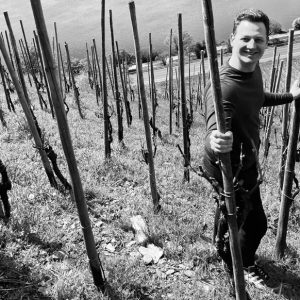
The Vineyards at Weingut Klumpp.
Klumpp had been farming organically since 1996 and biodynamically since 2020. Not for commercial reasons, Markus emphasized, but because healthy vineyards formed the foundation of quality. Climate change also played an important role. Viticultural practices looked very different from what they had twenty years earlier. Cover crops helped retain moisture and protect the soil, but they were only one part of a broader approach. Everything revolved around creating resilient vines and maintaining balance in the vineyard. According to Markus, quality was not created in the cellar; it began outside, among the vines.
The Kitchen as a Starting Point
At Merlot, quality was not defined by wine alone. The kitchen played an equally important role. Rooted in classical French cuisine, chef Simon Groenhuijsen and his brigade had created a five-course menu and two amuse-bouches for the evening, with freshness, elegance, and refinement running throughout the menu.
Impression from the Kitchen.
The menu mirrored Klumpp’s style perfectly. From the first amuse-bouche to the final dessert, each course had been thoughtfully constructed to bring out the best in the wine served alongside it.
Amuse-Bouches
Klumpp Riesling Sekt Brut 2023, Baden, Germany
The evening began with two amuse-bouches: a pani puri with curry, coconut, and mango, and a second bite featuring herring, olive, tomato, Parmesan, and pine nuts.
The Riesling Sekt Brut 2023 set a bright and energetic tone for the evening. Made from forty-year-old vines and aged on the lees for two years, the wine combined a fine mousse with crisp freshness, minerality, and aromas of green apple, citrus, stone fruit, and a delicate touch of spice.
The wine worked well with both amuse-bouches, but it was the combination with herring that truly stood out. The salinity of the herring and olive mirrored the wine’s mineral character, while the lively acidity and fine mousse cut neatly through the richness of the Parmesan cream. Tomato added an extra layer of freshness and echoed the citrus of the Riesling. Together, wine and food created a remarkably light, precise, and energetic whole.
Swordfish | Watercress | Fennel | Kalamansi
Klumpp Blanc 2024, Baden, Germany
For the swordfish course, Klumpp deliberately moved away from the Pinot varieties for which the estate was best known. Instead, the Blanc 2024 took center stage: a blend of 50% Sauvignon Blanc, 30% Riesling, and 20% Scheurebe.
Markus jokingly referred to the wine as his “fruit basket”, and after a single sip it was easy to see why. Stone fruit, candied citrus, melon, elderflower, and a subtle hint of blackcurrant immediately emerged from the glass. Despite its aromatic generosity, the wine remained remarkably fresh. The grapes were grown on light sandy loess soils and vinified entirely in stainless steel, keeping the focus firmly on fruit and aromatics.
During his presentation, Markus spent considerable time discussing Scheurebe, a grape variety highly regarded in Germany for its expressive character. In his view, it perfectly reflected the philosophy behind the wine: approachable, fruit-driven, and, above all, enjoyable. Or, as he put it himself, “A lot of fun.”
The wine and dish complemented one another beautifully. The firm texture of the swordfish was balanced by the bright citrus lift of the kalamansi, the peppery freshness of the watercress, and the subtle aniseed notes of the fennel. The Riesling component mirrored the citrus elements in the dish, while Sauvignon Blanc and Scheurebe had enough aromatic intensity to hold their own against the herbal elements. At the same time, the wine’s riper fruit character softened and complemented the gentler side of the fennel. Together, they formed a harmonious match defined by freshness and precision.
Prawn | Vanilla | Coconut | Radis
Klumpp Auxerrois 2025, Baden, Germany
When asked which wine guests should remember at the end of the evening, Markus did not hesitate. His answer was immediate: the Auxerrois.
He described it as “Kraichgau in a glass”, a wine that, in his view, captured the essence of the region through ripe fruit, lively acidity, and a distinct mineral character.
With this course, it became clear why. The wine was highly aromatic, offering ripe yellow fruit, floral nuances, and striking freshness.
The prawn brought a gentle sweetness to the dish, while the coconut and vanilla contributed a rounder, richer texture. Elements that could easily become heavy were kept firmly in check by the wine’s refreshing acidity. At the same time, the ripe fruit and floral nuances of the Auxerrois connected naturally with the lightly exotic flavours of the coconut and vanilla.
The radish played an important supporting role. Its fresh, lightly peppery character provided a welcome counterpoint to the richer elements of the dish. The result was a combination that felt generous yet remarkably light on its feet. By the end of the course, it was easy to understand why Markus had hoped this would be the wine guests would remember long after the evening had ended.
Jet, assistant sommelier, providing the finishing touch at the table for one of the dishes.
Asparagus | Seaweed | Shrimp Oil
Hand in Hand Grauburgunder 2023, Baden, Germany
Klumpp Kirchberg Chardonnay 2022, Baden, Germany
To showcase two different interpretations of the course, Merlot served the same dish with both the Hand in Hand Grauburgunder 2023 and the Kirchberg Chardonnay 2022.
The Hand in Hand Grauburgunder held special significance for Markus. Created together with his wife, Meike Näkel of Weingut Meyer-Näkel in the Ahr, it was affectionately referred to as their “wine baby”. The mention of the wine immediately sparked an enthusiastic response from several guests, prompting a visibly proud smile from Markus. Behind the bottle lay not only a collaboration between two wineries, but also a personal story.
In the glass, this translated into a Grauburgunder that combined ripe fruit, structure, a distinct mineral core, and notable freshness.
The Kirchberg Chardonnay.
The Kirchberg Chardonnay revealed a different side of Klumpp. The fruit for this wine came from a steep single vineyard with exceptionally low yields, resulting in a wine of impressive concentration and depth, complemented by a subtle creamy note and the estate’s hallmark freshness.
Each wine highlighted a different aspect of the dish. The Grauburgunder emphasised crispness, precision, and structure. The Chardonnay took a different approach. Through barrel ageing and extended lees contact, it accentuated the dish’s richer textures and brought additional depth to the pairing.
For us, the Chardonnay ultimately proved to be the more compelling match. It highlighted the dish’s richer side without sacrificing freshness, allowing both wine and food to show at their best.
With the free-range polder chicken came an elegant expression of Baden Pinot Noir. The Weiherberg Pinot Noir 2022 originated from a single vineyard of just 1.2 hectares, planted on limestone-rich Muschelkalk soils.
Markus described it as a Pinot Noir inspired by Burgundy, without attempting to imitate it. Following six days of cold maceration, the wine underwent partial whole-cluster fermentation and was then aged for fifteen months in French oak barrels, with only a small proportion of new oak used. The objective remained consistent: to add structure and complexity without overshadowing the fruit.
The wine opened with aromas of cherry, cassis, herbs, spice, and a subtle hint of mocha. Stylistically, it differed markedly from the Pinots of the Ahr. Where slate often produced wines defined by precision and linearity, the limestone soils of the Weiherberg yielded a Pinot Noir with greater palate weight, backbone, and earthy complexity. It was a different expression altogether, and one clearly appreciated by the Meyer-Näkel fans present.
Polderhoen Chicken and Pinot Noir.
The wine paired beautifully with the free-range polder chicken. The tender meat and rich jus complemented the wine’s gently earthy character, while the refined tannins provided enough grip to carry the dish. The lemon zest was a particularly clever addition. It brightened the wine’s fruit expression, making the Pinot Noir feel even more vibrant and refined.
Peach | Pistachio | Basil | Orange Blossom
Klumpp Gewürztraminer 2025, Baden, Germany
The evening concluded with a Gewürztraminer 2025 served alongside a dessert of peach, pistachio, basil, and orange blossom.
For Markus, this wine held a special place within the range. While Klumpp was primarily known for dry wines, the estate had been producing sweet wines for roughly twenty years. The journey had not been straightforward. Markus explained how he had sought advice from producers in the Mosel, a region renowned for its long tradition of crafting sweet wines, to deepen his understanding of the style.
The knowledge he gained there played an important role in shaping Klumpp’s dessert wine portfolio. By then, the estate produced just one sweet wine each year, typically in very small quantities of only 200 to 300 liters.
The Gewürztraminer came from the same steep vineyard sites as the Kirchberg Chardonnay. At just 8.5% alcohol, Markus jokingly described it as the perfect “driver’s wine.”
The wine offered aromas of lychee, mango, pineapple, honeydew melon, and dried apricot, complemented by rose petals and a subtle spicy note. Despite its sweetness, it remained remarkably lively thanks to its refreshing acidity, something Markus considered essential.
“Without acidity, all you’re left with is sugar water,” he remarked.
Gewürztraminer for Dessert.
Ripe exotic fruit, floral aromatics, and remarkable vitality made the wine a natural partner for the dessert. Mango, honeydew melon, and ripe stone fruit echoed the peach beautifully, while its lively character prevented the wine from becoming cloying. The aromatic character also found common ground with the basil and orange blossom, adding another layer of complexity. On paper, there was plenty that connected wine and dish.
Yet this proved to be the one course about which Vincent expressed some reservations afterwards. Normally, wines were tasted in advance before a menu was finalized, but that had not been possible in this case. In the end, the dessert turned out to be just a touch sweeter than the wine, leaving the overall harmony slightly less convincing than in the earlier courses. For us, it was the only moment of the evening where wine and food did not fully meet in the middle.
More Than a Wine Maker’s Dinner
What ultimately made this evening memorable was not a single wine or one exceptional wine-and-food match. Looking back, it was the combination of many elements: a full dining room filled with eager guests, thoughtfully composed dishes, carefully considered wine pairings, attentive service, and a winemaker who clearly enjoyed sharing his story.
Guests were overwhelmingly positive in their assessment of the evening, describing it as welcoming, well organized, and refreshingly unpretentious.
Our personal highlight was the Kirchberg Chardonnay 2022 with the asparagus. It was a moment in which wine and dish seemed perfectly aligned. Equally enjoyable was the decision to serve two different wines with the same course, allowing guests to discover their own favorite.
An unforgettable experience with Markus of Weingut Klumpp at Restaurant Merlot.
More than anything, however, what stayed with us was Markus’s enthusiasm. The pride with which he spoke about the family estate he and his brother had transformed from a small winery in a relatively unknown corner of Baden into an internationally respected producer.
Every wine carried a story, and it was precisely that combination of craftsmanship, hospitality, and personal connection that made the evening feel like much more than just a wine maker’s dinner.
This article is written by our own Brigitte Janssen. We would like to thank Restaurant Merlot and of course Weingut Klumpp. Photography: on location at Restaurant Merlot and courtesy of Weingut Klumpp.
The wines of Weingut Klumpp are imported and distributed in the Netherlands by Wijn op Dronk (Den Haag) and Heisterkamp Wijnkopers (Ootmarsum).
Join our insiders’ list and get exclusive early access to new articles, expert tips, and fresh reviews delivered straight to your inbox. Subscribe now and be the first to discover!