Join Our Wine Journey – Sign Up for the Newsletter 🍷
Ornellaia: Understanding a Place
Share
Deel op X (twitter)
LinkedIn
WhatsApp
Ornellaia: Understanding a Place.
Four decades after its foundation, Ornellaia no longer needs to prove itself. During an exclusive conversation with Technical Director Marco Balsimelli and the Dutch presentation of the 2023 vintage at Restaurant De Bokkedoorns, Dutch Wine Apprentice explores how one of Italy’s defining estates continues to evolve by deepening its understanding of the place that made it famous.
The conversation begins somewhere unexpected.
Rather than talking about the newly released 2023 vintage or the responsibility of succeeding one of Italy’s most respected technical directors, Marco Balsimelli almost immediately turns to vineyards. Questions about his years in Bordeaux become reflections on observation rather than technique. Ask him what attracted him to Ornellaia and he prefers to discuss the estate instead of his own appointment. Even when speaking about the 2023 vintage—the first Ornellaia to accompany him through the cellar after joining the winery—he is reluctant to describe it as a turning point. Instead, he returns to the same thought throughout our conversation: before attempting to shape a wine, you first have to understand the place from which it comes.
It is a revealing way to begin an interview because, perhaps without intending to, Balsimelli also describes the stage at which Ornellaia now finds itself.
More than forty years have passed since the estate was founded on the Tuscan coast. During that time, Bolgheri has evolved from an emerging wine region into one of Europe’s most admired fine wine destinations, while Ornellaia has become one of the estates by which that reputation is measured. The questions that once surrounded both the winery and the region have largely disappeared. Few people still ask whether Bordeaux varieties belong on the Tuscan coast or whether Bolgheri deserves to stand alongside Italy’s historic appellations. Those debates have long since been settled.
Today, the questions are quieter, yet in many ways more demanding. How does an estate continue to evolve once it has established itself among the world’s great wineries? How do you refine a style without allowing it to become formulaic? And how do you ensure that each new generation contributes something meaningful while preserving the character that has taken decades to build?
Those questions accompanied us throughout the Dutch presentation of the 2023 vintage, organized by importer Vinites at the two Michelin-starred Restaurant De Bokkedoorns. Bringing together the latest releases with a carefully selected series of mature vintages, the event offered far more than an introduction to Ornellaia’s newest wines. It became an opportunity to experience the estate across different stages of its evolution. Only after speaking with Balsimelli several weeks later did, it become clear that the tasting and the interview were never separate occasions. The wines showed where Ornellaia stands today; the conversation explained how it arrived there.
Beyond the Super Tuscan
It remains almost impossible to mention Ornellaia without the phrase Super Tuscan appearing close behind. Historically, the association is entirely justified. Together with a small group of pioneering estates, Ornellaia helped redefine international perceptions of Tuscany by demonstrating that Cabernet Sauvignon, Merlot and Cabernet Franc could produce wines every bit as compelling as those traditionally associated with Sangiovese. In doing so, the estate became one of the driving forces behind Bolgheri’s rise to international prominence.
Yet spending time with Ornellaia today, one quickly realizes how little that description actually tells us about the estate.
Nobody speaks about challenging convention any longer. The pioneering spirit that characterized the early years has gradually given way to something more reflective. Conversations revolve around vineyard parcels rather than grape varieties, about the influence of the Tyrrhenian Sea instead of appellation rules, and about understanding individual sites rather than proving what the region is capable of. In many ways, the most significant transformation at Ornellaia has not taken place in the cellar, but in the questions the estate now asks itself.
Bolgheri itself has undergone a similar evolution. Four decades ago, the region was still defining its identity. Today, vineyards stretch from the first hills towards the Mediterranean, where cooling sea breezes temper the summer heat and a remarkable mosaic of gravel, clay, sand and marine deposits creates subtle but important differences from one parcel to the next. Walking through the vineyards, it quickly becomes apparent that distance alone tells only part of the story. A few metres can separate soils that ripen differently, retain moisture differently and ultimately contribute something entirely different to the finished wine.
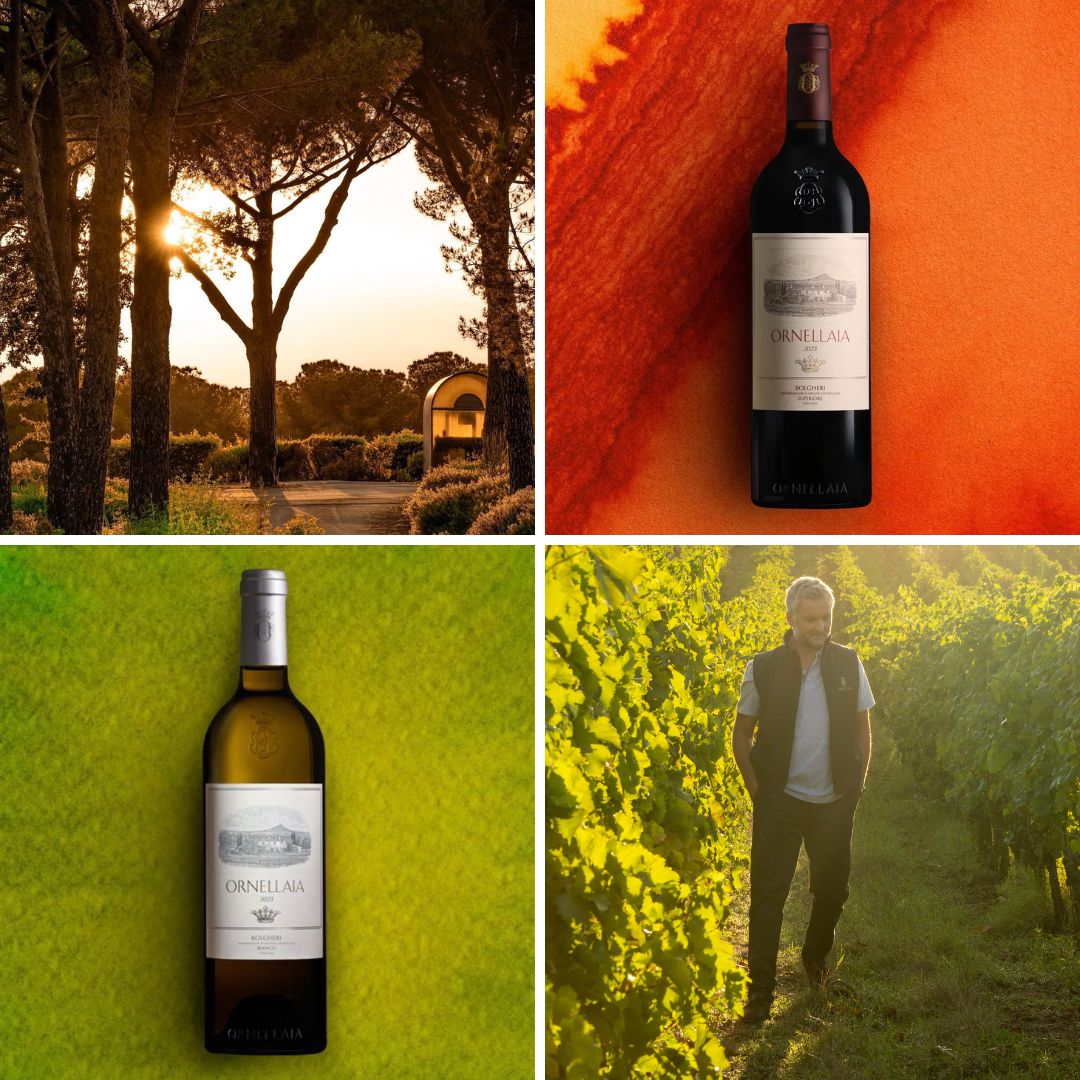
The Ornellaia Estate in Bolgheri.
That growing understanding of place became one of the defining themes of the masterclass presented by Alberto Orengia. Rather than speaking about the vineyards as a single entity, he repeatedly referred to individual parcels, explaining how around seventy separate vineyard blocks are harvested and vinified independently before months of tasting determine their eventual destination. Some become part of Ornellaia itself, others find their way into Le Serre Nuove, Le Volte or the estate’s white wines. The objective is not to make every vineyard behave in the same way, but to understand what each one contributes before the final blend begins to take shape.
It is a painstaking process that demands patience as much as technical precision. More importantly, it reflects a philosophy that has quietly matured alongside the estate itself. Ornellaia no longer feels like a winery searching for its identity. Instead, it feels like one that has become increasingly comfortable refining it. Every harvest adds another layer of understanding, every growing season another opportunity to observe vineyards that continue to reveal something new despite decades of careful study.
Listening to Orengia, it became increasingly clear why Marco Balsimelli felt like such a natural appointment. His arrival does not represent the beginning of a new chapter so much as the continuation of a conversation that has been unfolding for more than forty years. Understanding why requires looking beyond Tuscany and towards the years that shaped the way he thinks about wine.
Learning to Listen
Marco Balsimelli often describes Bordeaux as the place where he truly learned to make wine, although listening to him, it becomes clear that what he brought back to Tuscany extends well beyond technical knowledge. Before our conversation turns to fermentation, blending or tannin management, he repeatedly returns to a much simpler principle. Great wines begin with observation. Every vineyard behaves differently, every vintage asks new questions, and no amount of technical expertise can replace the patience required to understand both.
His own route into wine was far from inevitable. Growing up in Tuscany, wine formed part of everyday life, yet not in the way one might expect from someone who would eventually become Technical Director of Ornellaia and Masseto. His father taught mathematics, while his grandfather tended a small vineyard behind the family home, producing wine largely for family and friends. It was enough to make wine feel familiar, but not enough to determine a career. For a long time, Balsimelli imagined a different future altogether.
“I actually wanted to become a chef,” he recalls with a smile. “Cooking fascinated me first.”
Only gradually did wine begin to combine the things that had originally attracted him to the kitchen: craftsmanship, creativity and the scientific curiosity that underpins both disciplines. Studying oenology in Florence eventually led him to Bordeaux, where he completed his master’s degree before beginning a career that would span almost fifteen years. Looking back, he describes the move not simply as an opportunity to study abroad, but as a chance to immerse himself in one of the world’s great centres of wine education, where every vintage offered another lesson and every decision was scrutinized against generations of accumulated experience.
An internship at Château Gruaud Larose developed into a permanent position before he became winemaker at Château Brillette in Moulis. The defining chapter of his career, however, began when he joined renowned consultant Éric Boissenot, working alongside some of Bordeaux’s most respected estates. Over the following fourteen years he encountered an extraordinary diversity of vineyards, growing seasons and winemaking philosophies. Yet when asked what those years taught him, he barely mentions famous châteaux. Instead, he remembers how differently apparently similar vineyards responded to the same conditions and how often one vintage challenged assumptions formed during the previous one.
“You cannot arrive with one idea and apply it everywhere,” he reflects. “Every place has its own personality.”
That observation quietly became one of the recurring themes of our conversation. Technical expertise remains essential, but only after the vineyard itself has been understood. The role of the winemaker, he suggests, is not to impose a style, but to recognize the potential that already exists within a place before deciding how best to reveal it.
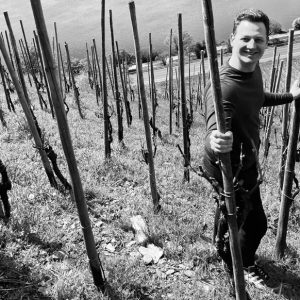
Marco Balsimelli in the Estate Vineyards.
Returning to Tuscany therefore represented considerably more than another career move. Professionally, Ornellaia offered an opportunity few Italian winemakers would ignore, although accepting the position also meant leaving behind colleagues who had become close friends over more than a decade in Bordeaux. The timing added another dimension. By the time Balsimelli arrived in Bolgheri during 2023, the growing season was already well underway, meaning his first contribution centred primarily on the cellar, following the wines through fermentation, élevage and, ultimately, the blending process.
The result is that the newly released 2023 vintage occupies an interesting place in the estate’s recent history. It would be too simplistic to describe it as Marco Balsimelli’s first Ornellaia, just as it would be inaccurate to suggest that he merely inherited it. Instead, the vintage bridges two generations of technical leadership, combining continuity in the vineyards with a new perspective during the wines’ development in the cellar. Rather than announcing a stylistic departure, it reflects the quiet continuity that has become one of Ornellaia’s defining strengths.
Our conversation inevitably turned to Axel Heinz, whose influence on the modern identity of Ornellaia is impossible to overlook. Balsimelli acknowledged that legacy without hesitation, yet quickly broadened the discussion beyond individual names. Vineyard managers who have spent decades walking the same rows, agronomists who know every parcel through experience rather than maps and cellar teams who have followed countless vintages from harvest to bottle all form part of the estate’s collective memory. Listening to him, one begins to appreciate that the consistency of a winery such as Ornellaia is built not around one personality, but around decades of shared knowledge accumulated by the people who know the estate best.
That perspective would continue to shape our conversation as it moved away from people altogether and back to the place where it had begun: the vineyards themselves.
Understanding a Place
One of the more interesting aspects of our conversation was that Marco Balsimelli rarely spoke about the future without first referring to experience. Not in the sense of tradition for tradition’s sake, but as something that accumulates over time. Every vintage, he explained, leaves something behind. A particularly warm growing season teaches one lesson, an unusually wet spring another, while decisions that appear straightforward one year often become invaluable points of reference in the next. Over time, those individual observations become part of the estate’s collective understanding, allowing each new harvest to be approached with greater confidence rather than greater intervention.
That gradual accumulation of knowledge perhaps explains the evolution of Ornellaia more convincingly than any stylistic description ever could. The vineyards themselves have not fundamentally changed. The rows still stretch towards the Tyrrhenian Sea, where afternoon breezes moderate the summer heat and the proximity of the Mediterranean brings freshness even during the warmest periods of the growing season. Beneath the vines, however, lies an intricate mosaic of gravel, clay, sand and marine deposits, creating subtle variations that reveal themselves only through years of careful observation. Forty harvests have taught the estate how individual parcels respond to changing weather patterns, how they ripen under different conditions and, ultimately, what each contributes to the final blend.
The Ornellaia Team in the Vineyards.
It is here that Ornellaia’s philosophy becomes tangible. Rather than seeking consistency by making every vineyard behave in the same way, the estate has embraced their differences. Each parcel is harvested separately, fermented independently and assessed on its own merits before months of tasting begin to shape the final blends. Some vineyards consistently contribute structure, others fragrance or freshness, while certain parcels reveal entirely different personalities depending on the vintage. Blending therefore becomes less an exercise in composition than one of interpretation, allowing the character of each vineyard to emerge before determining where it belongs.
Listening to Balsimelli describe that process, it becomes clear that blending occupies a very different role from the one many consumers imagine. It is not about correcting weaknesses or compensating for imperfections, but about recognizing how individual components complement one another.
“The blend is never decided beforehand,” he explains. “The wine tells you where it wants to go.”
The remark is delivered almost casually, yet it captures something fundamental about Ornellaia. Decisions are guided less by predetermined formulas than by patience, observation and an increasing willingness to trust what the vineyards reveal over time.
Merlot Grapes in the Ornellaia Vineyard.
That way of thinking has become particularly valuable as growers across Europe continue to adapt to changing climatic conditions. Unsurprisingly, the subject emerged during our conversation, although Balsimelli approaches it with considerably more nuance than one often encounters. Rising temperatures undoubtedly present challenges, but he believes unpredictability has become the defining characteristic of recent vintages. Rainfall patterns are less reliable, harvest dates more fluid and every growing season seems to bring its own set of questions. Those changes demand flexibility, yet they also reinforce the value of accumulated experience. Every unusual vintage becomes another point of reference, making future decisions more informed rather than more reactive.
Interestingly, Balsimelli does not believe these developments have altered Ornellaia’s ambition. The objective remains exactly what it has always been: to produce wines capable of expressing their origin while ageing gracefully over decades. What has evolved is the route by which that ambition is achieved. Rather than pursuing concentration as an end in itself, the estate increasingly speaks about freshness, texture and the refinement of tannins. The wines are no less profound than they were twenty years ago, but they have become more composed, placing greater emphasis on harmony than sheer scale.
That shift also reflects the changing world in which fine wine is enjoyed. Restaurants rarely maintain the extensive cellars they once did, while collectors increasingly expect wines to offer pleasure earlier in their lives without compromising their capacity to age.
For Balsimelli, those ambitions are not mutually exclusive.
“A great wine should always be enjoyable,” he says. “It should give pleasure when it is young, but it should also reward patience.”
Achieving that balance requires countless decisions, many of which begin long before the grapes reach the cellar.
Looking back at the tasting held several weeks earlier, it was striking how many of those ideas had already been present in the glass before they were ever expressed in words. The freshness running through the whites, the finely judged tannins of Le Serre Nuove and the effortless balance of Ornellaia 2023 had all hinted at an estate increasingly comfortable with its own identity. At the time they felt like stylistic observations. After our conversation with Balsimelli, they became something more meaningful. They reflected a philosophy that has been quietly refined over decades and continues to evolve with every harvest.
When Theory Meets the Glass
By the time dinner was served at De Bokkedoorns, much of the technical discussion surrounding the 2023 growing season had already taken place. Alberto Orengia had guided us through the composition of the wines, the individual vineyard parcels and the meticulous blending process that lies behind every release. At that stage, however, many of those details still existed largely in isolation. They explained how the wines had been made, but not necessarily why they tasted the way they did.
Only after our conversation with Marco Balsimelli did those pieces begin to fall into place.
Looking back, what had initially seemed like individual stylistic choices increasingly appeared to be expressions of a much broader way of thinking. The freshness running consistently through the range, the remarkable refinement of the tannins and the sense of composure that characterized every wine were no longer isolated impressions. They reflected an estate that has become increasingly confident in allowing its vineyards to speak with greater clarity, intervening only where necessary and trusting the understanding accumulated over more than four decades.
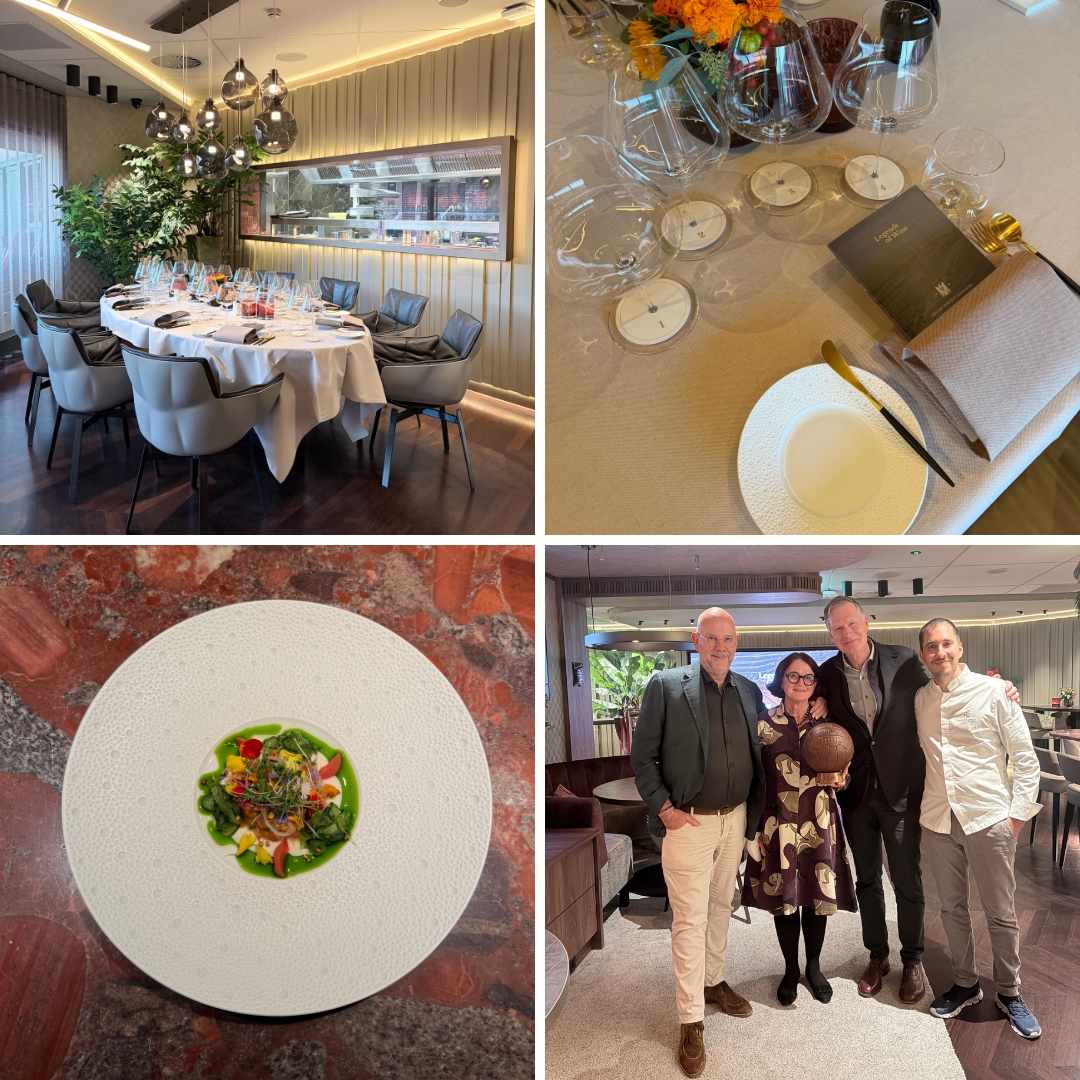
The setting undoubtedly contributed to that experience. Rather than presenting the wines in a formal tasting room, Vinites had chosen Restaurant De Bokkedoorns, where Chef Roy Eijkelkamp’s menu unfolded alongside the wines at an unhurried pace. The pairings never sought to overwhelm the glass, nor did they feel designed simply to impress. Instead, each course created space for the wines to evolve naturally, while Pascal Beeren and his front-of-house team maintained a rhythm that encouraged conversation rather than haste. It proved an ideal setting for wines that reveal themselves gradually rather than demanding immediate attention.
The tasting itself also followed a deliberate progression. Rather than opening with the estate’s flagship wine, Ornellaia chose to begin with its whites, quietly reminding those present that Bolgheri’s identity extends well beyond Cabernet Sauvignon alone. It proved an inspired introduction, because the white wines immediately established many of the qualities that would continue throughout the event: freshness, restraint and an effortless sense of balance.
The 2023’s at the Release.
Poggio alle Gazze dell’Ornellaia 2024 | 92/100 DWA
Poggio alle Gazze has long established itself as one of Bolgheri’s benchmark white wines, and the 2024 vintage continues that tradition with considerable confidence. Built around Sauvignon Blanc and complemented by Vermentino, Viognier and Verdicchio, it opens with vibrant citrus, white peach and delicate Mediterranean herbs before a subtle saline note reminds you just how close these vineyards lie to the sea. Bright acidity provides energy from beginning to end, while a gentle creaminess adds texture without diminishing the wine’s freshness. It is an accomplished introduction to the range and a reminder that Ornellaia’s pursuit of balance extends well beyond its celebrated reds.
Ornellaia Bianco 2023 | 95/100 DWA
Produced in extremely limited quantities, Ornellaia Bianco has quietly become one of Italy’s most compelling white wines. The 2023 vintage reveals itself gradually, opening with citrus zest, ripe pear and white flowers before subtle flinty notes and beautifully integrated oak add further complexity. What impressed us most, however, was not its aromatic intensity but its composure. There is considerable concentration beneath the surface, yet every element remains precisely in balance, allowing freshness to carry the wine towards a long, mineral finish. It is a wine that rewards patience in the glass today and promises even greater complexity with time.
The 2023 Ornellaia Bianco.
The transition towards the red wines marked a natural increase in depth and structure, yet not in philosophy. If anything, Le Serre Nuove demonstrated just how consistently those underlying ideas run throughout the entire range, making it increasingly difficult to think of it merely as Ornellaia’s second wine.
Le Serre Nuove dell’Ornellaia 2023 | 93/100 DWA
Le Serre Nuove has gradually grown beyond the description of “second wine”. While it undoubtedly shares its origins with the estate’s flagship, it possesses a distinct identity of its own, offering an earlier and perhaps more immediately approachable expression of Ornellaia without compromising the precision that defines the estate.
The 2023 vintage opens with generous aromas of black cherry, cassis and ripe plum, accompanied by cedar, sweet spice and a subtle hint of dark chocolate. Yet what impressed us most was not the generosity of the fruit, but the way it is carried across the palate. Polished tannins provide structure without imposing themselves, while vibrant acidity keeps the wine remarkably fresh from beginning to end. There is depth here, but also an ease that makes the wine accessible today, even though it clearly possesses the balance to develop beautifully over the coming years.
More than anything, Le Serre Nuove demonstrates that the philosophy discussed throughout the event extends well beyond Ornellaia itself. Rather than attempting to imitate the flagship, it offers its own interpretation of the estate’s style, combining generosity with restraint and concentration with freshness in a way that feels entirely convincing.
By the time Ornellaia 2023 reached the table, the tasting had quietly built towards its natural centerpiece. Yet what struck us most was how comfortably the flagship sat within the wider line-up. Rather than separating itself through sheer power or concentration, it seemed to draw together many of the qualities that had already emerged in the preceding wines. Looking back after our conversation with Marco Balsimelli, it also became the clearest expression of the ideas we had spent so much time discussing.
Ornellaia 2023 | 98/100 DWA
Every great estate eventually reaches a point where the challenge is no longer to produce a remarkable wine, but to deepen the understanding of what that estate represents. Tasting Ornellaia 2023, that thought returned repeatedly. The wine possesses all the depth and concentration one expects from Bolgheri, yet it never seeks to impress through scale alone. Instead, it unfolds with remarkable patience, revealing new layers as it opens in the glass.
Dark berry fruit, cassis and black cherry form the foundation before gradually giving way to graphite, cedar, Mediterranean herbs, violets and delicate notes of cocoa and sweet spice. The aromatics are beautifully defined, yet it is the palate that truly distinguishes the wine. The tannins are exceptionally fine, lending structure without weight, while a vibrant line of acidity carries the wine effortlessly from beginning to end. Oak remains perfectly integrated, adding texture rather than flavour and allowing the purity of the fruit to remain at the forefront.
Perhaps the most striking aspect of the 2023 vintage is the sense of harmony it achieves. Every element appears to have found its place. Nothing dominates, nothing feels exaggerated and nothing appears designed simply to attract attention. Instead, the wine combines concentration with transparency, richness with freshness and youthful accessibility with the quiet confidence that suggests a very long future ahead.
2023 Ornellaia.
During our conversation, Balsimelli spoke about producing wines that offer pleasure throughout their lives rather than demanding decades of patience before revealing their potential. Ornellaia 2023 illustrates that ambition beautifully. It is already remarkably expressive, yet there is little doubt that its greatest complexity still lies ahead. For us, it is not only one of the outstanding wines of the vintage, but also a compelling reflection of where Ornellaia stands today.
The newly released wines offered a fascinating insight into the estate’s current direction, yet one question inevitably remained. Would the qualities that had become such recurring themes throughout the afternoon—freshness, balance and refinement—stand the test of time? Fortunately, the second half of the event offered an opportunity to explore precisely that, as a series of mature vintages accompanied the final courses and quietly shifted the conversation from promise to proof.
Time as the Final Judge
One of the privileges of a presentation such as this lies in the opportunity to look beyond the latest release. New vintages inevitably attract most of the attention, inviting discussion about growing seasons, blends and future potential. Mature bottles ask rather different questions. They no longer speak about possibility, but about what time has revealed.
That change in perspective was reflected naturally in the progression of dinner. As Chef Roy Eijkelkamp’s menu gradually moved towards richer flavours, the wines followed a similar path, shifting from the newly released vintages towards bottles that had already spent years developing in the cellar. It never felt like a retrospective or a nostalgic celebration of past successes. Instead, the mature wines became part of the same conversation, offering a glimpse of where today’s releases may eventually be heading.
The first of those comparisons came in the form of Le Serre Nuove 2017, served from Methuselah. Larger bottle formats are often discussed in theoretical terms, yet tasting the wine made the effect immediately tangible. While tertiary aromas of cedar, tobacco leaf, dried herbs and forest floor had begun to emerge, the wine retained a striking freshness at its core. Blackcurrant and dark cherry still carried the palate, supported by beautifully integrated tannins that had softened without ever losing their definition. More than anything, the wine demonstrated how comfortably Le Serre Nuove matures over time, reinforcing the idea that it deserves to be regarded as far more than simply Ornellaia’s second label.
Le Serre Nuove dell’Ornellaia 2017 (Methuselah) | 94/100 DWA
Returning to the current vintage from Magnum offered an equally fascinating comparison. Although identical in composition to the standard bottle tasted earlier that afternoon, the larger format already hinted at a slightly different rhythm of development. The fruit appeared a touch more reserved, the structure more tightly woven and the finish even more focused. These were subtle differences rather than dramatic ones, yet they served as another reminder that patience continues to reward those fortunate enough to cellar fine wines in larger formats.
Le Serre Nuove dell’Ornellaia 2023 (Magnum) | 94/100 DWA
The moment that remained with us longest, however, arrived with Ornellaia 2013.
During our conversation, Marco Balsimelli remarked that great wines should offer pleasure throughout their lives. They should be approachable in their youth, he argued, without sacrificing their ability to evolve over decades. It is an appealing philosophy, but one that can ultimately only be judged in the glass. The 2013 vintage quietly provided that evidence.
More than a decade after harvest, the wine has moved beyond primary fruit without ever feeling distant from it. Cedar, graphite, cigar box and dried flowers now accompany blackcurrant and plum, while the palate combines remarkable freshness with the effortless harmony that only time can bring. The tannins have become beautifully resolved, allowing the wine to glide across the palate with an elegance that feels entirely unforced. Nothing about it suggests a wine in decline. If anything, it appears to have entered one of the most compelling stages of its life, where complexity has deepened without diminishing vitality.
Looking back at the newly released 2023 vintage, it became easier to understand where that wine might eventually be heading. Rather than diminishing the younger release, the 2013 strengthened it, quietly demonstrating that the balance and restraint we had observed throughout the event are qualities built for the long term.
Ornellaia 2013 | 95/100 DWA
The evening concluded with Ornus dell’Ornellaia, the estate’s rare sweet wine produced from botrytised Petit Manseng. Although stylistically very different from everything that had preceded it, the wine nevertheless felt entirely consistent with the broader story of the day. Layers of apricot, candied citrus, saffron and acacia honey were lifted by vibrant acidity that prevented the wine from ever becoming heavy. Once again, richness was balanced by freshness, providing a fitting conclusion to a tasting defined by harmony rather than excess.
Ornus dell’Ornellaia 2020 | 95/100 DWA
Looking Ahead
Reflecting on the event as a whole, one observation continued to return. No two wines attempted to tell exactly the same story. Poggio alle Gazze expressed freshness and energy, Ornellaia Bianco precision and restraint, Le Serre Nuove generosity without excess, while Ornellaia itself brought those qualities together with remarkable composure. Even Ornus, despite belonging to an entirely different category, shared the same sense of balance that had quietly defined every wine poured that day.
It also became increasingly clear that the tasting was never really about a single vintage. The opportunity to place the newly released wines alongside mature bottles transformed the experience into something much broader than a product launch. The younger wines demonstrated where Ornellaia stands today, while the older vintages revealed the direction in which they are likely to evolve. Together, they offered a rare glimpse of the estate across time rather than at a single moment.
Looking back, one remark from Marco Balsimelli seemed to encapsulate that idea better than anything else we discussed. Every vintage, he had said, teaches you something. It is a deceptively simple observation, yet perhaps no sentence better captures the way Ornellaia approaches its work today. The estate no longer seeks dramatic reinvention from one harvest to the next. Instead, every growing season becomes another opportunity to deepen its understanding of vineyards that continue to reveal new subtleties despite decades of careful observation.
Ornellaia has grown up to become the best version of itself, with increased knowledge and understanding of the vineyards.
That mindset is perhaps Ornellaia’s greatest strength. Many wineries spend their formative years searching for an identity. Ornellaia has long since found its own. The challenge now is not to redefine Bolgheri or to demonstrate that Bordeaux varieties belong on the Tuscan coast. Those questions have already been answered. The more interesting work lies in refinement: understanding individual parcels more intimately, responding thoughtfully to changing conditions and allowing each vintage to express itself with increasing clarity.
The setting at De Bokkedoorns provided a fitting backdrop for that story. Rather than presenting the wines in isolation, the event unfolded as a dialogue between food and wine, producer and importer, younger vintages and older bottles. Roy Eijkelkamp’s cuisine displayed the same restraint that characterized the wines themselves, allowing each pairing to support rather than dominate, while Pascal Beeren and his team orchestrated the service with an ease that encouraged conversation rather than ceremony. Together, they created an atmosphere in which the wines were given exactly what they required most: time.
It is perhaps no coincidence that time emerged as the quiet theme running throughout both the tasting and our conversation with Balsimelli. Time allows vineyards to be understood more completely. Time softens tannins, reveals complexity and places individual vintages into a broader perspective. It also explains why Ornellaia continues to evolve without ever appearing to chase change for its own sake. Every decision, whether made in the vineyard or the cellar, seems guided by the knowledge accumulated over forty harvests rather than by the desire to leave an immediate mark.
That may ultimately be what distinguishes Ornellaia today. The estate no longer measures itself against the achievements of others, nor does it appear interested in reinventing itself with every new release. Instead, it has reached a stage where confidence lies in continual refinement, trusting that every vintage can add another chapter to a story that began more than four decades ago.
The Oak of Bellaria stands as a symbol of the past, but the estate still reveals new secrets every day.
The 2023 vintage reflects that philosophy beautifully. It is a wine of remarkable poise, built on freshness, precision and balance rather than sheer power, and one that feels entirely comfortable within the broader history of the estate. It also marks the beginning of Marco Balsimelli’s own contribution to that story—not as a break with the past, but as another voice in a conversation that has been unfolding since Ornellaia’s earliest days.
Great wineries are rarely defined by the vintages that made them famous.
More often, they are defined by the quiet confidence with which they approach the vintages that follow.
This article is written by our own Niels Aarts. We would like to thank Ornellaia, Marco Balsimelli and Alberto Orengia, their Dutch importer Vinites (Henrico van Lammeren in particular) and of course the team of Restaurant De Bokkedoorns under the guidance of Pascal Beeren and Chef Roy Eijkelkamp.
The wines of Ornellaia can be purchased through Vinites (for professionals) and selected partners in retail and hospitality (for consumers).
Join our insiders’ list and get exclusive early access to new articles, expert tips, and fresh reviews delivered straight to your inbox. Subscribe now and be the first to discover!