Join Our Wine Journey – Sign Up for the Newsletter 🍷
Château Cos d’Estournel: The Exotic Soul of Saint-Estèphe
Share
Deel op X (twitter)
LinkedIn
WhatsApp
Château Cos d’Estournel: The Exotic Soul of Saint-Estèphe.
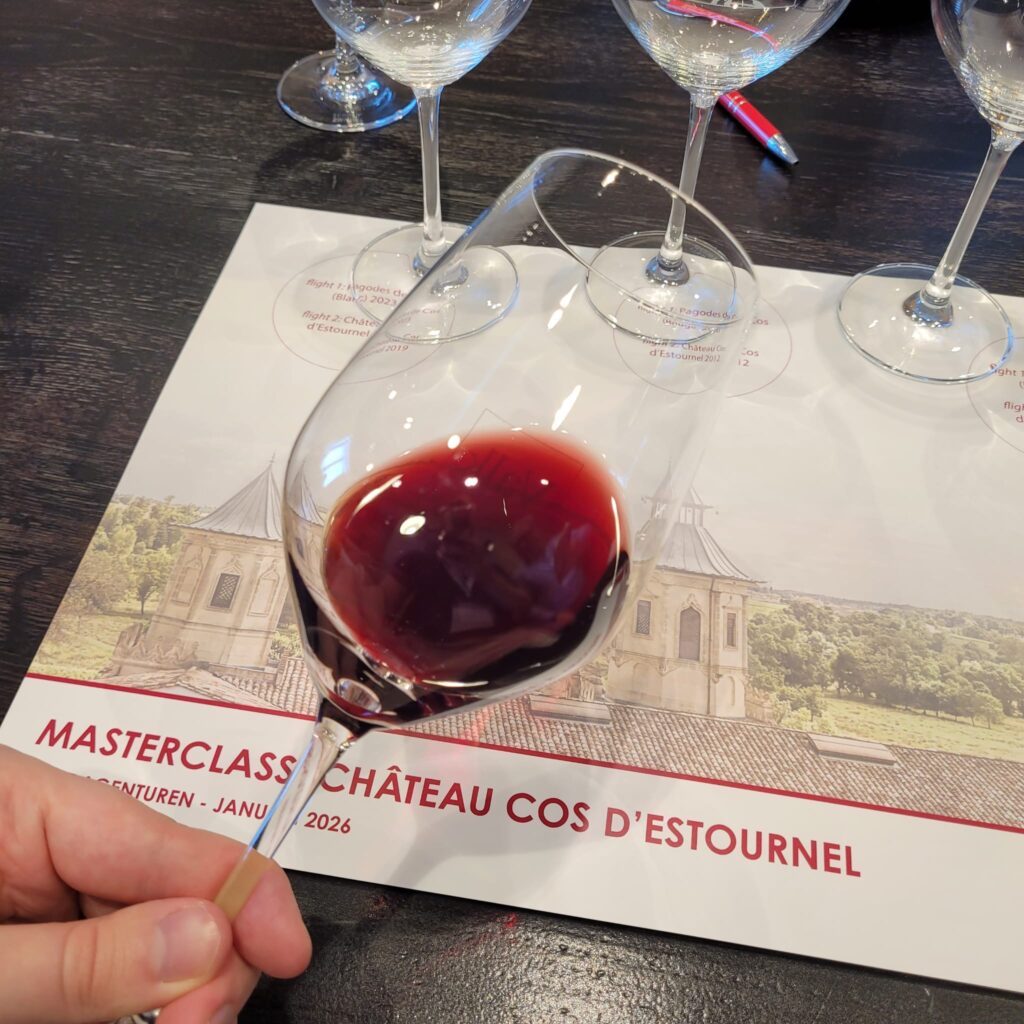
During the annual portfolio tasting of our partner POOT Agenturen, we were delighted to take part in a masterclass of Château Cos d’Estournel. The Château is situated just a stone’s throw from Château Lafite Rothschild, but to derive the greatness of Cos from its mere proximity to Lafite would not be doing it justice. Instead, over recent decades, Cos has fully come into its own, producing some of the finest and longest-lived wines of the Médoc – greatly helped by its signature fresh acidity and spicy complexity. Join us today as we highlight one of the more mysterious and distinctive Châteaux of Bordeaux, alongside tasting a few of its benchmark vintages going back to the 1970s.
Saint-Estèphe: a Marriage of Clay and Gravel
Château Cos d’Estournel is situated in the appellation of Saint-Estèphe, the most northerly of the four famous left-bank Bordeaux communes where almost all of the 1855-classified Châteaux are to be found. Compared to its neighbouring communes – from north to south Pauillac, Saint-Julien, and Margaux – Saint-Estèphe tends to have a bit more clay in its otherwise gravelly soils, which historically produced structured wines with occasionally rough and rustic tannins. However, with global warming bringing more warmth and drought these clayey soils are increasingly advantageous, retaining much-needed moisture and keeping soil temperatures cooler than the warmer, pure gravel soils found in the other communes. The proximity of Saint-Estèphe to the Atlantic Ocean also helps in this regard, moderating temperatures and bringing cooling winds.
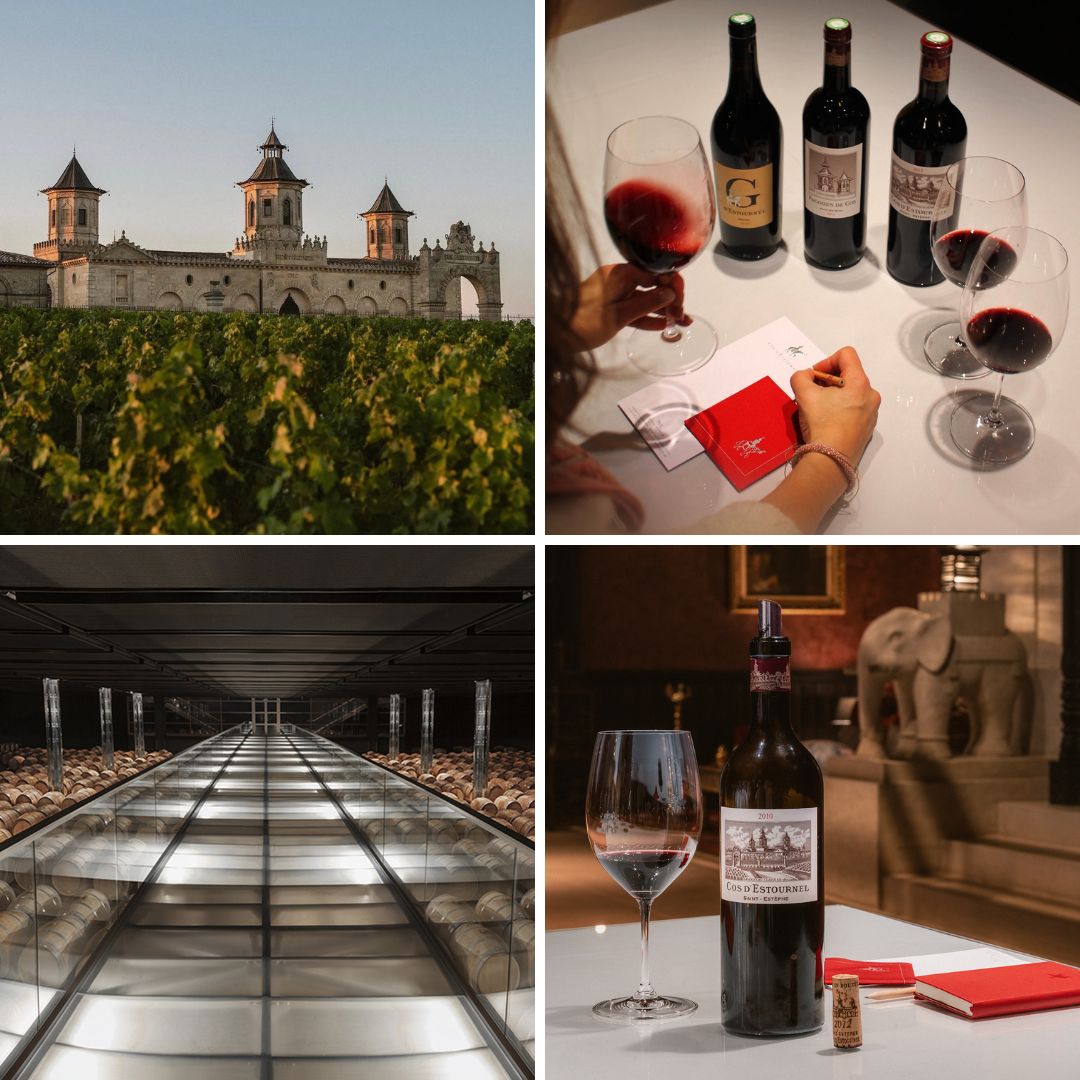
Château Cos d’Estournel.
Overall, these growing conditions can be challenging in cooler, wetter years, but they make for truly outstanding wines in hot and dry years like 2003, 2009, 2010, 2015, 2018, and 2022. In these years the moderating influences of the clayey gravel soils combined with the region’s proximity to the Atlantic yield elegant, balanced wines, with ripe tannins and ample freshness. Unsurprisingly, especially in these vintages the wines of Cos d’Estournel are among the finest of the whole Médoc. However, as our tasting note further highlights, in cooler and more classical vintages such as 2021 the unique terroir of Cos also performs very well.
Enterprising Origins, Terroir, and Vision
The story of Château Cos d’Estournel starts in 1791, when Louis Gaspard d’Estournel inherited 13 hectares of vineyard on the hill of ‘’Cos’’ – an old Gascon word denoting a pebbly hill. The magic of Cos d’Estournel is exactly this pebbly hill, being situated on a large gravel outcrop in the southern end of Saint-Estèphe, separated from Pauillac and the vineyards of Château Lafite-Rothschild by the Jalle de Breuil stream and corresponding small valley. This small stream aids the drainage of the vineyards of Cos, bringing more warmth than is typical for Saint-Estèphe, while remaining true to the appellation’s hallmark freshness and structured tannins. It is no surprise that these pebbly soils already allowed for the production of great wines. In his lifetime Louis Gaspard d’Estournel expanded the vineyards to over 45 hectares in a nearly continuous block of vines on the hill, as he believed in the quality of the wines from this special gravelly outcrop.
The Vineyards at Cos d’Estournel.
However, Louis Gaspard d’Estournel was not the sole believer in his vineyard and wines. Starting in the 1830s, he was one of Bordeaux’s first to develop a strong market in Asia, specifically India, by relentlessly promoting his wines overseas and preferring to sell directly to consumers rather than through négociants. This love for India can still be seen in the unique architecture of the Château today – even going as far as the Château specifically selecting barrels with a toast level that hints at aromas of exotic Indian spices for their first wine (locally called ‘’grand vin’’).
Unfortunately, Louis Gaspard d’Estournel passed away a few years before the 1855 classification, when his Château was rightfully classified as second growth. Today, Château Cos d’Estournel is seen as one of the most prestigious second growths, regularly named in the same class as other ‘’super second’’ estates such as Châteaux Léoville-Las Cases and Pichon Longueville Comtesse de Lalande. This reputation has not gone unnoticed, with Michel Reybier purchasing the Château in 2000 and later acquiring the neighbouring Fifth Growth Château Cos Labory in 2013 to gain further foothold on the hill of Cos.
Today, much in the spirit of Louis Gaspard, the vineyard of Château Cos d’Estournel forms a largely continuous block, rising to around 20 metres and gently sloping with exposures to the east and southwest. True to its Saint-Estèphe nature, the gravelly soils in the vineyard are interspersed by clay veins, giving a fresher profile to the wine. Especially Merlot is an ideal match for these cooler clay veins, keeping the alcohol levels of the wines produced moderate and preventing over ripeness. And whereas many Bordeaux châteaux are reducing their plantings of Merlot, Cos d’Estournel has instead sought to increase them in recent years because of these soils.
On the other hand, as Cos is still a left bank estate, it is no surprise that Cabernet Sauvignon still forms the great majority of the plantings and will continue to do so in the future. And where Merlot thrives on the clay veins, the Cabernet is ideally matched with the pure gravel soils surrounding the clay, benefitting from their much-needed warmth and drainage. Additionally, a tiny dash of Cabernet Franc and Petit Verdot are also found in the vineyard, bringing a subtle spice and floral note to the wines – making for a very classical Médoc blend of grape varieties.
Winemaking Philosophy and Style
With the arrival of Michel Reybier in 2000, no expense has been spared to further improve the quality of the wines of Cos d’Estournel. As one of the first estates in Bordeaux, Cos d’Estournel fully eliminated pumps from the cellar, instead using large glass elevators and small carts to transport grapes and juice between the numerous stainless-steel tanks. Grapes are even shortly frozen after sorting so they can be destemmed without damaging the skins of the grapes, keeping the juice very pure. While all these techniques are state-of-the-art and some of the most modern available, the style of the wine has largely remained the same as it was back in the 19th century – being that of rich, bold flavours, with power but also freshness and complexity, all with a signature note of exotic spices such as clove and cardamom.
Cos d’Estournel’s Barrel Cellar.
The red wines of Cos d’Estournel are split roughly half and half between the grand vin and second wine ‘’Pagodes de Cos’’, with grapes outside of Saint-Estèphe used for the ‘’G d’Estournel’’ and ‘’Goulée by Cos d’Estournel’’ wines. The grand vin is aged in an average of 60% new oak for 12–14 months, while Pagodes sees roughly 40% new oak for 12 months. Like with many other premium estates in Bordeaux, young vines usually find their way into the Pagodes bottling, whereas for the grand vin the oldest and best plots of the Château are used.
More recently, attention has also focused on the estate’s white wines, which are a relatively contemporary phenomenon but are already showing much promise. The white grand vin was launched in 2005 and comes from a plot just north of Saint-Estèphe with clay-limestone soils and cooling breezes from the Atlantic. Originally the plot was planted with black grape varieties, which were later grafted over to Sauvignon Blanc and Sémillon after realising the potential for white wine. In 2018 a white version of the Pagodes de Cos d’Estournel was also launched to improve the white grand vin even further. Both wines are made in a very pure style, with no skin contact, no malolactic, and only 5-10% new oak – perfectly underlining their style of Atlantic freshness while also bringing an interesting new perspective on white Bordeaux in the context of the fuller and riper wines of Pessac-Léognan further south.
The Wines of Cos d’Estournel
Below an overview of the wines tasted at the Masterclass.
Medium lemon in colour, with subtle aromas of lemon, white peach, green fruit, grass, honeysuckle, white pepper, vanilla, and bread dough. Full-bodied and round, with medium plus acidity. Graceful, with a long finish. Very clean and precise style, supported by a subtle 7% new oak. Great texture, but needs a bit of time to develop its aromatic complexity. Altogether a balanced wine from a balanced vintage.
A bit more expressive than the 2023 at this point, undeniably helped by the long and cool growing season that the 2021 vintage brought. Classical aromas of lemon, lime, and green fruit, supported by refreshingly high acidity. Great balance between the freshness of the Sauvignon Blanc and the density of the Sémillon. Very long finish, with a touch of vanilla from the new oak giving a bit of richness to an otherwise quite linear wine. Delicious now, but will also age very well.
Pagodes de Cos d’Estournel Rouge 2021
60% Cabernet Sauvignon, 36% Merlot, 3% Cabernet Franc, 1% Petit Verdot | 91/100 DWA score | Drink 2026-2035
Already quite open and accessible. Great freshness, with high acidity and balanced ripe tannins. Inviting notes of fresh cassis, blueberry, red cherry, and subtle floral violet notes. 50% new oak gives richer notes of vanilla and spices. Impressive richness for the vintage, with a calm and harmonious character to the wine. Long, elegant finish. Classical Saint-Estèphe, pure and precise in style.
Pagodes de Cos d’Estournel Rouge 2020
58% Cabernet Sauvignon, 34% Merlot, 4% Cabernet Franc, 4% Petit Verdot | 92/100 DWA score | Drink 2026-2045
Completely different from the 2021, with rich and round notes of ripe cassis, smoke, plum, black cherry, and leather. Only 25% new oak was used so as not to make the wine too heavy – as the vintage already yielded quite powerful fruit. Impressive freshness, with good acidity and subtle red fruit. The Petit Verdot adds further colour and floral notes. Hallmark Saint-Estèphe wine, and perfectly suited to the vintage. Drink the 2021 now while allowing the 2020 to evolve gracefully over many years to come.
A testament to the ageing potential of Pagodes. The vintage of 2006 in the Médoc was not seen as one of Bordeaux’s top vintages due to cooler temperatures and rain during harvest, but this wine has stood the test of time. Fully at its peak with a beautiful medium garnet colour, showing dried cranberry, ripe blueberry, red cherry, damp earth, smoke, leather, tobacco, potpourri and subtle vanilla, incense, and allspice notes. Lovely fresh acidity, with still some tannic grip and a hint of softness. Classical and perfectly matured.
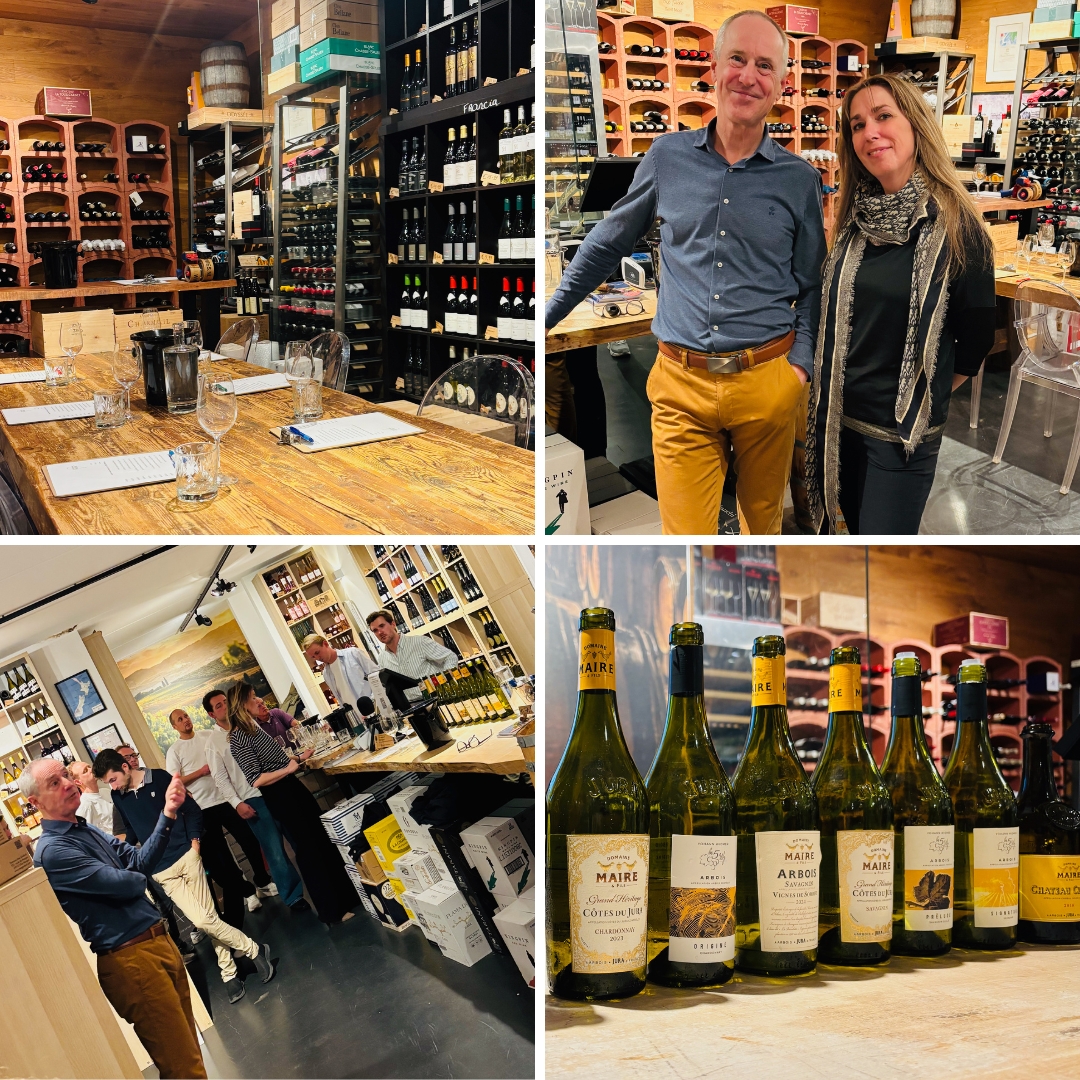
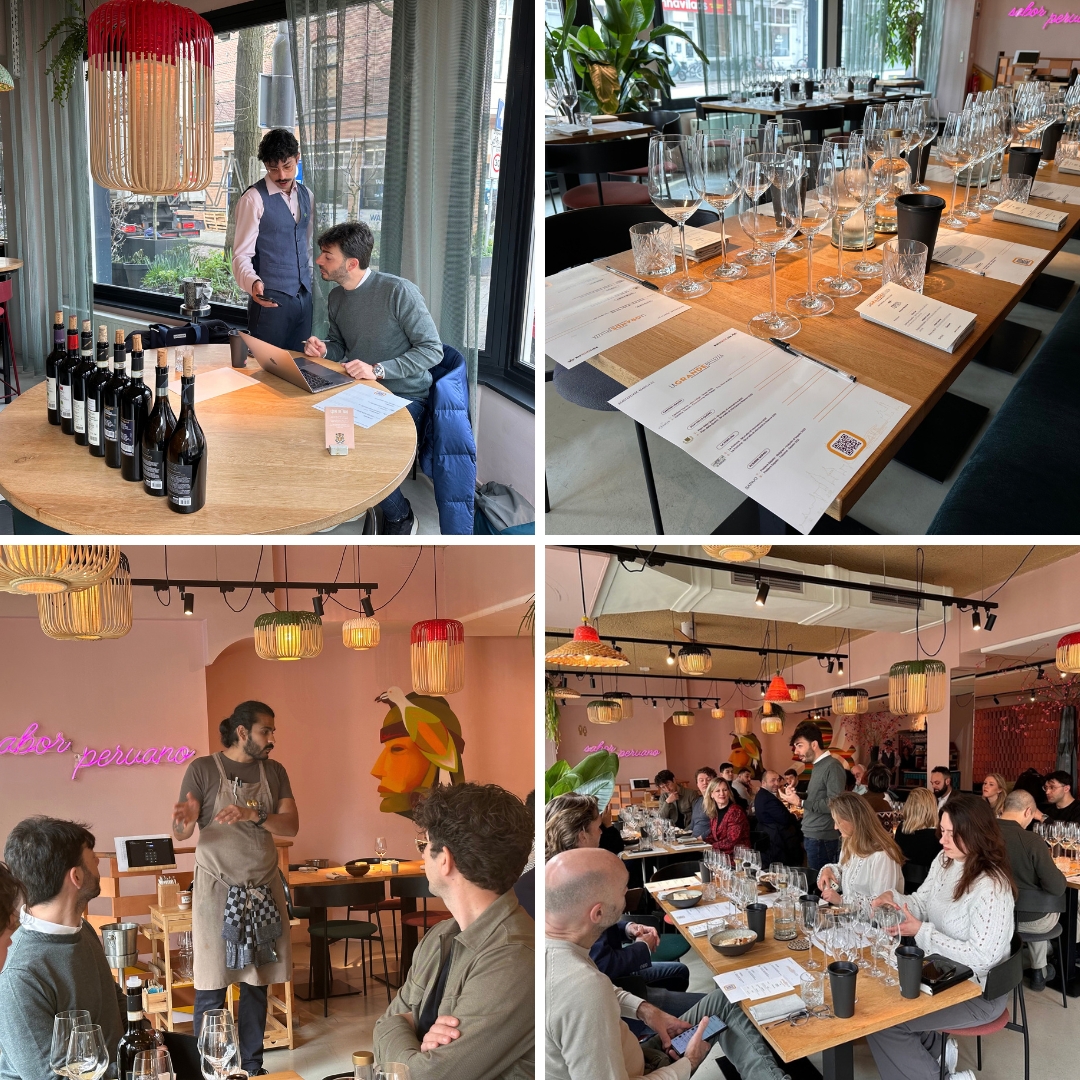
The Château Cos d’Estournel Tasting organised by Poot Agenturen.
Château Cos d’Estournel 2021
64% Cabernet Sauvignon, 30% Merlot, 4% Cabernet Franc, 2% Petit Verdot | 95/100 DWA score | Drink 2026-2051
Remarkably dense and powerful given both the vintage and the appellation, letting the terroir of Cos fully shine through. Deep colour, with ripe and pixelated tannins. Aromas of ripe cassis, fresh blueberry, black cherry, menthol, exotic spices, and vanilla dominate the nose. Mineral and refined. Energetic. Clay power combined with the elegance of the vintage yields a very well-balanced wine – already accessible now but with much reserve. The exotic house style of Cos works wonders with this more elegant, fresh vintage. Drink now or keep.
Still a bit closed and muted in terms of aromas, but the palate is fully there, with exuberant primary notes of pure cassis, blackberry, bramble, wet stone, leather, incense, smoke, and vanilla. Firing on all cylinders, with massive ripe tannins, high acidity, and a very long finish. Blockbuster, all about power at this point in time. Silky pure cassis fruit – almost glamorous. In its infancy and needs more time, but the concentration combined with the refreshing acidity will make this wine extremely long-lived. Exotic and eternal.
Château Cos d’Estournel 2012
75% Cabernet Sauvignon, 22% Merlot, 2% Cabernet Franc, 1% Petit Verdot | 93/100 DWA score | Drink 2026-2037
A difficult vintage due to uneven flowering, which combined with intense heat waves (blocking photosynthesis) pushed back ripeness of especially the Cabernet Sauvignon. The 2012 grand vin of Cos, however, has no signs of under ripeness or harsh tannins, undoubtedly helped by its terroir and strict sorting practices in both the vineyard and winery. The oak regime of 70% new oak is a bit noticeable, giving intense vanilla and toasty clove notes alongside a strong tannic structure. All in all, a powerful wine, but with enough cassis and plum intensity to largely balance the oak usage. Slight tertiary notes of grey tea and damp earth are slowly emerging, but fade slightly on the mid-palate. Very good length.
Château Cos d’Estournel 2008
85% Cabernet Sauvignon, 12% Merlot, 2% Cabernet Franc | 95/100 DWA score | Drink 2026-2038
A more classical, cooler vintage, where top producers such as Cos were able to wait out ripeness for the Cabernet thanks to an Indian (how appropriate) summer. The corresponding wine in turn has a lovely medium-garnet colour, with fresh cranberry, cassis, dried plums, damp earth, and exotic incense on the nose. Relatively elegant on the palate, with complex pure and bright flavours but also impressive depth. Great energy. Mineral. Very fine and long finish, more classical and old-school in style. Can continue to age without difficulty due to its lovely balance and freshness.
The surprise of the evening. The 70s were quite difficult in Bordeaux, with a lot of damp and cold vintages. The 1975 vintage however shone through, with very low yields due to heat producing dense, tannic wines – resulting in some wines even being too tannic in relation to their fruit intensity. Cos d’Estournel does not seem to have this problem luckily, with the wine being fully in balance and showing notes of sweet and sour cherry, cranberry, clove, damp earth, potpourri, dried roses, with mellowed but present tannins and high acidity. Very long and deep, with softness, ripe and smooth tannins, and fresh acidity keeping it all in check. At its peak now, or perhaps just after it depending on personal preference. In any case a glorious example of just how well these wines age.
Our Martin Bronkhorst and Cos d’Estournel’s Baptiste Belly.
Conclusion
Perhaps the defining characteristic of a great terroir is its ability to perform in lesser vintages. Judging by several such vintages tasted in this masterclass, we can only conclude that Château Cos d’Estournel indeed has a great terroir. What further stood out was the freshness in the wines, along with unique notes of incense and exotic spices present in virtually all wines tasted, whether from the mature 1975 vintage or the fresh 2021 vintage. Recent vintages also show that the burly style in the late 2000s and early 2010s has largely made way for a greater focus on elegance and harmony – without Cos losing its distinct house style. We can only conclude that Château Cos d’Estournel truly merits its super second status.
This article was written by our own Martin Bronkhorst. The wines of Château Cos d’Estournel are exported to a number of foreign markets and are imported into the Netherlands by POOT Agenturen.
We would like to thank POOT Agenturen for the gracious invitation and Baptiste Belly of Château Cos d’Estournel for guiding us through the history of the Château and its excellent wines.
Join our insiders’ list and get exclusive early access to new articles, expert tips, and fresh reviews delivered straight to your inbox. Subscribe now and be the first to discover!