Join Our Wine Journey – Sign Up for the Newsletter 🍷
Spottswoode: From Family Dream to Napa Benchmark
Share
Deel op X (twitter)
LinkedIn
WhatsApp
Spottswoode: From Family Dream to Napa Benchmark.
In Napa Valley, where reputation is often built on scale, prestige, and critical acclaim, there are estates that define themselves differently. Spottswoode is one of them. Rooted in family ownership, shaped by decades of quiet evolution, and driven by an unwavering commitment to stewardship, it represents a model of what fine wine can be when vision and responsibility are aligned over generations.
From Historic Site to Family Estate
The story of Spottswoode begins long before the Novak family arrived. In 1882, George Schonewald planted the first vines on what is now one of Napa Valley’s most revered vineyard sites. Located on the western edge of St. Helena, at the foot of the Mayacamas Mountains, the estate lies on the famed Napa Valley bench—an alluvial fan known for its well-draining soils and ability to produce Cabernet Sauvignon of both structure and longevity.
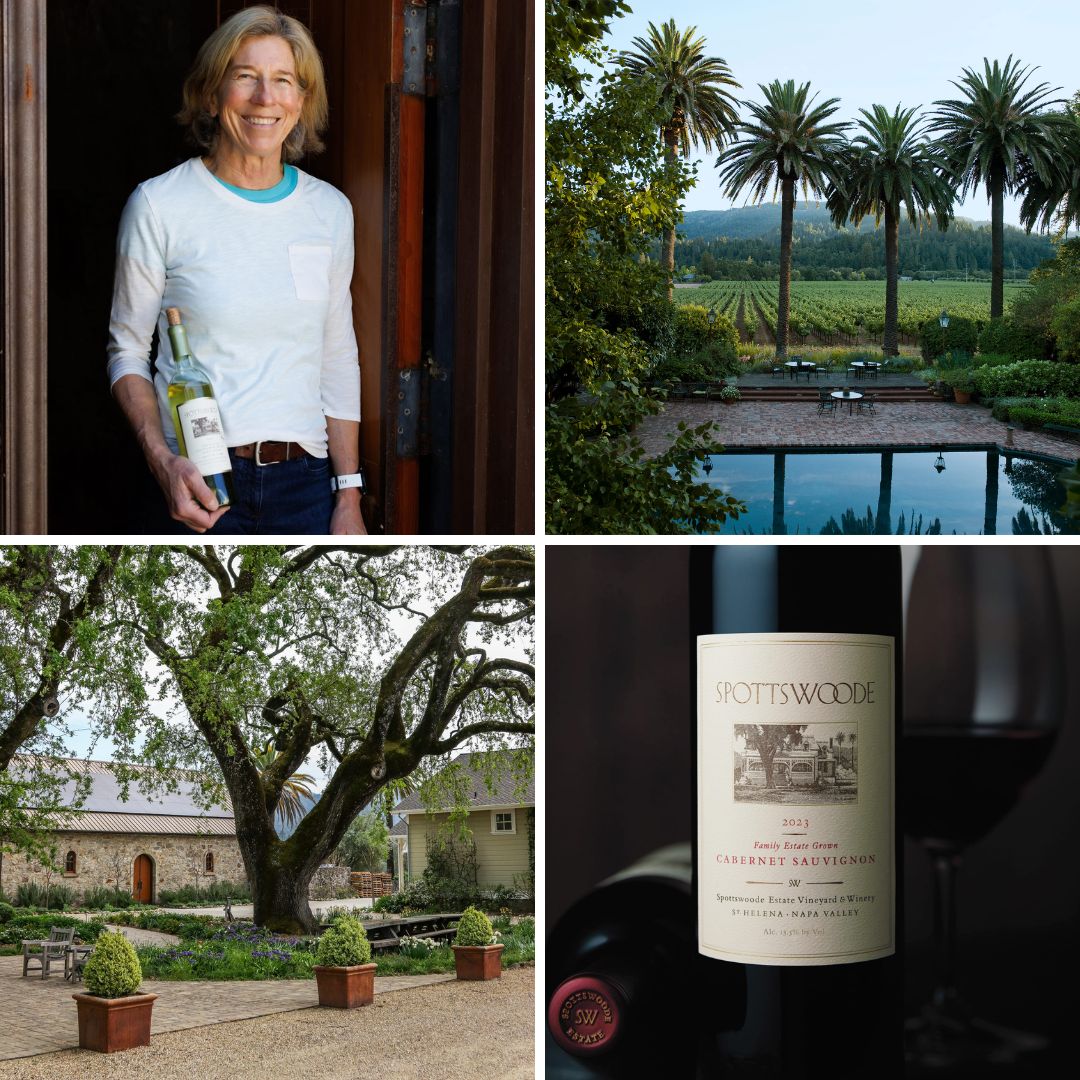
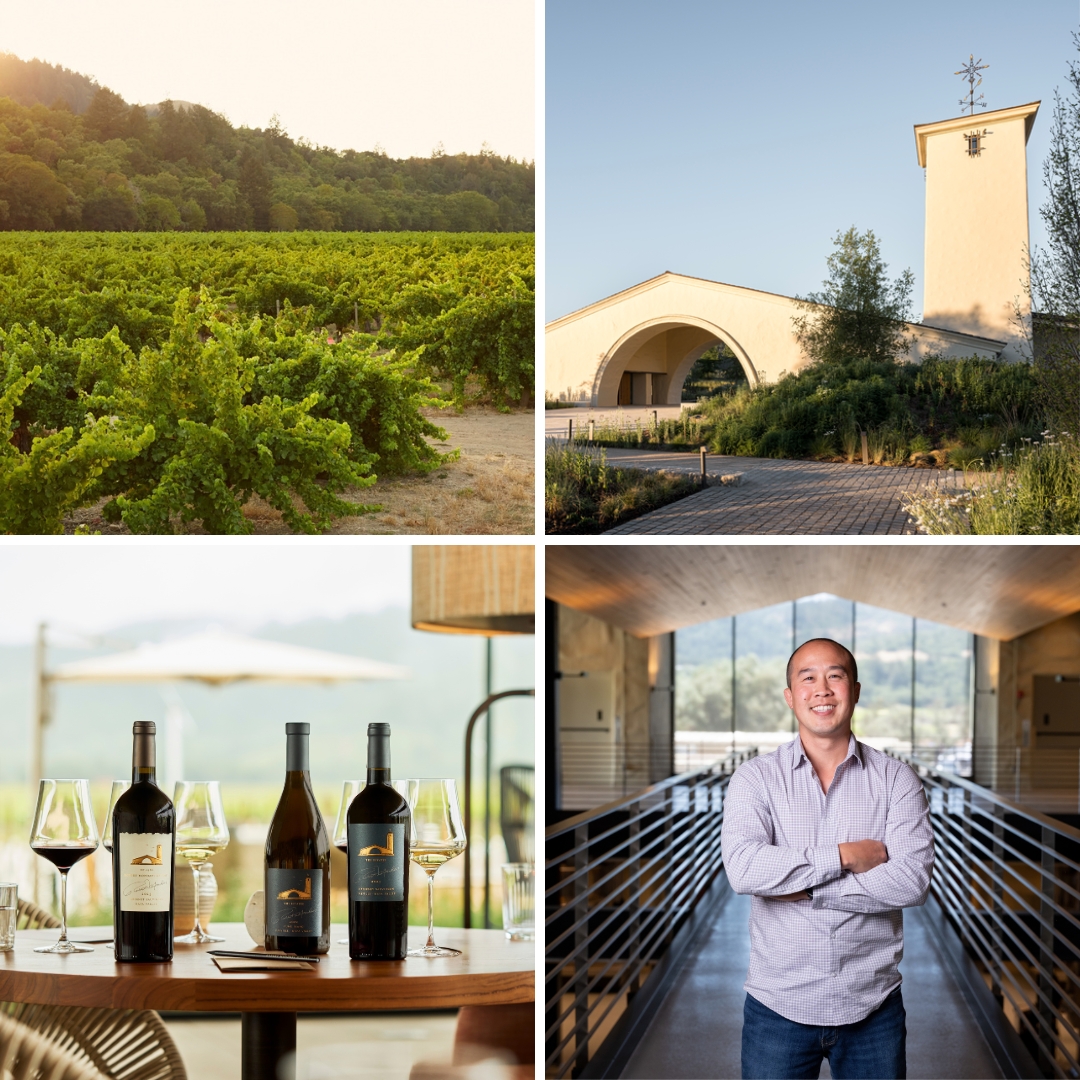
Spottswoode estate and its surroundings.
Over the decades, the estate passed through several hands and identities. Known successively as Esmeralda, Stonehurst, and Lyndenhurst, it eventually took on the name Spottswoode, in memory of a former owner’s husband. These layers of history still echo through the estate today, not least in the naming of the Lyndenhurst Cabernet Sauvignon.
The entrance to the Spottswoode estate, with its beautiful Victorian style house.
The modern chapter begins in 1972, when Mary and Jack Novak acquired the property. Their move from Southern California was not driven by a vision of building a fine wine estate, but by a desire to raise their five children in a more rural, grounded environment. Napa Valley at the time was still far from its current global stature, and the decision was, by any measure, a leap of faith.
That leap became even more profound following Jack’s sudden passing in 1977. Faced with the dual responsibility of raising a family and managing a vineyard, Mary Novak chose to stay. Rather than stepping back, she moved forward—continuing to farm the land, selling grapes to respected producers, and gradually working towards establishing her own winery.
In 1982, ten years after arriving in Napa Valley, she founded Spottswoode Winery and produced the first vintage of Estate Cabernet Sauvignon. It marked the beginning of a legacy that would, over time, place Spottswoode among the most consistent and respected names in Napa Valley.
Mary Novak, flanked by her daughters Beth and Lindy.
Organic Before It Was Obvious
Spottswoode’s identity is inseparable from its early commitment to organic farming. Introduced in 1985 by founding winemaker and vineyard manager Tony Soter, this decision placed the estate among the pioneers of environmentally conscious viticulture in Napa Valley.
At the time, such an approach was far from mainstream. Yet it reflected a belief that has only grown stronger over the decades: that the health of the vineyard is the foundation of great wine.
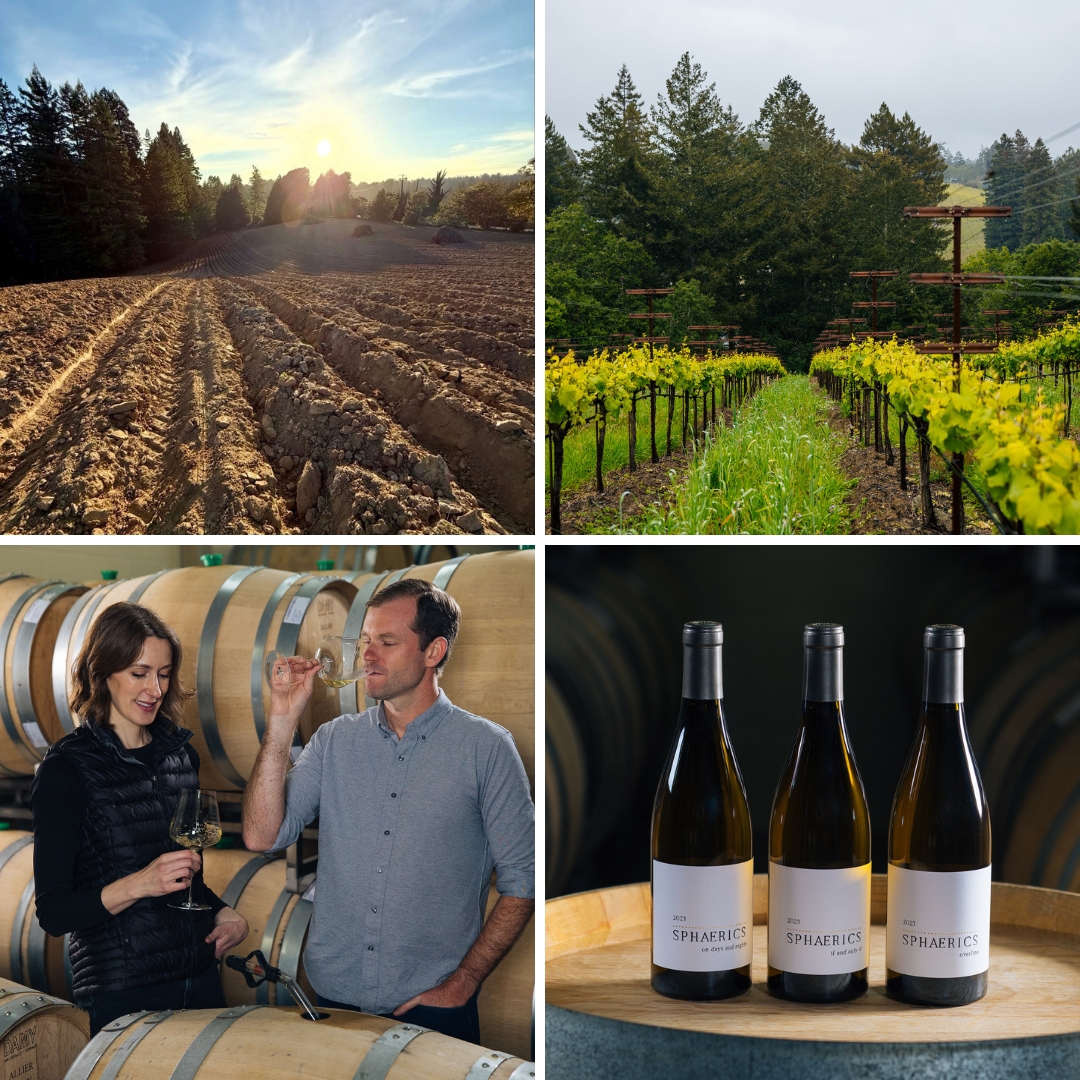
The Spottswoode Vineyards, Organic before it became ‘fashionable’.
Today, that philosophy has expanded into a comprehensive approach to sustainability. The estate is organically farmed, biodynamic, and regenerative, with certifications that include CCOF Organic, Demeter Biodynamic, Regenerative Organic, Napa Green, and B Corp. These are not endpoints, but milestones in an ongoing process of refinement.
Beth Novak: Expanding the Vision
When Beth Novak joined the winery in 1987, she became the first second-generation family member to actively shape its future. Over more than three decades, her influence has been both structural and philosophical.
She oversaw the replanting of the vineyard in response to phylloxera, ensuring continuity of estate production, and played a key role in expanding the property through the acquisition of the adjacent Kraft parcel—now home to the winery’s barrel room and offices.
Beth Novak part of the second generation, now running the estate.
Beyond the estate itself, Beth has been a leading voice within the Napa Valley community. As president of the Napa Valley Vintners, she broke new ground as both the first woman and youngest person in that role. Her work has increasingly focused on environmental leadership, from restoring Spring Creek to advancing industry-wide sustainability initiatives.
Under her guidance, Spottswoode has evolved into a winery that not only produces benchmark wines, but also sets a standard for environmental responsibility—demonstrating that sustainability and quality are not opposing forces, but complementary ones.
The Estate Vineyard: Precision Through Diversity
The Spottswoode Estate Vineyard spans approximately 17 hectares on the western edge of St. Helena. Positioned on the Napa Valley bench, the vineyard benefits from a combination of alluvial soils, gentle slopes, and excellent drainage.
The vineyard is divided into 24 blocks, with a focus on Cabernet Sauvignon supported by smaller plantings of Cabernet Franc, Petit Verdot, and Sauvignon Blanc. Diversity is central to its identity: different clones, rootstocks, and soil compositions contribute layers of nuance and complexity.
The Spottswoode Estate Vineyard Map.
A defining decision—one that continues to shape the style of the wines—is the estate’s open canopy system. Rather than maximizing sun exposure, Spottswoode protects the fruit, preserving acidity and avoiding excessive ripeness. It is a deliberate choice that prioritizes balance over power.
The Spottswoode Sauvignon Blanc Vineyard Map.
A Vineyard-Led Philosophy
For winemaker and vineyard manager Aron Weinkauf, who joined Spottswoode in 2006, the central principle is balance.
His dual role reflects a long-standing belief that wine is made in the vineyard. Farming decisions are guided by observation and an understanding of natural systems, while interventions are kept to a minimum.
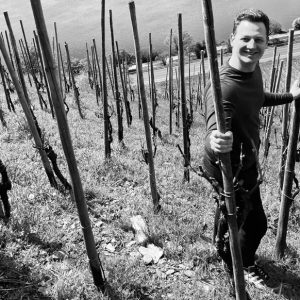
Spottswoode winemaker Aron Weinkauf.
In the cellar, this translates into a restrained approach. Fermentations are straightforward, extraction is carefully managed, and the goal is to preserve the integrity of the fruit. Blending is used not to construct, but to reveal the natural harmony of the vineyard.
The result is a style that emphasises precision, aromatic clarity, and structure—wines built to evolve rather than impress in the moment.
The Spottswoode barrel cellar.
Climate, Adaptation, and the Future
The past two decades have brought significant challenges to Napa Valley, from prolonged droughts to extreme heat events and the increasing presence of wildfires.
At Spottswoode, adaptation begins with the vineyard. Healthier soils, increased biodiversity, and thoughtful canopy management all contribute to resilience. At the same time, there is a growing recognition that vines themselves are adapting—responding to heat in ways that challenge traditional expectations.
Cover crops in the vineyard.
These developments reinforce the importance of flexibility. In an environment defined by variability, consistency is no longer about repetition, but about intelligent response.
The Wines: Expression of Place and Philosophy
Within this broader framework, the wines of Spottswoode are not separate entities, but direct expressions of the estate’s philosophy. This commitment to balance, restraint, and vineyard transparency is not theoretical—it is clearly perceptible in the glass.
It becomes immediately tangible in the Sauvignon Blanc. The 2024 vintage opens with lifted aromatics of citrus blossom, lime zest, and white peach, underscored by subtle herbal tones and a delicate hint of wet stone. On the palate, it combines freshness with a refined, almost understated texture, shaped by its largely barrel-fermented approach. A gentle creaminess is present, yet the wine remains taut and linear, with vibrant acidity guiding it towards a long, saline finish. Scoring 92/100, it is a Sauvignon Blanc defined by precision and restraint rather than overt fruit expression.
Spottswoode’s Sauvignon Blanc.
This same philosophy carries through to the Lyndenhurst Cabernet Sauvignon. The 2022 vintage offers an inviting nose of ripe red and black currants, plum, and subtle notes of cedar, tobacco leaf, and graphite. On the palate, it is generous but finely balanced, with polished tannins and a fresh core that avoids any sense of heaviness. The fruit remains vibrant and well-defined, framed by integrated oak and a lifted acidity that brings energy and clarity. With a score of 93/100, Lyndenhurst captures a broader Napa Valley expression while maintaining the hallmark elegance of the estate.
The Lyndenhurst Cabernet Sauvignon.
At the pinnacle sits the Estate Cabernet Sauvignon, the purest articulation of the Spottswoode Vineyard. The 2022 vintage is both poised and expressive, revealing layered aromas of blackcurrant, dark cherry, and cassis, complemented by notes of violets, graphite, and finely integrated oak spice. The palate is defined by precision and structure, with refined tannins providing shape without dominance. Freshness balances the depth of fruit, leading into a long, composed finish marked by mineral nuance and subtle savoury complexity. Scoring 96/100, it stands as a compelling and age-worthy expression, fully aligned with the estate’s philosophy of balance and site transparency.
The Spottswoode Estate Cabernet Sauvignon.
A Global Presence, by Design
Despite its limited production, Spottswoode has maintained an international presence since the late 1980s. This is not driven by necessity, but by intent.
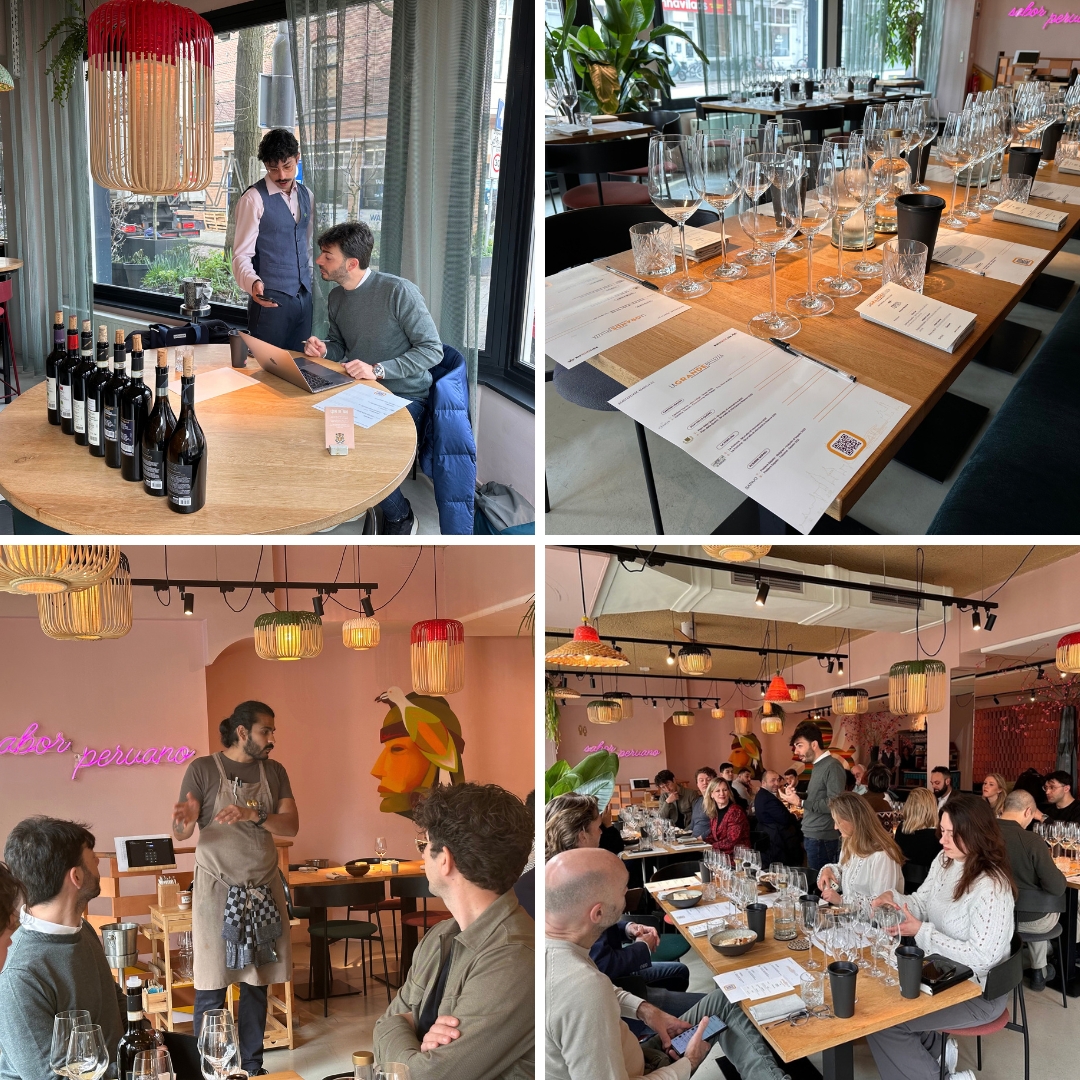
For Beth Novak, being a world-class winery means being present on the global stage. Whether in Napa Valley, Amsterdam, London, or Tokyo, the wines are meant to be discovered in context—by an audience that understands and values fine wine.
Spottswoode does not want to limit itself to the regional or domestic market but spreads its wines world-wide.
A Quiet Benchmark
Spottswoode does not rely on grand gestures or rapid change. Its strength lies in continuity—in doing the same things thoughtfully, and refining them over time.
It is a winery defined not by ambition alone, but by responsibility. One that demonstrates that true progress in wine is often incremental, built vintage by vintage, decision by decision.
In a region that continues to evolve, Spottswoode remains a benchmark—not just for Napa Valley, but for what sustainable, family-driven fine wine can represent.
We would like to thank Beth Novak and Aron Weinkauf for their time, openness, and insights. Our thanks also go to Heather de Savoye at Spottswoode, as well as to J.A.M. PR and Miriam Jonas for their support and coordination.
For readers interested in discovering the wines of Spottswoode, they are available in the Netherlands through Best of Wines, a trusted partner and specialist retailer.
Join our insiders’ list and get exclusive early access to new articles, expert tips, and fresh reviews delivered straight to your inbox. Subscribe now and be the first to discover!