Join Our Wine Journey – Sign Up for the Newsletter 🍷
Promontory: A Territory Defined by Discovery
Share
Deel op X (twitter)
LinkedIn
WhatsApp
Promontory: A Territory Defined by Discovery.
How a hidden site in Napa Valley reshaped the Harlan family’s understanding of wine growing.
A Place That Was Found, Not Created
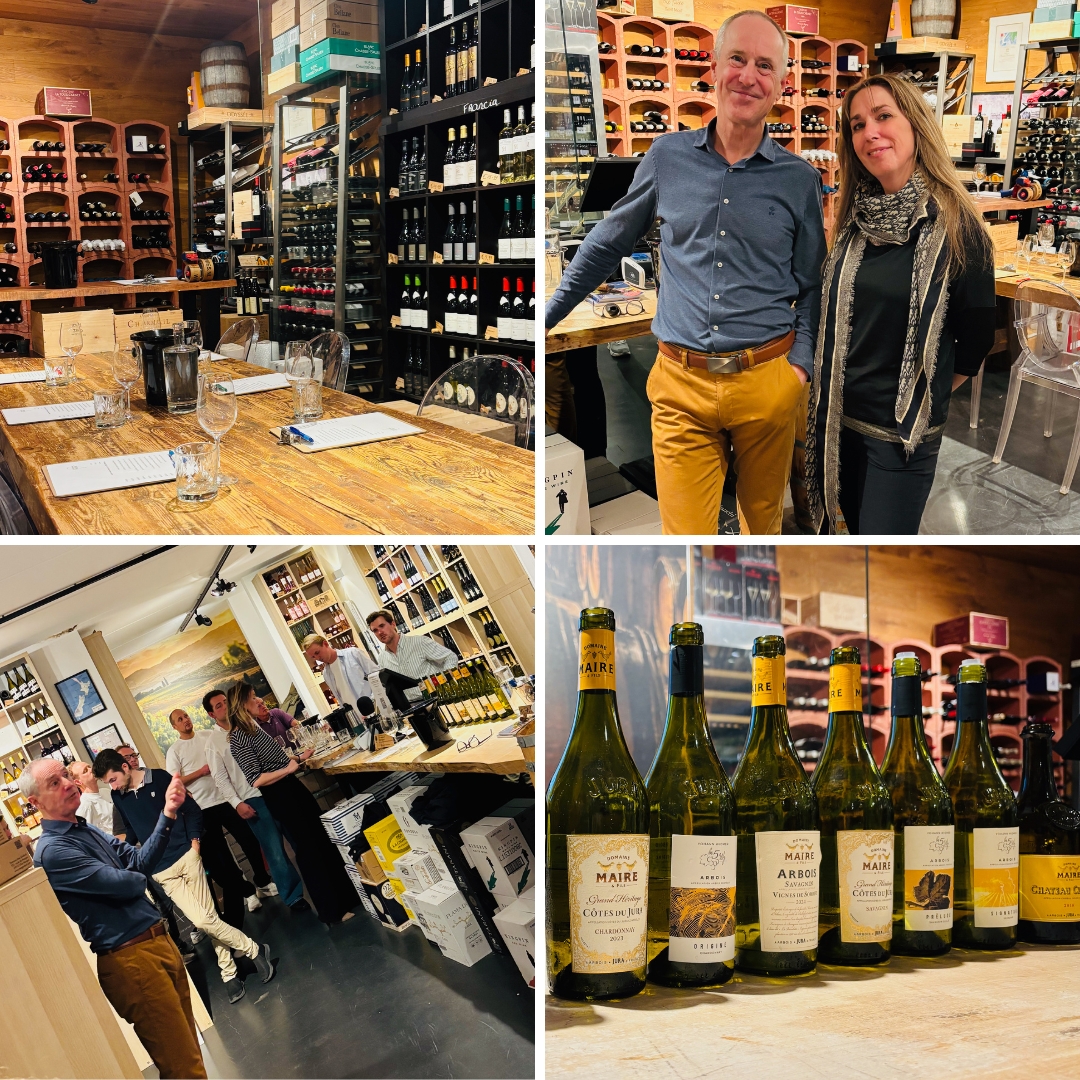
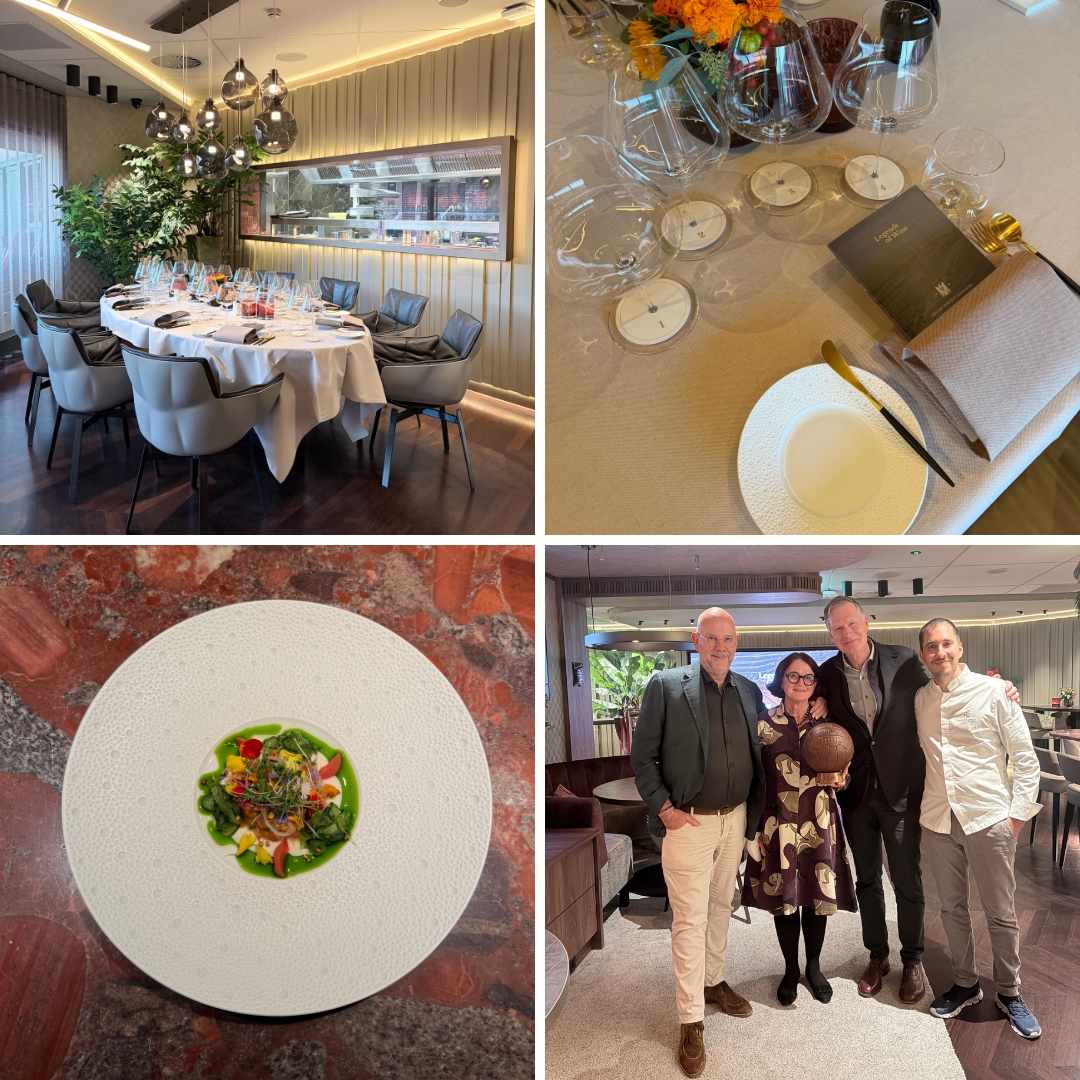
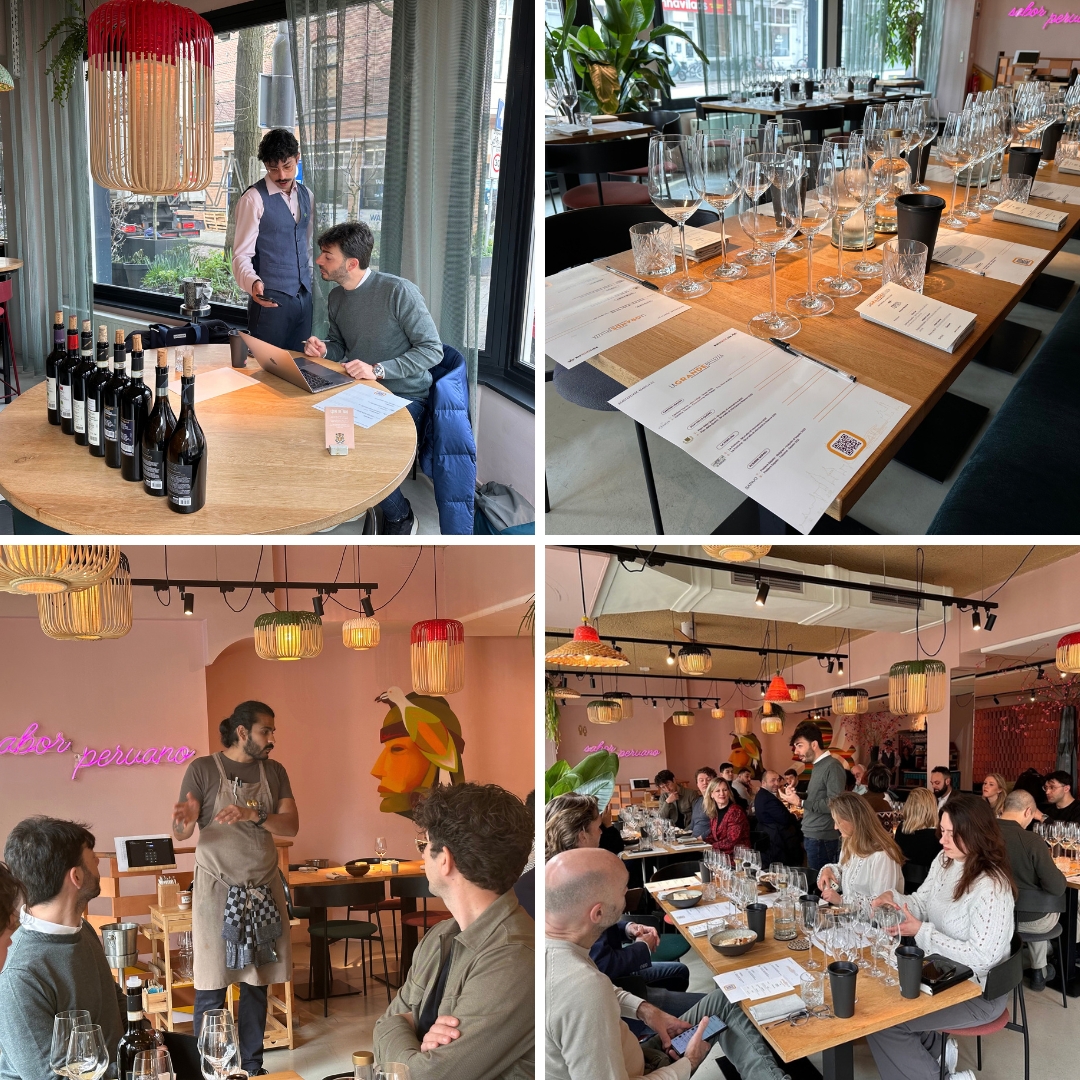
The wines of Promontory did not immediately read as Napa Valley. Encountered during a private tasting in Rotterdam, hosted by its Dutch distributor Colaris at NOTK Rotterdam, and presented by Estate Director Joe Rorke, they revealed a character that felt markedly different: structured yet weightless, precise yet restrained.
That impression — of a wine shaped less by intent than by place — proved difficult to ignore. It pointed to something more fundamental: not only how the wines are made, but how the project itself is approached.
A subsequent conversation with Promontory’s Managing Director Will Harlan provided the framework. Not as a definitive explanation, but as a continuation of that same process of discovery. What emerges is a project shaped not by a predetermined vision, but by a gradual recognition that the land itself demands a different way of thinking. Early assumptions, informed by decades of experience at Harlan Estate, didn’t resonate with this particular place.
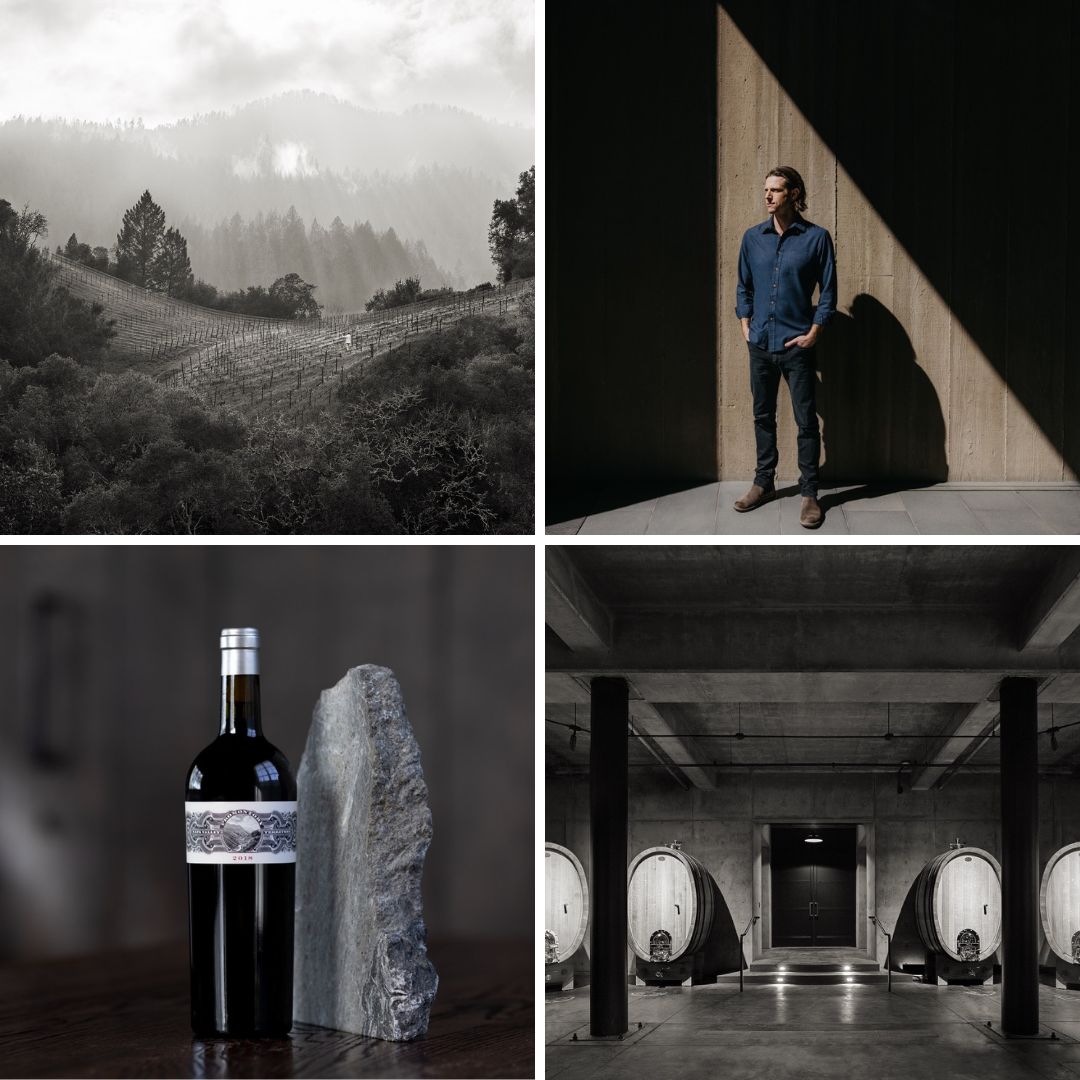
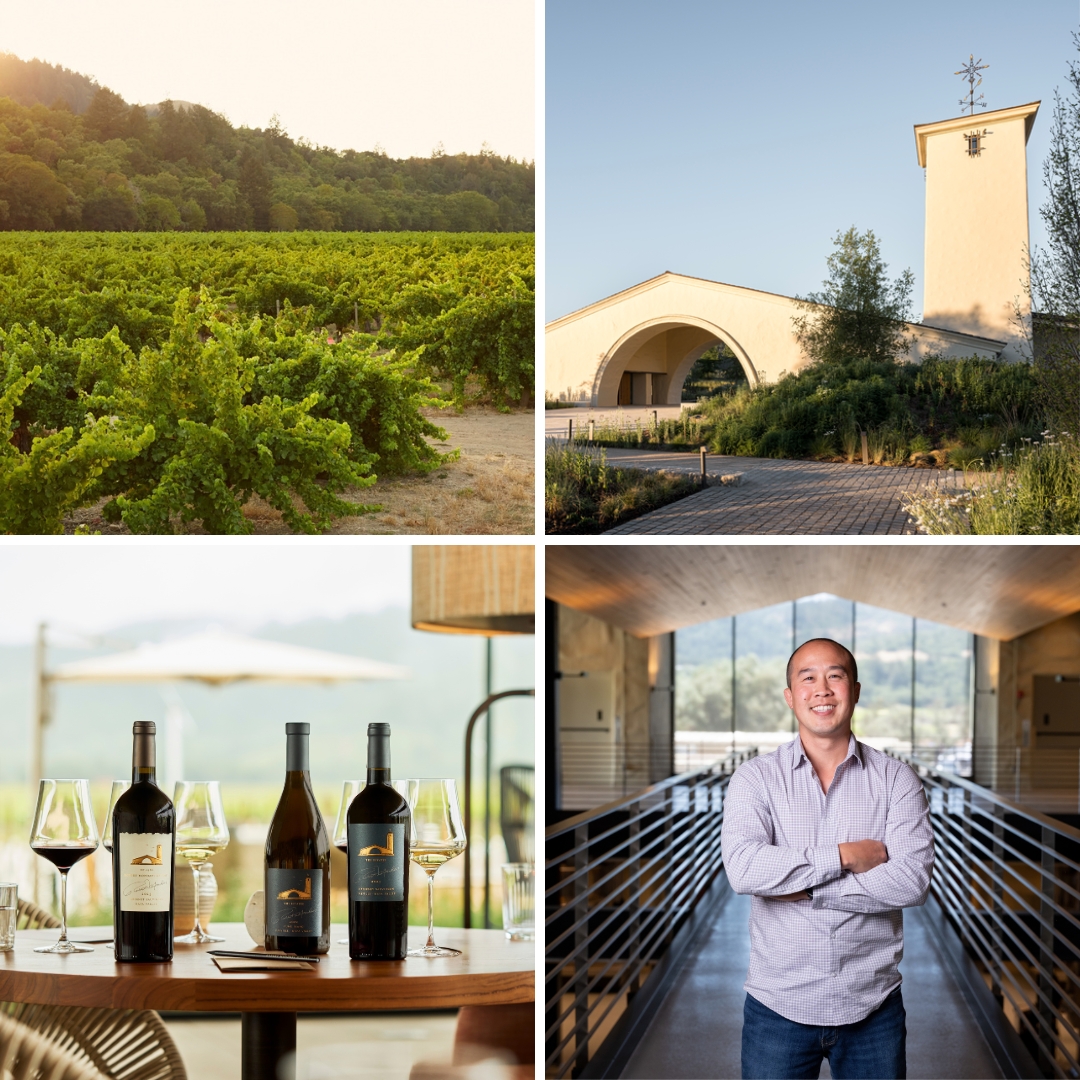
Promontory, one of Napa’s Icons, created by the Harlan family.
Promontory is not an evolution of its predecessors, but instead finds itself on its own path, with its own mysteries.
A Name That Defines an Approach
The identity of Promontory begins with its name.
A ‘promontory’ is a piece of land that rises above its surroundings, offering perspective rather than dominance. It suggests both elevation and distance — a position from which one observes, rather than imposes. In an American context, the term also carries associations with exploration and the pioneering era, evoking movement into the unknown without a predetermined outcome.
That meaning is not merely symbolic. It is woven into the very DNA of this endeavor.
Unlike Harlan Estate, which was conceived with a certain intentionality and structured along a specific vision, Promontory developed through discovery. It is not an interpretation of an existing model, nor an attempt to replicate established ideals. Direction emerges gradually, through experience and intuition.
This distinction is embedded in the language used to describe the property itself.
Promontory is not referred to as an estate, but as a territory.
A territory is not shaped to conform. It is explored, observed, and gradually understood.
A Site That Refuses Simplification
At first glance, the proximity to Harlan Estate suggests continuity. In practice, the opposite proves true.
The site behaves differently, both in the vineyard and in the cellar. Vines respond in less predictable ways, and the resulting wines display a character distinct from the broader Napa Valley context.
The explanation lies beneath the surface.
Promontory Territory.
Promontory sits on a rare formation of metamorphic rock, an anomaly within Napa Valley, where volcanic and sedimentary soils dominate. Even more significantly, all three primary geological formations converge within the boundaries of the property.
The vineyard is not a uniform entity, but a tapestry of micro-environments, each responding differently to the similar conditions.
Understanding the site was only the beginning. Responding to it required something else entirely.
Learning to Unlearn
For a project built on decades of accumulated experience, the most significant shift was not technical, but conceptual.
The early years were not defined by clarity, but by uncertainty. Applying established practices yielded results that felt unfamiliar — at times even contradictory. It became evident that previous knowledge could not simply be applied. It had to be reconsidered.
This process of unlearning became central to Promontory.
Rather than imposing a predefined approach, the work began with observation. Decisions were made more slowly, and often with less certainty. Over time, a direction emerged — not as a plan, but as a response.
The objective shifted: no longer to realize a vision, but to understand one.
Farming Through Observation
This shift is most visible in the vineyard.
At Promontory, vineyard management operates at a level of detail that reflects the variability of the site. Parcels are subdivided repeatedly, and decisions are made with the understanding that even adjacent vines may require different approaches.
Rather than imposing uniformity, the vineyard is managed as a dynamic system.
This approach demands patience, attentiveness, and a willingness to adapt continuously. It also shapes the people drawn to the project — individuals less interested in applying knowledge than in questioning it, and willing to work within a process that offers no immediate resolution.
Interestingly, this way of working has also informed practices at Harlan Estate, illustrating that the relationship between the two projects is not hierarchical, but reciprocal.
Winemaking as Restraint
That same restraint carries through into the cellar.
The structure of the fruit at Promontory requires a different approach to extraction. Techniques have been adapted to favor gentleness, allowing tannins to develop without force. The use of oak has evolved, moving toward larger, more neutral vessels that preserve the wine’s inherent structure.
These decisions are not stylistic preferences. They are functional responses to the demands of the site.
Winemaking at Promontory has, in many ways, proven to be a process of ‘un-learning’.
In a region often associated with richness and scale, the trajectory at Promontory moves in the opposite direction — toward precision, restraint and structure.
A Territory Defined by Nature
The physical structure of the property reinforces this philosophy.
Of the approximately 350 hectares that comprise Promontory, less than 35 hectares are planted with vines. The remainder remains woodlands and forest — steep, rugged, and wild.
The vineyards are situated in ‘islands’ among the wilderness, on slopes averaging nearly forty percent—embedded within the natural environment rather than imposed upon it.
Infrastructure is minimal by design. Roads remain unpaved, and the winery is located outside the core of the territory, preserving the integrity of the landscape.
At Promontory, the vineyard does not dominate the land. It exists within it.
Time as an Open Dimension
Time plays a central role, but here it unfolds differently.
Rather than moving toward a defined objective, the project progresses through a series of inflection points — moments where understanding deepens, but never completes. Each vintage contributes to this process, revealing new aspects of the site while raising new questions.
Progress is measured not by repetition, but by clarity.
The project remains in motion — and intentionally so.
Purpose, Positioning and Perspective
Promontory’s ambition is precise: to produce a wine inseparable from its origin, and unmistakable as such.
Today, it is widely regarded among Napa Valley’s most distinctive projects, not for its scale, but for its refusal to conform to it.
Production remains limited, with only a few thousand cases produced annually. Yet scale is not a driver. Growth is measured in understanding.
The distribution model reflects this philosophy. Promontory operates independently, with dedicated partners across markets, allowing for a focused and differentiated presence. This approach avoids overlap with other projects and enables access to distinct audiences.
At the same time, there is a clear emphasis on maintaining a direct connection with those who ultimately open the bottles. Private allocations, visits, and ongoing engagement are treated as integral to the project.
The objective is not exclusivity, but alignment — ensuring the wines are experienced in a way that reflects both their origin and intent.
Wines as a Reflection of Understanding
Tasted across three vintages — 2012, 2019 and 2021 — the wines of Promontory offer a clear perspective not only on the character of the site, but also on the estate’s evolving understanding of it. Rather than presenting a fixed style, the wines trace a gradual process of refinement, where interpretation becomes increasingly precise over time. Promontory, therefore, emerges more from intuition, allowing the character of the site to take precedence over stylistic expression.
2012 Promontory Napa Valley | DWA Score: 96/100
The 2012 vintage reflects both the early phase of Promontory and the character of a warm, generous growing season in Napa Valley. The nose opens with ripe dark cherry, blackberry and cassis, layered with graphite, cedar and a subtle herbal lift, alongside hints of dried sage and warm earth. The aromatics show breadth and openness, yet retain a sense of composure that prevents the wine from leaning toward excess.
On the palate, the wine is structured and composed, with firm, slightly more assertive tannins framing a core of dark fruit. There is a notable sense of amplitude, with a broader texture that reflects the conditions of the vintage, balanced by sufficient freshness to maintain direction. Notes of cocoa, tobacco leaf and crushed stone emerge toward a long, gently savoury finish.
While the vintage carries the imprint of a more opulent year, it remains anchored by restraint and structure, offering an early indication of Promontory’s tendency to favor balance over overt power.
2019 Promontory Napa Valley | DWA Score: 97/100
By 2019, the expression of Promontory appears more focused and classically proportioned, reflecting a growing season often regarded for its balance and clarity. Aromatically, the wine shows greater precision, with blackcurrant, dark plum and black cherry complemented by violet, graphite and crushed rock, alongside subtle notes of spice and finely integrated oak. The profile feels more delineated, with each element clearly defined.
The palate follows with a refined structure, where finely grained tannins integrate seamlessly into the wine’s core. There is a pronounced sense of tension and linearity, giving the wine both energy and direction without sacrificing depth. The fruit is framed by a distinct mineral backbone, lending a cooler, more architectural impression compared to riper Napa expressions.
The finish is persistent and precise, marked by freshness, restraint and a controlled, understated power. The vintage suggests a growing confidence in allowing the site to speak with clarity, rather than shaping it toward a preconceived style.
2021 Promontory Napa Valley | DWA Score: 99/100
The 2021 vintage presents a highly complete and finely tuned expression of Promontory, shaped by a growing season defined by low yields and natural concentration. The nose combines cassis, blackberry and black cherry with lifted floral notes, graphite and a pronounced mineral character, supported by nuances of iron, crushed stone and delicate spice. The aromatics feel both layered and precise, balancing intensity with restraint.
On the palate, the wine achieves a striking equilibrium between structure and elegance. Tannins are exceptionally refined, polished yet firmly present, supporting a concentrated core without imposing on it. There is a heightened sense of purity and definition, with each component precisely articulated. Rather than relying on volume, the wine conveys its presence through tension, clarity and quiet intensity.
The finish is long and resonant, unfolding gradually with notes of dark fruit, graphite and subtle savoury complexity. In contrast to many contemporary Napa wines, the 2021 does not seek to impress through scale, but through balance, precision and composure, suggesting a deep alignment between site and expression.
A Continuum Rather Than a Style
Taken together, the three vintages illustrate an evolution not toward a fixed house style, but toward a deeper understanding of place. The progression from 2012 to 2021 reflects a gradual shift from interpretation to articulation, where decisions appear less about shaping the wine and more about revealing the underlying character of the vineyard.
In that sense, the wines of Promontory are not static expressions, but part of an ongoing dialogue between site, time and the people working to understand it.
Will Harlan, leading the dialogue with Promontory.
A Territory Still Unfolding
Promontory is not defined by what it has already achieved, but by what it continues to reveal.
Its identity remains in motion — shaped by land, time and an understanding that is still unfolding.
It is, in the most literal sense, a territory:
Not something that has been fully defined, or something that may ever be.
For readers interested in exploring the broader philosophy of the Harlan family in Napa Valley, we also recommend our earlier feature on Harlan Estate — a project built around generational vision, precision and longevity. Together, Harlan Estate and Promontory offer two distinct yet deeply connected perspectives on terroir, time and the future of fine wine in Napa Valley.
This article is written by our own Niels Aarts. We would like to thank Promontory, Will Harlan and Joe Rorke, for their support in writing this article, and Colaris, their Dutch distributor for the invitation.
We also thank the team at NOTK in Rotterdam for the excellent lunch during our tasting. Promontory is available on a limited basis in several markets around the world. For purchases in the Netherlands, you can reach out to Colaris directly. Picture credits: Promontory.
Join our insiders’ list and get exclusive early access to new articles, expert tips, and fresh reviews delivered straight to your inbox. Subscribe now and be the first to discover!