Join Our Wine Journey – Sign Up for the Newsletter 🍷
Isole e Olena — Continuity, Precision, and the Next Chapter
Share
Deel op X (twitter)
LinkedIn
WhatsApp
Isole e Olena — Continuity, Precision, and the Next Chapter.
Most successions in wine begin with a problem.
A decline in quality, a loss of direction, or the need to modernize what no longer fits its time. Isole e Olena presents the opposite case. When the estate changed hands, there was nothing to fix.
That is precisely what made the transition so exacting.
For decades, Isole e Olena has been defined by a clarity of vision that left little room for reinterpretation. Under the direction of Paolo De Marchi, Sangiovese was elevated from a blending component to a complete expression. Cepparello became its most convincing statement—an early and decisive move toward site, selection, and precision at a time when the region was moving in a different direction.
Taking over an estate like this is not about redefining it.
It is about proving that it can continue to matter.
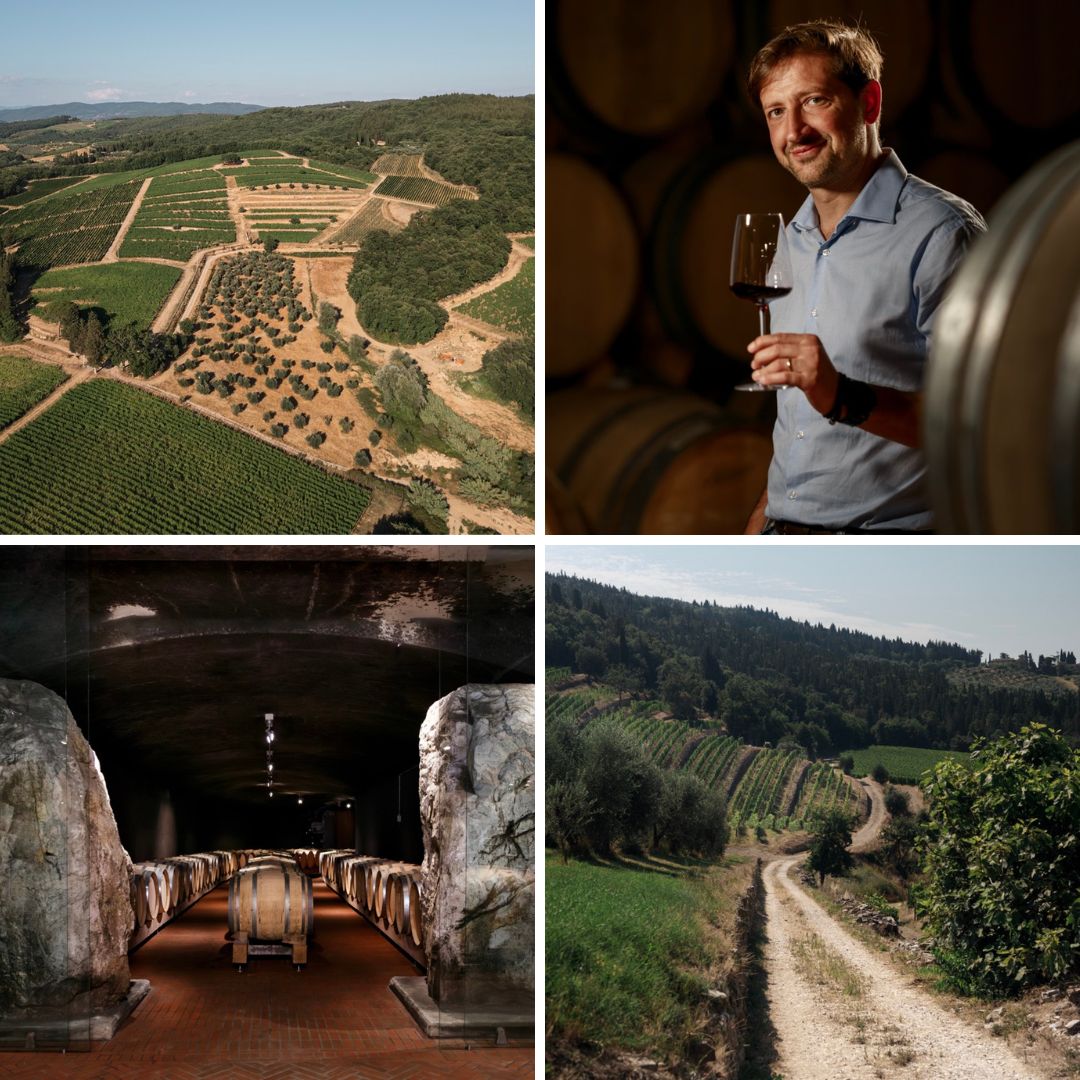
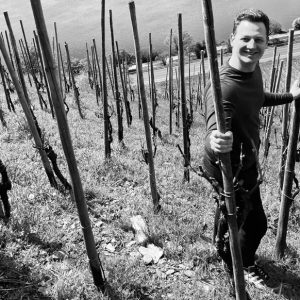
Emanuele Reolon leading the estate in this new chapter.
That responsibility now sits with Emanuele Reolon, who leads the estate as both estate director and winemaker. His role is not to impose a new identity, but to take ownership of an existing one—ensuring that it holds under conditions that are no longer the same as when it was first shaped.
Understanding Before Acting
At Isole e Olena, the first step is not change. It is observation.
The estate spans 56 hectares, but its real complexity lies in its composition. Differences in soil, exposure, altitude, and vine age do not appear neatly divided—they shift within vineyards, sometimes within parcels as small as 0.3 hectares. What seems coherent from a distance reveals itself, on closer inspection, as highly fragmented.
This fragmentation is not a limitation. It is the estate’s defining asset.
Rather than simplifying it, the focus is on understanding it in greater detail. Historical selections—particularly those that define Cepparello—are being revisited, not to question them, but to understand their internal logic. Why certain parcels consistently performed, what variables shaped those decisions, and how those same sites behave today.
Deep analysis of the vineyards revealed more secrets and new potential.
This work is supported by a deeper level of soil analysis, developed in collaboration with Pedro Parra. Early findings reveal a level of geological variation far more intricate than previously mapped, reinforcing the idea that the estate’s potential lies in nuance rather than scale.
Even a benchmark estate is never fully resolved.
Some parcels confirm their historical role. Others—once considered secondary—show potential limited not by soil, but by earlier choices in planting density, rootstock, or clonal material. Understanding this distinction defines the next phase of the estate.
Underlying this is something less tangible, but equally important: a way of thinking shaped over decades. The ability to read a vineyard not only analytically, but instinctively—to recognize when to intervene and when to step back.
It is here that the influence of De Marchi remains most present—not as a fixed model, but as a standard defined as much by independence of thought as by technical precision.
Complexity as Direction
Understanding, however, is only the first step. Acting on it requires time.
At Isole e Olena, variation exists not just across vineyards, but within them. Mapping this variation into something usable—something that informs planting decisions, harvest timing, and selection—becomes a long-term project.
The scale is considerable.
Across the estate, the number of distinct conditions approaches 150, each requiring its own interpretation. This is not a process that yields immediate results. Replanting decisions alone carry a horizon of 15 to 20 years, with outcomes that may only fully reveal themselves in the following generation.
This is the nature of viticulture at this level.
A long term vineyard program decides what the future brings for individual plots.
Certain vineyards will be replanted, with a stronger focus on Sangiovese and plant material derived from the estate’s own clonal heritage. Others will be restructured, adjusting density and canopy management to better respond to increasingly variable climatic conditions.
These changes are not driven by a desire to alter the wines.
They are driven by the need to preserve their identity under different conditions.
Precision Without Disruption
If the vineyard defines potential, the cellar defines its translation.
Here, the approach remains deliberately restrained. The objective is not stylistic change, but clarity—removing inconsistency and sharpening definition.
Sangiovese remains central. Extraction is controlled, avoiding excess while preserving detail. Tannins are guided toward finesse, shaping the structure without dominating it. Oak is present, but integrated, supporting the wine rather than imprinting on it.
In the cellar the focus lies on creating clarity well maintaining the characteristic styles.
The effect is subtle, but meaningful.
The wines do not change in character.
They become more precise in their expression.
Oak supports the wines throughout the process opposed to dictating it.
Cepparello — The Measure of the Estate
Cepparello remains the clearest measure of Isole e Olena.
From its origin, it represented a departure—not just from blending practices, but from the idea that Sangiovese required support. It introduced selection as a defining principle, isolating the best parcels long before such approaches became standard in Chianti Classico.
That principle remains intact.
Each vintage, Cepparello is assembled from the strongest Sangiovese parcels across the estate. It is not tied to a single site, but to a level of quality that must be redefined every year.
In 2022, that identity is expressed through a warmer, more generous vintage profile.
The nose shows breadth from the outset—dark cherry, blackcurrant, and ripe plum—layered with dried rose, iris, and a subtle interplay of spice and earth. There is depth, but it unfolds gradually, without the vertical tension seen in cooler years.
On the palate, the structure is immediate and cohesive. The tannins are finely textured, more supple than in vintages such as 2016 or 2019, giving the wine an accessible, seamless progression. Acidity remains present, though less pronounced, allowing the fruit to take a more central role.
The result is a wine defined less by contrast and more by continuity. The mid-palate is complete, the elements integrated, the movement fluid rather than tension-driven.
2022 Cepparello – 96/100 DWA score.
Compared to the most age-worthy vintages, the 2022 does not reach the same depth or architectural precision. Its strength lies elsewhere—in its balance, accessibility, and ability to deliver a complete expression without requiring extended time in bottle.
The finish is long and composed, marked by dark fruit, spice, and a fine mineral undertone.
This is a Cepparello that prioritizes harmony over structure—less demanding, more immediate, yet firmly anchored in the identity of the estate.
2022 Cepparello — 95/100 DWA Score (NA)
A Broader Expression of Place
That same philosophy extends beyond the flagship.
The Chianti Classico is not treated as a secondary wine, but as a distinct expression with its own purpose. Where Cepparello is about selection and synthesis, Chianti Classico is about immediacy and movement.
The 2023 vintage captures this with clarity.
The nose is lifted and precise—red cherry, cranberry, and wild strawberry, supported by floral notes and a subtle touch of spice. There is an openness that makes the wine immediately engaging.
On the palate, structure is driven by acidity. The wine moves with energy, carried by freshness rather than density. Tannins are fine and lightly structured, providing just enough framework without slowing it down.
2023 Chianti Classico – 94/100 DWA score.
What defines this wine is its sense of direction. It does not build in layers, but in momentum—moving cleanly across the palate, emphasizing flow over weight.
This is Sangiovese in its most direct form.
Less complex than Cepparello, but no less intentional.
2023 Chianti Classico — 94/100 DWA Score (NA)
Reframing Chianti Classico — New Tools, Expanded Expression
While much of the work at Isole e Olena is focused inward, the broader context of Chianti Classico has also evolved.
For a long time, the estate operated slightly outside the framework of the appellation. The focus on pure Sangiovese—central to its identity—did not align with earlier regulations, which allowed and often encouraged blending with international varieties.
In that sense, Isole e Olena was working ahead of the system.
Today, the system has moved closer to it.
Changes within the denomination—particularly the strengthening of quality tiers and the emphasis on origin—have created new tools for expressing identity with greater precision.
Changes within the appellation create new opportunities for Isole e Olena.
At Isole e Olena, this evolution is taking shape through a focused Gran Selezione project.
Rather than introducing a generic new tier, the estate is exploring two distinct wines under the Gran Selezione classification—each tied to the historical areas that define the property: Isole and Olena.
Where Cepparello represents the synthesis of the estate—the best Sangiovese across all parcels—these wines move toward specificity. They isolate the identity of each village, shaped by differences in soil composition, exposure, and microclimate.
Positioned between Chianti Classico and Cepparello, these wines introduce a more site-driven interpretation, strengthening both the structure of the portfolio and the estate’s positioning within the appellation.
What changes is not the philosophy, but the clarity with which it can now be expressed.
Beyond Sangiovese
While Sangiovese remains central, the estate’s Chardonnay offers a different perspective.
Once part of the Collezione Privata, the wine has evolved in both identity and presentation, yet remains one of the most refined white wines produced in Tuscany.
The 2024 vintage reflects this balance.
The nose is layered and expressive, combining ripe apricot, baked apple, and peach with notes of pastry, light spice, and subtle oak. The aromatic profile suggests richness, yet remains composed.
On the palate, texture defines the wine. A rounded mid-palate is supported by measured acidity that maintains freshness without imposing sharpness. Oak is integrated with precision, adding depth without dominating the fruit.
What distinguishes this Chardonnay is its structure through texture rather than tension. It builds through weight and integration, held together by a fine mineral line that prevents the wine from becoming overly broad.
The finish is long and controlled, with lingering notes of stone fruit, spice, and a subtle saline edge.
2024 Chardonnay – 94/100 DWA score.
This is a wine of interpretation rather than typicity—aligned with the estate’s philosophy, even outside Sangiovese.
2024 Chardonnay — 94/100 DWA Score (NA)
Editor’s note: At this stage (April 2026), we recommend giving the wine sufficient time and air, using large glassware to allow its full potential to emerge.
Context and Continuity
For those looking to understand the transition in context, we previously covered the final vintage fully overseen by Paolo de Marchi, along with his perspective on the estate:
These provide a clear reference point for the continuity that defines Isole e Olena today.
The spirit of Paolo De Marchi is still very much alive at Isole e Olena.
Looking Forward
The work now underway will not define a single vintage.
It will define the next decades.
Parcel by parcel, vineyard by vineyard, the estate is being understood in greater detail. Some changes will appear in the near term. Others will take a generation to fully emerge.
This is not a process of reinvention.
It is a process of verification.
At this level, legacy is not preserved by maintaining it unchanged. It is tested—continuously—against new conditions, new decisions, and new interpretations.
At Isole e Olena, that test is already underway.
Under new ownership Isole e Olena is getting into the next gear to ensure continuation of its leadership in the world of fine wine.
This article is written by our own Niels Aarts. We thank Emanuele Reolon of Isole e Olena for this time and the estate for the wines provided. The wines of Isole e Olena are imported into many countries around the world, amongst which Les Généreux in the Netherlands.
Join our insiders’ list and get exclusive early access to new articles, expert tips, and fresh reviews delivered straight to your inbox. Subscribe now and be the first to discover!