Join Our Wine Journey – Sign Up for the Newsletter 🍷
Germany’s Pinot Paradise, Part II: Baden
Share
Deel op X (twitter)
LinkedIn
WhatsApp
Germany’s Pinot Paradise, Part II: Baden.
Join us for the second part of our journey through Germany’s Pinot Paradise, this time exploring the sub-region of Baden! And in case you missed the first part of this journey highlighting the limestone hills of the Pfalz, click here to read Part I of this Series.
Baden
The wine region Baden begins just east and extends south of the Pfalz, overlooking France’s Alsace region from the other side of the Rhine valley and stretching all the way to the border with Switzerland. The region has always been a strong champion of Burgundian grape varieties, helped by its proximity to France and Switzerland, its warmer temperatures, and its drier, sunnier conditions than Germany’s more northerly wine regions. Pinot Noir is the most-planted grape variety in Baden for exactly these reasons – and is planted more than five times as often as Riesling. Whereas in the Pfalz you could sense the relative anticipation, potential and novelty of Burgundian grape varieties (and especially Chardonnay), in Baden many of the growers have grown utterly confident with working with these varieties over the years. And judging by the quality of their wines, this confidence is well-founded.
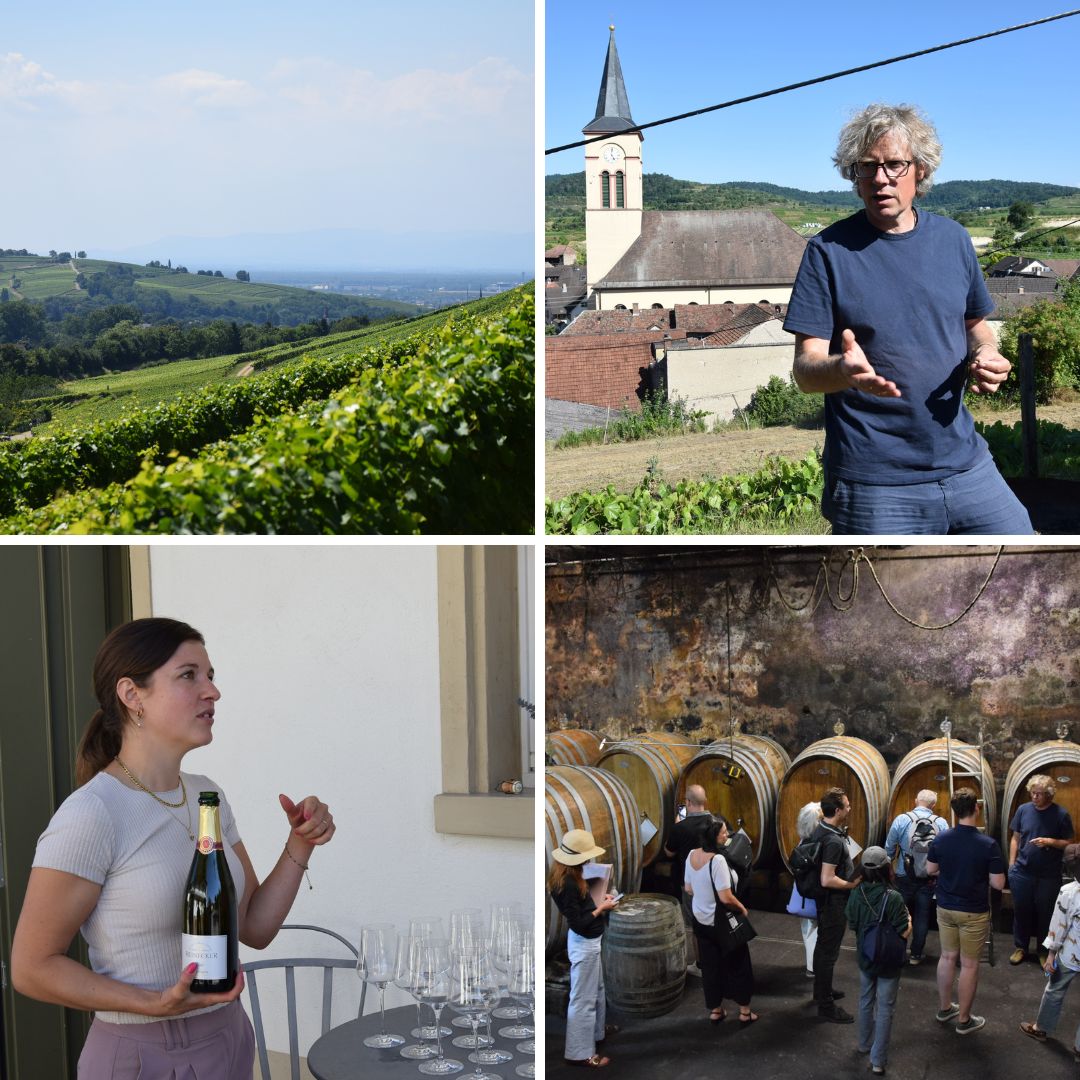
Baden makes a beautiful scenery and interesting terroir with its Volcanic soils.
Weingut Salwey
Our stop in the volcanic Kaiserstuhl sub-region of Baden was at Weingut Salwey, where we were graciously greeted by calm and charismatic owner Konrad Salwey. The vineyards in this part of Baden mainly consist of wind-blown loess-loam and volcanic soils, composed of volcanic rock from ancient eruptions and loess deposited by long-past sandstorms. The Salwey family settled here in the village of Oberrotweil when they emigrated from Prussia in the 20th century. Fortunately for them, no one wanted to work on steep slopes at the time, allowing them to acquire top vineyard sites for relatively affordable prices. Among these are the Eichberg, Henkenberg, and especially the Kirchberg – sites that producers are now very eager to acquire.
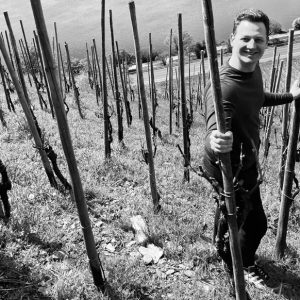
Visiting the Vineyards with Konrad Salwey.
The vineyard prices in this region are not the only things that have changed over the years. Konrad, having taken over from his late father Wolf-Dietrich in 2011, has opted for a different style than his father. Whereas his father was not scared of extraction and higher alcohol, Konrad instead favours lighter, more elegant styles of Pinot Noir, Pinot Gris and Chardonnay. His wines rarely exceed 13% alcohol, reflecting his preference for ‘digestible’, lighter styles – a signature even noticeable in his elegant Pinot Gris bottlings. Remarkably and also paradoxically, the concentration and balance are never lost. Perhaps a lighter touch in winemaking (long aging in older oak, no fining and filtering) is just what the powerful Kaiserstuhl terroir needs. When asked about the potential of Cabernet Franc in the Kaiserstuhl a big smile appeared on Konrad’s face, possibly (and hopefully) hinting at future experimentation with the variety. One thing is clear however, and that is that Burgundian varieties are right at home here, often expressing a unique salty note in the wines.
The Vineyards of Weingut Salwey.
Weingut Salwey 2021 Steingrubenberg Chardonnay GG
DWA score 93/100 | Drink 2025–45
From the Steingrubenberg vineyard, an eastern-facing, rocky vineyard with volcanic soils. 100% new oak, which according to Konrad is not a problem at all as his wines usually spent three winters in barrel, giving time to fully absorb the oak notes – especially when aged further in bottle. Vanilla, bread dough, nutmeg, fresh lemon, ripe yellow pear, yellow apple, jasmine, smoke, salt; lots of freshness and linearity, still young, wonderfully balanced, fully integrated oak and almost paradoxical high drinkability.
Weingut Salwey 2012 Henkenberg Pinot Gris GG
DWA score 94/100 | Drink 2025–37
Only one winter on the lees, as Konrad only started aiming for two or more winters on the lees starting with the 2014 vintage. From the Henkenberg, a place of weathered, cooled lava and limestone veins, covered by dark volcanic ash. Smoke, clove, yellow flowers, honey, apricot, baked apple, potpourri, hay, nutmeg; round and matured yet still so fresh, beautiful complexity and depth. Exemplary Pinot Gris from one of Germany’s specialists.
Tasting the Wines of Weingut Salwey.
Weingut Salwey 2022 Kirchberg Pinot Noir GG
DWA score 96/100 | Drink 2027–47
Typical Kaiserstuhl terroir of hard, barren volcanic rock interspersed with limestone veins. A place that gets quite hot in the summer – causing only the oldest vines to survive on their own. Luckily some cooling westerly winds are funneled through the Rhine valley. Konrad only uses vines planted on steep slopes of over 45 degrees, ensuring greater concentration and resulting in remarkable depth in the wine. Smoke, bacon, vanilla, clove, fresh strawberry, red cherry, blueberry, sour cherry, salt; seductive and elegant while intense. Crystalline purity combined with volcanic power.
Sektgut Reinecker
A bit to the South of the Kaiserstuhl, we arrived in the Markgräflerland sub-region of Baden at Sektgut Reinecker, who as its name suggests, is fully specialized in the making of traditional method sparkling wine. However, contrary to what the name suggests, they only make ‘Baden Crémant’ wines, and no ‘Sekt’. In this light Herbert Reinecker and his daughter Katja explained that for Sekt, producers are allowed to machine harvest (and thus not only use whole bunch pressing), whereas for Baden Crémant whole bunch pressing and hand-harvesting is mandatory, resulting in higher quality sparkling wines. Complicated (as German wine law usually is), but especially in Germany an important distinction considering the poor name Sekt carries in their local markets.
Tasting Sekt at Sektgut Reinecker.
German wine law aside, the focus of Reinecker is on quality, innovation, and showing the diversity of Baden Crémant, offering both non-vintage and vintage, blends and single vineyard, oaked and unoaked, and regular and rosé sparkling wines. Being fully dedicated to their Baden Crémants, one can see how they can maintain such a wide selection of sparkling wine, all made with meticulous attention to detail and precision, but luckily never sacrificing drinkability. Besides making their own bubbles, Reinecker also produces sparkling wine for other growers in Baden. They produce over a staggering 12 million bottles annually for other growers, compared to a more modest 40.000 under their own label. Tasting Reinecker’s Crémant wines, one can see why a grower would trust Reinecker to carry out this process. Unsurprisingly Reinecker became a member of VDP.Baden as of January 2025, showing their further dedication to quality.
Sektgut Reinecker Baden Crémant
DWA score 87/100 | Drink 2025–27
Blend of Chardonnay, Pinot Noir, and Pinot Blanc. 2023 base vintage with 15 months on the lees. Eight grams of dosage. Lemon, pear, red apple, smoke, bread dough; subtle toast, medium-bodied, gentle and soft. Lovely introduction to the house style.
Sektgut Reinecker 2020 Feuerbach Steingässle Pinot Noir Extra Brut
DWA score 91/100 | Drink 2025–30
100% Pinot Noir from the Steingässle vineyard, one of the coolest vineyards in the Markgräflerland situated on thin volcanic soils. Aged for one year in mostly old and a bit of new oak. Roughly five years on the lees in total, with three grams of dosage. Strawberry, lemon, clove, umami, nutmeg, smoke, salt; great texture with refreshingly high acidity, balanced, dense and refined. Atypical for Germany as of today, but promising for the future of German sparkling wine.
Sektgut Reinecker Cuvée Reserve Extra Brut
DWA score 93/100 | Drink 2025–33
Mostly Pinot Noir, with a bit of Chardonnay and Meunier. Again atypical, with 25% of the wine being aged in a perpetual reserve – much like many of the top Champagne growers are doing today. Base vintage 2017, almost seven years on the lees, with three grams of dosage. Vinified in old oak. Ripe citrus, smoke, yellow apple, dried fruit, nougat; high acidity, structured, and an impressively long finish. Great depth due to the reserve wines used. Amazing price to quality ratio and an inspiration for the German sparkling wine industry.
Weingut Ziereisen
Our journey continues down south in the Markgräflerland to Weingut Ziereisen, situated only 10 kilometers from the Swiss border. This part of the Markgräflerland is a bit drier, with stonier and more clayey vineyards, plus higher altitudes. There even are significant pockets of limestone to be found, dating back from when the Rhine River deeply cut out this part of Germany. Here we were enthusiastically greeted by Hanspeter and Edel Ziereisen. While the Ziereisens make excellent wines from the Burgunders, their true passion (especially that of Edel) is Gutedel, also known as Fendant in Switzerland and Chasselas in France. This grape variety is one of the specialties of the Markgräflerland, but perhaps even more so of the Ziereisens, with them producing the most expensive (and highly-rated) Gutedel in the world.
Hanspeter and Edel of Weingut ZIereisen.
After an enthusiastic reception in the cellar by Edel, chaos (in the best way possible) ensued once Hanspeter joined for the tasting. Over 20 wines were passed around the table with lightning speed, with Hanspeter and Edel running back and forth grabbing all relevant bottles, showing maps of the vineyards, yelling across the courtyard to one another in the most loving way, and in the end Hanspeter decided to quickly jump on his bike to cycle to his cellar in order to pick up some old gems. Truly a one-of-a-kind experience.
Tasting the Wines at Weingut Ziereisen.
All in all, the wines are quite atypical in the best way, with all premium wines vinified in wooden barrels, spending at least two years on their fine lees, and being unfiltered. The musts are deliberately oxidized, pressed so strongly that even deeply coloured, oxidized black juice is extracted, and left to complete malolactic on their own. Some barrels get flor, and some do not. All of these factors result in wines with earthiness, spiciness, smokiness, and that are unlike almost anything else produced in Germany but always seem to have a profound depth to them. Subtle and integrated reduction is present in most wines, giving them a jolt of energy. The Ziereisens are much like their wines in this aspect – intense, profound, and electric, with an atypicity that makes you adore them.
Weingut Ziereisen 2022 Gutedel ‘ST’
DWA score 90/100 | Drink 2025–28
As they make no Qualitätswein but instead Landwein, they are not allowed to label the vineyards. Instead, clever abbreviations are used. ‘ST’ stands for Steinkrügle, referring to the bare limestone soils of the vineyard. Like all premium wines, this wine spent two years in oak, with no filtering and fining. Lemon, pear, mint, wet stone, smoke; chalky and lean, medium acidity, clear and precise example of the variety.
Weingut Ziereisen 2022 Chardonnay ‘HA’
DWA score 91/100 | Drink 2025–30
Typical Ziereisen Chardonnay where the must is oxidized before being fermented, as to oxidize all volatile components so they precipitate during fermentation and result in a very stable wine. Only recommended when the base wine has enough intensity and structure to be able to afford missing the volatile aroma compounds, which the Ziereisen wines usually do. Bread dough, smoke, jasmine, lemon, yellow apple; long, pure and Burgundian.
The Jaspis range is characterized by the use of older vines, and named after the silex stones found in the vineyards. The soils here are Jura limestone, perfectly suited for Pinot Noir. Vinified, naturally, in oak. Stemmy, red cherry, strawberry, earth, smoke, clove; spicy and lightly herbal expression, velvety texture, tight, compact, and long. Impressive density.
Weingut Ziereisen 2022 Jaspis Gutedel 10 hoch 4
DWA score 95/100 | Drink 2027–42
10 hoch 4 denotes the density of the vines, being 10.000 vines per hectare. Most expensive Gutedel in the world. Lemon, pear, wet stone, chalk, mineral; difficult to attach direct tasting notes to due to its complexity. Dense, yet pure and crystalline, fresh, compact, and with massive concentration.
Weingut Ziereisen 2022 Jaspis Syrah 10 hoch 4
DWA score 94/100 | Drink 2027–42
Old vine Syrah planted at high densities, a project the Ziereisens started in 2005. Smoke, wet stone, black pepper, black cherry, fresh blueberry, violet; chalky and elegant, bit like the old Northern Rhône style.
Other Surprises from Baden
Besides above-mentioned producers, we also visited several others. In the beautiful village of Sasbachwalden in the foothills of the Black Forest we visited the co-operative Alde Gott, who have recently started to emphasize freshness over ripeness and extraction. Highlights included the Weitblick Pinot Noir 2020 (DWA 89) and the Weitblick Cuvée Sekt Extra Brut 2020 (DWA 90).
While visiting Weingut Julius Zotz in the Markgräflerland we learned all about the different faces of Gutedel, including a young and fresh one, one with five years of bottle age (still fresh!), one that had long lees contact and malolactic conversion, and even a honeyed Trockenbeerenauslese sweet version.
The Barrel Cellar at Weingut Julius Zotz.
All had two things in common, being gentle acidity and a very modest price. Do not miss out on their Römerberg Pinot Noir (DWA 93/100) and Chardonnay (DWA 91/100), that offer bracing minerality and crystalline fruit due to the vineyard’s shallow, rocky limestone soils.
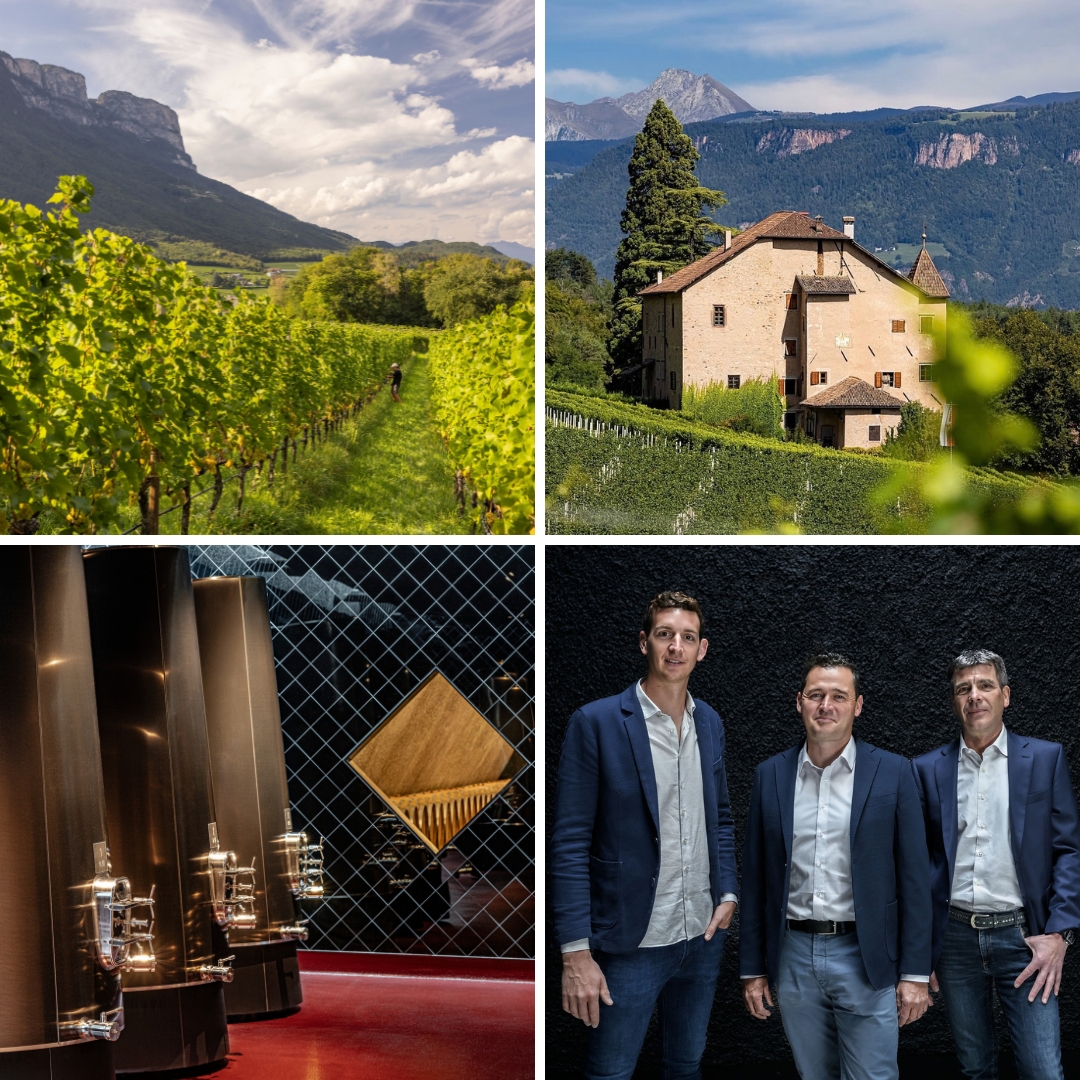
The end of the trip was marked by an especially memorable visit to Weingut am Schlipf – Schneider, situated right on the Swiss border in the village of Weil am Rhein and as of today led by brothers Christoph and Johannes Schneider. Due to the clay-limestone soils found here, the brothers have, naturally, fully specialized in Pinot Noir and Chardonnay. While the wines were beautiful, the view from their vineyards overlooking the border triangle of Germany, Switzerland, and France was something else.
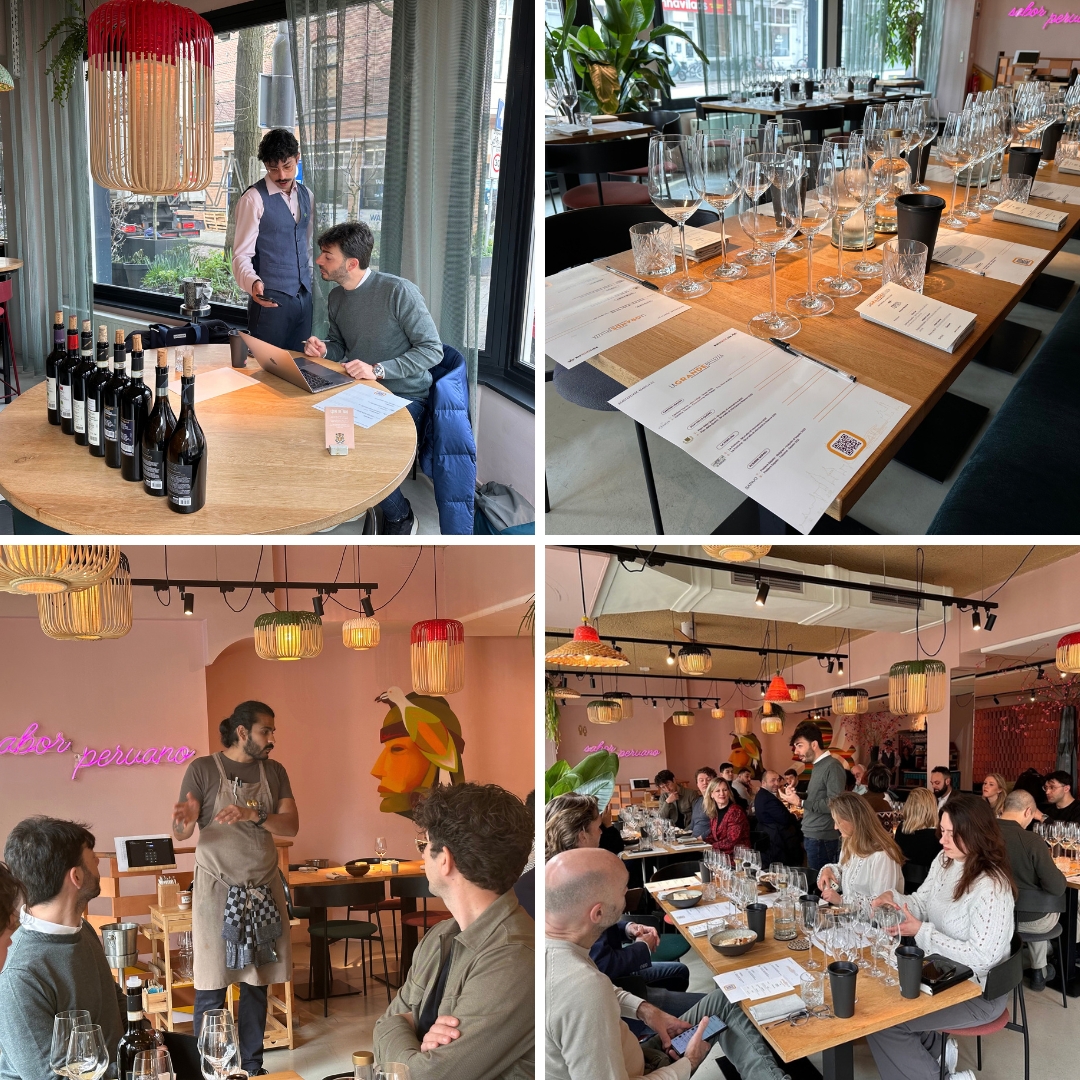
One final tasting at Cafe Gupi.
Johannes remarked that they often share weather conditions with Burgundy, as a large valley runs from Dijon to their village bordering their vineyards. We recommend each of their wines, but the Schlipf Chardonnay 2019 (DWA 92/100), Alte Reben Pinot Noir 2023 (DWA 90/100), Schlipf Pinot Noir 2017 (DWA 94/100), and Schlipf Weisser Burgunder Reserve 1990 (DWA 93/100) will always carry a special place in our hearts.
Not just because of the quality, but also due to the memories of overlooking this beautiful spot of Germany, the spectacular dinner we had at Café Gupi while enjoying these wines, and the connections we made, both with the growers we met and the camaraderie and laughs shared with our press group. All in all, the perfect finish to a great journey uncovering the Pinot Paradise that is Germany.
This article was written by our own Martin Bronkhorst. The wines of the mentioned estates are exported to a number of foreign markets and well distributed in the Netherlands. We would like to thank the German Wine Institute, and Alain Jacobs in particular, for the invitation to this press trip that took place in the summer of 2025.
Join our insiders’ list and get exclusive early access to new articles, expert tips, and fresh reviews delivered straight to your inbox. Subscribe now and be the first to discover!