Join Our Wine Journey – Sign Up for the Newsletter 🍷
Biondi-Santi — Preserving a Legacy, Preparing the Future
Share
Deel op X (twitter)
LinkedIn
WhatsApp
Biondi-Santi — Preserving a Legacy, Preparing the Future.
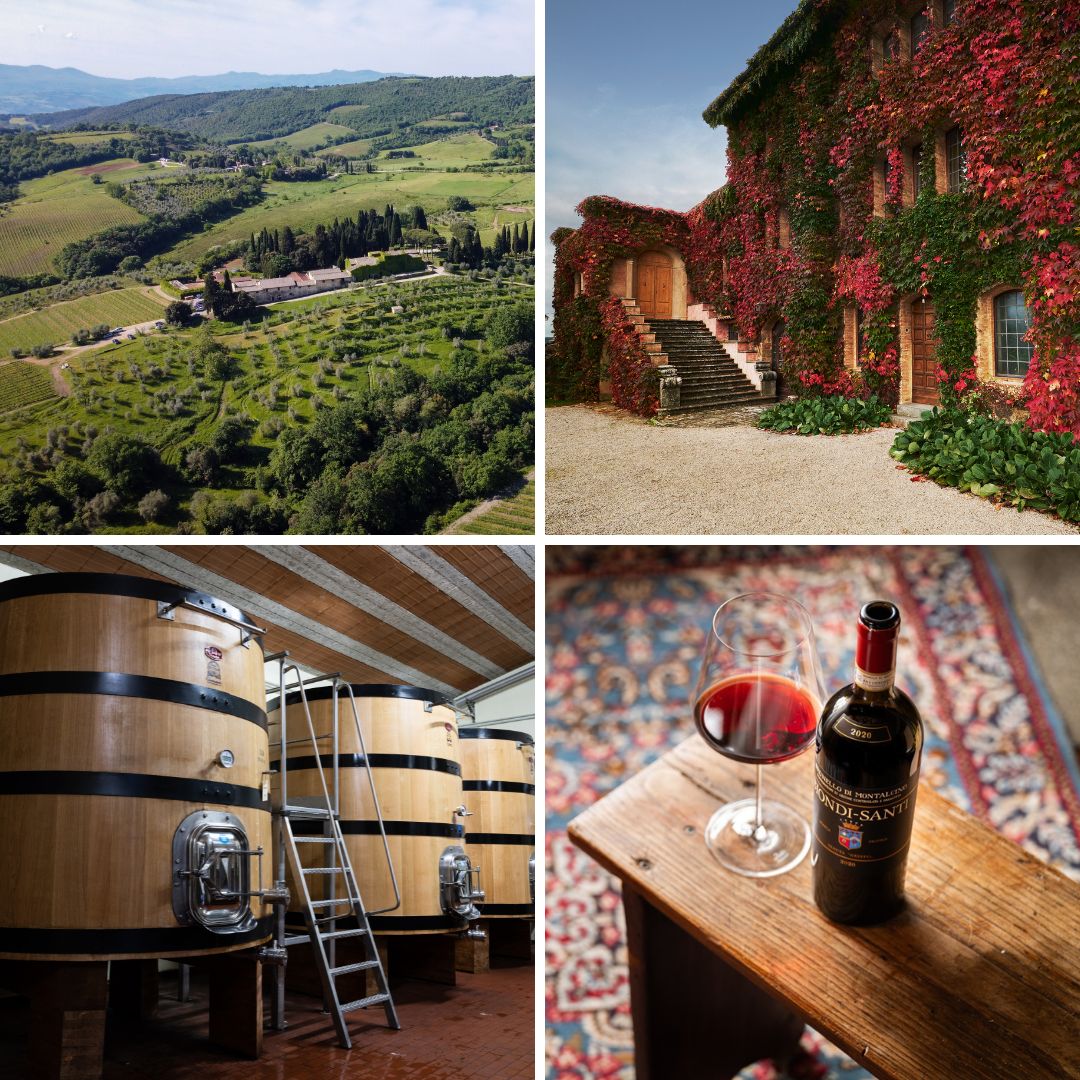
High above Montalcino, at Tenuta Greppo, Brunello is not simply produced—it is defined.
For over a century, the name Biondi-Santi has been inseparable from Brunello di Montalcino—shaping not only its origin, but its ideal: wines built on structure, restraint, and the ability to evolve over decades. Yet that same legacy carries a certain weight. Because once you are considered the reference, the question inevitably becomes whether you still are.
Tenuta Greppo, the origin of Brunello di Montalcino.
When Giampiero Bertolini took over as CEO in 2018, Biondi-Santi found itself at precisely that intersection. The reputation remained intact, but the estate itself required direction—internally in the vineyards and cellar, and externally in how it positioned itself within an increasingly competitive fine wine landscape.
What stands out in conversation with Bertolini is a clear sense of responsibility—an awareness that at Biondi-Santi, every decision is measured not just against the present, but against more than a century of history.
What has followed is not a transformation in style, but a recalibration of intent. A process of stripping things back to what matters—and rebuilding from there.
A Legacy Forged Against the Current
Long before Brunello became a global benchmark, Biondi-Santi had already defined what it could be. In the late 19th century, Ferruccio Biondi Santi made a radical decision: to isolate Sangiovese, vinify it separately, and—most importantly—treat it as a wine capable of ageing.
It was a quiet revolution. Not because of how the wine was made, but because of what it was meant to become.
That idea would be tested a century later.
Tenuta Greppo, the Biondi-Santi estate.
If Ferruccio created Brunello, it was Franco Biondi Santi who protected it—at a time when the rest of the wine world was moving in a very different direction.
From the late 1980s into the 2000s, a new aesthetic began to dominate international fine wine. Power, concentration, extraction. Wines designed to impress early, shaped as much in the cellar as in the vineyard. Brunello was not immune. Across Montalcino, styles shifted—alcohol rose, colour deepened, and the pursuit of immediacy often replaced the patience that had once defined the region.
Franco did not follow.
At Tenuta Greppo, the approach remained unchanged. Long ageing, large casks, a focus on acidity and structure rather than weight. Wines that, in their youth, could seem austere—almost out of step with the prevailing taste of the market.
For a time, that decision came at a cost. These were not the wines that dominated tastings or captured attention in their early years. But they endured. And over time, as vintages aged and bottles were opened decades later, the coherence of that philosophy became evident.
What had once seemed conservative revealed itself as precise.
In many ways, Franco’s contribution extends beyond the estate itself. By refusing to adapt to short-term trends, he preserved a stylistic reference point—not just for Biondi-Santi, but for Brunello as a whole. A reminder of what the wine was capable of when allowed to follow its natural trajectory.
That reference is perhaps more relevant today than it has been in decades.
A New Chapter, A Familiar Direction
Legacy alone, however, does not sustain an estate.
In 2016, Biondi-Santi entered a new phase when it was acquired by the French Descours family through their EPI Group. The move raised immediate questions—how a historic, deeply Italian estate would evolve under French ownership.
The appointment of Bertolini in 2018 marked the beginning of a more defined transition. The task was not to reinterpret Biondi-Santi, but to stabilize it. To take what had been preserved and ensure it could continue under modern conditions.
Giampiero Bertolini, CEO of Biondi-Santi.
The principle was clear from the outset: evolution, not revolution.
Resetting the Foundations
The starting point was not in the cellar, but in the vineyard.
Years of limited investment had left soils depleted and parcels uneven in performance. The response was direct: restore the vineyard before anything else. This meant rethinking farming practices, reintroducing organic material into the soils, and in some cases uprooting and replanting entire sections.
It also meant shifting the mindset. The vineyard was no longer approached as something to maintain, but something to actively understand. Each plot required its own strategy—its own way of being worked, fed, and ultimately interpreted.
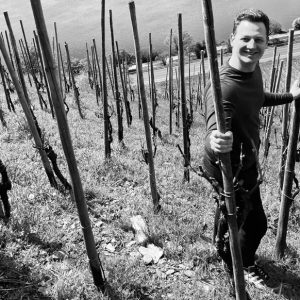
Biondi-Santi’s vineyards underwent a complete transformation.
Even at the Rosso level, this renewed focus is already visible. The 2021 Rosso shows a firmer structure and more tension, hinting at the depth of the estate, while the 2023 vintage moves toward greater precision and clarity, capturing the purity of fruit with a more effortless expression.
Inside the cellar, the changes were equally deliberate. Fermentation facilities were rebuilt, ageing capacity renewed, and a significant portion of the traditional large casks replaced. The objective was clarity: to allow the wines to express themselves with greater precision, without losing their identity.
Precision Without Compromise
If there is one defining thread in Biondi-Santi’s recent evolution, it is the introduction of precision—not as a stylistic shift, but as a tool.
A detailed study of the estate revealed just how varied the soils of Tenuta Greppo truly are. From this, a parcel-based approach emerged, isolating specific vineyard sites that now form the backbone of the wines.
Deep analysis of the vineyards led to better understanding of different vineyard parcels.
This has fundamentally changed how the wines are assembled. Where decisions were once guided primarily by experience, they are now supported by a deeper understanding of each parcel’s contribution. The result is a more focused style—cleaner, more defined, and more consistent from vintage to vintage.
That increased precision is already evident in the glass. The 2023 Rosso, in particular, shows a level of clarity and definition that feels almost effortless—driven by purity of fruit and fine, weightless tannins.
Biondi-Santi’s Rosso outperforms many Brunello’s produced by others.
Importantly, this approach applies across the entire range. The Rosso, Brunello, and Riserva are no longer seen as hierarchical selections alone, but as distinct expressions, each built with a clear profile in mind from the outset.
The Return to Balance
Over the past decades, Brunello has gone through its own period of identity shift. A move toward power, extraction, and immediate impact reshaped parts of the appellation, often at the expense of finesse.
That phase is now receding.
What is emerging instead is a renewed focus on balance—on wines that prioritise elegance over weight, freshness over sheer concentration. In many ways, this is less a new direction than a return to the original idea of Brunello.
Biondi-Santi prioritises elegance over weight and freshness over sheer concentration.
At Biondi-Santi, that idea never disappeared. The estate’s position in the cooler, northeastern part of Montalcino naturally supports a style built on tension and longevity. The wines are defined not by size, but by their structure—fine tannins, persistent acidity, and a sense of progression in the glass rather than immediate impact.
The 2020 Brunello captures this shift particularly well, leaning into elegance rather than power, with a linear structure and freshness that defines its progression on the palate.
The challenge, of course, will be maintaining this balance as expectations around accessibility continue to evolve.
Rethinking Time
Time has always been central to Biondi-Santi. But the way it is managed has quietly evolved.
The reality of today’s market is different. Wines are expected to be more approachable upon release, while still retaining the capacity to age. This has forced producers to rethink not just how long wines are aged, but where that ageing takes place.
At Biondi-Santi, part of that responsibility has shifted back to the estate itself. Bottling is brought forward, time in bottle extended before release, and ageing in wood slightly reduced. The aim is to refine the wine’s early expression without compromising its long-term evolution.
Biondi-Santi extended ageing time, now releasing its wines ready to enjoy.
The result is a wine that arrives on the market already composed—yet still capable of developing over decades.
At the same time, wines such as the 2019 Brunello demonstrate that this approach does not come at the expense of longevity—offering greater depth and structure, with a profile that will continue to evolve over time.
Beyond the Estate
While much of the focus has been internal, the broader context of Montalcino cannot be ignored.
The region has grown significantly over the past decades, both in size and in diversity of producers. With that growth comes complexity—differences in philosophy, in scale, and in how Brunello is positioned in the market.
Montalcino and the Brunello category face challenging times.
Against this backdrop, Biondi-Santi has taken a more defined stance. Rather than relying on the appellation alone, the emphasis is placed firmly on the estate itself—on its history, its identity, and its ability to deliver consistency at the highest level.
This is not a rejection of Brunello as a collective, but a recognition that in today’s fine wine market, identity needs to be clearly articulated. Not just as a region, but as a place.
Preparing for What Comes Next
If the past years have been about restoring and refining, the next phase is about adaptation.
Climate change is no longer an abstract concept in Montalcino. It is a daily reality, shaping decisions in the vineyard and influencing how wines are made.
At Biondi-Santi, this has led to two long-term initiatives. The first is a massal selection programme, built around a historic vineyard containing a wide range of Sangiovese biotypes. This introduces greater diversity and resilience, moving away from reliance on a single clone.
The historical vineyard at the estate.
The second is a rethinking of vineyard structure. New planting systems allow for more flexible canopy management—protecting the fruit from excessive heat while maintaining airflow and balance.
Both initiatives are rooted in the same principle: adaptation without compromise. The goal is to ensure the style remains achievable under changing conditions.
Continuity as Strategy
Biondi-Santi has never been about sudden shifts. Its strength lies in continuity—in the ability to evolve without losing direction.
Under Bertolini, that continuity has taken on a more defined shape. The estate has moved from a period of uncertainty to one of clarity, where each decision—whether in the vineyard, the cellar, or the market—serves a single purpose: to reinforce what Biondi-Santi represents.
Not just historically, but today.
Because in the end, legacy alone is not enough. It needs to be maintained, challenged, and, at times, quietly rebuilt.
At Tenuta Greppo, that process is well underway.
Ultimately, the question is not only how Biondi-Santi defines Brunello—but how that philosophy translates into the glass today.
In the Glass — Biondi-Santi Today
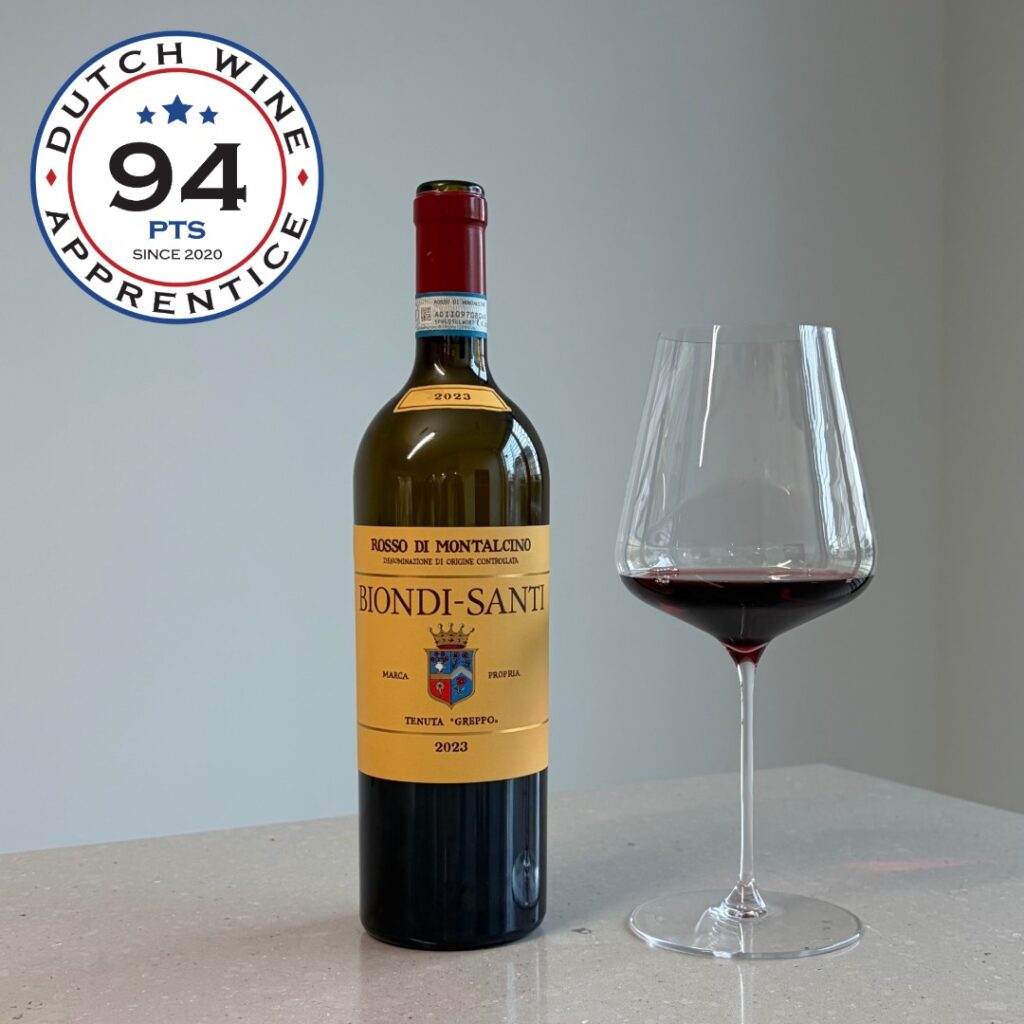
To understand how this philosophy translates into the bottle, we tasted a selection of recent releases, provided by Biondi-Santi and their Dutch distributor Colaris. Together, they offer a clear snapshot of the estate’s current direction—from the precision of the Rosso to the structure and longevity of Brunello.
2023 Rosso di Montalcino
A strikingly precise and expressive Rosso, immediately capturing attention through its purity of fruit and lifted aromatics. Bright red cherry, wild strawberry and subtle floral notes are supported by a delicate herbal edge, giving the wine both clarity and energy from the outset.
On the palate, the wine is defined by its precision. Acidity is vibrant yet seamlessly integrated, carrying the fruit with a sense of direction, while the tannins remain exceptionally fine and almost weightless. There is an effortlessness here—everything is in place, without excess or distraction.
This is a Rosso that fully embodies the estate’s philosophy: elegant, focused, and already complete.
Rating: 94/100 DWA (NA)
Biondi-Santi – 2023 Rosso di Montalcino – 94/100 DWA score.
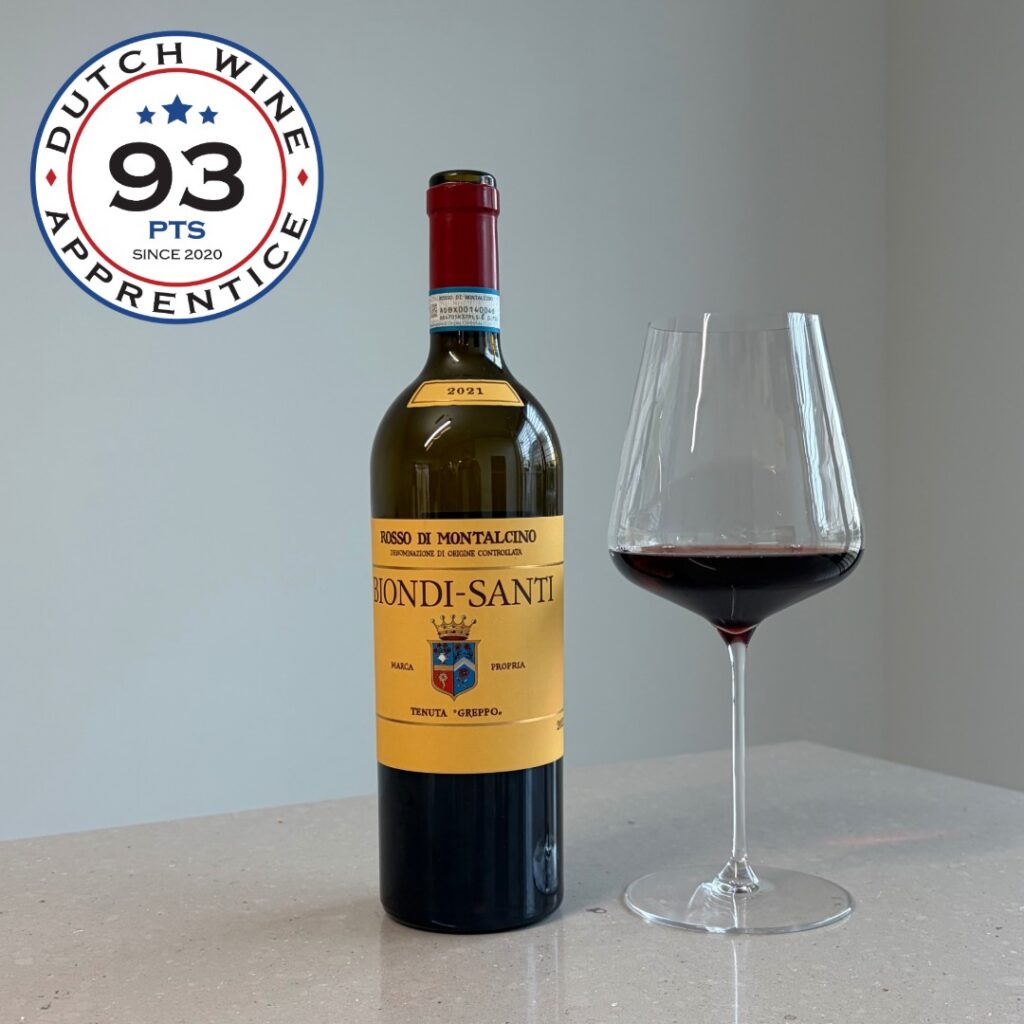
2021 Rosso di Montalcino
More structured and slightly more reserved in its expression, the 2021 offers a deeper and more layered profile. The aromatics lean toward ripe cherry, cranberry and dried rose, complemented by a subtle savoury and lightly spiced undertone.
The palate shows greater tension and grip compared to the 2023. Acidity remains a defining feature, but the tannins are more pronounced, giving the wine a firmer framework. There is clear depth here, though the wine feels slightly more compact at this stage, requiring time to fully open.
A Rosso with strong structure and ageing potential, sitting closer to Brunello in its overall profile.
Rating: 93/100 DWA (NA)
Biondi-Santi – 2021 Rosso di Montalcino – 93/100 DWA score.
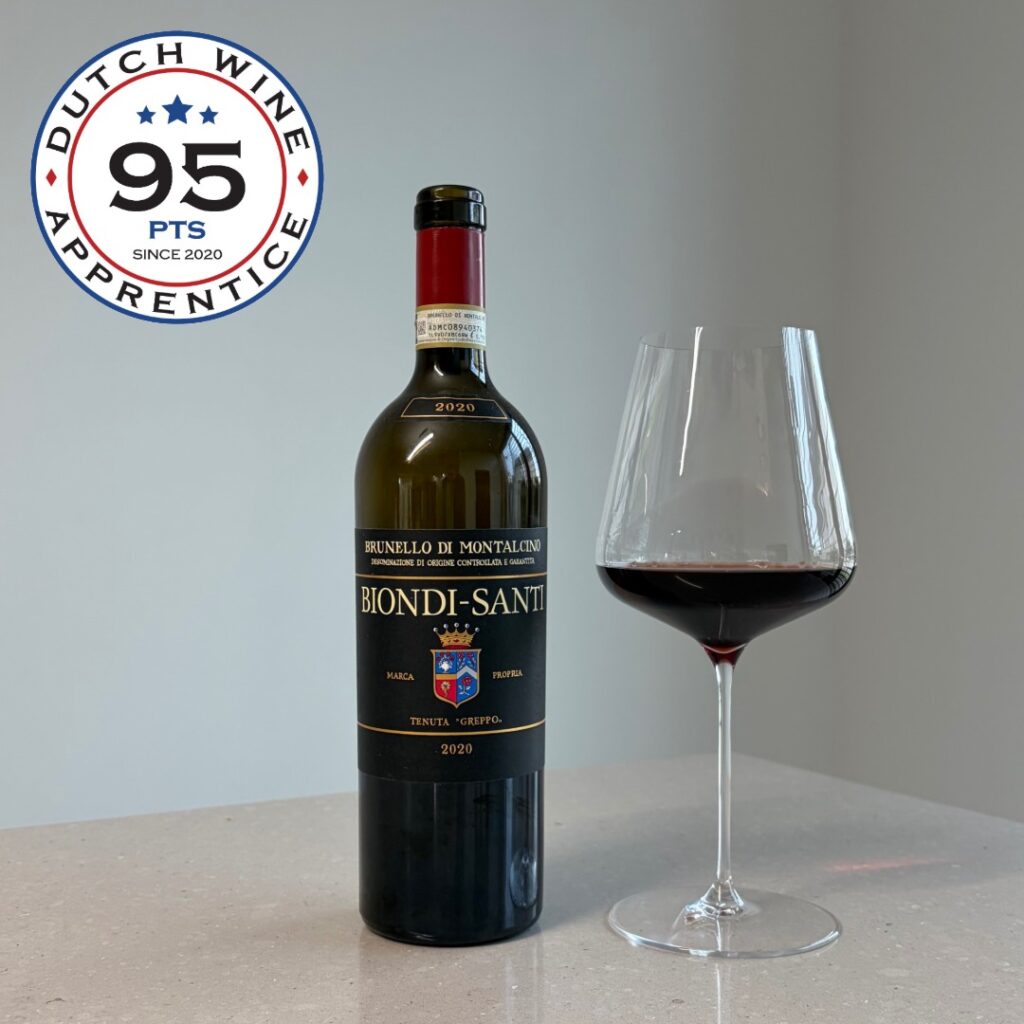
2020 Brunello di Montalcino
Refined and composed, the 2020 Brunello opens with a precise aromatic profile of red cherry, pomegranate and subtle citrus lift, framed by gentle herbal nuances and restrained oak influence.
On the palate, elegance defines the wine. The tannins are polished and finely grained, supporting a linear and balanced structure. Acidity provides lift and freshness, giving the wine a sense of flow rather than weight. It is already approachable, showing harmony and accessibility without sacrificing its underlying structure.
A Brunello that reflects a modern interpretation of the house style—focused on finesse, clarity, and early drinkability.
Rating: 95/100 DWA (NA)
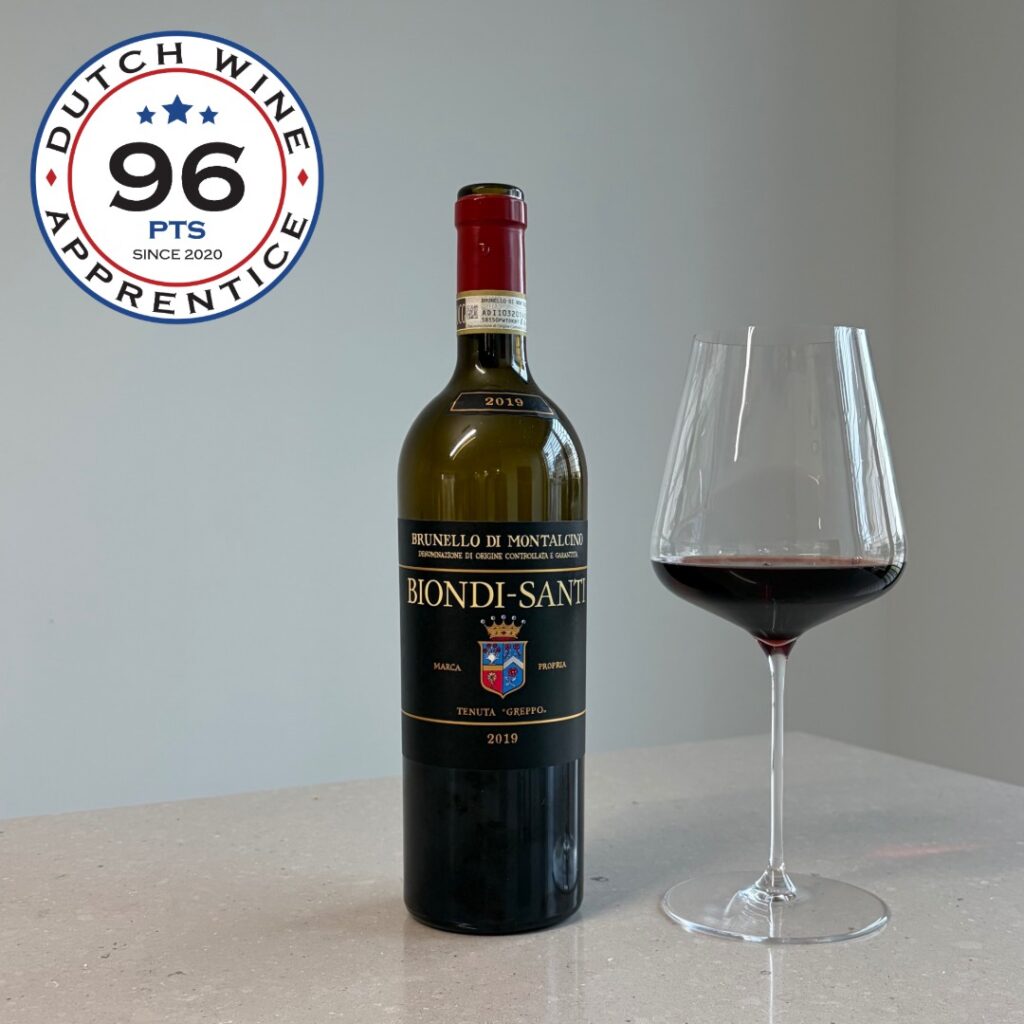
Biondi-Santi – 2019 Brunello di Montalcino – 95/100 DWA score.
2019 Brunello di Montalcino
A more complete and classically structured expression, the 2019 stands out for its depth and composure. Aromatically, it offers layers of ripe cherry, plum, dried flowers and a subtle mineral undertone, with hints of balsamic complexity adding further dimension.
The palate is broader and more structured than the 2020, with firmer, well-defined tannins and a more expansive mid-palate. Despite this, the wine remains balanced—acidity keeps the structure in check, allowing the wine to unfold gradually across a long, persistent finish.
This is a Brunello that speaks of both place and time, combining precision with depth and clear ageing potential.
Rating: 96/100 DWA (NA)
Biondi-Santi – 2019 Brunello di Montalcino – 96/100 DWA score.
Closing Perspective
If Franco Biondi Santi ensured that Brunello never lost its identity, then Giampiero Bertolini’s task is to ensure it never loses its relevance—because in Montalcino, true legacy is not defined by time alone, but by the discipline to preserve what matters, even as everything else changes.
This article is written by our own Niels Aarts. We thank Biondi-Santi, in particular Giampiero Bertolini, for their time and support, as well as their distributor, our partner Colaris, for providing additional reference bottles. If you are interested in the wines, you can reach out directly to Colaris or one of the many other distributors of Biondi-Santi around the world.
Join our insiders’ list and get exclusive early access to new articles, expert tips, and fresh reviews delivered straight to your inbox. Subscribe now and be the first to discover!