Join Our Wine Journey – Sign Up for the Newsletter 🍷
Vie die Romans: Terroir, Precision and a Clear Voice in Friuli
Share
Deel op X (twitter)
LinkedIn
WhatsApp
Vie die Romans: Terroir, Precision and a Clear Voice in Friuli.
In Friuli’s Isonzo Valley, Vie di Romans is not defined by grape variety or stylistic trends, but by a long-term vision built around terroir. Friuli is often described through its diversity. Different grape varieties, different styles, different interpretations. That diversity is part of its strength, but it can also make it difficult to define what the region stands for. In many ways, Friuli does not present one clear identity, but several at the same time. Depending on where you look and who you speak to, the region can feel completely different. This is exactly what makes it interesting, but also what makes it challenging, especially from a consumer perspective.
Vie di Romans approaches this differently. Not by simplifying Friuli, but by focusing on something more stable. Not the grape, not the trend, but the place itself. During a conversation with Matteo Gallo, that idea came back again and again. The grape variety is not the identity. It is simply the tool. What matters is how the wine reflects the conditions it comes from, including climate, soil, and the decisions made in the vineyard. That sounds simple, but in practice, it creates a very clear direction, and more importantly, it creates consistency.
From Farm to Focused Estate
The estate did not start with that clarity. Like many wineries in Friuli, Vie di Romans began as a mixed farm where wine was produced, but not the main focus. It was sold locally, often in bulk, without much attention to style, structure, or long-term identity.
This changed when Gianfranco Gallo took over in the late 1970s. What followed was not one single decision, but a long process of rebuilding and redefining what the estate wanted to be. Vineyards were replanted with a clear focus on quality, planting density increased, and the layout of the vineyards was redesigned to allow for more precision and control. At the same time, the winery moved out of the village and into the vineyards, creating a much stronger connection between production and origin.
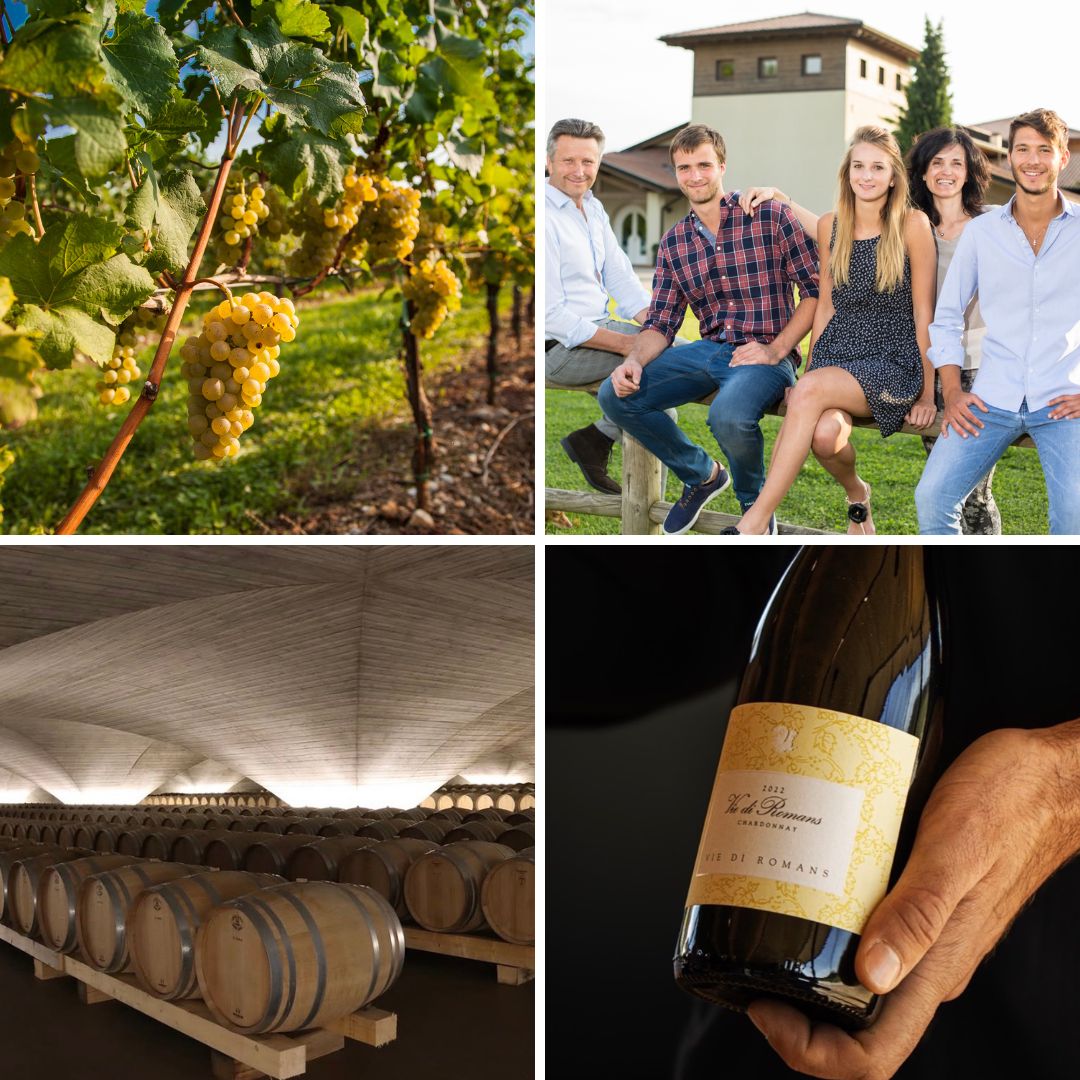
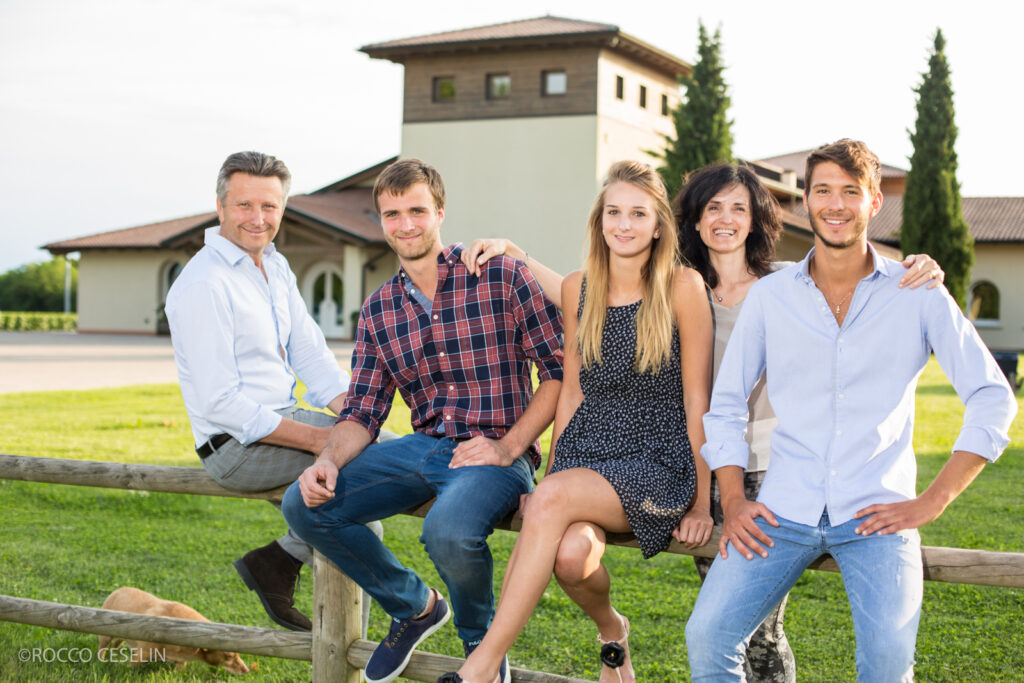
The Gallo family at the estate.
Even the name reflects this shift. Moving away from “Gallo” to “Vie di Romans” was a conscious decision to step away from a family-centered identity and move towards something more place-driven. That decision still defines the estate today.
Terroir as the Starting Point
One of the most interesting aspects of Vie di Romans is the choice of grape varieties. In a region where indigenous grapes are often used to define identity, the estate focuses largely on Chardonnay, Sauvignon Blanc, and Pinot Grigio.
At first glance, this might seem like a more international approach, but in reality, it is almost the opposite. By working with varieties that exist in many parts of the world, the focus automatically shifts away from the grape itself. The question is no longer what Chardonnay tastes like, but what Chardonnay tastes like here.
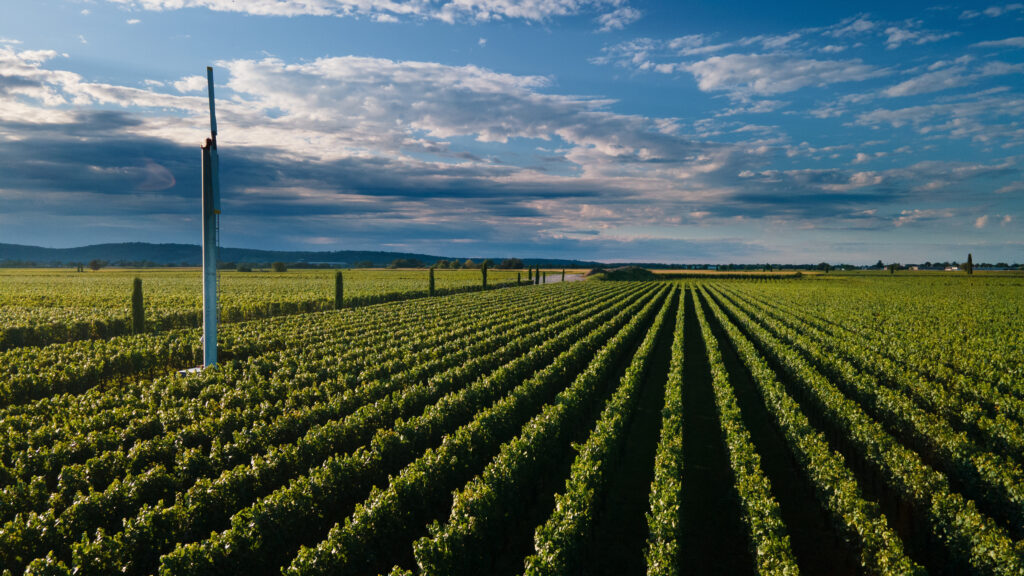
Vie di Romans focusses on the grape varieties that best represent the estate’s terroir.
Here, terroir takes the lead. As Matteo Gallo explains, the varieties are only a means to express it, not the purpose of the wine itself. The identity comes from the place, and from the way that place is understood and managed over time. This approach also creates a certain discipline. When the grape is no longer the main focus, there is less room to hide behind it, and the differences between sites, vintages and decisions become much more visible.
Time, Ripeness and Control
A key element in this style is the way ripeness is approached. Rather than harvesting early to preserve acidity, Vie di Romans works towards full phenolic ripeness, meaning that not only the sugars, but also the skins and seeds of the grapes reach maturity. This takes time and requires a high level of control.
Friuli offers a natural advantage here. The region sits between the Alps and the Adriatic Sea, creating constant interaction between cooler and warmer air. During the growing season, and especially towards harvest, this results in significant temperature differences between day and night. These differences slow down the ripening process, allowing the grapes to develop complexity while maintaining freshness.
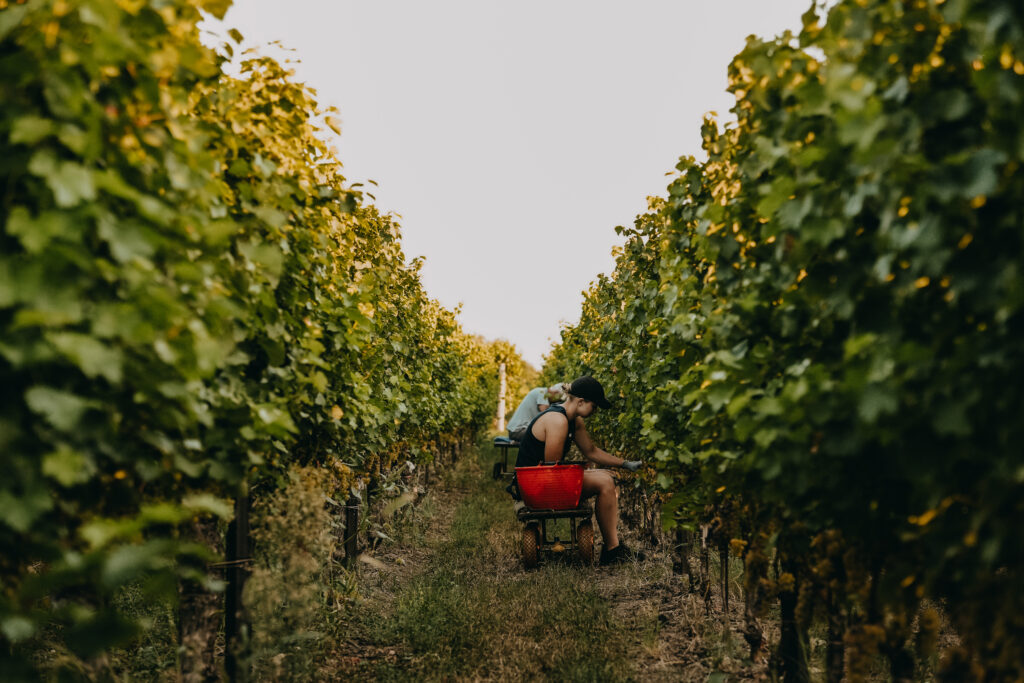
At the same time, this natural advantage is only one part of the story. Vineyard work plays an equally important role and is in many ways the foundation of the entire process. A dedicated team works year-round in the vineyards, making detailed, vintage-specific decisions that directly influence the final result. It is also the most labor-intensive part of production. Water management has become increasingly important, not necessarily because there is always too little water, but because the distribution of water has become less predictable. Canopy management allows the estate to control how much sunlight reaches the grapes, while yield decisions help to maintain balance and concentration. All of these choices are made continuously and always in response to the specific conditions of the village.
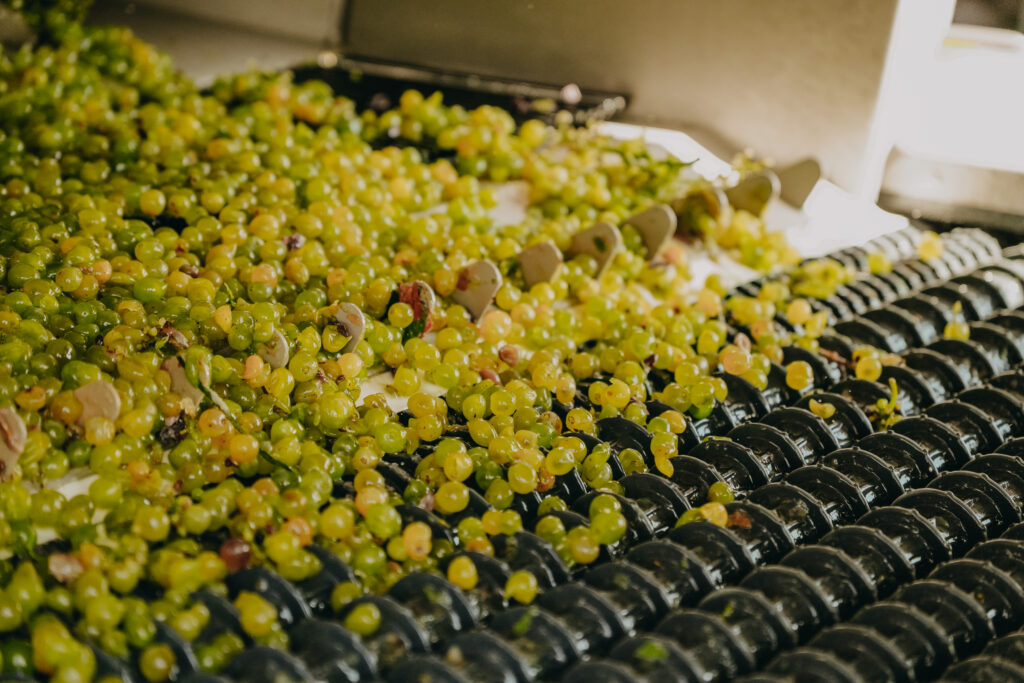
Grape sorting at harvest time.
In the cellar, the same philosophy continues. Stainless steel fermentation is used to preserve purity, oxygen is carefully managed, and the wines are only released when they are ready, often after extended ageing. The goal is not to intervene, but to guide. This combination of precision in the vineyard and patience in the cellar ultimately defines the style of Vie di Romans.
Redefining Pinot Grigio
This philosophy becomes particularly clear when looking at Pinot Grigio. In many markets, Pinot Grigio is associated with light, simple wines that are easy to drink and easy to understand. Vie di Romans takes a completely different approach.
Instead of aiming for simplicity, the estate explores the full potential of the grape, resulting in a wine that is more structured, more layered, and more expressive. When this style was first introduced, it created challenges, as it did not match consumer expectations. Over time, however, this changed, and the wine became one of the estate’s most recognized labels.
Pinot Grigio forms a key role at Vie di Romans.
It is a clear example of what happens when a producer follows its own philosophy rather than adapting to the market.
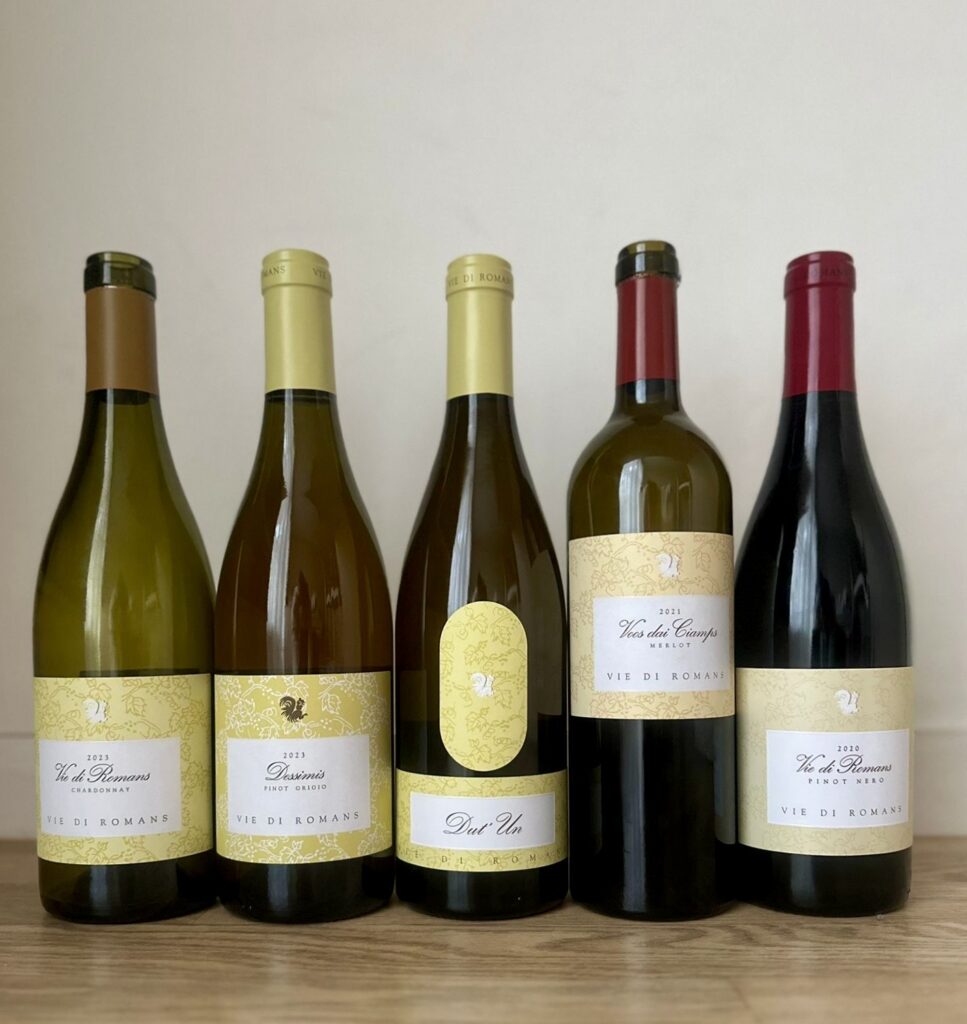
For this article we got to taste a selection of Vie di Romans wines, provided by their Dutch distributor Verkerk Wijnimport – Enoteca Sprezzatura. Below our reviews, including the scores for the wines.
The Vie di Romans selection on our tasting table.
2023 Vie di Romans Chardonnay | 92/100 DWA score
Chardonnay 100%
This Chardonnay shows a layered and expressive profile, opening with floral notes of acacia and honeysuckle, followed by ripe stone fruits such as peach and apricot. As the wine develops in the glass, additional aromas of dried fruit, pineapple, and a touch of citrus emerge, complemented by subtle spice notes of ginger and cinnamon. On the palate, there is a gentle buttery richness, supported by a fine freshness that keeps the wine balanced. The balance between the ripeness and acidity gives the wine both structure and elegance, resulting in a long and refined finish.
Dessimis Pinot Grigio 2023 | 95/100 DWA score
Pinot Grigio 100%
The Dessimis Pinot Grigio stands out immediately, both in colour and in style. Its light copper hue hints at a more textured and structured expression of Pinot Grigio. The nose reveals an aromatic mix of peach, apricot, rose petals, and tallow fruit, alongside a delicate nuttiness. On the palate, the wine is soft and rounded, yet remains fresh and vibrant. Flavours of pear, orange, and stone fruits are complemented by a mineral touch reminiscent of wet stone.
2021 Dut’Un | 93/100 DWA score
Blend: Chardonnay 50%, Sauvignon Blanc 50%
This blend of Chardonnay and Sauvignon Blanc highlights the interplay between two contrasting grape varieties. The nose shows a combination of floral notes such as blossom and honeysuckle, together with herbaceous aromas of tomato leaf, mint, and a hint of bell pepper. On the palate, the freshness and green character of the Sauvignon Blanc is balanced by the roundness and subtle creaminess of the Chardonnay. Notes of citrus, apple, and subtle spice are layered with a slight saline touch, giving the wine both energy and depth.
Vie di Romans Pinot Nero 2020 | 90/100 DWA score
Pinot Nero 100%
The Pinot Nero presents a more evolved and complex profile, with a color already showing slight garnet and brownish hues. The nose is driven by fruits such as strawberry, cherry and raspberry, supported by spicy notes of bay leaf and cinnamon, alongside more developed aromas of tobacco, leather and dried leaves. On the palate, the wine is juicy yet refined, with fine tannins that provide structure without overpowering the fruit. Additional savory notes add more character and complexity. The velvety texture and the balance between the fruit and tertiary notes give the wine an elegant and layered expression.
Voos dai Ciamps Merlot 2021 | 94/100 DWA score
100% Merlot
Voos dai Ciamps Merlot is a particularly expressive and open wine, with an intense aromatic profile that immediately stands out. The nose is dominated by ripe and cooked red fruits, such as. Strawberry, raspberry, and red cherry, reminiscent of strawberry marmalade, alongside darker fruit tones. On the palate, this fruit intensity is complemented by notes of cacao, smoke, and a subtle earthy character, with additional layers of plum, violet, and a hint of truffle. Despite its richness, the wine remains well-balanced due to its fresh acidity and structured tannins. The result is a bold yet harmonious Merlot with dept and a long finish.
Built for Gastronomy
One thing that becomes clear, both in conversation and in the glass, is the strong connection to gastronomy. These are not wines designed for quick consumption, but wines that are built to work with food. Structure, freshness, and aromatic depth all play a role in that. Today, almost all of the production is directed towards gastronomy, with restaurants playing a central role in how the wines are positioned and experienced.
The wines need to interact with a dish, not just accompany it, which requires a careful balance. Too much power would dominate the food, while too little structure would cause the wine to disappear. This balance explains why a large part of the production is directed towards restaurants, not because of a marketing decision, but because the wines naturally belong in that context.
A Region with Many Faces
Friuli remains a region of contrasts. Its diversity allows for a wide range of expressions, but it can also make it difficult to define a clear identity. Different producers follow different philosophies, sometimes leading to very different wines from the same grape varieties.
For producers like Vie di Romans, this makes clarity even more important. Not in the sense of simplifying the region, but in maintaining a consistent interpretation within it. That consistency requires long-term commitment and a willingness to stay on the same path, even when trends change.
A Shared Vision Across Generations
Today, the fourth generation of the Gallo family is actively involved in the estate. Responsibilities are divided, with Matteo focusing on export markets while his siblings are more involved in production and vineyard work. Despite this division, the direction remains unified. Decisions are discussed, but always within the same framework. The philosophy established decades ago is not being replaced but refined. This continuity is part of what gives the wines their consistency.
A Consistent Direction
What stands out most about Vie di Romans is not a specific technique or grape variety, but the consistency of its vision. Over time, the estate has evolved, vineyard practices have improved, technology has developed, and a new generation has joined. But the core idea remains unchanged.
Harvest time at Vie di Romans.
Focus on the vineyard, understand the place, and allow the wine to express it. In a wine world that often moves quickly, that kind of consistency feels almost rare, and it is exactly what makes Vie di Romans so distinctive.
This article is written by our own Britt van den Hoofdakker. We would like to thank Matteo Gallo of Vie di Romans for his time, and their Dutch distributor Verkerk Wijnimport for their support. Professionals can find the wines of Vie di Romans at Verkerk, and consumers can purchase them through Enoteca Sprezzatura (both online and at their store in Amsterdam).
Join our insiders’ list and get exclusive early access to new articles, expert tips, and fresh reviews delivered straight to your inbox. Subscribe now and be the first to discover!