Join Our Wine Journey – Sign Up for the Newsletter 🍷
Germany’s Pinot Paradise, Part I: the Pfalz
Share
Deel op X (twitter)
LinkedIn
WhatsApp
Germany’s Pinot Paradise, Part I: the Pfalz.
Thanks to a generous invitation from the German Wine Institute (Wines of Germany), we were invited to explore Germany’s newfound potential for Burgundian grape varieties in the Pfalz and Baden. The trip mostly focused on Spätburgunder, but beautiful examples of Weissburgunder, Grauburgunder, and perhaps above all Chardonnay highlighted that Germany’s days of focusing solely on Riesling as its flagship grape are long gone.
The journey was split into two parts, and so will our coverage be. Join us in this first part exploring the Burgundian heights of the Pfalz.
In Part II we continue this journey and explore Baden’s Pinot potential. Click here to continue.
The Pfalz
The Pfalz region is one of Germany’s 13 defined wine-growing regions, stretching for just 70 kilometers under Rheinhessen and bordering France to the south. After Rheinhessen it is the largest wine-growing region of Germany, characterized by cooling influences from the Pfälzerwald to the west and cooling winds from the north. Compared to the classic slate soils of the Riesling-dominated regions of the Mosel, Rheingau, and Nahe, the soils here are primarily limestone and sandstone, with a bit of basalt thrown into the mix at villages like Forst. These soils are naturally a bit cooler than the rocky slate soils, which combined with the more undulating hills and gentle altitudes create ideal conditions for earlier-ripening varieties like Spätburgunder and Chardonnay. It is no coincidence that growers are increasingly discovering that Riesling isn’t the only variety to thrive on these soils, and that where a bit of clay and limestone are involved, the Burgundian varieties often even outperform Germany’s signature grape.
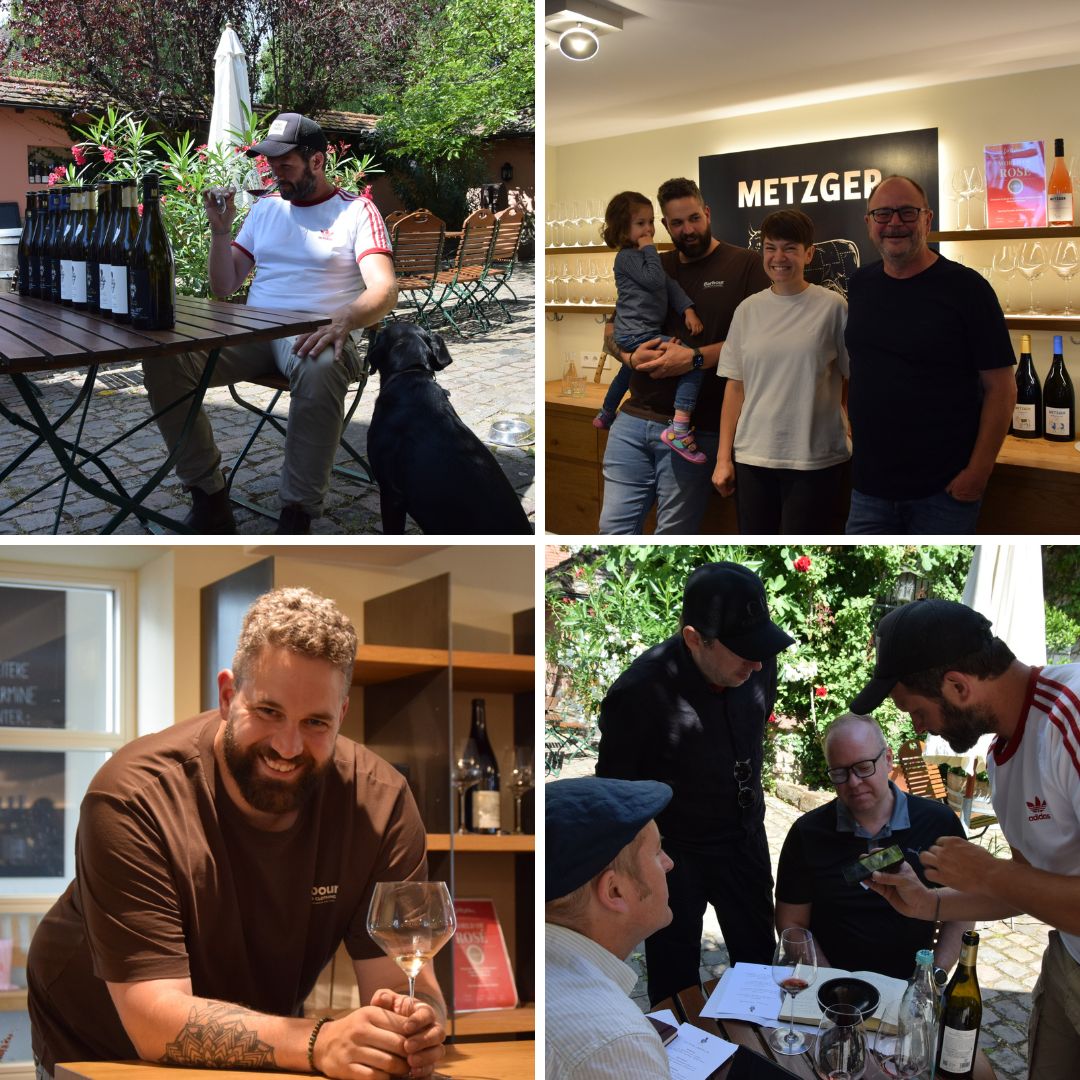
Weingut Metzger
The first visit of the trip was at Weingut Metzger (Vinum Winery of the Year 2026) in the village of Asselheim, situated in the northern part of the Pfalz where the soils mainly consist of limestone. Here Martin Metzger and his wife Lea make some of the Pfalz’ most elegant and refined, yet still weighty and concentrated Chardonnays and Pinot Noirs – the top bottlings of which only amount to roughly 90.000 bottles from the 1.5 million bottles that are filled annually at their estate. For the Chardonnays, malolactic is prevented to preserve as much freshness as possible, giving the wines a great zip of acidity and freshness. To balance this roughly 50% of new oak is used which due to the precise winemaking is perfectly integrated with the freshness of the wine – resulting in a harmonious expression of the grape, instead of a disjointed style that seems torn between expressing freshness or weight.
The Metzger Family.
For the Spätburgunder, or at this winery better said Pinot Noir, roughly the same amount of new oak is used as for the Chardonnay wines. An important distinction is that 15-25% of whole bunches are mixed in for extra freshness, elegance, and spice. The secret here however is the usage of French clones, which tend to have tighter bunches and smaller berries. They tend to deliver greater concentration, a silkier texture, and more intense fruit than the classical higher-yielding German clones of Spätburgunder, which can be lighter, spicier, and earthier. However, growers working with old German clones can still produce world-class Spätburgunder, as we will discover further in this trip.
But first things first. The Metzgers also delay malolactic conversion as much as possible and leave the wines in barrel for a year without adding any sulphur. Key here is to regularly top up the barrels to prevent oxidation, in order to gain the perfect balance between letting go a bit of the primary fruit while keeping just enough for the purity of the fruit to express itself. In our opinion Martin and Lea have fully succeeded in setting up a little Burgundian enclave in the Riesling-dominated Mittelhaardt subregion of the Pfalz. And if you ever visit (we highly recommend it): do not miss their Tempranillo, combining Spanish rusticity with German cleanliness.
We tasted a broad range of wines at Weingut Metzger.
Weingut Metzger 2023 Im Langental Chardonnay
DWA score 93/100 | Drink 2027–33
From the ‘Im Langental’ vineyard, one of the highest in the Pfalz at 310 meters of altitude. Lemon, yellow pear, jasmine, white flowers, wet stone, mineral, vanilla, dill; elegance, restraint, purity, precision, clean, medium-bodied. Slightly more new oak than the Asselheim bottling, but it stands out even less. Like an icicle in the sun. Even better with some air.
Weingut Metzger 2023 Abyssus Chardonnay
DWA score 95/100 | Drink 2028–40
Made from a secret parcel in the Metzger holdings, with only two barrels being produced each year. 100% new oak. Ripe lemon, grapefruit, ripe yellow pear, clove, nougat, bread dough, smoke, saline; closed, dense, full, pronounced, with high acidity, extract, structure and even some tannin being present. Intellectual wine that needs much longer to unfold.
Weingut Metzger 2022 Sonnenberg Pinot Noir
DWA score 95/100 | Drink 2027–37
From the Sonnenberg vineyard in Mühlheim, at 190-250 meters of altitude containing a lot of limestone rocks. 20% whole bunch, with 18 months in 60% new oak. French Pinot Fin and Très Fin clones used, lowering yields but greatly boosting quality. Ripe red fruit, red cherry, strawberry, blueberry, cured meat, smoke, clove, vanilla, earth; elegant, Burgundian, sophisticated, and classy.
Weingut Metzger 2022 Am Hesselbrunnen Pinot Noir
DWA score 96/100 | Drink 2027–42
From a small plateau within the Sonnenberg, exposed to a lot of sunshine and cooling winds. Metzger’s unofficial grand cru. Same winemaking as the Sonnenberg. Red fruit, red cherry, blueberry, smoke, chalk, vanilla, clove, wet stone; complete, balanced, pure and polished, super intense, velvet-like. Hard to find as the plateau only amounts to 0.12 hectares. If you see it, buy it. Drinks like a Burgundy Grand Cru. Exceptional – one of the finest Pinot Noirs in the Pfalz.
Martin Metzger and his excellent wines are flying high at the moment.
Weingut Jülg
Next stop: Jülg! Weingut Jülg, a proud VDP member as of the 2021 vintage, is located in the southern tip of the Pfalz. They notably have vineyards well over the border with France, stemming from times when these lands were part of Germany. Fun fact: the vineyard workers of Jülg once had to carry their passports with them when working in the vineyards, as the country lines directly cross them. This dual heritage is still present in this part of Germany today – with Burgundian grapes and French vinifications (usage of oak, whole bunches) being commonplace.
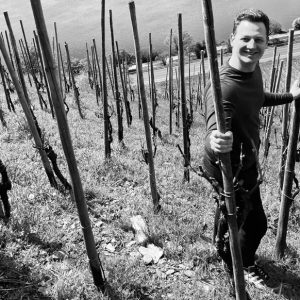
Johannes Jülg of Weingut Jülg.
Noteworthy is that Jülg only produces ‘German’ wines, with France and Germany having signed a treaty that allows the French vineyards of German producers (like Jülg) to be bottled under the German wine law, with the wines still legally labelled as Pfalz. However, this is purely administrative, as Johannes Jülg (the winemaker, and son of owner Werner Jülg) rightly states that the vines do not care about borders. The Jülg family was actually one of the first to plant Chardonnay in this region and the whole of Germany, well before it was allowed from 1991 onwards – so before then they smuggled their Chardonnay grapes into Germany as Weissburgunder.
Tasting the wines with Johannes.
The soils in this part of Germany are once again limestone, with a bit of marl and sandstone thrown in the mix. Compared to Metzger, Jülg always destems, as Johannes finds the tannins imparted by the stems a bit too bitter for his taste and prefers the tannins given by long maturation in oak. With apprenticeships at Weingut Keller and Domaine des Lambrays, and especially after tasting the wines, we cannot disagree with him.
Weingut Jülg 2015 Grande Réserve Prestige Sekt
DWA score 93/100 | Drink 2025–35
100% Chardonnay, aged roughly 10 years on the lees. Disgorged March 2025. Intense chalk, toast, smoke, citrus oil, dried flowers and fruit, nougat; creamy, long and fresh. Elegant, with the lees aging not being too overpowering. In its drinking window now but with even more upwards potential.
Weingut Jülg 2023 Sonnenberg Weissburgunder GG
DWA score 94/100 | Drink 2025–30
Yellow limestone and intense sunlight (as the vineyard name suggests) result in a relatively powerful Weissburgunder. Aged in small and large format oak. Vanilla, smoke, white flowers, ripe yellow pear, herbs, clove, nutmeg, ripe pear; needs time, round, structured, powerful, pure and precise. Impressive example of what Weissburgunder can achieve in Germany.
Weingut Jülg 2023 Opus Oskar Chardonnay
DWA score 95/100 | Drink 2027–33
Selection of old vines from the Wormberg Erste Lage situated just over the border in France. Dense yellow fruit, ripe apple, jasmine, vanilla, nutmeg; cool and precise, great texture and solid acid backbone, with a noble, endless finish. Needs a bit of time, currently still finding its way.
The Complete Wine Selection for the Tasting.
Weingut Jülg 2023 Sonnenberg Spätburgunder ‘KT’
DWA score 94/100 | Drink 2025–38
From vines in the Kostert Grosse Lage, situated across the border in France. Hence why the vineyard cannot be named and is instead bottled as part of the larger Sonnenberg cru situated in Germany, with the ‘KT’ referring to Kostert. Nice example of the complexity of German wine law. Fresh red fruit, chalk, pure blueberry, vanilla, chalk, wet stone, smoke; velvety and very Pinot-like fruit profile, fine tannins, polished, depth. Seductive. Dense plantations (10.000 vines per hectare) on pure limestone with a bit of clay yield a very Pinot-like elegant expression, with underlying power.
Looking Back on the Pfalz
While villages with sandstone and basalt, like Deidesheim and Forst, will likely be forever Riesling bastions, more and more villages with limestone and clay soils are discovering their potential for world-class Burgundian grape varieties. With the climate getting warmer, the Pfalz’s potential to produce great Spätburgunder, Chardonnay, and even Weissburgunder is undeniable – and we expect that these varieties will get explored even more in the coming years.
Our tip: while the greatness of Spätburgunder from the Pfalz is getting more and more recognized, the relatively new Chardonnay is getting better every year. It is only a matter of time before the VDP will also allow Chardonnay GG bottlings (like they do in Baden) – so buy them while they are still affordable.
An amazing trip organized by Wines of Germany.
To continue click here for Part II of this trip, diving into the Pinot Paradise that is Baden!
This article was written by our own Martin Bronkhorst. The wines of the mentioned estates are exported to a number of foreign markets and well distributed in the Netherlands. We would like to thank the German Wine Institute, and Alain Jacobs, for the invitation to the press trip that took place in the summer of 2025.
Join our insiders’ list and get exclusive early access to new articles, expert tips, and fresh reviews delivered straight to your inbox. Subscribe now and be the first to discover!