Join Our Wine Journey – Sign Up for the Newsletter 🍷
Tenuta di Biserno and the Rise of Cabernet Franc in Bibbona
Share
Deel op X (twitter)
LinkedIn
WhatsApp
Tenuta di Biserno and the Rise of Cabernet Franc in Bibbona.
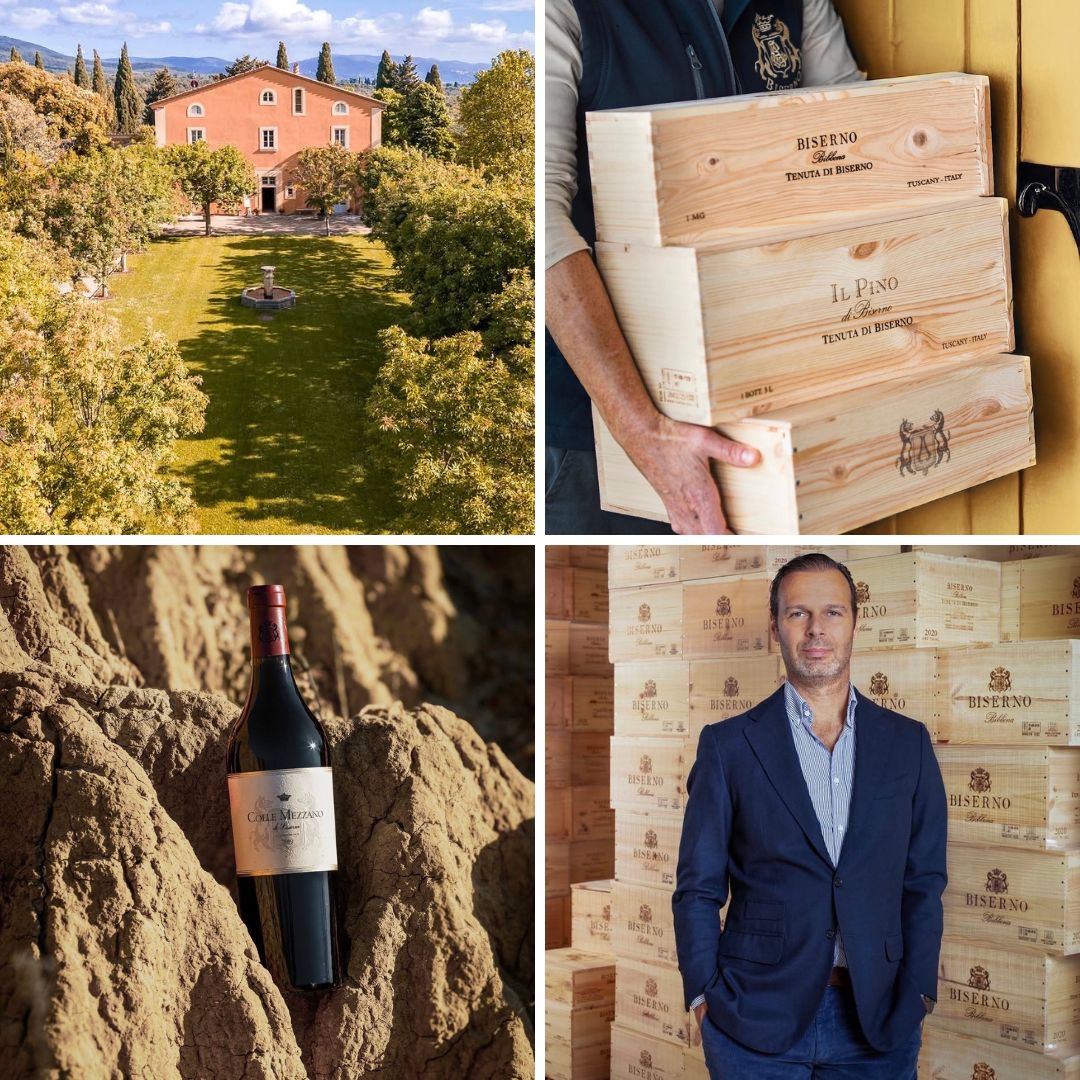
Recently we had the opportunity to sit down for an exclusive interview with Niccolò Marzichi Lenzi, the current managing director of Tenuta di Biserno in Italy’s upper Maremma region. During our talk, we took a deep dive into the history of Biserno, the unique terroir of Bibbona, and why Cabernet Franc has such a bright future in this corner of the upper Maremma – followed by a tasting of the top three wines of Tenuta di Biserno. All in all, it was a memorable encounter that highlighted why Biserno is considered one of the leading Super Tuscan estates, with its own unique twist.
Niccolò Marzichi Lenzi, Managing Director of Tenuta di Biserno.
Bibbona: Cabernet Franc Paradise
Tenuta di Biserno is situated in the commune of Bibbona, a stone’s throw away to the north of Bolgheri along the Tuscan coast. This gentle, sunny area is where the famous Italian ‘Super Tuscans’ were born, a movement that as of today is still going strong and includes many of Italy’s most prized wines such as Sassicaia, Ornellaia, Masseto, and Guado al Tasso – with Biserno being a ‘relatively’ recent addition to the mix. Unsurprisingly, all these examples were either created or strongly influenced by the Antinori family, who in many ways shaped the modern image of Super Tuscans and the potential of Bordeaux grapes in Maremma to produce world-class wine.
However, that is a story for another day. Essential in the context of Biserno are the soils to be found in this region, consisting of sedimentary deposits such as gravel, sand, and clay, underpinned by limestone. Where Bolgheri enjoys this classic ‘Conglomerato di Bolgheri’ soil profile, Bibbona – home to Tenuta di Biserno – features a comparative terroir but with slightly more calcareous pebbly gravel and clayey limestone in the soils. Niccolò explains that this perfectly suits Cabernet Franc which in general thrives on calcareous clays with a good amount of gravel – much like what can be seen at for example Château Cheval Blanc in Saint-Emilion (more gravel) and Clos Rougeard in Saumur-Champigny (more calcareous clays).
Cabernet Franc is the key to Biserno’s success.
However, it is not only the soils that fascinate Niccolò. He further notes that Cabernet Franc is one of the few grapes that transmit terroir in a distinctive manner, much like Pinot Noir and Sangiovese. For example, the pockets of gravelly soils in Saint-Emilion near the border with Pomerol bring out the more powerful character of the grape, whereas in the Loire it produces more elegant, crunchy, and refined wines in part due to the calcareous clays found there. Bibbona on the other hand with its terroir tends to bring out the sunnier, riper aspect of the grape, with generous red fruit but always with a solid base of elegance and freshness, alongside a slightly more linear profile.
With today’s gastronomy favouring lighter dishes, the more elegant, restrained profile of Cabernet Franc seems perfectly adapted to modern taste, and with its more moderate alcohol content perfectly suited to a future with global warming. This also explains why the variety is gaining so much ground over the last decade, with plantings all over the world; from Canada’s Niagara Peninsula to Argentina’s Uco Valley, and from the Loire Valley over to the upper Maremma region at Bolgheri and Bibbona. It seems like Biserno was truly ahead of its time when it started championing the variety in the early 2000s.
Rediscovering Bellaria: The Birth of Biserno
But first things first. The history of Tenuta di Biserno starts with Lodovico Antinori, who is together with his brother Piero Antinori famous for making the Antinori wine empire world-renowned. In this regard, Piero is associated with creating the Tignanello and Solaia labels alongside leading the family company, whereas Lodovico is better-known for creating the benchmark Super Tuscan wines Ornellaia and Masseto in the 1980s. Adjacent to this, after identifying a promising terroir just north of Bolgheri known as ‘Bellaria’ in the late 1990s when searching for new vineyards for Ornellaia, Lodovico decided to lease the southern part of Bellaria for Ornellaia. He left the other half as it was, since it was not part of the Bolgheri DOC.
Relais il Biserno.
However, Lodovico came back on this decision in 2001, when he felt like it was time for a new challenge after having moved on from Ornellaia and Masseto. Still remembering the potential of the northern part of Bellaria, he decided to lease it and create Tenuta di Biserno together with his brother Piero, working together as brothers for the first time. This also gave them the chance to try something new and primarily plant Cabernet Franc in this special place just to the north of Bolgheri. As noted earlier, these subtle differences in terroir – with Bibbona having a slightly higher calcareous pebbly gravel and clayey limestone content in the soils – perfectly suit Cabernet Franc.
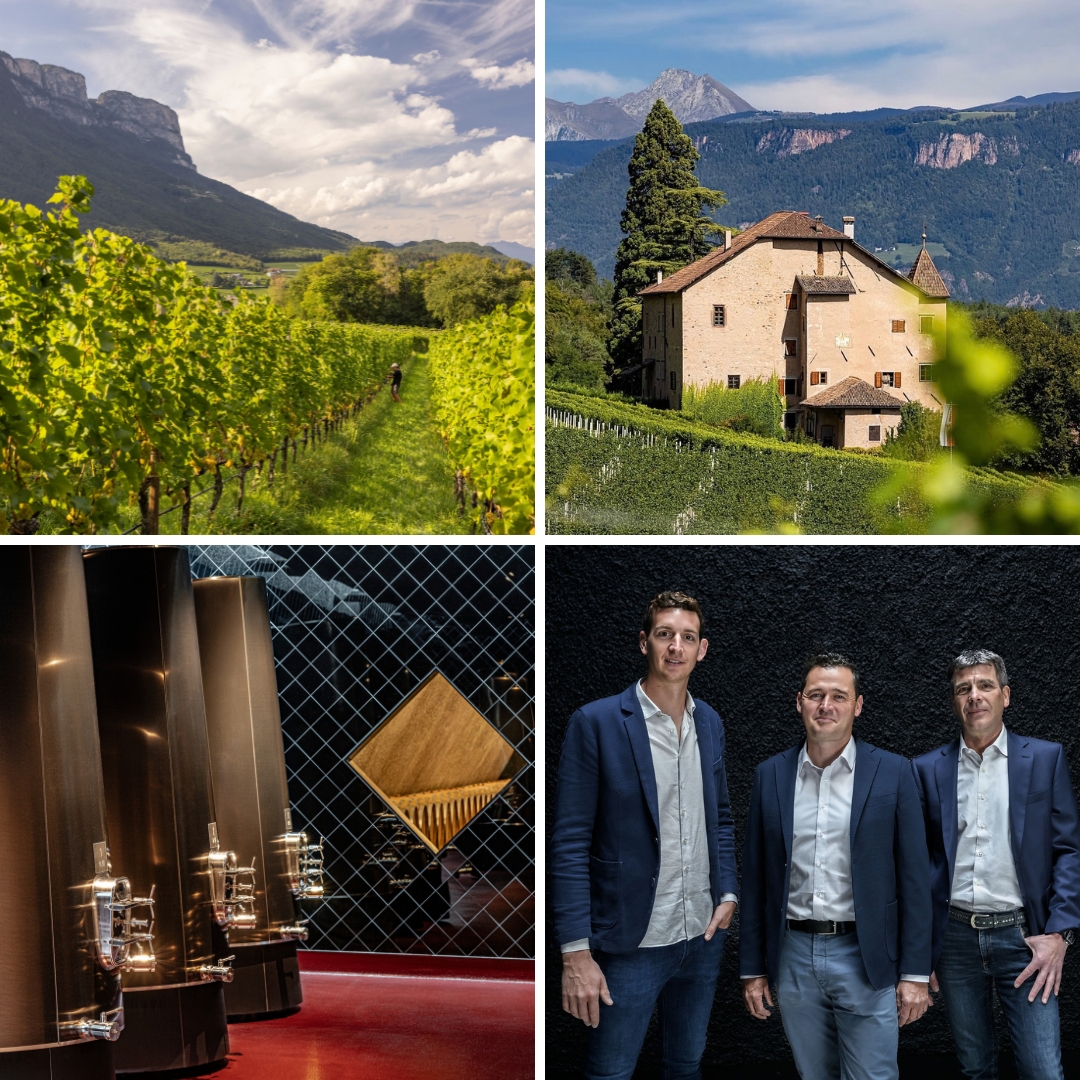
Tenuta di Biserno with its own unique micro climate and soils.
Specific for Biserno’s terroir however is the elevated position of the estate, being situated at 60 to 130 meters above sea level on mostly south-facing hills. This slightly elevated exposition provides good exposure to sunlight combined with cooling sea breezes from the Tyrrhenian Sea, resulting in perfectly ripe fruit with pleasant freshness. The vineyards are furthermore surrounded by forest, giving additional cooling influences and biodiversity in the vineyard. These conditions help explain why the late Michel Rolland identified the ‘Bellaria’ terroir as the most outstanding in Maremma, and underpin the reputation and quality of the Biserno wines.
Niccolò Marzichi Lenzi: The Last Piece of the Biserno Puzzle
Enter Niccolò Marzichi Lenzi, son of Ilaria Antinori and nephew to Lodovico and Piero Antinori. Although he began his career as a showjumper in the Netherlands, he felt the urge to pick up a role in the wine business after inheriting a vineyard property in Chianti after the premature passing of his father. Back then, Piero assured him that the site he was given could make fine wine, but not great wine – leading to Niccolò selling the estate in the late 1990s and asking Piero for advice on the next steps to take. Luckily for Niccolò, this was around the time Lodovico and Piero were setting up Tenuta di Biserno, resulting in them inviting Niccolò as a partner in the project. Coincidentally this move also ended up unifying the three branches of the Antinori family for the first time ever, with Lodovico, Piero, and Niccolò all contributing to Tenuta di Biserno.
At first Lodovico and Piero mostly focused on the winemaking and overall strategy of the Biserno project, while Niccolò was sent out abroad to collect feedback on the wines. In this regard he still fondly remembers the stressful times of knocking on restaurant doors to get appointments in order to show the Isoglio del Cinghiale wine, the red entry-level wine of the estate. Combined with completing the WSET Diploma course, being largely responsible for the sales of Biserno, and gaining hands-on winemaking experience at the estate quickly made him move through the ranks at Biserno, where he has been the managing director since 2014. It is no surprise that the wines are better than ever.
Niccolò Marzichi Lenzi.
But Niccolò is not one to rest on his laurels. Looking ahead, Niccolò notes that he would like to further dive into how to keep the alcohol percentages of the Biserno wines moderate – which is no problem for the Insoglio del Cinghiale but more challenging to maintain for the level of ripeness and extraction needed for the top-line Il Pino, Biserno, and Colle Mezzano wines with global warming. He further adds that he would like to make the Biserno name more well-known worldwide, which he notes is challenging given their relatively humble production volumes, but believes is possible due to their unique identity and great terroir. All in all, Biserno is quickly gaining ground as one of Tuscany’s new modern classics, with the beautiful range of wines we tasted combined with Niccolò’s insights promising much for the future.
The Wines of Biserno
For this article we had the opportunity to taste a selection of the wines of Tenuta di Biserno. Below our tasting notes and ratings of the wines.
The Wines of Tenuta di Biserno.
Tenuta di Biserno – 2023 Il Pino di Biserno
Cabernet Franc and Merlot, with some Petit Verdot and Cabernet Sauvignon | 93/100 DWA score | Drink 2026-2033
The first and most accessible wine in the Biserno trilogy of wines, made from several plots fully dedicated to Il Pino. Niccolò is quite thorough in this aspect, explaining that while Il Pino used to be a second wine and made from declassified plots of Biserno, now they have selected plots to be fully dedicated to Il Pino to get the exact profile of Il Pino they want – being a more lively, exuberant expression of the Biserno vineyards. To aid this goal, the blend is tailored to be mostly Cabernet Franc and Merlot, with a touch of Petit Verdot and Cabernet Sauvignon. Here, the Merlot in particular adds drinkability when the wine is young. Still, this is not a simple or lighter wine by any means, with the wine showing intense notes of ripe cassis, ripe red pepper, cranberry, ripe plum, and red cherry, accompanied by spicy notes of dried rosemary, thyme, and oregano. Roughly 25% new oak for a year adds subtle clove and vanilla notes. Great finish and freshness, with a distinctive spicy peppery touch. Intense and generous. Sunny Mediterranean character, with backbone and freshness. Great quality of fruit and tannins. Good crunch. Young but already there.
Tenuta di Biserno – 2022 Biserno di Biserno
Mostly Cabernet Franc, alongside Cabernet Sauvignon and Petit Verdot, with a hint of Merlot | 96/100 DWA score | Drink 2028-2047
The flagship wine of the estate, fully showing the potential of Cabernet Franc in Bibbona. Significantly different from the Il Pino, showcasing more depth and concentration. Very serious and profound nose, needs a bit of time to open up. Intense notes of fresh cassis, blueberry, ripe blackberry, red cherry, violet, rosemary, dried herbs, and nutmeg, with a light balsamic touch and green olive note, alongside gentle vanilla and smoky characteristics from the 70% new oak treatment for over a year. Structured and deep mouthfeel, but with a certain freshness, linearity, and herbal flirt unique to Cabernet Franc. You sense the exoticness of the Petit Verdot, but perhaps even more so that the wine is led by Cabernet Franc’s mouthfeel and freshness – with the typical structure of Cabernet Sauvignon and richness of Merlot making way for Cabernet Franc to take the lead. Great elegant touch to it, not too extracted, perhaps also aided by the cooler nature of the 2022 vintage. Good acidity. Beautifully polished tannins, built to last many years. Initially quite powerful, but with spicy elegance on the finish. Very long finish. Keeps evolving in the glass. Chalky, unique, and delicious expression of both Cabernet Franc in Tuscany and the terroir of Bibbona.
The Vineyards of Tenuta di Biserno.
Tenuta di Biserno – 2021 Colle Mezzano di Biserno
Mostly Cabernet Franc, alongside Cabernet Sauvignon and a hint of Merlot | 96/100 DWA score | Drink 2028-2051
The Colle Mezzano vineyard is a relatively new project, with its first commercial vintage in 2021. It began when Niccolò was searching for new vineyards for the Insoglio del Cinghiale label and found old plantings of Cabernet Franc, Cabernet Sauvignon, and Merlot going back to the 1990s. He then vinified a few of the grapes and was impressed with the rather elegant, nuanced results – comparing Colle Mezzano and Biserno to the left bank and right bank of Bordeaux respectively, and wanting to show the world that Biserno can excel both in more powerful and more elegant wines. The terroir here, around six kilometers north of the main Biserno vineyards, is slightly richer in clay with more pebbles and larger stones, which Niccolò attributes to greater finesse and elegance. The nose of the wine is gloriously aromatic, almost filling the room. Perfectly ripe, fresh red cherry, ripe cranberry, cassis, plum, and violet, with high, refreshing acidity. Intensity and freshness combined. Mineral, gravelly nuance and a subtle menthol note further add complexity. Constantly evolving and changing in the glass, gaining even more depth and nuance. Beautiful silky mouthfeel, but with distinct freshness and crunch from the Cabernet Franc. Amazing texture and tannin quality. Noble in character. The elegance of Bordeaux combined with Tuscan sunshine and warmth.
Conclusion
So where does Tenuta di Biserno stand as of today? While it is not the only producer with significant Cabernet Franc plantings in the upper Maremma (Le Macchiole and Duemani are other champions of the variety), it might be one of the few producers, if not the only one, fully embracing the variety as the leading proportion in each of its top wines. Especially on the soils of Bibbona, Cabernet Franc seems to fully come together and produce some of Italy’s finest wines – combining acidity, elegance, structure, and freshness, and perhaps even more so in Niccolò’s very capable hands. All in all, the future looks very bright for Tenuta di Biserno.
For more on Tenuta di Biserno check out our earlier publication following a Tenuta di Biserno Masterclass here.
This article was written by our own Martin Bronkhorst. The wines of Tenuta di Biserno are exported to a number of foreign markets and are well distributed. In the Netherlands, their wines can be purchased through Wine & Spirits. We would like to thank Niccolò Marzichi Lenzi of Tenuta di Biserno for his time and outstanding wines, as well as our partner Wine Lister for setting up the interview.
Join our insiders’ list and get exclusive early access to new articles, expert tips, and fresh reviews delivered straight to your inbox. Subscribe now and be the first to discover!