Join Our Wine Journey – Sign Up for the Newsletter 🍷
Pinot Noir in Alsace: Grand Crus, History, and the Wines to Watch
Share
Deel op X (twitter)
LinkedIn
WhatsApp
Pinot Noir in Alsace: Grand Crus, History, and the Wines to Watch.
Frequent readers may recall a 2023 article by Benjamin Roelfs introducing the Wines of Alsace. In this special feature, we spotlight one of the region’s most exciting developments: the rise of the acclaimed Pinot Noir. Gaining traction among producers and making its mark on the global stage, this variety is redefining Alsace’s wine landscape.
Pinot Noir’s Turbid History
Pinot Noir has been present in Alsace longer than many might expect. The Thirty Years’ War—a conflict that profoundly shaped the region—is actually the reason this black grape variety took root in one of France’s sunniest areas. The war, which raged from 1618 to 1648 (coincidentally lasting exactly thirty years), began with the infamous Defenestration of Prague, when Protestant noblemen in Bohemia threw Catholic officials out of a window. This act ignited resistance against the Habsburgs’ attempts to impose Catholicism.
The war unfolded in distinct phases, with different countries and regions playing pivotal roles. During the Swedish phase, Sweden, championing Protestantism, marched into the Holy Roman Empire, which included both Baden-Württemberg and Alsace. As they moved through the region, the Swedes brought vines from Baden-Württemberg and planted them where they settled. Fierce battles followed, leaving their mark in the ruins that now dot the Vosges Mountains—such as Château Bernstein, Ortenbourg, Ramstein, and Kintzheim.
By the war’s end, Strasbourg had embraced Lutheranism, while much of the surrounding region remained Roman Catholic. Most of Alsace became French territory.
In an ironic twist, while the Swedes’ actions were often far from ideal, they had an unintended but remarkably positive outcome for wine lovers in 2025: the establishment of Pinot Noir in Alsace.
Within thirty years of the war’s end, many families settled in the region, laying the foundation for some of today’s renowned Alsatian wine producers. Names like Wach, Boxler, Schoech, Schoepfer, and Ruhlmann-Schutz trace their origins to this period of migration into Alsace.
The storied past of the Alsace region has brought many changes over time.
The Future of Pinot Noir
Over the centuries, Pinot Noir in Alsace has seen its share of ups and downs, but in the past two decades, its trajectory has been unmistakably upward. Its growth rivals—if not surpasses—that of the increasingly popular and drinkable Pinot Blanc. To put this into perspective, in the late 1960s, only 198 hectares were planted with Pinot Noir. By 2022, that number had surged to 2,000 hectares—a remarkable 1,000% increase. Many wineries we speak with regularly recognize its potential and continue to expand their plantings, contributing to the exceptional wines we enjoy today.
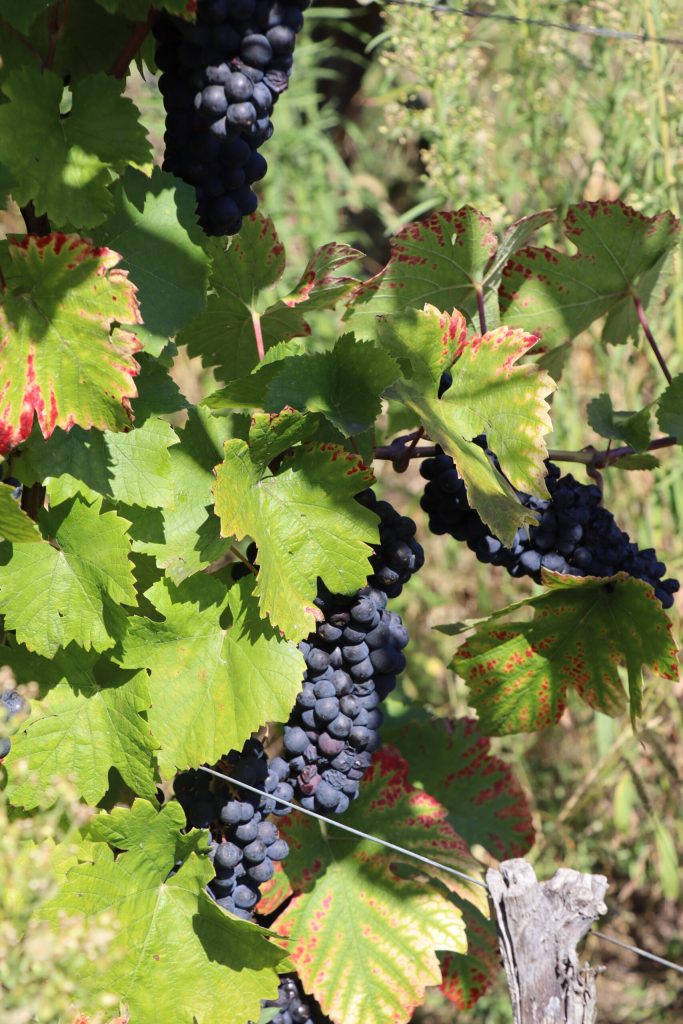
Pinot Noir grapes near Grand Cru Wineck-Schlossberg.
What we seek in Alsace Pinot Noir is not a Burgundy replica, but rather a true expression of its unique terroir. Fortunately, this is exactly what we are seeing more and more. Early iterations of Pinot Noir from the region were often thin and overly green. As winemakers gained confidence, many experimented with oak, sometimes to excess, masking terroir rather than enhancing it. This overuse of oak is now widely regarded as a “beginner’s mistake” in Alsace Pinot Noir production and has largely been abandoned. Today, the best expressions—especially those from grand cru and lieu-dit sites—favour older oak and extended aging, allowing the terroir to shine while softening overt oaky notes. These wines are officially categorised by the CIVA – Comité Interprofessionnel des Vins d’Alsaceas Pinot Noir d’Alsace Rouge.
Another style worth mentioning, though not featured in this tasting, is Pinot Noir d’Alsace Rouge Léger. As the name suggests, this is a lighter, fresher style that benefits from a slightly lower serving temperature. Léger Pinot Noirs are often enjoyed as an apéritif or during the warm Alsace summers.
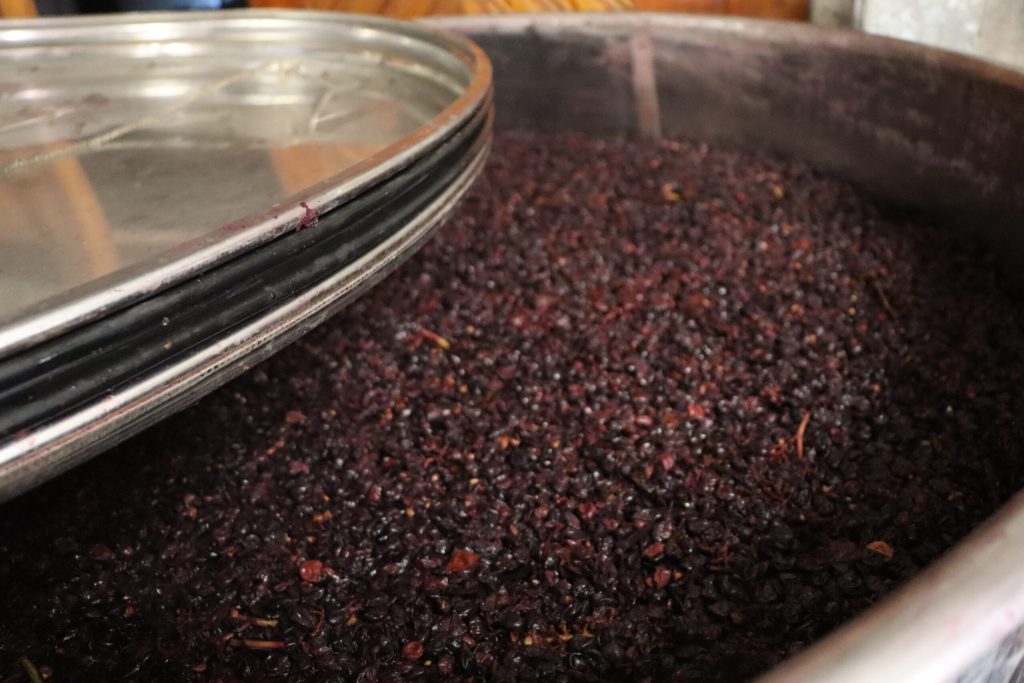
First pressing of the Pinot Noir grapes in Voegtlinshoffen at Vorburger – Meyer.
Alsace Pinot Noir is steadily carving out a place in the wine market, appearing more frequently on wine lists both within the region and internationally. If this trend continues—and we expect it will—Alsace Pinot Noir may soon become a staple in the industry.
The Evolution of Alsace Pinot Noir: A Tasting Selection
As Pinot Noir continues its ascent in Alsace, we find ourselves in an exciting era where the region is no longer merely experimenting with the variety, but truly mastering it. Once overlooked or produced in styles that leaned either too green or too oaky, today’s Pinot Noir d’Alsace reflects a refined balance—one that respects the region’s distinct terroir while embracing modern winemaking techniques.
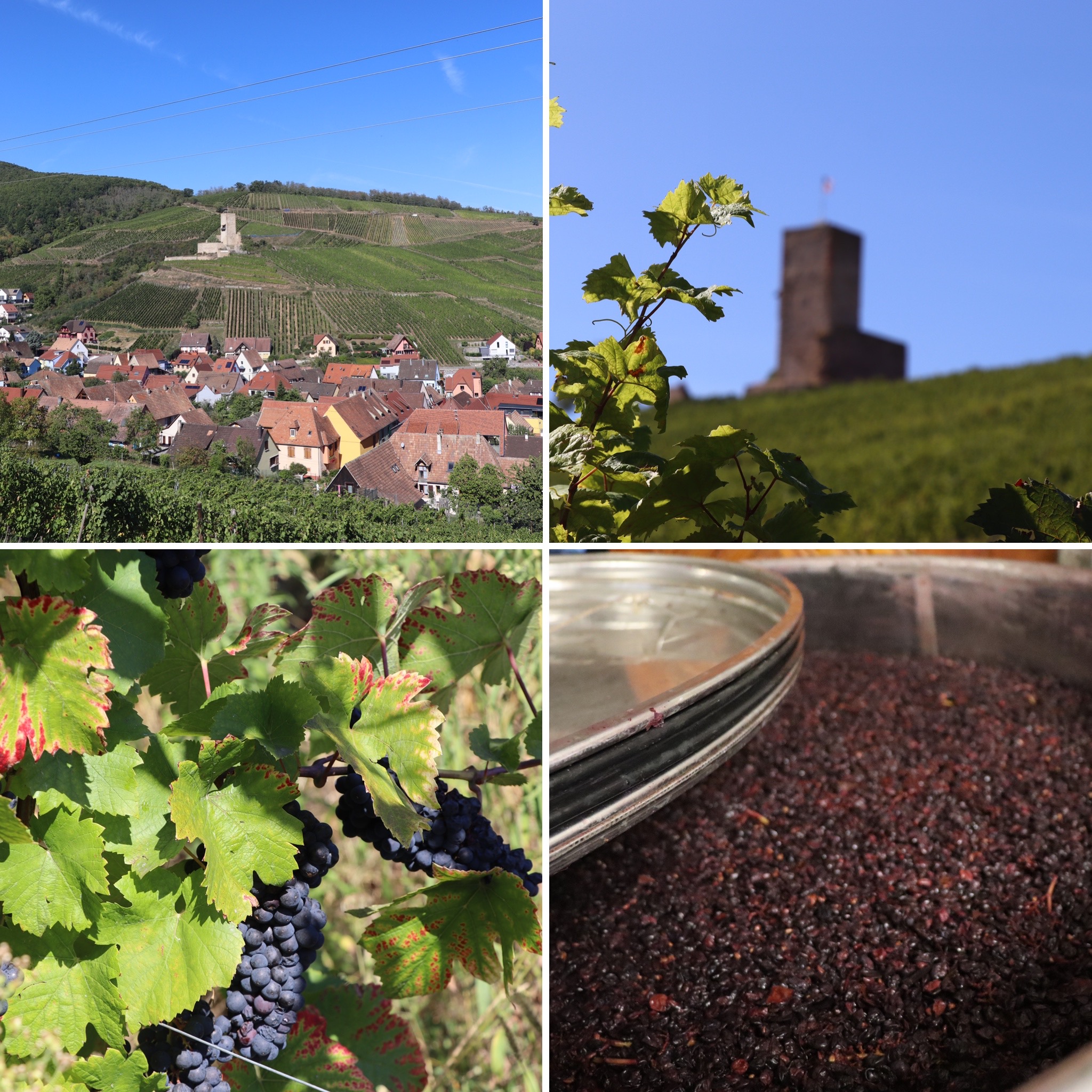
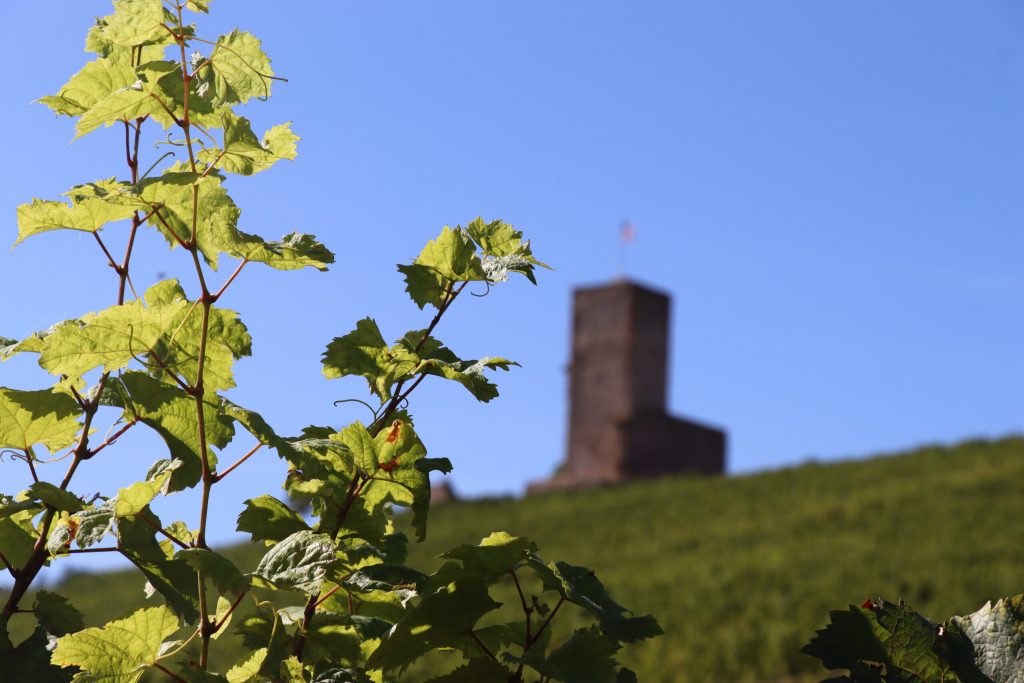
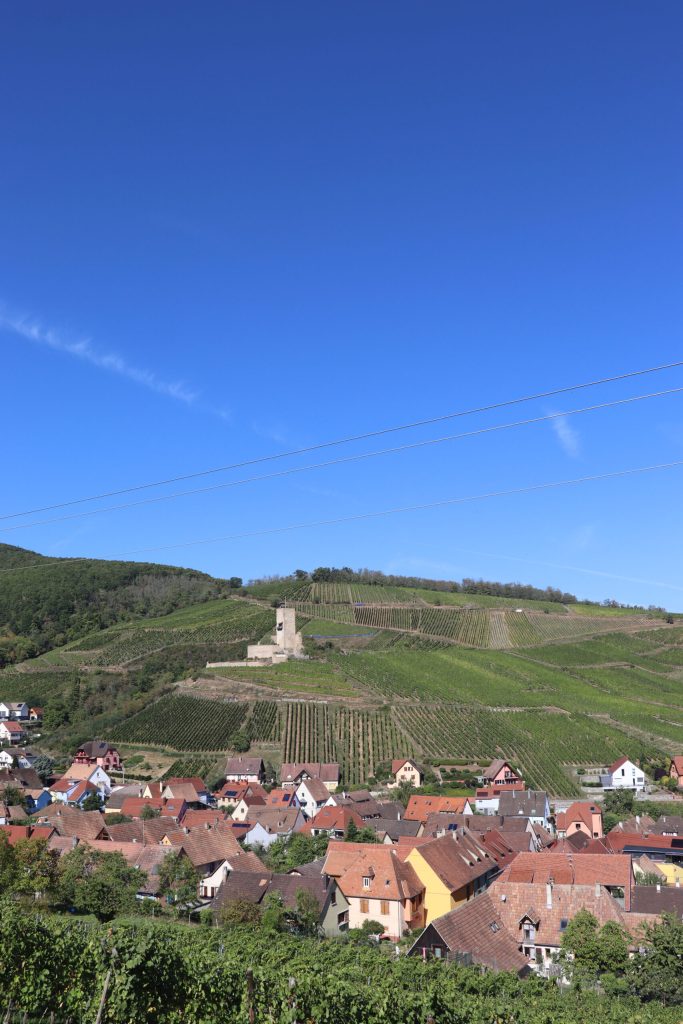
Katzenthal as seem from Niedermorschwihr with Chateau Wineck on the hill and Grand Cru Wineck-Schlossberg on top.
In this tasting selection, we highlight a range of exemplary Pinot Noirs from across Alsace, showcasing both the pioneering estates and the newer wineries that are pushing the boundaries of quality. These wines serve as living proof of Alsace’s potential to produce world-class Pinot Noir, each expressing its own unique sense of place.
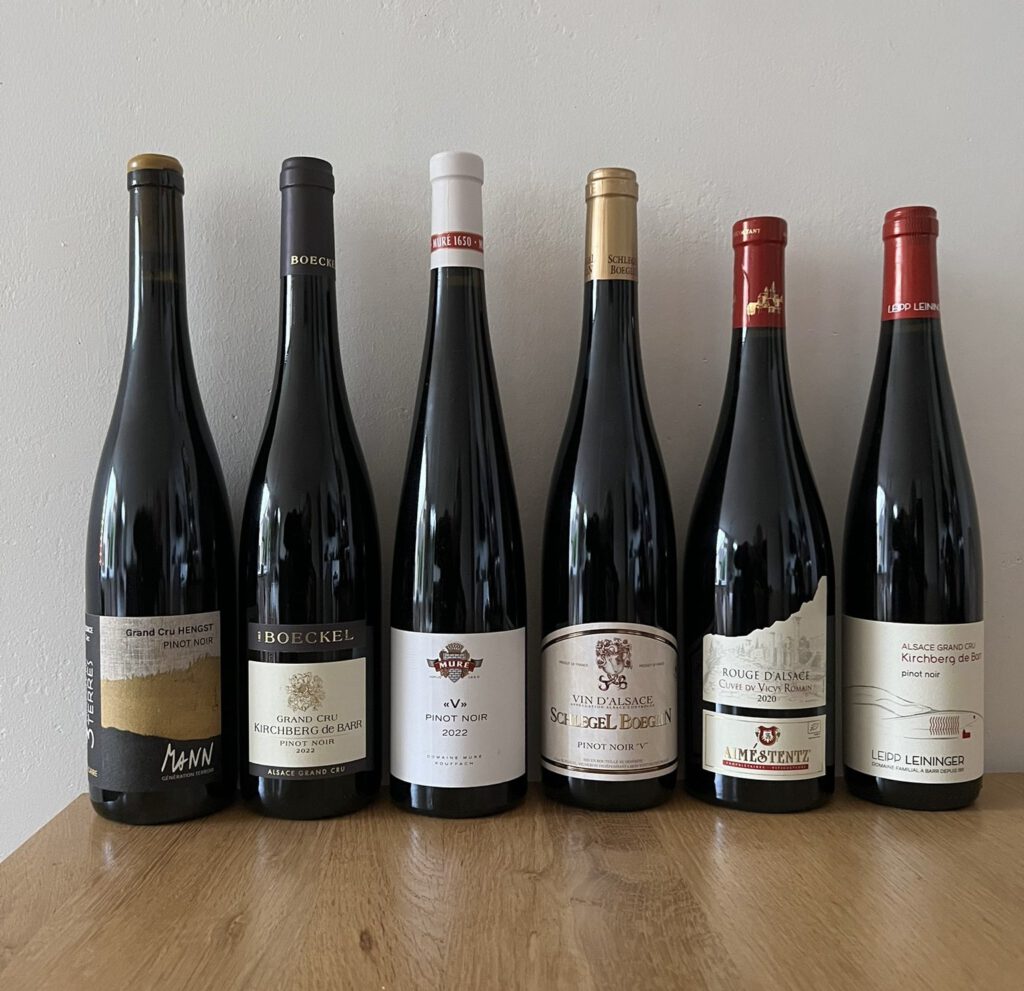
Domaine Mann – Vignoble des 3 Terres
Founded in 1998, Domaine Mann is a relatively young winery, but its commitment to biodynamic viticulture runs deep. Jean-Louis and Fabienne Mann began preserving their land in 1991 when they acquired 10 hectares of vines. In 2009, their son Sébastien joined the estate, working with various parcels to craft wines that express both the Mann family name and their dedication to natural winemaking.
2022 Pinot Noir Hengst
Style: Red
Country: France
Region: Alsace
Grape: Pinot Noir
Score: 93 DWA-points
This young-vine Pinot Noir from the renowned Hengst vineyard impresses with its depth and character. The nose is dark and ripe, with aromas of chalk, wet stone, black pepper, earth, and an elegant core of red fruit—raspberry, cherry, and bramble. Twelve months in oak barriques contribute a subtle vanilla touch. The palate is juicy and silky, with a more pronounced oak presence adding layers of vanilla and sweet spice, yet still allowing the peppery and earthy notes to shine. While it has great potential for aging, it already drinks beautifully.
The Stentz family has been crafting wine in Wettolsheim since 1919, with Aimé Stentz leading its transformation into a full-scale winery. Now in its fifth generation, Marc Stentz continues to uphold the family legacy, managing 12 hectares dedicated to high-quality winemaking.
2020 Cuvée du Vicus Romain
Style: Red
Country: France
Region: Alsace
Grape: Pinot Noir
Score: 91 DWA-points
Price: €35-50
Sourced from the prestigious Hengst Grand Cru—known for its power and structure—this Pinot Noir comes from Clos de Vicus Romain, a walled vineyard with remnants of ancient Roman architecture. The wine is pale garnet in color, revealing aromas of toast, sweet spice, liquorice, cherry, and the hallmark smoky earthiness of Alsace Pinot Noir. The palate is soft and plush, with mellow tannins, a full body, and refreshing acidity. A floral note reminiscent of violet adds an extra layer of complexity.
Located in Barr, at the foot of its namesake grand cru, this historic winery has been in the Leininger family since 1911. The estate spans 10 hectares, with Luc Leininger now overseeing its operations since 2016.
Grand Cru Kirchberg de Barr Pinot Noir 2022
Style: Red
Country: France
Region: Alsace
Grape: Pinot Noir
Score: 94 DWA-points
Price: €15-20
A modern expression of Alsace Pinot Noir, this wine showcases a pale garnet hue and an intensely aromatic profile—earth, wet forest floor, flint, smoke, black olive, redcurrant, cranberry, and cherry. The contrast between its dark, moody aromas and its crisp freshness is striking. The palate is juicy yet structured, with excellent grip and vibrant acidity lifting the flavours. The black olive note carries through, adding intrigue to this beautifully balanced wine.
With a winemaking lineage dating back to the 16th century, the Boeckel family has long been a pillar of Mittelbergheim’s viticultural heritage. Today, Thomas and Jean-Daniel Boeckel continue to craft terroir-driven wines with minimal oak influence.
2022 Grand Cru Kirchberg de Barr Pinot Noir
Style: Red
Country: France
Region: Alsace
Grape: Pinot Noir
Score: 93 DWA-points
Price: €35-50
Only 20% new oak is used in this wine, allowing the vineyard’s mineral-driven character to shine. It opens with aromas of forest floor, flint, smoke, toast, vanilla, and cinnamon, alongside an abundance of fresh red fruit. The palate is smooth and silky, with lively acidity giving the wine a refreshing lift. Light yet deeply flavorful, it’s dangerously drinkable with subtle herbal undertones. Best enjoyed with a slight chill and some aeration to reveal its full potential.
Founded just 50 years ago, Domaine Schlegel-Boeglin is nestled in the Vallée Noble, an area renowned for its historic vineyards. Jean-Luc Schlegel now leads the family winery, crafting expressive wines from the esteemed Grand Cru Vorbourg.
2020 Vorbourg Pinot Noir (V)
Style: Red
Country: France
Region: Alsace
Grape: Pinot Noir
Score: 91 DWA-points
Striking a perfect balance between fruit and oak, this Pinot Noir displays a pale garnet color and a fruit-forward bouquet of cherry, cranberry, raspberry, and wild strawberry. Subtle notes of bay leaf, smoke, wet earth, and tobacco leaf add complexity. The palate is defined by crisp acidity, ripe tannins, and a medium body, all underscored by the natural warmth of the Vorbourg Grand Cru.
One of Alsace’s most esteemed names, Domaine Muré traces its roots back to the 17th century. Now in its 12th generation, Véronique and Thomas Muré continue to cultivate 28 hectares of biodynamically farmed vineyards, including the legendary Clos Saint Landelin.
2022 Vorbourg Pinot Noir (V)
Style: Red
Country: France
Region: Alsace
Grape: Pinot Noir
Score: 95 DWA-points
Price: €35-50
A true showstopper, this Pinot Noir boasts a medium ruby color and an immensely complex nose—flint, graphite, liquorice, vanilla, smoke, black olive, forest floor, and an explosion of wild strawberry and cherry. The palate is silky smooth yet structured, with medium-plus acidity, layered texture, and a lingering red fruit finish. This is a benchmark expression of Alsace Pinot Noir, displaying both elegance and power.
Available directly from the winery’s website and select retailers. Other wines from Muré can be found at Wijnkring.
The selection for our Alsace Pinot Noir tasting.
As these wines demonstrate, Pinot Noir has firmly established itself in Alsace, with an increasing number of producers crafting expressions that celebrate the region’s diverse terroirs. Whether from historic grand crus or younger, pioneering vineyards, Alsace Pinot Noir is proving to be more than just a trend—it is a category on the rise, destined for a permanent place on the global wine stage.
Alsace Pinot Noir: A Unique Identity in the World of Red Wines
We understand why Alsace Pinot Noir is growing in popularity, as the above-mentioned wines all score either 90-points or higher. None of these examples are difficult to drink or too heavy a wine, while this is something you will hardly ever see in Pinot Noir, it is a positive note to take. Where comparisons are often drawn between Alsace and Burgundy Pinot Noir, there are some clear differences between Burgundy as well as some similarities. From an Alsace point of view, we can jot down that Alsace would really like to have its own personality when it comes to Pinot Noir rather than be compared to the highly sought after Burgundy.
Find yourself some Alsace Pinot Noir and discover the joys of the super drinkable red wines from Alsace!
This article is written by our own Benjamin Roelfs. We would like to thank CIVA – Comité Interprofessionnel des Vins d’Alsace , in particular Margaux Bruckert & Foulques Aulagnon, and all wineries that submitted their wines for this article.
Join our insiders’ list and get exclusive early access to new articles, expert tips, and fresh reviews delivered straight to your inbox. Subscribe now and be the first to discover!