Join Our Wine Journey – Sign Up for the Newsletter 🍷
Germany at the Table: A VDP Evening at Legends of Wine
Share
Deel op X (twitter)
LinkedIn
WhatsApp
Germany at the Table: A VDP Evening at Legends of Wine.
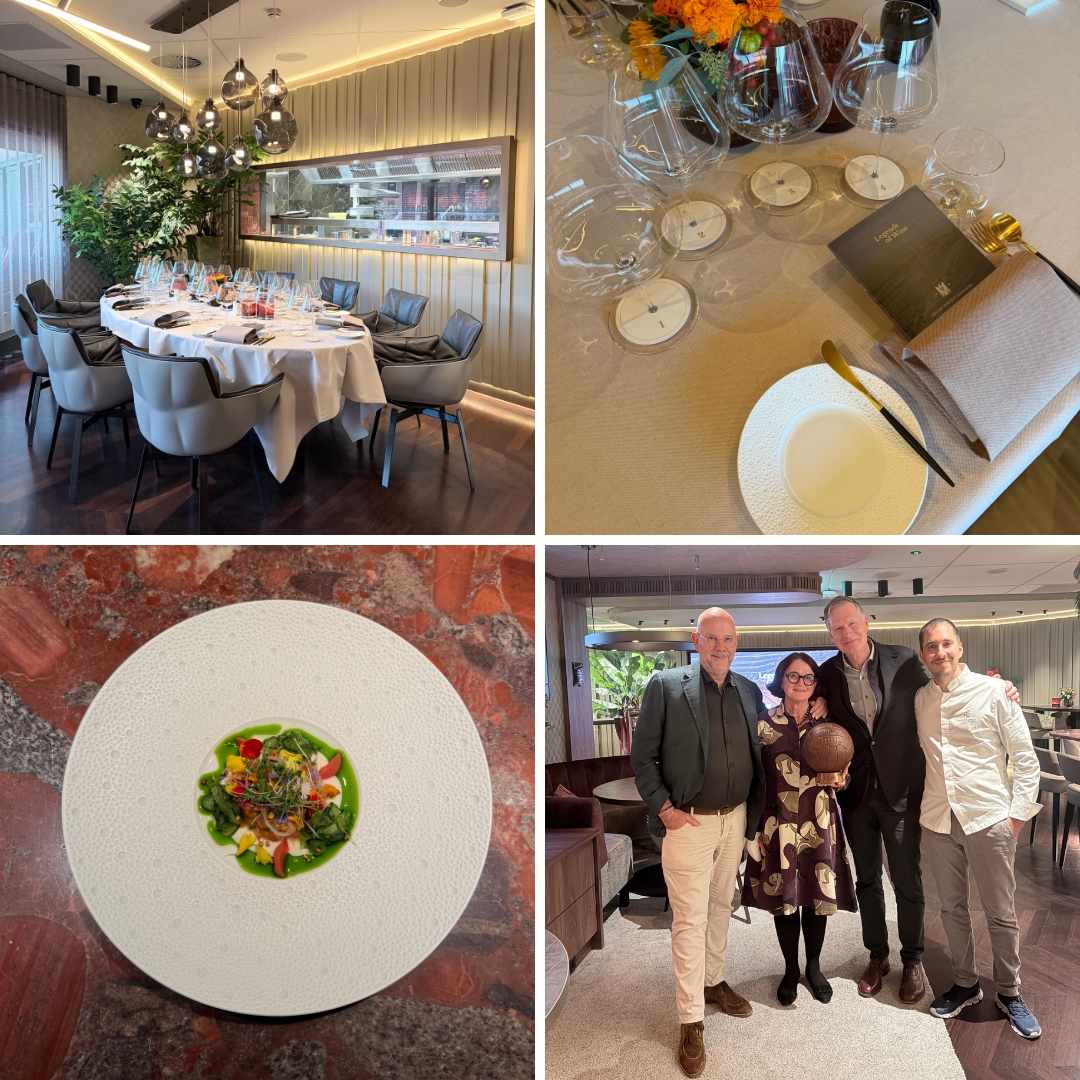
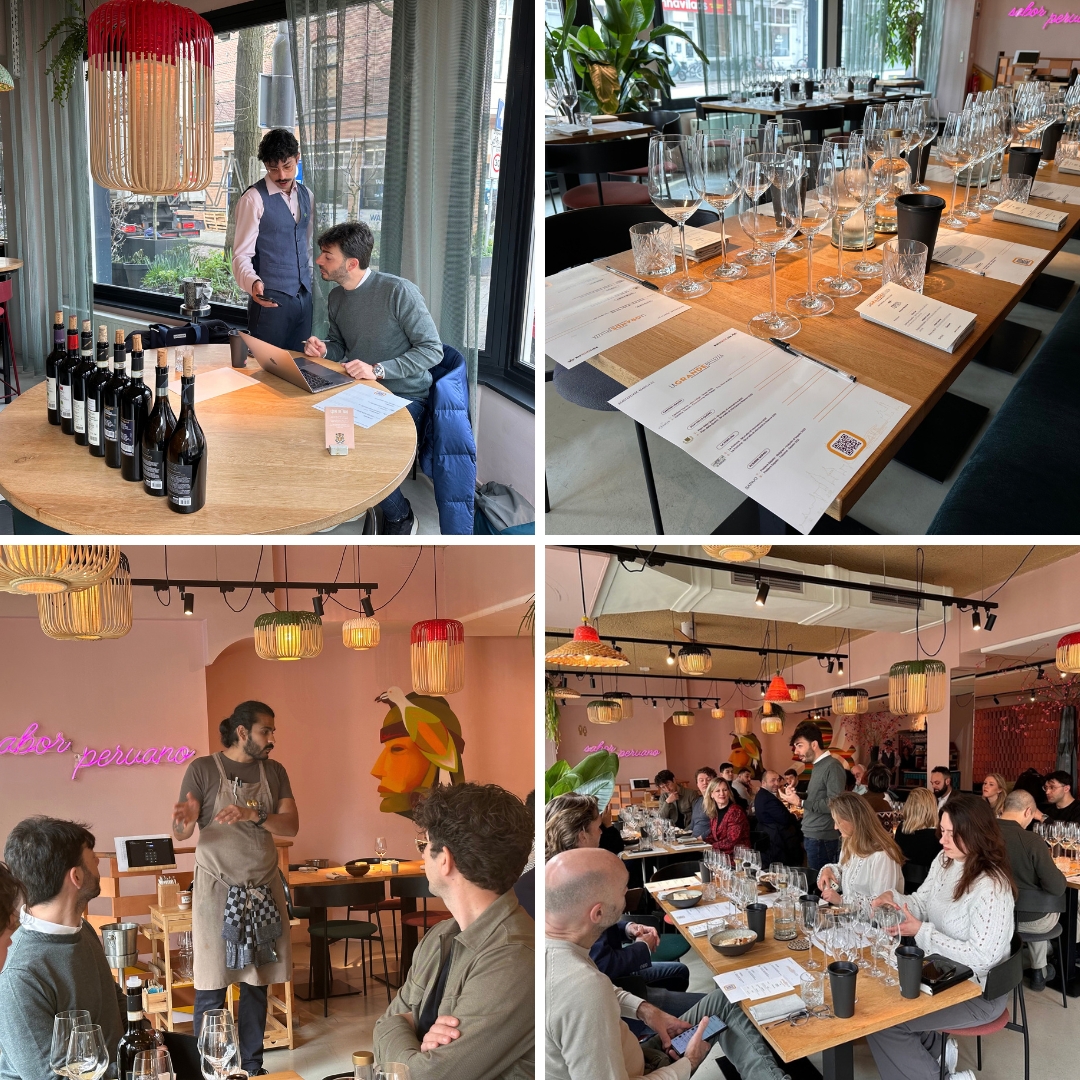
At the Legends Lounge inside Eindhoven’s Philips Stadium, our latest evening of Legends of Wine brought Germany’s vineyards to the dinner table. Twenty-three wines from VDP estates formed a selection that stretched from traditional-method sparkling wines to mature Silvaner, dry Riesling, Chardonnay, Spätburgunder and sweet Auslese. Guiding us through that breadth was Cees van Casteren MW, supported by Hilke Dahlem, co-managing director of the VDP, while chef Philipp Stein of Michelin-starred Steins Traube in Mainz prepared the accompanying dinner.
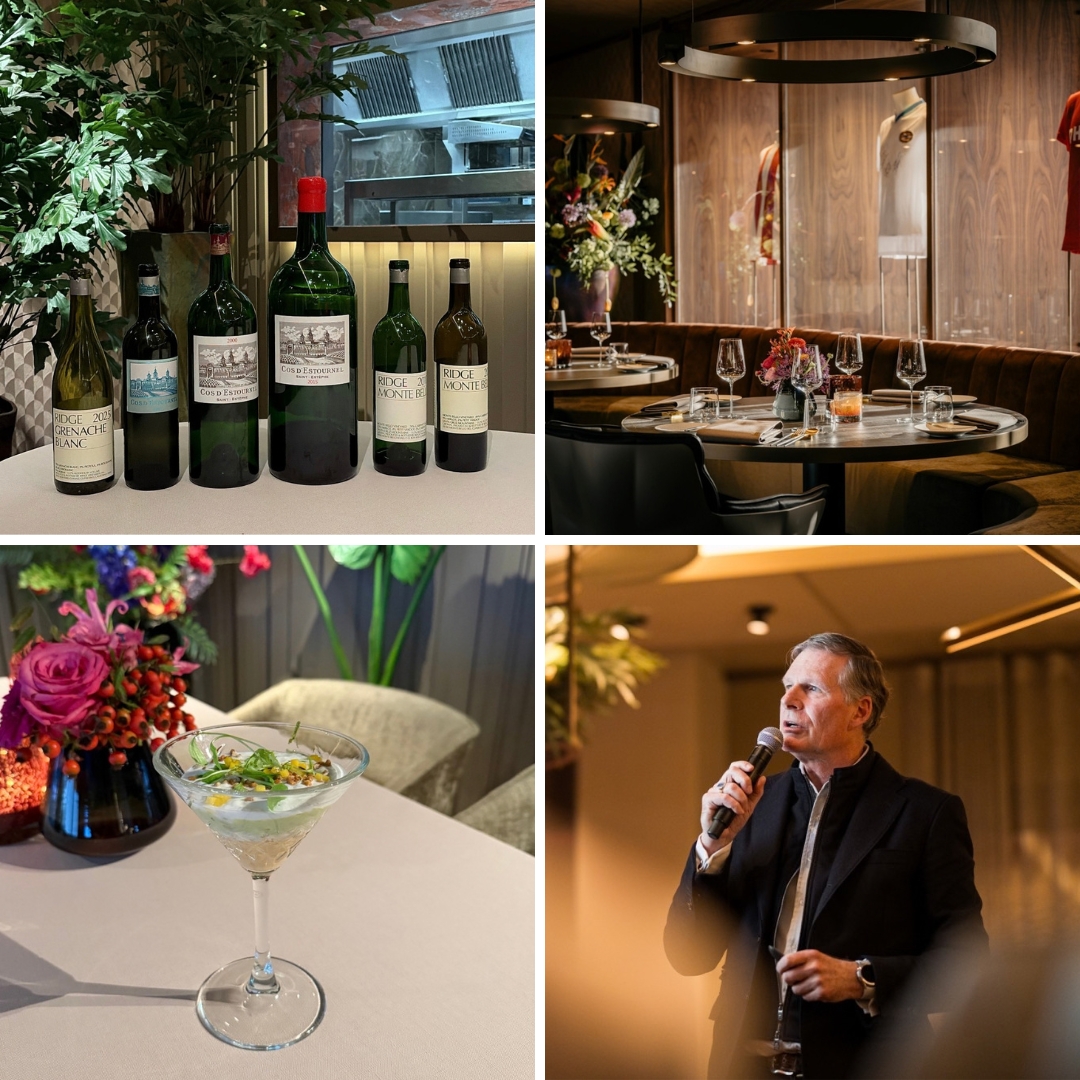
We had last visited for an encounter between Ridge Vineyards and Château Cos d’Estournel, exploring the relationship between California and Bordeaux. This edition offered a different perspective: the diversity within one country, whose international reputation remains closely tied to Riesling even as its finest estates demonstrate a much wider range. Bringing those wines together over dinner allowed us to consider their origins and styles alongside the food they were chosen to accompany.
The tables are set for another edition of Legends of Wine.
Philipp’s presence gave the evening a close connection to German wine country. As the sixth generation of his family to lead Steins Traube, he brought a culinary background rooted in regional traditions, with a menu that moved from Arctic char and pike-perch to sweetbread, venison and a dessert inspired by a wine-foam preparation from his home region. As the dinner unfolded, his explanations of the dishes began to connect with Cees’s observations about the wines, giving the evening a conversation that extended between the glasses and the kitchen.
Those connections became the most rewarding part of our return to the Lounge. The older Silvaners provided context for a later discussion about the youth of great dry Riesling, while three village-level Chardonnays prompted us to look more closely at what a classification can tell us. Through these comparisons, the selection gradually became a fuller account of German fine wine, shaped by vineyard, maturity and its place at the table.
The evening had 23 top estates and 1 top chef and his dishes in store.
Following the Eagle
The first glasses already suggested how broad that perspective would be. Reinecker’s non-vintage Blanc de Blancs Chardonnay Extra Brut from Baden, Heid’s 2019 Lämmler Pinot Brut Nature from Württemberg and Ökonomierat Rebholz’s 2017 π No. Gold Extra Brut from the Pfalz opened the evening with traditional-method sparkling wine. Before Riesling appeared, three regions had introduced Germany through Chardonnay and Pinot varieties, with bottle fermentation and lees ageing placing time and craftsmanship at the center of the discussion.
The eagle emblem connecting the estates gave Cees a starting point. The VDP, or Verband Deutscher Prädikatsweingüter, brings together around 200 producers under a shared commitment to quality and origin. As he explained, membership is by invitation and requires estates to continue meeting the association’s expectations. Its significance lies in the standards behind the emblem as much as in the recognition it brings.
Cees placed those ambitions within a longer history. German wine had once commanded prices above those of some celebrated Bordeaux, yet the importance of its individual vineyards became harder for consumers to understand amid changes in legislation and the success of inexpensive sweet wines. His account helped explain why the VDP had devoted so much attention to restoring origin as a guide to quality.
For us, that history became more useful when the first still wines arrived. Four Silvaners from Franken allowed the discussion to move from an association’s principles to two producers, two vineyard sites and the influence of maturity. Horst Sauer’s Am Lumpen 1655 from Escherndorf appeared in the 2025 and 2019 vintages, while Am Stein’s Stettener Stein was represented by 2024 and 2019.
Both vineyards are associated with Muschelkalk, the shell-limestone that shapes much of Franken’s wine identity. Their GG designation also introduced an important distinction: VDP.Grosse Lage identifies a top vineyard site, while Grosses Gewächs identifies a qualifying dry wine from it. Beneath those sites sit Erste Lage, village-level Ortswein and estate-level Gutswein. The hierarchy narrows the geographical focus, giving the vineyard greater prominence as we move through it.
With the Silvaners, however, place was only the beginning of the comparison. The older vintages invited us to consider what happens after a wine leaves the cellar, and how fruit, texture and savoury detail develop together. The programme described the younger releases through fresh fruit and herbs, with the 2019s moving towards quince, spice and broader texture. Vintage conditions and producer decisions remained part of that story; maturity could not explain every difference on its own.
Philipp’s Artic Char.
Philipp’s Arctic Char gave the comparison a setting at the table. Apple, mustard seed, radish and cucumber introduced freshness and a savoury edge, while sweet potato and coconut brought a softer, richer element. The dish offered several ways into Silvaner, a variety whose place in German gastronomy deserves more attention beyond Franken.
What a Young Riesling Can Tell Us
The question of maturity stayed with us as Cees turned to Riesling. He introduced five wines he had selected from a much larger tasting, then observed that an older example would have added something valuable to the flight. Young GG Rieslings can be reserved, he explained, and a wine with twenty years behind it would have shown how much remains to unfold.
Coming after the paired Silvaners, that observation gave the discussion continuity. We had already been encouraged to think about development; now we were considering wines whose future was still largely ahead of them. Cees’s enthusiasm for the selection was accompanied by an understanding of what youth could leave unresolved.
Wittmann’s 2025 Kirchspiel brought us to Rheinhessen, where Cees recalled the distance between the region’s former association with inexpensive wine and the reputation of its leading estates today. Philipp Wittmann’s work offered a clear example of that change, directing attention towards vineyard identity and ambitious dry Riesling.
From there, Philipp Kuhn’s 2025 Kirschgarten took us into the Pfalz, Dönnhoff’s 2025 Hermannshöhle into the Nahe, and Peter Jakob Kühn’s 2025 Doosberg into the Rheingau, before Aldinger’s 2024 Pulvermächer brought Württemberg back into the conversation. Cees gave each a regional context, allowing the unfamiliar names to acquire meaning through climate, landscape and the producers working there.
The range also demonstrated why Riesling remains so compelling at this level. One grape variety provided a way to consider several distinct places, from limestone sites to vineyards shaped by very different combinations of rock and soil. Cees eventually encouraged guests to return to the glasses and form their own impressions, giving the wines room beyond the explanations.
Philipp continued that conversation with Pike-Perch from Germany’s Müritz See, gently poached and served with scallop and courgette. He described a beurre blanc prepared with reduced late-harvest wine, while mountain pepper and bergamot added an aromatic lift. Wine was present in the construction of the sauce as well as in the pairing, bringing richness and acidity into the same culinary discussion.
His connection to German wine country gave these choices a particular relevance. At Steins Traube, Philipp represents the sixth generation of his family to lead the restaurant. He and his wife Alina took over in 2019, bringing his experience in leading kitchens into a business with deep local roots. At the Legends Lounge, that background emerged through familiar ingredients and preparations, adapted with influences that extended beyond the region.
When the Kitchen Follows the Wine
The Chardonnays brought us back to the limits of reading a wine through its classification alone. Friedrich Becker’s 2022 Schweigen, Kühling-Gillot’s 2023 Oppenheim and Bernhard Huber’s 2021 Malterdingenwere all presented as Ortsweine, yet Cees made clear that he had chosen them for their ambition and quality.
He explained that eligibility for GG status depends partly on the varieties permitted within each region’s rules. A village designation therefore needs to be understood in context, particularly with Chardonnay. Having established the value of the VDP framework, he was now asking us to use it thoughtfully.
Burgundy provided his reference for the flight. Oak maturation connected the wines, although he described differences in their expression, from the restraint of Kühling-Gillot to the fuller character he associated with Huber. Becker’s position on the Alsatian border added another geographical consideration: the places in which wine is grown do not always fit neatly within national boundaries.
Philipp approached the same flight through texture and savoury flavour. Veal Sweetbread was combined with sot-l’y-laisse, the small oyster-shaped morsel of chicken, alongside porcini, Parisian gnocchi, pea shoots and Allgäu mountain cheese. Explaining the cheese, he referred directly to the complexity of the Chardonnays and the character that oak maturation could contribute.
That explanation made the pairing especially interesting. Ingredients that might otherwise have appeared as details on a menu became part of the reasoning behind the dish. Cees had invited us to look beyond a formal designation; Philipp showed how closely a kitchen could respond to the wines themselves.
The dinner’s center of gravity was shifting too. Silvaner and Riesling had established the importance of Germany’s regional white varieties, while Chardonnay introduced another part of its contemporary wine identity. The reds extended that view further, with four Spätburgunders and a Lemberger accompanying venison.
A Wider View of Germany
Meyer-Näkel’s 2024 Sonnenberg from the Ahr and Rudolf Fürst’s 2024 Centgrafenberg from Franken introduced different settings for Pinot Noir, the former associated with slate and greywacke, the latter with red sandstone. Christmann’s 2024 Schild returned us to the Pfalz, while Salwey’s 2023 Kirchberg brought the volcanic landscape of Baden’s Kaiserstuhl into the selection.
Together, they encouraged us to consider German Spätburgunder through its regional differences. It is easy to speak of the country’s growing reputation for Pinot Noir as a single development, but the vineyards represented here pointed towards several distinct traditions and expressions.
Schnaitmann’s Lämmler Lemberger gave Württemberg a further role in the evening. Known elsewhere as Blaufränkisch, Lemberger belongs firmly to the region’s wine culture, and its inclusion broadened a flight otherwise devoted to Pinot Noir. Alongside the earlier Silvaner’s, it helped keep regional identity within a programme filled with internationally celebrated varieties and estates.
Philipp’s Venison, served with plum, celeriac, Savoy cabbage, quark and cauliflower mushroom, brought a seasonal depth to the menu. Fruit, earthy vegetables and mushroom surrounded the meat, providing a setting for the reds after the different textures of the white-wine courses. By this stage, the dinner had carried us well beyond the image of Germany as primarily a source of Riesling.
The final wines returned to Riesling, although in a form that opened another discussion. Forstmeister Geltz-Zilliken’s 2025 Saarburger Rausch Auslese, Maximin Grünhaus’s 2018 Abtsberg Auslese and Dr. Loosen’s 2020 Wehlener Sonnenuhr Auslese brought the Saar, Ruwer and Mosel together.
Cees spoke about concentration, sweetness and the acidity needed to hold them in balance, explaining how noble rot and the drying of grapes can contribute to the wines’ intensity. In discussing Ernst Loosen, he drew particular attention to lightness, a reminder that concentration and weight are different qualities. The older Abtsberg also returned us to the question of maturity that had run through the dinner from the Silvaners onwards.
For dessert, Philipp drew on Weinschaumcreme, a regional wine-foam preparation related to sabayon. He reworked it into a peach-filled mousse, with blood peach, nectarine, lavender and blackberry shaping the final course. After an evening spent travelling through Germany’s vineyards, this reference to a preparation from his home region brought the kitchen’s own sense of place back into focus.
Frank, Hilke, Cees and Philipp after another successful edition of Legends of Wine.
Looking back, the most engaging moments had come when one part of the evening helped us understand another. The older Silvaners gave context to Cees’s wish for a mature Riesling; the Chardonnays qualified our understanding of the classification; and Philipp’s explanation of the cheese made the relationship between wine and food tangible.
Cees and Hilke provided access to the thinking behind the estates and their shared framework, while Philipp showed how those wines could be approached from the kitchen. Frank van Gool and the Legends Lounge team had given that exchange a setting in which it could unfold over dinner. Twenty-three wines offered considerable breadth, but it was the connections between them that gave us a fuller picture of German fine wine.
The Next Edition of Legends of Wine
Legends of Wine brings leading wine estates and accomplished chefs together for evenings devoted to fine wine, gastronomy and the stories behind them. Previous editions have welcomed producers including Liber Pater, Egon Müller, Domaine Thibault Liger-Belair, Biondi-Santi and Penfolds, with further distinguished guests joining the Legends Lounge throughout the season.
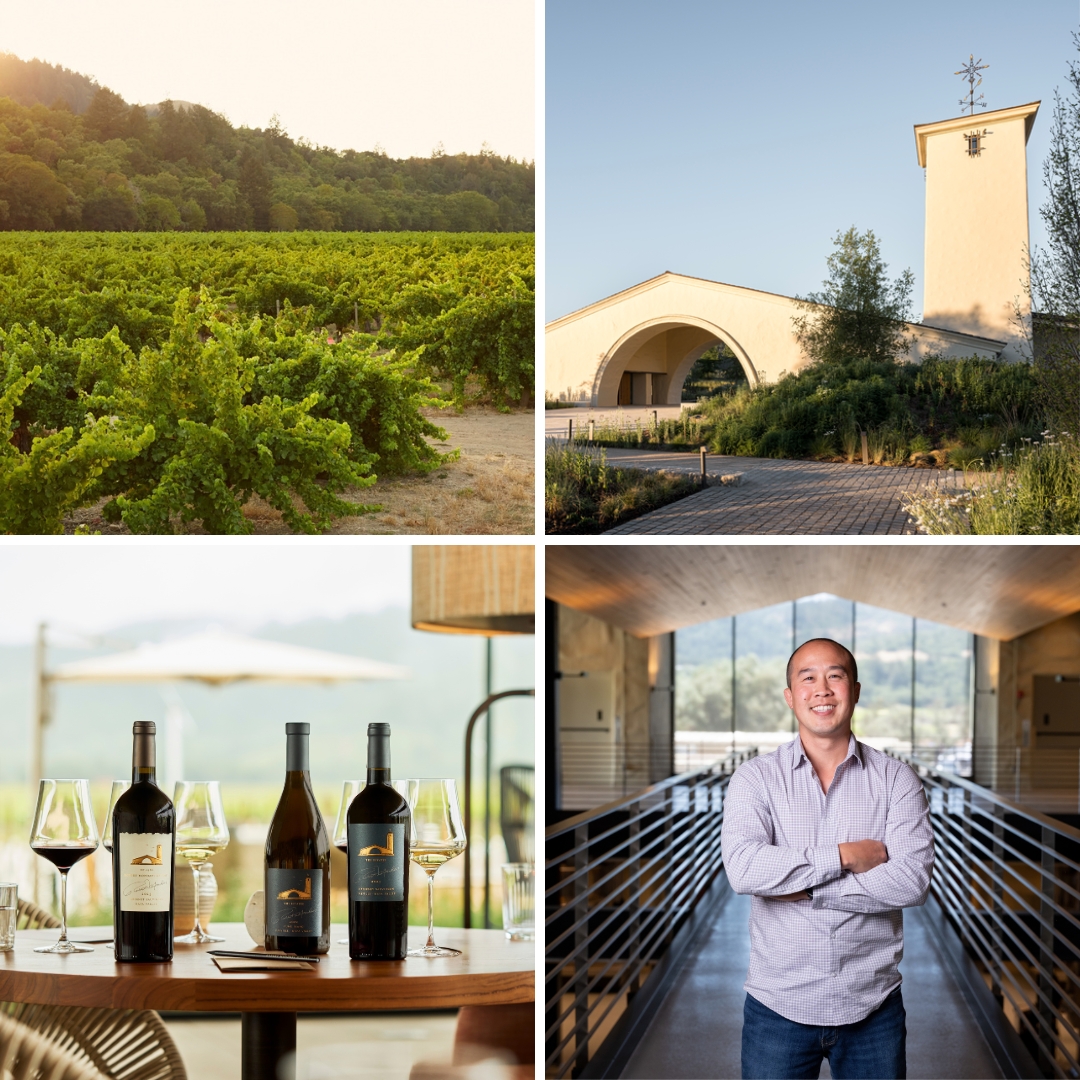
The next Legends of Wine dinner will take place on Thursday, 5 November 2026, welcoming Tim Mondavi, co-founder of Continuum Estate, from Napa Valley. Tim will personally introduce the estate and its wines, offering guests an opportunity to hear the thinking behind Continuum directly from one of its founders.
Following a Champagne reception, Chef Jaap Krabbendam will prepare a four-course dinner accompanied by Sentium Blanc, Novicium and two vintages of Continuum. The evening will conclude with Continuum 2018 served from magnum, a wine awarded 100 points by Robert Parker’s Wine Advocate.
For more information and registration, click here.
This article is written by our own Niels Aarts. We would like to thank Frank van Gool and the Legends Lounge team, Cees van Casteren MW, Hilke Dahlem and the VDP, and Philipp Stein and his team from Steins Traube for the evening, wines and dinner.
Join our insiders’ list and get exclusive early access to new articles, expert tips, and fresh reviews delivered straight to your inbox. Subscribe now and be the first to discover!