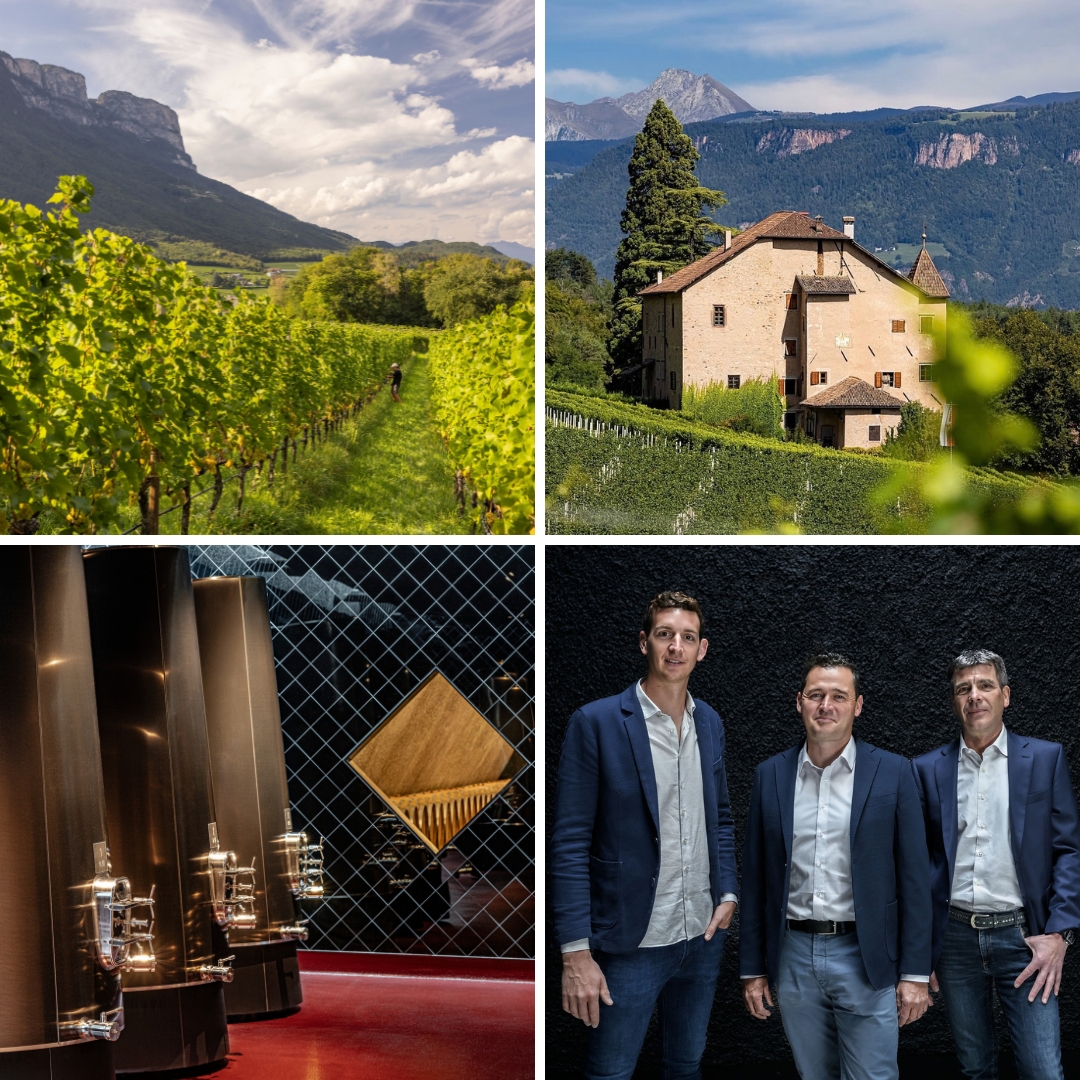
Join Our Wine Journey – Sign Up for the Newsletter 🍷
Eben Sadie on Legacy, Time and the Future of Sadie Family Wines
Share
Deel op X (twitter)
LinkedIn
WhatsApp
Eben Sadie on Legacy, Time and the Future of Sadie Family Wines.
From old-vine Chenin Blanc and climate adaptation to family succession and the next generation, one of South Africa’s most influential winemakers reflects on building an estate designed to outlast its founder.
“I don’t believe you can make a Grand Vin in one lifetime.”
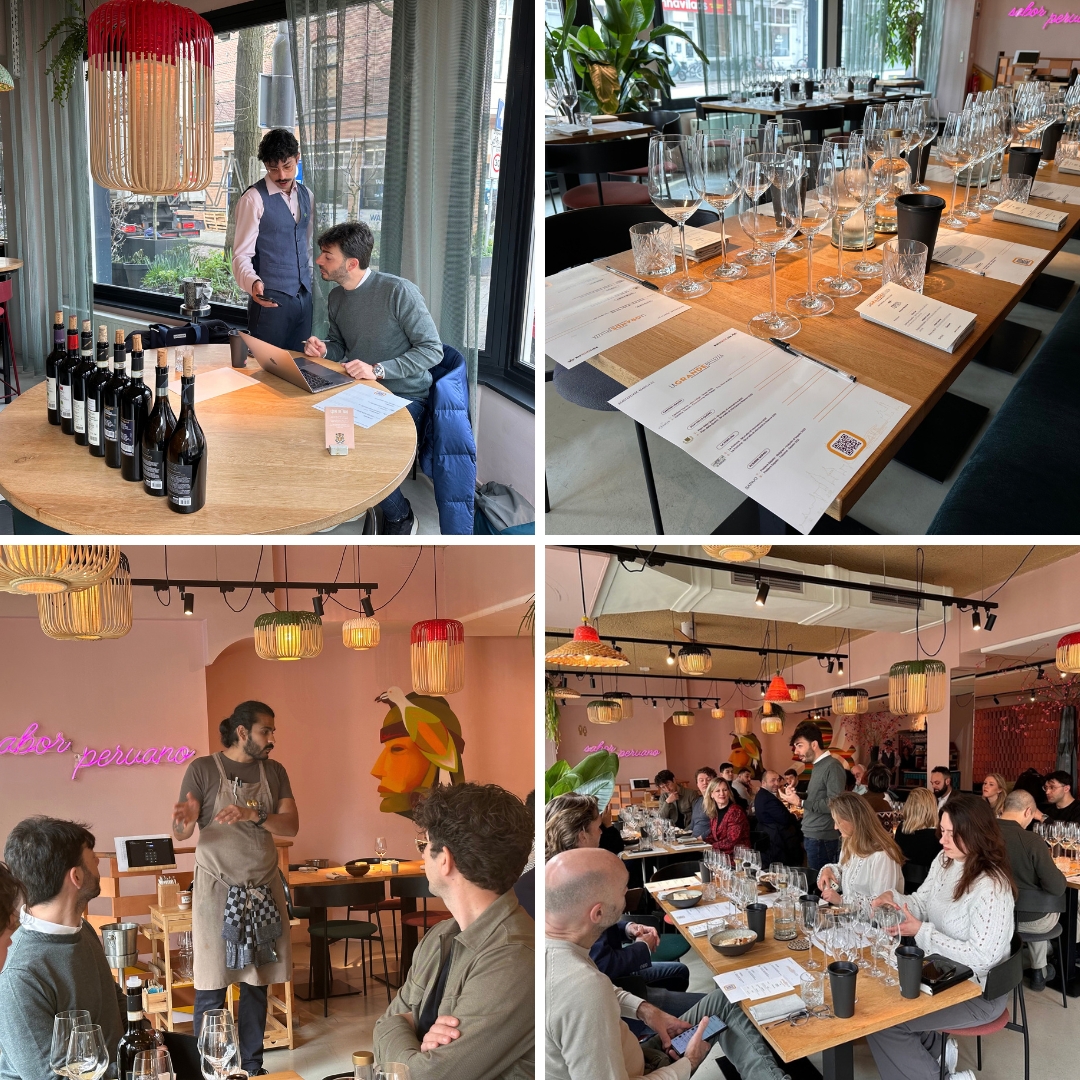
It is not the sort of statement one expects from a winemaker whose wines are widely regarded among South Africa’s finest. Yet sitting inside Amsterdam’s Zuiderkerk during Cape Cru 2026, Eben Sadie returns repeatedly to the same idea: time.
Whether discussing Chenin Blanc, climate change, farming, family or the future of Sadie Family Wines, everything eventually circles back to a single question. How do you build something capable of outliving you?
That perspective has long distinguished Sadie from many of his contemporaries. Over the past twenty-five years, Sadie Family Wines has become one of the defining estates of modern South African wine, helping to elevate both the Swartland and South Africa’s reputation on the global fine wine stage. Yet spending an afternoon with Sadie reveals a man who seems less interested in discussing past achievements than in preparing for what comes next.
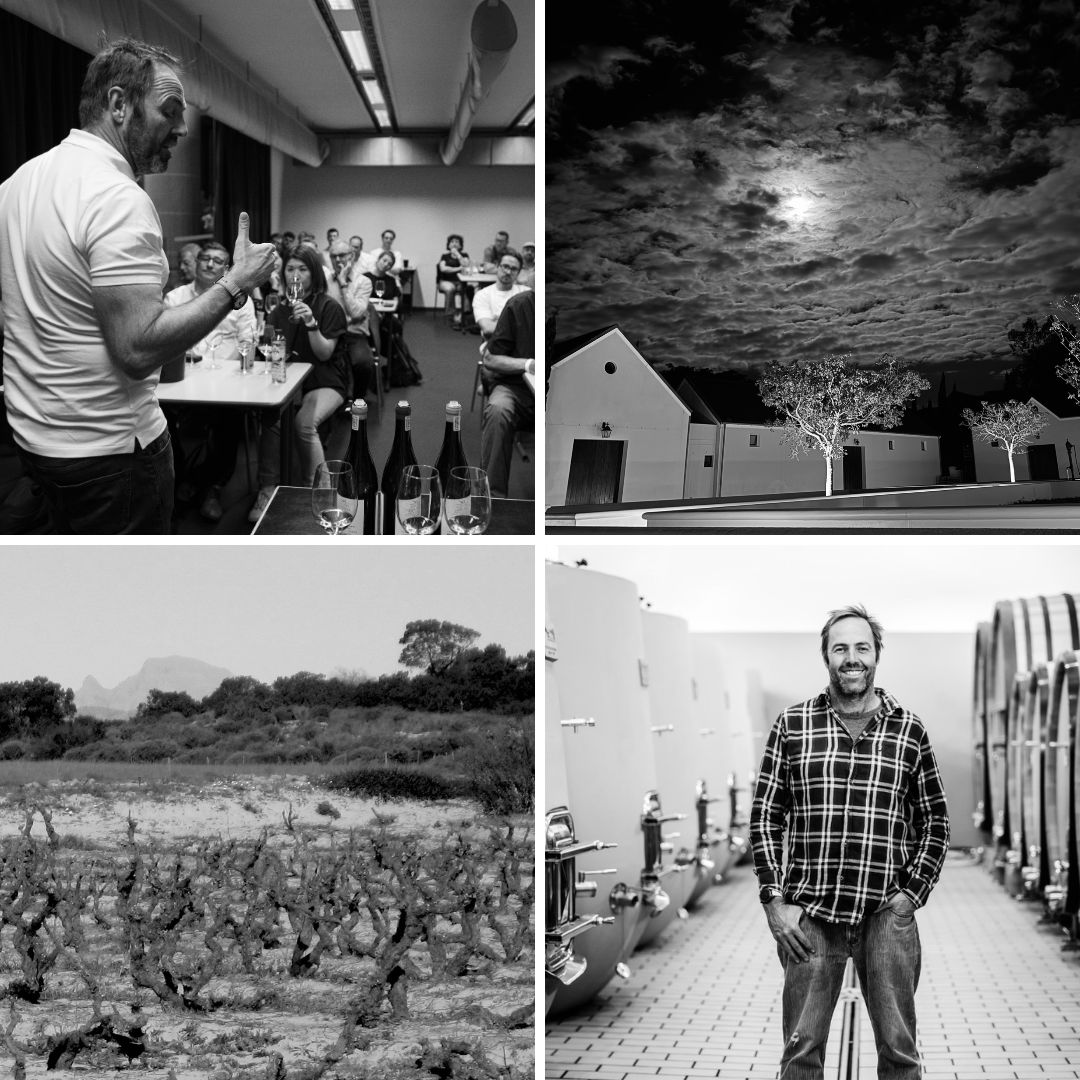
Eben Sadie, presenting his wines at Cape Cru.
At fifty-three years old, he finds himself at a fascinating point in his career. The vineyards he spent decades restoring and nurturing are reaching maturity. The wines continue to evolve. His children are becoming increasingly involved in the family business. Increasingly, his focus appears to be shifting from building a winery towards ensuring its future.
That theme emerged repeatedly throughout a masterclass featuring Rotsbank, Skurfberg and Mev. Kirsten, a one-on-one conversation about the future of the estate, and a rare vertical tasting of Palladius and Columella. Together, they painted a portrait not simply of a winemaker, but of a steward thinking in decades rather than vintages.
A Country Shaped by Chenin Blanc
Few producers are better placed to discuss South Africa’s relationship with Chenin Blanc than Eben Sadie.
One of the most fascinating moments of the masterclass came when he challenged the common assumption that South Africa’s success with Chenin Blanc was the result of careful planning. Instead, he described it as one of wine history’s great accidents.
The story begins with Lieberstein, once one of South Africa’s most commercially successful wines. Its popularity drove extensive Chenin Blanc plantings across the country throughout much of the twentieth century. At one point, more than half of South Africa’s vineyard area was planted with the variety.
“If you plant 55 percent of a country with one grape, even if you’re very bad at choosing your sites, you’re going to plant some of it in the right places.”
The audience laughed, but the point was serious. South Africa’s extraordinary collection of old-vine Chenin Blanc vineyards exists largely because of those historic plantings. What began as a commercial success story ultimately became one of the country’s greatest viticultural assets.
Chenin Blanc Grapes in the Mev. Kirsten Vineyard, that hosts the oldest Chenin Vines Eben uses.
For Sadie, however, Chenin Blanc’s significance extends beyond history. Over the past twenty-five years he has invested enormous amounts of time and resources into understanding plant material, climate adaptation and vineyard resilience. He spoke passionately about epigenetics, vine adaptation and the way Chenin Blanc has evolved over centuries of cultivation in the Cape.
His fascination with these subjects is driven by a concern that extends far beyond the next harvest. Climate change is already reshaping wine regions across the world, forcing producers to rethink both grape varieties and farming systems. While many wineries are only beginning to confront these realities, Sadie has spent decades preparing for them.
He discussed drought-tolerant varieties, alternative vineyard designs and farming systems capable of handling hotter, drier conditions. In his view, many of the world’s classic wine regions are increasingly trying to adapt varieties to climates for which they were never intended.
His approach is different.
Rather than asking how vineyards can survive future conditions, he asks what vineyards should look like in those future conditions.
The Vineyard is the Story
That long-term thinking becomes tangible when tasting the wines.
The three Chenin Blancs presented during the masterclass could hardly have been more different, despite being produced using essentially the same winemaking philosophy.
Rotsbank, planted on ancient granite soils in the Swartland, offered remarkable tension and mineral precision. The wine seemed to embody the rugged conditions of the site itself, where shallow soils and constant wind naturally limit vine growth. Dutch Wine Apprentice awarded the 2022 vintage 92/100 points and the 2024 vintage 93/100 points.
The Rotsbank Vineyard.
Skurfberg presented an entirely different expression. Situated hundreds of kilometers away on sandstone soils at higher altitude, it combined freshness, lift and aromatic complexity with a distinctive sense of energy. We awarded the 2022 vintage 95/100 points and the 2024 vintage 94/100 points.
Eben Sadie during his Chenin Blanc Masterclass at Cape Cru.
Yet it was Mev. Kirsten that perhaps best illustrated everything Sadie believes about farming.
Planted in 1905, it remains one of South Africa’s oldest Chenin Blanc vineyards. When Sadie first became involved with the site in 2005, it was in poor condition and producing only a fraction of its potential. Two decades of careful stewardship have transformed it into one of the country’s most celebrated vineyards.
The Old Vines that Populate the Mev. Kirsten Vineyard.
The 2022 Mev. Kirsten received 97/100 points from Dutch Wine Apprentice. The 2024 vintage went even further, earning 98/100 points and standing among the most profound South African white wines we have encountered in recent years.
What made Sadie’s comments particularly compelling was that he refused to take full credit for it.
“The 2024 Mev. Kirsten is the best wine we ever made,” he said.
Then, almost immediately, he admitted that despite all the data, research and vineyard monitoring available today, he could not entirely explain why everything had aligned so perfectly.
There was something refreshing in that honesty. For all the science involved in modern viticulture, great vineyards still possess an element of mystery.
We farm
Throughout both the masterclass and our interview, one phrase surfaced repeatedly.
“We farm.” Not “we make wine.” Not “we produce wine.” “We farm.”
It is a distinction that reveals a great deal about Sadie’s philosophy.
The estate’s approach begins with the belief that wine quality is determined in the vineyard. Winemaking therefore becomes an exercise in preservation rather than intervention. The objective is not to improve the wine, but to protect what already exists.
This philosophy explains why the wines are not filtered, why they are not cold stabilized and why cellar movements are kept to an absolute minimum.
In Eben’s word Farming is the essence of winemaking.
One of the most memorable comparisons he offered involved surgery.
A surgeon who unnecessarily opens a patient introduces risk, even if the operation itself is successful. Wine, he argues, is no different. Every transfer, every intervention and every manipulation introduces the possibility of loss.
“The best the wine will ever be is one second after you cut the grape.”
Everything that follows is an attempt to preserve that moment.
Palladius and a Vision for the Future
If Mev. Kirsten represents the preservation of history, Palladius arguably represents Sadie’s vision for the future.
The wine is built from nineteen vineyards and fourteen different grape varieties. On paper it sounds chaotic. In reality, it reflects many of the themes that emerged throughout our conversations.
Diversity. Resilience. Adaptation. Complexity.
Where much of the modern wine world has embraced simplification and monoculture, Palladius moves in the opposite direction. The wine is built around the idea that diversity creates strength, both in vineyards and in wines.
Tasting the 2016 and 2023 vintages side by side reinforced that philosophy. Dutch Wine Apprentice awarded the 2016 vintage 94/100 points and the 2023 vintage 97/100 points. Despite being separated by seven years, both displayed the remarkable complexity and ageing potential that have become hallmarks of the wine.
The Old Vines that form the Identity of South Africa and Palladius.
The same could be said of Columella.
Tasting the 2012, 2016 and 2023 vintages demonstrated not only consistency but also the patience that underpins Sadie’s approach. The 2012 vintage earned 96/100 points from Dutch Wine Apprentice, while the 2016 scored 95 points and the 2023 received 98 points.
These are wines built for time. They are not designed to impress in their youth alone; they are intended to reveal themselves gradually over decades.
Columella ageing in Barrels in the Cellar.
That belief is central to Sadie’s understanding of fine wine.
Too often, he argues, wines are judged before they have had the opportunity to fully express themselves. It is one reason why he rarely drinks young wines himself. The feedback that matters only arrives years later.
Building Something Larger than Yourself
Perhaps the most surprising aspect of our conversation was how little Sadie spoke about himself.
Instead, he spoke about people. He spoke about culture. He spoke about responsibility.
The estate now employs dozens of people and invests heavily in research, vineyard development and education. It operates fully off-grid and continues to explore new approaches to sustainability and long-term farming.
Yet one of the details that remained with us most was remarkably simple.
Every day, everyone working on the estate eats lunch together. Vineyard workers, cellar staff, managers and executives all sit around the same tables.
“If the guy in the vineyard doesn’t have the philosophy, he cannot work on the plant.”
Unity is an important aspects of Sadie Family Wines.
For Sadie, culture is not something that exists separately from wine. It is part of the wine.
“You need pride. You don’t need arrogance. You’re allowed to be proud.”
Those comments offer insight into a producer who increasingly seems focused on building systems rather than personal recognition.
The Next Generation
That mindset becomes most evident when discussing succession.
Markus Sadie now works alongside his father, while his siblings (Xander and Lisa-Maria) are also building careers connected to agriculture and wine. Yet Eben is acutely aware that inheriting a successful estate presents different challenges from building one.
“I was free to do what I wanted, where I wanted, when I wanted it. Markus lands in a framework.”
Unlike his father, Markus inherits expectations. He inherits a reputation. He inherits a history.
For that reason, Sadie believes one of the greatest risks facing family businesses is a founder who remains involved for too long.
“I have to leave soon the winery. If I stay too long, they won’t have enough time to make their own story.”
It is a striking statement from someone who has spent decades building one of South Africa’s most respected wine estates.
To support that transition, he is developing what he calls a “Generational Passage” charter, a framework designed to guide the estate into the future while allowing enough freedom for the next generation to shape its own path.
Importantly, he is not writing it alone. The next generation will help define it.
That detail feels entirely consistent with the philosophy underpinning the estate. Great vineyards are not inherited intact. They are inherited, improved and passed forward.
Looking Beyond a Single Lifetime
After an extensive tasting and conversation, what remains most striking is not a particular bottle, vineyard or score. It is the sense that Eben Sadie views wine differently from many of his contemporaries.
While much of the wine world operates vintage by vintage, he thinks in decades. While others focus on products, he focuses on systems. While others discuss the next release, he is already thinking about the next generation.
Eben Sadie, happy when sharing his wines.
As our conversation drew to a close, he returned once again to the idea that had framed the entire day.
“I don’t believe you can make a Grand Vin in one lifetime.”
Perhaps that is precisely why Sadie Family Wines continues to evolve. For Eben Sadie, the goal has never been simply to make great wine. The goal is to leave behind vineyards, people and ideas strong enough that the work can continue long after he is gone.
This article is written by our own Niels Aarts. We would like to thank Eben Sadie for his time and openness and his Dutch importer and Distributor Wijnkooperij de Lange (Paul Frankhuizen in particular) for their support. Picture credits: Wijnkooperij de Lange, Cape Cru and Sadie Family Wines.
Join our insiders’ list and get exclusive early access to new articles, expert tips, and fresh reviews delivered straight to your inbox. Subscribe now and be the first to discover!