Join Our Wine Journey – Sign Up for the Newsletter 🍷
DuMOL: Precision, Patience, and the Rise of a Sonoma Benchmark
Share
Deel op X (twitter)
LinkedIn
WhatsApp
DuMOL: Precision, Patience, and the Rise of a Sonoma Benchmark.
California fine wine has entered a period of transition. The era in which prestige was largely defined by scale, ripeness, and luxury positioning is increasingly giving way to a different conversation — one centred around site transparency, freshness, longevity, and authenticity. Within that evolving landscape, DuMOL has quietly emerged as one of the clearest expressions of where modern California wine is heading.
In many ways, DuMOL’s rise parallels the broader maturation of California fine wine itself. Founded during the height of the Parker era — when richness, extraction, and power dominated much of the conversation around American wine — the winery has gradually evolved toward a more restrained and site-driven identity without losing its Californian character. That evolution now places DuMOL among a growing group of producers redefining what modern California Chardonnay and Pinot Noir can look like.
Founded in 1996 in Sonoma County, DuMOL has evolved from a modest startup into one of California’s most respected producers of Pinot Noir and Chardonnay. Yet unlike many wineries that expanded rapidly alongside California’s luxury boom, DuMOL developed with unusual patience. Vineyard by vineyard, vintage by vintage, the winery built an identity rooted not in excess or reinvention, but in precision, continuity, and long-term vision.
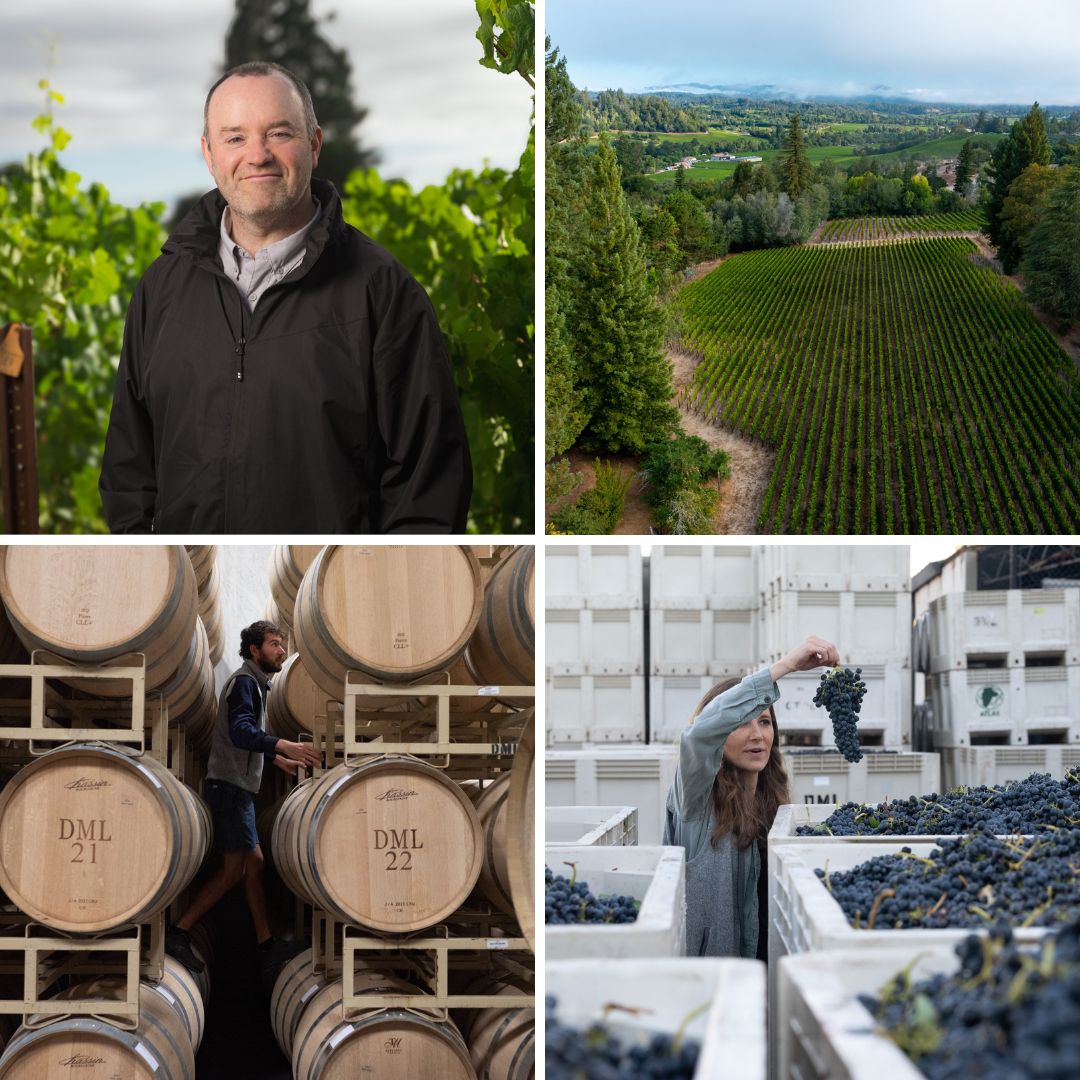
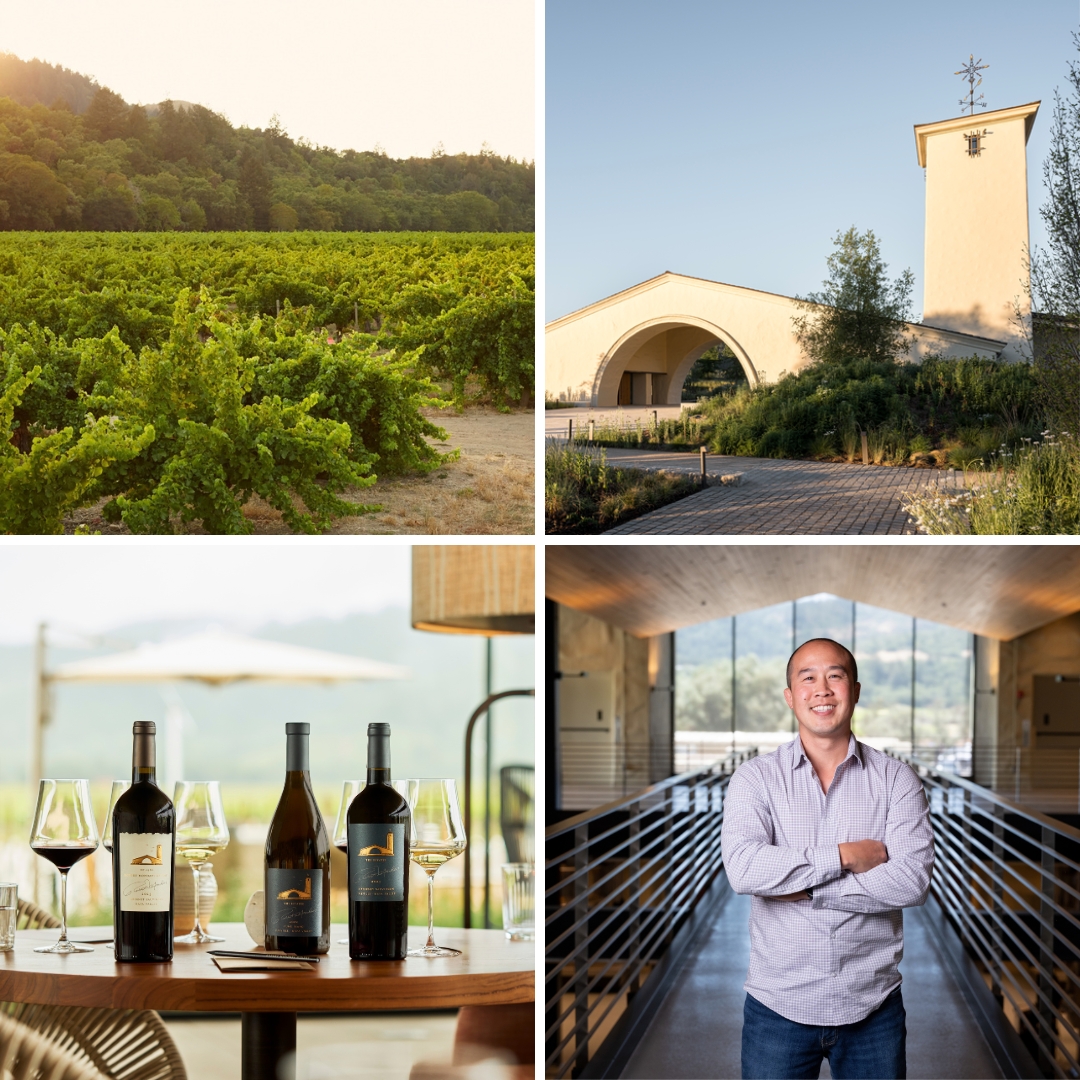
DuMOL Estate and its Vineyard.
Today, the winery operates largely as a domaine-driven estate focused on Green Valley and the western reaches of the Russian River Valley — cooler, fog-influenced sites that naturally favor tension, moderate alcohol, and structural refinement.
At the center of that evolution stands Andy Smith — proprietor, partner, and winemaker — whose influence has shaped DuMOL since its formative years. But the story of DuMOL is not simply that of a winemaker. It is equally the story of a winery whose founders, vineyard team, and long-term management philosophy have remained remarkably aligned for nearly three decades.
From Startup Project to Serious Estate
DuMOL was founded by Michael Verlander and Kerry Murphy in 1996, initially operating under a flexible négociant-style structure that was increasingly common in California at the time. The winery owned no vineyards, had no winery facility, and relied entirely on purchased fruit and consulting winemaking support.
What separated DuMOL from many similar projects was the willingness of its founders to reinvest continuously into the winery’s long-term future rather than treating it as a short-term luxury venture.
A pivotal moment came in 1999 when Andy Smith joined the winery through his work with consultant Paul Hobbs. Originally from Scotland, Smith brought with him an unusually broad international foundation, shaped through harvests and studies in New Zealand, Australia, Napa Valley, and Sonoma County.
His formative experiences included work at Dry River in Martinborough, Yalumba in Australia’s Barossa Valley, Havens Wine Cellars in Napa Valley, and alongside influential figures such as Ted Lemon and Paul Hobbs. Those experiences exposed him to both New World precision and European vineyard philosophy at a moment when California itself was still defining its modern identity.
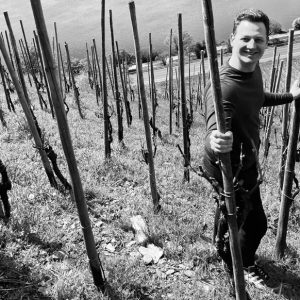
Andy Smith of DuMOL.
Working closely with the ownership team, Smith helped guide DuMOL away from its original asset-light structure toward a far more ambitious vision centred around estate farming, long-term vineyard control, and vineyard expression.
The transition happened gradually, but decisively.
By the early 2000s, DuMOL began acquiring land, planting vineyards, and deepening relationships with a small number of highly trusted growers. Early critical acclaim, including strong recognition from Robert Parker, accelerated the winery’s visibility internationally and helped establish momentum at a crucial stage in its development.
A dedicated winery followed in 2007, marking an important step in the winery’s evolution from boutique project to serious long-term estate.
Today, roughly 80% of production comes from estate vineyards or directly managed sites, representing a complete transformation from the winery’s original model.
Green Valley: Defining a House Style
At a time when many California Pinot Noir producers built portfolios spanning multiple appellations across the state, DuMOL chose a different path.
Rather than chasing geographical diversity, the winery concentrated heavily on Green Valley and the western Russian River Valley. Located close to the Pacific Ocean, these areas experience strong coastal influence, with cool foggy mornings, moderate daytime temperatures, and long growing seasons that preserve acidity and aromatic detail.
That decision would become foundational to the winery’s identity.
Standing in the middle of DuMOL’s estate vineyards today, the Pacific influence is impossible to ignore. Morning fog drifts inland through the vineyard rows before gradually lifting into cooler afternoons shaped by ocean air. The result is a growing environment where ripening occurs slowly and naturally, allowing flavour development without sacrificing freshness.
Much of the winery’s core vineyard network lies within only a few kilometers of one another. The result is not uniformity, but coherence: a recognisable stylistic thread running throughout the wines.
Fog plays an important role in the Vineyards at DuMOL.
The vineyards themselves reflect this same precision-driven philosophy. In the early 2000s, DuMOL adopted high-density vineyard planting inspired partly by Burgundy — highly unusual in California at the time. Instead of traditional Californian spacing, the winery planted certain vineyards at nearly three times the density, encouraging competition between vines and naturally moderating vigor.
The visual effect is striking. The tightly spaced rows resemble parts of Burgundy far more than classic California viticulture.
Combined with Green Valley’s sandstone-based soils — capable of retaining moisture deep below the surface while still offering excellent drainage — the vineyards produce wines defined less by sheer ripeness and more by structural energy, mineral detail, and composure.
Farming for Balance Rather Than Power
If there is one recurring theme throughout DuMOL’s evolution, it is the pursuit of balance through farming.
The estate vineyards are farmed organically, with certification currently nearing completion after years of practicing organic viticulture without formal accreditation. Herbicides, synthetic fertilizers, and synthetic fungicides have long been absent from the vineyards.
Equally important is the winery’s increasingly hands-on farming structure. Today, DuMOL operates with its own dedicated vineyard crew led by longtime vineyard manager Ruben Mendiola — a move that has allowed far greater precision and flexibility in responding to each growing season.
That continuity within the vineyard team has become one of the winery’s quiet strengths. Many crew members return year after year, creating an unusually deep familiarity with the vineyards themselves — from pruning decisions to canopy management and harvest timing.
Vineyard Inspections.
That flexibility has become increasingly important in California’s changing climate.
Fog rolling in from the Pacific brings humidity and disease pressure during parts of the growing season, while warmer vintages require constant adaptation in canopy management and harvest timing. Rather than following rigid ideology, DuMOL approaches farming pragmatically: observing what the vines need and adjusting accordingly.
As Smith explained during our conversation: “We’d far rather have the grapes off a day early than a day late.”
The goal is not to stress the vines into concentration, but to maintain equilibrium.
That philosophy also explains one of the defining characteristics of DuMOL’s wines: freshness. Harvest decisions increasingly favor earlier picking windows, preserving acidity, vibrancy, and structural lift rather than maximum ripeness.
The Evolution of the Wines
Like many California wineries founded during the late 1990s and early 2000s, DuMOL’s earlier wines reflected the stylistic preferences of the period: richer fruit profiles, greater new oak influence, and more overt power.
Those wines were highly successful and reflected the broader direction of fine California wine at the time, when critical acclaim often rewarded richness, concentration, and immediacy. DuMOL itself benefited from that momentum, particularly as international demand for Californian luxury wines accelerated during the early 2000s.
Yet as both the winery and the global fine wine landscape evolved, so too did DuMOL’s priorities. Rather than rejecting its Californian identity, the winery gradually refined it — moving toward greater freshness, structural clarity, and vineyard transparency while still preserving the depth and generosity that remain essential to the region.
This evolution mirrors Smith’s own development as a winemaker. Drawing on decades of vineyard and cellar experience across multiple wine regions, he gradually moved DuMOL toward a more restrained, site-driven approach focused on energy, texture, and longevity.
Importantly, this transition was not abrupt. It emerged through years of experimentation and accumulated understanding.
For Chardonnay, that refinement includes native fermentations, restrained oak use, full malolactic conversion, and extended élevage combining barrel aging with additional time in stainless steel before bottling. The resulting wines carry concentration and textural depth, yet remain defined by saline tension and linearity.
Oak use still is important at DuMOL but the way Oak is used has changed a lot over the years.
Pinot Noir has perhaps undergone the most visible transformation. Extraction methods have become increasingly gentle, with less pigeage, cooler fermentations, and greater use of whole clusters in warmer vintages. Rather than amplifying fruit, the focus shifted toward preserving savoury complexity, transparency, and vineyard character.
The wines today feel more architectural than opulent — built around shape, clarity, and gradual evolution rather than immediate impact.
Long-Term Relationships and Stability
A defining strength of DuMOL lies in its continuity.
Many California wineries of similar age have changed ownership structures repeatedly, sold to larger corporate groups, or altered stylistic direction in response to market shifts. DuMOL has remained remarkably stable.
That stability extends directly into the vineyard relationships themselves.
Sites such as Hyde Vineyard in Carneros and Charles Heintz Vineyard on the Sonoma Coast have remained central to the portfolio for decades, allowing the winery to build an unusually deep understanding of each vineyard’s personality over time.
Chardonnay Grapes in DuMOL’s Estate Vineyard.
Rather than constantly searching for new sites or reinventing the portfolio, DuMOL focused on refinement through familiarity — learning how vineyards respond across different vintages and adapting incrementally.
This patient approach increasingly distinguishes the winery within modern California wine.
Beyond Pinot Noir and Chardonnay
Although DuMOL is best known for Pinot Noir and Chardonnay, the winery also maintains a small but serious Cabernet Sauvignon program sourced from cooler Napa Valley sites including Coombsville and Spring Mountain.
These wines reflect the same philosophy found throughout the broader portfolio: freshness, structure, moderate ripeness, and balance over sheer opulence.
Cabernet Grapes at Harvest Time.
Alongside Cabernet Sauvignon, DuMOL also produces small quantities of Syrah, Chenin Blanc, Zinfandel, and occasional experimental bottlings. These projects are less about commercial expansion and more about curiosity — another reflection of the winery’s broader wine culture.
A Global Winery Without Losing Identity
From relatively early in its history, DuMOL pursued export markets seriously — something still uncommon for many California wineries of comparable size during the early 2000s.
Today, the winery exports to more than 30 countries, with especially strong presence in markets such as Japan, Belgium, the Netherlands, Scandinavia, and the United Kingdom.
Importantly, this global growth was never driven through artificial scarcity or aggressive luxury positioning. Instead, DuMOL focused on building long-term relationships with importers, sommeliers, collectors, and restaurants.
That strategy now appears increasingly prescient.
At a moment when parts of the luxury wine market are facing growing volatility, DuMOL’s broader international foundation and measured pricing philosophy have provided notable stability.
The winery’s success increasingly feels built on trust rather than hype.
The Wines: Expression of Place and Philosophy
Within DuMOL’s broader philosophy of precision farming, restrained winemaking, and long-term vineyard focus, the wines themselves clearly reflect the estate’s stylistic evolution. Across the range, there is a consistent emphasis on freshness, layered texture, moderate alcohol, and a balance between Californian generosity and structural tension.
The DuMOL selection on our tasting table.
DuMOL Estate Vineyard Chardonnay 2021 — 96/100 DWA score
The 2021 Estate Vineyard Chardonnay immediately reveals the tension and precision that define DuMOL’s top Chardonnay bottlings. Aromatically, the wine opens gradually with layers of preserved lemon, yellow apple, ripe pear, chamomile, flint, crushed stone, and subtle pastry notes. There is clear richness on the nose, yet it never feels overtly opulent.
On the palate, the wine combines concentration with remarkable energy. A broad, almost creamy texture is tightened by vibrant acidity and a saline mineral backbone that gives the wine exceptional focus. Notes of citrus oil, orchard fruit, toasted almond, and wet stone continue through a long, youthful finish. The oak remains supportive rather than dominant, allowing the vineyard character and high-density estate fruit to remain fully transparent.
Still youthful and tightly wound, this is a Chardonnay built for long development in bottle, combining Californian depth with a distinctly Burgundian sense of structure and restraint.
DuMOL Hyde Vineyard Chardonnay 2023 — 97/100 DWA score
Tasted during our interview with Andy Smith, the 2023 Hyde Vineyard Chardonnay immediately demonstrated why this wine occupies such an important place within the DuMOL portfolio. Sourced from one of California’s most historic Chardonnay vineyards in Carneros — a site DuMOL has worked with for nearly 25 years — the wine effectively captures the broader philosophy that has shaped the winery itself: patience, continuity, and precision over time.
From the first moment in the glass, the wine reveals remarkable tension between richness and freshness. Aromas of preserved citrus, ripe white peach, yellow apple, crushed oyster shell, chamomile, toasted almond, and smoky wet stone unfold gradually, gaining complexity with air rather than immediate opulence. Subtle oak influence sits quietly beneath the fruit, adding texture and shape without dominating the wine.
On the palate, the balance is exceptional. There is clear concentration and density from the old vines, yet the wine never feels broad or heavy. Instead, a vibrant core of acidity drives the wine forward, creating a sense of movement and precision that keeps every layer tightly focused. Saline mineral notes, citrus oil, and savoury reduction continue through an extraordinarily long finish.
What makes the wine particularly compelling is its composure. During our conversation, Smith emphasized that the objective at Hyde is not maximum ripeness or sheer power, but harvesting on the early side of maturity in order to preserve energy and allow the wine to evolve slowly in barrel and bottle. That philosophy is immediately visible here. Despite its scale and intensity, the wine remains disciplined, detailed, and remarkably youthful.
The 2023 vintage also appears to mark an important moment for the vineyard itself. Smith described it as one of the finest Hyde vintages DuMOL has produced, benefiting from decades of accumulated understanding of both the site and the vines.
A benchmark California Chardonnay that successfully combines Grand Cru-like intensity with restraint, detail, and longevity.
DuMOL Hyde Vineyard Chardonnay 2023 — 97/100 DWA score.
DuMOL Chloe Russian River Valley Chardonnay 2023 — 94/100 DWA score
The 2023 Chloe Chardonnay presents a more approachable and open-knit expression within the DuMOL Chardonnay portfolio, while still retaining the winery’s hallmark precision and freshness. The aromatics lean toward ripe orchard fruit, golden apple, pear, citrus blossom, and lemon curd, supported by subtle notes of fennel, pastry spice, and lightly toasted oak.
On the palate, the wine is generous and textured, delivering ample fruit concentration without sacrificing balance. A bright line of acidity keeps the wine energetic and focused, while gentle oak influence adds shape rather than weight. The polished mid-palate gradually transitions into a fresh, mineral finish with lingering citrus and stone fruit notes.
More immediately accessible than some of the more tightly wound single-vineyard bottlings, the Chloe nevertheless carries sufficient depth and structure to develop positively over the coming years.
DuMOL Western Reach Russian River Valley Pinot Noir 2023 — 93/100 DWA score
The 2023 Western Reach Pinot Noir beautifully captures DuMOL’s increasingly refined Pinot Noir style: energetic, layered, and driven more by detail than sheer power. The nose opens with vibrant aromas of wild strawberry, red cherry, cranberry, rose petal, blood orange, forest floor, and subtle savoury spice.
On the palate, the wine combines impressive concentration with finesse and transparency. The fruit profile remains bright and pure, framed by fine-grained tannins and vibrant acidity that provide both structure and lift. Beneath the red fruit core lies an earthy, saline complexity that adds depth and persistence.
What stands out most is the wine’s fluidity. There is no heaviness or over-extraction here; instead, the wine moves with clarity and precision from start to finish. The cooler western Russian River Valley influence remains clearly visible throughout.
Already highly attractive in its youth, this Pinot Noir clearly possesses the structural energy for long-term aging.
DuMOL Estate Vineyard Pinot Noir 2021 — 96/100 DWA score
The 2021 Estate Vineyard Pinot Noir represents one of the purest expressions of DuMOL’s estate philosophy and vineyard precision. Deeply layered aromatics of black cherry, pomegranate, cranberry, dried rose petals, blood orange, spice, and crushed stone emerge gradually from the glass, revealing increasing detail with air.
The palate is simultaneously concentrated and restrained. Silky tannins frame a vibrant core of red and dark fruit, while fresh acidity gives the wine exceptional drive and direction. Beneath the fruit lies a persistent mineral backbone that adds both structure and complexity.
Rather than relying on extraction or overt richness, the wine achieves its depth through purity, composure, and persistence. Oak integration is seamless, allowing the savoury and floral nuances to remain fully visible. The finish is long, tightly wound, and highly precise, suggesting considerable development potential ahead.
This is Sonoma Pinot Noir at a very high level — sophisticated, age-worthy, and increasingly defined by detail rather than power.
DuMOL Napa Valley Cabernet Sauvignon 2019 — 93/100 DWA score
The 2019 Napa Valley Cabernet Sauvignon offers a more restrained and classical interpretation of Napa Cabernet than many contemporary examples. Sourced from cooler Napa Valley sites including Coombsville and Spring Mountain, the wine immediately distinguishes itself through freshness and structural clarity rather than sheer opulence.
The nose combines cassis, black cherry, graphite, cedar, tobacco leaf, and subtle herbal nuances with hints of mint and dark cocoa. On the palate, the wine is polished and concentrated, yet notably controlled in style. Fine tannins provide structure without dominance, while vibrant acidity maintains lift and precision throughout.
The fruit remains pure and focused, supported by carefully integrated oak and a savoury mineral undertone that carries through the finish. Rather than pursuing excessive ripeness or extraction, the wine leans into balance, tension, and longevity — fully aligned with DuMOL’s broader philosophy across the portfolio.
Still youthful, the wine should continue developing positively over the next decade and beyond.
A Winery Entering Maturity
Nearly thirty years after its founding, DuMOL occupies a unique position within California wine.
It combines the scale and professionalism of a mature international winery with the mentality of a focused grower-producer. The team remains relatively compact, highly hands-on, and deeply involved in both farming and winemaking decisions.
For Andy Smith, who has now overseen nearly every DuMOL vintage since the late 1990s, that continuity has provided something increasingly rare in modern wine: the ability to refine rather than reinvent.
The wines themselves increasingly reflect that maturity — less about immediate impact, more about detail, composure, texture, and longevity.
DuMOL has become one of California’s leading Chardonnay and Pinot Noir producers.
What once began as a small Sonoma project has quietly evolved into one of California’s clearest statements of modern fine wine. Its greatest strength may ultimately be consistency of vision: a winery confident enough to evolve slowly, trust its vineyards, and allow time itself to become part of the process.
This article is written by our own Niels Aarts. We would like to thank Andy Smith for his openness, time, and insights during our conversation. Our thanks also go to the DuMOL team (especially Marc Guerguy) and to Best of Wines for the opportunity to taste and review the wines. Picture credits: DuMOL.
For readers interested in discovering the wines of DuMOL, they are available in the Netherlands through our partner Best of Wines, one of the country’s leading specialists in fine wine.
Join our insiders’ list and get exclusive early access to new articles, expert tips, and fresh reviews delivered straight to your inbox. Subscribe now and be the first to discover!