Join Our Wine Journey – Sign Up for the Newsletter 🍷
Vignoble des Cabottes: A New Domaine for Old Terroirs
Share
Deel op X (twitter)
LinkedIn
WhatsApp
Vignoble des Cabottes: A New Domaine for Old Terroirs.
With the 2023 vintage, some of Burgundy’s most historic vineyards appeared under a new name. Vignoble des Cabottes may be a new domaine, but its story is rooted in vineyards cultivated for centuries and in the experience of Frédéric Weber, who has worked with many of them for more than two decades.
Following the domaine’s Dutch launch, we spoke with Weber about the transition from Bouchard Père & Fils, what greater focus is changing in vineyard and cellar, and why success for Cabottes will ultimately be measured by how clearly its individual terroirs continue to speak.
There is an obvious temptation, when encountering Vignoble des Cabottes for the first time, to describe it as a new Burgundy domaine. Technically, that is true, yet almost everything that matters inside the bottle predates the name.
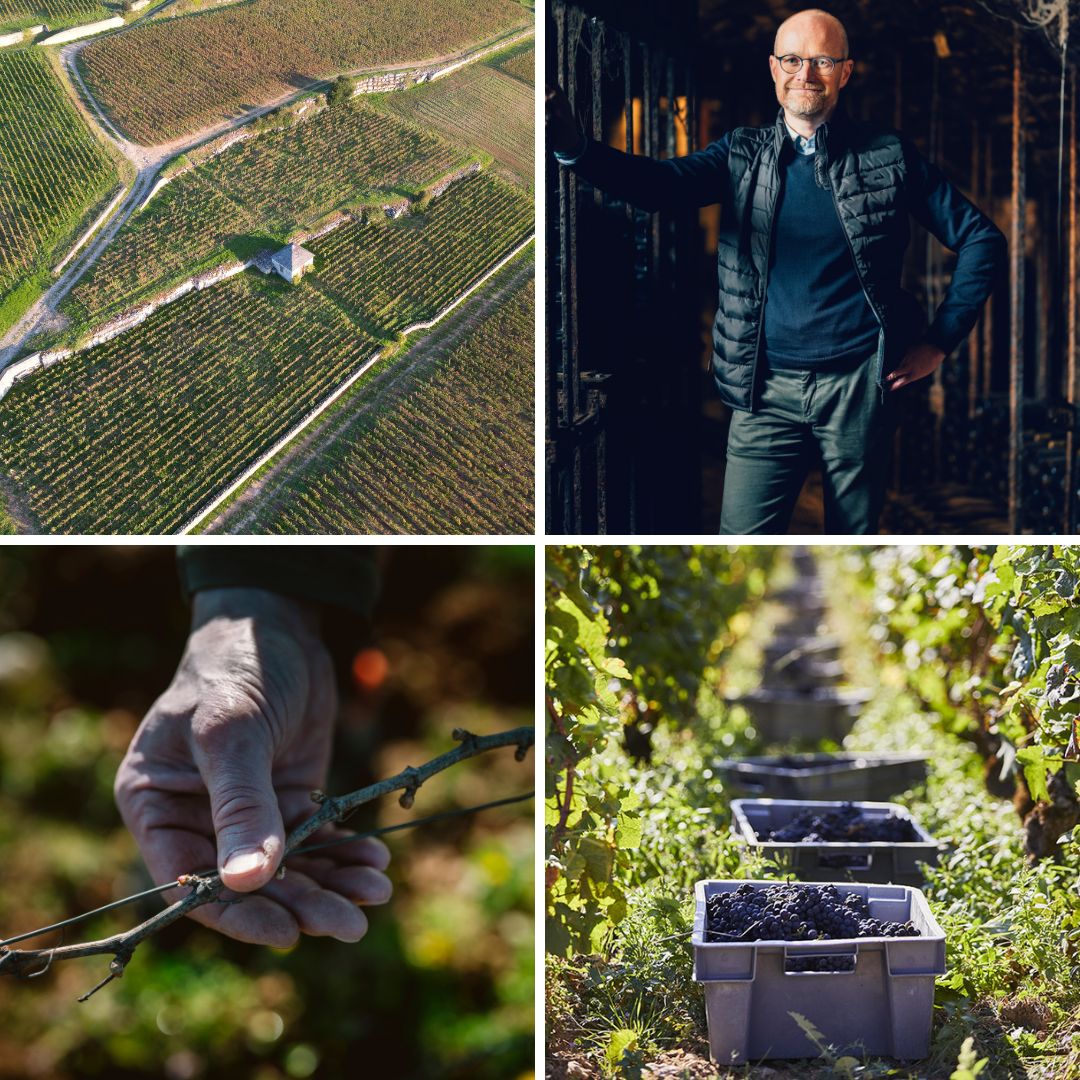
Many of its vineyards have been cultivated for centuries, several rank among the most recognisable names of the Côte de Beaune, and the man now responsible for their technical direction has known them for more than twenty years. Frédéric Weber joined Bouchard Père & Fils in 2003 and spent the following decades working with an exceptionally broad collection of Burgundian terroirs. When Artémis Domaines acquired Bouchard and subsequently reorganized its vineyard holdings, Weber was not brought in to reinterpret unfamiliar land. He was given the opportunity to work differently with vineyards he already understood intimately.
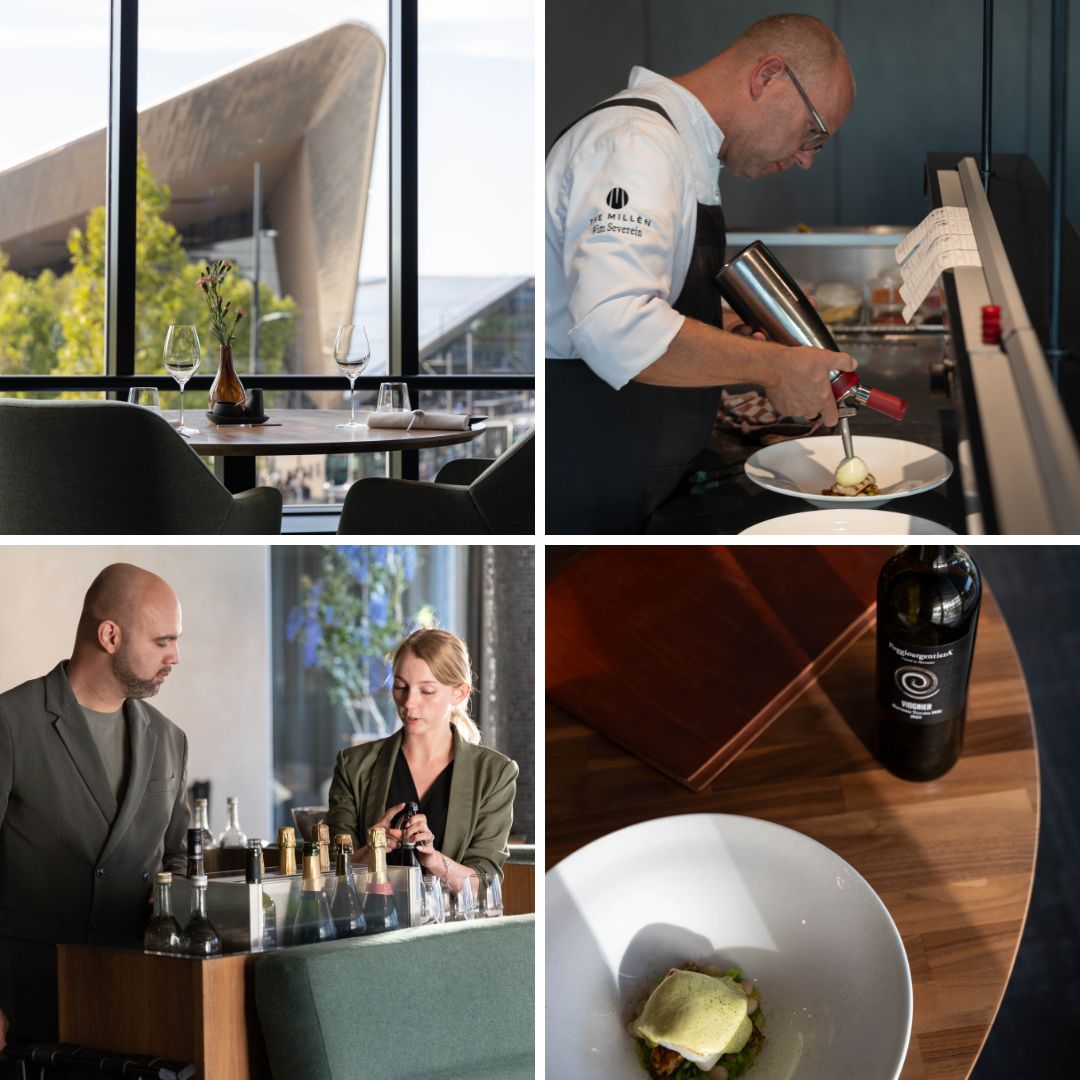
Our own first encounter with the result came when our partner Wijnkooperij de Lange presented the inaugural 2023 collection during a dinner at the two-Michelin-starred Parkheuvel in Rotterdam, where Erik van Loo, working alongside his son Juliën, created the menu around the wines. From Meursault and Beaune to Corton and Corton-Charlemagne, the vineyard names were familiar, even if the domaine name above them was not.
That contrast became the central question of our conversation with Weber: if the terroirs are unchanged, and the man responsible for them already knows them intimately, what does Vignoble des Cabottes actually change?
A New Domaine, but Not a New Beginning
The answer begins with structure. Bouchard had historically combined substantial domaine holdings with négociant activity while accumulating a remarkably broad portfolio of climats and appellations. Under Artémis, the négociant activity was discontinued and the estate reorganized around vineyards under direct ownership.
The Côte de Nuits holdings were transferred to Domaine d’Eugénie, while Bouchard Père & Fils continued with its own team and technical direction. A concentrated group of Côte de Beaune vineyards became Vignoble des Cabottes.
Formally established in 2025, Cabottes today encompasses 35 hectares, including 10 hectares of Grand Cru and 22 hectares of Premier Cru vineyards, stretching from the hill of Corton to Beaune, Savigny-lès-Beaune, Meursault, Volnay and Puligny-Montrachet.
For Weber, the restructuring inevitably carried mixed emotions. After more than twenty years with the broader Bouchard collection, narrowing his responsibilities also meant relinquishing vineyards he had followed for years.
“There were some tears,” he admits. “You lose some other things.”
Frédéric Weber, Vignoble des Cabottes.
What remained, however, included many of the vineyards closest to him. When Weber speaks about being able to concentrate more intensely on Corton-Charlemagne and the Premier Crus of Meursault, his attachment is obvious. “It was my heart. I love these terroirs.”
Continuity also extended beyond Weber. Rather than rebuilding the technical organisation from outside, the existing team was divided between the two domaines, with several people promoted into positions of greater responsibility. Over roughly two years, both operations moved towards full autonomy.
The vineyards did not suddenly become important with the creation of Cabottes, nor did Weber suddenly begin to understand them. What changed was the framework in which that knowledge could be applied.
What More Time Actually Changes
For much of his career at Bouchard, Weber worked within an operation of considerable scale and complexity, around 130 hectares with a vast number of appellations and individual parcels. Cabottes changes that equation. A dedicated team can now concentrate on a fraction of the previous surface area, supported by additional people in vineyard and cellar.
“In the past, we dreamed to do some different things, but we did not have time,” Weber says.
Many of the ideas now being pursued were already present; the difference lies in the ability to follow them more systematically and at a finer level. Weber summarizes the result neatly: “We become more artisan.”
Beaune Les Grèves Vigne de l’Enfant Jésus.
Few vineyards illustrate this better than Beaune Les Grèves Vigne de l’Enfant Jésus. Its 3.9 hectares are divided according to vine age and maturity, with different sections harvested, vinified and aged separately before Weber and Frédéric Engerer (managing director of Artémis Domaines) taste the components blind.
Only then are the lots selected that together represent their interpretation of Enfant Jésus. Those that do not reach the required level can be declassified.
“There is no pressure of money, no pressure of time,” Weber says. “There is only one goal. It’s the quality, the expression of the terroir.”
This is what “precision” means in practice: not necessarily imposing a new technique, but preserving differences long enough to decide whether they matter.
Adapting Without Losing Identity
Greater focus has also accelerated work in the vineyards. Organic farming is established across the estate, biodynamic practices are being expanded, grass is being introduced between rows, trees replanted and the traditional dry-stone cabottes restored.
The reasoning is practical. Weber is particularly interested in building organic matter because of its relationship with water retention. Grass between the rows can help clay-rich soils retain moisture longer into dry summers.
2023 harvest in Le Corton, first changes in the vineyards can already be seen.
His view of biodynamics is similarly pragmatic. Weber does not claim to understand every mechanism, but believes he sees greater freshness, precision and a saline quality in the wines, characteristics that become increasingly valuable in warmer growing seasons.
For Weber, these changes belong to a wider idea of transmission. The responsibility is not simply to make the strongest possible wine today, but to leave vineyards capable of expressing the same identity for future generations.
The Vineyard Before the Winemaker
For a newly established domaine, creating a recognisable style might seem an obvious ambition. Weber sees it differently. “The vineyard first, because we are in Bourgogne.”
There should not, in his view, be a fixed Cabottes recipe imposed across the collection. Harvest dates, extraction and whole-cluster percentages must respond to the vineyard and vintage. The technique can change; the identity of the vineyard should remain.
Harvest in Corton Charlemagne, healthy grapes that transmit the terroir.
He illustrates the point through Meursault. Put Genevrières and Perrières alongside each other, Weber argues, and the difference should be apparent without requiring an extended explanation from the winemaker. “If people taste a Genevrières and Perrières, immediately they see the difference. That is the most important for me.”
An overly dominant winemaking signature risks obscuring exactly what Burgundy has spent generations identifying. Modern technical knowledge can produce excellent Chardonnay in many places, but expressing Genevrières or Chevalier-Montrachet is another proposition entirely.
Precision, in this sense, is valuable not because it creates uniformity, but because it allows variation to remain visible.
2023: The First Statement
The 2023 vintage is the first to carry the Vignoble des Cabottes identity, but far from Weber’s first attempt at interpreting these vineyards. The transition had already begun in 2022, when new equipment and approaches were introduced.
Weber describes 2023 as warm but sufficiently supplied with rainfall to avoid serious hydric stress. His qualification is important: where yields were controlled, he believes the berries achieved excellent balance.
Asked where he sees the clearest evidence of progress, Weber immediately names Beaune Les Grèves Vigne de l’Enfant Jésus and Corton-Charlemagne.
Enfant Jésus demonstrates what stricter parcel selection can achieve, while Corton-Charlemagne shows the value of greater freedom during élevage. Rather than working towards an earlier bottling schedule, Weber can give it around a year in barrel followed, where appropriate, by further ageing in larger-format oak. “Corton-Charlemagne is like a Montrachet,” he says. “This wine needs time.”
The line-up containing the 2023 inaugural vintage.
The 2023 Vintage at the Table
That inaugural collection brought us to Parkheuvel, where Wijnkooperij de Lange had organized the Dutch launch for a select group of guests, around a dinner from Erik and Juliën van Loo’s kitchen. The evening began with Carrot Tartare and Jalapeño, Tom Kha Gai with Crispy Chicken Skin, chicken liver with Portobello and Hibiscus, and Pickled Asparagus with Curry, Coconut and Pink Peppercorn.
Beaune Clos Saint-Landry accompanied Foie Gras with Dutch Shrimp and Grapefruit. The wine had enough breadth for the foie gras, while its acidity and mineral character connected naturally with the shrimp and citrus.
Foie Gras with Dutch Shrimp and Grapefruit.
Corton-Charlemagne followed with Bresse Chicken Ravioli, Langoustine and Forest Mushrooms, one of the most complete pairings of the evening. The poultry and shellfish gave the Grand Cru sufficient richness to open gradually, while the mushrooms introduced a savoury, earthy dimension that suited its structure and mineral tension.
Roe Deer, Beetroot and Umeboshi.
With the reds, Beaune Les Grèves Vigne de l’Enfant Jésus was served alongside Roe Deer, Beetroot and Umeboshi. The game matched the wine’s depth, while the umeboshi provided the acidity and savoury tension needed to keep the combination fresh.
The most unconventional pairing came last: Corton Le Corton with Comté, Rye and Brillat-Savarin Ice Cream. The richness of the cheese met the wine’s tannic structure, while the rye introduced a savoury, nutty dimension that helped reveal the more refined side of the Grand Cru.
Beyond the quality of the dinner itself, the sequence reinforced the individuality of the wines. Clos Saint-Landry and Corton-Charlemagne behaved very differently despite both being Chardonnay; Enfant Jésus and Le Corton were equally distinct expressions of Pinot Noir. At the table, Weber’s insistence on protecting vineyard identity rather than constructing a Cabottes house style became easy to understand.
The 2023 Wines
Seven wines from the inaugural collection were tasted at Parkheuvel. The scores below are our own ratings.
2023 Savigny-lès-Beaune Les Lavières Premier Cru | 91/100 DWA score
Fragrant and energetic, built around red cherry, wild strawberry and raspberry, with violet, dried herbs and a subtle stony character adding nuance. The palate is supple but never soft, combining fine-grained tannins with fresh acidity and an attractive sense of limestone tension. The warmth of the vintage gives the fruit a little extra generosity, but the wine remains recognizably Savigny in its understated, savoury character. Red fruit, herbs and gentle spice linger through a fresh and balanced finish.
2023 Beaune Clos Saint-Landry Premier Cru | 91/100 DWA score
A distinctive white Beaune with an inviting combination of peach, citrus peel and yellow orchard fruit, accompanied by a light smoky reduction and restrained oak. The palate is broader and creamier than the nose initially suggests, though lively acidity and a firm mineral grip prevent the richness from becoming dominant. Notes of lemon pith, stone, subtle spice and a hint of dried apricot add complexity towards the finish. A wine that combines generosity with sufficient tension and structure to remain composed.
2023 Meursault Les Clous | 92/100 DWA score
An elegant rather than overtly opulent Meursault, opening with restrained reduction, citrus and orchard fruit before ripe pear, white peach and subtle notes of fine lees emerge with air. There is more substance on the palate than the initial nose suggests, yet the wine never becomes heavy. Juicy acidity, a gentle phenolic grip and a mineral undertone keep the ripe fruit in check, while discreet oak sits comfortably in the background. The finish is clean and persistent, suggesting a wine already harmonious but likely to gain further complexity with bottle age.
2023 Beaune Clos de la Mousse Premier Cru | 94/100 DWA
Perhaps the most immediately graceful of the Beaune reds, with red cherry and raspberry accompanied by herbs, subtle spice and a distinctly earthy-mineral character. Fine-grained tannins provide quiet structure rather than force, while ripe acidity and a juicy center give the wine an attractive accessibility even at this young stage. The mineral component becomes more pronounced towards the finish, where fruit, spice and freshness come together with impressive clarity. Elegant in expression, but with enough underlying substance to reward further ageing.
Beaune Les Grèves Vigne de l’Enfant Jésus.
2023 Beaune Les Grèves Vigne de l’Enfant Jésus Premier Cru | 96/100 DWA score
Immediately deeper and more complete, with pure red and darker berry fruit joined by violet, spice and crushed stone. The oak is already well integrated and supports rather than shapes the wine. On the palate, the natural generosity of Les Grèves is held together by impressively precise tannins, fresh acidity and a mineral line that keeps the considerable concentration from becoming heavy. The long, lightly gravelly finish adds further definition. One of the most complete reds of the evening and, considering Weber’s explanation of the increasingly detailed selection behind it, an important reference point for the developing Cabottes philosophy.
The 2023 Grand Cru’s in the Vignoble des Cabottes portfolio.
2023 Corton-Charlemagne Grand Cru | 96/100 DWA score
One of the outstanding wines of the tasting, and one of the bottles Weber himself identifies as particularly significant in 2023. Initially reserved, it gradually opens towards white flowers, lemon, ripe stone fruit and fine spice, with a subtle reductive character adding another layer of tension. The palate carries considerable density and breadth, but it is the combination of acidity, phenolic structure and mineral drive that defines the wine rather than sheer weight. The finish is long, savoury and increasingly saline, leaving the impression of a Corton-Charlemagne with substantial reserves and a long development still ahead.
2023 Corton Le Corton Grand Cru | 95/100 DWA score
The scale increases considerably here, though without sacrificing finesse. Rose, peony and ripe red berries lead into cherry, raspberry, herbs and finely judged spice. The palate is concentrated and energetic, with substantial yet polished tannins and a firm mineral structure carrying the fruit forward. There is a particularly attractive tension between Corton’s natural authority and the lifted character of the wine, creating power without heaviness. It remains youthful and tightly constructed, with the architecture and depth for extensive development.
Twenty Years of Observation, Translated into a Winery
From the 2028 vintage, the wines are scheduled to be vinified at Château de Puligny-Montrachet in a new dedicated winery.
The important point is not simply that Cabottes is building a modern facility. Many of the decisions behind it reflect Weber’s accumulated experience of these vineyards since 2003. The cellar is being designed around what more than two decades of observation have taught him.
A greater number of vessels in different sizes and materials, including wood, stainless steel and concrete, will allow parcels and sub-parcels to remain separate for longer. That separation also feeds back into vineyard management. If an individual lot underperforms, pruning or soil management can be adjusted; if problems persist, vines can eventually be uprooted, the soil rested and the parcel replanted using different rootstocks and massal selections.
The design also reflects warmer vintages. Greater natural maturity can bring more tannin and potential alcohol, while alcohol itself increases extraction. Weber has therefore moved towards longer but gentler macerations, with less punching down and more careful wetting of the cap, while closed wooden vats and whole clusters are among the tools he increasingly favours.
The methods may continue to evolve because protecting vineyard identity does not mean preserving the techniques used to express it.
A New Name for Old Vineyards
Vignoble des Cabottes faces an unusual challenge: the domaine has almost no history under its current name, while the vineyards entrusted to it have an abundance of history of their own.
Weber does not appear particularly concerned by how long the name may take to establish itself. “Perhaps ten years to be well known,” he suggests, before returning to what matters more: respecting the terroirs and allowing the wines themselves to build the reputation.
Cabottes, like this one at Le Corton. Old stone houses in the vineyard, to which the estate owns its new name.
The challenge is therefore not to make Cabottes more important than Montrachet, Chevalier-Montrachet, Corton, Corton-Charlemagne, Meursault or Beaune, but to establish itself as a trusted custodian of them.
Changing What Is Necessary
Towards the end of our conversation, we ask Weber to imagine tasting the inaugural 2023 vintage blind alongside 2033. By then, the vineyards will have experienced another decade of evolving viticulture, the new winery will have been operating for several vintages, and Burgundy will almost certainly have adapted further to a changing climate.
What would he hope to find?
“If you taste the ’23 and the ’33 with a blind tasting, I hope just to recognize our own terroir. If you recognize a Genevrières, it’s still a Genevrières, it has not become another wine. That is my goal.”
A Genevrières grown in a warm vintage cannot necessarily be farmed, harvested and vinified like one from a cooler year. Ripeness, acidity and tannin change, meaning that preserving identity does not mean preserving technique.
“The most difficult thing is to be very humble, to be very transparent about the terroir,” Weber explains.
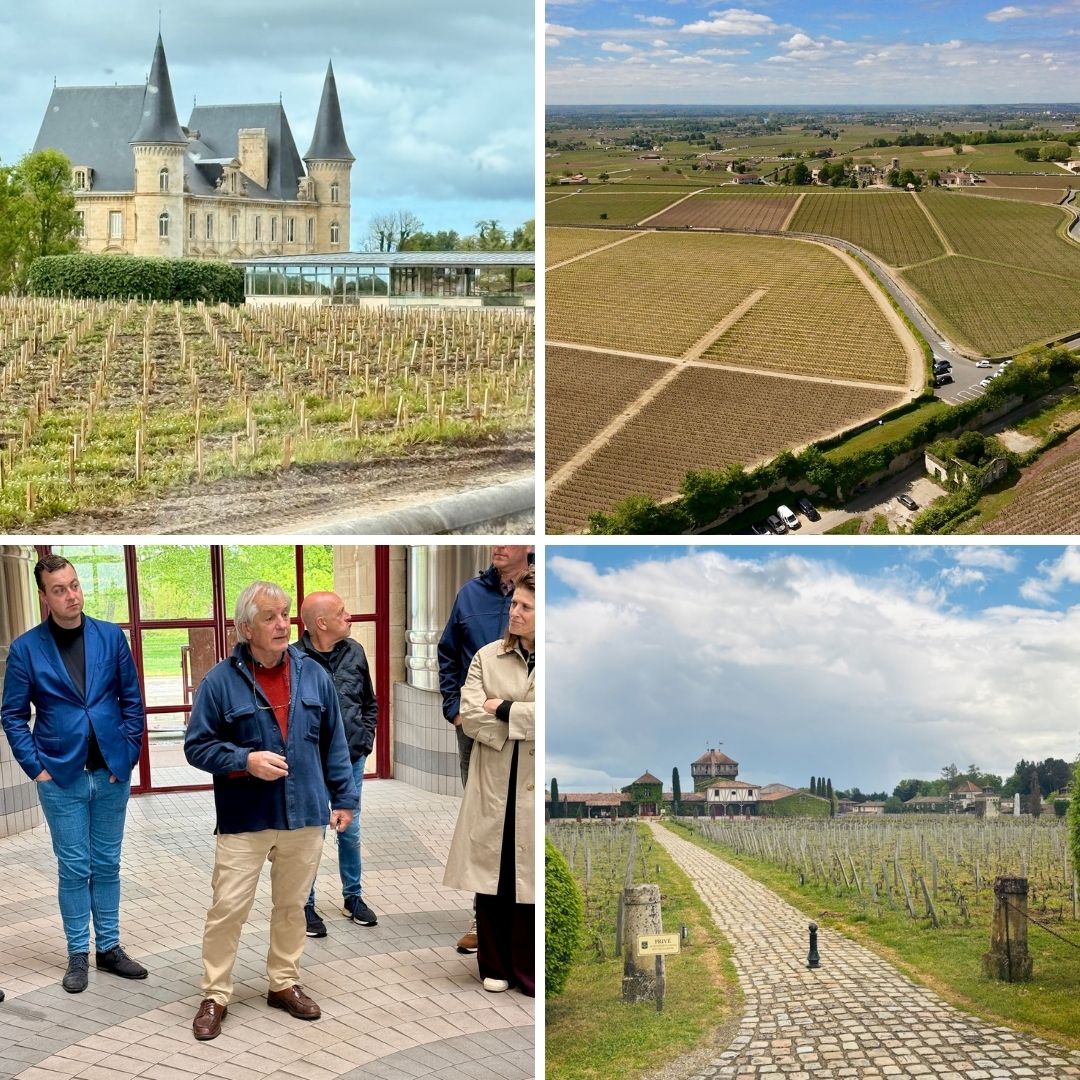
Le Montrachet and its Cabotte. Where history, preservation and respect come together for Vignoble des Cabottes.
That thought brings the story back to the apparent contradiction we encountered when the first Cabottes bottles appeared at Parkheuvel. The organizational structure has been redrawn, farming is evolving, selection has become more detailed, élevage can be extended and a purpose-built winery is on the horizon.
Yet all of those changes serve an ambition based on continuity. Weber has followed many of these vineyards for more than two decades, and Cabottes now gives him and his team the possibility to apply that accumulated knowledge at a finer scale.
Almost everything around the vineyards is being allowed to change, so that what matters most within them does not have to.
This article is written by our own Niels Aarts. We would like to thank Victor Goichon and Frédéric Weber of Vignoble des Cabottes for their time and openness, Wijnkooperij de Lange for their invitation and Restaurant Parkheuvel (Erik and Juliën van Loo, Daniel Gravesteijn and team) for the excellent dinner. Picture credits Vignoble des Cabottes.
The wines of Vignoble des Cabottes are imported and distributed in the Netherlands by Wijnkooperij de Lange, who offer the wines to both professionals and consumers.
Join our insiders’ list and get exclusive early access to new articles, expert tips, and fresh reviews delivered straight to your inbox. Subscribe now and be the first to discover!