Join Our Wine Journey – Sign Up for the Newsletter 🍷
St. Michael-Eppan: Pushing Alto Adige to New Heights
Share
Deel op X (twitter)
LinkedIn
WhatsApp
St. Michael-Eppan: Pushing Alto Adige to New Heights.
Recently we had the opportunity to sit down with Jakob Gasser and Günther Neumair, respectively winemaker and CEO/export manager of St. Michael-Eppan, one of the most highly regarded cooperatives in Alto Adige. The interview provided a deep dive into why cooperatives in Alto Adige are known for some of the finest wines of the region, while also maintaining strong price-to-quality ratios. We were furthermore guided through a tasting of many of their top wines, with the signature Appius white blend standing out as one of the finest white wines of Alto Adige, if not Italy as a whole. Join us for a deep dive into Alto Adige, the importance of cooperatives, and the wines of St. Michael-Eppan.
Alto Adige: From Lacklustre Reds to Pristine Whites
The cooperative of St. Michael-Eppan is situated in Alto Adige, Italy’s northernmost wine region, which lies along the upper reaches of the Adige (Etsch) River and its tributaries.
The region was long part of the Habsburg Empire but was ceded to Italy in 1919 after the First World War, explaining why many labels are in both Italian and German. Due to this cultural duality, there is also a wide array of grape varieties present in the region, with Germanic grapes such as Riesling and Müller-Thurgau, Burgundian grapes such as Pinot Blanc, Pinot Gris, Pinot Noir, and Chardonnay, Bordeaux varieties such as Cabernet Sauvignon and Sauvignon Blanc, and Italian grapes such as Schiava and Lagrein all well-represented.
Alto Adige has a long history in winemaking, with a wide diversity of grapes.
However, the current diversity in grape varieties was not always so. Throughout much of the 19th and 20th centuries, Schiava dominated the vineyards of Alto Adige, mass-produced at very high yields in Pergola vineyards to make bulk wines primarily for local consumption. From the late 1970’s onwards, Hans Terzer, former winemaker of St. Michael-Eppan and an important figure in Alto Adige (which we will later get back to), advocated switching instead to white grape varieties cropped at lower yields, resulting in both higher quality and a wider spread of grape varieties planted.
Climate, Soils, and Sub-Regions
This diversity is well supported by the climate and soils of the region. The wider climate of Alto Adige is moderately continental, as the region lies on the southern side of the Alps. This causes the vineyards, which are situated between 200 and over 1.000 metres in altitude, to get plenty of sunshine and warmth – with heat building up on the valley floors during the day and cooling winds descending from the Alps at night. This, combined with the 300 days of sunshine Alto Adige has per year, gives a large diurnal temperature range, resulting in a harmonious mix of ripeness and freshness in the wines.
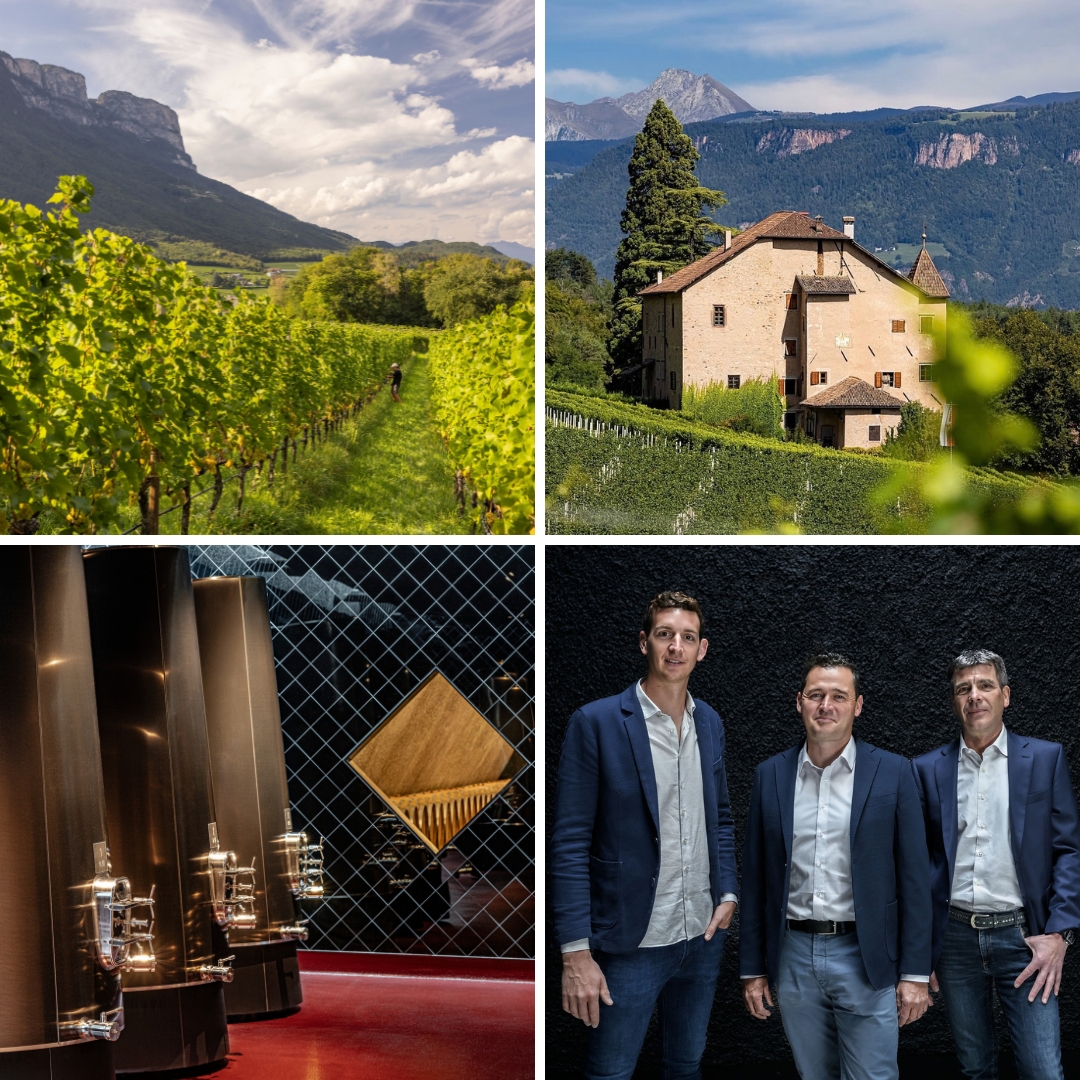
The Vineyards of St. Michael-Eppan in Alto Adige.
Alto Adige is also known for its relatively simple appellation system, with no DOCGs and only a few DOCs being present – meaning that almost all wines are labelled Alto Adige DOC. The main growing area of Alto Adige comprises the sub-zones of Bassa Atesina in the south and Oltradige, which lies between Bassa Atesina and the city of Bolzano (the capital of the region) to the north. Soils here are mainly Dolomitic limestone gravels and glacial deposits at altitudes of 300 to 700 metres, ideally suited for most grape varieties. In these sub-zones, most of the famous wine villages such as Andriano, Appiano (namesake village of St. Michael-Eppan), Caldaro, Termeno (Tramin in German, the village said to give the grape Gewürztraminer its name), Montagna, and Cortina are to be found, with many of these villages having their own cooperative.
Historical Cooperatives, Modern Wines
Cooperatives have always played a major role in Alto Adige, with the twelve cooperatives operating today accounting for over 70% of the region’s wine production. Due to the hilly and fragmented nature of Alto Adige’s vineyards, average vineyard holdings have traditionally been just one hectare per grower or less. The high cost of winemaking equipment and administration encouraged these growers to band together to form large cooperatives, in which sometimes hundreds of growers are united to make their wines under a common label.
The old historical barrels in the barrel cellar of St. Michael-Eppan.
In the world of wine, cooperatives are often not associated with the highest-quality wines, but in Alto Adige they have the complete reverse reputation. Günther Neumair of St. Michael-Eppan states in this regard that growers who have joined cooperatives in Alto Adige bring all their grapes to the cooperative, whereas in other countries growers often only sell their lesser grapes to cooperatives and keep the best for themselves. He further adds that in Alto Adige cooperatives pay their growers well and are also strict on quality control – explaining why these cooperatives are held in such esteem. In addition to the twelve cooperatives, which account for 70% of production, there are roughly 32 estate wineries such as Alois Lageder, Franz Haas and Elena Walch, accounting for 25% of production, with the remainder 5% being produced by independent growers. One can see the dominance of cooperatives in this Alpine part of Italy – a trait also shared with the neighbouring Trentino region.
St. Michael-Eppan: Quality and Quantity
Considering this long-standing reputation of quality, it is no wonder that nine of the twelve cooperatives active in Alto Adige today were founded before the First World War, with St. Michael-Eppan founded back in 1907. The cooperative initially started with just a few local growers but has steadily expanded to over 320 growers as of today. These growers cultivate just over 390 hectares of vineyards in Alto Adige – producing over two million (!) bottles per year. Unsurprisingly, almost all vineyards are situated around the municipality of Appiano (Eppan in German, the namesake village of St. Michael-Eppan), at roughly 400 to 700 metres of altitude. St. Michael-Eppan is known for rewarding its growers strongly for high-quality grapes, further emphasizing quality over sheer quantity.
These days the winery houses modern equipment to enable more precise winemaking.
However, this reputation for quality was not always present. When discussing St. Michael-Eppan, it is impossible not to mention Hans Terzer, winemaker from 1977 to 2024. As mentioned before, it was Hans Terzer who advocated against the mass plantings of Schiava (consisting of roughly 85% of plantings in the 1970s), instead promoting white grape varieties like Chardonnay, Pinot Grigio, Pinot Blanc, Sauvignon Blanc and Gewürztraminer. As Jakob Gasser, current winemaker of St. Michael-Eppan, also confirms, this helped change the image of Alto Adige as a whole from a bulk producer of pale red wines to a producer renowned for its pristine white wines. Hans Terzer was also instrumental in encouraging the growers of St. Michael-Eppan to reduce yields by, amongst others, green harvesting to achieve higher quality, something that was seen as quite controversial back then.
Hans Terzer was also one of the region’s first to recognize the potential of Chardonnay, being the first to bottle Chardonnay as a stand-alone variety in the early 1980s – as before that it was often blended with Pinot Bianco without mention. He also served as president of the South Tyrolean Cellar Masters Association for almost 25 years, and was named one of the world’s best winemakers by Gambero Rosso. All in all, not a name to skip over when discussing St. Michael-Eppan.
Jakob Gasser: Same Vision, Even More Precision
Recently the torch has been passed on to Jakob Gasser, who joined St. Michael-Eppan in 2017 and took over the role of winemaker in 2024 – supported by a double degree in Viticulture and Oenology from the universities of Geisenheim and Udine. Having trained under Hans Terzer for seven years, he shares the philosophy that quality is made in the vineyard, with his meticulous winemaking being all about preserving the quality that nature has given in a certain vintage. Adding to this focus on the quality that nature provides, he has recently ensured that herbicides are no longer used in the vineyards of the growers.
Jakob’s style of winemaking is, especially for the higher ranges, not one to emphasize smoothness and mass appeal. He aims to let the rugged Alpine climate speak through his wines, which often have an interesting touch of wildness in them, showing complex notes of Alpine herbs and flowers in the white wines, and strong yet managed tannins in the red wines. In the case of the latter, he also vinifies all his red wines using destemmed fruit as the stems would add too much additional tannin, confidently going against the current trend for whole bunches in red winemaking.
Jakob Gasser with Klaus Pardatscher and Günther Neumair of St. Michael-Eppan.
Despite this confidence, he is also very honest. When asked about a potential red version of Appius, he admits that the red wines of St. Michael-Eppan are currently not at the same level as the white Appius, which is why a red Appius is, at the moment, not on his radar. Furthermore, when discussing the current popularity of sparkling wines, he states that the nearby Trentino is already doing a great job at them, and he would rather focus on further perfecting his current range of wines. In this regard, Jakob has also taken steps to reduce the number of labels produced by St. Michael-Eppan, to allow for an even greater focus on its core ranges of wines. As of today, five lines of wines exist: Classic, Fallwind, Sanct Valentin, The Wine Collection, and Appius, with Jakob’s style of winemaking and precision noticeable at all levels.
The Range of Wines
The ‘Classic’ range forms the foundation of St. Michael-Eppan’s portfolio, made to emphasize varietal character and purity, with a strong focus on price-to-quality ratio. Even for this range, all grapes are hand-harvested at lower yields (maximum 70 hL/ha) than what is allowed under Alto Adige DOC (up to 98 hL/ha), showing their commitment to quality. Vinification is in stainless steel for the white wines with partial malolactic, whereas most of the red wines are briefly aged in old, large oak vats. As of the 2025 vintage, all Classic wines are bottled in Burgundy bottles weighing just around 360 grams, making them the lightest bottles currently available. A step up in quality is the ‘Fallwind’ line, named after the cool evening winds (downdrafts) from the mountains, giving the wines freshness, fragrance, and longevity. Yields for this line are markedly lower, and the wines see a bit more extraction alongside longer ageing, often in oak, representing a clear step up from the Classic range.
Perhaps the most emblematic line of St. Michael-Eppan is the Sanct Valentin range, introduced in 1986 by Hans Terzer. For these wines, some of the best vineyards of the growers of St. Michael-Eppan are selected beforehand to pay as much attention to quality as possible. As a result, yields are greatly reduced, but the growers also get significantly more for their grapes. Being more concentrated and potent, the resulting wines are in turn also aged for longer, and see stronger extraction than the Classic and Fallwind lines.
These wines are seen as some of the most emblematic wines of Alto Adige, being very popular in restaurants worldwide – with the Sauvignon Blanc in particular considered one of the finest examples of the variety in the whole of Italy. Small amounts of the Sanct Valentin wines are also held back at the winery to be aged for at least 10 years and then released as an ‘Annata Storiche’ bottling, personally tasted and recorked by the winemaker, demonstrating just how well these wines age.
The St. Michael-Eppan wines on our tasting table.
St. Michael-Eppan Sanct Valentin Pinot Grigio 2024
100% Pinot Gris | 92/100 DWA score | Drink 2026-2034
Pinot Gris sourced from limestone-gravel vineyards in the lower part of Alto Adige. Fermented and aged in small oak, and after one year blended and matured for 8 months in concrete to allow some oxygen into the wine while keeping the elegance. A fresh yet ripe fruit profile, with notes of lemon curd, peach, ripe yellow apple, melon, pear, nectarine, and fresh apricot. The oak ageing and malolactic fermentation add richer vanilla, butter, and toasted hazelnut nuances. Medium-plus acidity and floral notes of honeysuckle and jasmine add some welcome freshness, alongside a fine mineral seam. Seductive, with a light phenolic grip.
St. Michael-Eppan Sanct Valentin Chardonnay 2024
100% Chardonnay | 93/100 DWA score | Drink 2028-2038
Sourced from sandy limestone gravels around the village of Appiano. The same winemaking approach is used as for the Sanct Valentin Pinot Grigio. Refined and limestone-rich nose. Noble palate, decadent and classy, with intense notes of lemon curd, ripe yellow pear, melting butter, bread dough, herbs, nectarine, jasmine, and sea spray. Lots of weight due to the ripe fruit profile and oak but more than enough freshness too. Soft and opulent texture. Great acidity. It has a subtle phenolic wild edge to it, with notes of thistle and wildflowers, very much speaking of Alto Adige. Opens up more with air, could use a bit more time in bottle.
St. Michael-Eppan Sauvignon Sanct Valentin 2025
100% Sauvignon Blanc| 94/100 DWA score | Drink 2027-2042
One of the cooperative’s most famous wines and one of Italy’s most highly regarded examples of the variety. The wine was first created in 1989, after then-winemaker Hans Terzer was walking through a Pinot Blanc vineyard and discovered some Sauvignon Blanc vines – which he subsequently experimentally vinified. One quarter is fermented and aged in large oak, while the remainder is vinified in stainless steel to preserve freshness and varietal typicity. Full-bodied, with the typical high acidity giving a steely mineral spine. Intense aromas of grass, grapefruit, lemon pith, gooseberry, green apple, fresh nectarine, smoke, bread dough, jasmine, Alpine herbs, and thistle. Very subtle oak, quite shy on the nose but more evident on the palate. Great representation of Alpine Sauvignon Blanc.
St. Michael-Eppan Pinot Noir Riserva Sanct Valentin 2023
100% Pinot Noir | 93/100 DWA score | Drink 2026-2041
Made from 100% Pinot Noir, sourced from vineyards planted on alluvial and gravelly limestone soils around Appiano. Three days of cold maceration to extract colour while keeping the tannins in check, afterwards fermented in stainless steel and aged for one year in smaller oak. A unique style of Pinot Noir, earthy on the palate, with the finish evolving towards ripe forest fruit and spices. Polished and noble, with a velvety texture. Intense and concentrated, but with elegance and poise. A hefty amount of oak, albeit well-integrated. The destemmed fruit shines through. Rightfully considered one of the finer expressions of Pinot in Alto Adige.
St. Michael-Eppan Passito Comtess Sanct Valentin 2023
100% Gewürztraminer | 95/100 DWA score | Drink 2026-2053
100% Gewürztraminer harvested very late in the season, with yields as low as 20 hectolitres per hectare (almost one-third that of the other Sanct Valentin bottlings). Fermented and aged partly in stainless steel and partly in smaller oak barrels to add some rich vanilla and spice notes. Gorgeous balance between overripe tropical fruit notes of lychee and cooked pineapple, the wine’s residual sugar of over 200 grams per liter, and its marked yet beautifully ripe and interwoven acidity. Subtle oak usage adds further spice and structure alongside vanilla and nutmeg notes. Luscious texture. Very long and complex, pure honeyed deliciousness. Lots of depth and concentration, with varietal notes also shining through.
Yet another step up the quality pyramid of St. Michael-Eppan are the bottlings labelled ‘The Wine Collection’, made since 2015. Only a few thousand bottles are produced each year, always varietal and chosen as a sub-selection from the very best barrels of Sanct Valentin, with the wines often hailing from the oldest vineyards with the lowest yields, to be aged for a prolonged amount of time. Currently only a Pinot Noir and Sauvignon Blanc are made, but other varieties may be added in the future. As a one-off, a Pinot Noir rosé was also made in 2021, as the vintage was not strong enough to produce a Pinot Noir bottling of The Wine Collection, but the purity and quality of the resulting rosé still warranted a special bottling.
St. Michael-Eppan The Wine Collection Sauvignon 2020
100% Sauvignon Blanc | 96/100 DWA score | Drink 2026-2050
Pure Sauvignon Blanc, from some of the oldest gravelly-limestone vineyards in Appiano. Twenty-four hours of skin contact are followed by fermentation and ageing in small oak for one year. Afterwards, the wine is aged for 18 months in stainless steel to allow it to settle down. Very ambitious, with the result showing in the glass. Lots of toasty new oak, but very well-balanced by intense fruit notes of yellow apple, baked pear, fresh mango, ripe grapefruit, lime, and apricot. Needs some air to open up and reveal the fruit. Just beginning to develop more tertiary characteristics with subtle caramel, hay, and baked pear, while retaining its nuanced notes of dill, thistle, and gooseberry. Burgundian opulence, kept in check by the high acidity. Subtle tannic grip due to skin contact. Good bitterness, still showing the underlying variety. Very long finish. Up there with the best examples of Sauvignon Blanc in the world.
St. Michael-Eppan The Wine Collection Pinot Noir 2020
100% Pinot Noir | 95/100 DWA score | Drink 2026-2048
Again, made from some of the oldest gravelly-limestone vineyards in Appiano, but with a bit more clay and glacial deposits compared to the Sauvignon Blanc. Ten days of cold maceration are followed by one year in small oak and 18 months in stainless steel. Very intense and concentrated. Balanced austerity, not hiding the Alpine terroir it hails from, with menthol, Alpine flowers, and wild roses. Structured. Beautiful Pinot Noir fruit, showing remarkable intensity and precision, with cranberry, liquorice, blueberry, dried blood orange, cherry cola, and ripe black fruit. Silky mouthfeel. Perfectly managed, fine-grained tannins. Long finish, moving back and forth between fruit and spice. A hefty amount of oak, but the fruit and acidity carry it well. Still quite young and only just starting to show some subtle tertiary smoke and forest floor notes. Made for the long haul.
A vertical of Appius releases with their iconic labels.
The top of the quality pyramid at St. Michael-Eppan is Appius, first made in 2010 with the very best white grapes of the cooperative. The exact blend differs each year, but often comprises approximately 55% Chardonnay, 20% Pinot Grigio, 15% Pinot Bianco, and 10% Sauvignon Blanc, hailing from the oldest, most historically prized vineyards in Appiano, with the lowest-yielding vines. Aged for one year in small and large oak barrels, and afterwards three years in bottle. As a result, the 2021 vintage is the current release – luckily for us, it was a great year for white wine in Alto Adige.
Rather subtle on the nose, hinting at a couple of years of bottle ageing needed to come around. However, the palate is fully there and massively concentrated, with proper depth and nuance. Rich mid-palate. Very structured. Finely balanced, with the freshness and purity of the crystalline and ripe lemon, apricot, yellow pear, starfruit, gooseberry, and peach fruit matching the structure and power of the wine, giving tension and excitement. The blend is particularly well judged, with Chardonnay forming the backbone of the wine while also allowing the other varieties to give their own twist and nuance, with especially the whisper of Sauvignon Blanc adding a rare thistle and menthol freshness to the wine. Elegant and evolving finish, beautifully long, emphasizing freshness and nuance over sheer power. Subtle notes of acacia and Alpine herbs give typicity and further depth. Excellent and truly noble, flowing like an Alpine creek. What perhaps stands out most is how delicious and detailed the fruit is, with the powerful oak regime serving only to support the fruit density. Still quite young. In many ways, it is a summation of all the top-tier white wines of St. Michael-Eppan, representing the pinnacle of Alto Adige. Glorious and above all delicious!
Conclusion
All in all, both the interview and the beautiful range of wines tasted further demonstrated the importance of cooperatives in Alto Adige, with many producing some of the region’s finest wines – particularly among their white wines, several of which rank among Italy’s finest. With Jakob Gasser as winemaker, St. Michael-Eppan has turned the page for an exciting new chapter, in which we will likely see further focus on precision and a slow move towards Jakob’s own style of wine. When asking Jakob about his most memorable vintage, he was quick to cite 2025. In this special vintage, the harvest had to be completed in an exceedingly quick 10 days, far shorter than the normal harvest window in Alto Adige. To succeed, all the growers of St. Michael-Eppan came together for harvest and brought all their friends and family – finishing the harvest in record time, with the resulting 2025 wines already showing beautifully in the glass. Precisely this spirit of cooperation is what defines the world’s greatest cooperatives.
St. Michael-Eppan can be seen as one of the greatest cooperatives in the wine world.
This article was written by our own Martin Bronkhorst. The wines of St. Michael-Eppan are exported to a number of foreign markets and are well distributed. In the Netherlands, their wines can be purchased through Wine & Spirits. We would like to thank Jakob Gasser and Günther Neumair of St. Michael-Eppan for their time and outstanding wines, as well as our partner Wine & Spirits for setting up the interview.
Join our insiders’ list and get exclusive early access to new articles, expert tips, and fresh reviews delivered straight to your inbox. Subscribe now and be the first to discover!