Join Our Wine Journey – Sign Up for the Newsletter 🍷
Robert Mondavi Winery at 60: Carrying a Napa Legacy into its Next Chapter
Share
Deel op X (twitter)
LinkedIn
WhatsApp
Robert Mondavi Winery at 60: Carrying a Napa Legacy into its Next Chapter.
There are few names more closely intertwined with the modern history of Napa Valley than Robert Mondavi. His influence extends far beyond the winery carrying his name, into the way Napa presented itself to the world and, perhaps just as importantly, the way Americans came to think about wine. When Robert established his winery in Oakville in 1966, his ambition was unapologetic: California could produce wines worthy of standing alongside the finest in the world. Sixty years later, that argument hardly needs to be made anymore.
For Kurtis Ogasawara, Director of Winemaking at Robert Mondavi Winery, this creates an interesting responsibility. He belongs to a generation that inherited the success of that original ambition, but also the expectations that came with it. The question is no longer whether Napa Valley can make great wine. It is how a winery that helped establish that reputation continues to move forward without becoming captive to its own history.
Robert Mondavi Winery just finished an extensive renovation of the cellar and its hospitality center.
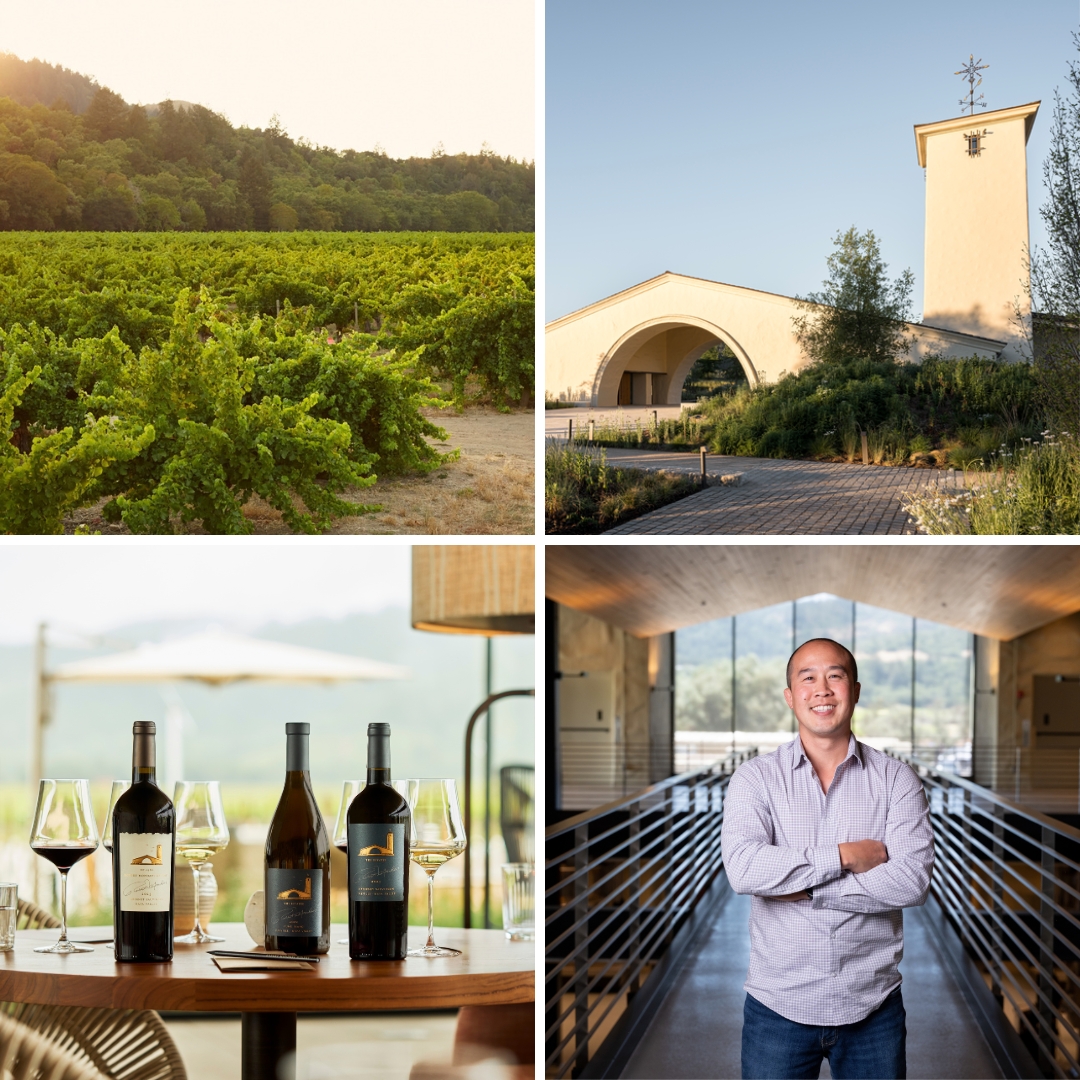
The timing of our conversation could hardly be better. Robert Mondavi Winery has just celebrated its 60th anniversary and emerged from the most extensive transformation of its Oakville home in decades. After three years of redevelopment, the estate reopened in April 2026. The familiar arch and tower remain, but behind them the winemaking and hospitality facilities have been comprehensively reconsidered, with a new cellar designed to work more precisely with individual vineyard lots and hospitality spaces intended to reconnect visitors with the vineyard outside.
For Kurtis, who joined Robert Mondavi Winery in 2015, the transformation has taken place alongside his own journey through the organisation. When we speak, harvest is underway. There are tanks being pressed in the new cellar and, despite everything around him having changed physically, Kurtis keeps returning to an idea that initially sounds almost contradictory: his objective is not to reinvent Robert Mondavi Winery.
If anything, he seems more interested in understanding what should not change.
Growing into Mondavi
Kurtis arrived at Robert Mondavi Winery as an oenologist, moving between vineyard, laboratory and cellar while gradually becoming part of the winemaking team. He had studied at UC Davis, where the Mondavi name was already impossible to miss. He understood that Robert had played an important role in California wine, but admits that at the time the significance remained somewhat distant.
Only after arriving in Oakville did the story become more tangible. Kurtis found himself surrounded by people who had spent decades at the winery, carrying an institutional memory that connected decisions being made today with those made twenty, thirty or forty years earlier. He began walking the vineyards and understanding the places behind the labels, while the stories surrounding Robert Mondavi gradually became stories about a person rather than a historical figure.
Robert and Margrit Mondavi.
Some of those stories followed Kurtis outside the winery. While travelling, he would meet people who remembered unexpected encounters with Robert: a restaurant somewhere, a bottle of Mondavi on the table, Robert introducing himself and sitting down for a glass. They are small recollections, but they reveal something easily lost when discussing a man whose name became an institution. Robert was constantly talking about wine, sharing it and trying to bring people into its world.
His ambition also extended beyond his own estate. Kurtis points to the collaborative spirit that characterized Napa’s formative decades, when winemakers tasted together, exchanged knowledge and sometimes helped one another with equipment or cellar space. Robert understood that his own success would mean considerably less if Napa Valley as a whole failed to establish itself.
That spirit is something Kurtis still recognizes today. Napa is wealthier, more established and more competitive than it was in the 1960s, but winemakers still visit one another, compare wines and exchange ideas. It is one part of Robert’s legacy Kurtis feels responsible for carrying forward.
Learning Never to Settle
If Robert’s influence initially reached Kurtis through people who had known him, nobody was more important in translating that history into winemaking than Geneviève Janssens, head winemaker at Robert Mondavi Winery for 27 years.
When I ask what he learned from her, Kurtis does not reach for a technical lesson. Instead, he remembers Geneviève talking about presenting new vintages of Reserve Cabernet Sauvignon to Robert. However successful the wine might have been, Robert’s attention inevitably turned towards what could be improved the following year.
For Kurtis, the lesson was simple: never assume you have arrived.
“If you think that you’re done, you’re not.”
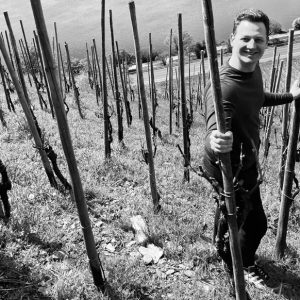
Kurtis at the new cellar.
That constant pursuit of improvement became one of the principles Geneviève impressed upon the younger winemaking team. Kurtis remembers being relatively inexperienced when he first tasted alongside her, sometimes hesitant to express an opinion among people whose experience far exceeded his own. Geneviève expected him to speak, but she also expected him to listen. Over time, that combination of confidence and humility became part of his own approach.
It also explains why, when I ask where preservation ends and his own judgement begins, Kurtis rejects the idea that becoming Director of Winemaking should mean imposing a personal signature. He has little interest in changing something simply so that future observers can identify the moment he took responsibility.
Instead, he talks about gradual refinement, questioning what can be improved without losing what made the wines distinctive in the first place.
“The soul of these wines needs to stay the same,” he tells us.
That sentence becomes increasingly relevant as we turn to the new winery around him.
Changing the Winery, Not its Soul
The renovation offered Kurtis and his colleagues an opportunity that few winemaking teams receive. Instead of replacing equipment gradually, they could reconsider how a winery established sixty years earlier should function for the decades ahead.
Kurtis was wary, however, of filling the new cellar with technology simply because the opportunity existed. Once a project of this scale begins, there is no shortage of equipment manufacturers offering increasingly sophisticated solutions. The team wanted things they understood and would genuinely use rather than complexity for its own sake.
Perhaps the most symbolic change came in the To Kalon Cellar. Its 56 large French-oak fermenters had once represented an ambitious investment in the future. Following the 2022 vintage, the room was emptied and rebuilt around smaller stainless-steel and concrete vessels, allowing individual parcels to be followed more closely.
Kurtis does not describe this as correcting the previous generation. Those vessels belonged to another moment and reflected what the team believed was best then. The new cellar does the same for his generation.
Robert Mondavi Winery at 60, modernised but still very recognisable.
Even architecturally, there is an appealing parallel. The redevelopment did not attempt to make the original winery look new, nor disguise the contemporary additions as something built in 1966. The famous arch and tower remain unmistakably part of the old Robert Mondavi Winery, while the new spaces around them belong visibly to another era.
Much the same could be said about the wines Kurtis wants to make.
To Kalon: Understanding the Vineyard Behind the Name
For all the attention surrounding the new winery, Kurtis’s most important workplace remains outside it.
Walk beyond the Oakville estate and you enter To Kalon Vineyard, a name immediately familiar to American collectors but perhaps less meaningful to wine lovers elsewhere. Understanding Robert Mondavi Winery, however, is difficult without understanding why this particular piece of Napa Valley has become so important.
To Kalon lies in Oakville, on the western side of the valley, spreading across an alluvial fan descending from the Mayacamas Mountains. Its viticultural history reaches back to the nineteenth century and H.W. Crabb, who began planting vines here in the 1860s and later used the name To Kalon for his property. Usually translated from Greek along the lines of “the highest beauty” or “the beautiful”, the name has subsequently become one of the most celebrated—and valuable—in American wine.
The historic vineyard area is not a single estate in the European sense. Ownership has been divided over time, but Robert Mondavi Winery today farms roughly 450 acres of To Kalon. The relationship is therefore much deeper than simply purchasing grapes from a famous vineyard. Robert chose to establish his winery alongside it in 1966, and To Kalon has remained at the center of the estate’s identity ever since.
Old vines with old souls in the Mondavi vineyards.
For European readers, describing To Kalon as something approaching a Napa Valley grand cru offers a useful, if imperfect, analogy. Napa’s history, ownership structures and appellation system are very different from Burgundy’s, and To Kalon has none of the formal classification that accompanies a Burgundian grand cru. What the comparison does communicate is the importance of the place itself. To Kalon belongs to a relatively small group of American vineyards whose name can carry significance independently of the producer printed on the bottle.
Kurtis, however, is less interested in the mythology surrounding To Kalon than in what he continues to discover by working with it.
After more than a decade, the vineyard seems more complicated to him rather than less. What initially impressed him was its consistency. A great vineyard, he believes, proves itself not through one extraordinary vintage but through its ability to retain character and quality as the seasons change.
Consistency should not be mistaken for uniformity. To Kalon’s considerable size contains differences in soil, exposure, plant material and ripening patterns, and Kurtis talks about its individual sections almost as personalities he has gradually come to know. The new cellar allows those parcels to remain separate for longer, giving the team more opportunities to understand what each contributes before deciding where the wines ultimately belong.
What fascinates him is that connections remain despite those differences. Having worked alongside and tasted interpretations involving Geneviève Janssens, Andy Erickson, Thomas Rivers Brown and Tony Biagi, Kurtis has seen how different winemakers can approach related vineyard material without erasing the place underneath.
“The vineyard is going to speak louder than the winemaker,” he tells us.
It explains why he seems so comfortable resisting the temptation to establish a recognisable Kurtis Ogasawara style. His role is not to make To Kalon taste like him. After twelve vintages, he is still trying to understand what To Kalon wants to say.
And perhaps one of the most revealing ways to understand that is not through Cabernet Sauvignon at all.
Robert Mondavi Winery 2023 The Reserve Fumé Blanc, To Kalon Vineyard | 95/100 DWA score
Robert Mondavi’s association with Sauvignon Blanc deserves its own chapter in California wine history. His adoption of the name Fumé Blanc in the late 1960s helped reposition a variety that struggled for attention in the American market, and Kurtis still regards Sauvignon Blanc as fundamental to the identity of the winery. The 2023 Reserve comes entirely from To Kalon, predominantly from Monastery Block, combining 94% Sauvignon Blanc with 6% Sémillon.
It is a wine that rewards patience rather than announcing everything immediately. The first impression brings ripe citrus, pear and white peach, gradually joined by more exotic fruit, restrained floral tones and a subtle herbal quality. With air, however, it is the texture that becomes particularly compelling. There is considerable breadth and concentration, yet a vibrant line of acidity prevents that richness from becoming heavy.
The oak contributes more to texture than overt flavour, bringing gentle spice and additional depth, while the small addition of Sémillon provides some roundness through the middle palate. Towards the finish the wine tightens again, moving towards citrus peel and a pronounced saline, savoury sensation that keeps returning after the fruit has faded.
What we particularly appreciate is the tension between generosity and freshness. This is not Sauvignon Blanc built primarily around aromatic exuberance; it is a more contemplative expression that develops in the glass and should become increasingly interesting with bottle age. Give it air and, importantly, do not serve it too cold.
The Fumé Blanc also makes Kurtis’s argument about To Kalon tangible. Cabernet may have made the vineyard famous, but Sauvignon Blanc allows us to look at the same place from another direction.
The Robert Mondavi wines on our tasting table.
Napa Through a Wider Lens
The 2023 Napa Valley Cabernet Sauvignon takes us away from To Kalon and into the broader valley.
Kurtis jokingly calls the wine “Napa Cab 101”. Drawing on estate vineyards alongside long-standing grower relationships, it is intended to offer a wider picture of Napa rather than the personality of one celebrated site.
Robert Mondavi Winery 2023 Cabernet Sauvignon, Napa Valley | 93/100 DWA score
Dark cherry, blackberry and ripe plum make this immediately inviting, followed by cedar, graphite and a gentle tobacco-like savouriness as the wine opens. There is the generosity of fruit we expect from Napa Cabernet, but without the excessive ripeness that can make some examples impressive for the first glass and tiring thereafter.
The palate is supple and polished, its tannins fine enough to make the wine approachable now but sufficiently present to give it shape. Freshness keeps the dark fruit clearly defined, while restrained oak spice and a subtle herbal note bring additional complexity towards the finish.
Its strength lies partly in knowing what it wants to be. This is not an attempt to reproduce the concentration of the To Kalon Reserve at a lower level. Instead, it is an accessible, convincing interpretation of Napa Cabernet, equally comfortable on the dinner table today as it would be after several years in the cellar. For someone approaching Robert Mondavi Winery for the first time, it may be the most logical introduction to the red wines.
There is something appropriate about one of Mondavi’s core wines continuing to represent Napa Valley rather than one prestigious site. Robert spent much of his career arguing that the region’s success had to be collective. Sixty years later, that philosophy remains visible in the glass.
Robert Mondavi Winery Oakville Vineyard Views.
What Reserve Means Today
The 2022 To Kalon Reserve Cabernet Sauvignon takes us back towards selection and a much more focused interpretation of place.
Kurtis explains that parcels do not earn their place in the Reserve simply through reputation. Lots are tasted and reconsidered, and even a vineyard block with a long history in the wine can be excluded if it does not strengthen that particular vintage.
For him, this is another expression of the lesson inherited from Geneviève: history deserves respect, but never exemption from scrutiny.
Robert Mondavi Winery 2022 The Reserve Cabernet Sauvignon, To Kalon Vineyard | 96/100 DWA points
Initially less forthcoming than the Napa Valley Cabernet, the Reserve asks for more time in the glass and rewards it. Blackcurrant, blackberry and dark cherry gradually emerge alongside graphite, cedar and dried herbs, with dark chocolate and warm spice appearing underneath as the wine opens.
The real difference becomes apparent on the palate. There is considerably greater concentration, but also a firmer architecture, with finely textured tannins running throughout the wine rather than simply appearing on the finish. The fruit carries the warmth and generosity of 2022, yet there is enough freshness to maintain definition.
Particularly attractive is the savoury character beneath the ripe fruit. Graphite and dried herbs provide contrast and prevent the wine becoming simply opulent, while the oak, still noticeable in its youth, has sufficient fruit and structure around it to integrate with time.
Kurtis acknowledges that 2022 did not initially enjoy the easiest reputation, but believes the wines are beginning to challenge some of those early assumptions as they settle into bottle. This Reserve supports his argument. Already impressive, it nevertheless feels like a wine we would rather follow than hurry. A decade in a good cellar should reveal considerably more.
Two Parts of Robert’s Life
The final Cabernet brings the story naturally back to the anniversary.
Kurtis and the team could simply have dressed an existing wine in commemorative packaging. Instead, they decided to bring together Cabernet Sauvignon from To Kalon in Oakville and Wappo Hill in Stags Leap District, two places closely connected with Robert Mondavi.
To Kalon represents the estate he built; Wappo Hill connects with where Robert and Margrit lived. Kurtis says that after speaking with people who had been around the organisation for decades, the team could find no recollection of precisely this combination having been bottled before.
The resulting 2023 wine is 100% Cabernet Sauvignon, sourced nearly equally from the two vineyards.
Cabernet Sauvignon grapes in the Robert Mondavi Vineyard.
Robert Mondavi Winery 2023, 60th Anniversary Commemorative Cabernet Sauvignon | 96+/100 DWA points
The most complete wine of our tasting, and perhaps the one that most successfully reconciles the different ideas Kurtis has been discussing throughout our conversation.
Cassis, blackberry and dark cherry provide depth, but there is a brighter register here too, with raspberry and red berry bringing lift before violet, graphite and dried herbs begin to appear. The aromatic profile feels detailed rather than simply powerful, revealing new elements as the wine sits in the glass.
There is considerable concentration on the palate, yet it never becomes static. Fine, polished tannins provide structure while fresh acidity carries the fruit through the middle of the wine, creating an impression of energy that belies its density. Cedar, cocoa and subtle toast gradually emerge, but remain behind the fruit rather than becoming the center of attention.
Most impressive is the sense of proportion. There is plenty of power here, but power never becomes the message. Fruit, tannin and freshness seem to arrive together, and the long finish moves gradually from ripe fruit towards graphite, herbs and a more savoury mineral character.
This can certainly be enjoyed young with sufficient time in a decanter, but its balance suggests a long future. More importantly, it succeeds beyond the symbolism surrounding it. This is not interesting merely because it celebrates sixty years of Robert Mondavi Winery; it is interesting because it shows what the winery is capable of today.
Making Mondavi Matter Again
Towards the end of our conversation, we return to the question that has quietly followed us throughout it. If Robert Mondavi set out to demonstrate that Napa Valley could stand alongside the great wine regions of the world, what does Robert Mondavi Winery still have to prove?
Kurtis thinks about the people drinking the wines.
Older generations often know Robert’s story intimately, but younger consumers may recognize the name without understanding the influence behind it. At tastings, Kurtis sometimes meets people who tell him they tried Robert Mondavi years ago and therefore already know what the wines are like. He encourages them to taste again.
The reaction he enjoys most is the moment when someone discovers that what is in the glass does not quite match the memory they carried with them.
“We’ve evolved, we’ve changed,” he says, before returning once more to the qualification that has run throughout our conversation: the spirit is still there.
Perhaps that is why the renovation matters beyond the new cellar. Robert understood that wine existed alongside food, hospitality, art, music and conversation. Kurtis speaks from a similar perspective, describing wine as something that should be approachable rather than intimidating, shared with friends and family rather than reserved only for grand occasions.
After the renovation Robert Mondavi Winery is ready for its chapter.
By the time we finish talking, the scale of everything that has changed at Robert Mondavi Winery somehow feels less important than it did at the beginning. The new cellar matters, as do the vineyards, equipment and renewed estate, but Kurtis keeps returning to people: Geneviève challenging him when he was a young oenologist, colleagues carrying decades of experience, winemakers comparing different interpretations of To Kalon and visitors encountering the Mondavi name for the first time—or rediscovering it after many years away.
Robert Mondavi’s generation spent much of its time persuading the world to look differently at California wine. Kurtis has inherited a different challenge. He does not need to repeat that argument, nor does he appear interested in putting his own signature over everything that came before him. His task is to understand which parts of that inheritance matter, question those that can be improved and leave the winery sufficiently alive for another generation to do exactly the same.
Outside, the familiar arch still stands. Behind it, much has changed. After spending more than an hour with Kurtis, the two no longer seem contradictory.
This article is written by our own Niels Aarts. We thank Robert Mondavi Winery, especially Kurtis Ogasawara, and Constellation Brands, for their time and support in writing this article and providing the wines. Robert Mondavi Wines available internationally and can be found through select partners such as Best of Wines in the Netherlands.
Join our insiders’ list and get exclusive early access to new articles, expert tips, and fresh reviews delivered straight to your inbox. Subscribe now and be the first to discover!