Join Our Wine Journey – Sign Up for the Newsletter 🍷
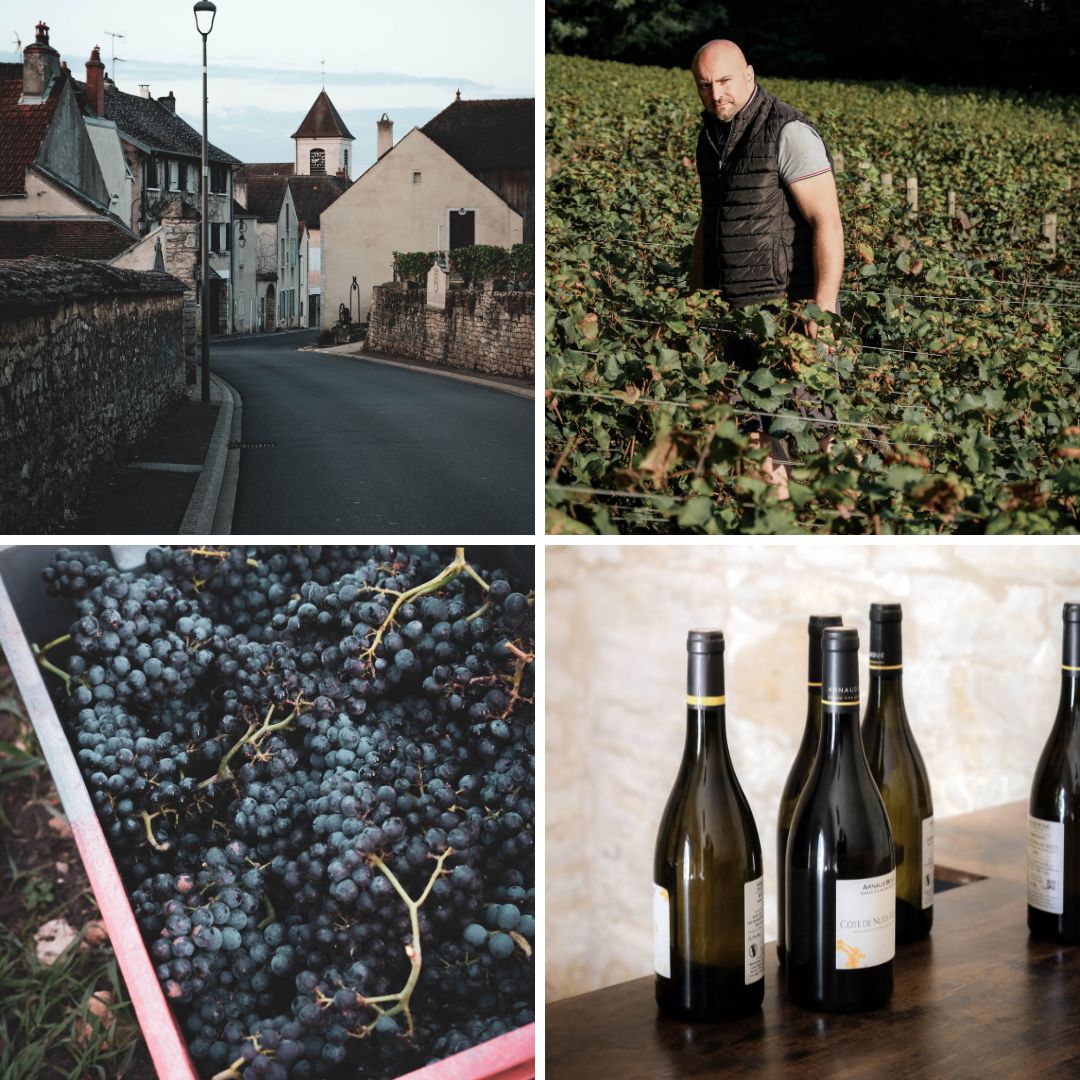
Maison Arnaud Boué, A Fresh Perspective on Burgundy
Share
Deel op X (twitter)
LinkedIn
WhatsApp
Maison Arnaud Boué, A Fresh Perspective on Burgundy.
Burgundy is often seen as one of the world’s most traditional wine regions. Historic vineyard classifications, famous villages, and generations of winemaking families continue to shape the identity of the region today. At the same time, Burgundy is changing rapidly. Climate change, rising vineyard prices, and increasing demand have pushed both producers and consumers to rethink what the future of Burgundy should look like.
One area that is becoming increasingly important in this conversation is the Hautes-Côtes de Nuits. Located at higher elevations above the Côte de Nuits, the region benefits from cooler temperatures and naturally fresher conditions. In warmer vintages, especially, these vineyards are attracting growing attention for their ability to retain acidity, balance, and freshness.
For Arnaud Boué, the Hautes-Côtes is not simply an alternative to the Côte d’Or. It is a region with serious long-term potential.
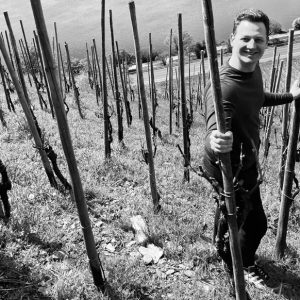
Arnaud Boué sees clear future in Burgundy’s Hautes-Côtes.
Founded in 2018, Maison Arnaud Boué reflects a vision of Burgundy that combines tradition with a more modern and forward-thinking approach. Alongside classic Burgundy appellations, Boué also works with varieties such as Aligoté Doré, Gamay, and Pinot Blanc, while continuing to focus strongly on terroir expression and freshness. His philosophy is not about making Burgundy bigger or more powerful, but about preserving balance, drinkability, and accessibility within a region that has become increasingly expensive.
As he explains himself: “I want to stop people from abandoning Burgundy because it’s too expensive.”
That idea returned constantly throughout the visit.
The Potential of the Hautes-Côtes
For many years, the Hautes-Côtes de Nuits remained somewhat overlooked compared to villages such as Vosne-Romanée, Chambolle-Musigny, or Gevrey-Chambertin. Today, however, perceptions are starting to shift.
As temperatures continue to rise in Burgundy, freshness and altitude are becoming increasingly important. The Hautes-Côtes naturally offers these conditions. Cooler nights and slower ripening cycles help preserve acidity and tension in the wines, while the limestone-rich soils continue to give strong mineral character and precision.
Burgundy’s Hautes-Côtes has a lot of potential in the short and long term.
Boué spoke a lot about this freshness during the tasting. For him, the future of Burgundy is closely linked to these higher altitude vineyards. At the same time, the region still offers more freedom and accessibility compared to some of Burgundy’s more prestigious appellations, where vineyard prices have become almost impossible for younger producers.
His connection to the Hautes-Côtes also feels very personal. Having spent much of his childhood there, he developed a strong attachment to the landscapes and diversity of the area long before creating his own domaine. Today, that connection clearly shapes both the identity of the wines and the direction of the project itself.
Arnaud has spend a lot of his childhood in the Hautes-Côtes.
In recent years, Maison Arnaud Boué has expanded significantly, growing from 30,000 to 50,000 bottles and acquiring several additional vineyard plots.
Rather than treating the Hautes-Côtes as secondary Burgundy, Boué clearly sees it as part of the region’s future.
Tradition, But Not Restriction
Although Maison Arnaud Boué produces recognisably Burgundian wines, there is also a clear willingness to move beyond some of the region’s traditional expectations. This balance between tradition and innovation became particularly interesting throughout the tasting. Boué clearly respects classic Burgundy, but at the same time, he is not afraid to experiment or challenge convention when he believes it benefits the wines.
One of the clearest examples is the Iconoclaste cuvée, a blend of Pinot Noir and Gamay. Even the name itself already suggests a more rebellious approach. In a region where strict classifications and traditions often dominate, the wine feels refreshingly different while still remaining connected to Burgundy’s identity.
Arnaud makes some interesting choices in the wines he makes, challenging convention where he sees fit.
The same openness can also be seen in his work with Aligoté Doré and his involvement with Les Aligoteurs, a collective of producers working to elevate the reputation of Aligoté within Burgundy.
For many years, Aligoté was often seen as a secondary grape variety compared to Chardonnay. Yet producers such as Boué increasingly show how much potential the grape actually has when grown carefully on limestone soils and vinified with precision.
Importantly, none of this innovation feels forced or purely commercial. Instead, it feels closely connected to Boué’s broader philosophy about the future of Burgundy: maintaining freshness, accessibility, and terroir expression while still respecting the identity of the region.
A Morning at Maison Arnaud Boué
These ideas became even clearer during a recent visit and tasting at Maison Arnaud Boué.
The tasting took place late in the morning inside the domaine’s tasting room in a very relaxed and personal atmosphere. Rather than feeling overly formal or technical, the tasting unfolded naturally through conversation. Between the wines, discussions moved from vineyard sites and vinification to larger topics such as climate change, rising prices in Burgundy, and the growing importance of the Hautes-Côtes.
Tasting the wines at the Maison.
What stood out most throughout the tasting was Boué’s energy and thoughtfulness. He speaks about wine with genuine passion, but also with a clear long-term vision for both the domaine and Burgundy itself. Every decision, from vineyard selection to oak usage, seemed carefully considered.
After the tasting, a short visit to the cellar followed. Although the cellar was in the middle of relocation and therefore not completely representative of the finished project, it still carried the atmosphere so often associated with Burgundy: small, intimate, slightly rustic, and centred entirely around craftsmanship. The smell of ageing wine and barrels filled the space, creating the kind of authentic cellar atmosphere that feels deeply connected to the region.
Freshness, Minerality, and Ageing Potential
Across the full range, freshness was undoubtedly one of the defining characteristics. Even in the more structured wines, there was always a sense of energy and balance rather than heaviness.
The limestone influence was also particularly noticeable throughout the tasting. Several wines carried pronounced chalky and saline characteristics that gave both texture and tension. In some wines, the terroir expression became almost tactile.
Boué’s use of oak plays an important role in preserving this purity. Rather than relying heavily on new oak, he works mainly with older barrels, allowing the fruit and mineral character to remain central. None of the wines felt marked by excessive wood influence.
Oak barrels in the wine cellar.
Instead, the oak remained subtle and supportive.
Another striking aspect was the ageing potential of the wines. During the tasting, several older vintages still showed remarkable freshness despite already having developed some maturity. Rather than feeling tired or overly evolved, the wines retained vibrancy and precision, showing both careful winemaking and strong balance.
This combination of freshness, accessibility, and ageing potential feels central to the identity of Maison Arnaud Boué.
On the Tasting Table
During our visit we tasted a number of different wines from the portfolio. Below our observations and ratings.
Bourgogne Hautes-Côtes de Nuits Blanc 2021 | Chardonnay | 91/100 DWA score
The Bourgogne Hautes-Côtes de Nuits Blanc immediately reflects the freshness and mineral focus that defines Maison Arnaud Boué. The nose opens with mineral and salty notes reminiscent of wet limestone and oyster shell, followed by aromas of citrus, green apple, pear, and white peach. With more air, floral notes and a light smoky touch appear in the glass.
On the palate, the wine feels fresh and well-balanced. The acidity gives the wine energy, while a slight roundness keeps it approachable and elegant. The restrained use of oak allows the terroir and freshness to stay central.
Maison Arnaud Boué’s whites.
Bourgogne Aligoté 2022 | Golden Aligoté| 92/100 DWA score
The Bourgogne Aligoté was one of the most surprising wines of the tasting. The nose shows aromas of lemon zest, green apple, pear, and blossom, supported by mineral notes and a slightly flinty character. On the palate, the wine feels soft and rounded while still keeping its lively freshness. Flavours of citrus, orchard fruit, and wet stones are combined with a slight salty touch that gives the wine extra length and energy. It is a great example of why producers such as Boué continue investing in Aligoté as an important category within Burgundy.
Interesting fact: Arnaud joined the association “Les Aligoteurs” in 2024. Les Aligoteurs is an association dedicated to promoting and preserving the Aligoté grape variety in Burgundy. It currently comprises around sixty winegrowers in Burgundy.
Maison Arnaud Boué’s reds.
Bourgogne Hautes-Côtes de Nuits Rouge 2022 | Pinot Noir | 91/100 DWA score
The Bourgogne Hautes-Côtes de Nuits Rouge 2022 combines freshness and purity with a more classic Pinot Noir profile. The nose shows aromas of red cherry, raspberry, and wild strawberry, together with earthy and subtle floral notes. A clear chalky minerality adds some freshness and complexity to the wine.
On the palate, the wine feels elegant and energetic, with fine tannins that give structure without overpowering the fruit. The result is a balanced and refined expression of the Hautes-Côtes de Nuits with both drinkability and ageing potential.
Nuits-Saint-Georges Les Charmois 2022 | Pinot Noir | 94/100 DWA score
The Nuits-Saint-Georges Les Charmois holds special importance for the domaine as it was the first wine bottled under the domaine’s name. Located in the cooler upper section of Nuits-Saint-Georges near the forest edge, the vineyard benefits from limestone-rich soils that bring freshness and tension to the wine.
The nose reveals aromas of raspberry, dark cherry, violet, and subtle earthy notes, together with a light minerality. On the palate, the wine feels fresh, refined, and well-balanced, with fine tannins and a long, elegant finish. Rather than focusing on power, the wine highlights freshness, purity, and terroir expression.
Looking Forward
Maison Arnaud Boué represents a younger generation of Burgundy producers helping shape a different future for the region. Rather than focusing only on prestige and hierarchy, Boué is exploring how Burgundy can remain relevant, accessible, and sustainable in a changing world.
Through his investment in the Hautes-Côtes de Nuits, his focus on freshness and terroir expression, and his willingness to work with alternative grape varieties and styles, he is quietly challenging some of Burgundy’s traditional boundaries while still remaining deeply connected to the identity of the region.
Arnaud Boué is doing great work showing a different side of Burgundy to the World.
Most importantly, the wines never feel disconnected from Burgundy itself. Instead, they offer a fresher and more contemporary interpretation of what Burgundy can become in the years ahead.
This article is written by our own Britt van den Hoofdakker. We would like to thank Maison Arnaud Boué, in particular Arnaud, for their time and hospitality. Additionally, we would like to thank our partner Wine Lister for arranging the visit and interview to the Maison. Picture credits: Maison Arnaud Boué.
Join our insiders’ list and get exclusive early access to new articles, expert tips, and fresh reviews delivered straight to your inbox. Subscribe now and be the first to discover!