Join Our Wine Journey – Sign Up for the Newsletter 🍷
Jura, More Than Vin Jaune
Share
Deel op X (twitter)
LinkedIn
WhatsApp
Jura, More Than Vin Jaune.
Jura: Small in Size, Remarkably Diverse
In eastern France, across from Burgundy and close to the Swiss border, lies Jura. This wine region stretches in a narrow strip along the eastern side of the Saône Valley. Jura may be best known for Vin Jaune, Savagnin, and ageing under voile. Yet, this small region uses five grape varieties to produce sparkling, white, rosé, red, sweet, and oxidatively aged wines. Traditional styles sit alongside wines that place greater emphasis on the grape, the vineyard, and its terroir.
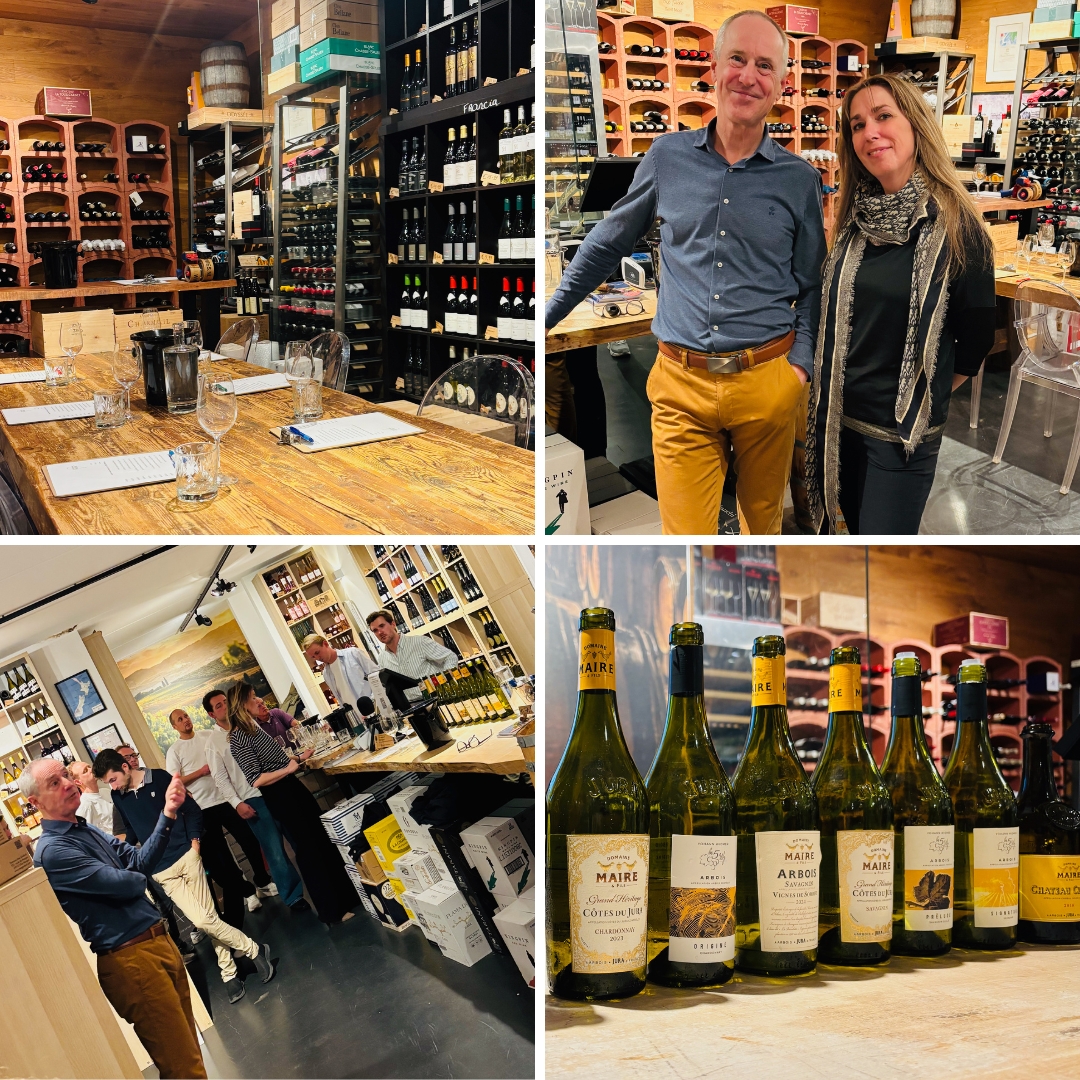
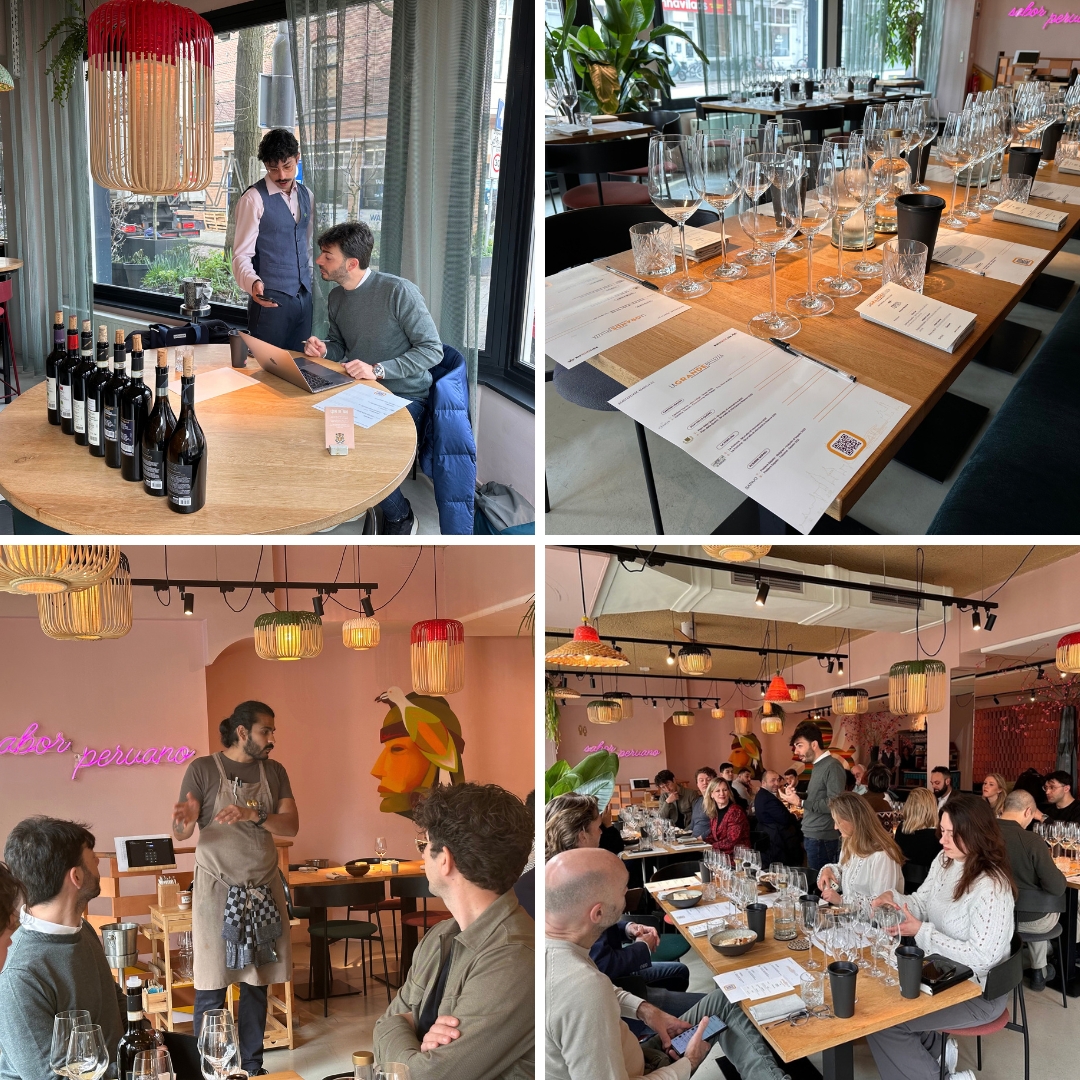
The Jura masterclass, presented by Joep Speet, Magister Vini, at Siersma Wijnadvies in Huizen, begins with a warm welcome from Rutger Siersma. Joep then takes us through the landscape, geology, grape varieties, appellations, and, above all, the region’s different wine styles. Over the course of the evening, we taste ten wines from Domaine Maire & Fils and Domaine Les 5 Wy, ranging from Crémant and Trousseau to Chardonnay, several interpretations of Savagnin, and, finally, Vin Jaune. The differences between grape varieties, terroirs, and winemaking techniques provide the thread running through the tasting.
Tasting a selection of Jura wines produced by Domaine Maire & Fils and Domaine Les 5 Wy.
A Landscape of Plateaus and Marl
The formation of the Alps has had a major influence on Jura’s landscape. Three levels can be distinguished: the highest extends towards Switzerland and reaches around 1,700 metres, the second lies roughly between 700 and 1,000 metres, and the first rises to around 500 metres. It is this first plateau that matters most for viticulture. The vineyards are situated mainly at elevations of approximately 200 to 500 metres, often on slopes and colluvial soils formed from material transported downhill from higher ground.
Water and erosion have played a major role in shaping the landscape. One characteristic feature is the reculées: deep valleys carved into the limestone plateaus. As the limestone cliffs gradually retreated, scree slopes also formed in places. Around L’Étoile, for example, vineyards occupy marl slopes covered with limestone debris.
That geological history is just as important below the surface. Jura was once covered by the sea, and its soils are largely rich in clay and limestone. Different types of marl are an important part of the terroir, with grey and blue marl particularly associated with Savagnin.
The temperate maritime climate presents challenges: warm, humid summers increase disease pressure, while spring frost, heavy rainfall, and hail remain risks.
At around 2,200 hectares, Jura is small, but even within this limited area, elevation, slope, marl, and limestone create clear differences between vineyard sites.
Two Producers, Two Approaches
The line-up brings together two producers representing different sides of Jura. Domaine Maire & Fils has a long history and was substantially expanded by Henri Maire from 1939 onwards. Today, the estate belongs to the Boisset family and covers approximately 240 hectares of vineyards. By contrast, Yohann Widmer’s Domaine Les 5 Wy has seven hectares, with a focus on terroir, individual vineyard plots, and minimal intervention.
During the masterclass, Joep describes Maire as a producer offering strong value for money and Les 5 Wy as a smaller-scale, more ambitious estate. The contrast is relevant: the same region, but a different scale and approach. The evening begins with a wine from each producer: Crémant du Jura.
The wine-up at the Jura Masterclass.
Crémant du Jura: Two Styles Side by Side
Henri Maire Brut Jurassique
A Crémant du Jura made from Chardonnay and Pinot Noir. The grapes are hand-harvested and whole-bunch fermented, using only the cuvée, or first pressing. The wine does not undergo malolactic fermentation. Secondary fermentation takes place inside the bottle, the traditional method, followed by around a year on the lees. Slightly honeyed, with white flowers and some dried fruit. The high acidity is immediately apparent, but there is enough fruit to prevent the wine from feeling too austere. The bubbles are fine, and the style is fresh and approachable.
Les 5 Wy Crémant du Jura Blanc Brut
The second Crémant is a blend of 50% Chardonnay, 30% Pinot Noir and 20% Savagnin, also made using the traditional method. Unlike the Henri Maire, this wine undergoes full malolactic fermentation. Savagnin is included to retain sufficient acidity. The malolactic fermentation softens the acidity, giving the wine a noticeably rounder mouthfeel. The mousse is gentle, with greater freshness emerging towards the finish and a slight apple note.
Two Crémants from the same appellation, yet two distinctly different styles from the outset.
Five Grapes, Many Expressions
Chardonnay and Savagnin dominate Jura’s white wines. Chardonnay is the most widely planted variety and forms the basis of many Crémants. It buds early, making it vulnerable to spring frost. Savagnin is more closely associated with Jura itself, thrives on marl, retains its acidity, and provides the basis for Vin Jaune. It is also made in an ouillé style, producing very different expressions.
For red wines, the varieties are Pinot Noir, Poulsard, and Trousseau. Poulsard, also known as Ploussard, has little colour pigment and can produce strikingly pale reds, sometimes almost rosé-like in appearance. Trousseau generally offers more colour, structure, and spice. Of the three red varieties, only Trousseau features in this masterclass.
Trousseau: The Only Red of the Evening
Domaine Maire Trousseau Vignes aux Ânes 2024
This 100% Trousseau from AOP Arbois comes from a late-ripening variety that is particularly well suited to lighter, warm, relatively dry, and gravelly soils. After twelve days of maceration, 25% of the wine is aged in used oak, with the remainder in stainless steel, allowing the fruit to remain prominent. Ruby red in colour, with red fruit, some spiciness, and a subtle touch of oak. Fruity on the palate, with low tannins and sufficient structure.
This is not a wine that calls for extended bottle ageing. Drinking it young is better suited to its fruit-driven character. It also shows well served slightly chilled, making it a lovely summer red. A real sommelier’s wine and an interesting alternative to Pinot Noir.
Chardonnay: One Grape, Two Interpretations
After Trousseau, the focus returns to white wine, with Domaine Maire’s Grand Héritage Chardonnay 2023 alongside Les 5 Wy’s Origine Chardonnay 2023. Tasted side by side, they show just how much difference vinification and ageing can make within the same grape variety and region.
Domaine Maire Grand Héritage Chardonnay 2023
A Côtes du Jura blend of 91% Chardonnay and 9% Savagnin. The Chardonnay is vinified separately and aged for eight months in stainless steel, after which a small proportion of Savagnin aged sous voile is added. Pale in colour and fresh in character, with white fruit and white flowers. Dried fruit and subtle oxidative notes also emerge on the palate. Chardonnay brings freshness, while Savagnin adds structure and the distinctive oxidative accent.
Les 5 Wy Arbois Origine Chardonnay 2023
A 100% Chardonnay from AOP Arbois, sourced from the first vineyard acquired by Yohann Widmer, hence the name Origine. The vineyard lies on blue marl and, following hand-harvesting and direct pressing, the wine is aged for a year, partly in oak and partly in tank. Pale gold, with an immediately noticeable oxidative nose alongside white fruit, white flowers, and hazelnut. Broad and rounded on the palate, with considerable structure and depth. Very distinctive, with something of a natural-wine character: recognizably Jura, and a style that comes down to personal taste.
The Appellations of Jura
The largest geographical appellation is Côtes du Jura, an elongated area covering much of the wine region. Arbois is geographically smaller and encompasses white, red, and rosé wines. L’Étoile is a small appellation for white wine, as well as Vin Jaune and Vin de Paille. Château-Chalon is the most specific: this appellation is devoted entirely to Vin Jaune made from Savagnin.
Vin Jaune, however, is not exclusive to Château-Chalon. It can also be produced within Côtes du Jura, Arbois, and L’Étoile. Jura also has Crémant du Jura for sparkling wines. Within this small region, broad geographical designations therefore exist alongside highly specific appellations.
The Masterclass offered a Journey through the Jura.
Ouillé, Sous Voile, and the Influence of Ageing
To understand the wines that follow, the distinction between ouillé and sous voile is essential. With ouillé, barrels are topped up regularly to compensate for evaporation and limit contact with oxygen. With sous voile, they are deliberately left untopped, allowing a layer of yeast, the voile, to develop on the wine’s surface. This offers partial protection against oxygen while also contributing nutty, spicy, and savoury aromas. The comparison with flor in Jerez is an obvious one, although Jura wines are not fortified. Temperature, barrel position, and the length of ageing all influence how pronounced the voile character becomes.
The best-known result is Vin Jaune: always made from Savagnin and aged for an extended period without topping up. It is traditionally bottled in the 62-centilitre clavelin. This distinctive bottle size refers to the wine lost through evaporation during ageing. The wine spends at least five years under voile and is not bottled until more than six years have passed. Through evaporation, approximately 62 centiliters remain from an initial liter of wine.
At the same time, Savagnin is also made in an ouillé style, and grapes from individual plots are increasingly vinified separately. The distinction between origin and ageing is central to the four Savagnins we taste next.
Savagnin in Two Styles
Domaine Maire Savagnin Vignes de Sorbief 2023
A 100% Savagnin from AOP Arbois, sourced from a south-facing plot on Triassic marl. The wine is made in the naturé style, i.e. ouillé, with the barrels topped up. Fermentation and nine months of ageing on the fine lees take place in oak, 30% of which is new. Pale gold in colour, with white fruit, flowers, and a hint of something exotic. Citrus, roundness, and structure on the palate. The wine becomes taut more quickly than the Chardonnays tasted earlier, and the finish is long.
Not a classic oxidative style, but a Savagnin in which freshness and the grape’s own character take center stage. In terms of freshness, it is even reminiscent of a Chenin Blanc from the Loire. A very different style from the Savagnin aged sous voile that follows.
Domaine Maire Grand Héritage Savagnin NV
Grand Héritage shows a more classic side of Savagnin. This Côtes du Jura combines a fresher Savagnin aged on its fine lees with 30% Savagnin aged sous voile. During this process, the yeasts in the voile consume substances including glycerol, which can make the mouthfeel less rounded and tauter. In the glass, the wine is lightly oxidative and nutty, with floral and fruity aromas as well as spice. The influence of the voile is clearly recognisable.
The two Maire Savagnins split the group almost exactly in half. The pronounced nuttiness and slightly oxidative character of the sous voile style is clearly something that can take a little getting used to.
Two Savagnins from Les 5 Wy
With the Les 5 Wy, we encounter the same contrast again, this time from a different producer. Prélude 2023 is aged ouillé, while Signature 2021 spends at least two years in oak without topping up. The comparison makes the influence of ageing on Savagnins character even clearer.
Les 5 Wy Arbois Prélude Savagnin 2023
A 100% Savagnin from AOP Arbois. Following hand-harvesting and direct pressing, the wine is aged alternately in oak and tank, with regular topping up. It has a deeper colour than the preceding white wines, with floral notes and freshness. Relatively delicate and restrained on the palate, with fresh acidity and a taut structure. Oxidative aromas play very little part.
Les 5 Wy Arbois Signature Savagnin 2021
Signature spends at least 24 months in oak under voile, without the barrels being topped up during ageing. Golden yellow in the glass, with nuts, spices, riper fruit, and a spicy note reminiscent of curry. The wine has considerable structure and a long, lingering finish. While Prélude primarily shows Savagnins fresher side, Signature clearly reflects the influence of extended ageing under voile.
Here too, preferences are almost evenly divided: Prélude and Signature each receive roughly half the votes. Choosing between a fresh ouillé style and a more classic sous voile expression is largely a matter of personal taste. The contrast works well within the masterclass: the same grape takes on an entirely different character depending on how it is aged.
Jura in Transition
Jura is attracting growing interest, alongside increasing attention to organic and biodynamic viticulture, natural wine, individual vineyards, and terroir. Producers such as Pierre Overnoy and Stéphane Tissot are among the influential names in this development. Grapes from individual plots are increasingly vinified separately, allowing differences in soil, exposure, and origin to become more apparent in the wines.
Climate change, meanwhile, poses new challenges for the region. Spring frost hit Jura particularly hard in 2021 and 2024, while harvest dates have shifted earlier over the longer term. Experimentation is also taking place in the cellar, including skin contact for white grapes. Alongside its traditional styles, Jura therefore has plenty of room for new approaches to winemaking.
Château-Chalon: Classic Jura
Domaine Maire Château-Chalon 2018
The final wine is a 100% Savagnin from AOP Château-Chalon. The vineyards lie on steep slopes around the village, on grey-blue marl and limestone. Château-Chalon is subject to strict regulations. Vineyard suitability is specifically defined, and the grapes are assessed each year. After fermentation, the wine spends at least five years in oak barrels that are not topped up. Beneath the voile, it slowly develops its character while some of the wine evaporates: the angel’s share. It is eventually bottled in the traditional 62-centilitre clavelin.
Château-Chalon was officially recognized as an appellation d’Origine in 1936, but the history of viticulture around the village goes back much further. The former Abbey of Château-Chalon played an important role. The abbey is mentioned in historical documents as early as 869 and developed into a religious community for women of noble birth. Through their connections with influential families, Château-Chalon wine became known beyond Jura and enjoyed a distinguished reputation centuries before its official recognition.
According to tradition, the abbesses may also have been behind the origins of Vin Jaune, although the precise origins of this wine style have not been established with certainty. Recognition in 1936 ultimately gave the origin and production methods of this distinctive wine official protection.
The 2018 is intense, powerful and distinctly oxidative, with pronounced nutty and spicy notes and a long finish. A very different wine from the Savagnins tasted earlier. As the final wine of the evening, it brings together much of what the masterclass has covered: terroir, Savagnin, and the classic approach of ageing under voile.
Jura Continues to Surprise
Above all, this masterclass demonstrated just how diverse Jura is. Its strength lay in tasting the wines side by side: two Crémants, Trousseau, two Chardonnays, four interpretations of Savagnin, and Château-Chalon. The differences in grape variety, terroir, and vinification were not merely explained; they could be tasted directly. Several wines were well outside more familiar styles, particularly because of the influence of sous voile ageing and their oxidative character.
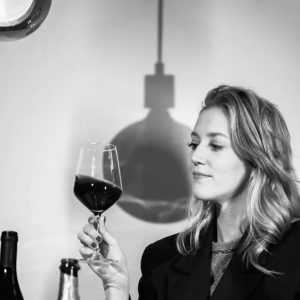
Joep Speet, Magister Vini, provided valuable context throughout. A natural storyteller, he consistently connected the landscape, grape varieties, viticulture, and winemaking to what was in the glass. Rather than a succession of ten wines, the evening became a story about what makes Jura so distinctive. The relaxed atmosphere at Siersma Wijnadvies completed the experience.
Joep Speet, Magister Vini and our own Brigitte Janssen.
This article is written by our own Brigitte Janssen. The wines featured above are imported into the Netherlands by Pallas Wines, part of Delta Wines, and are available through selected partners. Our thanks go to Rutger Siersma and Arjan Dijkman of Siersma Wijnadvies for their warm hospitality, and to Joep Speet, Magister Vini, for his engaging presentation and extensive knowledge of Jura.
Join our insiders’ list and get exclusive early access to new articles, expert tips, and fresh reviews delivered straight to your inbox. Subscribe now and be the first to discover!