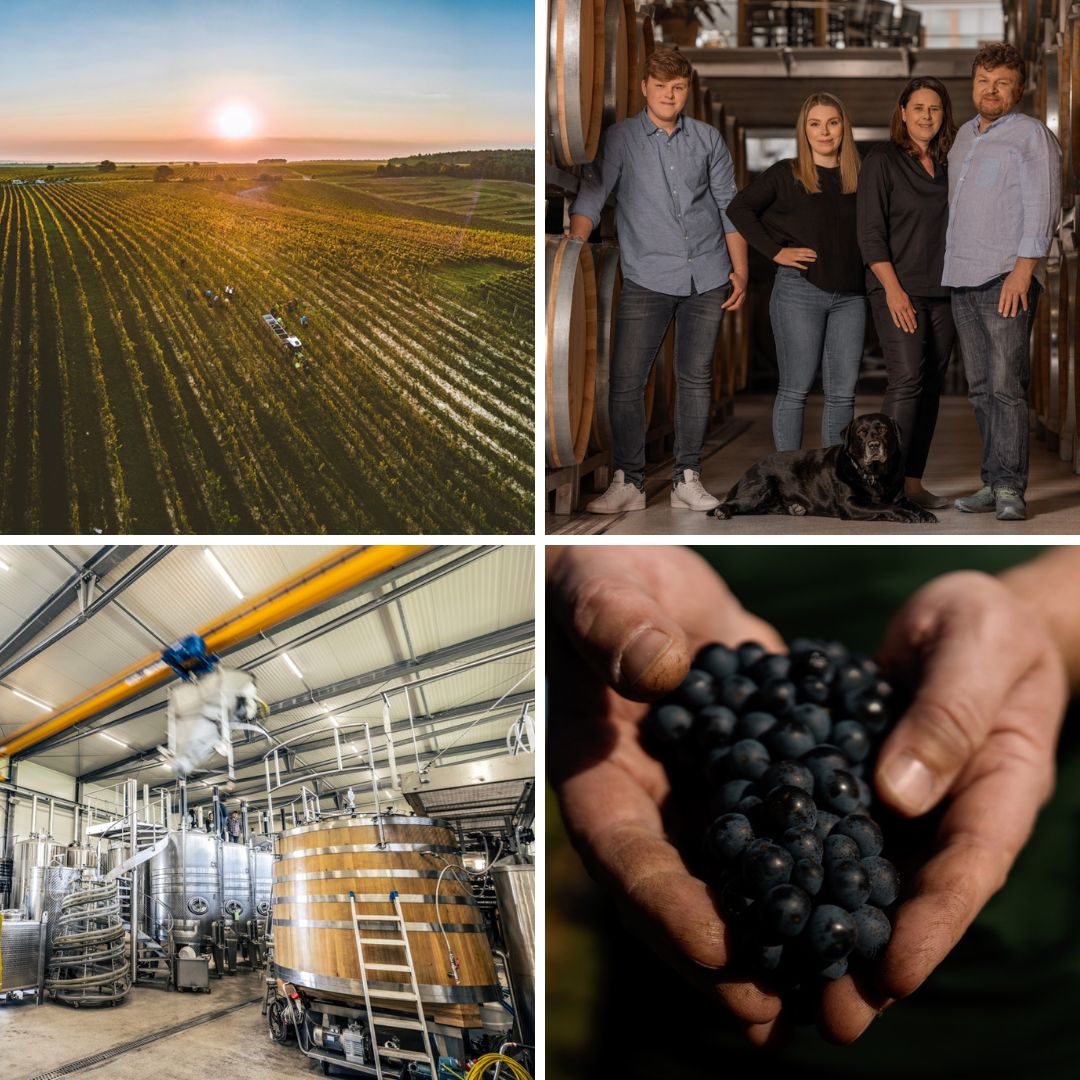
We recently had the opportunity to sit down for a lengthy interview with Albert Gesellmann, winemaker and owner of Weingut Gesellmann in Austria’s Mittelburgenland. A great opportunity to talk about the wines of his estate, Albert’s background, and why the Mittelburgenland is Austria’s premier region for red wine – led by its signature Blaufränkisch grape variety. Join us as we unveil a story of vision and pioneering spirit that has shaped not only Weingut Gesellmann, but also the modern identity of the Mittelburgenland.
Blaufränkischland
Weingut Gesellmann is situated in the northern part of the Mittelburgenland, specifically in the village of Deutschkreutz. Unlike most other Austrian winegrowing regions, here the focus is on black grape varieties, which account for over 90% of the region’s plantings. Of this number, Blaufränkisch alone makes up over half of the region’s 2.100 hectares of vineyards. One can see why the Mittelburgenland is also referred to as ‘Blaufränkischland’.
Mittelburgenland is Austria’s premier region for red wine and Blaufränkisch.
This dominance of black grape varieties, and specifically Blaufränkisch, is not a coincidence. The region is wide open to warm, easterly winds from the Hungarian part of the Pannonian Plain – helping black grapes to reliably ripen each year. Adding to this, the vineyards of Mittelburgenland are well-protected against cooling Alpine winds by the hills of the Bucklige Welt to the west, the Ödenburg Mountains to the north and the Günser Mountains to the south. The region’s frequent morning fogs help preserve acidity and freshness, as the sun often takes time to pierce through—much like in California’s premier regions such as Napa Valley and the Sonoma Coast. Together, these factors make the Mittelburgenland Austria’s warmest and driest wine region, with a generous 300 annual days of sunshine and only 600 mm of annual rainfall.
Blaufränkisch, Austria’s flagship red wine grape.
Fortunately, the terroir of the Mittelburgenland is well-suited to these warm conditions. Clay is the predominant soil type in this hilly, forested region, perfectly balancing the warm, dry climate of the region with its moderating cooling influence and water-holding capacity. Besides clay, significant deposits of heavy loams, schist, and wind-blown loess are also found, with even a bit of limestone and volcanic basalt present in some spots. Combined with the region’s hilly topography, this results in a wide range of distinct vineyards and corresponding expressions of Blaufränkisch. In turn, future-oriented growers like Gesellmann are even experimenting with varieties such as Chardonnay and Pinot Noir on the cooler, more limestone-dominant sites such as the Steinriegel and Siglos vineyards.
However, Blaufränkisch still dominates the Mittelburgenland and this is not expected to change anytime soon. The warm climate combined with richer soils suit the variety perfectly, allowing it to ripen fully and enjoy a long growing season. According to Albert, Blaufränkisch from the Mittelburgenland is distinctive for its spicy notes, high acidity, and strong structure and texture, with the latter two especially attributed to the richer clay soils of the region.
He further explains that the neighboring Eisenberg region to the south, on the other hand, has rockier, shallower soils, yielding more mineral and stony expressions of Blaufränkisch, whereas the limestone-richer Leithaberg to the north tends to give more subtle, soft expressions of the variety. Having tasted a range of Gesellmann wines, and being familiar with Blaufränkisch expressions from these neighboring regions, we can only confirm this notion. While perhaps not as transparent as Pinot Noir, it is clear that Blaufränkisch is able to clearly convey significant differences in terroir.
Besides Blaufränkisch, the Mittelburgenland is mostly planted to Zweigelt (24%, often easier-drinking wines), plus a fair number of international grapes such as Merlot (6%) and Cabernet Sauvignon (4%). These international grape varieties account for an unusually high percentage compared to other Austrian regions; a trend attributed to the pioneering work of Engelbert Gesellmann in the 1980s – which we further highlight below.
Weingut Gesellmann: Solid Foundations
The Gesellmann winery is situated in Deutschkreutz, a village in the northern part of the Mittelburgenland where they have been making wine since at least the early 18th century. However, the real turning point in the Gesellmann history was in the 1980s, when Engelbert Gesellmann (1935-2021) was one of the first to plant international grape varieties such as Cabernet Sauvignon and Merlot in the region. The Opus Eximium (Latin for ‘outstanding work’) cuvée – the first Gesellmann wine with these varieties – was released in 1988, comprised of Blaufränkisch with Cabernet Sauvignon and Pinot Noir, followed shortly by the Bela Rex (reference to Hungarian King Bela IV) cuvée in 1992, which is a blend of Cabernet Sauvignon and Merlot.
Gesellmann is well-equipped to produce a variety of red and white wines.
Both wines see quite strong macerations and long ageing in partly new, small French oak, but also carry plenty of elegance and refinement alongside the typical spicy black cassis note that the Mittelburgenland is known for. Especially in the late 80s wines like these were very uncommon in the region (and, as a matter of fact, also in Austria as a whole), resulting in these wines being some of the first to hint at the country’s quality potential for red wine – also inspiring other growers. Fortunately, both wines are still made as of today, and are still considered among Burgenland’s finest – although made with a tiny bit more emphasis on elegance and drinkability now that Albert is at the head of the estate.
Weingut Gesellmann’s Cellar.
The Next Generation
In 1992 Engelbert handed over the reins of the winery to his son Albert, who still is in charge as of today. Under his leadership, the winery has seen subtle changes in style and plantings, with even more to come. Two particularly important milestones were the introduction of the ‘G’ cuvée in 1997 and the single-vineyard Hochberg bottling of Blaufränkisch in 2005 – with the first focusing on the pure quality of Blaufränkisch through the estate’s oldest vines of the variety and the second on its potential to display terroir. Luckily, we were able to taste and discuss both wines with Albert himself in the section further below.
Other changes Albert has made are a conversion to organic farming in 2015 as the first winery in Deutschkreutz, spontaneous fermentations for both the white and red wines, the introduction of cover crops in the vineyard to slow ripening, resulting in more elegant wines while increasing biodiversity, the introduction of both Syrah and Chardonnay (following his internships in South Africa and California), and his new single vineyard bottlings.
Albert Gesellmann and his family.
However, the classic Gesellmann signature profile of the wines seeing strong macerations and plenty of time in oak remains fully in place, with 30 months and longer not being uncommon. Albert adds to this that he destems all his fruit (except for a portion of his Pinot Noir), with him preferring the tannin oak gives compared to the greener tannin that the stems tend to give. In this case the spice notes from including some stems in the fermentation are also not needed, as these aromas are already present in many of his wines.
Albert adds that for the future, he will consider bringing the plantings of Merlot down as in the recent warm years it has gotten a bit too soft and high in alcohol and perhaps swapping it for Cabernet Franc – even in the Bela Rex cuvée. This would bring a bit more acidity and freshness alongside lower alcohol percentages, both considered quite welcome with the warming climate. Furthermore, the planting densities have been subject to experimentation in the last years, with Albert even releasing a Hochberg ‘Stockkultur’ bottling that uses vines with a planting density of 10.000 vines per hectare (compared to the 5.000-6.000 density for the regular Hochberg). Although still experimental, the vines have so far produced fewer but thicker-skinned berries that in turn have deeper vine roots due to increased competition between the vines. The resulting wine in turn is more intense and structured, but also higher in alcohol. It will be interesting to follow this experiment in the future.
However, the high-density parcel in the Hochberg is not the only experiment that is going on in this special site. Albert has also been making a field blend (Gemischter Satz) of white grape varieties there after buying a plot there from a retired farmer which included Grüner Veltliner, Chardonnay, Sauvignon Blanc, Pinot Blanc, Riesling, Gutedel, and even Gewürztraminer – all planted in 1959. The plan was to uproot them at first, but for fun he decided to vinify the parcel and ended up liking the resulting wine, which was not too high in acidity but with immense power, texture and grip.
In the future, the Gesellmanns will likely experiment more with field blends of white grapes specifically, as red field blends tend to have more trouble balancing the resulting combination of ripe and underripe fruit with their tannins, giving some green notes.
Furthermore, Albert is experimenting with biodynamic practices and might even go for certification in the future, alongside trying out whole bunch fermentations but without the stems included. All in all, while already quite modern in style and practices, this estate is one to watch for the future with all the experimentation going on, many of which have resulted in utterly delicious and great wines already.
Gesellmann’s Wines
Onward to the wines. Before our interview with Albert, we tried the Blaufränkisch von Lehm and the Blaufränkisch Creitzer Reserve to get a good first feel of the wines, and after the interview with the new insights gained, we tried the higher-tier cuvées. All in all, the Mittelburgenland signature of spice is definitely present in the wines, alongside impressive structure and black-fruited density, but always with elegance. An impressive line-up of some of Burgenland’s finest – with the ‘G’ as one of Austria’s finest red wines we have ever tasted.
Weingut Gesellmann – 2023 Blaufränkisch vom Lehm
100% Blaufränkisch | 88/100 DWA score | Drink 2026-2029
Grown on heavy loams with high clay content and a bit of limestone. Medium purple in colour, with elegant lifted aromas of black cherry, bramble, plum, blueberry, and a hint of black pepper, liquorice, and clove. Younger vines of the estate, with the oldest being around 20 years old. The usage of larger, old oak barrels gives structure and texture. Lovely freshness. Elegant, refined, and spicy – with ripe black fruit. Drinkable. Impressive finish for the price. Great fruit purity. Lovely introduction to both the grape and the producer.
Weingut Gesellmann – 2023 Ried Steinriegel Chardonnay
100% Chardonnay | 93/100 DWA score | Drink 2027-2037
From the southern-facing Steinriegel vineyard, according to Albert a very poor and dry slope in Deutschkreutz, with gravelly rocks on top and a thick layer of limestone two meters down. 45-year-old vines. Aged fully in small oak, which might change into larger, 500-litre barrels in the future. Frequent bâtonnage and full malolactic in barrel. Lemon in colour, with intense aromas of lemon, wet stone, yellow apple, yellow ripe pear, fresh pineapple, and white flowers. The oak and lees influence give notes of clove, smoke, fresh butter, and vanilla. Full-bodied with a quite long finish. Needs a bit more time to open up. Complex and fresh nose. Pure and ripe, with good acidity. Polished and aristocratic, Burgundian-like.
Good dry extract. Rocky limestone feel to it instead of the regular clay fullness found in Mittelburgenland wines. Fresh and linear nose and front palate, rounder and more generous on the finish. Very young still, will benefit from additional bottle age but already delicious. Unique, chalky expression of Mittelburgenland Chardonnay.
100% Blaufränkisch | 91/100 DWA score | Drink 2026-2033
Albert’s only wine carrying the Mittelburgenland DAC (Districtus Austriae Controllatus), in theory the highest quality appellation in Austria. However, as only Blaufränkisch-dominated wines which fit in a certain flavour profile (recipe according to Albert) are allowed in the DAC, Albert is not too interested in the DAC for his wines – a trend commonly seen among many of Austria’s finest producers. The Creitzer Reserve is a step up from the Blaufränkisch von Lehm, and is made using the estate’s older Blaufränkisch plantings of 20- to 70-year-old vines on mostly heavy clay loam soils, giving a richer, more intense expression of the variety. Aged in small oak. More intense, with generous and round notes of wet earth, black cherry, white pepper, clove, tobacco, cassis, blueberry, wet stone, smoke, and dried flowers. Great aromas, perfectly ripe black fruit and spice. Deep and earthy. Fleshy but with freshness and poise. Structured and round tannins, powerful but ripe and integrated. Very typical Mittelburgenland expression. Clay generosity. Delicious, intense but still really drinkable.
The top performers from our tasting table.
Weingut Gesellmann – 2022 Opus Eximium No. 35
60% Blaufränkisch, 30% Zweigelt, 10% St. Laurent | 93/100 DWA score | Drink 2026-2042
One of Gesellmann’s signature wines, having been made since 1988 (hence, the No. 35 on the label refers to 2022 being the 35th iteration) and originally created by Engelbert Gesellmann. At first the blend was Blaufränkisch with Cabernet Sauvignon and Pinot Noir, but since Albert took over, he decided to focus more on Austrian varieties from the 1999 vintage onwards. 30- to 70-year-old vines, each variety fermented separately, 24 months in small oak, and afterwards two years in large cask. Deep and intense aromas of black cherry, cassis, ripe redcurrant, blueberry, red cherry, red plum, violet, rose, warm stones, damp soil, and white pepper, with subtle clove, allspice, vanilla, and smoky notes from both the oak and varieties used. Incredibly soft texture yet still showing the typical Blaufränkisch structure. Quite intense but also elegant and refined. Great freshness yet with good warmth in there. Very mineral and nuanced. Still has that Austrian, Mittelburgenland spice and freshness feel to it. Tannins are there but refined and elegant, and quite hidden. Opens up and evolves in the glass, with a perfect balance between black, blue, and red fruit, with spice and integrated oak as a strong backbone. Very long. Velvety texture. Already drinkable but will keep for many years.
Weingut Gesellmann – 2021 Hochberc Blaufränkisch
100% Blaufränkisch | 95/100 DWA score | Drink 2028-2051
‘Hochberc’ is in this case not a misspelling, but rather the old local word for Hochberg, a southwest-facing vineyard with medium to heavy calcareous loam over limestone soils. The high limestone content of the soil gives a significantly different feel than the Gesellmann wines grown on the more typical clay loams, with this wine showing intense concentration and power. Dense cassis, blackberry, bramble, black cherry, blueberry, black pepper, liquorice, cardamom, dried spices, damp earth, wet stone, and chalk dominate the nose, alongside cedar, dark chocolate, smoke, vanilla, tobacco, and leather notes, from the 30-month ageing in oak vats. High acidity and strong, fine-grained tannins balance the intense fruit notes. Chalky feel and texture to it. Perfectly ripe tannins and pure cassis fruit. Great balance between power and freshness, and so detailed. Very structured and savoury. Almost a Pauillac-like power and grip to it, but with distinct Austrian spice and elegance. Balanced, classy and noble. Super finish.
Weingut Gesellmann – 2021 ‘G’
95% Blaufränkisch, 5% St. Laurent | 98/100 DWA score | Drink 2029-2061
The flagship wine of the estate, made from the oldest Blaufränkisch vines with a tiny dash of St. Laurent in there. The blend used to be 85/15 in the past, but has been growing more towards the Blaufränkisch side. Firing on all cylinders, with intense aromas of perfectly ripe cassis, dark plum, fresh blackcurrant, blueberry, and ripe red cherry, alongside violet and rose floral nuances and clove, white pepper, allspice, nutmeg spices. Well-integrated oak notes of smoke, vanilla, dark chocolate, and cigar box are also in place. Mineral. Not giving much on the nose at this stage but opens up a bit in the glass. Dense and structured on the palate, with immense old-vine depth. Generous and round. Concentrated. Needs a bit more age to come around. Balanced, with generosity and texture accompanying the concentration and power. Extremely long finish. Subtle red fruit and floral notes around the ripe black fruit and spice core give depth and complexity alongside some welcome elegance. Beautiful. Surprisingly drinkable, not over extracted or too dense, but rather made with freshness and poise. Aristocratic, built to last. The 2021 vintage according to Albert is the best of the century yet, with hot days but cold nights, plus a beautiful dry autumn, allowing for late-picking perfectly ripe and intense fruit with amazing flavour. Blaufränkisch perfection?
Conclusion
All in all, we look back on a very insightful interview with Albert, in which we learned about the past, present, and perhaps future of his estate and the Mittelburgenland as a whole. It also showed just why black grape varieties excel so much in the Mittelburgenland – the undisputed frontier for Austrian red wine with producers like Gesellmann contributing to the region’s prestige with each vintage. We were surprised by just how good Blaufränkisch can be, but also with how precisely it can reflect the terroir on which it is grown. And with its bright acidity and subtle polished black fruit and spice notes, it will likely even gain more attention and renown in the future. We look forward to it!
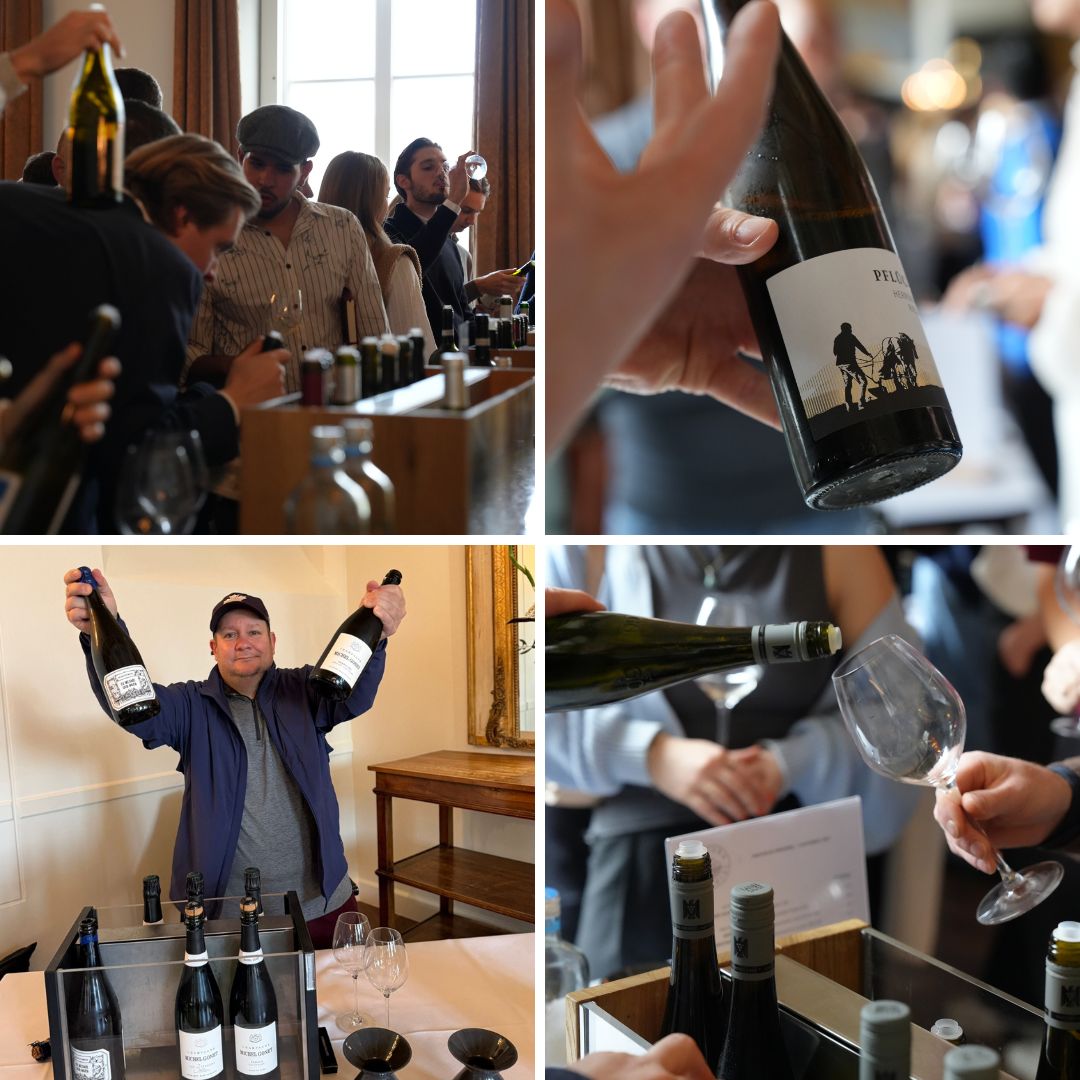
This article was written by our own Martin Bronkhorst. The wines of Weingut Gesellmann are exported to a number of foreign markets and well distributed. In the Netherlands their wines can be purchased through De WijnGoeroe.
We would like to thank Albert Gesellmann of Weingut Gesellmann for his time and outstanding wines, and Astrid Rauch and Arabella Maislinger of Wine+Partners for setting up the interview.
Join our insiders’ list and get exclusive early access to new articles, expert tips, and fresh reviews delivered straight to your inbox. Subscribe now and be the first to discover!