Join Our Wine Journey – Sign Up for the Newsletter 🍷
Weingut A. Christmann: Artisans living in Harmony with Nature
Share
Deel op X (twitter)
LinkedIn
WhatsApp
Weingut A. Christmann: Artisans living in Harmony with Nature.
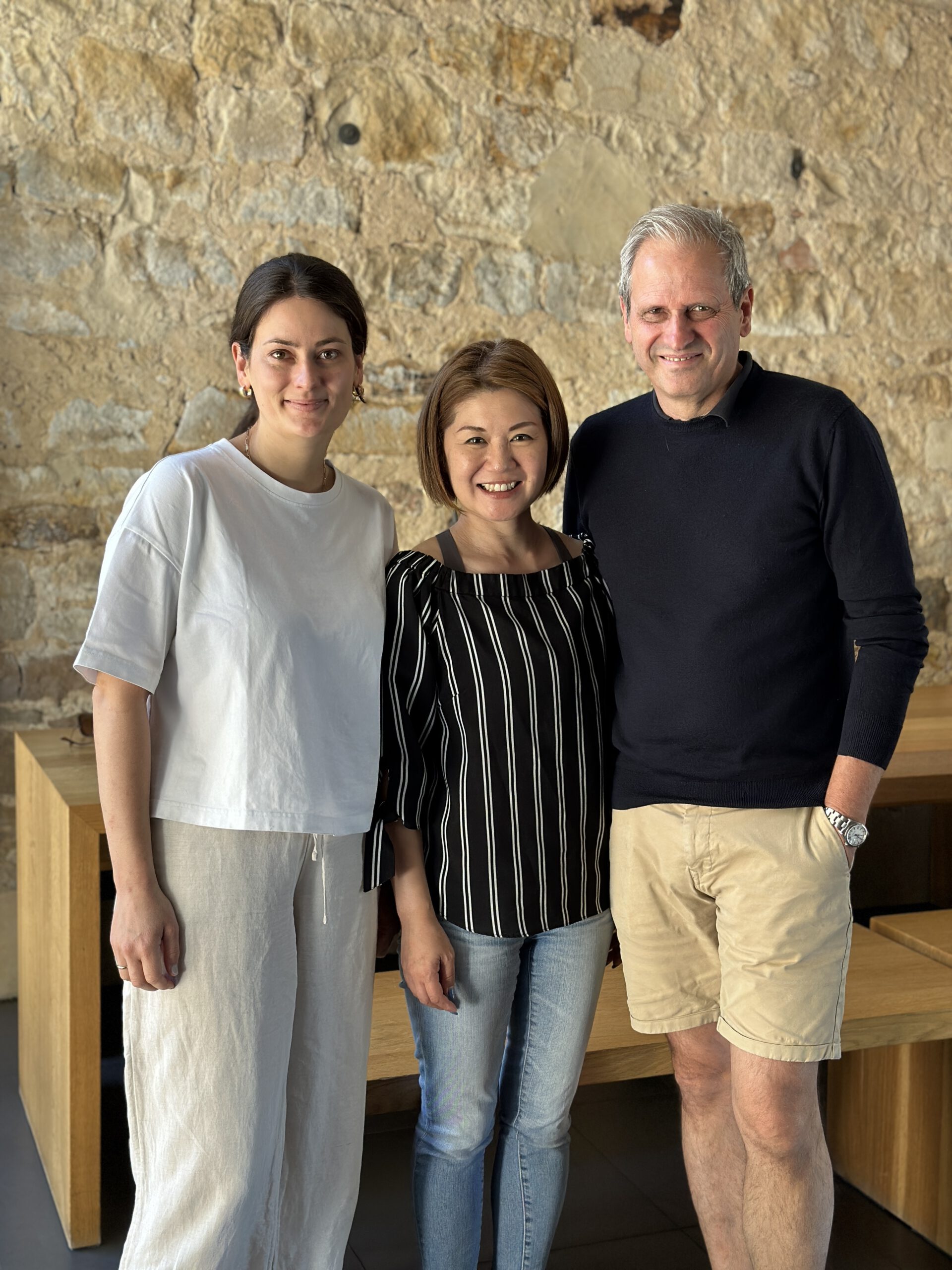
On a beautiful sunny morning in July, our own Kazumi visited Weingut A. Christmann in Germany’s Pfalz region to meet winemakers Steffen and Sophie (the 7th and 8th generation of the Christmann family). As part of our Spätburgunder journey through Pfalz, a stop at this top-tier VDP winery in Gimmeldingen—renowned both in Germany and internationally as a premier Spätburgunder and Riesling producer—was a must. During the visit, we explored the uniqueness of Pfalz’s terroir, their biodynamic viticulture, and the winemaking techniques that bring out the terroir’s distinct character.
Regional Uniqueness: Mixed Soil yet High Concentration of Limestone
The Pfalz region boasts an astonishingly diverse soil composition, a result of the Rhein Valley’s collision 35 million years ago, which brought various soil types to the surface. While sandstone from the Palatinate Forest forms the area’s base, certain sites feature exceptionally high limestone content. Notable vineyards include Idig in Königsbach, Saumagen in Kallstadt, and Morstein in Westhofen.
Limestone, a soft rock that easily breaks down into the soil, plays a vital role. When the subsoil retains minerals, vine roots can absorb essential nutrients, making soil composition and a healthy microbial ecosystem crucial. While many vineyards are influenced by limestone, the proportion present is key.
The iconic Idig vineyard sits on a limestone massif formed during the Tertiary period, topped with terra fusca—a mix of limestone, loam, and clay—at concentrations comparable to Burgundy. Recognized for its unique qualities since the 14th century, Idig’s heavy soil demands careful handling. Young vines mature slowly, but Steffen and Sophie manage the vineyard with meticulous care and patience. The resulting Spätburgunder is extraordinary, known for its structure, fuller body, power, and roundness.
In contrast, Vogelsang—a newly designated Grosse Lage—produced its first vintage of Spätburgunder in 2021 and showcases a distinct soil profile. Its soils consist of over 200-million-year-old shell limestone, unique to the region, which surfaced during the Rhein Valley’s collapse. At an altitude of 200 meters, Vogelsang’s harvest typically occurs about a week later than Idig’s. The Spätburgunder from Vogelsang is lighter, more elegant, and stands out with its floral and fruity character.
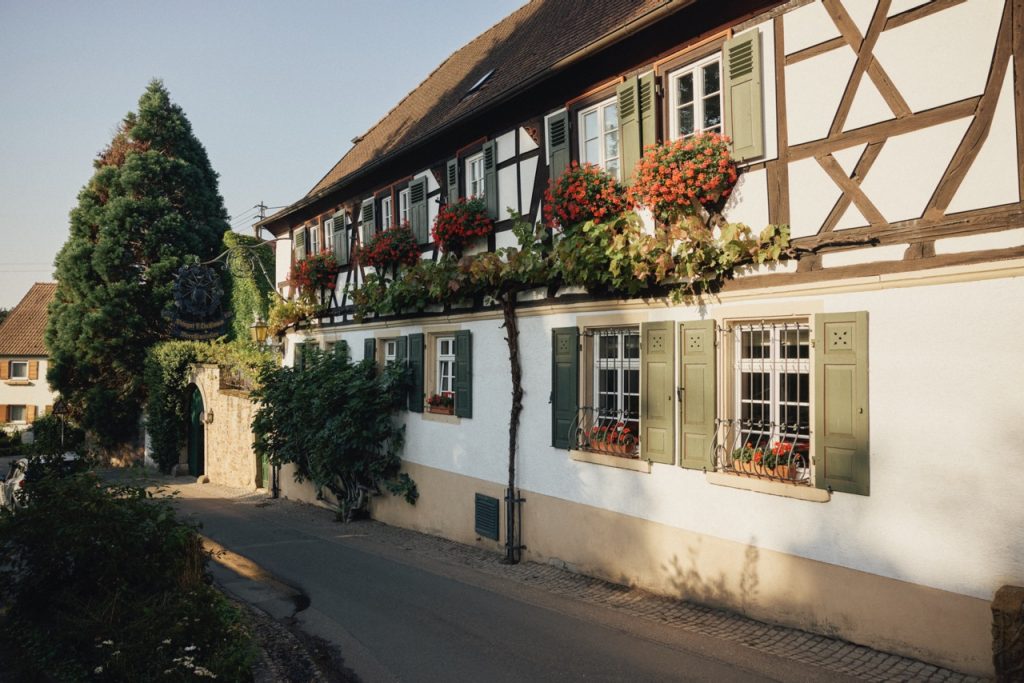
Weingut A. Christmann – Sektgut Christmann & Kauffmann.
Biodynamic Viticulture
To express the uniqueness of their terroir, biodynamic viticulture is essential. With over 19 years of organic and biodynamic farming, Steffen and Sophie have witnessed many positive changes in their vineyards. The vines now bear only as many grapes as they can naturally support, in harmony with the annual cycle of nature. Before adopting biodynamic practices, the leaves would often stay green and active until late October or even November, continuously producing sugar and energy—disrupting the plant’s natural rhythm.
“In a natural cycle, energy from the soil moves into the plant in spring, activating it. By autumn, this energy should return to the soil, roots, and stems. After switching to biodynamic farming, the plants naturally transition into harvest ripening mode as summer ends and autumn begins. Leaves turn slightly yellow, and the vines prepare for autumn and winter,” said Steffen.
As a result, the grapes stop accumulating excess sugar, leading to remarkable outcomes: at harvest, the grapes can be picked with lower sugar levels while still achieving full phenolic ripeness. Today, their vineyards thrive with visible biodiversity—hosting a variety of insects, herbs, and plants—all contributing to the harmony that makes their wines a true expression of place.
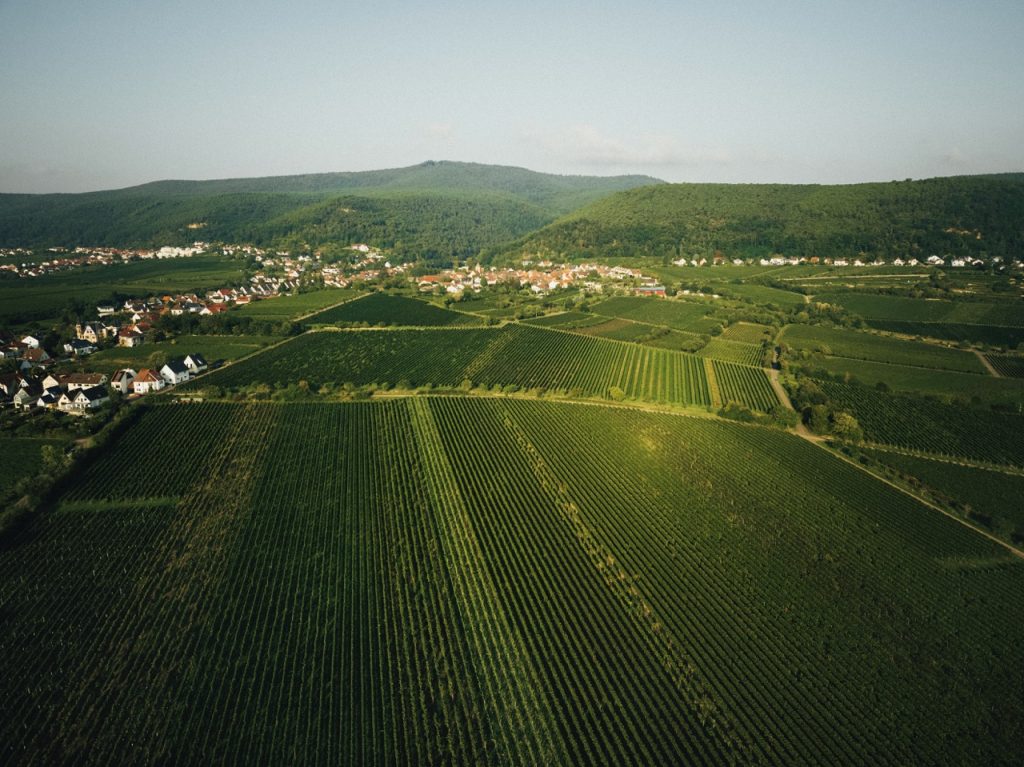
The Vineyards surrounding Gimmeldingen.
Low Intervention and Revisiting the Roots
Healthy grapes from biodynamic viticulture enable a low-intervention approach to winemaking, allowing a shift away from technical methods. Since 2000, Steffen and Sophie have been using natural yeast and eliminated all additives except for a small amount of SO₂ at bottling.
Today, 100% of their fermentation happens in oak barrels. Fermentation speed and conditions vary with each vintage, requiring meticulous attention. Steffen and Sophie seem pleased with the results of their hard work, as A. Christmann gradually returns to its traditional roots in both viticulture and winemaking.
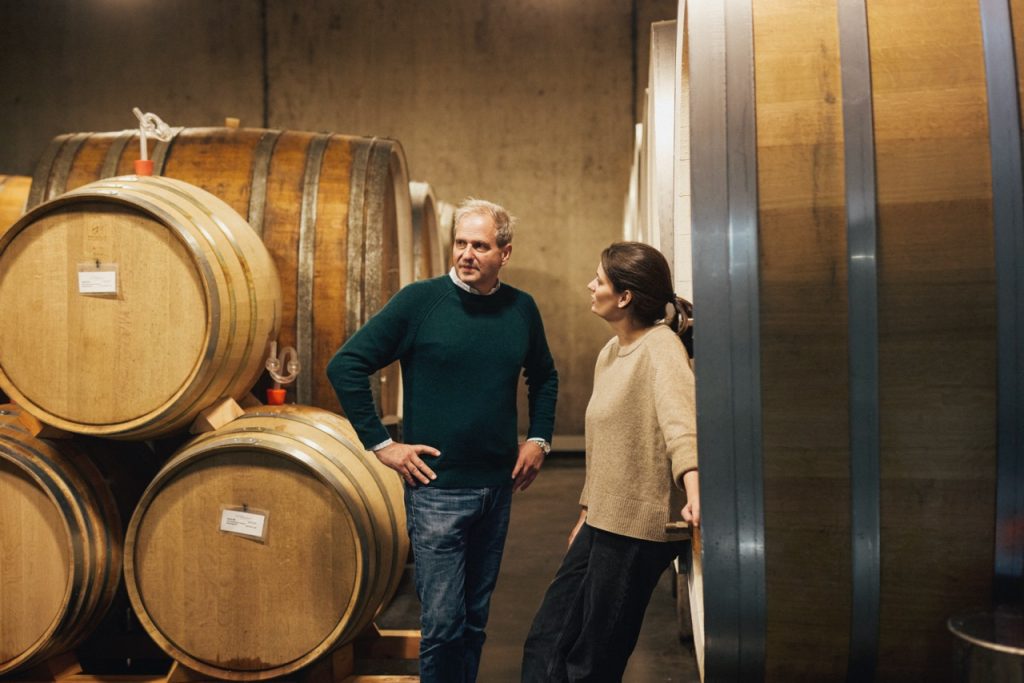
Steffen and Sophie in the Barrel Cellar.
French Clone and German Clone
Another fascinating topic of discussion was clones. The term “French Clone” is now being heard in Germany as well. However, using French clones doesn’t mean replicating a French style. For instance, Burgundy receives an average annual rainfall of 900mm, while Pfalz has only 450mm. In dry years, French clones often struggle to bear fruit, necessitating careful adjustments. Cloning is just one factor in crafting a great wine; these adaptations contribute significantly to the unique character of the place.
At Idig, vines come from two distinct plots: a German clone planted in 1977, forming the foundation of their wines, and a section planted in 2008 with French Massale selections, which adds complementary traits.
“Comparing old German clones and young French clones is only half accurate,” said Sophie. Clones have evolved over the decades. The old German plantings are a mix of various berry sizes, from small to large. Some vines (20-30%) are highly productive and require yield control. Yet, these grapes, with slightly higher acidity, are translucent, lighter, and more elegant. In contrast, the French genetics from 2008 produce very small, compact grapes with lower yields that ripen earlier, resulting in fruitier, spicier, and more generous flavors.
A. Christmann now benefits from blending these diverse characteristics to maximize potential. “This is not a story easily determined by zeros and ones.” To fully express the land’s character, respond to climate change, and prepare for the next generation, they are exploring a broad range of options. Looking ahead, they are even considering reviving old German clones using native German genetics, alongside the French selections.
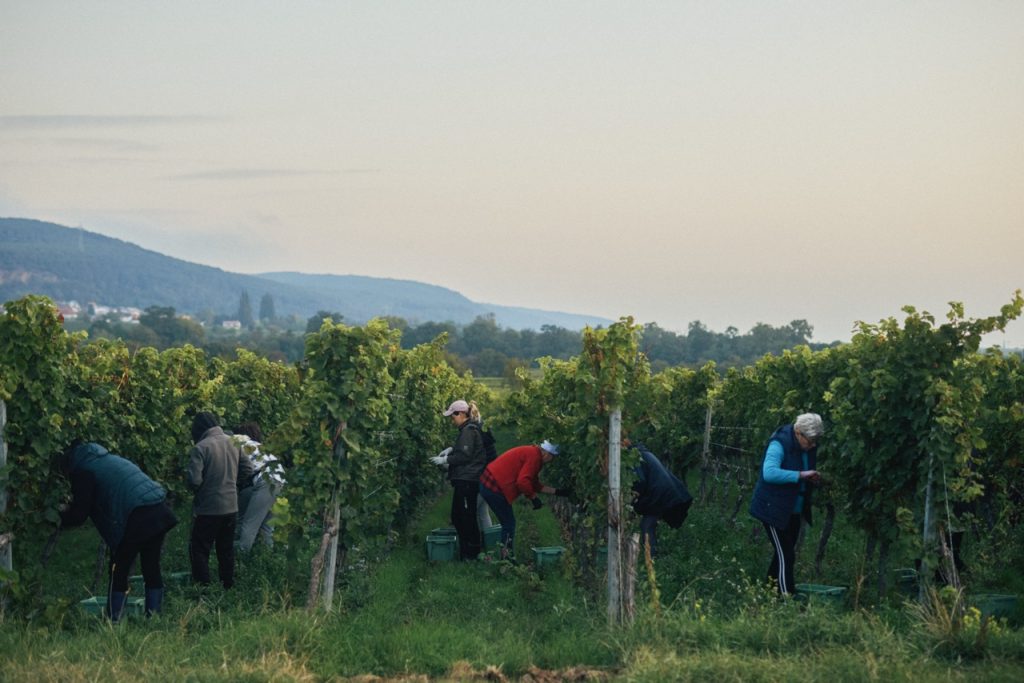
Work in the Vineyards.
Spätburgunder Tasting
After the impressive discussion, we tasted the related Spätburgunder wines.
But before we head to our tasting notes and ratings it is worth mentioning that Steffen and Sophie make a number of other wines, including top Riesling (dry) and even sparkling wine. The specialisation in sparkling wine came to live a few years ago, and took form in a collaboration with former Bollinger cellar master Matthieu Kauffmann. The wines are produced under the name Sektgut Christmann & Kauffmann.
Below our tasting notes and ratings for the Spätburgunder wines.
2021 Aus den Lagen Spätburgunder
Since spring 2022, A. Christmann has downsized their lineup to focus on classified VDP.ERSTE LAGEN and VDP.GROSSE LAGEN wines. The only blend now produced is ‘Aus den Lagen,’ which combines grapes from single vineyards for each variety.
‘Aus den Lagen’ is hand-harvested, spontaneously fermented, and carefully blended. 20-30% whole clusters fermentation and 18 months aging in oak barrels.
This wine features ripe yet not overly fruit-forward red fruits (cherry, strawberry, berry) with herbal and spice notes. It is fragrant and elegant, with silky smooth tannins and refreshing acidity.
DWA-score: 92/100. Drink 2022-2032.
2021 Gimmeldinger Schlössel VDP. Erste Lage Spätburgunder
The soil is a blend of calcareous loess from Meerspinne and red sandstone rubble. Spontaneous fermentation and 10% whole bunches.
The result is a rich tapestry of spice and subtle sweetness, featuring dark cherry flavors, a touch of fine wood, and hints of cedar and earth. On the palate, it’s complex and layered, balancing elegant acidity with ripe tannins. A long, velvety finish.
DWA-score: 94/100. Drink 2022-2037.
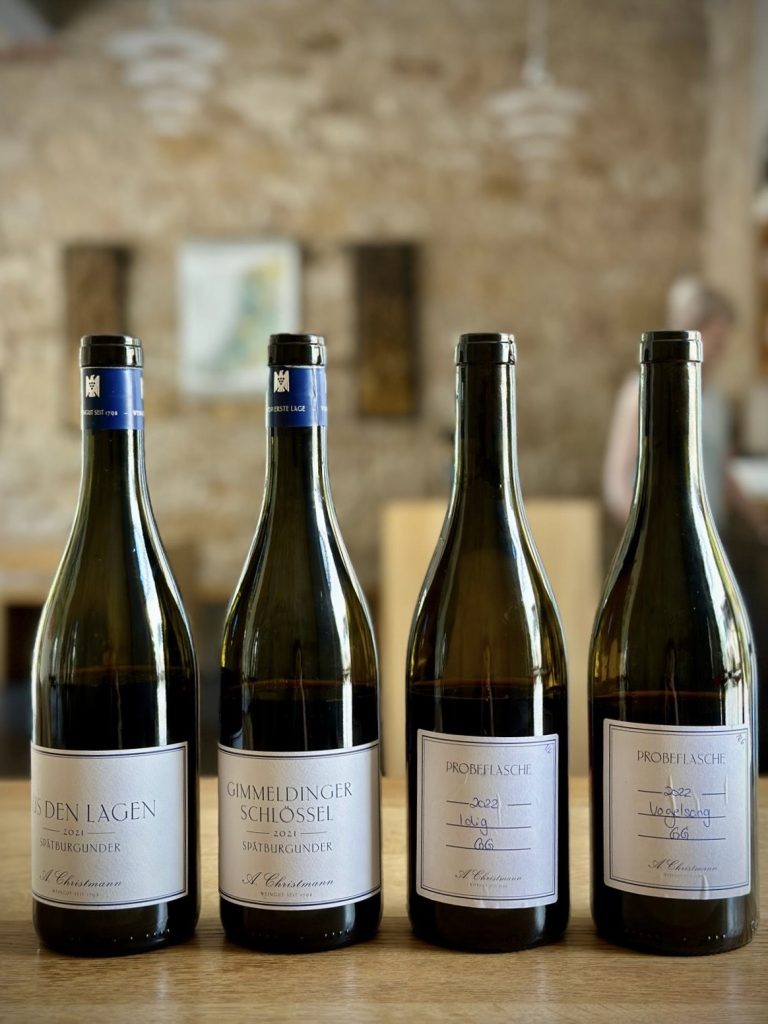
The Spätburgunder wines on the tasting table.
2022 Idig Königsbach VDP.Grosse Lage Spätburgunder
10% whole bunches fermentation with wild yeast. Oak barrel aging (10% new).
The bouquet reveals multiple layers such as ripe cherries, wild berries, strawberries, refined with a touch of vanilla and delicate spicy notes. Velvety tannins, vibrant acidity beautifully balanced with the fruity elegance of red berries and a hint of warm spice. Powerful and complex, yet incredibly elegant, offering a harmonious blend of fruit, spice, and a deep, structured finish.
DWA score: 97/100. Drink 2022-2042.
2022 Vogelsang Neustadt VDP.Grosse Lage Spätburgunder
There are just under 1,000 bottles available. The grapes come from shell limestone soil at 240 meters. These are Massale selections from the Côte d’Or, planted in 2019, and were hand-harvested. The fermentation included 20% whole bunches.
The wine is incredibly clear, pure, and bright, showcasing red and sour cherries, raspberries, and hints of black fruit, spice, and subtle earthiness. It’s delicate and nuanced on both the nose and palate, yet structured with vibrant acidity, ripe tannins, and a touch of minerality. Lingering finish Precision and finesse define this wine.
DWA-score: 96/100. Drink 2022-2042.
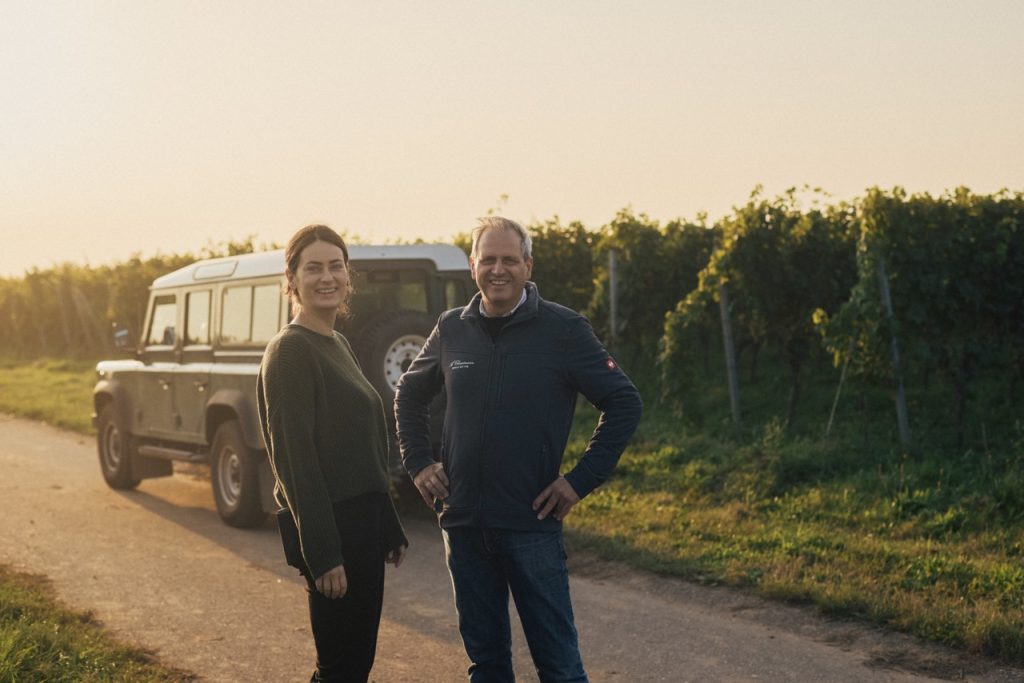
Steffen and Sophie have transformed A. Christmann into one of Germany’s Leading Wineries.
Conclusion
Crafting exceptional wines that truly reflect their terroir is a long journey—one that demands harmony with nature, constant adaptation, and an openness to evolving techniques. The craftsmanship at Weingut A. Christmann is extraordinary, with always more to discover. Steffen and Sophie have taken this winery far, but we are sure there is even more to come. We look forward to returning and uncovering more stories behind their exquisite wines.
This article was written by our own Kazumi Uejo. The wines of Weingut A. Christmann are imported into the Netherlands by Anfors Imperial, and sold through their affiliated partners in hospitality and their online shop. We would like to extend a huge thank you to Steffen and Sophie for taking the time to share their valuable stories with us. Picture credits: Weingut A. Christmann, photographer Peter Bender.
Join our insiders’ list and get exclusive early access to new articles, expert tips, and fresh reviews delivered straight to your inbox. Subscribe now and be the first to discover!