Join Our Wine Journey – Sign Up for the Newsletter 🍷
Viña Seña and Viñedo Chadwick – Chile’s Star Wines
Share
Deel op X (twitter)
LinkedIn
WhatsApp
Viña Seña and Viñedo Chadwick – Chile’s Star Wines.
This autumn we were graciously invited by Jaap Cuijpers of Wijnkoperij van Lieverlee and Erik Neuteboom of VINEUT Rare and Vintage Wines to join them for a tasting of the wines of Viña Seña and Viñedo Chadwick, two of the leading Chilean wine estates. They were joined by Cees van Casteren, one of the three Dutch Masters of Wine (MW), who guided us through the spectacular wines of both estates. Join us in exploring the story of Seña and Chadwick, considered by many to be the two finest Bordeaux blends from Chile.
Humble Beginnings
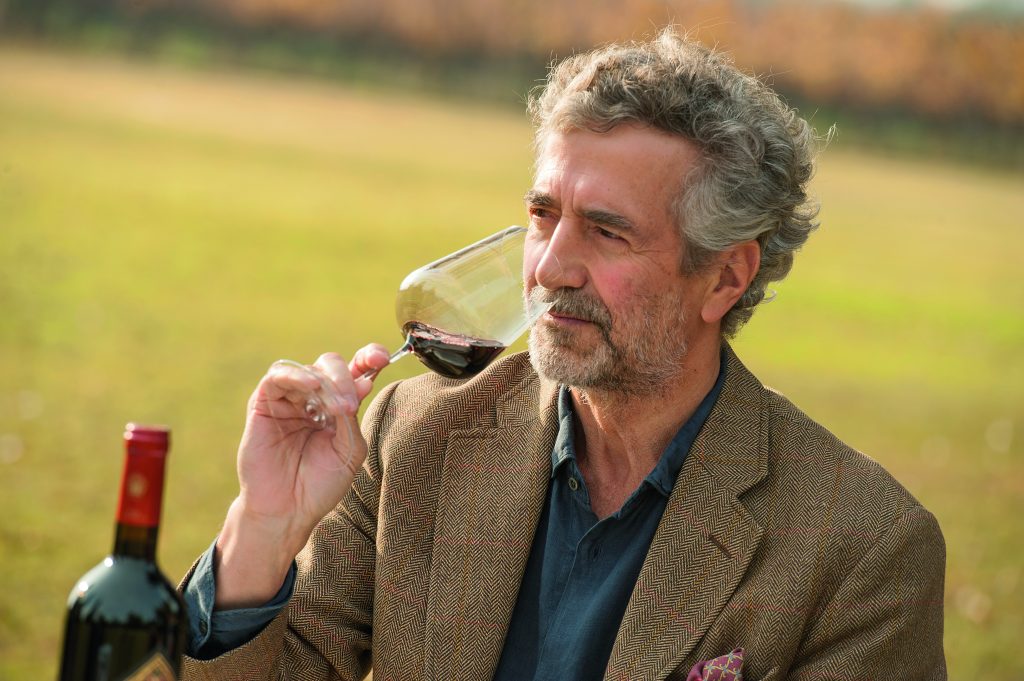
The story of both Viña Seña and Viñedo Chadwick begins with the same man: Eduardo Chadwick. While the Chadwick family – originally from Great Britain – has been associated with Chilean wine since the 1930s through their Viña Errázuriz winery, it was Eduardo who connected his family name to two of the greatest red wines Chile produces today. In the early 1990s his partnership with Robert Mondavi gave birth to Viña Seña, while in the late 1990s replanting a polo field with vines in homage to his father gave birth to Viñedo Chadwick, now considered one of the finest expressions of Cabernet Sauvignon in the new world.
Eduardo Chadwick, who has laid the foundation for Viña Seña and Viñedo Chadwick.
While both wines are benchmarks Chilean Bordeaux blends, their origin and story are quite different – which we further highlight below. One trait they do share however is their international success, highlighted by the landmark Berlin Tasting of 2004. In this tasting, Eduardo Chadwick conducted a blind tasting inspired by and modelled on Steven Spurrier’s Judgement of Paris event back in 1976. The tasting included several iconic Chilean wines such as Viñedo Chadwick, Viña Seña, and Don Maximiano, alongside Bordelaise and Tuscan classics such as Château Margaux, Château Latour, Château Lafite Rothschild, Sassicaia, and Solaia. In the end, Viñedo Chadwick 2000 took first place and Viña Seña 2001 second place – positioning Chile among the world’s top fine-wine regions and further showing the potential for new world wines as a whole.
Since 2004, this format has been repeated over twenty times in the world’s leading wine capitals, with these Chilean relative newcomers achieving success nearly every time. At twenty of the twenty-two events, either Chadwick or Seña finished among the top three, with both often included. Clearly something special is happening in these parts of Chile which can no longer be ignored. Join us in further discovering the background of these wines, their history and future, and our ratings of several vintages of them.
Viña Seña
Viña Seña was co-founded by Eduardo Chadwick and Robert Mondavi, whose partnership began after Robert Mondavi was shown around Chile’s wine country by Eduardo Chadwick in 1991, resulting in a strong friendship. Realizing the potential for Chile to produce great wine, together they embarked on a four-year search for the ideal site to create an iconic Chilean wine. The site had to be cooler to allow for an elegant style of wine, plus be relatively self-sufficient due to their focus on sustainability.
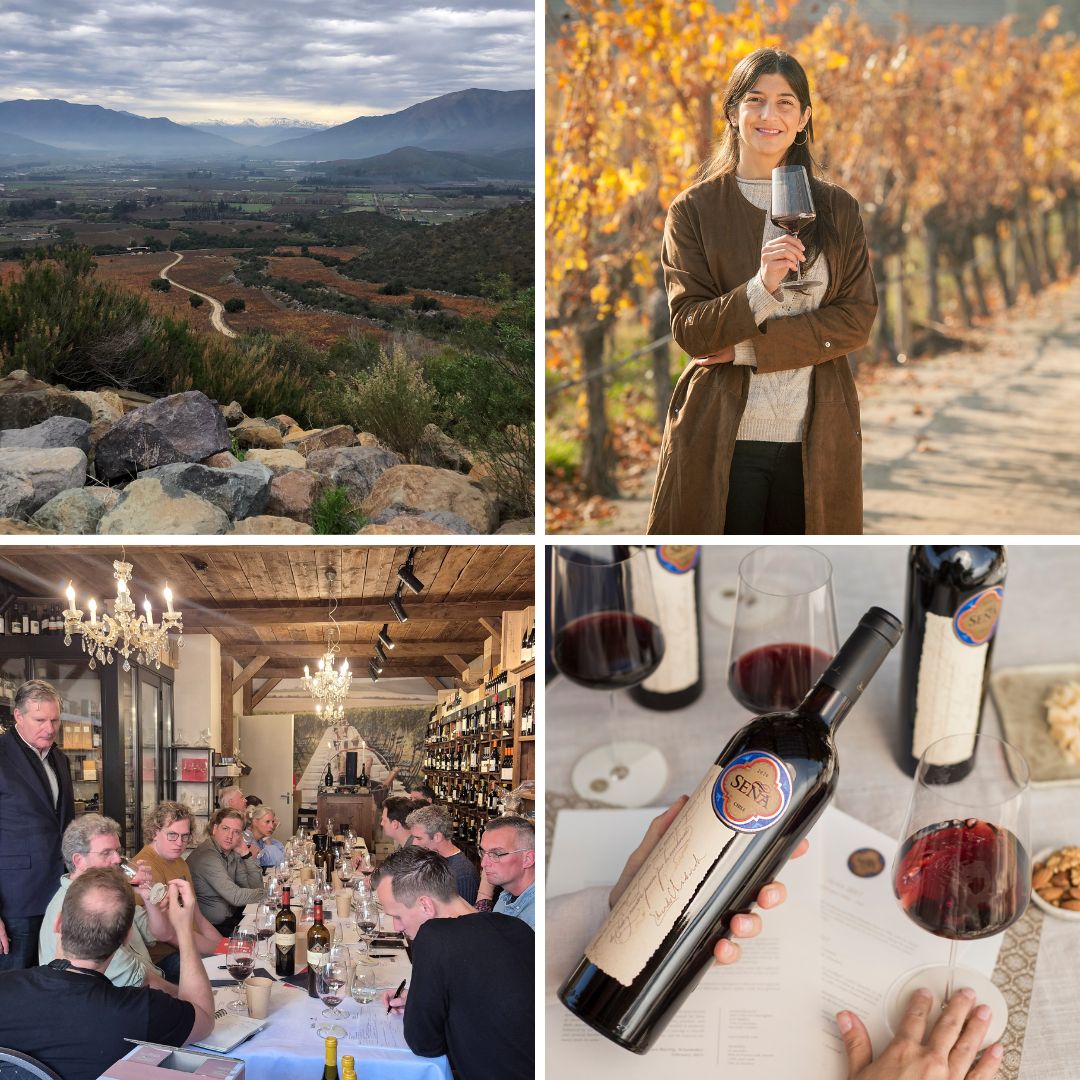
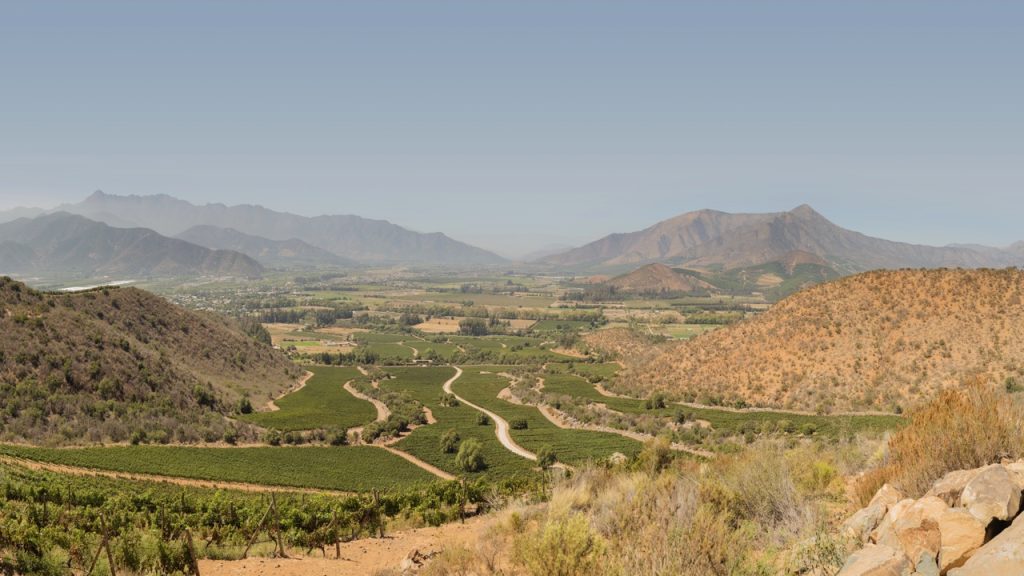
The Seña Vineyard.
Ultimately, this location was discovered in a cooler microclimate in the Aconcagua Valley near the Coastal Range and in 1998 they planted the Seña vineyard on a large east-facing slope on the eastern side of the Coastal Range, characterized by volcanic rocks and sedimentary deposits. While the vineyard was planted in 1998, Seña has been produced since the 1995 vintage, with the first vintages containing fruit from Errázuriz to produce the blend while the Seña vines were slowly coming of age.
The vineyard experiences strong cooling influences from the Humboldt Current alongside cooling winds descending from the Coastal Range, creating a high diurnal range. Pacific winds funneled through gaps in the Coastal Range add further cooling influences to the vineyard. These factors contribute to Seña’s elegance, yielding higher acidity and fresher fruit flavours that balance the intense fruit concentration driven by the region’s strong UV radiation. Additionally, meltwater from the Andes flows into the nearby Aconcagua River, providing essential irrigation amid the region’s dry growing season. These dry conditions also facilitate organic and even biodynamic farming practices, which are in line with the estate’s philosophy of sustainability and self-sufficiency.
Organic and Biodynamic Farming.
In the vineyard, all six Bordeaux varietals are cultivated, with the blend varying year by year but consistently dominated by Cabernet Sauvignon and a significant portion of Carménère. Over the last couple of decades winemaking has evolved towards an even more elegant style of wine, with Seña also seeing some aging in large foudres alongside the smaller, new oak barrels it is aged in.
This evolution culminated in Seña receiving its first 100-point score, awarded by James Suckling to the 2015 vintage, which was one of the first 100-point scores for a Chilean wine ever (the 2014 Chadwick came just before it, as the first ever Chilean wine in history). To celebrate this feat, Eduardo climbed the highest mountain in Chile (the Ojos del Salado), bringing a bottle of the 2015 Seña to show the world that this is truly one of the peak wines of Chile – something we can only agree on based on our tasting notes below.
The Tasting Table, Seña
So, let’s dive a little deeper into the wines, and join us for an overview of the impressive selection tasted at the event, including our ratings.
2022 Rocas de Seña | 93/100 DWA score | Drink 2027-2032
The unofficial second wine of the estate, taking its name from the rocky soils found in the Seña vineyard and the Aconcagua Valley as a whole. In contrast to Seña, some Grenache, Syrah, and Mourvèdre is also used for this bottling, giving subtle notes of Mediterranean spices like rosemary and thyme. The use of less new oak than Seña gives the wine a slightly lighter profile, with ripe red cherry, cassis, bramble, redcurrant, rosemary, black pepper, clove, and subtle vanilla. Somewhat closed at the moment, but already showing balance and softness.
2022 Viña Seña | 96/100 DWA score | Drink 2027-2047
The 2022 vintage was rather dry, resulting in lower yields but good concentration. The availability of irrigation from the nearby Aconcagua River certainly helped in this regard to give the vines a bit more water, improving balance in both the vines and the wine. Very much Chilean, with a subtle menthol note coming through thanks to the hefty amount of Cabernet Sauvignon used and due to the Seña vineyards seeing significant cooling influences. Compared to the Rocas, this wine is showing more black fruit, with strong cassis, blackcurrant, and bramble notes standing out. The new oak gives integrated vanilla, smoke, and liquorice, beautifully adding to the intense core of fruit. Very structured and intense, with the medium-plus acidity bringing welcome freshness. Full and powerful.
Tasting the Seña and Chadwick Wines with MW Cees van Casteren.
2021 Viña Seña | 99/100 DWA score | Drink 2025-2051
2021 was characterized by plenty of winter rainfall alongside cooler temperatures during the growing season and dry conditions during harvest. This yielded near-perfect conditions for Seña elegance to stand out, with a more floral note and elegance than the 2022 vintage, accompanied by ripe red and blue fruit, menthol, chocolate, vanilla, and smoke. Complex notes of wet stone, graphite, and a very subtle barnyard note add further depth. The wine is still young, but already intensely perfumed, with perfect tannins and a profoundly long finish. Exceptional energy due to its high acidity. Already approachable but will likely be one of the longest-lived Seña wines to date. Classic.
2016 Viña Seña | 97/100 DWA score | 97/100 DWA score | Drink 2025-2041
55% Cabernet Sauvignon | 20% Malbec |12% Petit Verdot | 8% Carménère | 5% Cabernet Franc
2016 also was a relatively cooler vintage, accompanied with a bit of pressure from rain during harvest. The wine in turn shows balanced red and black fruit, with plum, red cherry, cassis, and black cherry. Already quite open aromatically. An elegant violet note adds freshness and lift. High tannins, acidity, alcohol, and everything, overall, quite powerful but with restraint and nuance. Starting to develop some tertiary notes of clove, leather, and tobacco. Very complex and complete. Just starting to hit its drinking window, with plenty of reserve left. Very balanced and enjoyable, but with just slightly less depth than the 2021.
Vinas Seña belong to the Best of Chile.
2013 Viña Seña | 95/100 DWA score | Drink 2025-2038
2013 was yet again a cooler year, with a quite long growing season being especially promising for later ripening varieties. The wine is showing some development with a subtle garnet touch to its colour, alongside notes of earth, leather, and cedar accompanying the fresh red fruit profile of sweet and sour cranberry, red cherry, and plum. Fresh acidity balances it out and suits the fresher fruit profile, giving it more of a classy, restrained Bordeaux feel compared to the dense fruit Seña often has. Slightly less body and structure than the previous vintages, already in its drinking window. Perfect for those who seek profound elegance and freshness.
Viñedo Chadwick
Where Viña Seña was born out of friendship, Viñedo Chadwick was born out of Eduardo’s tribute and respect for his late father Don Alfonso – who, from the 1930s through the 1980s, helped grow Viña Errázuriz and the other Chadwick-owned brands into what they are today. At the family’s home estate in Puente Alto, positioned between Santiago and the Maipo River, Alfonso used to maintain a polo field for his regular training as he was even captain of the Chilean national polo team for many years.
However, after Alfonso’s retirement from the sport, his son Eduardo chose to transform the field into a vineyard as a tribute to him, creating Viñedo Chadwick in his name. This was carried out in 1992, when 15 hectares were planted with massale selection from the best Cabernet Sauvignon vines in the family’s vineyards, with the first vintage being produced in 1999 after the vineyard came of age.
The Chadwick Vineyard and its Characteristic Soil.
The terroir of this vineyard ended up being ideal for producing world-class Cabernet Sauvignon, as the estate in Puente Alto is situated in the foothills of the Andes Mountains at roughly 636 to 640 meters above sea level. This leads to both high diurnal ranges and cooling winds from the Andes, resulting in Cabernet Sauvignon with intense flavour and aromatics (also helped by the strong UV light found at this altitude) alongside great freshness and poise. The soils are alluvial in origin due to the proximity to the river, with plenty of calcium carbonate in them alongside stony, clay loams and sandy-loam textured soils, all relatively poor in nature. The calcium carbonate is particularly important here and said to be highly beneficial for the quality of the wines, providing a soil that both balances water retention and drainage and promotes slower, more complex fermentations due to the relative absence of nitrogen.
The Chadwick Vineyard with the Mighty Andes Mountains as a backdrop.
As with Seña, the focus here is also on sustainable practices, with precision viticulture, very strict sorting, gentle winemaking, and extreme attention to detail all in place. Over the recent years the emphasis has been on introducing a bit more elegance and finesse to the wine, helped by older vines, more precise irrigation, and more detailed canopy management. The resulting wine is roughly 95% Cabernet Sauvignon, depending on the vintage, with the remainder Petit Verdot. In the early years there was also Carménère, but it has been replanted to Petit Verdot in 2011 to bring additional depth and complexity to the blend. The wine sees roughly 80-90% new oak, a few percent more than Seña, contributing texture and rich vanilla and spice notes, but due to the intensity of the fruit as our tasting notes below point out, never overpowering the wine. All in all, an exemplary wine, and a benchmark Bordeaux Blend that can stand up to the very best the Médoc has to offer.
The Tasting Table, Chadwick
2022 Viñedo Chadwick | 97/100 DWA score | Drink 2029-2052
96% Cabernet Sauvignon | 4% Petit Verdot
Quite a cool and dry vintage, with a resulting dense and brooding wine that will need more time to unfold. Still a light lactic note coming through, likely due to the age of the wine. Structured and intense, with rich black fruit such as cassis and bramble coming through alongside blueberry and damp earth. Great energy and freshness are behind the richness but will need some more time to fully integrate. Extremely promising at this stage, like lightning in a bottle.
2021 Viñedo Chadwick | 99/100 DWA score | Drink 2028-2071
97% Cabernet Sauvignon | 3% Petit Verdot
As with Seña, the 2021 vintage in Puente Alto was just perfect for Viñedo Chadwick, with it having both outstanding freshness and power. Unsurprisingly, this was the first Chilean wine ever to receive 100 points from Robert Parker, with Tim Atkin and James Suckling also awarding the wine with a perfect 100 points. This is Cabernet Sauvignon in its prime, with perfectly ripe cassis and blackberry fruit, accompanied by fresh red fruit notes of red cherry and enormous structure and density, without ever getting overwhelming. Amazing tannins. A haunting violet elegance accompanies the rich fruit. The oak is dense but perfectly integrated, with rich vanilla and smoke notes coming through, along with an interesting mineral, flinty wet stone note. Endless finish and perfect balance. Perhaps the greatest wine our Martin has ever tasted, by his own account. Young but already approachable, and by all accounts a legend in the making.
The Wines of Viñedo Chadwick at the Masterclass.
2016 Viñedo Chadwick | 97/100 DWA score | Drink 2025-2050
97% Cabernet Sauvignon | 3% Petit Verdot
2016 was relatively warm and dry, resulting in a structured, dense wine, with plenty of pixelated tannins and ripe fruit. It was also the first year for Chadwick to see a tiny bit of Petit Verdot included, giving subtle extra spice and floral notes. The wine further shows typical notes of Cabernet Sauvignon, expressing generous plum, cassis, black cherry, and blueberry, alongside its hallmark structure and hint of elegance. Very long finish. Just starting to slowly enter its drinking window.
Conclusion
All in all, this tasting highlights exactly why the best Chilean wines are often Bordeaux blends. Whether from the Aconcagua Valley or from Puente Alto in Maipo, these wines tend to show ripe, intense fruit (helped by the strong UV radiation at these altitudes), all alongside a hallmark fresh menthol note and an old-world, classical whiff of elegance and earthiness – Seña and Chadwick being the perfect examples of this style.
Magui Chadwick, one of Eduardo’s daughters, leading the estates into the future as CEO.
The 2021 vintage in particular proved ground-breaking for both wines, and likely a new sign of what lies ahead. We look forward to following both estates closely in the future.
This article was written by our own Martin Bronkhorst. The wines of Viña Seña and Viñedo Chadwick are exported to a number of foreign markets and well distributed. In the Netherlands their wines can be purchased through VINEUT Rare and Vintage Wines.
We would like to thank Jaap Cuijpers of Wijnkoperij van Lieverlee and Erik Neuteboom of VINEUT Rare and Vintage Wines for the invitation to the tasting, and Cees van Casteren MW for presenting the wines of both estates. Picture credits: Viña Seña and Viñedo Chadwick.
Join our insiders’ list and get exclusive early access to new articles, expert tips, and fresh reviews delivered straight to your inbox. Subscribe now and be the first to discover!