Join Our Wine Journey – Sign Up for the Newsletter 🍷
The North Adriatic: Where Three Nations Share One Terroir (Part 1)
Share
Deel op X (twitter)
LinkedIn
WhatsApp
The North Adriatic: Where Three Nations Share One Terroir (Part 1)
Where Hills Were Once United
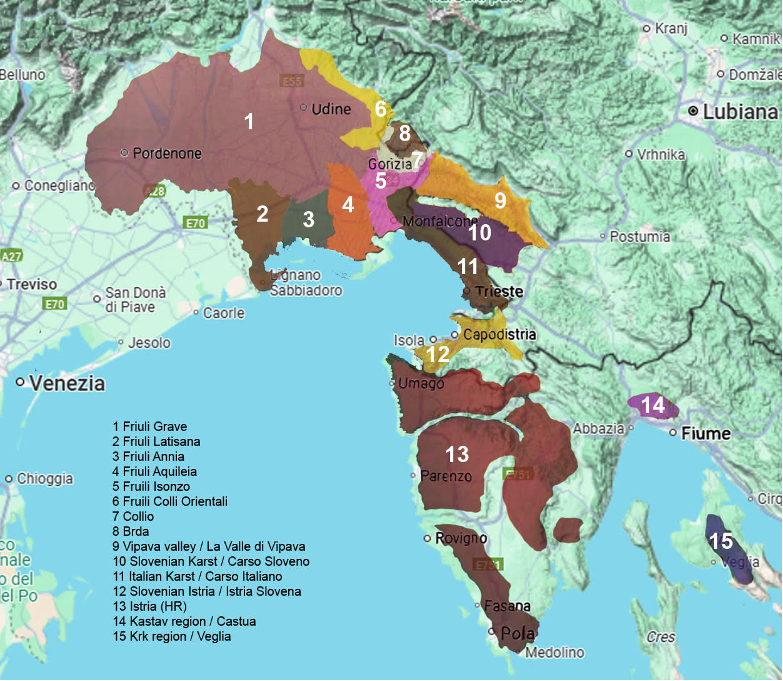
“North Adriatic” isn’t an official appellation, but rather encompasses rolling hills and coastal regions across northeastern Italy, western Slovenia, and northwestern Croatia. These lands share not only viticultural similarities in climate and soil but also a profound historical connection. Under the Austro-Hungarian Empire until 1918, this region belonged to a single nation. Since then, through the Yugoslav era and beyond, modern borders have split the regions into three countries, yet the terroir remains undivided—the same soils, climate, and winemaking traditions continue across frontiers. This unity is also reflected in the language: Collio in Italy and Brda in Slovenia both mean “hill” in their respective languages, describing the same undulating landscape that continues across national boundaries.
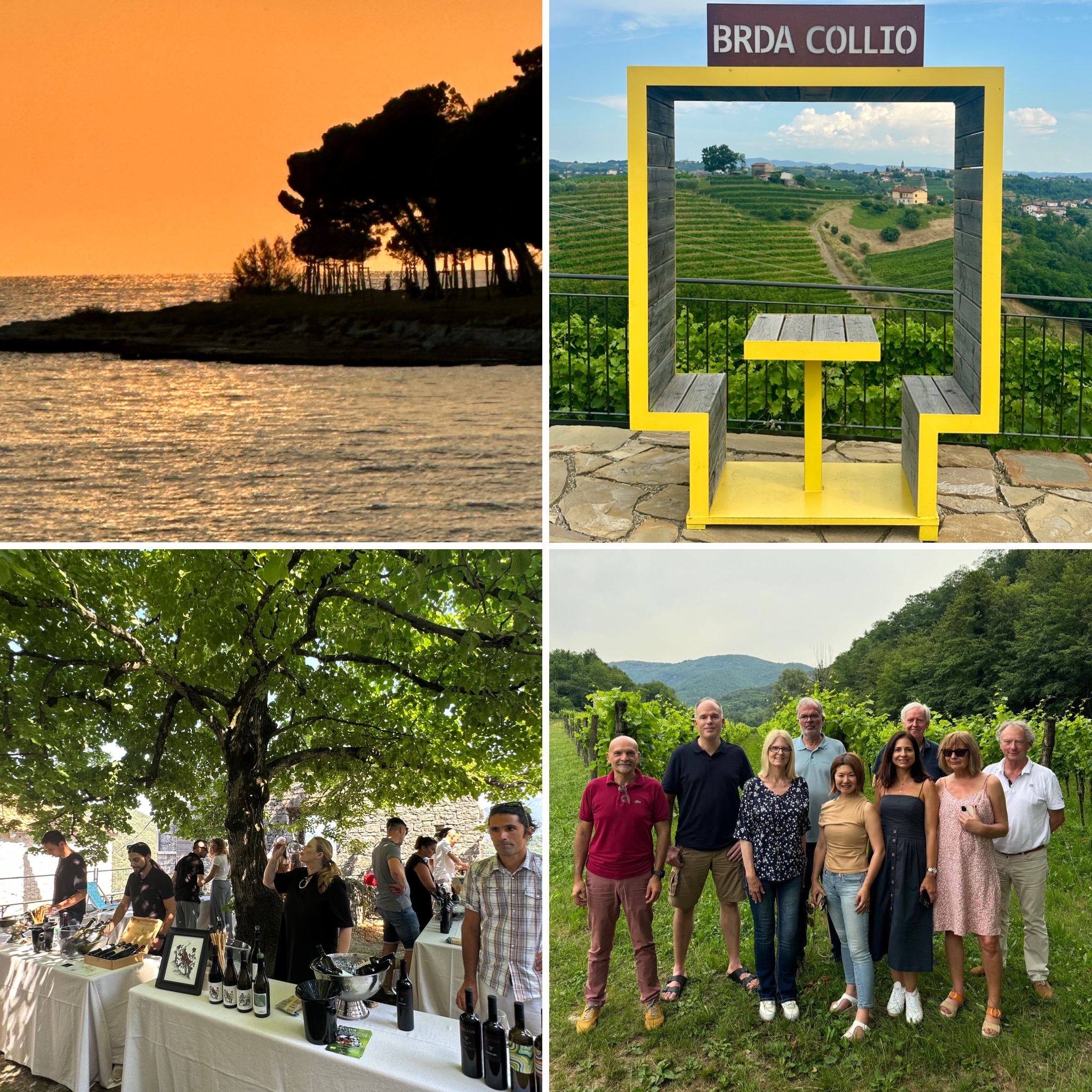
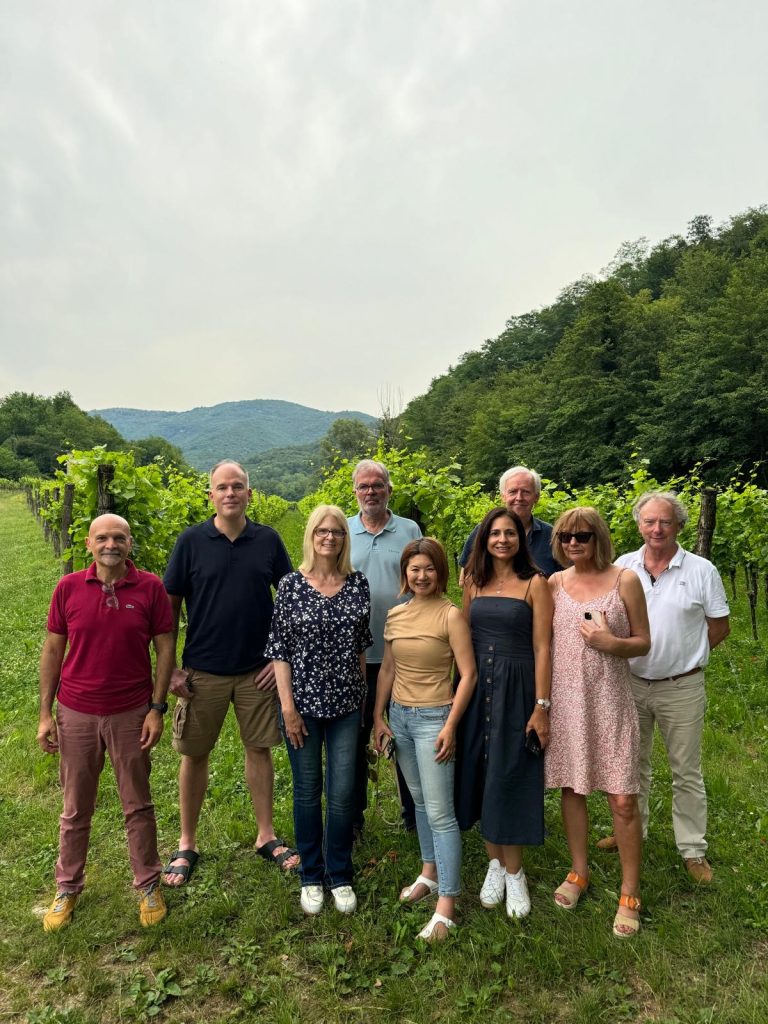
Our travel group for this Adriatic Coast Tour.
Paul Balke, author of “North Adriatic” invited us to an intensive educational trip to the region. Over seven days, our writer Kazumi met over 100 producers across three countries and nine wine regions, tasting more than 400 wines. What emerged was a portrait of regions where connections transcend modern borders, producing wines of surprising quality and distinctiveness. This two-part exploration captures the essence of the North Adriatic: this first article covers the overall picture of the region; part two will explore specific regional characteristics in greater detail.
Our Tour along the Adriatic Coast and its Wine Regions.
Terroir: Where Climate and Geology Converge
The North Adriatic’s climate is defined by an extraordinary duality. Warm Mediterranean breezes from the Adriatic collide with cool Alpine air descending from the north, creating dramatic diurnal temperature variations that preserve acidity while allowing full phenolic ripeness.
Two soil types particularly shape the region’s wines. First, Flysch—locally called “ponca” or “opoka”—consists of alternating layers of sandstone and marl rich in chalk. Flysch line’ that includes a part of Colli Orientali, and also Collio, Brda, Vipavska Dolina, Slovenian Istria and a part of Croatian Istria.
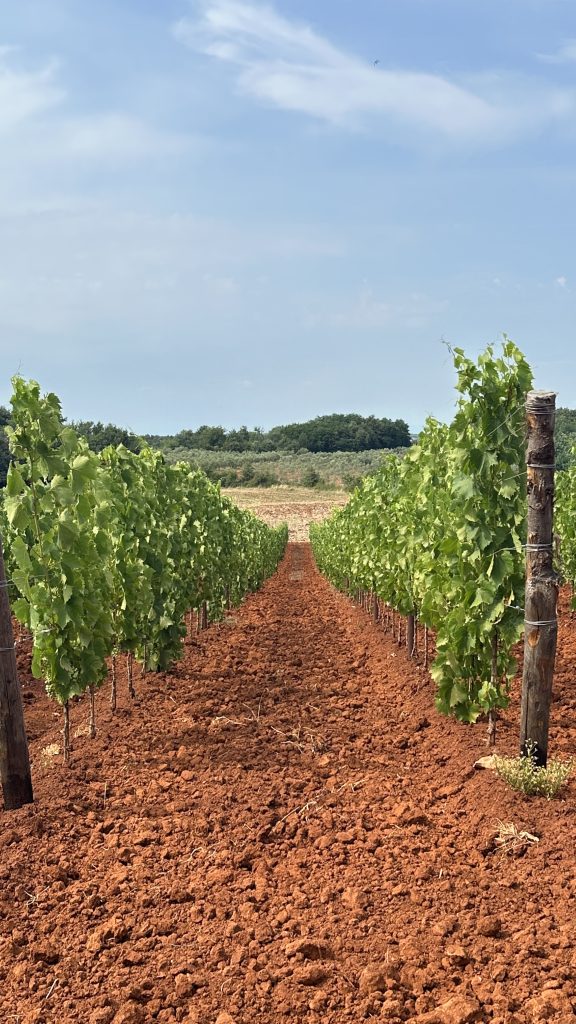
Second, Terra Rossa—iron-rich red clay found predominantly in the Istrian peninsula, formed from limestone weathering. Both soils share a limestone base that contributes to the wines’ hallmark freshness and mineral complexity.
Characteristic Terra Rossa Soil in Croatia.
Grape Varieties: A Treasury of Native Treasures
On this combination of climate and soil where international varieties have also found success, today’s quality-focused producers increasingly champion the indigenous grapes that have been cultivated here for centuries.
Indigenous varieties in the North Adriatic often share the same genetic heritage across borders but bear different names—a linguistic diversity that reflects centuries of local adaptation. Take Ribolla Gialla in Italy, known as Rebula in Slovenia, or Friulano, which was called Tocai Friulano until EU regulations required the name change to avoid confusion with Hungarian Tokaji.
Among the many indigenous varieties we tasted, these stood out for their exceptional quality and distinctive character.
White Varieties: The Cornerstone of North Adriatic Viticulture
Friulano (Sauvignonasse, Jakot) stands as the region’s white wine ambassador. This variety produces wines of remarkable versatility, from crisp, almond-scented versions fermented in stainless steel to complex, age-worthy expressions with extended skin contact. Its natural affinity for the local terroir makes it a favorite among quality-focused producers, used both as a single variety and in blends. Azienda Agricola Keber Renato (Collio, Italy) demonstrates Friulano’s aging potential with their Friulano Riserva 2016, showing how this variety develops complexity over time.
Ribolla Gialla (Rebula) represents the region’s most exciting rediscovery. Nearly extinct in the 1970s, Ribolla has experienced a renaissance thanks to pioneering orange wine producers like Radikon (Collio, Italy). Its thick skins make it ideal for extended maceration, producing amber-hued wines of striking complexity. Yet it’s important to note that most Ribolla is vinified as fresh, citrus-driven white wine; orange wine, despite its fame, represents less than 10% of production in regions like Collio. Vina Svetlik (Vipava Valley, Slovenia) specializes in Rebula, crafting exceptional wines that display the variety’s potential across different styles.
Malvasia Istarska (Malvasia Istriana) dominates Croatian Istria’s plantings—some producers estimate it accounts for nearly 70% of the region’s white grapes. Unlike its aromatic cousins, this variety produces structured, mineral wines with notes of acacia honey and Mediterranean herbs. These wines offer both immediate pleasure and extended aging potential. Korenika & Moškon (Slovenian Istria, Slovenia) exemplifies Malvasia’s versatility, producing outstanding wines from different soils with corresponding oak treatments.
Red Varieties: Power and Elegance Combined
Schioppettino offers perhaps the most distinctive red wine experience in the North Adriatic. Native to Friuli’s Colli Orientali, it produces intensely aromatic wines marked by black pepper, violet, and red berries, with firm, compact tannins and high acidity. Yet it can also show a fresher, lighter side. Producers like Vigna Petrussa(Colli Orientali, Italy) have demonstrated its sophisticated elegance, with aromas of crunchy red fruits and hints of green bell pepper notes.
Pignolo, rescued from near extinction, produces some of the region’s most structured reds. With its thick skins and naturally high tannins, Pignolo requires careful handling but can produce wines of notable longevity, as demonstrated by producers like Conte d’Attimis-Maniago (Colli Orientali, Italy), whose Pignolo 2013 shows beautiful evolution with licorice, mint, and perfectly integrated oak.
Terran/Terrano (Refošk), meaning ‘wine of local production,’ represents the region’s most widely planted red variety. High in natural acidity and tannins, it produces deeply colored wines that demand patience but reward it with complexity. Coronica Wines (Croatian Istria, Croatia) has proven the variety’s impressive aging potential—their wines from the 2007 vintage display vibrant fruit alongside developed tertiary characteristics, confirming that well-made Refosco can evolve beautifully over 15+ years. Meanwhile, Gordia (Slovenian Istria, Slovenia) produces more approachable styles by blending with international varieties.
Winemaking Approaches: Tradition Refined
The indigenous varieties we discovered showcase their versatility not only as single varietals but also in thoughtfully crafted blends. Throughout the region, producers demonstrate how combining native grapes can create wines of exceptional complexity; Conte d’Attimis-Maniago‘s field blends, combining Friulano with Ribolla Gialla and Malvasia; Kmetija Prinčič’s “Mihael,” where multiple varieties harmonize to express terroir in ways that transcend any single grape.
Tasting Field Blends at Conte d’Attimis-Maniago.
While orange wines brought international attention to the region, particularly in Collio, short skin contact emerged as the more prevalent technique. This approach—from a few hours to several days—creates gastronomic wines with enhanced texture while maintaining freshness. Clai Wines (Croatian Istria) exemplifies this with their Baracija Malvazija 2023, featuring ten days of maceration to craft characterful wines with silky structure.
Sparkling wine production particularly impressed us, with indigenous varieties showing remarkable aptitude for traditional method wines. Kristalvin Winery (Brda) creates exceptional sparklings from Ribolla Gialla, whose natural acidity makes it ideal for this style, while Medot Wines (Brda) produces truly Champagne-quality sparkling wines from Chardonnay and Ribolla Gialla blends aged five to eight years on lees.
Producer Profiles: Masters of Terroir
To truly understand the North Adriatic’s potential, we visited vineyards and cellars of producers who embody the region’s philosophy of respecting terroir while pushing boundaries. Walking through their vines and tasting in their cellars, we gained deeper insights into how place and practice combine to create exceptional wines. Here we share our experiences at two wineries that particularly impressed us during our journey.
Movia (Brda, Slovenia): Where Tradition Meets Innovation
Movia stands as one of Slovenia’s most prestigious wineries, established in 1820 and currently run by the 8th and 9th generations of the family. Located in Goriška Brda, this estate pioneered biodynamic viticulture in the region, obtaining organic certification in 2004. Their innovative techniques include using horizontal barrels that allow for natural rotation without battonage, maintaining freshness while avoiding oxidation.
Tasting the Wines of Movia.
Their Friulano 2024 sources grapes from Ponca and clay soils with yields of just 35 hL/ha. Aged eight months in stainless steel, it shows intense aromas of pear, green apple, white peach, and grapefruit alongside refreshing herbal and grass notes. The palate delivers lively acidity and a long finish. DWA Score: 91/100
The Rebula 2024, from calcareous soils and crafted in large old horizontal oak barrels, displays remarkable complexity and reductive freshness. Yellow stone fruits, apple, orange peel, and lemon combine with Mediterranean herbs like rosemary, plus hints of spice and vanilla from oak. It’s structured and textured, with a long-lasting mineral finish. DWA Score: 92/100
Their Veliko Red 2018 blend of Merlot, Cabernet Sauvignon, and Pinot Noir shows how international varieties can express North Adriatic terroir. Layered red and black berry notes intertwine with floral aromas, while spice and herbal flavors accentuate the palate. Velvety tannins and vibrant acidity suggest further aging potential. DWA Score: 93/100
To understand this aging potential, we also tasted their Veliko Red 2002, which proved remarkably fresh after two decades. With vibrant acidity and silky tannins still providing structure, the wine displayed beautiful evolution—tobacco and dried fruit notes complementing persistent primary fruit character. DWA Score: 92/100
Coronica Wines (Croatian Istria, Croatia): Masters of Terra Rossa
Moreno Coronica represents the current generation at this family winery established in 1993. Coronica Wines spans 23 hectares of coastal vineyards where proximity to the Adriatic Sea (7-8km) moderates temperatures while deep Terra Rossa soil provides the foundation for wines of distinctive character.
The Tasting at Coronica Wines.
Their Malvazija Istarska 2024, fermented in stainless steel for a refreshing style, delivers honey, pineapple, blood orange, and lime zest aromas grounded by wet stone minerality and a distinctive saline finish. This represents the pure expression of variety and terroir. DWA Score: 92/100
The Gran Malvazija 2023, aged 14-16 months on lees, reveals the variety’s capacity for complexity. Multiple citrus notes—lemon, grapefruit juice and peel—combine with herbs like dill and subtle spice. The oak integration is masterful, providing texture without overwhelming the wine’s inherent minerality. DWA Score: 93/100
Their Gran Teran 2021, produced only in exceptional years, needs time for its structure to integrate. “Teran is difficult to cultivate,” Moreno admits, “but when done right, it produces wines of incredible quality and longevity.” The wine shows remarkable balance despite its power, with refreshing acidity supporting notes of red cherries, ripe black fruits, graphite, earth, and spice. DWA Score: 94/100
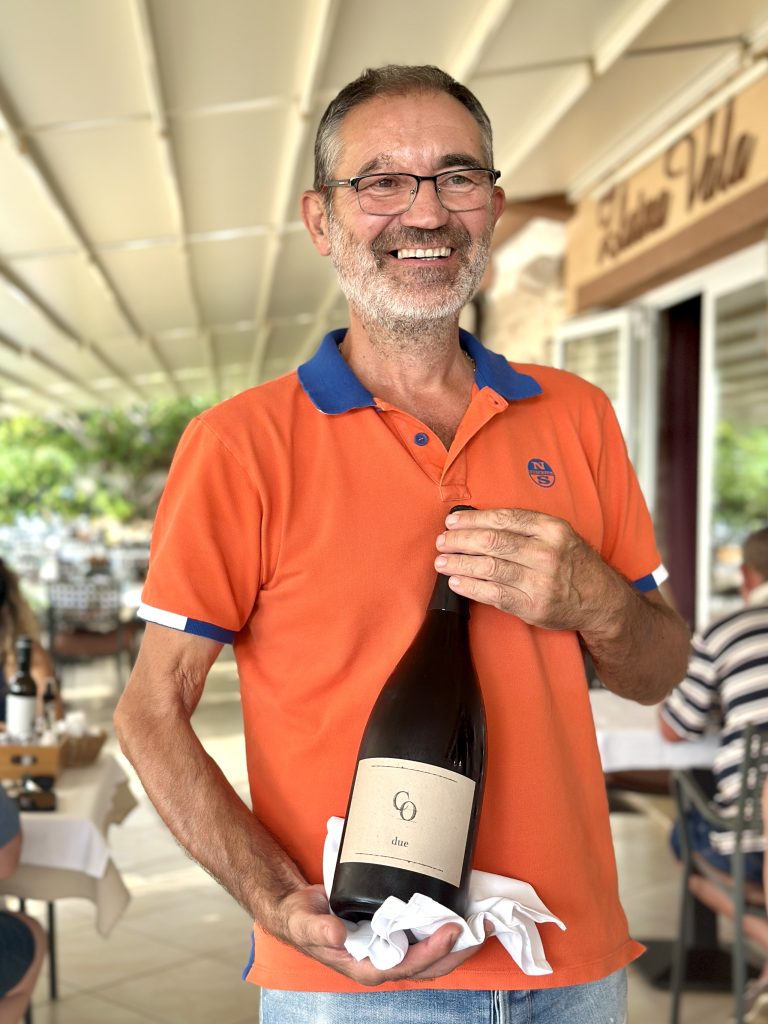
During our dinner, we also enjoyed their CO Due Extra Brut, a traditional method sparkling wine made from 100% Malvazija Istarska. This sparkler demonstrates Malvasia’s versatility, with citrus, stone fruit, and sage notes complemented by fine, persistent bubbles and pronounced saline minerality. The Ottaviano Malvazija 2021, named in honor of Moreno’s late father, represents a return to traditional winemaking, unexpectedly elegant for a Malvasia of pronounced maturity.
Perhaps most impressive was tasting their Gran Teran 2007, which proved the variety’s extraordinary aging potential after 17 years. Still vibrant with primary fruit alongside developed tertiary notes, this wine confirmed that well-made Teran from Terra Rossa can evolve beautifully for decades.
Conclusion: A Unified Vision Across Borders
The North Adriatic challenges our conventional understanding of wine regions. Beyond the shared terroir, we discovered profound cultural connections that transcend modern borders. Similar culinary traditions appear throughout the region, producers often speak each other’s languages, and even the architecture tells a story of unity with similar styles of houses and cellars dotting hillsides across all three countries.
In Part 2, we’ll explore how each specific region within this unified terroir expresses its own unique character, from the elegant heights of Colli Orientali to the sun-drenched shores of Istria.
This article was written by our own Kazumi Uejo, based on an educational tour of the North Adriatic region. We extend our heartfelt thanks to Paul Balke for organizing this exceptional journey and sharing his expertise. Our gratitude also goes to all the producers who shared their stories and wines.
Join our insiders’ list and get exclusive early access to new articles, expert tips, and fresh reviews delivered straight to your inbox. Subscribe now and be the first to discover!