Join Our Wine Journey – Sign Up for the Newsletter 🍷
The North Adriatic: A Journey Through Nine Wine Regions (Part 2)
Share
Deel op X (twitter)
LinkedIn
WhatsApp
The North Adriatic: A Journey Through Nine Wine Regions (Part 2).
From Unified Terroir to Regional Expression
In Part 1 of our trip along the Northern Adriatic coast, we explored how the region’s shared geology, climate, and history create a unified wine region across three nations. Now we embark on a more detailed journey through each distinctive area within this remarkable terroir.
What struck us most was how producers in each region have found their own voice while respecting their shared heritage. From tiny family estates crafting just a few thousand bottles to larger cooperatives preserving traditional varieties, each contributes to the mosaic of North Adriatic wine. Let’s discover how each region expresses its unique character.
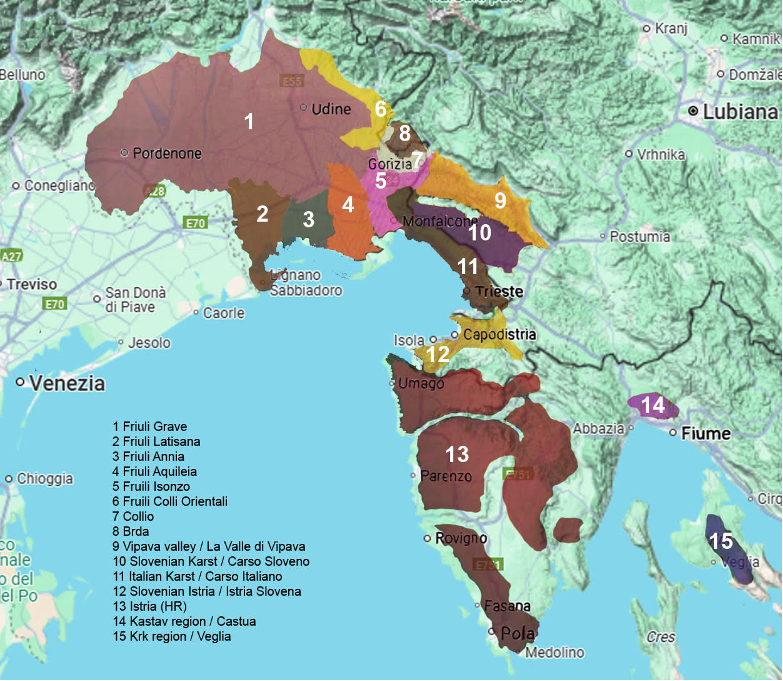
Our Tour along the Adriatic Coast and its Wine Regions.
The Eastern Hills: Where Elegance Meets Tradition
Colli Orientali del Friuli, Italy
The “Eastern Hills of Friuli” feature higher elevations where Flysch soils reach their most complex expression. This more continental climate, combined with steep slopes providing optimal sun exposure, creates conditions for wines of particular finesse.
Ronchi di Cialla operates at the region’s coolest point, where temperatures run 5°C lower than surrounding areas. This altitude translates directly into elegance. Their Schioppettino di Cialla 2019 showcases black pepper and violet notes wrapped around crunchy red fruits, all supported by silky tannins.
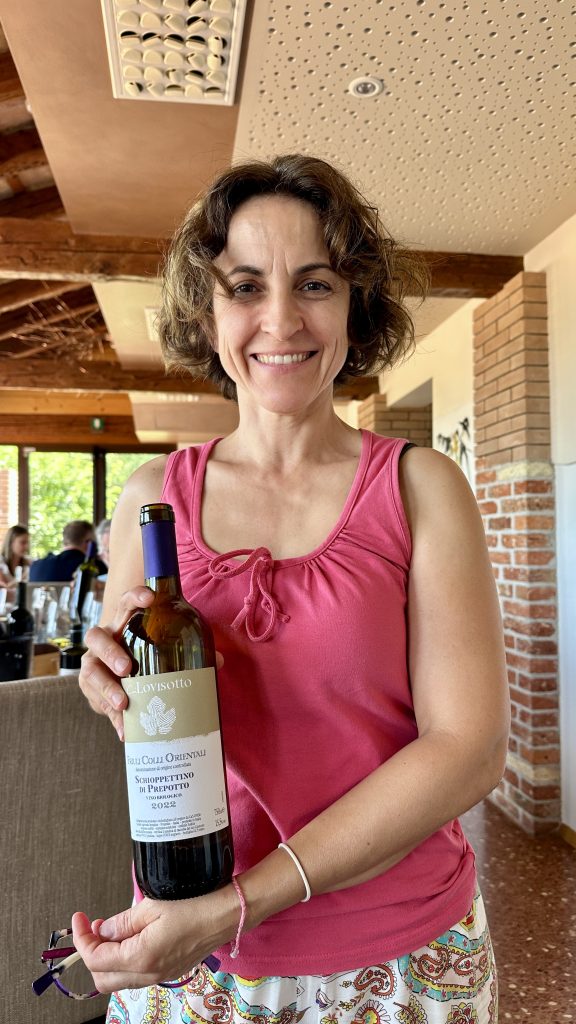
The young Ca’ Lovisotto, founded just a decade ago, represents the new generation’s approach to traditional varieties. Their Schioppettino 2022 emphasizes freshness and aromatic complexity. Meanwhile, Tunella demonstrates versatility with their Bianco 2023, a 50/50 blend of Friulano and Ribolla Gialla. Each variety enhances rather than masks the other.
The winemaker of Ca’ Lovisotto, Francesca.
Giovanni Dri Il Roncat surprised us with their Ramandolo DOCG, a sweet wine made from Verduzzo grapes. It shows how even dessert wines can maintain the region’s characteristic freshness and mineral precision.
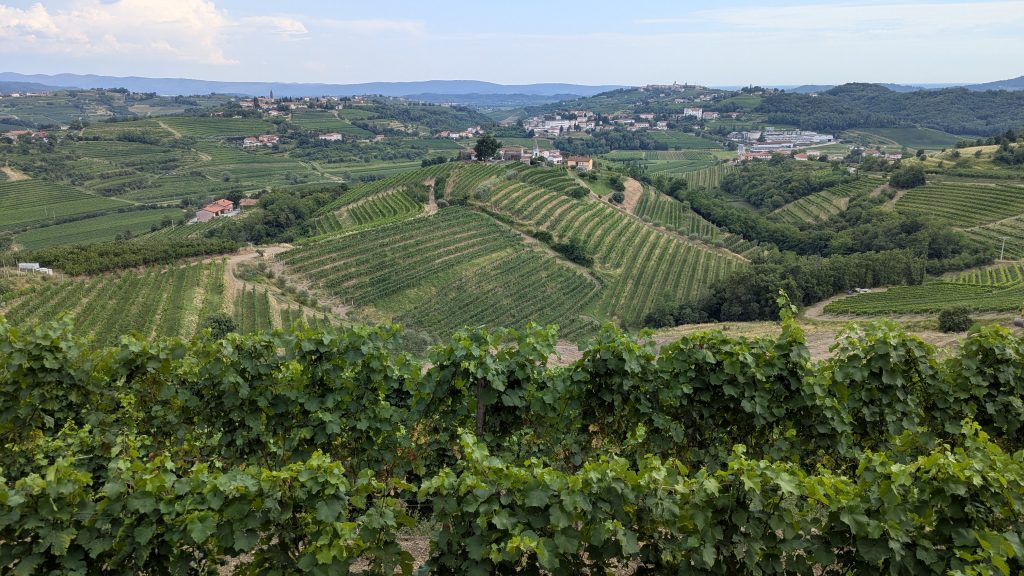
The Collio region encompasses approximately 1,400 hectares across 120 producers, creating around 7 million bottles annually. The hilly terrain is divided into three distinct territories. The coldest conditions come not from altitude but from exposure; the north-facing vineyards in the middle area experience the coolest temperatures.
The Enoteca di Cormons serves as the gateway to Collio wines, functioning as both a promotional hub and tourist reference point for the region since 1984, showcasing wines from producers throughout Collio and the Province of Gorizia.
Radikon stands as one of the orange wine pioneers who brought international attention to Collio. Their Ribolla 2020 represents the iconic style that made them famous, while Purple 2022 offers a more approachable entry point for those new to orange wines. The estate continues to advocate for orange wine’s inclusion in the Collio DOC regulations.
Beautiful Vineyards in Collio.
While producers debate which grape varieties should comprise Collio Bianco blends, many create exceptional quality from their chosen combinations. Livon‘s Blanc exemplifies this approach, combining Sauvignon Blanc, Chardonnay, Picolit, and Ribolla Gialla with both oak and stainless steel aging. Azienda Agricola Roncus takes a different approach with their Old Vines Blend 2017. They field-blend Friulano, Malvasia, and Ribolla from vines planted together decades ago.
Azienda Agricola Keber Renato represents the ultimate expression of patience by producing only reserve wines. Their Friulano Riserva 2016 demonstrates how extended aging can reveal hidden dimensions in varieties often consumed young.
Crossing the border into Slovenia, we find Brda, the continuation of Collio’s hills but with its own distinct personality. This region produces Slovenia’s most prestigious wines. The slightly cooler climate compared to Italian Collio results in wines with enhanced aromatic complexity and natural tension.
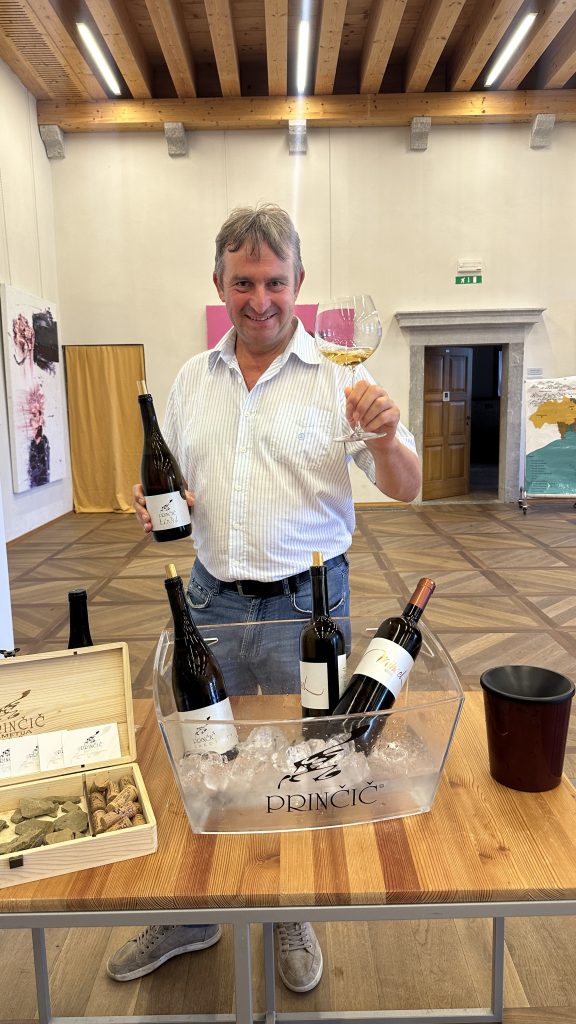
Kmetija Prinčič, a fifth-generation estate embracing wine as a “style of life,” crafts exceptional skin-contact Pinot Grigio from 40-year-old vines and refreshing Friulano alongside their field blend “Mihael” which combines multiple varieties in proportions determined by nature rather than recipe.
Tomaž Prinčič of Kmetija Prinčič.
Sylvmann pushes boundaries with their skin-contact wines. Their Rebula is created by blending macerations of five different durations. This technique achieves complexity and balance that single-maceration wines rarely match.
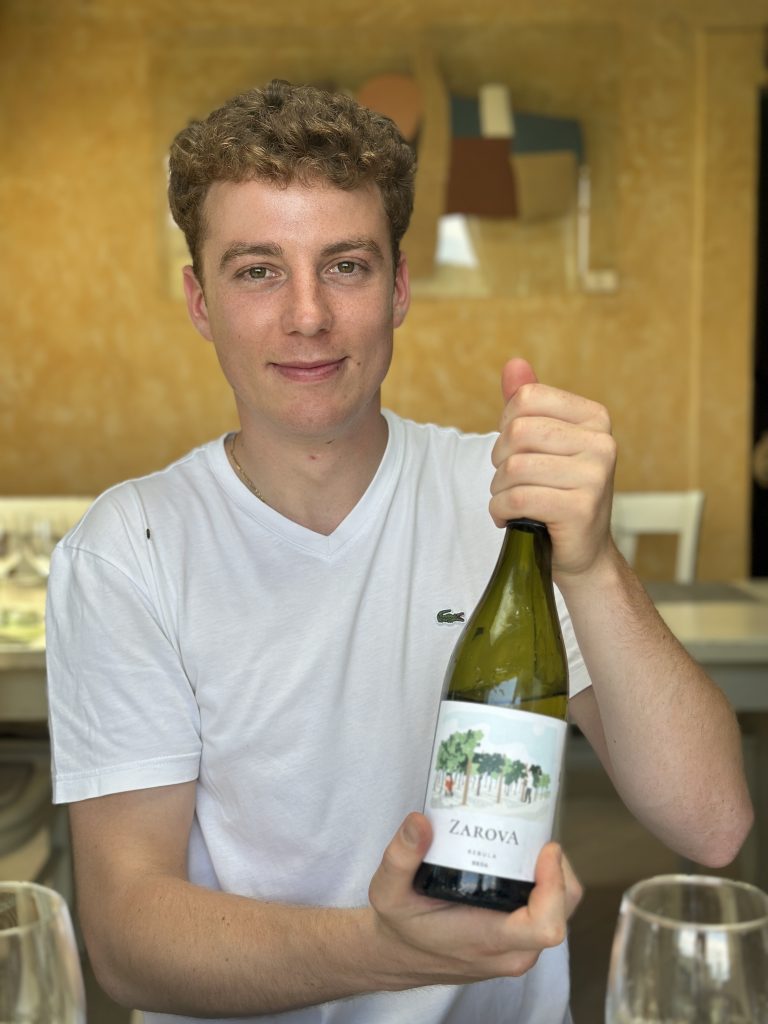
Zarova, managing 12 hectares alongside their fruit farm, exemplifies innovative dual philosophy: single-vineyard expressions versus blended “class” wines. Their Chardonnay 2022 shows remarkable precision with juicy minerality, while their Sauvignon Blanc 2022 displays citrus and dill with elegant saltiness.
The Next Generation at Zarova.
Ščurek brings both tradition and innovation to their winemaking. Their Zero 2021, a blend of Rebula and Chardonnay with 13 months on lees and batonnage, delivers autolytic complexity, while their field blend Stara Brajda 2022 combines Malvasia, Friulano, Rebula and Picolit for ripe stone fruit flavors with lean precision.
The involvement of young winemakers is particularly notable in Brda. At Reja Vino, Zarova, Movia, and other estates, twenty-something next-generation winemakers are energetically involved in production. This influx of young talent, combined with established producers’ experience, creates consistently high quality across the region and promises an exciting future for Brda wines.
These flatter regions with gravel and alluvial soils were historically dismissed as sources of simple, everyday wines. Today’s producers have shattered preconceptions through meticulous viticulture, lowering yield, and balancing indigenous varieties like Friulano, Ribolla Gialla, and Refosco with international grapes to express regional character.
Barone di Ritter Zahony benefits from Adriatic winds bringing salinity to their Aquileia vineyards. After his ancesster ceased bottling, the current generation restarted 11 years ago. Their approachable wines include the herbally complex Amalie Ribolla Gialla and age-worthy Hektor Merlot Riserva 2020.
Borgo delle Oche is a small private cellar operation, producing high-quality wines on small prodution. Their five-day skin-contact Pinot Grigio achieves gastronomic depth, while their modern-clone Friulano 2023 layers ginger, honey, and Mediterranean herbs—bridging tradition with contemporary techniques.
Other wineries from Isonzo & Grave: Pierpaolo Pecorari, Pitars, Tenuta Luisa.
The Valley of Smiles: Vipava’s Hidden Treasures
Vipavska Dolina (Vipava Valley), Slovenia
Known as the “Smiling Valley,” Vipava offers its own microclimate, with the famous Bora wind reaching speeds over 200 km/h shaping both viticulture and wine styles. Beyond the North Adriatic’s common varieties, Vipava’s indigenous Zelen and Pinela produce distinctive low-alcohol, refreshing summer wines that perfectly express the region’s unique character.
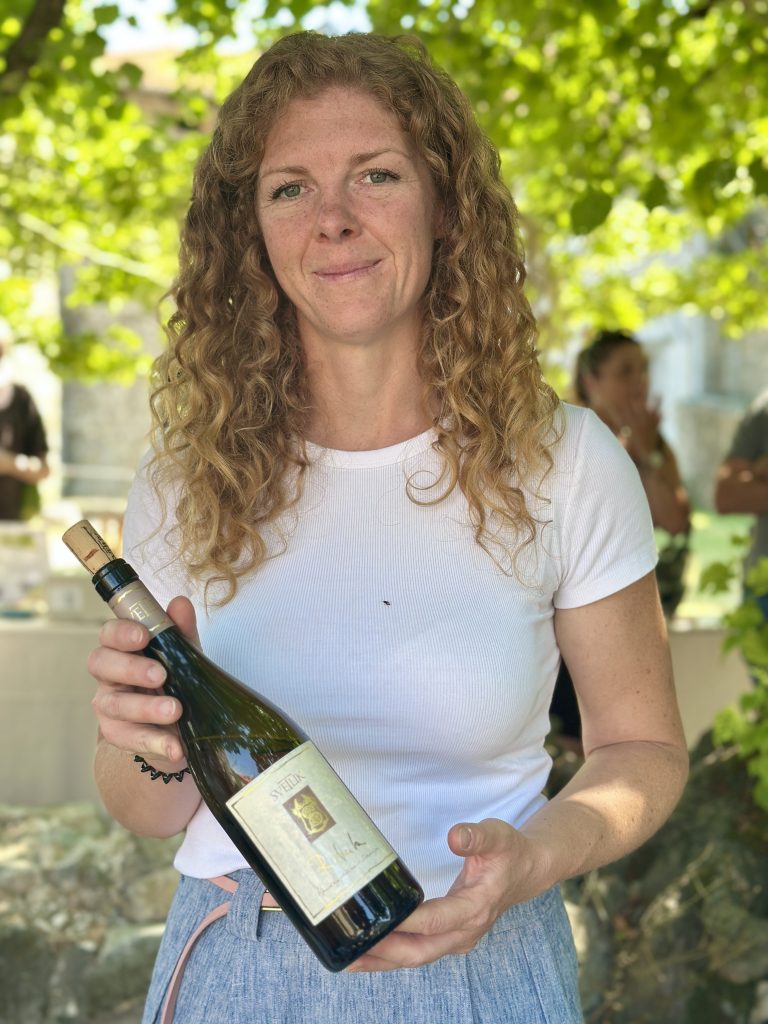
Svetlik focuses on Rebula, crafting different styles based on maceration days. Rebula Ivi 2023, made through 3 days maceration in stainless steel, shows abundant Mediterranean herbs (rosemary, lavender, sage), while Rebula Svetlik 2020 with 2 weeks and Rebula Selekcija 2017 demonstrate increasing depth and complexity.
Vina Svetlik.
Sutor delivers refreshing minerality while maintaining elegance. Their SUTOR White 2020, made with Malvasia and Ribolla Gialla, shows the regional balance, while Chardonnay 2021 displays rustic elegance reminiscent of Godello or Timorasso.
Guerila lives up to its name through certified organic and biodynamic practices. Their Retro field blend combines Pinela, Zelen, Malvazija, and Rebula. One week of skin contact is followed by two years in large barrels. The result captures both tradition and rebellion.
The Istrian Peninsula: Where Three Countries Meet the Sea
Slovenian Istria
The coast is crowded with intensive tourism, but just one kilometer inland, the hills start. The combination of Mediterranean climate, Terra Rossa soils, and cooling sea breezes creates ideal conditions for both indigenous and international varieties.
Vinakoper, the region’s largest producer with 600 hectares and 4 million bottles, proves that size need not compromise quality. Their Istria 1072 2022—a blend of Syrah, Merlot, Cabernet Sauvignon, Cabernet Franc, and Refosco aged entirely in barrel—earned 96 points from Decanter, demonstrating world-class quality.
Gordia, a certified organic estate for nearly two decades, exemplifies the region’s natural wine movement. Their pét-nat rosé, primarily Refosco with Merlot, captures bright strawberry and red berry flavors with perfect refreshment. Their Light Red 2023, also Refosco-based, offers an easy-drinking style that demonstrates how traditional varieties can be reimagined for contemporary palates.
Korenika & Moškon focuses intensively on Malvazija, showcasing the variety’s versatility through different expressions. Their biodynamic approach yields wines of remarkable purity and terroir expression, demonstrating why Malvazija has become the signature grape of Istrian viticulture.
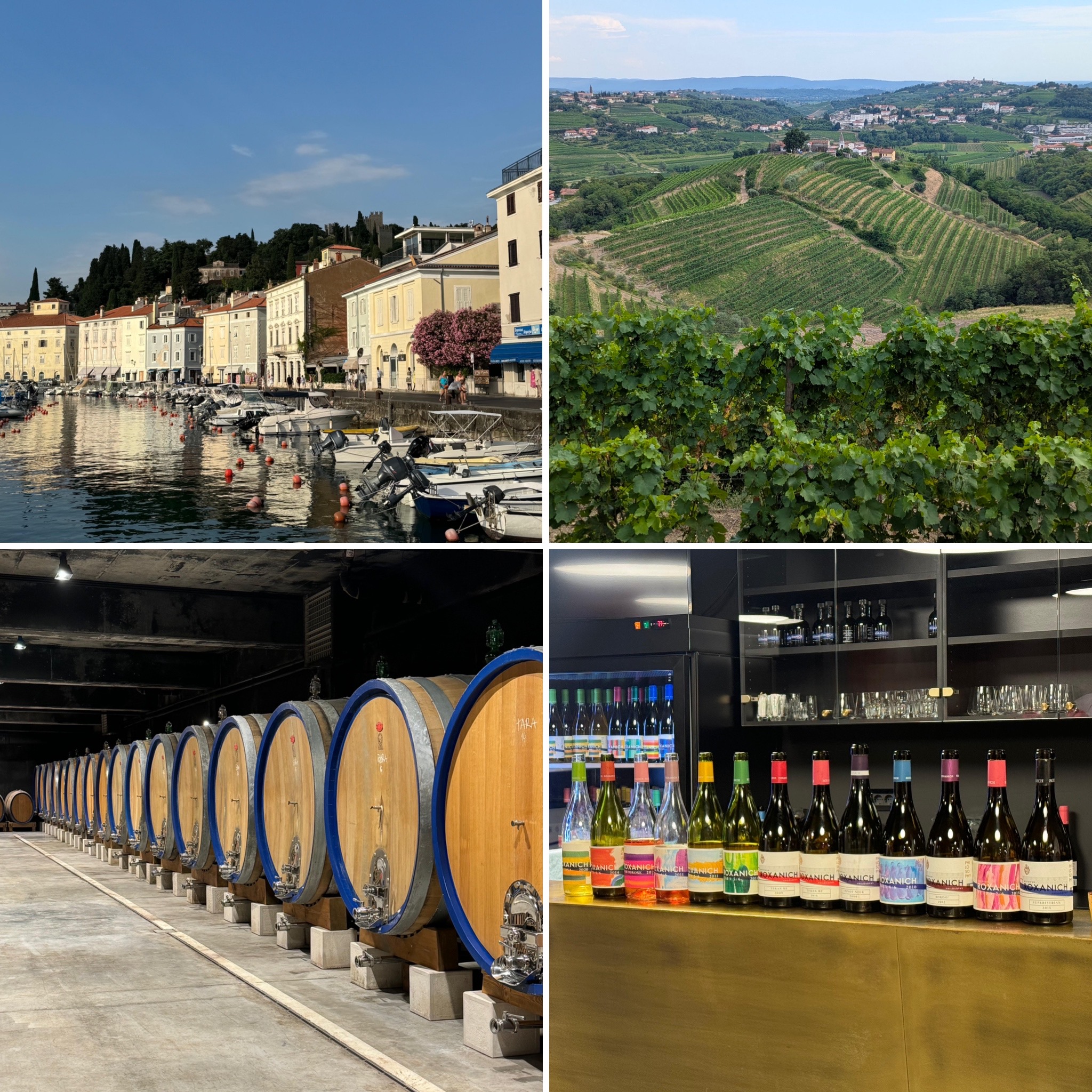
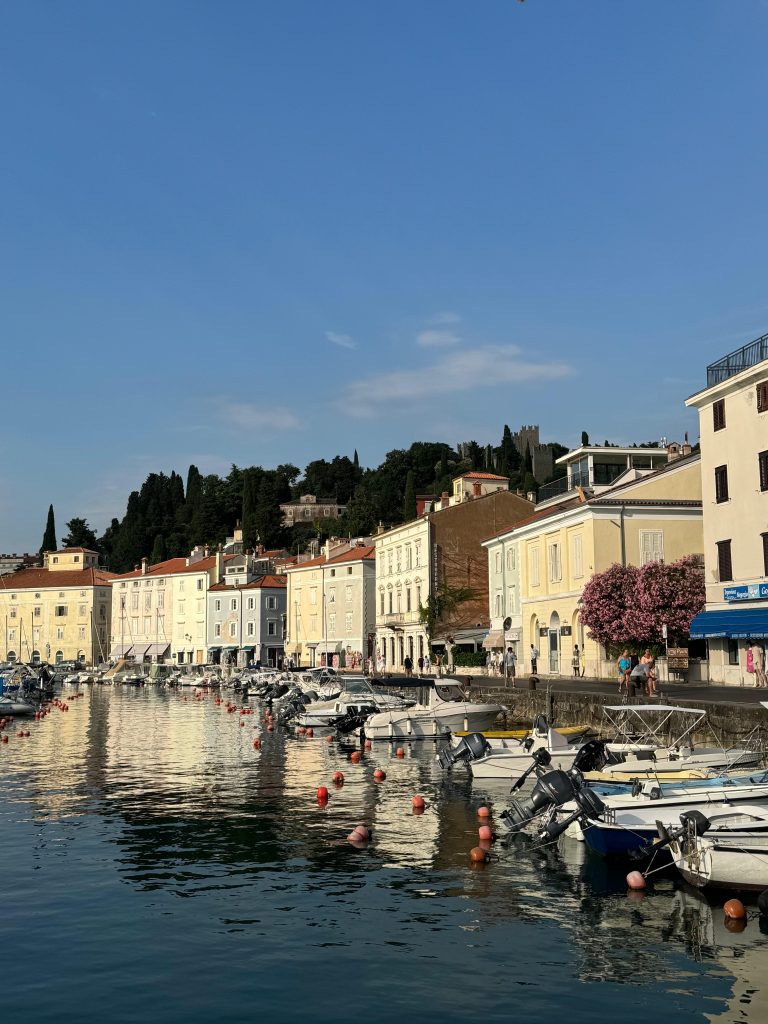
In town of Piran, where music drifts through seaside cafés and locals slip down backstreets to wine bars serving regional specialties, the infrastructure for wine tourism feels fully realized—sunset views and authentic gastronomy combining to create a complete destination experience.
The Beautiful Adriatic Coast and its Old Villages.
Croatian Istria
The Croatian portion of Istria represents the peninsula’s largest wine region, known for its gastronomic sensations including white truffle and regional seafood, and historical highlights. Here, soils are recognized as red (Terra Rossa), white (Flysch), and black (marl), each giving distinct character to the wines. Malvazija Istarska reigns supreme among white varieties, while Teran provides the backbone for age-worthy reds.
Cattunar demonstrates the expressions of distinct soil type, even within small areas. Malvazija 4 Terre Black Soil 2024 showcases purity with fruity and herbal notes, while their Malvazija Nono 2015, with eight months of maceration and three years in acacia wood, represents the extreme end of skin contact—achieving complexity that challenges preconceptions about white wine.
Clai exemplifies the natural wine movement’s best aspects, using biodynamic practices and minimal intervention to create wines of character. Their Baracija Malvazija 2023, with ten days of maceration in large old foudre, achieves that rare balance of being both “natural” and delicious—proving that ideology and quality can coexist.
Beyond the vineyards, the historic hilltop town of Grožnjan adds cultural depth to Croatian Istria’s wine story. Home to the numerous artists’ studios, this medieval village combines wine culture with creative expression, its narrow stone streets hosting jazz concerts and art exhibitions that perfectly complement the region’s viticultural renaissance.
As our journey through the North Adriatic’s nine regions concludes, what emerges is not a hierarchy of quality but a tapestry of complementary expressions. From the alpine freshness of Colli Orientali to the Mediterranean warmth of coastal Istria.
What unites these regions beyond their geological connections is a shared commitment to quality and authenticity. In an era of international standardization, the North Adriatic’s producers champion local varieties and traditional practices. Whether you prefer the ethereal elegance of Brda’s Rebula, the structured power of Croatian Teran, or the innovative spirit of Vipava’s field blends, the North Adriatic offers wines that satisfy every palate and curiosity.
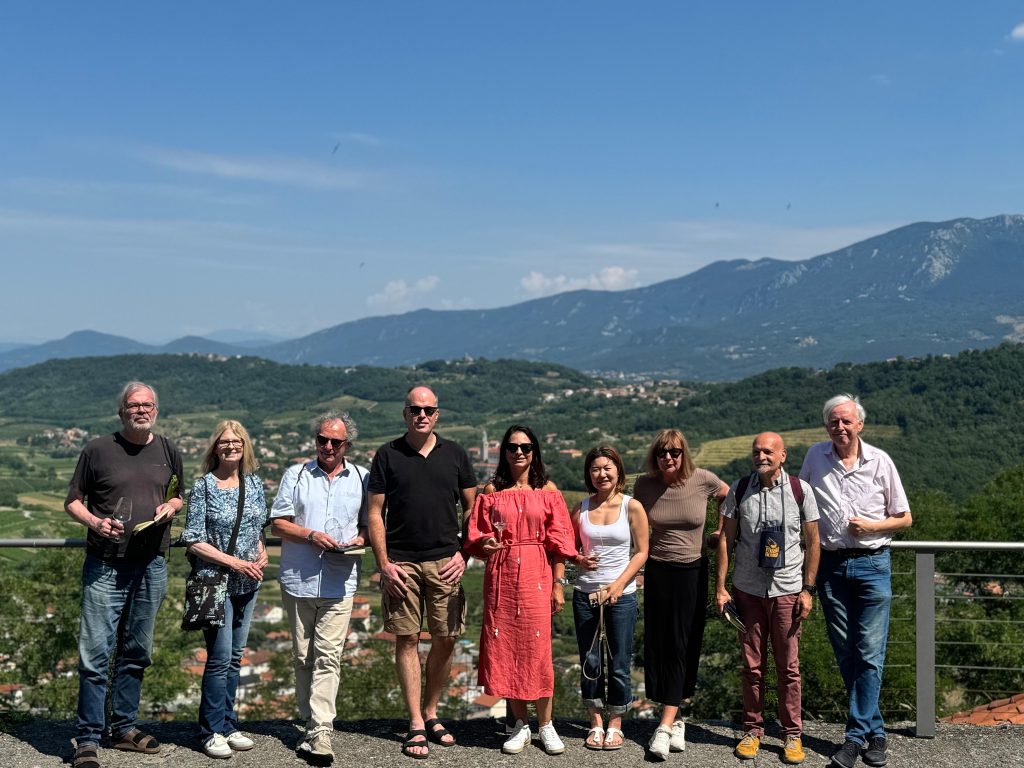
The Group with whom we enjoyed this Memorable Trip along the Adriatic Coast.
They embrace innovation that enhances rather than masks terroir. This balance makes the North Adriatic one of Europe’s most dynamic wine regions.
For wine lovers ready to explore beyond familiar names, these nine regions offer endless discoveries. For deeper exploration, Paul Balke’s comprehensive book “North Adriatic” provides an invaluable guide to this fascinating region.
This article was written by our own Kazumi Uejo, based on an educational tour of the North Adriatic region. We extend our heartfelt thanks to Paul Balke for organizing this exceptional journey and sharing his expertise. Our gratitude also goes to all the producers who opened their cellars and shared their stories.
Picture credits: Paul Balke and Dutch Wine Apprentice.
Join our insiders’ list and get exclusive early access to new articles, expert tips, and fresh reviews delivered straight to your inbox. Subscribe now and be the first to discover!