Join Our Wine Journey – Sign Up for the Newsletter 🍷
The 2022 Barolo Vintage Uncovered
Share
Deel op X (twitter)
LinkedIn
WhatsApp
The 2022 Barolo Vintage Uncovered.
Vintage 2022 arrived in Serralunga d’Alba under the weight of expectation. A growing season marked by heat, drought, and an unusually early harvest had many assuming a style of concentration and grip — especially in a commune known for its structure and longevity. But the story, as always, deserved closer scrutiny.
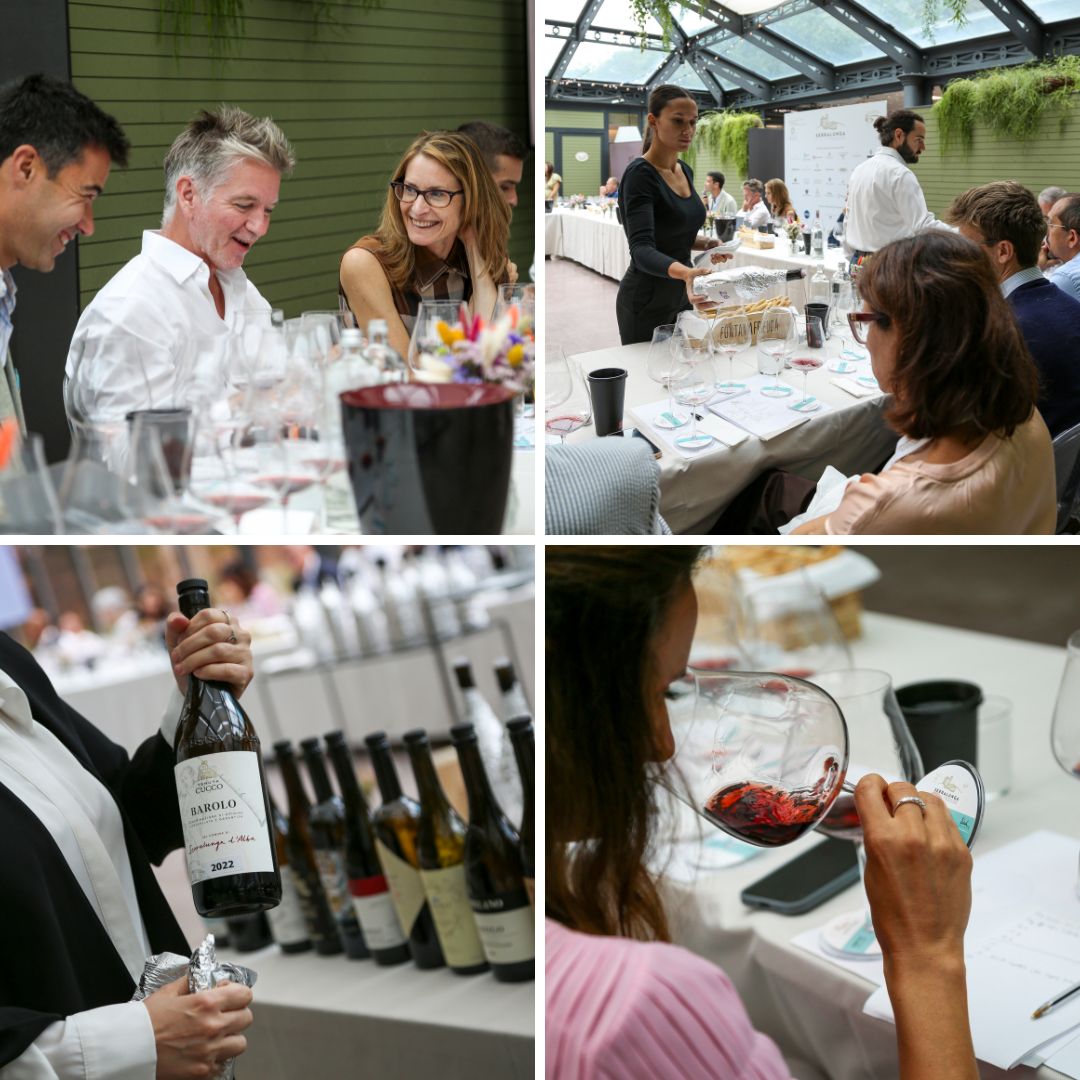
At Serralunga Day 2025, contributor Onno Deumer joined producers, journalists, and Masters of Wine for a blind tasting of 26 wines — each bottled under the village designation, and grouped not by name or reputation, but by terroir. With no labels and no context, the tasting offered a rare opportunity to approach the vintage on its own terms.
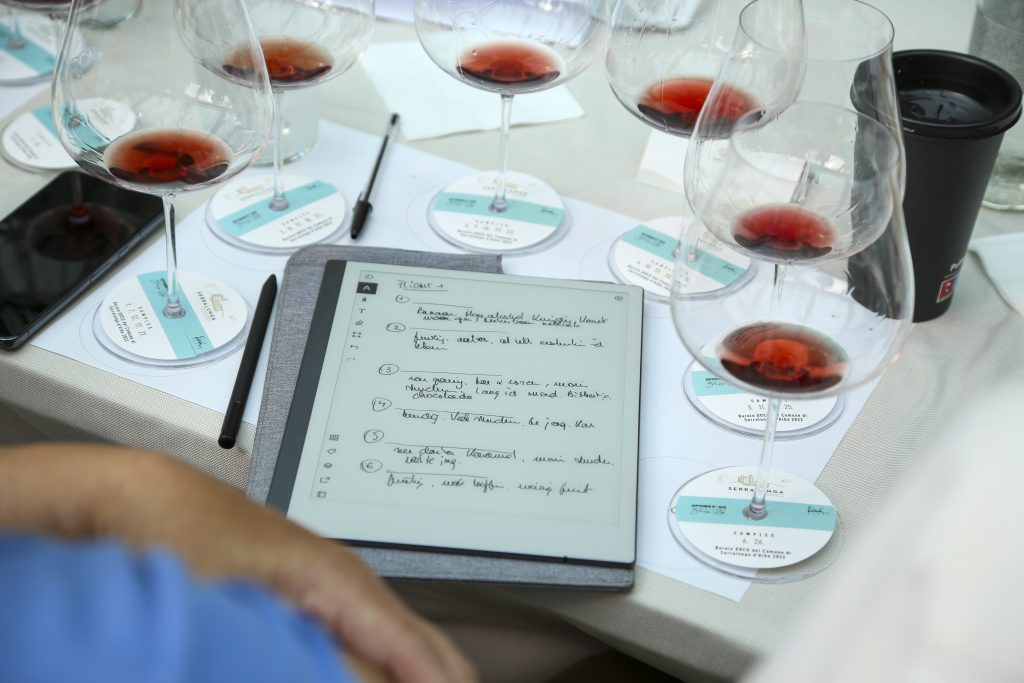
A participant during the blind tasting, carefully analysing one of many wines — all bottled as Barolo del Comune di Serralunga d’Alba, with no mention of MGA or single vineyard.
What followed was a journey through Serralunga d’Alba in five flights — from sites rooted in lighter, sandier soils in the north to the denser, more compact clays of the Lequio Formation in the south — and a chance to consider not just how these wines tasted, but why. And whether, in the face of a challenging year, something more deliberate might be unfolding.
The blind tasting at Serralunga Day 2025 brought together 26 wines, all bottled under the village designation and poured without identifying information. Organised into five geographically sequenced flights — north to south — the format followed a now-familiar template, unique to this commune. As in previous editions, the aim was not to highlight individual producers or crus, but to understand what Serralunga d’Alba communicates when tasted collectively, through the lens of a single vintage.
And 2022 had plenty to say. From the outset, the growing season posed a clear challenge. Total rainfall measured just 345 mm — less than half the historical norm. Rainfall during the crucial summer months was virtually absent, leading to widespread hydric stress and early signs of canopy reduction. Yet unlike in years with dramatic heat spikes, such as 2003, temperatures in 2022 were persistently high but rarely extreme. This created a slow, continuous push toward ripeness, without sudden shocks.
Phenological stages arrived early: budbreak in late March, flowering in May, and veraison by early July. By mid-September, sugar levels had reached picking thresholds across much of the commune. Harvest began on 19 September, and most fruit was in before 7 October — among the earliest collective harvests in recent memory. Producers spoke of compacted timelines and limited decision windows: once ripeness was there, waiting was not an option.
The risks were well known. Reduced leaf coverage threatened balance. Water stress risked shutting down maturation. And fast accumulation of sugars could push alcohol levels up before phenolic ripeness had time to settle. For a village with soils as compact and demanding as those of Serralunga d’Alba — especially in the south, where the Lequio Formation dominates — this was a vintage that required careful navigation.
What emerged in the tasting, then, would not only reflect nature’s hand, but also the human response to it.
The tasting was hosted by Fontanafredda, whose role in shaping and facilitating the event went beyond logistics. As one of the commune’s most historic estates, its involvement offered a quiet reminder that tradition and innovation often move hand in hand in Serralunga d’Alba — a dynamic we explore further in Fontanafredda: Icon with a Pulse.
Five Flights, One Vintage, Many Faces
The tasting began in the northern reaches of the commune, where lighter soils and higher altitudes often produce wines of lift and precision. From the outset, a pattern emerged: despite the growing season’s severity, the wines were anything but overbuilt. Instead of overt richness, the first three flights — sixteen wines in total — delivered clarity, energy and finely drawn structure.
“There’s a crunchiness here,” noted host Gabriele Gorelli MW, pointing to the vibrant tension running through the early part of the tasting. The wines were marked by lifted aromas — floral, red-fruited, lightly spiced — and a youthful, expressive character. Tannins showed ripeness without excess, while acidity offered a clean, refreshing line through the palate. One producer spoke of “tenderness over force”; another of “structure that never dominates.”
Michaela Morris offered a telling comparison: “These are not the big, muscular tannins we often associate with Serralunga d’Alba.” She noted how the 2022s, while still firm, felt more agile than their reputation suggested — a trait she contrasted with the more developed, fruit-driven profile of 2021.
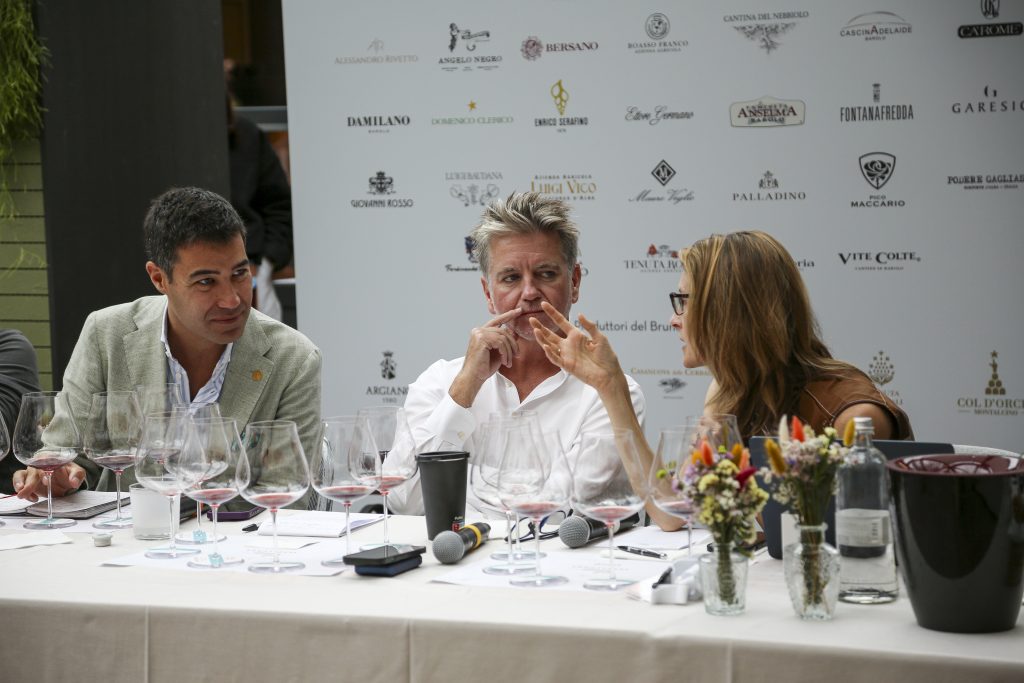
Gabriele Gorelli MW, Justin Knock MW and Michaela Morris exchange observations following the blind tasting — a discussion that shaped the collective perspective on Serralunga d’Alba 2022.
This stylistic coherence held remarkably steady across the first sixteen wines. There was structure, but also restraint; power, but channelled with finesse. The vintage showed discipline early.
As the tasting moved south, however, the tone began to shift. Flights four and five, sourced from deeper clays and denser subsoils, introduced a broader range of expression. Some wines leaned into darker fruit and firmer tannin; others revealed wilder edges, with more rusticity but also more intrigue. “Now we’re seeing the other end of the spectrum,” observed Justin Knock MW — less unity, but more definition.
Still, this wasn’t dissonance. The variation was contextual, not chaotic. The later wines didn’t undermine the vintage’s identity — they expanded it. And in doing so, they brought two bottles into sharper focus. Not because they were louder, but because they were clearer.
Signature in the Glass – Standouts in Context
Two wines stood out. Not for their volume or concentration, but for their balance, typicity, and composure under pressure — each capturing a different face of Serralunga d’Alba in 2022.
Tenuta Rocca Barolo del Comune Serralunga d’Alba2022 delivered a wine of immediate presence. Dark cherry aromas hinted at ripeness, edging toward compote but held in focus by a seam of bitter chocolate and dusty earth. On the palate, it showed breadth and grip, but also tension — the acidity finely tuned, the tannins bold but clean. It was a wine that spoke Serralunga fluently: power channeled through precision. In a vintage like 2022, that kind of balance is never accidental.
DWA Score: 94/100
Giovanni Rosso Barolo del Comune Serralunga d’Alba2022, by contrast, offered a more vertical reading of the vintage. Its nose unfolded with floral delicacy — rose petal, violet, a hint of white pepper — almost teasing in its restraint. The palate followed suit: linear, lifted, with tannins that framed rather than dominated. It was an interpretation that felt almost feminine in its detailing, yet utterly assured. Atypical for Serralunga, perhaps, but no less authentic.
DWA Score: 93/100
What made these two wines resonate wasn’t their technical perfection, but the clarity with which they expressed intention. Both showed that 2022, for all its challenges, offered space for definition — provided the choices were right. The contrast between them also echoed the broader arc of the tasting: from architectural structure to aromatic finesse, from the muscular to the mineral.
More than outliers, they felt like signposts. Not the whole story of the vintage, but important markers within it — suggesting that in Serralunga d’Alba, identity is no longer a question of strength alone.
The Turning Point – Precision over Power
The wines may have spoken softly, but the message was clear. As Alessandro Masnaghetti — cartographer and analyst of Barolo’s vineyards — reminded the room, 2022 was no gift from nature. It was a year of adversity: low rainfall, early budbreak, tight timelines, and little margin for error. The fact that so many wines showed composure was not a fluke — it was a sign of adaptation.
In the panel discussions that followed the tasting, one question kept surfacing: how did these results come about? Was the weather perhaps less extreme than anticipated? Masnaghetti’s data quickly dispelled that notion. Rainfall was demonstrably low, temperatures persistently high, and the harvest unusually early. The vintage had all the hallmarks of difficulty.
And yet, the overall tone among producers, journalists and organisers was not one of surprise, but of affirmation. There was broad consensus that the quality achieved in 2022 was not the result of milder-than-expected conditions, but of measured, increasingly precise responses in the vineyard and cellar.
Sergio Ettore, president of the Consorzio di Tutela Barolo Barbaresco Alba Langhe e Dogliani — the regional body overseeing quality and standards — spoke to the importance of this evolution: a growing capacity among producers to respond to extremes with confidence, not improvisation. Rather than reacting impulsively to climatic stress, they had adapted — drawing on experience, site knowledge and restraint.
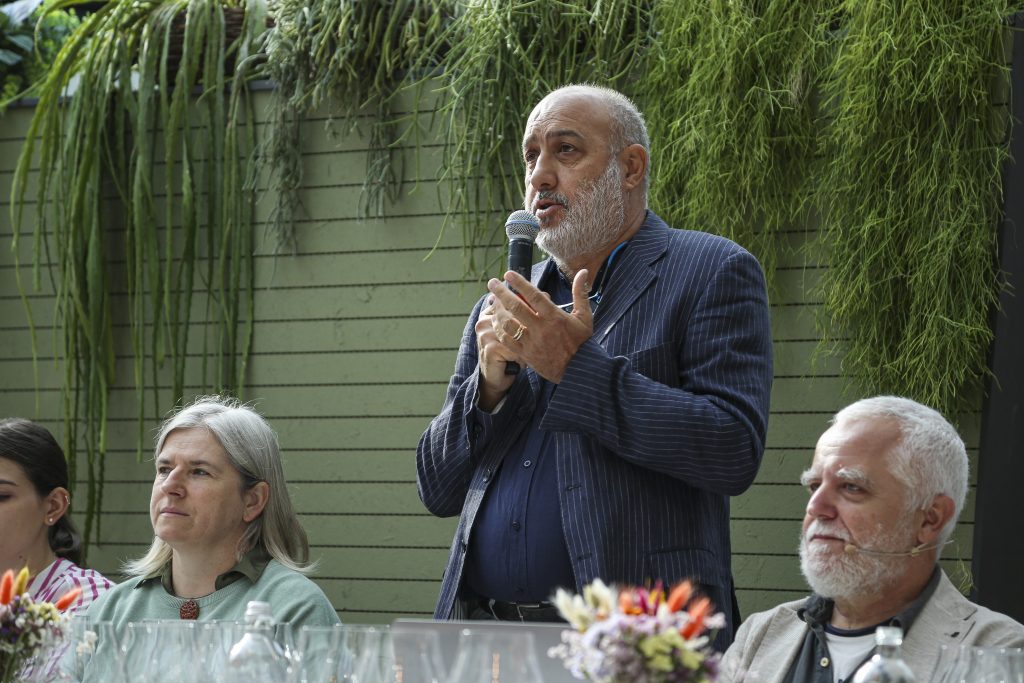
Sergio Ettore, president of the Consorzio, underscores that the quality of 2022 is no coincidence — but rather the result of increasingly skilled winemaking across the commune.
As Justin Knock MW put it: “Serralunga d’Alba is a wine you don’t need to push to show how good it is.” The statement captured the collective mood. What emerged in 2022 was not a reduction in identity, but a rebalancing of it. The producers of Serralunga d’Alba didn’t fight the vintage — they listened to it. And in doing so, they allowed it to speak with clarity and confidence.
The verdict, while softly spoken, was remarkably unified. Barolo 2022 from Serralunga d’Alba may not be a vintage of grandeur, but it is one of intention. These are not wines that shout — they speak in complete sentences, with calm structure and measured tone. That alone is worth noting in a year that, on paper, promised volume over voice.
If 2021 showed purity and elegance, 2022 revealed something more grounded: wines that feel less pristine, perhaps, but no less precise. Compared to earlier hot vintages like 2009 or 2017, the 2022s show greater restraint and less overt concentration — a shift that seems driven more by people than by climate.
And while it’s too early to compare communes — most 2022s from elsewhere have yet to be tasted — the impression within Serralunga d’Alba is one of coherence. Not uniformity, but balance across diversity. From the higher slopes of the north to the compact clays of the south, the wines told a story of response, not reaction.
More than anything, 2022 affirmed the strength of collective vision. By tasting as a commune — blind, structured, without hierarchy — Serralunga d’Alba continues to set an example for Barolo. Not only in how wines are made, but in how they are understood.
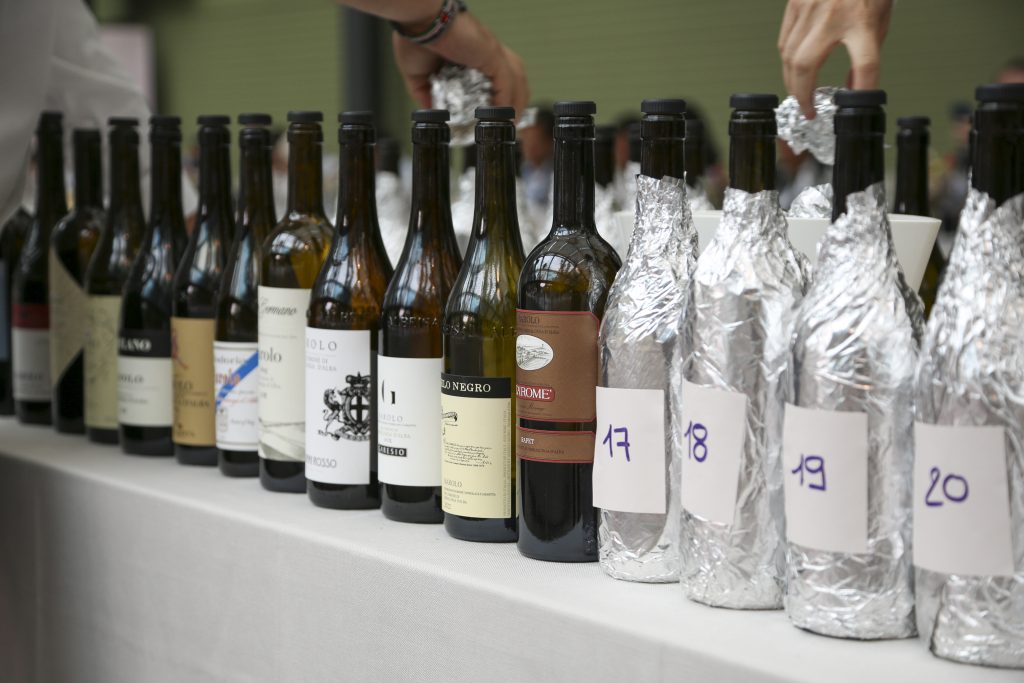
The 2022 line-up: 26 Barolos from across Serralunga d’Alba, tasted blind to uncover the commune’s collective signature — the basis for this year’s Manifesto.
This article is part of a four-part series on Serralunga Day 2025. Read more:
We thank the producers of Serralunga d’Alba for their openness and vision, and the organising committee for granting us access to every layer of the event — from blind tasting to roundtable debates.
Special thanks to Fontanafredda for hosting the event and anchoring its spirit, to Alessandro Masnaghetti for his analytical guidance, to Gabriele Gorelli MW for leading the tastings with clarity and precision, to Justin Knock MW and Michaela Morris for their insight and sharp observations throughout the day, and to Sergio Germano, president of the Consorzio di Tutela Barolo Barbaresco Alba Langhe e Dogliani, for his perspective on the vintage and the future of Barolo.
Join our insiders’ list and get exclusive early access to new articles, expert tips, and fresh reviews delivered straight to your inbox. Subscribe now and be the first to discover!