Join Our Wine Journey – Sign Up for the Newsletter 🍷
Taaibosch and Cabernet Franc: A Helderberg Renaissance
Share
Deel op X (twitter)
LinkedIn
WhatsApp
Taaibosch and Cabernet Franc: A Helderberg Renaissance.
There are estates that re-emerge quietly, and then there are those whose revival feels like a tectonic shift. Taaibosch belongs firmly to the latter category. Once known as Cordoba, this Helderberg property east of Stellenbosch has been brought back to life by Schalk Willem Joubert – fourth-generation wine farmer, former co-founder of Rupert & Rothschild, and today the custodian of one of South Africa’s most distinctive Cabernet Franc–led wines.
Rather than chasing volume, trends or headline-grabbing prices, Joubert’s guiding principle is identity. Every wine must express a recognisable fingerprint across vintages, not as a stylistic exercise but as the authentic voice of a place. At Taaibosch this concept is not marketing language but an operational reality that shapes decisions in the vineyard, cellar and boardroom.
From Cordoba to Taaibosch – a rebirth rather than a rebrand
Long before the Taaibosch name appeared on the market, the property had already achieved cult status under Cordoba. Joubert first became involved with the site while sourcing grapes for Rupert & Rothschild’s top cuvée Baron Edmond. These parcels consistently stood apart in flavour profile, structure and texture, and were always earmarked as the pinnacle of the harvest. Yet the estate itself had fallen silent after the passing of its owner, and its grapes were absorbed into blends elsewhere.
Over the years the idea of bottling this singular site as a standalone wine began to take root. Together with Bertrand Oddo, then a director at Rupert & Rothschild, Joubert explored the possibility of creating a one-wine estate that would express the property in its purest form. Capital constraints and the fact that the farm was not for sale stalled the project until the Oddo family – already active in projects across France, Spain and Sicily – were introduced to the site. Their immediate recognition of the vineyard’s potential proved decisive.
Joubert left Rupert & Rothschild amicably and moved to the farm to resurrect the estate under a new name: Taaibosch. The intention was not to trade on Cordoba’s reputation, but to build a new chapter rooted in the same DNA, with absolute clarity of purpose.
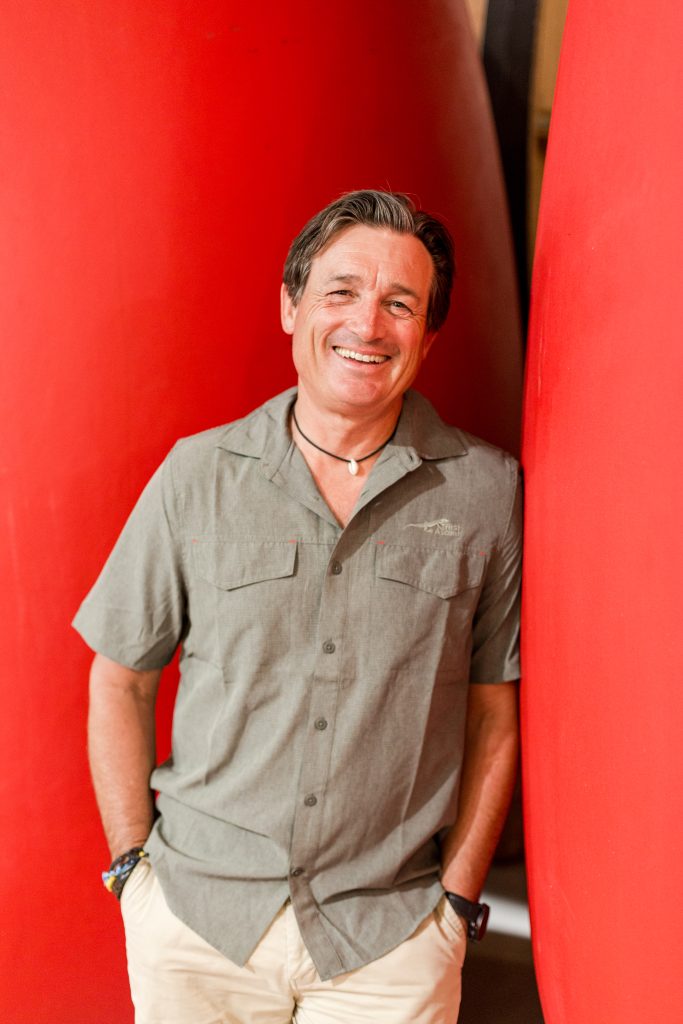
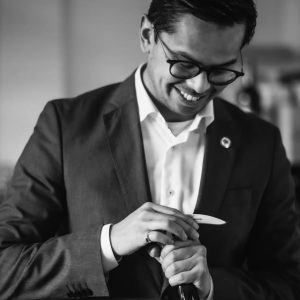
Schalk-Willem Joubert, the man behind Taaibosch.
Helderberg, shell fragments and clay – the making of a Cabernet Franc stronghold
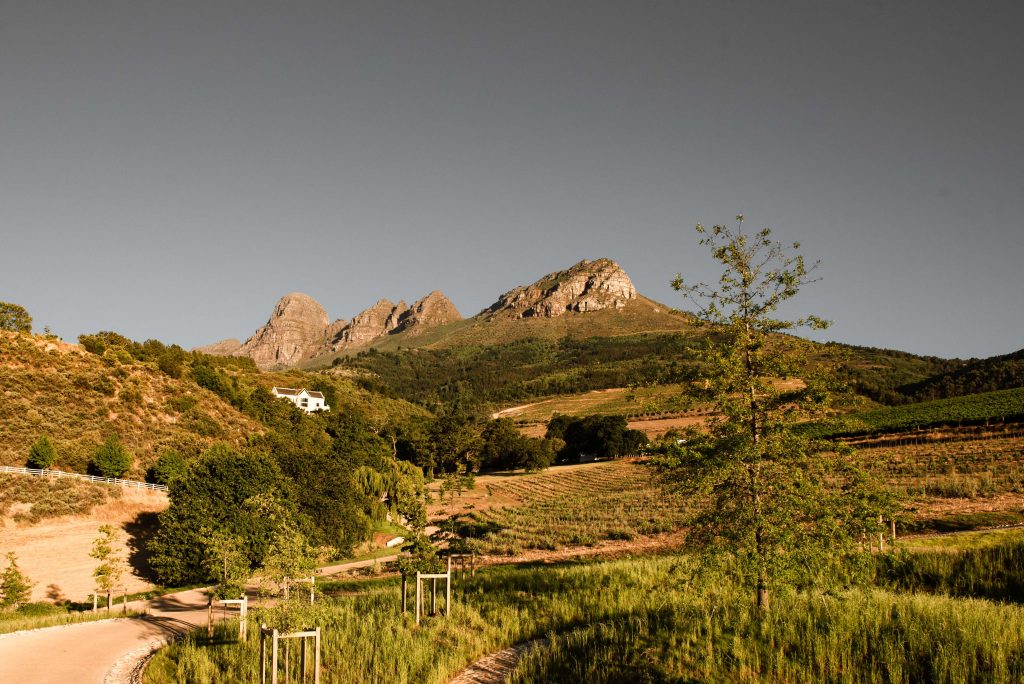
Taaibosch occupies a privileged position on the Helderberg slopes, with expansive views across False Bay and Robben Island visible on clear days. The Atlantic lies just seven kilometers away, exerting a moderating maritime influence that keeps ripening slow and even. The resulting wines rarely show excess alcohol or overripe fruit, instead offering precision and tension.
Wide Views over the Vineyards.
Beneath the surface lies the estate’s real secret: a rare combination of shell fragments and clay in the soils. This mix provides both drainage and water retention, a balance that allows Cabernet Franc to thrive in a way seldom seen elsewhere in South Africa. The vines dig deep, yielding fruit with layered aromatics, savoury complexity and natural freshness.
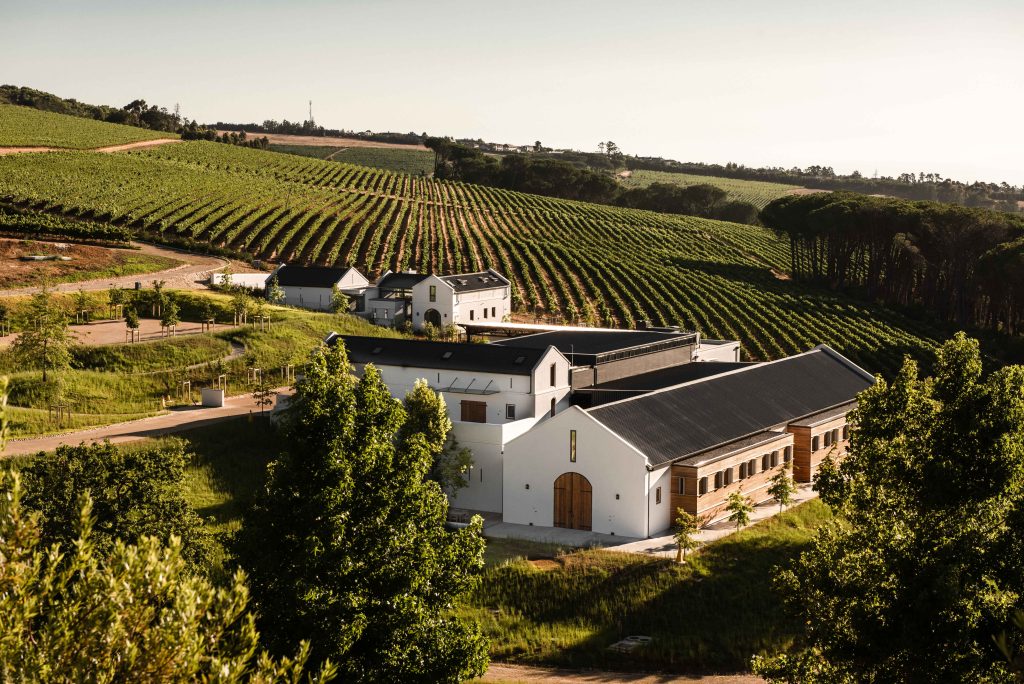
The Taaibosch Estate and its Vineyards.
This potential was first recognized by Jan Coetzee and later by Chris Keet, who planted Cabernet Franc at a time when the variety was far from fashionable in the Cape. Their work laid the foundation for Cordoba Crescendo, South Africa’s first Bordeaux blend dominated by Cabernet Franc, and quietly changed the way the industry looked at the grape.
Crescendo – one wine, no safety net
Under the Taaibosch name, Crescendo remains the sole wine of the estate. There is no second label, no off-vintage release and no brand architecture to fall back on. This approach creates enormous pressure on every harvest, but it also enforces discipline.
That discipline was tested in 2023, when a rain-affected season resulted in dilution across the vineyards. After months of élevage, the decision was taken to declassify the entire vintage. The wine was not redirected into a secondary cuvée or quietly sold in bulk. It simply disappeared.
For a young estate still establishing itself, the financial implications were severe. Yet the decision reinforced the idea that Taaibosch is built on trust and long-term thinking rather than short-term cash flow.
The Taaibosch Farm.
Elegance, texture and restraint
Crescendo is not built for impact in a tasting flight. Its power lies in detail rather than volume. The proximity to the ocean, the age of the vines and the distinctive soil profile combine to create wines with moderate alcohol, layered aromatics and remarkable persistence.
All vineyards are organically certified and steep slopes mean that most vineyard work is done by hand. Acidification is avoided, as Joubert believes it alters the natural texture of the wine. Texture, in his view, is the unspoken dimension of quality – something that is rarely articulated, yet immediately missed when it is wrong.
The Wine Cellar at Taaibosch.
From philosophy to glass
All philosophy aside, a winery ultimately stands or falls by what ends up in the glass. With Taaibosch and its sister estate Eikenhof now firmly established in the Dutch market, it was time to taste two recent releases in their proper context – one representing the pinnacle of the Helderberg revival, the other illustrating the more accessible side of the wider Joubert portfolio.
Reviews & Ratings
2020 Taaibosch Crescendo | 94/100 – DWA Score
A quietly commanding expression of Cabernet Franc-driven Helderberg terroir. The nose opens with graphite, dried violets and cassis, followed by subtle herbal notes, black olive and fine cedar. On the palate the wine is beautifully poised: cool-climate black fruit, pencil shavings and crushed stone wrapped in a silky but tensile frame. The acidity is perfectly judged, giving length rather than sharpness, while the tannins are ripe, fine-grained and persistent. A wine that builds in layers rather than volume, finishing with saline lift and remarkable composure. A benchmark South African Bordeaux blend built for long cellaring.
Taaibosch Crescendo, the Icon.
2021 Eikenhof | 88/100 – DWA Score
Fresh, accessible and finely textured, this Polkadraai wine offers an engaging counterpoint to the gravitas of Crescendo. Aromas of red cherry, raspberry, subtle spice and a hint of leafy freshness lead into a supple palate where crunchy red fruit meets gentle tannin. The maritime influence brings lift and clarity, making this a gastronomic, early-drinking style with real charm.
Building a business without diluting identity
To ensure commercial sustainability without compromising Taaibosch’s singular focus, Joubert expanded horizontally rather than vertically. Today, the Oddo-owned group comprises three distinct properties, each with its own narrative and winemaker.
Taaibosch remains devoted exclusively to Crescendo under Joubert’s direct stewardship.
Eikenhof / Le Chant, located in the Polkadraai area, offers greater scalability and is overseen by Petri Venter, who trained under Joubert at Rupert & Rothschild.
Pink Valley, a tiny ten-hectare site just 200 metres from Taaibosch, focuses entirely on rosé, built around Grenache, Sangiovese and a touch of Shiraz at just 12.5% alcohol, with Sangiovese providing natural acidity and textural lift.
Each estate stands alone, with no attempt to homogenize branding or positioning.
Hospitality as relationship, not transaction
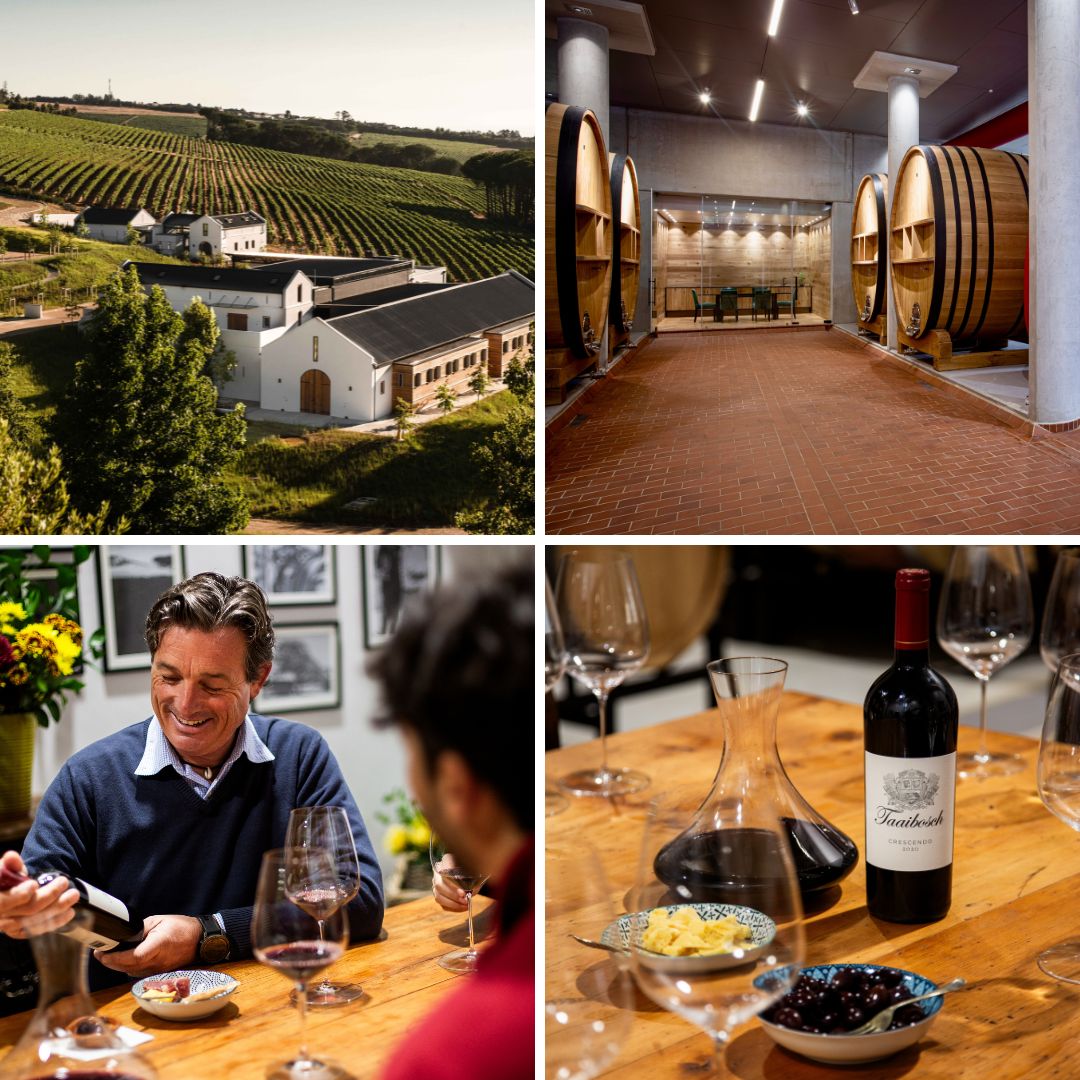
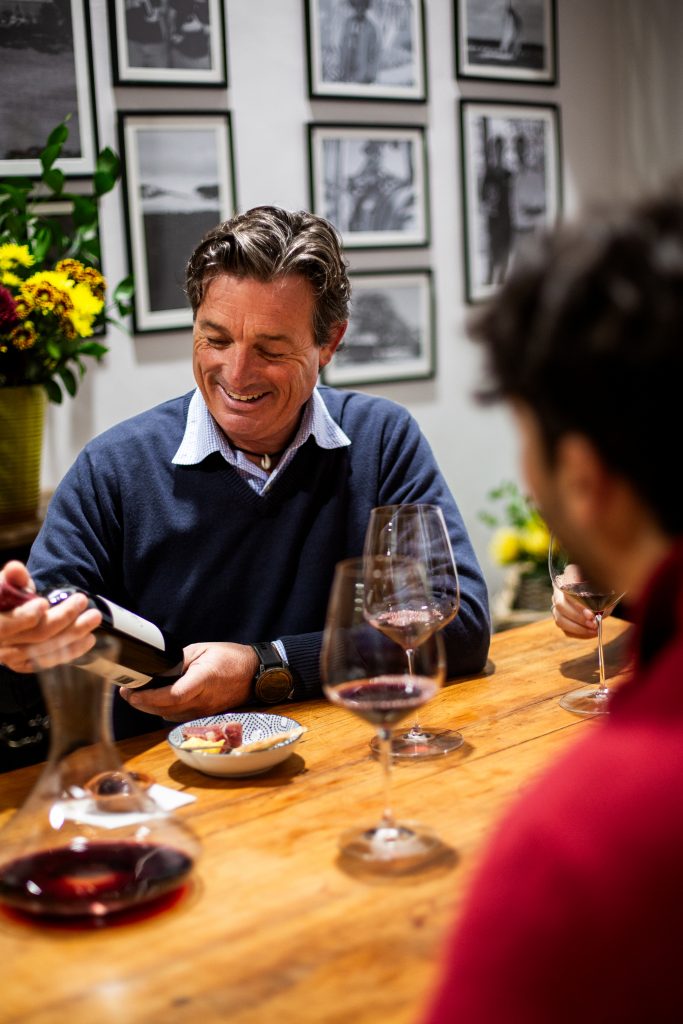
Taaibosch is not open to casual visitors. Access is granted through the wine club, with membership unlocked by purchasing twelve bottles annually. Tastings take place in a modest, three-table space beneath the cellar and are hosted personally by Joubert. Members buying more than ten cases can store their wines at the estate free of charge, for up to five years, and a boardroom is available for all members to host private meetings.
This approach transforms wine from a transactional product into a long-term relationship, creating loyalty that extends beyond a single generation.
Hospitality on another level at Taaibosch.
Team South Africa and Final Thoughts
A recurring theme in Joubert’s outlook is the belief that South Africa’s fine-wine future depends on collective progress. Winemakers routinely taste each other’s wines, share criticism and exchange ideas. This collaborative culture has become one of the country’s most valuable assets in a global fine-wine market increasingly driven by authenticity rather than pedigree.
With production hovering between 65,000 and 74,000 bottles across all three properties, Taaibosch is not built on volume or spectacle. It is built on restraint, patience and the conviction that identity is earned over decades rather than declared.
Crescendo does not shout. It lingers. And in a world saturated with sameness, that quiet persistence may well be its most compelling voice.
This article is written by our own Niels Aarts. We thank Taaibosch wines, in particular Schalk Willem Joubert, and their importer Wijnimport J. Bart.
The wines are imported and distributed in the Netherlands by Wijnimport J. Bart and available through selected hospitality partners, or through online, direct sale, for consumers at QV Select.
Join our insiders’ list and get exclusive early access to new articles, expert tips, and fresh reviews delivered straight to your inbox. Subscribe now and be the first to discover!