Join Our Wine Journey – Sign Up for the Newsletter 🍷
Symington’s: A Celebration of Vintage Port in Frankfurt
Share
Deel op X (twitter)
LinkedIn
WhatsApp
Symington’s: A Celebration of Vintage Port in Frankfurt.
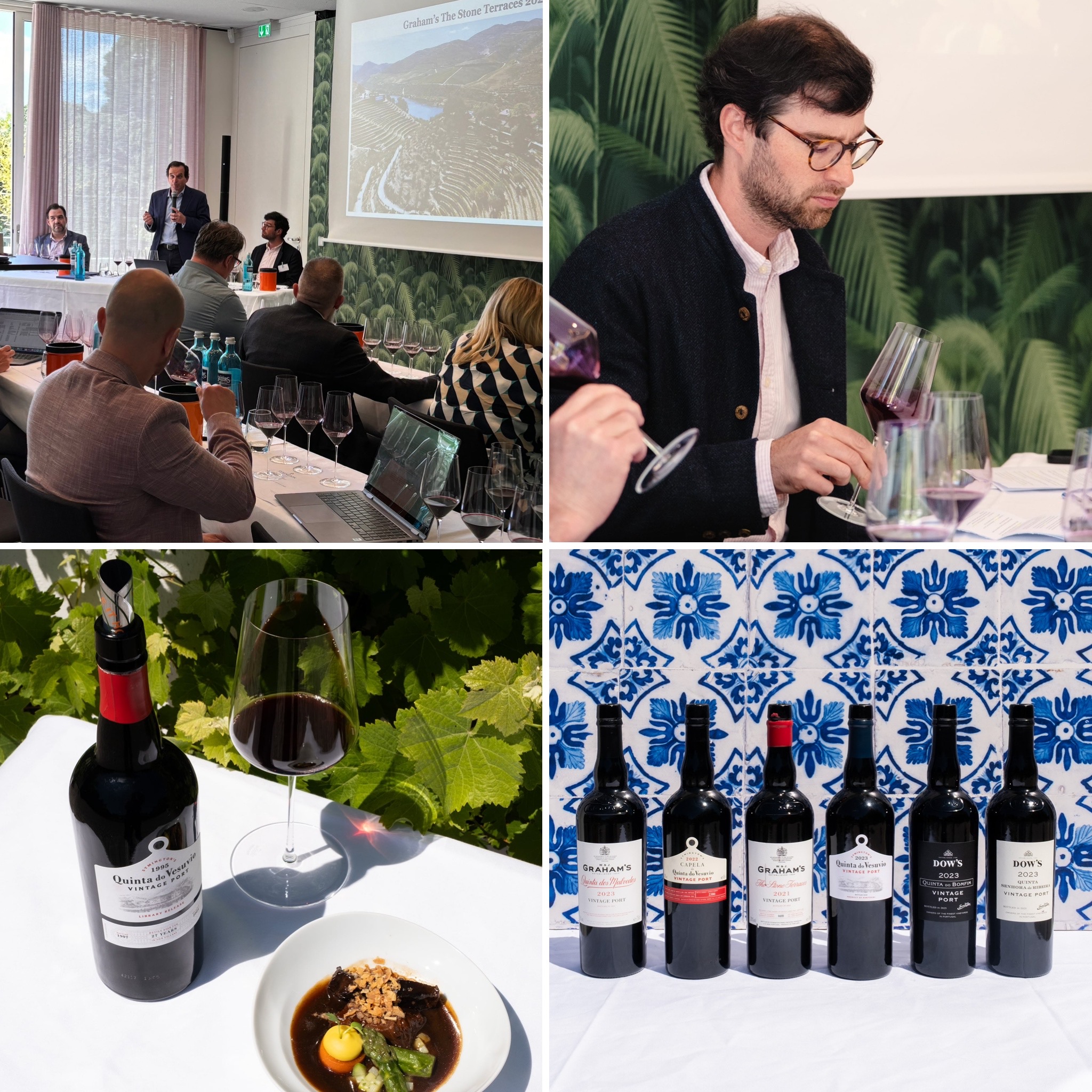
At the iconic Gesellschaftshaus Palmengarten in Frankfurt, the Symington family brought together journalists, sommeliers, and wine lovers for a day dedicated to one of the world’s greatest and most enduring wines: Vintage Port.
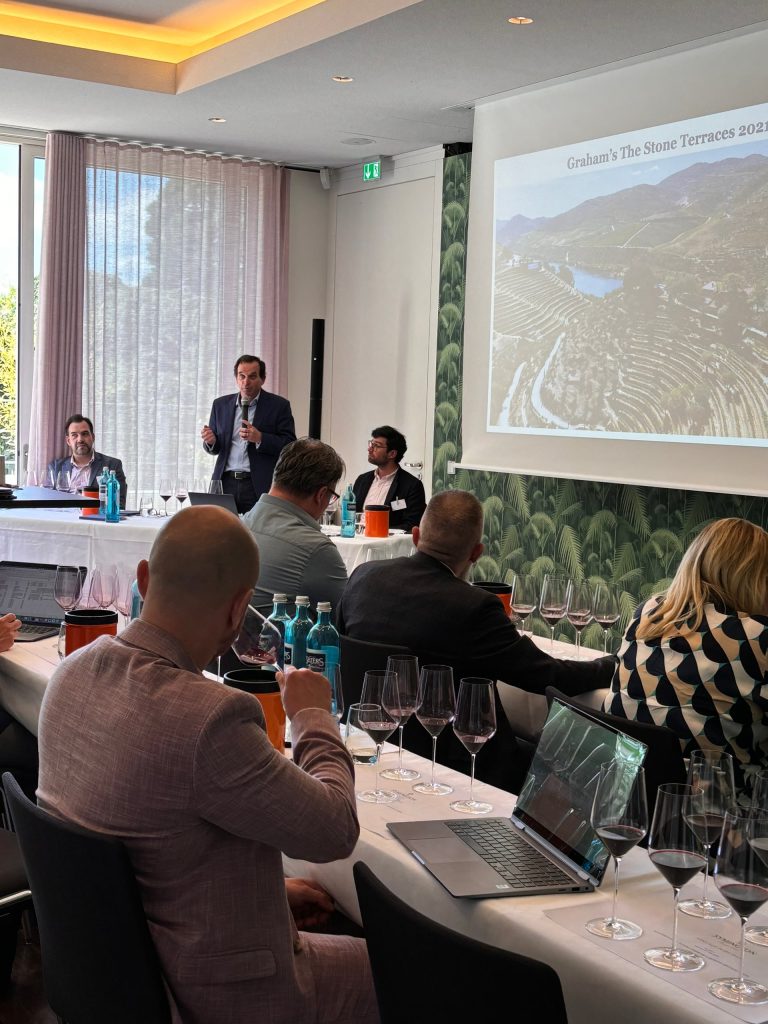
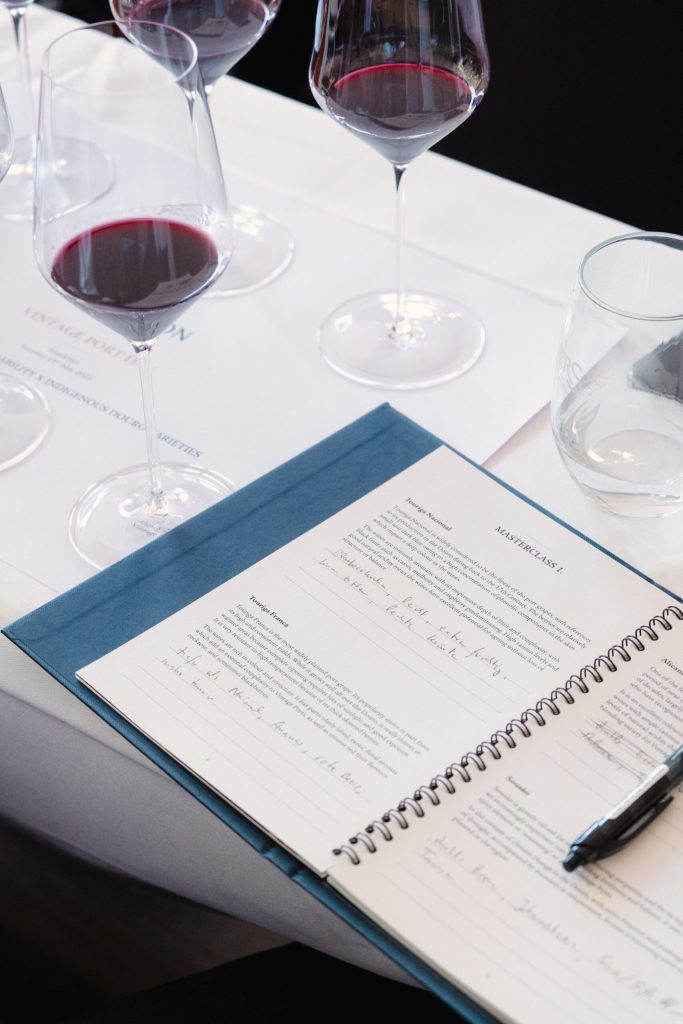
Across three masterclasses, the audience was taken on a journey through history, terroir, and time in the glass — guided by Charles and Harry Symington, whose family legacy has been central in shaping the Douro Valley and the global reputation of Port.
A Family at the Heart of the Douro
Few names are as deeply rooted in the Douro Valley as that of the Symington family. With over 1,100 hectares of vineyards spread across 26 quintas (including Graham’s, Dow’s and Warre’s Port), they are today the largest landowners in the region.
More than numbers, however, their story is one of stewardship: combining centuries-old tradition with forward-looking innovation.
As Charles Symington explained: “Declaring a Vintage Port is not about making wine every year. It is about patience and honesty — waiting for those rare years when everything aligns across the Douro.”
The family has invested heavily in vineyard research and technology: from grape variety libraries and precision viticulture with vineyard-mapping drones, to the “Vine Scout” robot that monitors plant stress. These advances help the Symington’s adapt to climate change while preserving the character of their wines.
“We’ve moved Douro viticulture into some of the most advanced in the world,” Charles added, “because the complexity of this region demands it.”
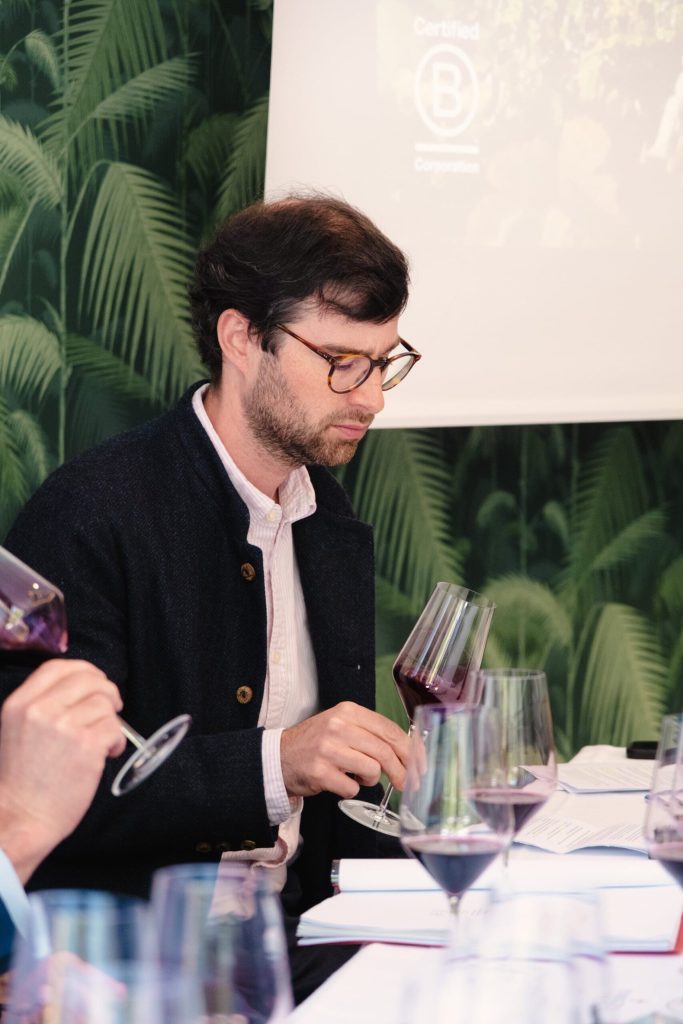
Charles and Harry Symington at the Masterclasses.
Vintage Port – History in a Glass
Fortification, first practiced in the 17th century to stabilize wines during transport, gave Port its distinctive balance of richness and power. The shift from squat onion-shaped bottles to cylindrical ones in the 18th century allowed for long cellaring, and the tradition of “declaring” vintages in only the best years was established in the 19th century.
Today, Symington Family Estates declares a Classic Vintage Port only two to three times per decade. In between, they release single-quinta bottlings (from estates such as Bomfim or Malvedos) or micro-terroir wines like Graham’s Stone Terraces.
The Masterclass Tastings.
The Three Masterclasses
1. Grapes in Focus
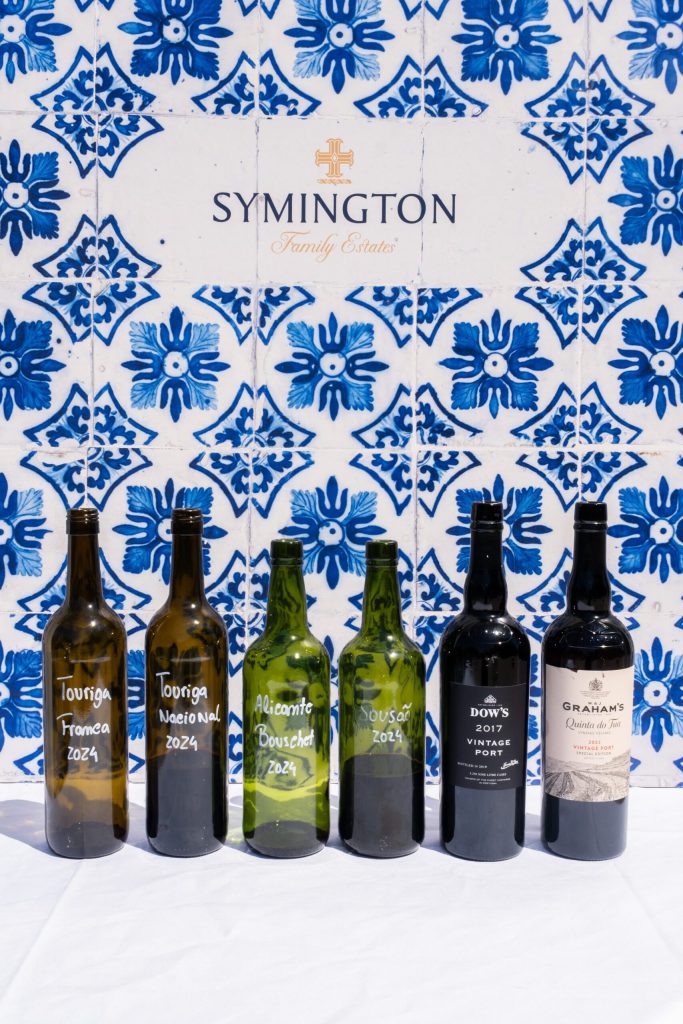
A rare tasting of monovarietal fortified wines showcased the building blocks of Port:
Touriga Nacional – Power and dark fruit, with floral notes (cistus, orange blossom). DWA: 92/100
Touriga Franca – Elegance and freshness, with violets and red fruits. DWA: 91/100
Alicante Bouschet – Deep color and tannic grip, adding intensity. DWA: 90/100
Sousão – High acidity and freshness, vital for balance. DWA: 89/100
These components revealed why blending is essential: no single grape can capture the full spectrum of Port’s complexity.
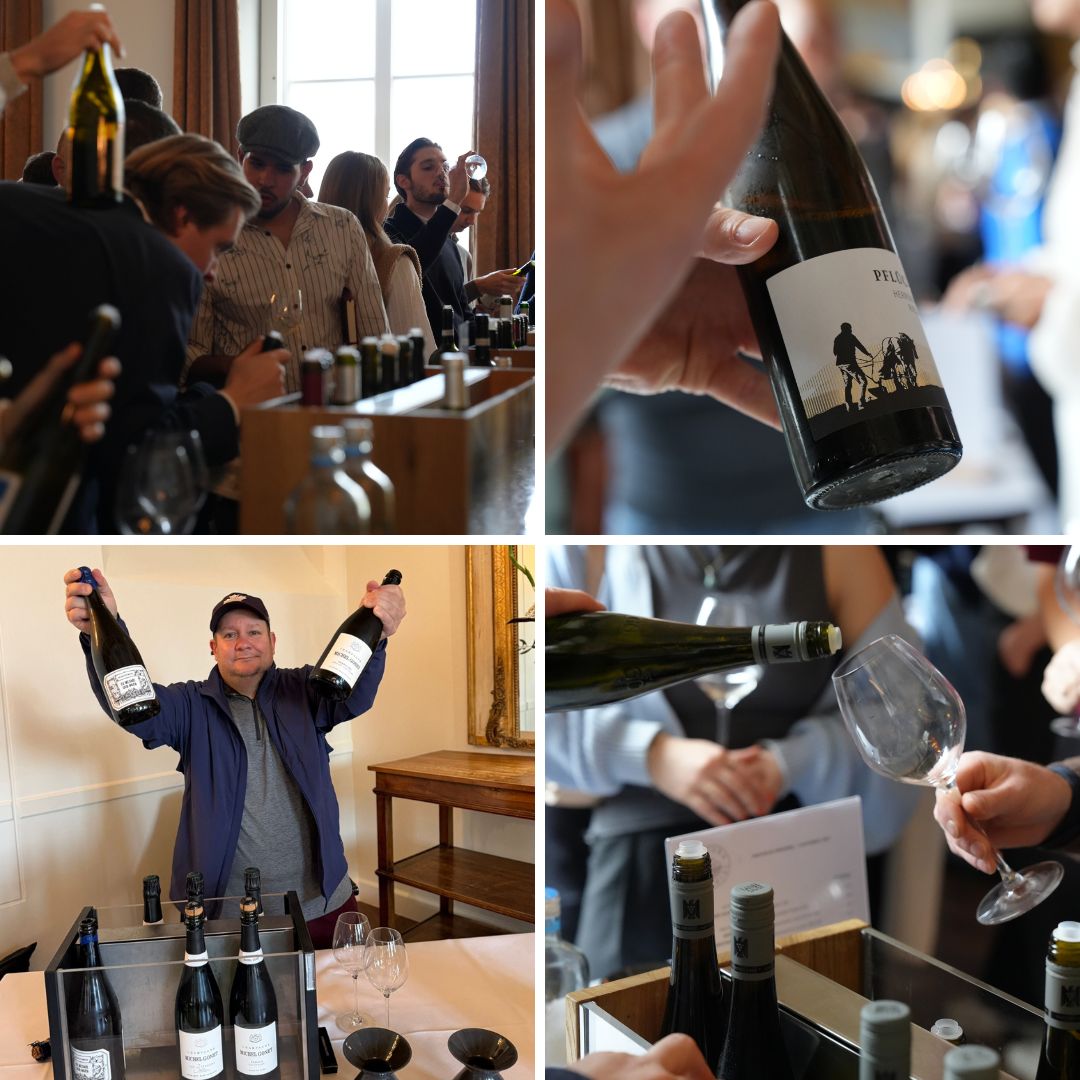
A rare opportunity to taste all ‘components’ separately.
2. Terroir and Quintas
The second masterclass explored how vineyard location defines style:
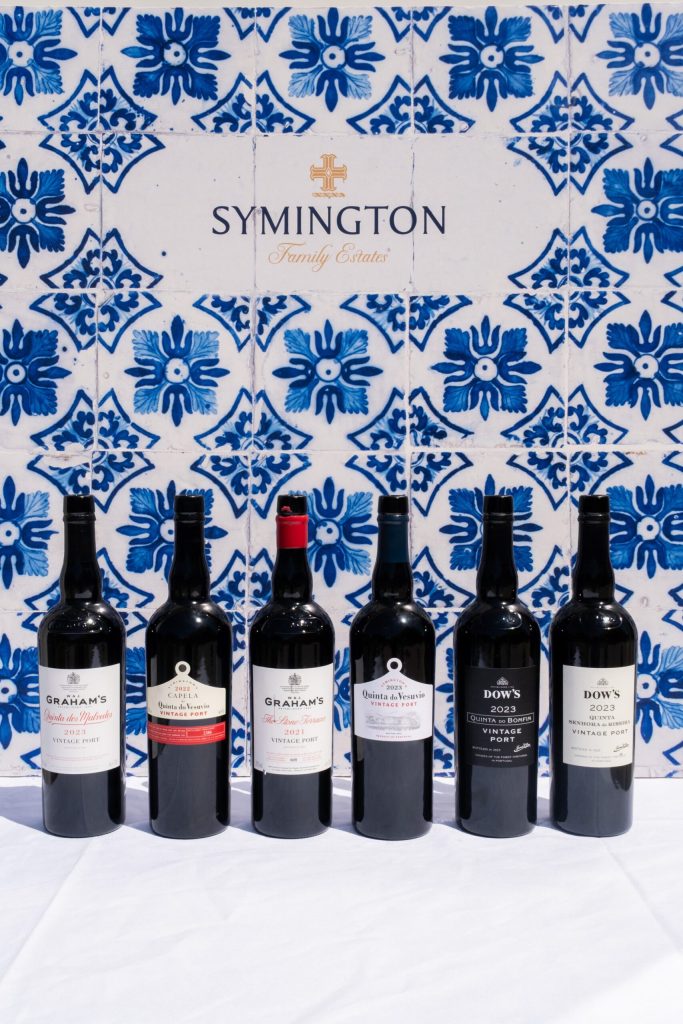
Quinta do Bomfim (Dow’s, 2023) – Structured and peppery, with blackcurrant and chocolate. DWA: 93/100
Quinta dos Malvedos (Graham’s, 2023) – Rich, concentrated black fruit, with freshness from cooler plots. DWA: 94/100
Stone Terraces (Graham’s, 2021) – A rare single-parcel bottling: mineral, refined, and balanced. DWA: 95/100
One of the most fascinating dimensions of the Frankfurt tastings was comparing the distinct personalities of the Symington houses. Although all three are produced under the same family umbrella, each Port carries its own unmistakable identity, shaped by history, vineyard sources, and blending philosophy.
Graham’s Port is the most flamboyant: opulent, rich in sweet black fruits, and often touched by eucalyptus and mint. It is the style that seduces early yet matures gracefully for decades.
Dow’s Port sits on the opposite end of the spectrum — drier, more structured, and sometimes austere in youth. Yet with time in bottle, it reveals remarkable power, depth, and longevity.
Warre’s Port is perhaps the most elegant of the trio, lifted by floral aromatics and silky tannins. These wines charm with refinement and freshness rather than sheer weight.
Finally, Cockburn’s Port, once Portugal’s most expensive Port in the 19th century, has been revived under the Symington’s. Its modern vintages are regaining recognition, marked by grip, intensity, and bold character.
Together, these houses represent not only stylistic diversity but also the breadth of expression that Vintage Port can achieve. For enthusiasts and collectors alike, understanding these nuances adds an extra layer of pleasure when comparing bottles across years and estates.
We experienced Symington’s World of Port through its different Port Houses.
Serving and Enjoying Vintage Port
For all its grandeur, Vintage Port is also a wine to be enjoyed — not just admired in cellars. Symington emphasized that sharing Port around a table remains central to its identity. Knowing how to prepare and serve it enhances the experience.
Decanting is essential, since Vintage Ports throw heavy sediment as they age. Older vintages should be handled gently, often needing only a short decant.
Glassware matters: instead of traditional small copitas, large wine glasses allow the complexity of aromas to unfold.
Serving Temperature is ideally 16–18°C. Too warm, and alcohol dominates; too cool, and the aromas close down.
Food Pairing remains classic with blue cheeses and chocolate desserts, but many argue that great Vintage Port shines best on its own, as a meditative wine to close an evening.
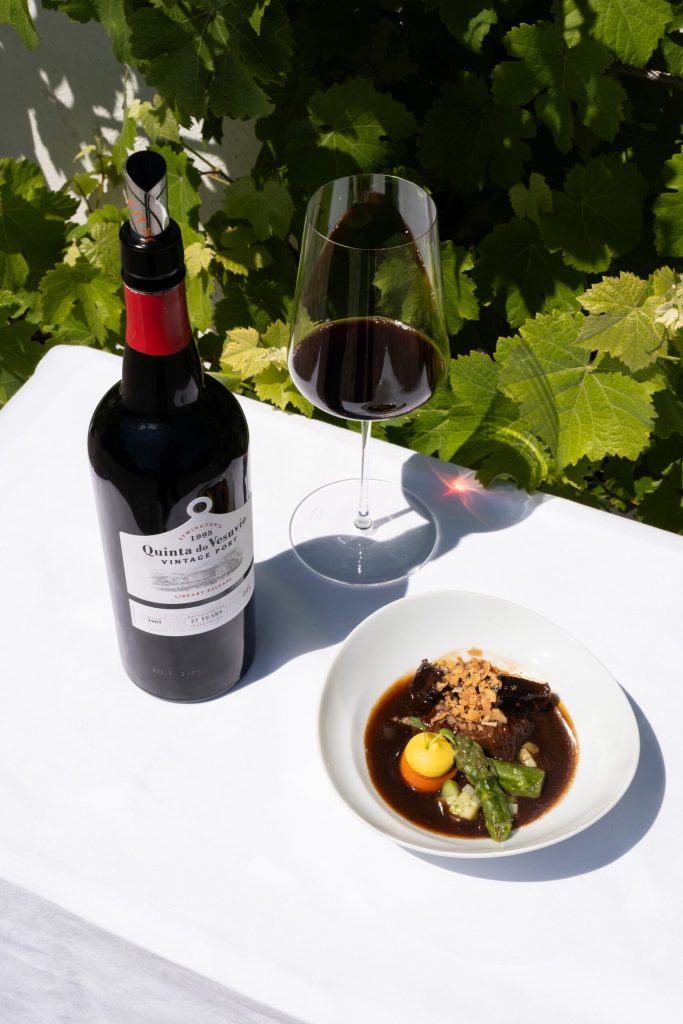
In Frankfurt, guests experienced precisely this harmony, with Ports poured alongside carefully chosen dishes. It was a reminder that Vintage Port is not only a piece of history in the glass but also a living part of convivial culture.
During the excellent lunch we enjoyed great Port and Food pairings.
Beyond Port: Innovation and Commitment
While Vintage Port remains the pinnacle, the Symington family also showcased their broader portfolio during lunch, including sparkling wines and Albariño from Galicia. This reflects their openness to innovation while maintaining Port at the heart of their identity.
Another highlight was their new re-release program:
Library Release (20–30 years old, carefully aged in their cellars).
Private Cellar Release (over 40 years old, in tiny quantities).
For collectors, this guarantees provenance and perfect storage conditions — something that adds confidence in a category often misunderstood by casual consumers.
Conclusion
For the guests in Frankfurt, Symington’s Vintage Port Day was both an education and a celebration. To taste Ports from three different decades — alongside single-quinta and varietal components — was to witness history, terroir, and time converge in the glass.
The conclusion was unmistakable: Vintage Port is not just a wine. It is a cultural legacy — one that the Symington family continues to carry forward with passion, precision, and a vision for the future.
This article was written by our own Niels Aarts. Our sincere thanks go to the Symington family — especially Charles and Harry — for their invitation and for hosting such a memorable day in celebration of Vintage Port. We also wish to thank the Alice Bown Agency (in particular Alice and Amandine) for their excellent organization of the event and their valued partnership in making this article possible. Picture credits: Alice Bown Agency.
Join our insiders’ list and get exclusive early access to new articles, expert tips, and fresh reviews delivered straight to your inbox. Subscribe now and be the first to discover!