Join Our Wine Journey – Sign Up for the Newsletter 🍷
Sustainability in Argentine Wine: Lessons from Catena Zapata
Share
Deel op X (twitter)
LinkedIn
WhatsApp
Sustainability in Argentine Wine: Lessons from Catena Zapata.
When thinking of Argentine wine, Malbec from Mendoza is often the first reference point. But how often do we pause to consider the environment in which these grapes are grown? As wine lovers, we enjoy the elegance in the glass and the stories told by winemakers, yet behind every bottle lies a broader reality—one increasingly shaped by sustainability.
The growing focus on sustainability in the wine sector is driven by both consumer demand and the tangible effects of climate change. Extreme weather events, water stress, and shifting growing conditions are no longer abstract future scenarios; they are current challenges confronting wine regions worldwide.
According to research by Wagner, Stanbury et al. (2023), winemakers must redesign their value chains to integrate environmental stewardship with human rights, inclusion, and equality. They identify five key challenges:
1. climate change adaptation,
2. reduction of greenhouse gas emissions and creation of carbon sinks,
3. vineyard inputs,
4. packaging, and
5. social and economic sustainability.
In this article, Catena Zapata illustrates how a major Argentine winery is addressing these challenges—particularly through packaging innovation and social and economic sustainability. Our thanks go to Mariela Molinari, low-weight packaging specialist and EU sales representative, who shared Catena Zapata’s perspective.
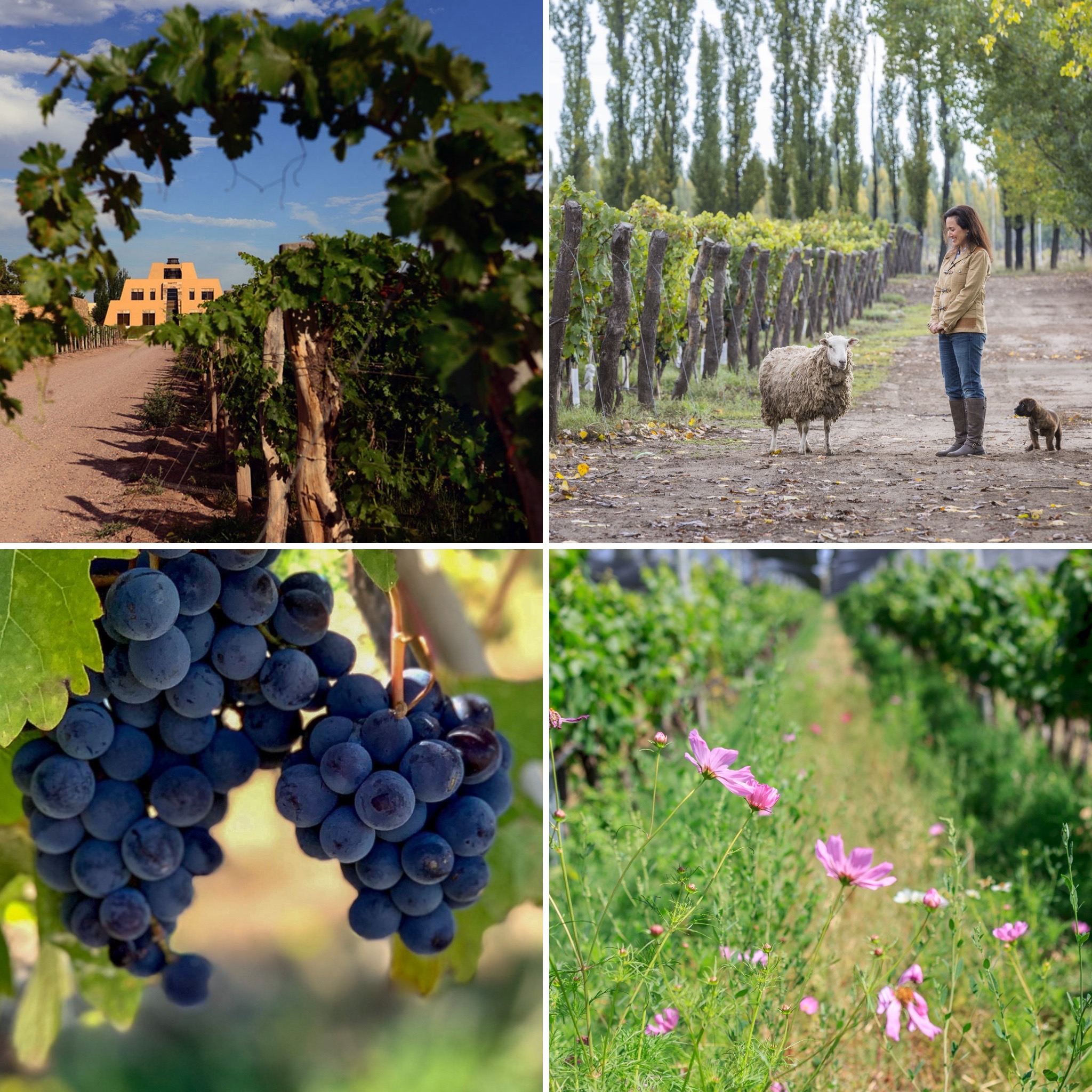
Catena Zapata in Mendoza, with the Andes Mountains in the background.
It Started with a Lighter Bottle
For decades, weight in wine packaging was equated with luxury, glass with tradition, and excess with prestige. Today, that logic is increasingly untenable. Change is no longer optional.
Founded in 1902 by Nicola Catena and now led by fourth-generation sisters Laura and Adrianna Catena, Catena Zapata is known not only for its high-altitude Malbecs, but also for reshaping sustainability standards in Argentina. The winery was the first in the country to achieve certification under the ‘Bodegas de Argentina Sustainability Code’, guided by its own sustainability framework: CATENAMICS.
Laura Catena of Catena Zapata.
As Molinari explains, CATENAMICS reflects the dynamic relationship between plants, soils, ecosystems, and people. The name combines “Catena”—meaning chain or connection in Italian—with “amics,” derived from Greek, referring to management.
One of the most tangible outcomes of this philosophy was a decision that may sound simple, yet proved transformative: reducing bottle weight.
Packaging can account for up to 60% of a wine’s total environmental footprint—outpacing vineyard emissions, energy use, and transport. Traditionally, premium bottles weigh between 700 and 1,200 grams. Catena Zapata redesigned its bottles to weigh under 510 grams, a process that took years of development. Today, 97% of their wines are bottled in this lighter glass.
This change alone saves over 1,200 metric tons of glass annually and reduces CO₂ emissions by approximately 21% per bottle before export. Still, the transition has not been without resistance. As Molinari notes, consumers often continue to associate quality with heavier bottles. Education—particularly through digital channels—remains essential. As with the slow acceptance of screw caps, lighter bottles may represent the next evolution in wine packaging.
Beyond the Bottle
Packaging sustainability extends well beyond glass.
Corks are often overlooked, yet natural cork is carbon negative, supports biodiversity, and biodegrades naturally. Catena Zapata continues to use sustainably harvested natural cork, recognising its environmental advantages when responsibly sourced.
Capsules, historically functional, are now largely decorative. Often made from PVC or composite materials, they are difficult to recycle. Catena is phasing them out entirely, removing unnecessary waste.
Labels also matter. Plastic coatings, metallic inks, and permanent adhesives hinder recycling. Catena uses FSC-certified recycled paper, avoids coatings, and prioritizes easy removal. The winery has also explored alternative materials, including grape waste and cotton fibers.
Sustainability Beyond Packaging
Social and economic sustainability present equally complex challenges. A major issue is the shortage of skilled professionals able to guide long-term sustainability strategies. For Catena Zapata, sustainability is not a box-ticking exercise but a shared framework for industry-wide progress.
In 2010, the winery made its internal sustainability code public, contributing to the creation of the ‘Bodegas de Argentina Sustainability Code’. In a region historically characterized by limited regulation and transparency, this was a decisive step. Catena became the first winery in Argentina to certify under the code, paving the way for others. Today, it forms the backbone of national sustainability standards.
Catena Zapata.
To support practical implementation, Catena partnered with LSQA to develop a carbon calculator tailored to the wine industry. Now used widely across Argentina, the tool enables wineries to measure emissions and identify reduction strategies.
Scientific research underpins these efforts. Through the Catena Institute of Wine, the winery has contributed to more than 30 peer-reviewed studies and collaborates with institutions such as UC Davis and the University of Burgundy, addressing viticulture in a warming climate.
Equally significant is what Catena chooses not to cultivate. Approximately 39% of its land remains untouched, preserving native ecosystems and biodiversity. These natural corridors function as carbon sinks, protect soils, and support pollinators—reminding us that sustainability is not always measured in yields.
Biodiversity in Catena Zapata’s Vineyards.
Social responsibility completes the picture. Catena invests in housing and education for vineyard workers and their families, recognizing that environmental sustainability cannot exist without social equity.
The Wine Industry’s Environmental Footprint
Despite wine’s agricultural roots, its environmental impact is measurable. On average, one bottle of wine generates around 1.28 kg of CO₂. The main contributors are:
Glass bottles: up to 60%
Vineyard practices: ~20%
Packaging (corks, capsules, labels): 5–8%
Transportation: 10–15%
Winery operations: variable, especially in warmer regions
These figures underline a simple truth: if wine is to thrive in a changing climate, sustainability must be addressed across the entire value chain. Frost in Burgundy, drought in Napa, fires in Australia, and hail in Mendoza are no longer isolated incidents. While progress is underway, adoption remains uneven—particularly for smaller producers with limited resources.
Conclusion
Catena Zapata demonstrates that meaningful sustainability in wine requires long-term vision, scientific grounding, and a willingness to challenge entrenched norms—from heavy bottles to opaque industry practices. While the winery remains an exception rather than the rule, its approach offers a tangible blueprint for change. As consumers, professionals, and producers, the responsibility is shared: understanding the impact of what is in our glass is the first step toward reshaping the future of wine.
This article is written by our own Judi Veldwijk. With thanks to Mariela Molinari and the team at Catena Zapata for sharing their insights and commitment to a more sustainable wine industry. Picture credits: Catena Zapata.
Join our insiders’ list and get exclusive early access to new articles, expert tips, and fresh reviews delivered straight to your inbox. Subscribe now and be the first to discover!