Join Our Wine Journey – Sign Up for the Newsletter 🍷
South Africa’s Cape Beyond the Glass
Share
Deel op X (twitter)
LinkedIn
WhatsApp
South Africa’s Cape Beyond the Glass.
How Creation and La Colombe rethink the order of wine and food.
In the classical canon of fine dining, the hierarchy is clear. The kitchen leads; wine follows. Dishes are conceived first, their weight, texture and flavour profile carefully calibrated. Only then is a wine selected to support, frame or counterbalance what is already on the plate. Acidity cuts through fat, tannin binds to protein, sweetness offsets spice. The logic is technical, repeatable, and grounded in centuries of European gastronomic practice.
This model is neither outdated nor naïve. It works – and it has shaped some of the world’s most refined culinary cultures. It also formed the foundation on which South African fine dining developed. Many of the Cape’s leading chefs and sommeliers trained in Europe or under strong European influence, absorbing the same principles of hierarchy, balance and correctness. The classical order – food first, wine in service – remains deeply embedded in how quality is defined.
Yet for all its strengths, this framework also fixes wine in a reactive role. Meaning is derived from how well it fits an existing composition, not from what it contributes independently. Wine behaves correctly, but it rarely directs. Within this structure, wine is an instrument rather than a voice.
What is becoming increasingly visible in South Africa today is not a rejection of that classical logic, but a rebalancing of it. A shift in which wine, under certain conditions, is allowed to move from accompaniment to point of departure – not as provocation, but as a recalibration of agency within gastronomy.
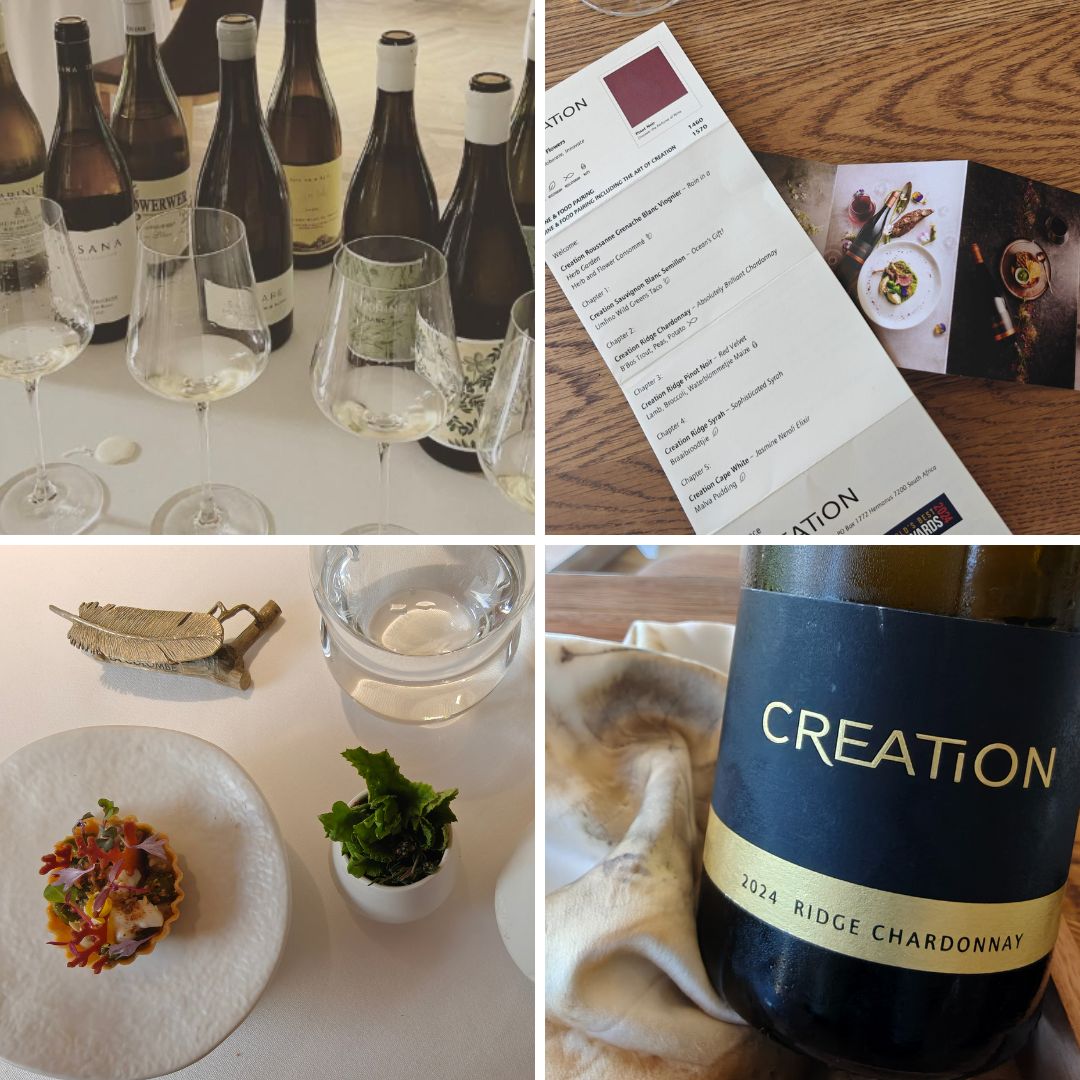
During a recent journey through the Cape for Dutch Wine Apprentice, our own Onno Deumer explored this shift firsthand – not only at the table, but in conversation. Onno visited both Restaurant La Colombe and Creation Wines, speaking extensively with Michelle Erasmus, Head Sommelier at La Colombe, and Jean-Claude Martin, co-founder and winemaker at Creation, about how wine functions within their respective contexts: how decisions are made, where ideals meet constraint, and why wine is increasingly asked not just to support flavour, but to shape experience.
At Creation, wine is never served alone. Each pairing is carefully constructed to highlight what the wine expresses – not to echo flavour, but to extend experience.
From those conversations, and from the practices observed on the ground, a broader pattern emerges – one that speaks not only to pairing philosophy, but to how South Africa is redefining the role of wine within gastronomy itself.
Why the Hierarchy Begins to Shift in South Africa
What has become increasingly visible in South Africa is not a rejection of this classical logic, but a subtle renegotiation of it. The shift is not driven by disruption or rebellion, but by context. South African gastronomy operates within a different set of conditions: more space, fewer rigid hierarchies, and a culture of hospitality that is expansive rather than formal.
Wine, too, occupies a distinctive position. South African wines are deeply informed by Old World reference points, yet unbound by institutional tradition. They are confident without being codified, ambitious without being doctrinaire. Within this environment, the classical hierarchy can be questioned without being dismantled.
As a result, wine is no longer always positioned solely as a response to food. In certain settings, it becomes an organising reference – shaping pacing, attention and interpretation. Wine-first here is not a gimmick or stylistic flourish. It is a recalibration of roles within a fundamentally classical structure.
That emphasis on intentional structure – where outcomes are shaped by premeditated decisions rather than spontaneity alone – is examined in more depth in our article The Cape’s Dual Grammar of Winemaking, which looks at how producers like Jordan and Avondale engineer classical results through modern systems thinking.
Two very different places illuminate this shift from opposite ends of the spectrum: La Colombe in Constantia and Creation in the Hemel-en-Aarde Ridge.
La Colombe – Precision as Innovation
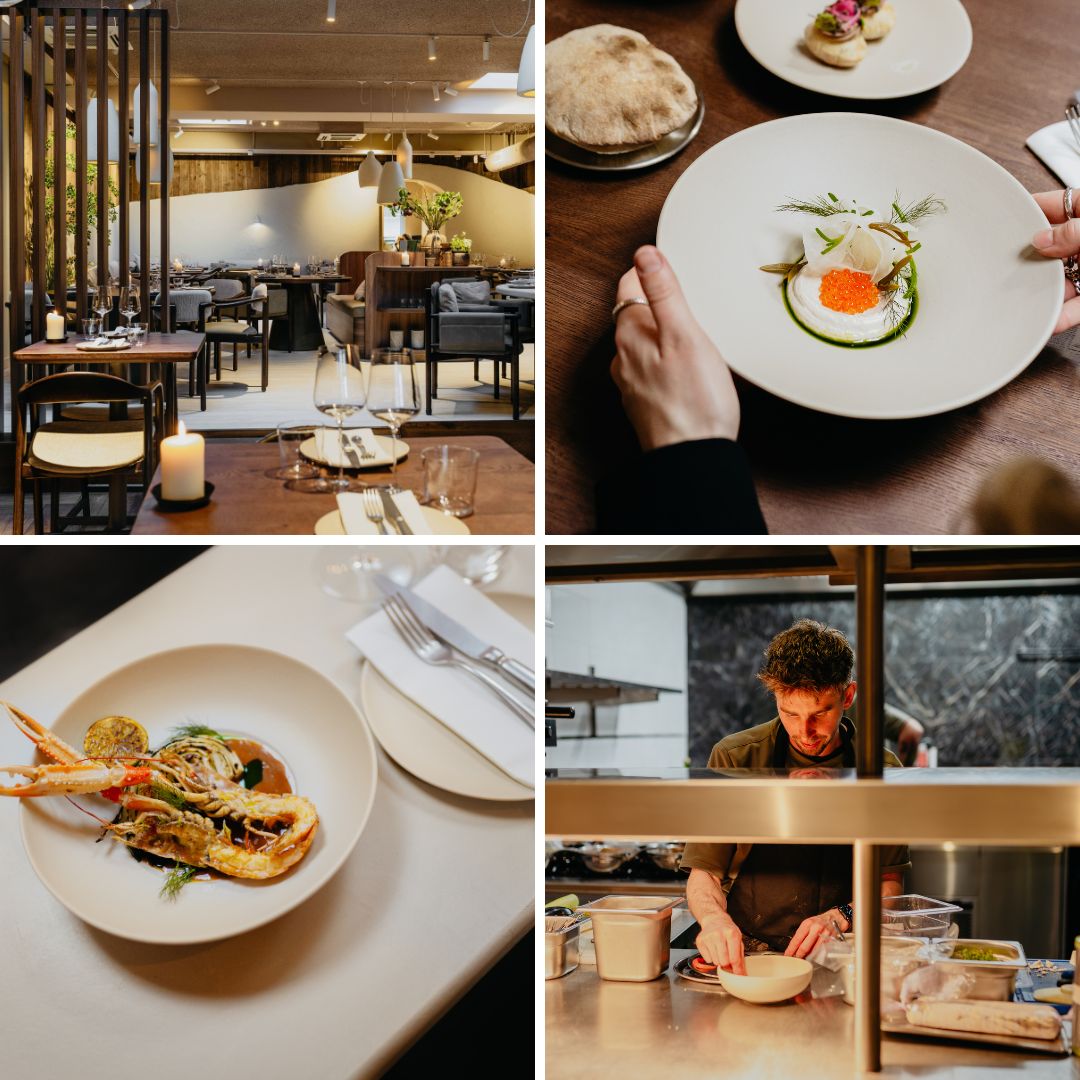
La Colombe occupies a singular position in South African gastronomy. Located on the slopes of Constantia, with a lineage that stretches back to the formative years of the country’s fine-dining scene, it has long functioned as a reference point – not just for culinary ambition, but for how South African restaurants engage with international standards. That status brings with it a particular kind of pressure: volume, consistency, and the expectation that innovation must withstand repetition.
At La Colombe, visual and culinary precision reflect a broader ethos: the same care that shapes each dish is mirrored in the selection and service of wine – not as an afterthought, but as an equal expression of intent.
In this context, the growing prominence of wine within the La Colombe experience is neither decorative nor experimental. It is structural.
Eikendal Infused by Death Chardonnay 2016 – Ripe yet composed. Baked apple, warm spice and a hint of caramel open the wine, followed by layered creaminess shaped by age rather than oak weight. Clove and toasted notes add depth without sweetness, while a persistent freshness keeps the palate mobile and precise. Generous in texture, but held firmly in line – a mature Chardonnay that leads through balance, not force.
DWA Score: 96/100
The restaurant’s now well-known cellar moment – where a wine is poured before any dish appears – is often described as radical. In practice, it is better understood as an act of confidence. Removing food from the equation, even briefly, places extraordinary weight on the wine. Aromatic clarity, textural coherence and compositional balance are no longer supported by the plate; they must stand alone. Only wines with sufficient internal architecture can function in this role.
What follows is equally telling. The kitchen does not “pair” in the classical sense; it responds. Texture, temperature and seasoning are adjusted to echo or sharpen what the wine already expresses. This is not improvisation, but highly controlled interpretation. The classical grammar of pairing remains intact – acidity, weight, contrast – yet the direction of authorship has shifted.
This shift did not emerge in isolation. Over recent years, wine has steadily moved from the periphery to the centre of La Colombe’s identity. The sommelier team expanded from two to seven, reflecting not only increased ambition but increased responsibility. Wine service here is no longer about recommendation; it is about narrative continuity across an entire meal.
Hartenberg The Stork 2016 – Dark plum and cassis lead, edged with cedar, spice and a herbal undertone. The palate is full but controlled, carried by finely polished tannins that give shape without weight. Richness and lift stay in balance, with every element settling into place. Served from a 12-litre bottle, the scale adds theatre – but the wine itself is firmly at its peak: confident, composed, and complete.
DWA-Score: 96/100
Story and Scale Converge: Serving The Stork from 12 litres turns wine into experience, without compromising precision.
That continuity is articulated through three distinct wine menus. Boutique focuses on fragility and discovery: smaller producers, often younger wines, where individuality outweighs polish. Heritage anchors the experience in established South African benchmarks – wines that speak clearly to lineage, place and continuity. Iconic operates under different constraints altogether: wines capable of repetition, longevity and absolute consistency, often drawn from library stock or historically significant producers. Together, these menus map the terrain of South African wine not as a hierarchy of quality, but as a spectrum of intent. Wine is no longer simply selected to “work” with food. It is positioned to explain where South African wine has come from, where it is now, and what it is capable of becoming.
Creation – Innovation through Expansion
If La Colombe represents innovation through reduction and control, Creation embodies innovation through expansion – of time, context and sensory engagement.
Creation’s origins are deliberately unpolished. Carolyn Martin comes from the Finlayson wine family, long rooted in the Hemel-en-Aarde Valley, while Jean-Claude Martin arrived in South Africa from Switzerland on internship and chose to stay. Their paths converged not around a grand concept, but around circumstance. When they acquired the property – then a neglected sheep farm – it stood far removed from the polished tasting rooms that increasingly define global wine tourism. What followed was not the execution of a blueprint, but the gradual construction of a place shaped by conviction rather than design.
That same dynamic – where classical European reference points are not copied but reinterpreted through Cape context – is explored more broadly in our article South Africa’s Cape as a Mirror of Europe, which examines how South African producers engage with Old World models without being confined by them.
From the outset, their relationship with wine was grounded in consumption rather than evaluation. Wine was always served with food – at first nothing more elaborate than a cheese board or a bowl of soup. This was not an aesthetic choice, but a philosophical one. Wine, Martin has repeatedly argued, does not reveal itself when stripped of context. Analytical tasting may teach structure, but it obscures purpose.
Creation Art of Chardonnay 2023 – From a single site of mature vines, this Chardonnay leans on line and clarity rather than breadth. Lemon zest and green pear set the tone, with subtle blossom and a cool mineral edge. The palate is tight and focused, driven by clean acidity and restrained lees texture. A long, stony finish underlines the site’s precision and intensity.
DWA Score: 95/100
This conviction placed Creation at odds with the dominant tasting-room logic: short visits, rapid flights, wines assessed and forgotten. Creation rejected that compression. Tastings became meals; meals became extended encounters. Time was not a variable to be optimised, but a condition to be protected. As the estate evolved, this philosophy expanded into a multi-sensory framework. Touch, sound and association were introduced not as spectacle, but as preparatory tools. A piece of satin placed on the table invites attention to texture before the wine arrives. A seashell held to the ear evokes maritime salinity, spatial distance and memory. These gestures recalibrate perception, slowing the guest down and sharpening focus.
At Creation, wine is introduced alongside silk – not for spectacle, but to attune the senses. Texture becomes mindset, framing the wine before a drop is poured.
Crucially, flavour remains central. Wines are still judged by balance, tension and length. The additional sensory elements do not replace taste; they frame it. Innovation here is not about distraction, but about receptivity. Wine is encountered not cold, but primed.
Creation Emma’s Pinot Noir 2023 – A high-altitude, single-plot Pinot shaped by structure rather than fruit. Fifty percent whole bunch brings dried herbs, anise and gentle earthy grip, with tannins that frame without tightening. Acidity is unusually moderate for Hemel-en-Aarde, giving breadth and calm. The finish is long and savoury, defined by composure rather than sweetness.
DWA-Score: 95/100
Where La Colombe compresses meaning into moments, Creation allows it to accumulate. Both, however, resist the same trend: the reduction of wine to a sequence of impressions rather than an integrated experience.
One Question, Two Answers
Placed side by side, La Colombe and Creation appear to inhabit different worlds. One distils meaning under extreme constraint; the other expands it through time and sensory layering. One pares back; the other builds outward.
Yet both are responding to the same friction in contemporary wine culture. As encounters with wine globally become faster, more comparative and more transactional, both push back against compression. Their shared belief is that wine reveals itself only when granted space – whether that space is silence or context, restraint or ritual.
This is where the classical-versus-innovative tension becomes productive rather than oppositional. Classical structure provides credibility and coherence. Innovation questions hierarchy and pacing. Wine is no longer valued only for how accurately it responds to food, but for how clearly it can set direction when allowed to do so.
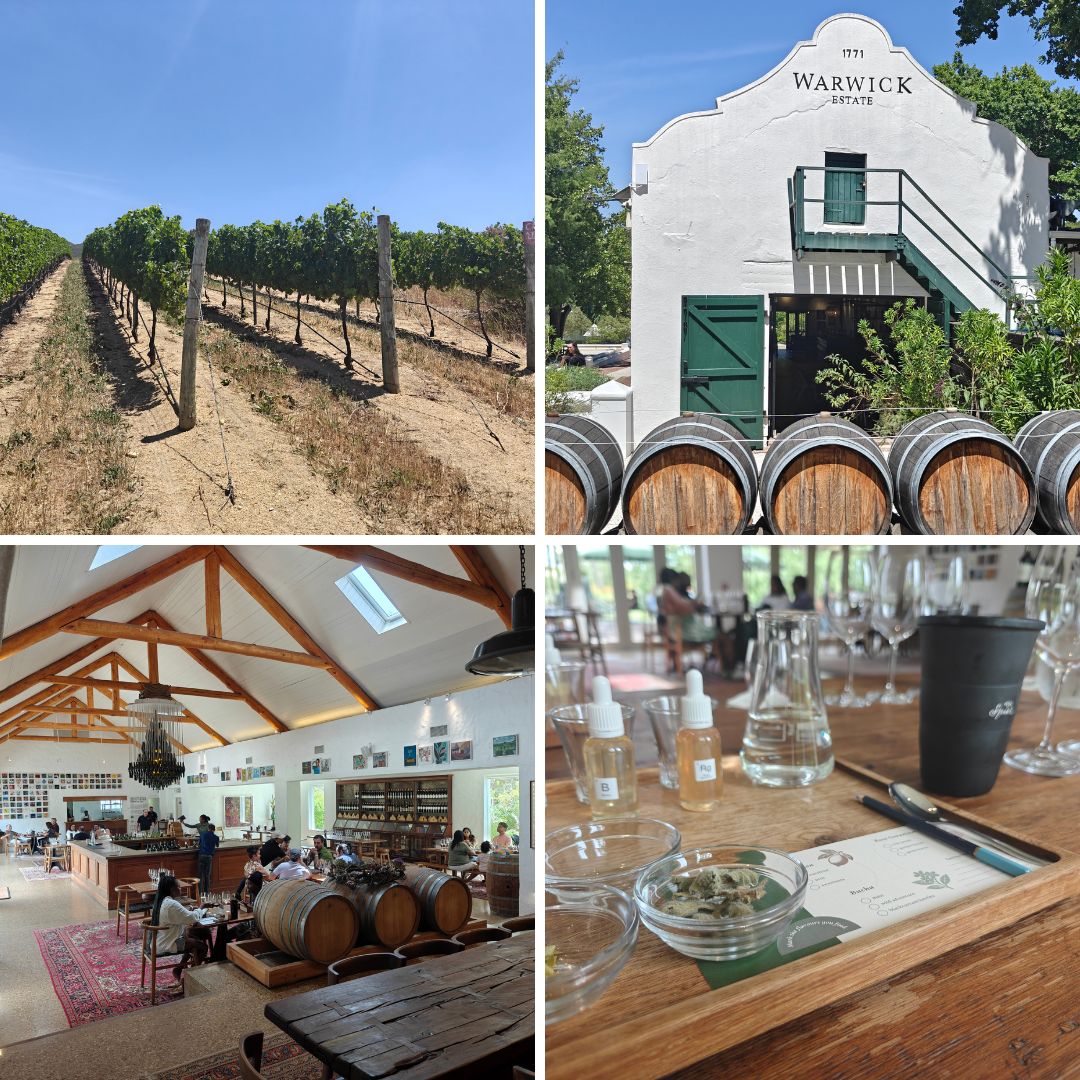
How that same tension between heritage and renewal plays out beyond the table – in brand language, portfolio structure and audience engagement – is explored in our article South Africa’s Cape as a Brand in Motion, which focuses on estates such as Warwick and Spier.
Michelle Erasmus – Between Belief and Reality
Michelle Erasmus operates precisely at the intersection where these ideas encounter reality. She does not describe herself primarily as a restaurant sommelier. Instead, she frames her role as an extension of the wine world into hospitality – a translator between producers and the dining room. That distinction shapes her daily practice. Service days often begin around 10:30 in the morning, meeting with winemakers before lunch preparation begins. These conversations are not transactional. They are about understanding intent, limitations and context.
Under her leadership, wine at La Colombe has undergone a clear evolution. What began as a single pairing supported by a small team has expanded into a complex structure of seven sommeliers and three wine menus, each serving a different narrative function. This growth reflects not ambition alone, but an acknowledgement that wine requires structure if it is to lead meaningfully.
That structure also includes the freedom to build a cellar beyond immediate service needs – to curate a library of older vintages and singular wines that anchor La Colombe’s wine identity over time. Yet even here, freedom is conditional: long-term cellaring, however intellectually compelling, must ultimately justify itself within the economics of the restaurant. Wine vision, at this level, is inseparable from return on investment.
Structure inevitably brings constraint. Volume is a constant consideration. Wines that shine in isolation may simply be impossible to deploy at scale. For a wine to appear in a pairing, two hundred bottles is often a minimum threshold. Consistency matters – not as an abstract quality ideal, but as a lived necessity across weeks of service. A wine may be technically flawless, but if it cannot perform reliably under repetition, it cannot lead.
Decanted in a handblown carafe shaped directly onto a carved map of Stellenbosch’s mountain ranges, this wine is served not just with care, but with narrative precision.
There is a second filter as well. Technical quality alone is not enough. For Erasmus, a wine must also carry a story – not marketing gloss, but narrative substance: where it comes from, why it exists, and what it represents. A wine with a compelling story but insufficient quality cannot be sustained; a wine with quality but no story cannot be communicated. Only when both align does a wine become usable in a context like La Colombe.
This creates a persistent tension between belief and responsibility. Erasmus is deeply committed to small, character-driven producers, yet she cannot build a programme on ideals alone. Selection becomes filtration. Advocacy must coexist with logistics, economics and narrative clarity.
Her reflections therefore carry particular weight. When wine is allowed to lead at La Colombe, it is not because it is conceptually interesting, but because it can withstand pressure – structurally, logistically and narratively. Wine-first is not a gesture of freedom; it is a test of resilience.
Classical and Innovative, Redefined
Within this framework, the opposition between classic and innovative begins to dissolve. Classical does not mean conservative. Innovative does not mean arbitrary. Classical thinking provides structure and repeatability; innovation repositions agency.
Wine-first, in this sense, is not a stylistic statement. It is a recalibration of roles within a classical system.
What this Says About the Cape
Taken together, La Colombe, Creation and the work of Michelle Erasmus reveal a deeper shift within South African wine culture – one that transcends technique.
This is not a story about abandoning classical pairing. On the contrary, everything described here depends on classical structure. Balance, acidity, texture and harmony remain non-negotiable. What has changed is hierarchy.
Wine is no longer confined to a reactive role. In certain moments, and under specific conditions, it is granted agency. It proposes rather than responds. It frames rather than follows.
Top Cape Chenins tasted at La Colombe: a selection that balances freedom with precision. Here, Chenin serves as a lens – revealing the Cape’s diversity, detail and direction.
This redefinition feels particularly natural in South Africa because hospitality functions here as infrastructure, not ornament. Estates host, cook, explain and engage as an extension of wine itself. Access is comparatively open; formality is lighter; conversation is central. These conditions allow wine to carry narrative weight without needing to perform.
What emerges is not innovation for its own sake, but recalibration. Classical frameworks are not rejected; they are redeployed. Innovation does not dismantle tradition; it asks where authority resides. In the Cape today, wine increasingly speaks not because it is louder, but because it is trusted. Trusted to stand alone in silence. Trusted to unfold over time. Trusted to carry meaning beyond technical correctness.
That confidence marks a maturing wine culture – one no longer defined by comparison to Europe, but by articulation alongside it. Wine, here, is not asking whether it belongs at the table. It is quietly redefining what the table is for.
The Cape Reframed
This reflection is part of a four-part series examining the evolving identity of South African wine through the tension between tradition and innovation. Across the series, we explore how the Cape positions itself in relation to Europe in South Africa’s Cape as a Mirror of Europe, how contrasting production philosophies shape outcomes in The Cape’s Dual Grammar of Winemaking, how estates articulate identity and audience in South Africa’s Cape as a Brand in Motion, and how wine redefines its role within gastronomy in South Africa’s Cape Beyond the Glass. Together, these perspectives outline a wine culture not in departure from its foundations, but in the active repositioning of them.
This article is written by our own Onno Deumer. With sincere thanks to Michelle Erasmus of Restaurant La Colombe for her openness, precision and willingness to reflect candidly on the evolving role of wine within fine dining. Our gratitude also goes to Jean-Claude Martin of Creation Wines for sharing both the philosophy and practice behind an approach that places wine firmly within lived experience rather than abstraction. Finally, we thank our partner and Dutch importer Vinites for their support and for facilitating access to Creation’s wines, helping make these conversations – and this exploration – possible.
Join our insiders’ list and get exclusive early access to new articles, expert tips, and fresh reviews delivered straight to your inbox. Subscribe now and be the first to discover!