Join Our Wine Journey – Sign Up for the Newsletter 🍷
Serralunga d’Alba, One Village, Four Archetypes
Share
Deel op X (twitter)
LinkedIn
WhatsApp
Serralunga d’Alba, One Village, Four Archetypes.
Serralunga d’Alba has long been one of the most recognisable names within Barolo. Perched on its limestone-rich slopes, the village is famed for wines of power, structure, and longevity — Barolo at its most formidable. To many, Serralunga d’Alba represents a single, unified idea: the archetype of strength in Nebbiolo.
But such a view only scratches the surface. Behind the imposing image lies a remarkable diversity of voices and approaches. For every vineyard parcel and bottle, there is a winemaker whose choices, convictions, and personality shape how Serralunga d’Alba is expressed in the glass. What appears monolithic from afar is, up close, a chorus of contrasting styles and philosophies.
Four producers illustrate this mosaic. Domenico Clerico, once a leading Barolo Boy, carried modernism into the heart of Serralunga d’Alba. Palladino embodies the role of custodian, safeguarding tradition and family heritage. Ferdinando Principiano is the idealist, aligning wine with nature’s rhythm. And Ettore Germano serves as architect, bringing precision and breadth to both Barolo and beyond.
Reporting on behalf of Dutch Wine Apprentice, Onno Deumer visited these estates to explore how, together, they reveal the living soul of Serralunga d’Alba — not singular, but plural, not fixed, but evolving.
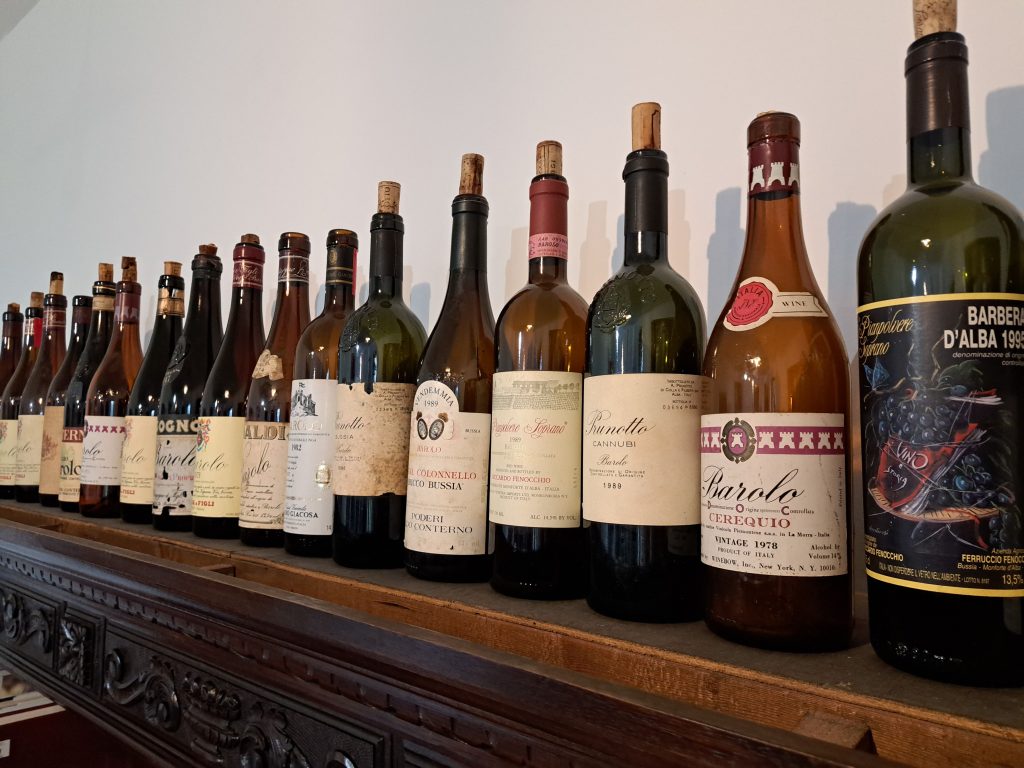
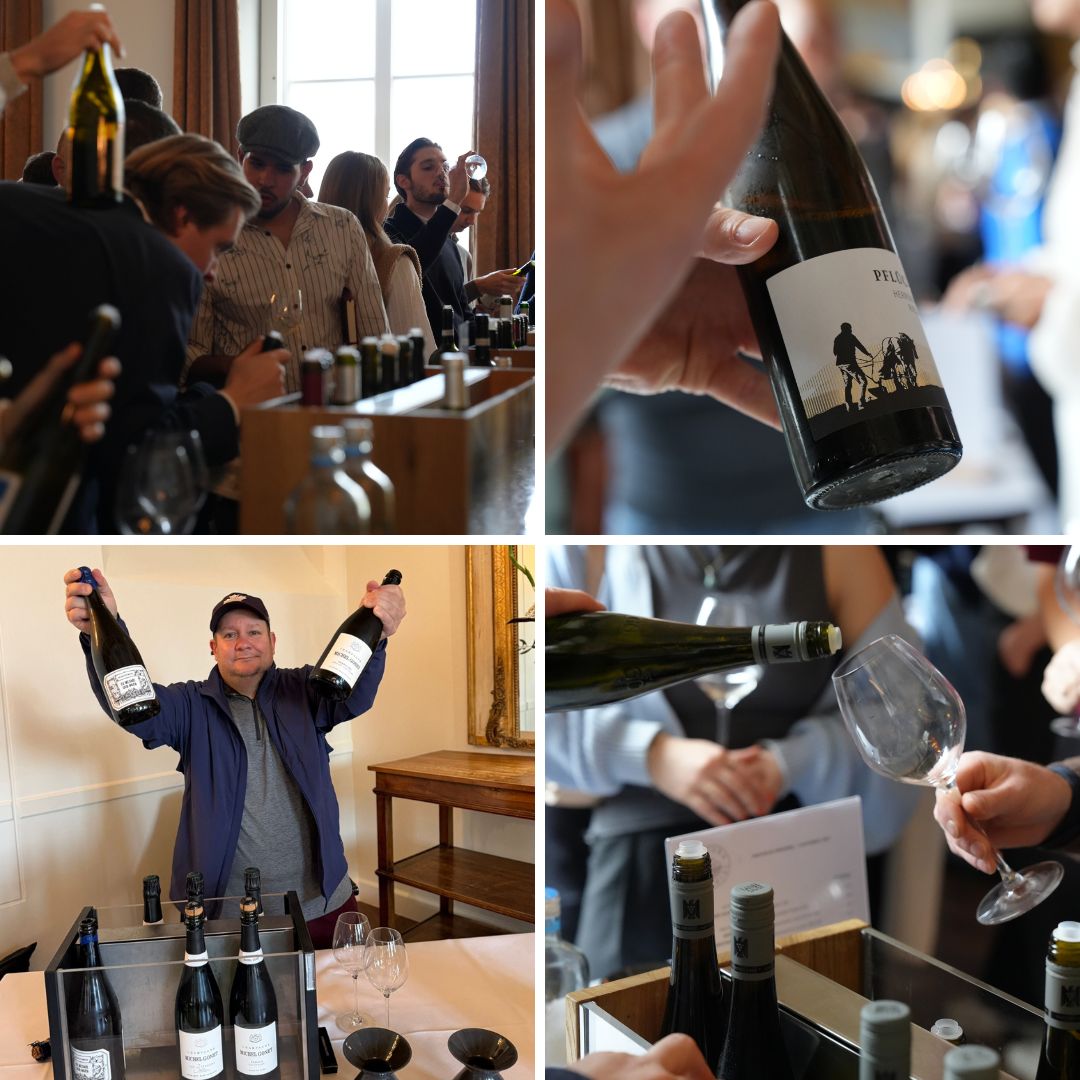
A mosaic of Barolo’s past: each bottle a voice, together reflecting the diversity that also shapes Serralunga d’Alba.
The Modernist – Domenico Clerico
Few names carry the same resonance in Serralunga d’Alba as Domenico Clerico. A leading figure among the so-called Barolo Boysof the 1980s and 1990s, Clerico embodied the modernist wave that reshaped Barolo’s reputation. At a time when the region was still bound by long fermentations and ageing in large Slavonian oak, he chose a different path: shorter macerations, new French barriques, and a bolder, more international sensibility. His wines were powerful and polished, often darker in style than those of his peers. For admirers, they symbolised progress and ambition; for critics, they challenged the essence of Nebbiolo. Either way, Clerico became a cult figure — one of the names that made Serralunga d’Alba synonymous with intensity and precision.
The estate itself reflects this dual identity. Based just outside the village, it has grown from Domenico’s modest beginnings in Dolcetto into one of Serralunga d’Alba’s most recognised names. The vineyards are an impressive patchwork: plots in Ginestra, Mosconi, Pajana, and Bussia anchor the range, while Aeroplanservaj — a fancifully named single-vineyard wine — speaks to Domenico’s rebellious streak. Even in the cellar, the architectural lines are modern, a deliberate contrast with the region’s historic caves. Everything conveys a sense of forward momentum.
Since Domenico’s passing in 2017, the estate has been carried forward by his nephew, Orlando, who made his first Barolo at just seventeen. Raised largely by his uncle while his parents worked long hours in hospitality, Orlando inherited not only vineyards and a name, but also a vision. Still in his twenties, he brings remarkable composure and knowledge, yet also feels the weight of expectation. Meeting him, one senses the tension between youthful enthusiasm and the responsibility of legacy. He honours Domenico’s ambition while allowing a new voice to emerge.
Two cuvées capture this dynamic particularly well:
Percristina 2015 – Ten years in the cellar have sculpted this wine into something remarkable. Aromas rise with precision: roses, dried leather, a touch of tar, then restrained red fruit. On the palate it shows depth and poise, tannins polished to silk yet still offering a subtle hold. The high alcohol feels invisible, absorbed by structure and balance. Texture is almost weightless, delivering refinement rather than force. The finish stretches far beyond expectation. A benchmark of patience and craft.
DWA-Score: 95/100
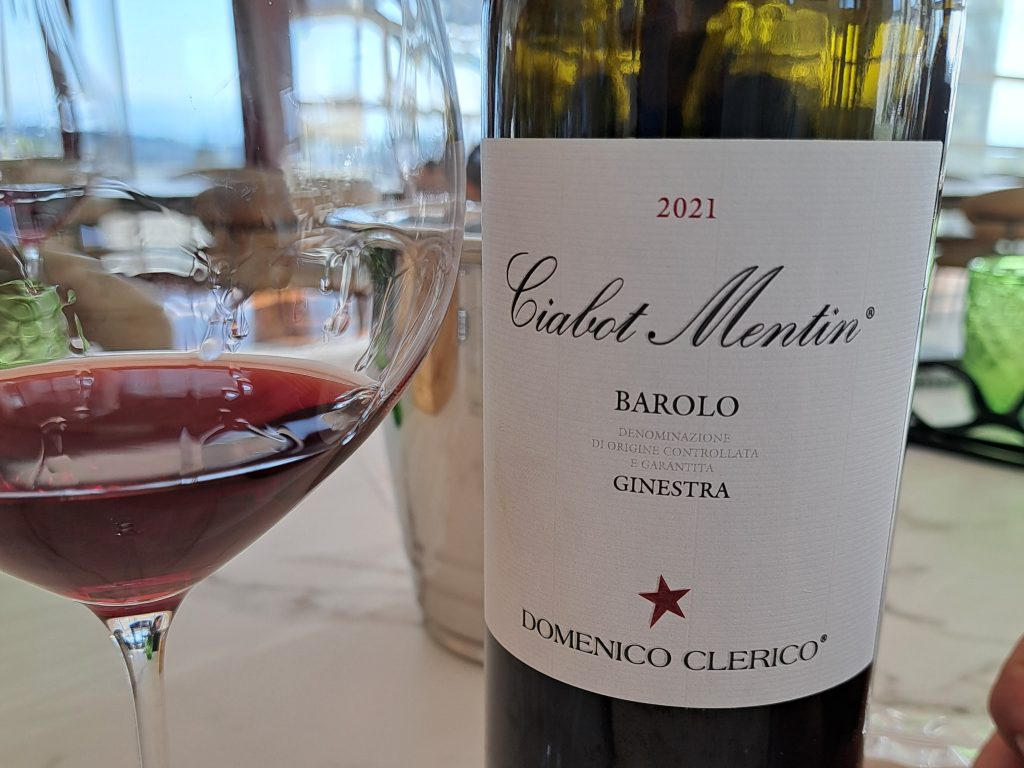
Ciabot Mentin 2021 – From the high parcel of Ginestra at 420 meters, this single-vineyard expression shows its pedigree in every layer. The nose is restrained yet precise, with dark cherry and herbal tones leading toward a balsamic and saline core. On the palate, remarkable softness: tannins polished, texture velvety, acidity finely etched by altitude. It feels both classic and fresh, deeply rooted in tradition yet lifted by elegance. A wine that resonates with structure and nuance, promising great evolution.
DWA-Score: 94/100
Ciabot Mentin 2021: Domenico Clerico’s enduring dialogue with the Ginestra hillside.
Together, they show how Clerico’s modernist spirit continues to echo in the glass, even as a new generation reshapes the sound. In Clerico’s story, Serralunga d’Alba is not a village frozen in tradition but a place where innovation left its mark — and continues to evolve in younger hands.
Clerico’s modernist spirit helped redefine perceptions of Serralunga d’Alba as a commune of unyielding tradition — a dynamic we explore further in Serralunga Day: Exploring Barolo’s Identity.
The Custodian – Palladino
At the heart of Serralunga d’Alba, in one of the village’s oldest stone buildings, lies the family estate of Palladino. Founded in 1974, it has grown into a quiet but steady presence — an address where heritage and continuity take precedence over fashion or reinvention. Their philosophy is simple yet powerful: to guard the essence of Barolo and pass it on, intact, to future generations.
This custodial spirit is reflected in every stage of their work. The vineyards are cultivated with care and harvested by hand; fermentations proceed slowly, guided by time rather than technology; and the wines mature in large oak casks that shape them gently while letting Nebbiolo’s voice shine. The approach is not about resisting change, but about ensuring that Barolo remains recognisable in its authenticity. In Palladino’s hands, tradition is a compass — not an anchor.
A visit to the estate makes this philosophy tangible. Conversations unfold at the family’s kitchen table, where humility and pride coexist in equal measure. The cellar, with its winding passages and cool stone walls, feels less like a stage set and more like a working heart of the house. There is no pretence here: the family’s focus is on the wine itself, not the trappings around it. As they explain, “We don’t want people to buy wine just as a souvenir.” Each bottle must earn its place on its own merit, carrying Serralunga d’Alba’s character honestly and without disguise.
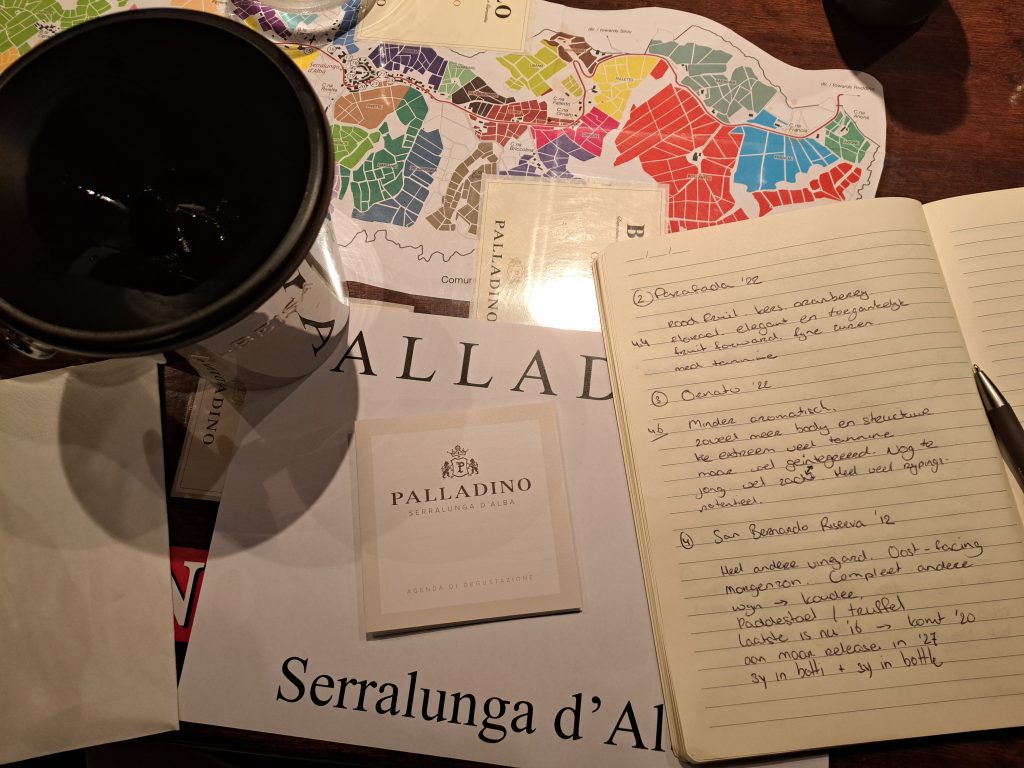
Notes, maps, and glasses at Palladino — a family estate where Serralunga d’Alba’s legacy is carefully charted.
The style of their wines reflects this ethos: structured yet approachable, combining depth with clarity. They carry the hallmark of Serralunga d’Alba’s limestone soils while remaining unforced, designed not for spectacle but for endurance.
Two cuvées anchor their story:
San Bernardo Riserva 2012 – An east-facing vineyard with morning light gives a cooler profile, produced only in strong vintages before three years in botti and three more in bottle. The style is now deeply tertiary: mushroom, truffle, wet soil and balsamic depth, framed by tar and a saline note. Structure remains dense yet softened, powerful but never harsh. Fruit has slipped away, replaced by layered earthy nuance and a sense of patience. A wine that speaks less of charm and more of endurance.
DWA-Score: 96/100
Ornato 2022 – Direct comparison with Parafada ’22 highlights the role of soil. Ornato’s south-facing slope, devoid of sand, delivers a denser, more muscular expression with darker fruit tones and pronounced structure. Aromatic finesse is subtler here, but the sheer depth of texture compensates. Tannins are abundant yet finely woven, already showing remarkable integration for such a young release. This is a wine built for the long arc: youthful now, somewhat austere, but to evolve into something profound.DWA-Score: 94/100
In Palladino’s hands, Serralunga d’Alba is not reinvented or rebranded, but safeguarded. Their wines remind us that strength lies not only in innovation, but also in loyalty to heritage. In an era when Barolo increasingly draws global attention, Palladino stands as a quiet guardian, ensuring that the soul of the village endures.
The commune of Serralunga d’Alba is celebrated for Barolo of formidable structure and longevity. Within it, in a modest hamlet beyond the village centre, lies the estate of Ferdinando Principiano. Its setting may be unassuming, but the vision behind it is anything but ordinary.
From early on, Principiano charted a different path. Inspired by the biodynamic principles of Nicolas Joly, he abandoned chemical treatments and industrial shortcuts, choosing instead to let nature guide the work. His vineyards, many positioned along the outer edges of the commune, are living ecosystems: wildflowers and hedges border the rows, bees and insects thrive, and grasses return life to the soil. For Principiano, terroir is not simply geology and climate, but the totality of its surroundings. “A plant has a memory,” he explains. “Its roots communicate with what is around them.”
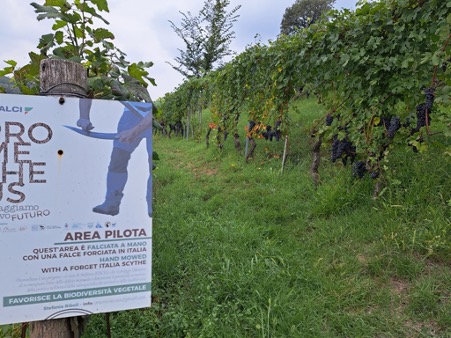
Principiano’s vineyards: hand-mowed rows where biodiversity thrives alongside Nebbiolo.
In the cellar, this philosophy translates into spontaneity and restraint. Fermentations proceed naturally, alcohol levels are kept moderate, and oak is used sparingly to frame rather than dominate the wines. There is no obligation to release every label each year; if nature does not provide the right conditions, a wine is not made. For Principiano, authenticity lies in accepting limits rather than forcing outcomes.
This has made him a distinctive voice within Barolo. In a commune long associated with intensity and longevity, Principiano’s wines are deliberately lighter, more fluid, and more approachable in youth. They prioritise drinkability without sacrificing depth, and often stand in contrast to the stereotype of Serralunga d’Alba as the source of Barolo’s most powerful expressions. Among sommeliers and wine lovers attuned to natural and artisanal wines, his name resonates as a pioneer of authenticity within one of Italy’s most tradition-bound regions.
His refusal to force outcomes and his acceptance of nature’s limits mirror the broader questions shaping the latest harvest, discussed in The 2022 Barolo Vintage Uncovered.
Two cuvées capture this philosophy:
Ravera di Monforte 2021 – Crafted with patience: spontaneous fermentation, nearly a month on skins, six months in steel, then two years in large cask. The result is quietly profound. Aromas lean earthy, with graphite, thyme and dried herbs dominating. Acidity is medium, adding freshness without breaking balance. There’s ripeness in the herbal register, steering away from greenness. Structure is firm yet not driven by overt tannins, more like a frame holding tension. A Barolo of restraint, measured and convincing.
DWA-Score: 92/100
Boscaretto 2020 – From limestone soils and handled with rare precision: whole bunch fermentation, spontaneous yeasts, and foot pressing to respect delicate berries. Released only when considered worthy – ’13, ’16, ’20 – this reflects patience and terroir. The nose shows red fruit, violets, faint licorice; the palate has polished tannins, a stony backbone, restrained yet persistent power. There’s clarity, a dialogue between site and craft, where freshness and grip merge into a wine that feels timeless and precise.
DWA-Score: 92/100
Through Principiano, Serralunga d’Alba’s chorus gains the voice of the idealist: proof that Nebbiolo can be both profound and poetic when guided by conviction.
The Architect – Ettore Germano
The estate of Ettore Germano, now led by Sergio Germano, is one of Serralunga d’Alba’s cornerstones. With deep family roots in the commune, the domaine has become a name that carries weight well beyond its own vineyards. Today it stands as both a producer of benchmark Barolo and a reference point for the region itself—an estate that others look to for assurance, stability, and direction.
What distinguishes Germano is not a single vineyard or wine, but the consistency and clarity of its approach. Prestigious parcels such as Vignarionda, Lazzarito, and Cerretta form part of its portfolio, yet the identity of the estate lies in the overall design. Each site is treated with precision, every decision carefully proportioned, and the results tied together by a unifying thread of balance. This is less about crafting statements and more about building coherence—an architectural vision that allows individual voices to coexist in harmony.
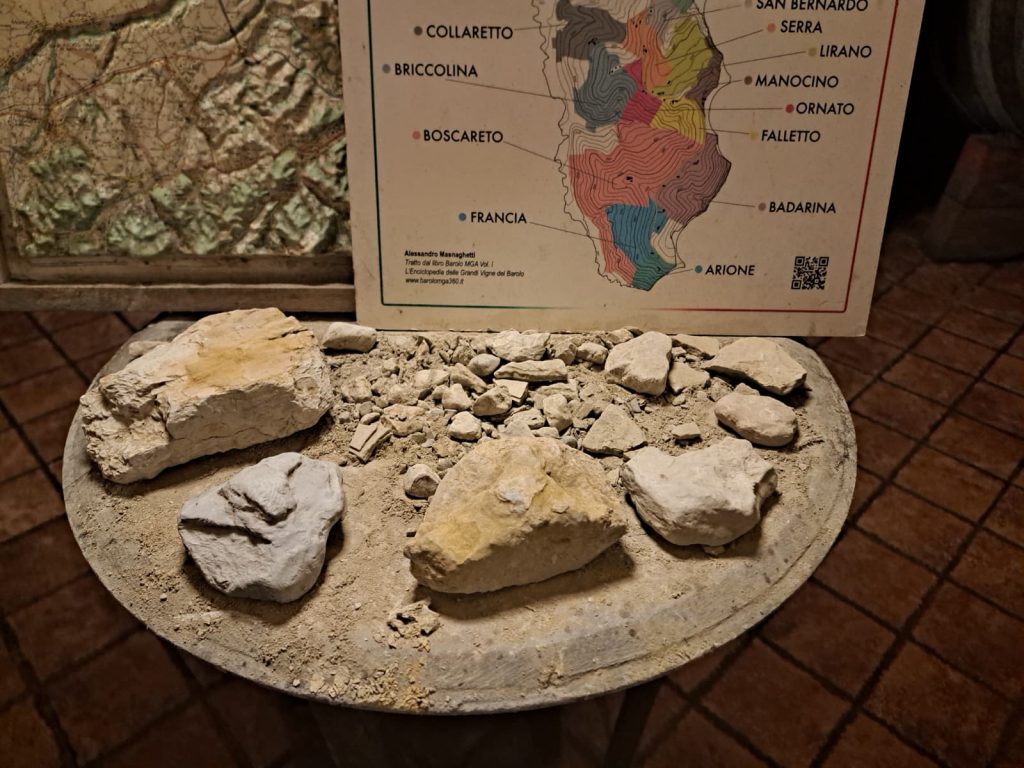
Soils under scrutiny at Ettore Germano — a reminder that great Barolo begins with geology.
Within the region, Sergio Germano’s reputation reinforces this role. He is seen as an authority, not through self-assertion but through quiet confidence and steadiness. There is a paternal quality to his presence: measured, thoughtful, and generous with his knowledge. When he speaks about Serralunga d’Alba, it is not only about his own wines but about the character of the commune as a whole. In this way, the domain embodies more than a personal legacy; it offers a framework within which Serralunga d’Alba continues to define itself.
The wines mirror this philosophy. They reflect the commune’s natural strength, but always with definition and composure. Structure is never heavy-handed, balance never in doubt. In a region where power is often celebrated, Germano shows that greatness also lies in discipline and proportion.
Two cuvées exemplify this architectural approach:
Vignarionda 2020 – A wine of scarce production, but immense presence. Even in this youthful stage, the layers are striking: primary fruit of red cherry and raspberry glide into balsamic tones, forest floor, leather and a subtle earthy depth. The structure is round yet defined, tannins finely woven, acidity lifting without dominating. What stands out besides the aromatic spectrum, is the seamless integration – balance, intensity, length, all in precise alignment. An articulate and refined reportrait of Serralunga d’Alba.
DWA-Score: 96/10.
Riserva Lazzarito 2014 – The choice of Lazzarito as the single Riserva reflects the cru’s ability to marry structure with intensity, hallmarks of its terroir. 2014 was never hailed as a great year, yet this wine shows remarkable poise, more convincing than the 2019: ripe red fruit framed by savory depth, tannins polished into a velvet texture, acidity keeping the line taut. There is density without heaviness, concentration without austerity. It offers a lesson in balance: how an off-vintage can still deliver refinement.
DWA-Score: 95/100
Through Germano, Serralunga d’Alba speaks with the voice of the architect: composed, measured, and assured. The estate reminds us that identity is not only shaped by innovation or tradition, but also by those who provide the structure in which both can endure.
A Polyphonic Commune
Four producers, four archetypes. Taken together, they reveal that Serralunga d’Alba is far from a singular idea. From the modernist ambition of Domenico Clerico, to the custodial heritage of Palladino, the idealistic conviction of Ferdinando Principiano, and the architectural assurance of Ettore Germano, the commune speaks through many voices. Each has its own rhythm, philosophy, and tone—yet all belong to the same chorus.
Serralunga d’Alba may be known for its imposing Barolo, wines of power and longevity. But beneath that reputation lies nuance and diversity, a mosaic shaped not only by vineyards and soils but by people. These winemakers remind us that the essence of the village cannot be captured by geography alone. It is carried in the hands that tend the vines, the choices made in the cellar, and the convictions that guide each estate.
To understand Serralunga d’Alba, one must listen to its voices. And in their harmony—and their contrast—the true soul of the commune emerges.
This article is part of a four-part series on Serralunga Day 2025. Read more:
With sincere thanks to the producers of Serralunga d’Alba for their generosity in sharing both their wines and their time. Special thanks to Domenico Clerico, where Orlando carries forward the vision of his late uncle with youthful determination; to Palladino, for welcoming us at the family table and safeguarding the village’s traditions; to Ferdinando Principiano, for showing us how respect for nature can shape both philosophy and wine; and to Ettore Germano, for offering perspective with the calm authority that anchors Serralunga d’Alba. Their openness and conviction made this portrait possible.
Join our insiders’ list and get exclusive early access to new articles, expert tips, and fresh reviews delivered straight to your inbox. Subscribe now and be the first to discover!