Join Our Wine Journey – Sign Up for the Newsletter 🍷
Oremus Tokaj Explained: Furmint, Terroir and Time
Share
Deel op X (twitter)
LinkedIn
WhatsApp
Oremus Tokaj Explained: Furmint, Terroir and Time.
When TEMPOS Vega Sicilia arrived in Tokaj in the early 1990s, the decision was neither opportunistic nor symbolic. It was a patient investment in one of Europe’s most historic wine regions at a moment when it was searching for its modern identity. More than three decades later, Oremus stands as one of Tokaj’s most articulate voices—anchored in tradition, refined through research, and increasingly relevant in a world rediscovering nuance over volume.
Speaking with Róbert Kindl, Managing Director of Oremus since 2020, it becomes immediately clear that this is not a winery driven by short-term trends. Instead, Oremus reflects the wider philosophy of TEMPOS Vega Sicilia: long horizons, structural thinking, and a deep respect for place.
A Region Reclaimed
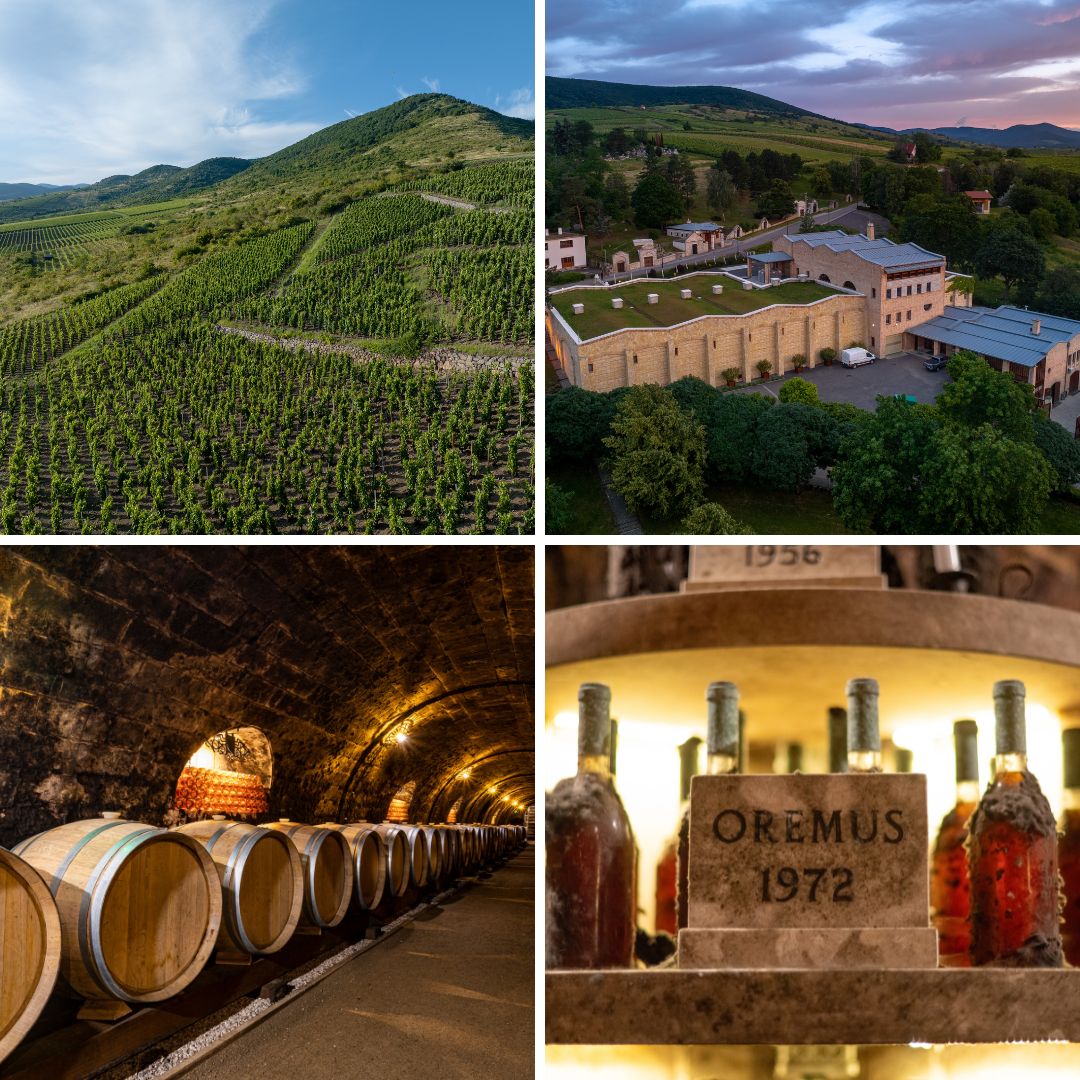
Tokaj entered the post-communist era with its cultural memory intact but its viticultural foundations compromised. Quantity-driven viticulture, wide row spacing, high-yielding clones and a centrally planned export system had stripped the region of much of its expressive potential. What remained was history, reputation, and an extraordinary natural framework—volcanic soils, noble rot, and indigenous varieties, chief among them Furmint.
For the Álvarez family, owners of Vega Sicilia since 1982, Tokaj was not an exotic outpost but a region whose historic prestige aligned naturally with their own philosophy. Following the creation of Alión in Ribera del Duero in 1991, Oremus became the group’s next step in 1993, marking Vega Sicilia’s first major move beyond Spain.
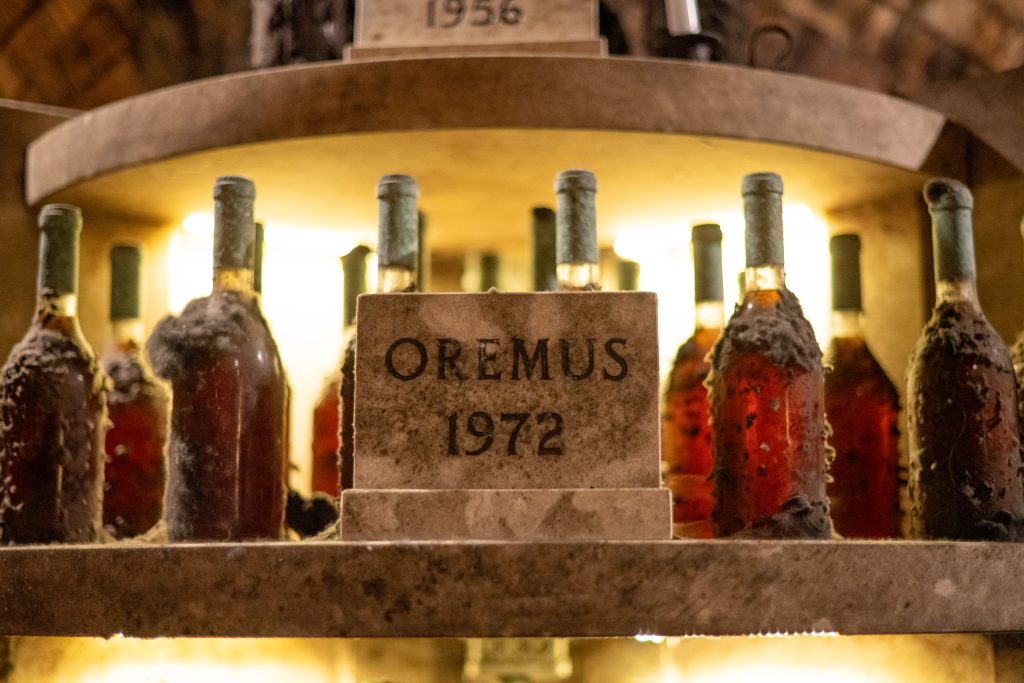
The early years were defined by reconstruction. The initial estate consisted of roughly 30 hectares, acquired as part of a state-created package that included historic vineyards, underground cellars and buildings characteristic of Tokaj’s landscape. Over time, through careful replanting and vineyard selection, the estate expanded to nearly 100 hectares, with quality—not scale—guiding every decision.
TEMPOS Vega Sicilia has guided Oremus from its glorious history to a promising future.
Relearning Tokaj, One Vineyard at a Time
By the late 1990s, Oremus had already re-established a benchmark for Tokaji Aszú. Yet the world around it was changing. Consumer preferences shifted, dry wines gained prominence, and Tokaj faced the challenge of redefining itself beyond its legendary sweet wines.
Dry Furmint had existed before, but often carried traces of botrytis and oxidative handling that limited its precision. At Oremus, the transition toward a more defined dry style was gradual and deeply analytical. From the mid-2000s onward, the estate invested heavily in clonal research, working with pre-phylloxera Furmint selections to identify loose-bunched, small-berried material better suited to dry wines.
The real turning point came around 2016, when Oremus fundamentally restructured how vineyards were assigned. Upper sections of first-class vineyards were designated exclusively for dry wines, eliminating botrytis altogether and allowing for earlier picking, greater purity and a markedly different aging profile. This shift reshaped Mandolás, the estate’s flagship dry Furmint, and laid the groundwork for something even more specific.
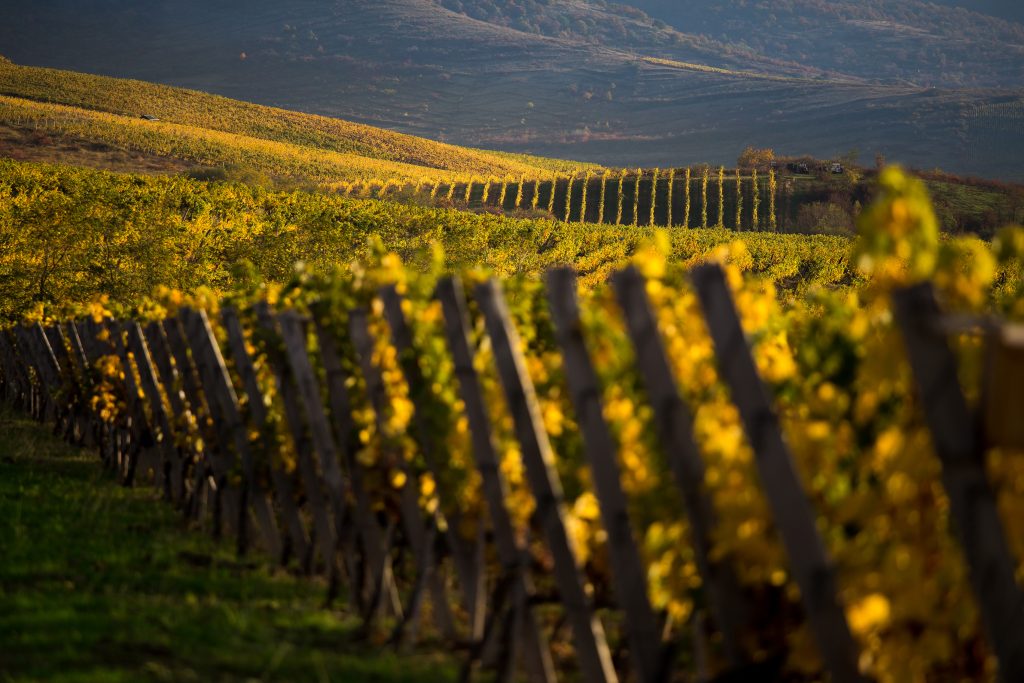
The Furmint Vineyards of Oremus now bringing forward world-class dry and sweet wines.
From Context to Glass: Oremus on the Tasting Table
Understanding Oremus through history and philosophy is one thing; experiencing it in the glass is another. Recently, we had the pleasure of having three wines from Oremus on our tasting table, offering a concise yet revealing cross-section of the estate’s work today. Two dry Furmints—Mandolás and Petrács—illustrate the estate’s precision-driven approach to terroir, while the Aszú 3 Puttonyos reminds us why sweet wine remains at the cultural heart of the region.
Below are our tasting impressions and ratings.
2023 Mandolás – Dry Furmint | 91/100 DWA score
The 2023 Mandolás presents itself with clarity and confidence. Aromatically, it opens on pear skin, green apple and citrus zest, layered with subtle white flowers and a distinctly volcanic undertone. The palate is taut and linear, driven by vibrant acidity rather than weight, yet never austere. A gentle phenolic grip adds texture, while the finish is saline, precise and persistent.
What stands out is balance. The wine feels thoroughly contemporary yet unmistakably Tokaji in character. Served too cold, much of its nuance would be muted; at a slightly higher temperature, it unfolds with a composure reminiscent of fine white Burgundy. This is a wine built for thoughtful drinking rather than immediate impact, and it promises graceful development over the coming decade.
2023 Mandolás – Dry Furmint | 91/100 DWA score.
Editor’s note – Mandolás and Petrács
While both Mandolás and Petrács are 100% Furmint and produced by Oremus, they serve different roles in expressing Tokaj’s dry wine potential. Mandolás is a multi-vineyard wine, drawing from several first-class sites to present a balanced and representative interpretation of dry Tokaji Furmint. Petrács, by contrast, is a single-vineyard wine, sourced from a highly distinctive, andesite-based site with old, densely planted vines. As a result, Petrács offers a more focused, mineral-driven and site-specific expression, while Mandolás emphasises harmony, accessibility and consistency across vintages.
2021 Petrács – Dry Furmint | 95/100 DWA score
The 2021 Petrács is a more restrained and site-driven expression of Furmint, shaped by one of Tokaj’s most distinctive vineyard locations. Planted on steep, elevated slopes with rare andesite-based soils, the site is farmed at high density, with many old, bush-trained vines contributing to the wine’s naturally low yields and structural focus.
Aromatically, the wine opens with crushed stone, citrus oil and subtle herbal notes, showing far less emphasis on primary fruit than Mandolás. On the palate, it is taut and vertical, driven by a fine, cool acidity that gives the wine a distinctly mineral character. The texture is precise and tightly woven, prioritizing tension and clarity over generosity.
Still youthful, Petrács unfolds gradually in the glass, revealing depth through restraint rather than power. Its balance and structure point clearly toward long-term aging, offering a compelling illustration of how precisely matched site and variety can elevate dry Furmint into a truly terroir-driven wine.
2021 Petrács – Dry Furmint | 95/100 DWA score
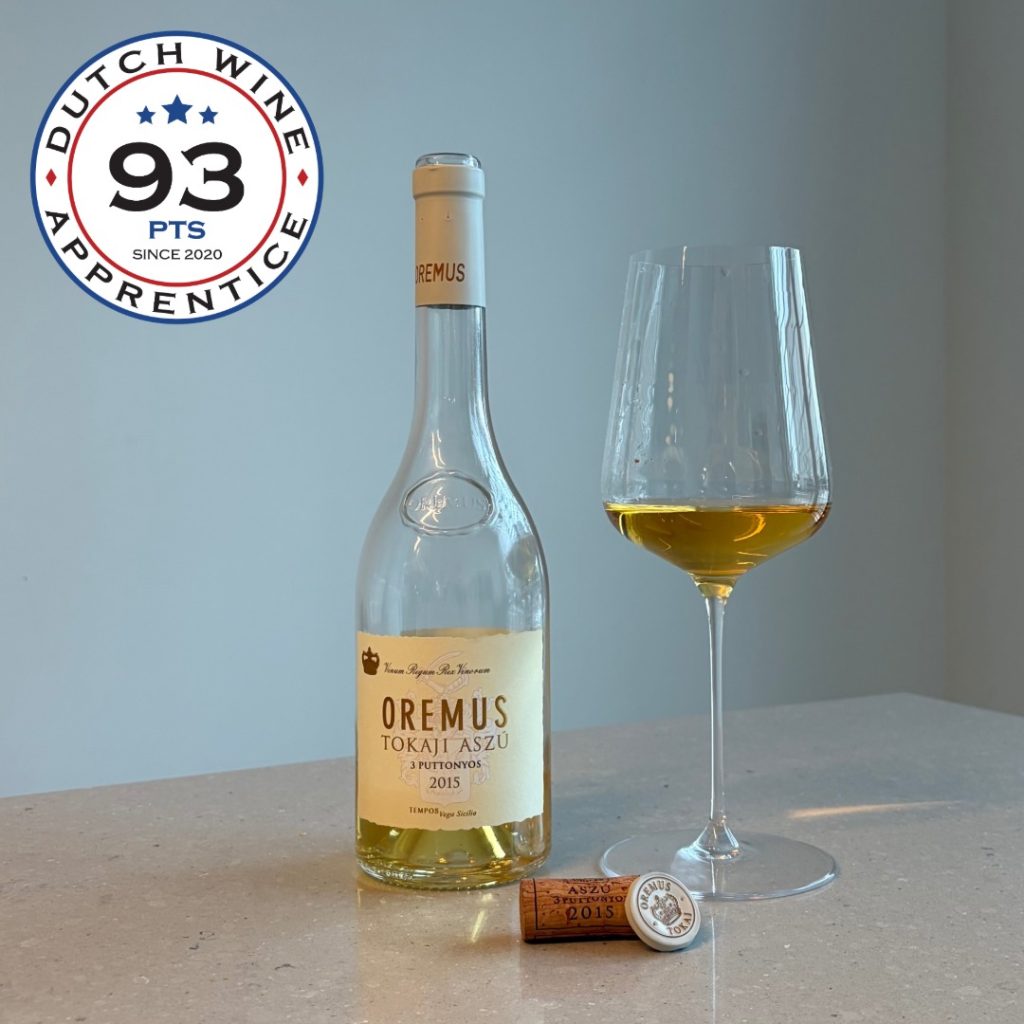
Oremus 2015 Aszú 3 Puttonyos | 93/100 DWA score
The 2015 Aszú 3 Puttonyos offers a compelling reminder that elegance, rather than sheer concentration, often defines the most versatile sweet wines of Tokaj. The nose reveals apricot, orange peel and acacia honey, supported by saffron, dried herbs and gentle spice. On the palate, the sweetness is finely calibrated, carried by vibrant acidity that keeps the wine fresh and dynamic.
Rather than opulence, this wine emphasises drinkability and precision. It works effortlessly at the table, yet remains deeply satisfying on its own. Importantly, it demonstrates that Aszú does not need extreme puttonyos levels to express depth, complexity and a strong sense of origin. This is Tokaj as a gastronomic wine—layered, balanced and enduring.
Oremus 2015 Aszú 3 Puttonyos | 93/100 DWA score.
Structure, Philosophy and the Long View
Since Róbert Kindl joined Oremus, the estate has continued to refine its internal structure, separating vineyard management, winemaking and strategic leadership. This mirrors the broader TEMPOS Vega Sicilia framework established in 2015, encouraging collaboration across the group while preserving each estate’s individual identity.
The Oremus winery in Tokaj.
Research remains ongoing across sustainability, organic and biodynamic trials, clonal diversity and climate resilience. While climate change has so far proven beneficial in Tokaj, uncertainty remains, and adaptability is treated as a necessity rather than a talking point.
Oremus Today
Annual production fluctuates around 250,000 bottles, now roughly evenly split between dry and sweet wines—a balance that would have seemed improbable two decades ago. Export markets span more than 140 countries, with renewed emphasis on gastronomy, education and long-term partnerships rather than volume growth.
Oremus is not defined by scale or visibility. Its strength lies in coherence. Over three decades, it has quietly rebuilt Tokaj from within, aligning tradition with modern precision and allowing the region to speak in its own voice once more.
The profile of Oremus has shifted and with it its international demand.
In the context of TEMPOS Vega Sicilia, Oremus no longer feels like a distant outpost, but an essential part of the group’s identity—an estate that understands that true prestige is not claimed, but earned slowly, vineyard by vineyard, vintage by vintage.
This article is written by our own Niels Aarts. We would like to thank Oremus, in particular Robert Kindl, and TEMPOS Vega Sicilia, Jessica Julmy, for their time and the opportunity to write this article. Picture credits: Oremus and TEMPOS Vega Sicilia.
The wines tasted are provided by Colaris, who imports and distributes Oremus in the Dutch market. They are available for direct sales through their consumer webshop, and direct sales for select retail and hospitality partners.
Join our insiders’ list and get exclusive early access to new articles, expert tips, and fresh reviews delivered straight to your inbox. Subscribe now and be the first to discover!