Join Our Wine Journey – Sign Up for the Newsletter 🍷
Marpaout: Médoc’s Answer to Pomerol?
Share
Deel op X (twitter)
LinkedIn
WhatsApp
Marpaout: Médoc’s Answer to Pomerol?
Bordeaux’s Médoc has long been Cabernet country. Blends led by Cabernet Sauvignon define its global reputation, while Merlot has traditionally played a supporting role.
Yet at Château Branas Grand Poujeaux in Moulis-en-Médoc, Dutch co-owner and winemaker Arjen Pen has broken with convention. With the launch of Marpaout, he unveils one of the first—and rare—single-varietal Merlots from Bordeaux’s Left Bank, a daring expression that challenges expectations and elevates Merlot into the Médoc’s spotlight.
Arjen Pen and the Branas Vision
When Arjen Pen joined Château Branas Grand Poujeaux in 2018, he saw an estate of potential. By 2019, he and fellow Dutch investor Hindrik Gommer had become majority owners, with Pen taking the reins as winemaker.
Branas itself lies in Moulis-en-Médoc, the smallest appellation of the Médoc, nestled between Margaux and Saint-Julien. Though modest in size, it is renowned for producing wines of classed growth quality. The property dates back to the 18th century, but its renaissance began in 2002 under Belgian businessman Justin Onclin, who modernized cellars, replanted vineyards, and enlisted renowned consultants Stéphane Derenoncourt and later Hubert de Boüard.
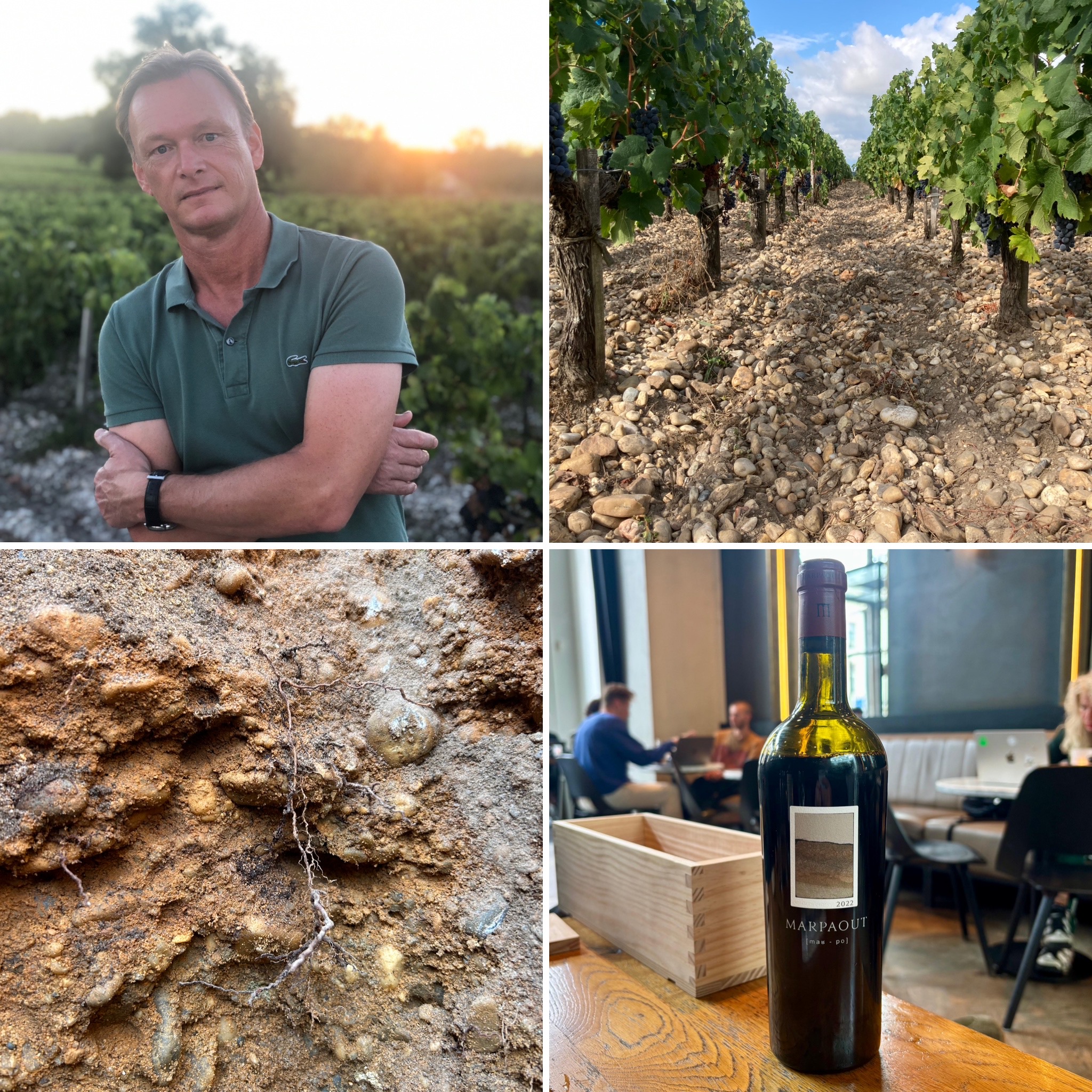
Arjen Pen driving revolution at Château Branas Grand Poujeaux.
Today, Branas cultivates 25 hectares of vines—a balanced mix of Merlot (50%), Cabernet Sauvignon (45%) and Petit Verdot (5%). Its flagship Château Branas Grand Poujeaux is admired for precision and elegance, while Les Éclats de Branas, its second wine, offers an approachable expression of the estate’s terroir.
But one small parcel within these vineyards was destined for something more.
Marpaout: A Vineyard with a Pomerol Soul
The 1.7-hectare Marpaout plot, planted with Merlot in 2000 at a density of 10,000 vines per hectare, had long contributed just a few percent to the Grand Vin. But vintage after vintage, when tasted blind, its fruit stood out for its purity and complexity.
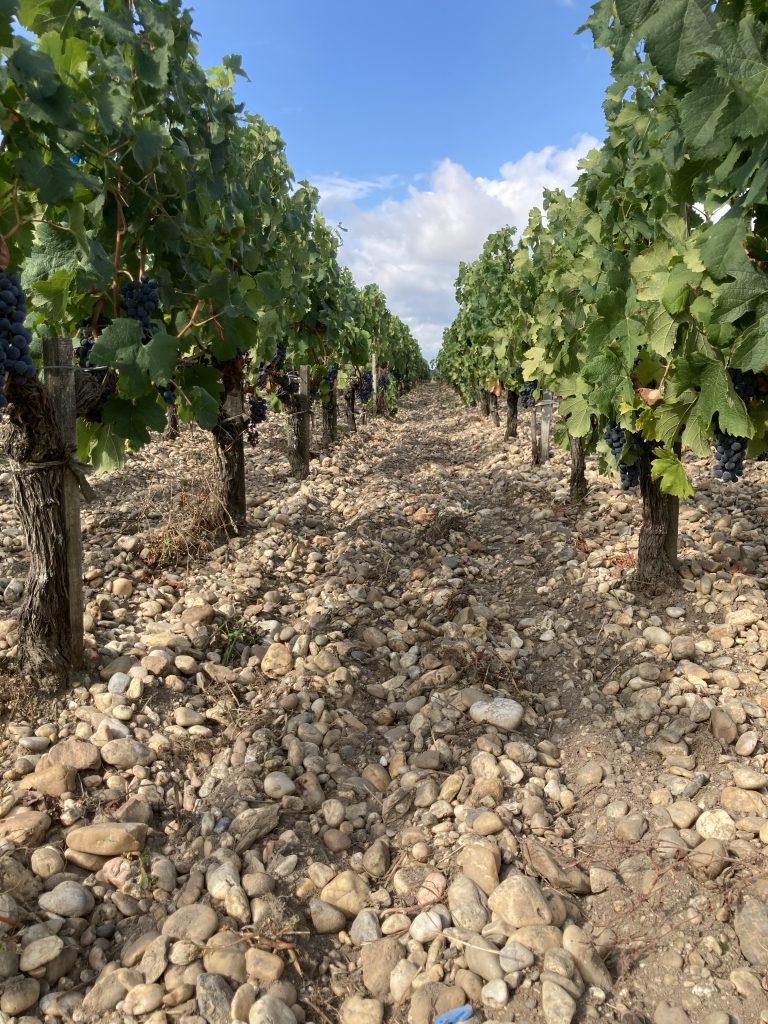
Marpaout’s vines, in their unique habitat.
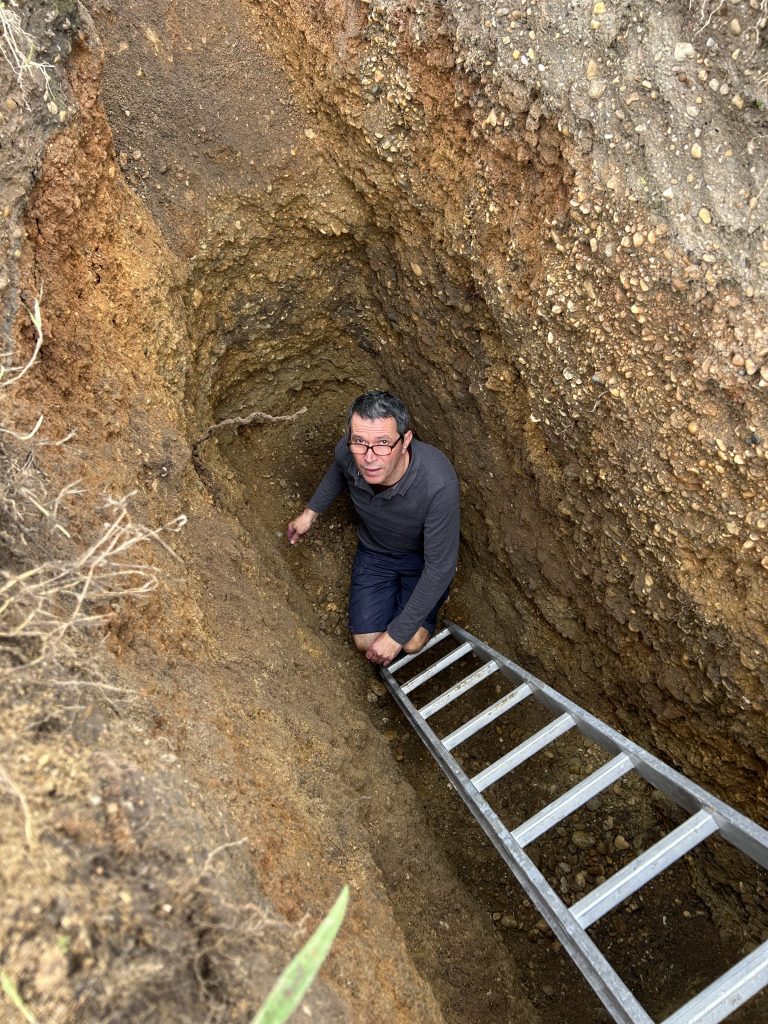
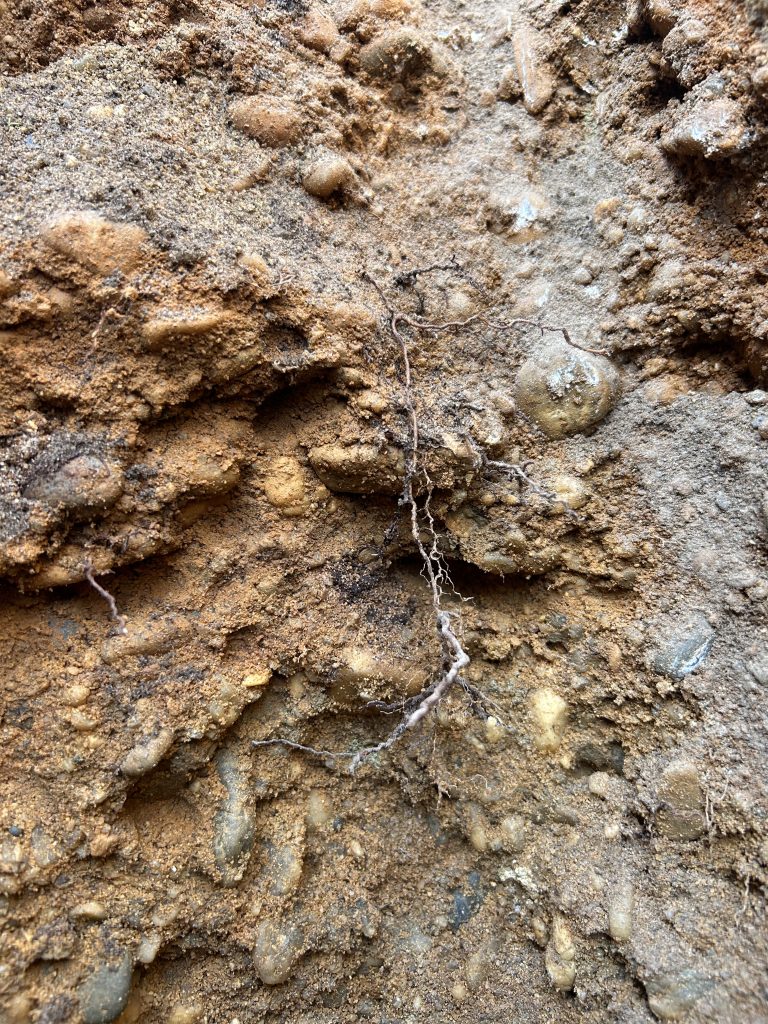
The terroir explains why. Dome-shaped and perched at 25 metres above sea level, Marpaout is the highest vineyard in Moulis and on Bordeaux’s famed Terrace 3. Its soils are a geological mosaic:
50 cm of Garonne gravel and humus
3 m of deep gravel streaked with ‘crasse de fer’ (oxidized iron, a Pomerol hallmark)
50 cm of gravel and grey sand
30 cm of iron-rich brown clay
50 cm of blue-green clay and limestone
Soil Research in the Vineyard.
This profile combines excellent drainage in wet vintages with access to water from the clay below during drought. The oxidized iron enhances photosynthesis and tannin quality, producing Merlot with both power and finesse. “It is no coincidence that the Merlot thrives here,” says Pen. “This vineyard delivers a complexity and structure usually associated with the Right Bank’s greatest terroirs.”
The DNA of Marpaout.
Marpaout also benefits from climate. Just 35 km from the Atlantic and 5 km from the Gironde estuary, its cooler microclimate tempers extremes and preserves freshness—giving a unique Médocain edge to what otherwise feels like a Pomerol profile.
Winemaking: Precision and Patience
The inaugural 2022 vintage was harvested in mid-September in a single morning, followed by optical sorting and fermentation in a 60-hl wooden vat after a cold soak. Malolactic fermentation took place in barrel.
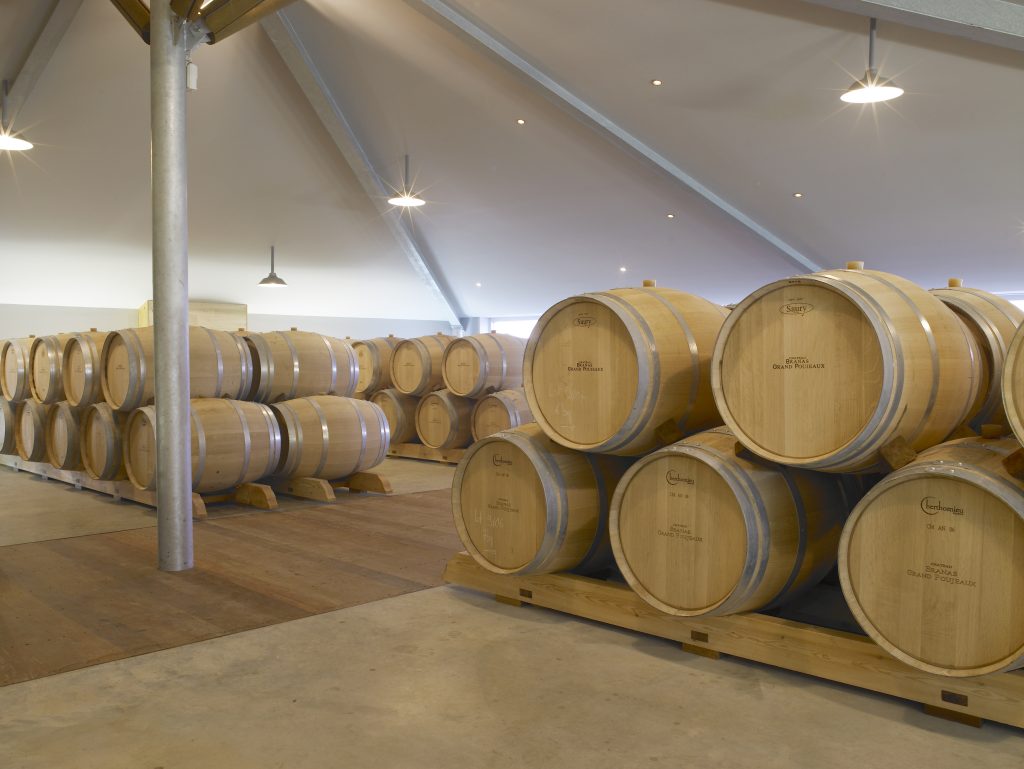
The Barrel Cellar of Château Branas Grand Poujeaux.
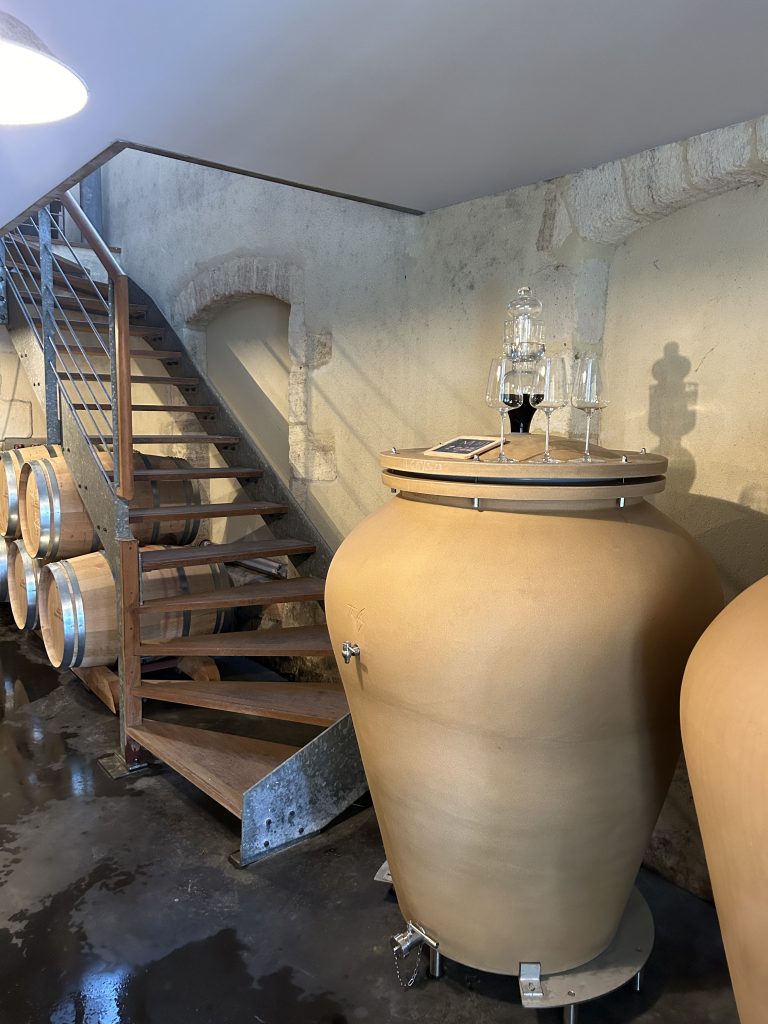
The wine spent 12 months in new French oak (from four coopers: Darnajou, Demptos, Taransaud, Stockinger) before being transferred to a 750L Tava amphora for a further year. The amphora’s natural micro-stirring integrated tannins and oak while preserving purity and freshness.
Use of Amphorae for the Winemaking.
Just 900 bottles and 50 magnums were produced. There will be no 2023 vintage due to mildew losses, and the 2024 is currently still in the works in the cellar.
Recognition from Bordeaux and Beyond
For years, Pen debated whether to bottle Marpaout separately. The decisive push came from the voices of Bordeaux itself.
Hubert de Boüard, consultant at Branas and co-owner of Château Angélus, was the first to point out the parcel’s uniqueness: “This Merlot is from another planet. Even Angélus would envy such fruit.”
Encouragement grew louder when Pen brought samples to Jacques Thienpont, the legendary winemaker of Le Pin. After tasting quietly, Thienpont declared simply: “This wine must be made.” For Pen, the verdict of Pomerol’s greatest Merlot producer sealed the decision.
Even on the Left Bank, respect followed. Thomas Burke, Master Sommelier at Château Margaux, compared Marpaout favorably to his own Cabernet blends—a rare concession that underlined the wine’s singularity. Early tastings by journalists in Austria, Switzerland and the United Kingdom called it “absolutely spectacular”, reinforcing its status as more than a curiosity.
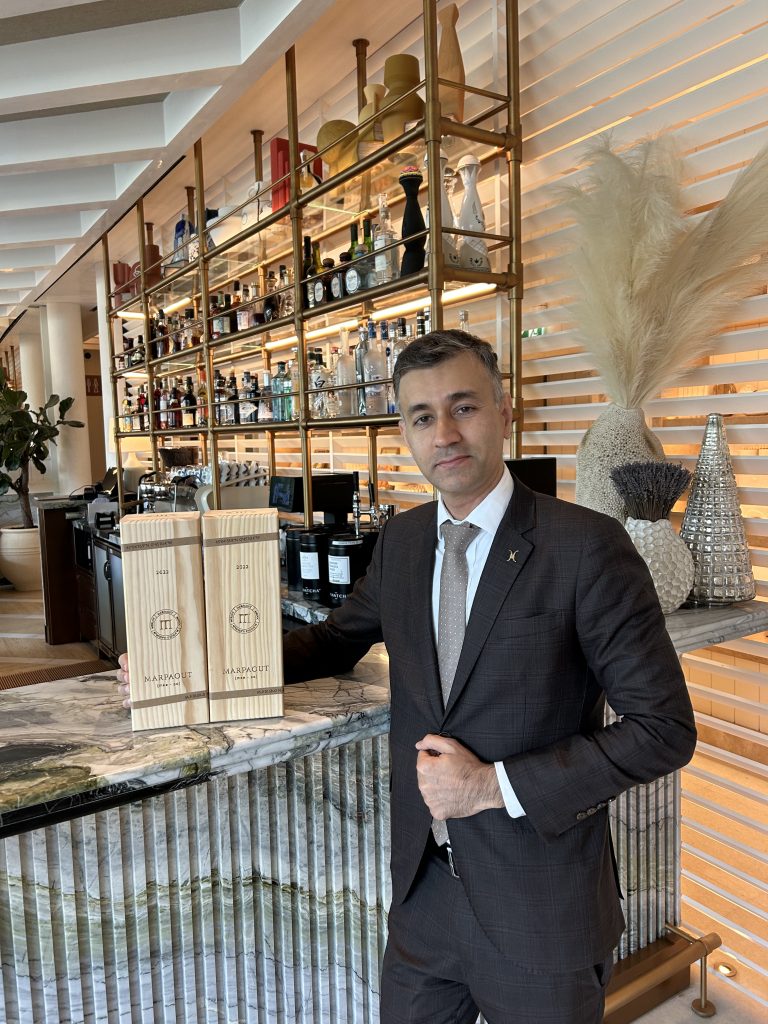
Marpaout served at the highest level, in Dubai.
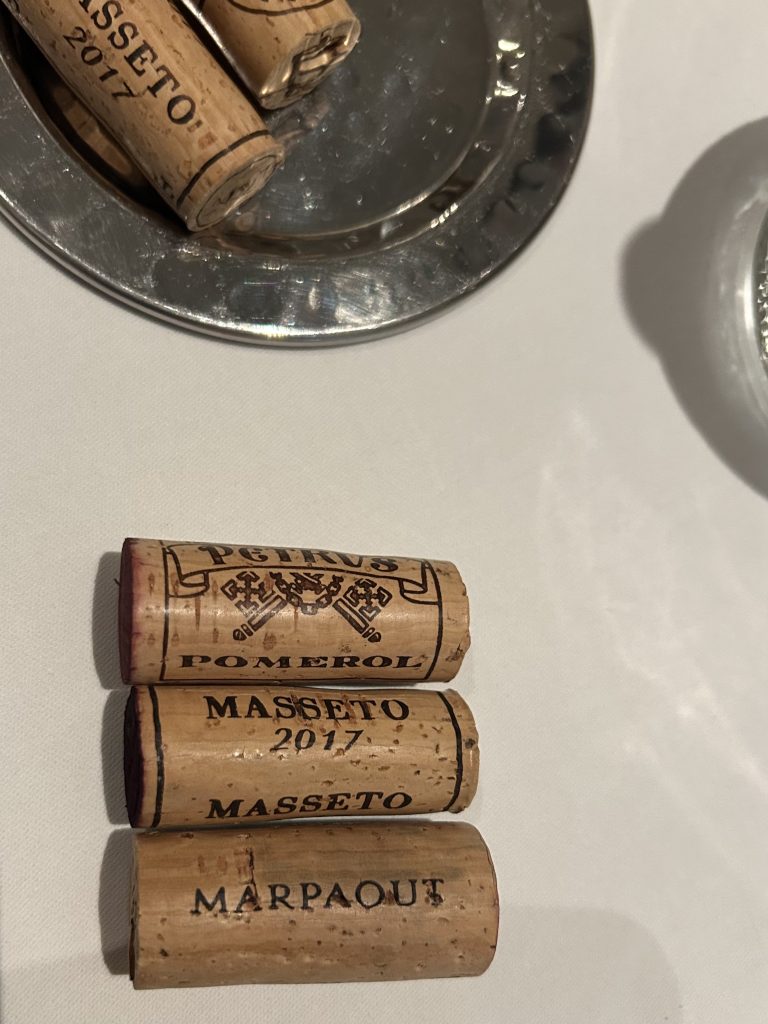
The ultimate test came at a collector’s event in Dubai, where Marpaout was poured alongside global icons (such as Petrus, Angelus and Masseto). To Pen’s astonishment, it was chosen as the Wine of the Night. Within hours, the entire allocation was gone.
Such recognition has transformed Marpaout from an experimental cuvée into a statement of what the Médoc can achieve with Merlot.
Marpaout stacked up against the greatest Merlot Wines of the World.
A Bridge to Pomerol
By releasing Marpaout, Château Branas Grand Poujeaux is breaking one of the Médoc’s unwritten rules: here, Cabernet is king. Single-varietal Merlot on the Left Bank is almost unheard of—save for rare examples like Château Couhins-Lurton in Graves and, more recently, Château Lascombes in Margaux with the first release of its La Côte.
Yet Merlot’s true heartland remains the Right Bank, where names like Pétrus, Le Pin, La Fleur-Pétrus and La Violette define the grape’s global prestige. In Saint-Émilion too, estates such as Péby-Faugères and Bellevue have built reputations on Merlot’s singularity.
Against this backdrop, Marpaout is not just another Left Bank curiosity—it is a bridge. It marries the structure and minerality of the Médoc with the sumptuousness of Pomerol, suggesting that world-class Merlot need not be confined to the Right Bank.
If the inaugural vintage is any indication, Marpaout may well prove that the Médoc can make Merlot to rival Pomerol itself.
Packaging with Purpose
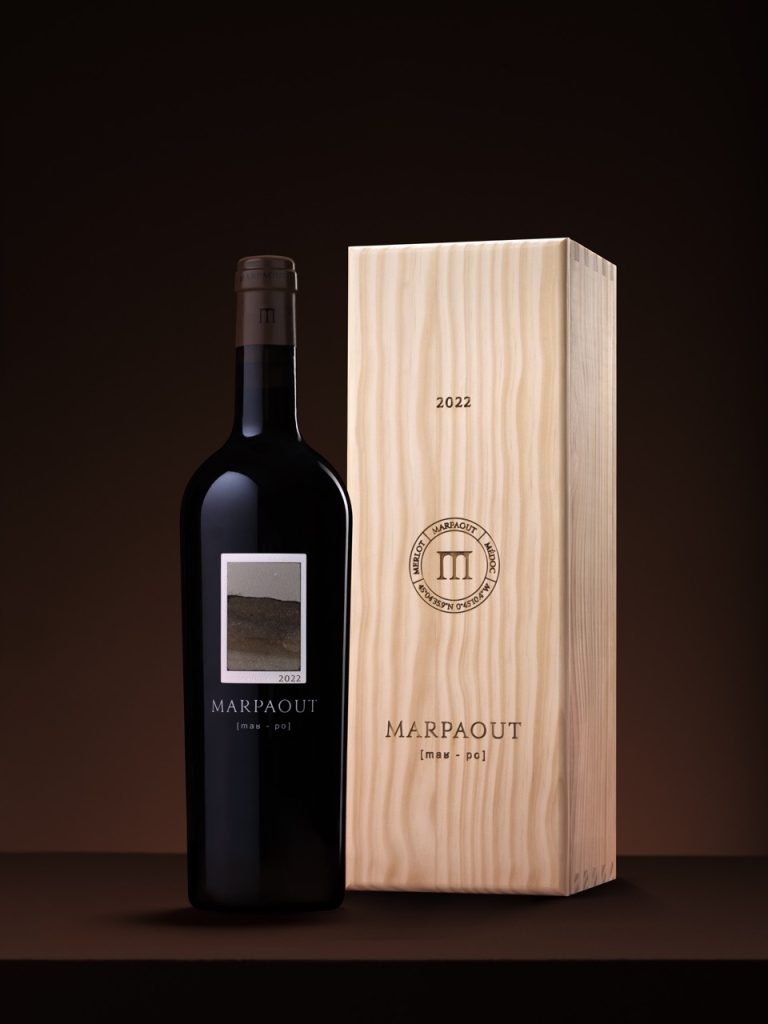
For Pen, Marpaout had to reflect its terroir not only in the glass but also in the way it was presented. Each bottle is housed in a bespoke wooden case, crafted from local Médoc pine by the same artisan who supplies Petrus. The bottles themselves are lightweight, reducing environmental impact, while labels and brochures are printed on paper made from recycled yeast residue — a nod to the circularity of winemaking.
The striking label is an artistic impression of the Marpaout terroir, with etched coordinates linking directly to the vineyard site. It is a symbolic gesture: this wine is inseparable from its place of origin. “We wanted to showcase the terroir in every detail,” says Pen, “while keeping the packaging honest and sustainable.”
Marpaout with its thoughtfully designed bottle, label and packaging.
Tasting Note: 2022 Marpaout
During our meeting with Arjen, we had the pleasure of sharing the first release of Marpaout.
The inaugural Marpaout gleams with ruby garnet tones and purple flashes, edged by a delicate ochre rim. Aromas of ripe black cherry, damson, liquorice, and cocoa bean mingle with floral highlights of orange blossom and wild herbs, framed by subtle cedar and finely judged oak.
The palate is succulent and layered, with deep fruit expression—black cherries, pomegranate, and mulberry—lifted by fennel, mint, and rosemary spice. There is both weight and elegance: silky, ultra-fine tannins carry precision, while a vibrant acidity keeps the wine fresh and long.
The finish is mineral, poised, and persistent, leaving a lasting impression of fruit purity and terroir character. It is both understated and powerful, Médoc in structure yet plush with Merlot’s sensuality.
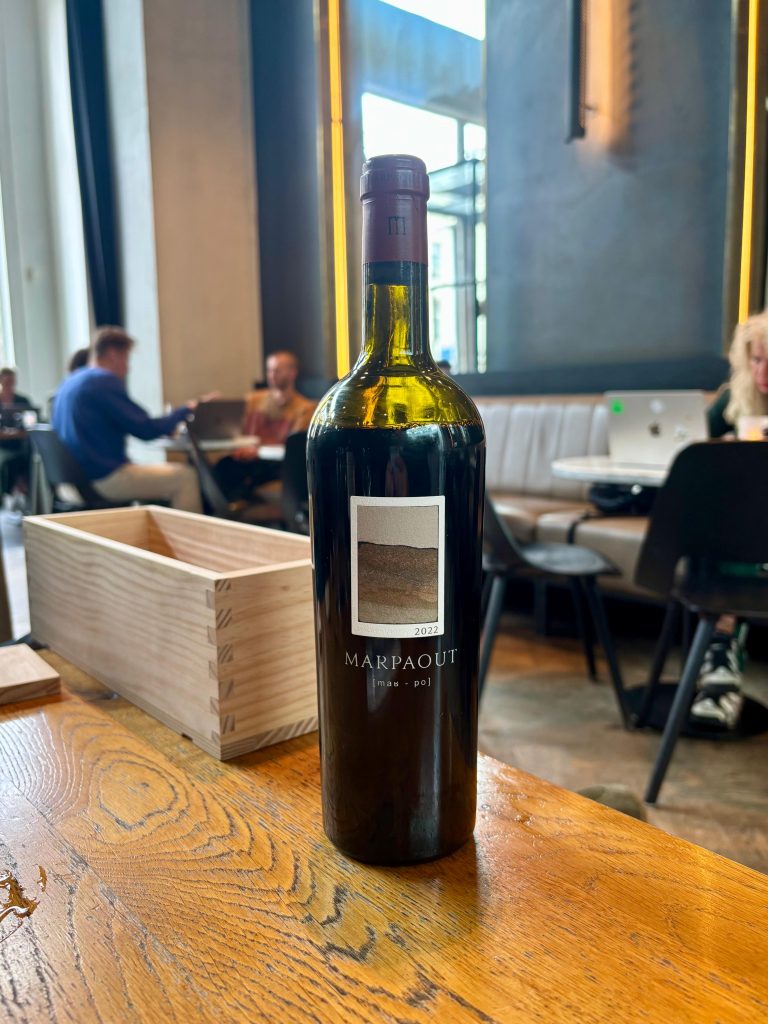
The 2022 Marpaout.
This truly is a rare and remarkable Left Bank creation, promising long ageing.
Production: 900 bottles and 50 magnums
Dutch Wine Apprentice score: 98/100
The Future Belongs to those who Dare
With Marpaout, Arjen Pen and Château Branas Grand Poujeaux have created more than just a wine. They have given the Médoc its boldest answer yet to Pomerol, proving that terroir—not tradition—should define Bordeaux. A Médoc Merlot that dares to stand alone—and succeeds brilliantly.
This article is written by our own Niels Aarts and based on an interview with Arjen Pen of Château Branas Grand Poujeaux. We would like to thank Arjen for this time and support in writing this article, as well as his partner Wine Lister in facilitating the interview.
Marpaout will be released for sale shortly, in very limited quantities. In the Netherlands Marpaout will be distributed by Best of Wines.
Join our insiders’ list and get exclusive early access to new articles, expert tips, and fresh reviews delivered straight to your inbox. Subscribe now and be the first to discover!